Knowledge Base
Water coming through a shared rowhouse wall: whose side is it?
A damp patch on a party wall puts two households in the same problem. Before anyone talks about blame, the wall itself can usually show which way the water is moving.
By Winifred Larkin, Knowledge Base EditorUpdated 7 min read
The short version
- On a brick party wall, the stain rarely marks the entry point; water travels through mortar, joists and flues.
- A grid of moisture readings, plus a thermal camera, shows which way the water is moving.
- Rule out your own plumbing, roof and drains first, then share facts with the neighbor rather than blame.
- Dry your side without waiting on fault; condo buildings follow their own documents.
Why does a party wall move water between two houses?
In a DC rowhouse, the party wall is one solid brick wall shared by two homes, usually two or three bricks thick and laid in soft lime mortar. Rows of these houses fill Capitol Hill, Shaw and Petworth. The wall runs from the footing to the roof, and on many blocks it rises past the roofline as a low parapet. The floor joists of both houses often rest in pockets cut into that same brick, and the chimney flues for both sides are frequently built inside it.
Brick is porous. Water that enters at one point spreads sideways and downward through the mortar joints, follows joists and flues, and surfaces wherever the plaster is thinnest or the wall is coolest. A leak at a neighbor's second-floor bathroom can appear as a stain near your first-floor ceiling, a few feet off to one side. On a party wall, where the stain shows up is rarely where the water got in, which is why guessing so often starts arguments.
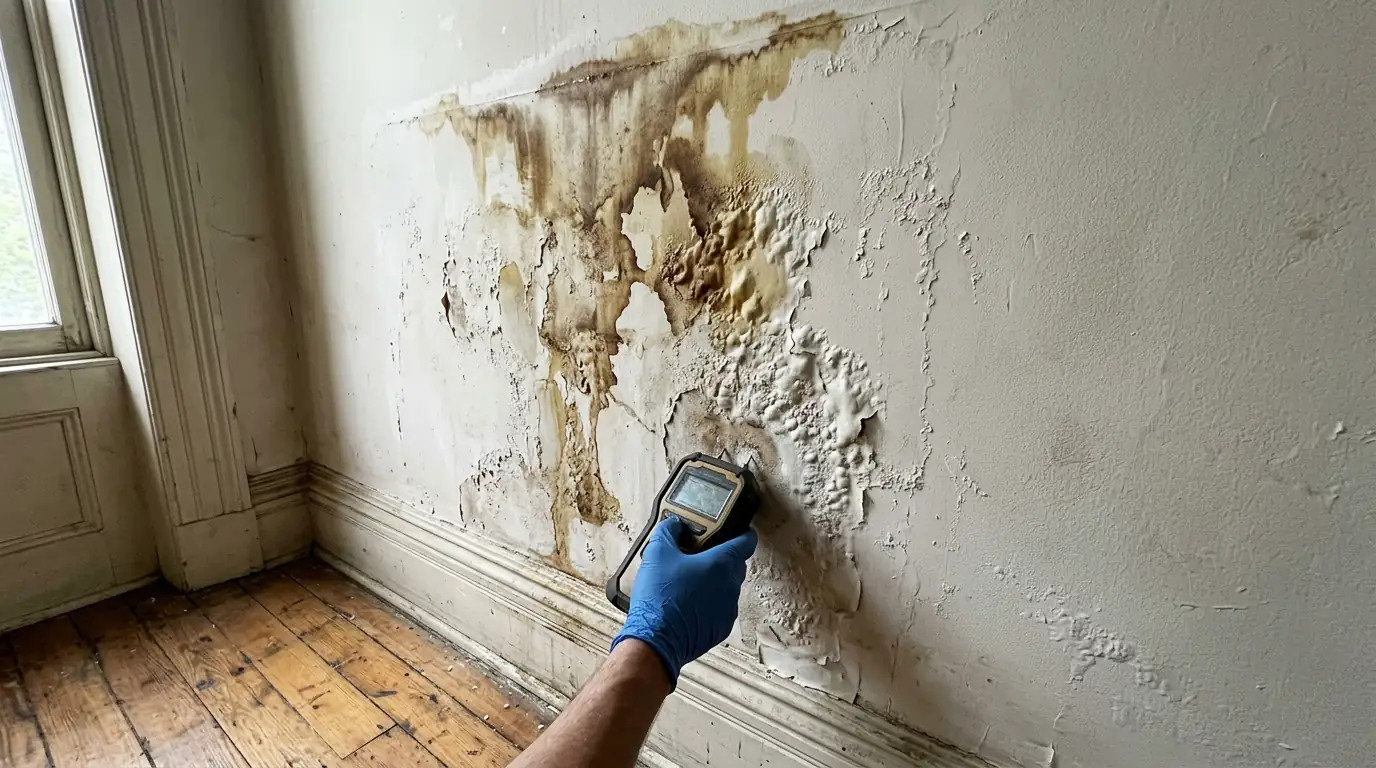
Plaster on these walls was often troweled straight onto the brick, so it soaks up moisture directly. Bubbling paint, a brown tide line and hollow-sounding plaster are the usual first signs.
What on the neighbor's side commonly sends water through?
Most party wall leaks come from a handful of places, some inside the house next door and some on the roof or in the yard, where neither household looks often.
- Plumbing on the shared wall: kitchen or bathroom supply lines and drains set against it, including slow drips at shutoff valves and old galvanized fittings.
- A bathroom next door: cracked grout or caulk in a tub surround, a failed shower pan or a leaking toilet seal on a floor framed into the shared brick.
- The roof and parapet: a cracked parapet cap, loose coping, failed flashing where a flat roof meets the party wall, or a seam between two roofs redone in different years.
- Gutters and downspouts: a gutter that overflows at the property line, or a downspout that empties at the base of the wall.
- The rear areaway: a clogged drain behind the neighbor's house that lets water pond against the shared foundation.
- A chimney flue inside the party wall that has lost its cap, letting rain run down through the masonry.
Could the water actually be coming from your own house?
Before knocking next door, rule out your own sources. A supply line in your kitchen wall, a radiator valve weeping onto the floor beside the party wall, or a washing machine standing against it can leave a patch that looks like it came through the brick. So can your own downspout, your half of the roof and your front stairwell drain, which our guide to English basement leak points covers.
Some dampness has no single owner. Below grade, both houses sit against the same soil, so ground moisture after a long wet spell can dampen the bottom of the wall in both basements at once. In an unheated rear room, humid air can condense on cold brick. These patterns show up as a band near the floor or an even dampness across a wide area, not a plume spreading from one point.
Two quick checks help. Turn off every fixture and watch your water meter for an hour; if it moves, the leak may be yours. Then compare the stain after a dry week and after a hard rain.
How do moisture readings and thermal imaging show which way water is moving?
Our technicians start by mapping the wall. A pin meter and a pinless meter take readings in a grid across the plaster, from floor to ceiling and well past the visible stain. On brick and plaster, those numbers are comparative rather than exact, so we also take reference readings on a dry stretch of the same wall. The wettest point, and the way readings fall off around it, form a pattern.
Readings highest near the ceiling that fade downward point to the roof, the parapet or a flue. A plume centered at one height often lines up with a bathroom or kitchen on the other side. A band along the floor points to the ground, the areaway or a stairwell drain.
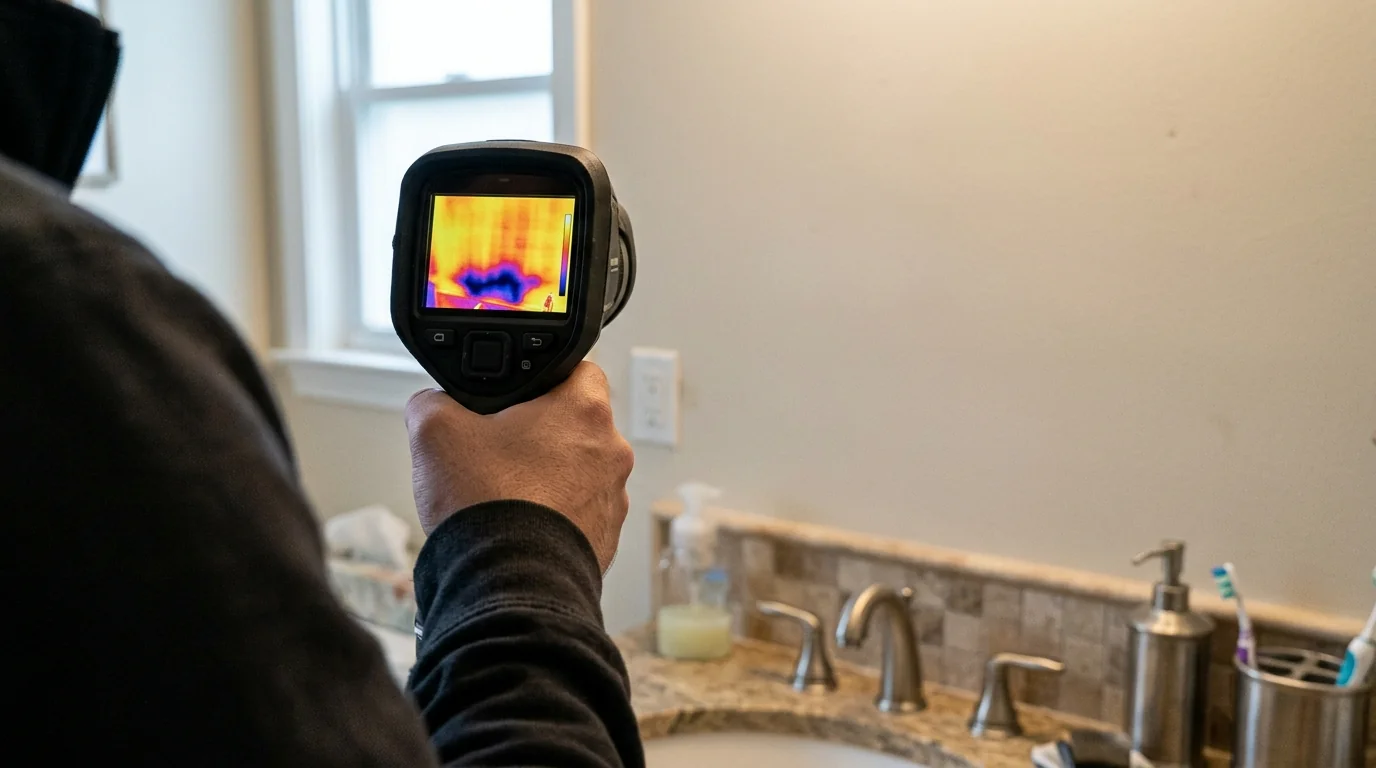
A thermal camera adds the shape. Wet plaster usually reads cooler than dry plaster because evaporation pulls heat from the surface, so a leak can appear as a cool streak or fan the eye can't see yet. The camera reads temperature, not water, so every cool spot gets confirmed with a meter. Readings after rain, after a dry week and, with the neighbor's help, after they run their shower for ten minutes can separate one source from another. A moisture mapping visit ends with a marked sketch both households can use.
How do you raise it with the neighbor and keep things calm?
Most neighbors want to know, and many have no idea anything is wrong. Lead with what you found rather than what you suspect: the stain, the readings, the dates it got worse. Ask whether they have noticed a slow drain, a recent plumbing job, roof work or a stain of their own. If either house is rented, bring the owner in early.
Offer to share everything, and invite them to see your side. Afterward, send a short text or email summarizing what you both saw and agreed to check. A shared record keeps the conversation about the wall instead of about each other. Both households should keep:
- Dated photos of the wall on each side, one wide shot and several close shots with a tape measure in the frame.
- Moisture readings with their locations marked on a simple sketch or on painter's tape stuck to the wall.
- Notes on weather, plumbing use and any roof or plumbing work around the days the patch changed.
- Receipts for anything spent on drying, testing or repairs.
How does insurance usually handle water from next door?
In general terms, each owner's insurer may get involved. Your policy may respond to damage on your side, and if the cause turns out to be next door, your insurer may later seek repayment from the neighbor's carrier. Sudden and accidental leaks, such as a burst supply line, are often covered, while slow seepage and gradual leaks are often excluded or limited. Check your policy and ask your agent. Our guide to documenting a water damage claim lists what adjusters usually ask for.
If the conversation stalls, that is a matter for the two owners and their insurers to settle. We document conditions on whichever side we are invited into; we don't assign fault. Meanwhile, wet plaster and the joists bearing in the wall can grow mold if they stay damp for days, and drying the masonry and framing on your side doesn't change who caused the leak.
Condo buildings work differently. If your rowhouse has been split into condo units, or you live in a larger condo building, the wall between units is often a common element under the association's documents and master policy. Start with management, and see our guide to water coming from another condo unit. If water is coming through a party wall now, call (202) 989-3053, day or night.
Questions readers ask
The damp spot on our party wall lines up with an old fireplace. Could the chimney be the cause?
Quite possibly, since flues for both houses often run inside the party wall. If a flue has lost its cap or its mortar crown has cracked, rain runs down inside the masonry and soaks the brick around the fireplace breast, often leaving brown soot stains. A chimney mason can check the caps from above, and readings that peak near the flue help confirm it.
Our neighbor just had a new flat roof put on. Could that work cause a leak along the shared wall?
It can. Where two flat roofs meet at a party wall or parapet, the new membrane has to tie into flashing on shared brick, and that joint is a common weak point. Leaks from it usually show up high on the top-floor party wall after rain. Share your photos and readings so the neighbor's roofer can inspect the tie-in.
Should I start drying my side before we know where the water comes from?
Usually yes, once your photos and readings are recorded. Drying doesn't erase evidence that has already been documented, and it keeps plaster, joists and finishes from staying wet long enough to grow mold. Drying can't finish while water is still entering, though, so the source still has to be found and stopped. Check your policy about notifying your insurer before work starts.
Winifred Larkin, Knowledge Base Editor at JEC Restoration. She writes and updates these guides from the questions homeowners ask our crews on DC area jobs.
Services this guide connects to
Moisture & Leak Detection
Moisture and leak detection is a non-invasive survey that finds where water is hiding in walls, ceilings and floors and how far it has spread.
How we handle it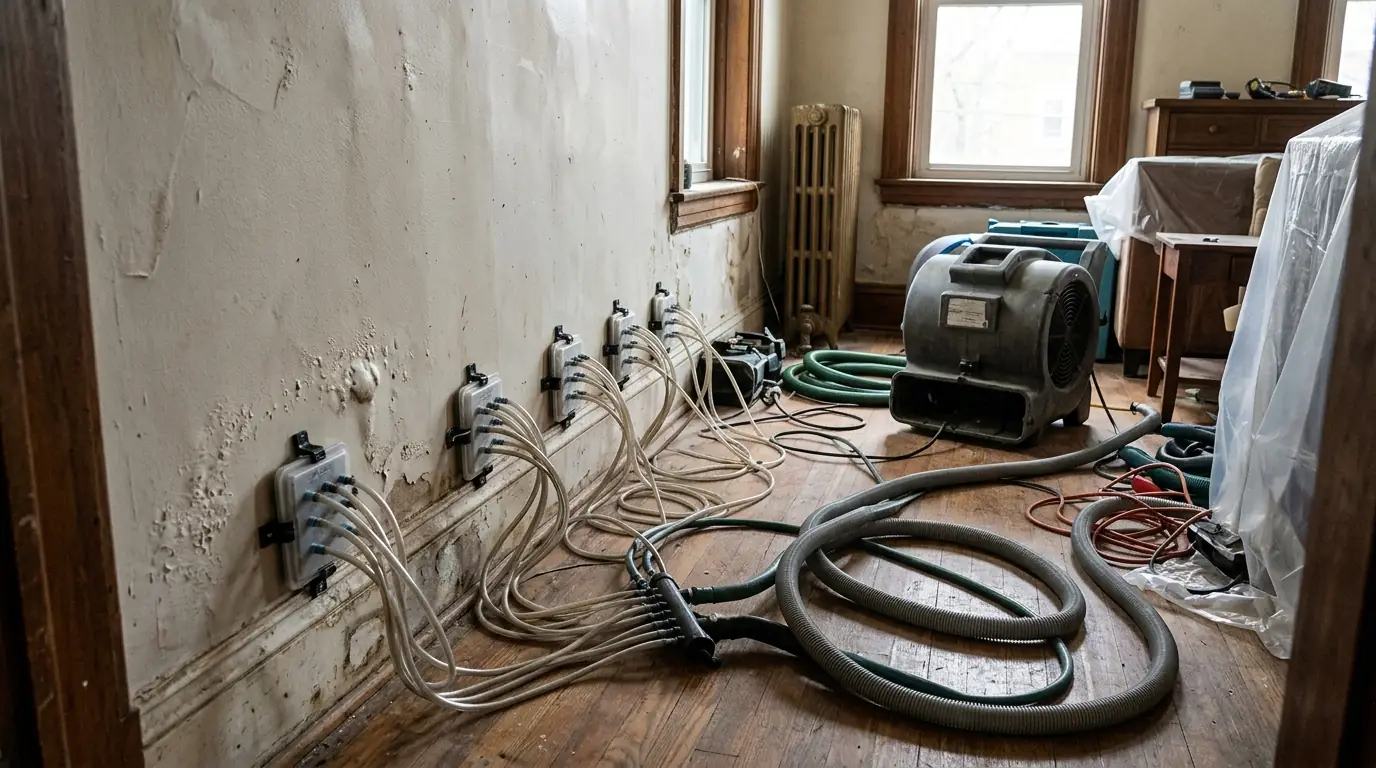
Structural Drying
Structural drying is the controlled removal of moisture from a building's framing, subfloor, wall cavities, plaster and masonry after a water loss.
How we handle it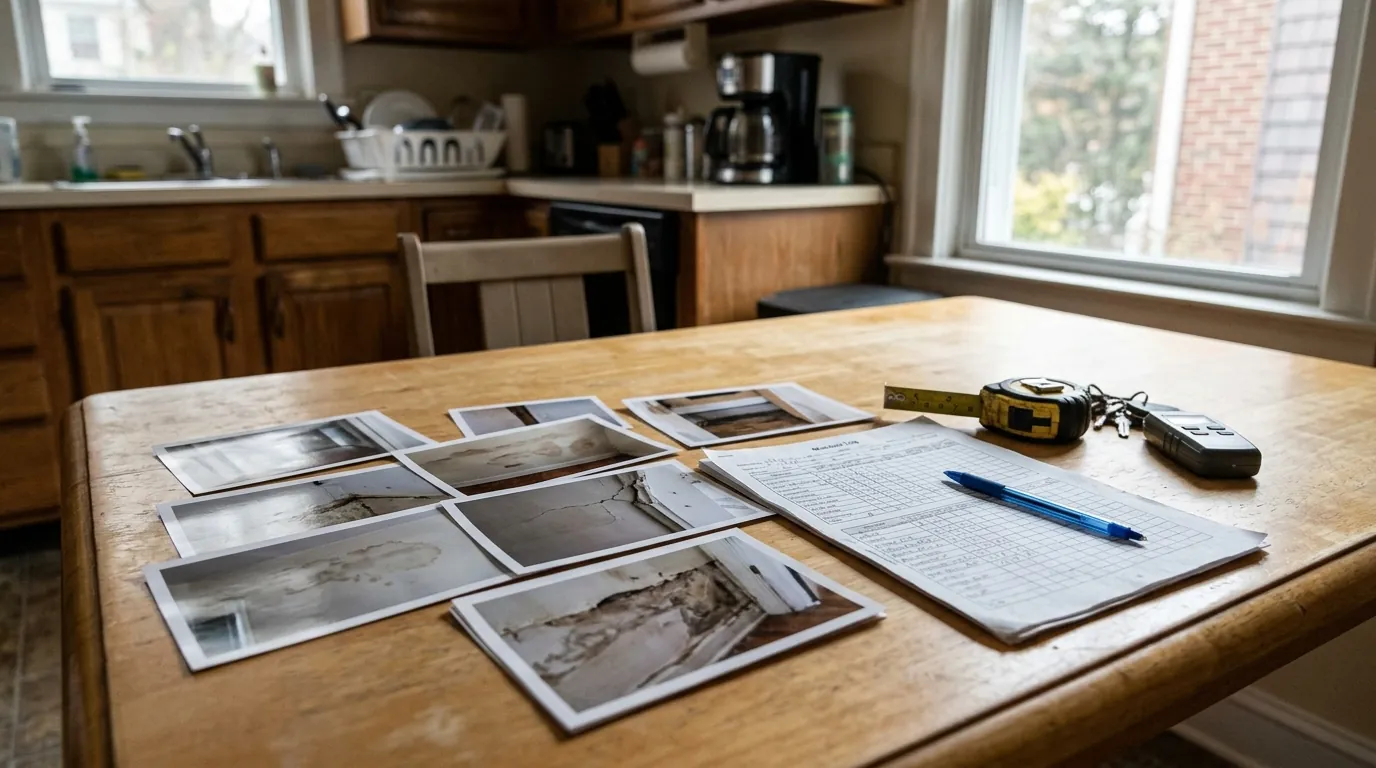
Insurance Claim Help
Insurance claim help, as we provide it, means documenting the damage and the work so you have what your insurer asks for: dated photos, moisture readings, daily drying logs, equipment records and an itemized repair scope.
How we handle itNeed someone to look at it today?
Call (202) 989-3053. We answer 24/7 and can talk you through the next safe step on the phone.