Water Damage
Burst pipe cleanup in Washington, DC
A pipe that splits inside a wall can run for hours before anyone sees water. We shut it down, follow the water through cavities and ceilings, open only what we must, and dry the framing before it is closed up.
Drying, air and detection equipment on our jobs comes from names like
- Dri-Eaz
- Phoenix
- B-Air
- Abatement Technologies
- Protimeter
- Delmhorst
- FLIR
- Benefect
- Concrobium
- Omnitec
- Sapphire Scientific
- Tramex
Burst pipe cleanup deals with the water a split supply or heating line leaves inside walls, floors and ceilings: opening the wall at the break, extracting water, removing soaked insulation, and drying the cavities and the rooms below. You need it after any freeze-related break, a failed fitting or a cracked radiator line. Call (202) 989-3053 at any hour.
Why do pipes often burst after the cold snap ends?
Ice in a pipe usually does not split it at the frozen spot. As the ice plug grows, it pushes water ahead of it toward a closed faucet, and pressure builds in that trapped section until a seam or a fitting gives way. While the line stays frozen, the plug holds most of the water back. The leak shows up when the temperature climbs and the ice melts, which is why so many calls come on the first mild afternoon after a January cold snap.
By then the line may have been running for hours. Inside a wall, water heads straight down: along studs, onto the sill plate, under the flooring and into the ceiling of the room below. Sudden and accidental pipe bursts are often covered by homeowner policies, while gradual leaks usually are not, so check your policy and photograph the break before the pipe is repaired.
How can you tell a pipe has burst inside a wall?
A break hidden in a wall or ceiling gives itself away in a few predictable ways.
One faucet with no water
During a freeze, a faucet that runs dry while the others work points to an ice plug, and a possible split, on that line.
Hissing inside a wall
A steady hiss or trickle behind plaster, especially near a kitchen or bathroom, is water escaping under pressure.
Meter moving with taps off
If the dial on your water meter turns while every fixture is closed, water is leaving the system somewhere.
A cold, damp patch on a wall
Wet plaster on an exterior wall feels colder than the wall around it and may darken or blister.
A new ceiling stain
A stain under a bathroom, kitchen or radiator that appears after a cold night often traces back to a split line above.
Water under a radiator
A puddle beneath a radiator or along its supply pipe after a boiler outage can mean a cracked section or valve.
How do we handle a burst pipe from shutoff to dry framing?
The goal is to remove the water and dry the structure while opening as little of your house as possible.
Shut off and drain
We close the main or branch valve, open faucets to drain the line, and make sure no electrical fixtures sit in the water path. If the heating system is involved, it is shut down safely.
Trace the water
A thermal camera shows the cool, wet path the water took through the wall and floor. Meters confirm where it stopped, including rooms and ceilings one or two floors down.
Open the wall at the break
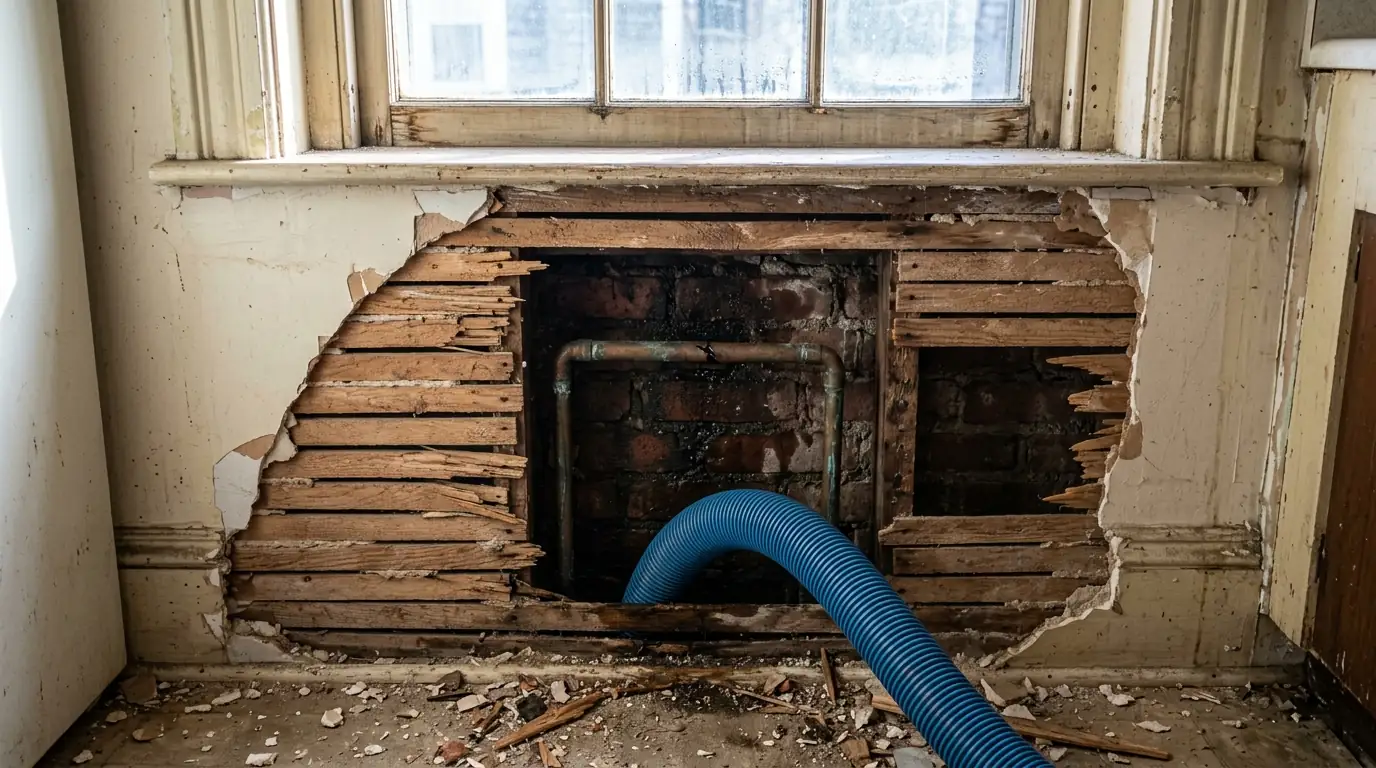
A clean access cut exposes the split so the pipe can be repaired. We set plastic and floor protection before cutting and save trim wherever we can.
Remove insulation and dry
Wet batts and debris come out, standing water is extracted, and dehumidifiers and injection drying go to work on the cavities. Readings are logged on each visit.
Confirm and close
When studs, plates and ceilings read dry, we record the final numbers and the opening is ready to be insulated, patched and painted.
Which pipes in older DC houses freeze first?
Water lines freeze where cold air reaches them and heat does not, and in the District's older housing the same spots come up winter after winter. Our article on where pipes burst in older DC homes goes through them room by room. These are the usual suspects:
- Kitchen supply lines on the rear exterior wall of a rowhouse, especially behind base cabinets that block warm air.
- Lines running through enclosed sleeping porches and rear additions built over unheated crawl spaces with open vents.
- Outdoor hose bibs without frost-proof valves, where the section of pipe just inside the wall splits and leaks into the basement ceiling.
- Old galvanized steel lines, narrowed and thinned by internal rust, that fail at threaded joints once ice puts stress on them.
- Radiator branches and hot-water heating loops in rooms closed off for the winter, or anywhere a boiler shut down during a hard freeze.
What does a burst line leave behind inside the wall?
Once the line is shut off, the visible water is the smaller part of the job. Fiberglass batts in an exterior wall soak up water and hold it against the studs and sheathing. Water that ran down the cavity sits on the bottom plate and spreads under baseboards into the next room. If the break was on an upper floor, the plaster or drywall ceiling below has taken on water from above, and it may be holding more than it shows.
We open the wall at the break with a clean, square cut so the repair is simple to close, and we pull out wet insulation, which rarely dries well in place. Below that point, we often remove the baseboard and drill small holes behind it to vent the cavity, then feed dry air in with an injection system. Ceilings below get checked with a meter and a thermal camera; if they are wet, the approach on our ceiling leak page applies. Cavities that stay damp past a couple of days are where hidden mold gets started, so nothing is closed until readings are back to normal.
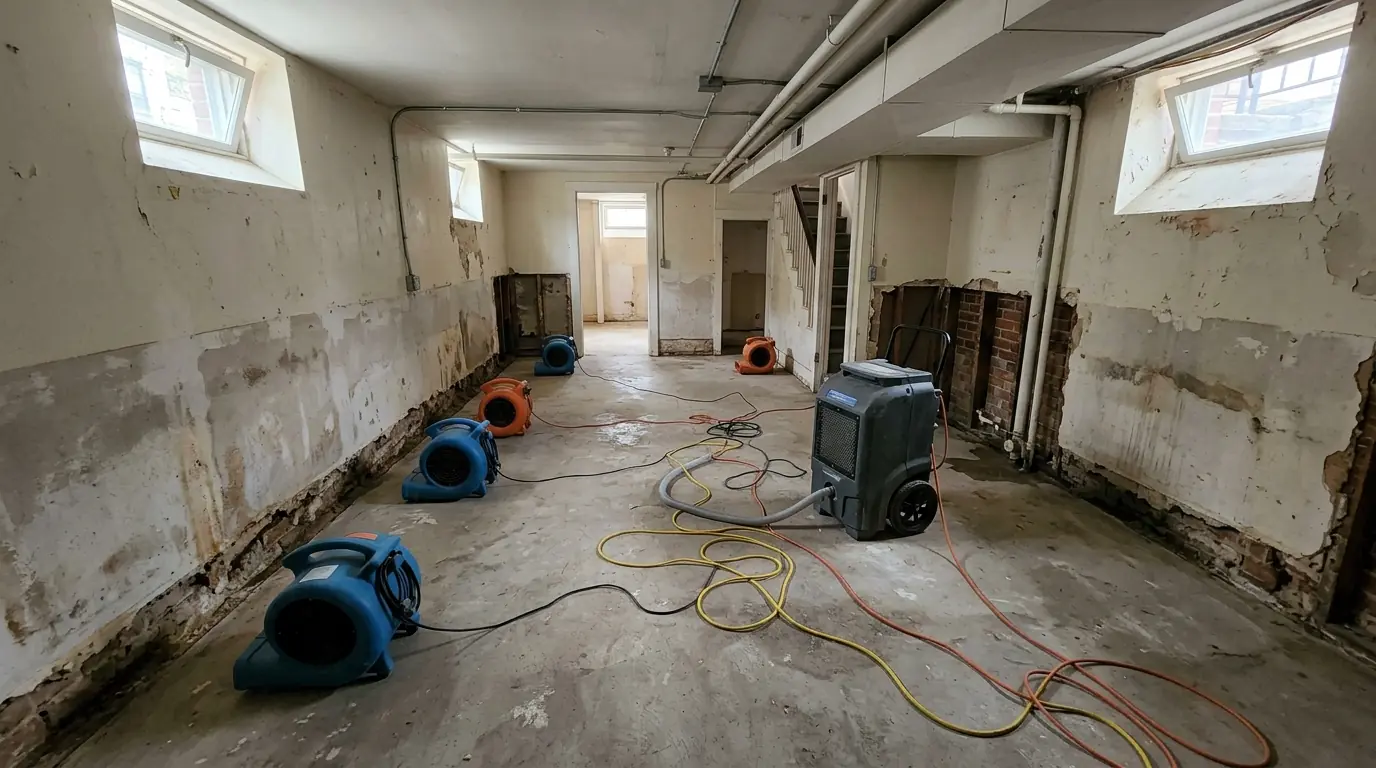
Air movers and a dehumidifier drying a DC basement apartment
Where do January freezes do the most damage in DC homes?
A typical cold-snap call in the District comes from a rowhouse kitchen. The sink sits on the rear wall, the cabinets block heat, and the brick behind them gets cold enough on a windy night to freeze the line. Rear additions come next: many Petworth and Brookland rowhouses have a kitchen or sunroom built over a shallow crawl space with vents that let winter air straight in.
Detached houses in upper Northwest and Chevy Chase DC see hose bib breaks and split lines in unheated garages and mudrooms. In the suburbs, split-levels in Silver Spring and Rockville freeze lines in crawl spaces and over garages. Vacant spaces are another pattern: an English basement apartment between tenants with the heat turned low, or a house where the boiler quit overnight, can freeze radiators and branch lines at the same time. In those cases we often find water damage on two or three floors at once.
Where we do this work: Washington, DC and nearby Maryland and Virginia, including:
What does burst pipe cleanup cost in the DC area?
Cost depends mostly on how long the line ran and how many surfaces the water reached on its way down.
| One wall cavity and the floor beneath it | $940-$2,380 |
|---|---|
| Kitchen exterior wall, cabinets pulled | $2,360-$5,640 |
| Second-floor break, ceiling below opened | $3,280-$8,170 |
| Rear addition or crawl space, insulation out | $2,870-$6,920 |
These are typical DC-area figures, not quotes; we price your job after looking at it on site. Compare ranges across all 40 services.
What moves the price
- How long the line ran
- Floors the water passed through
- Plaster or drywall
- Cabinets and built-ins in the way
- Insulation to remove
Related work we often do on the same job
Water Damage Restoration
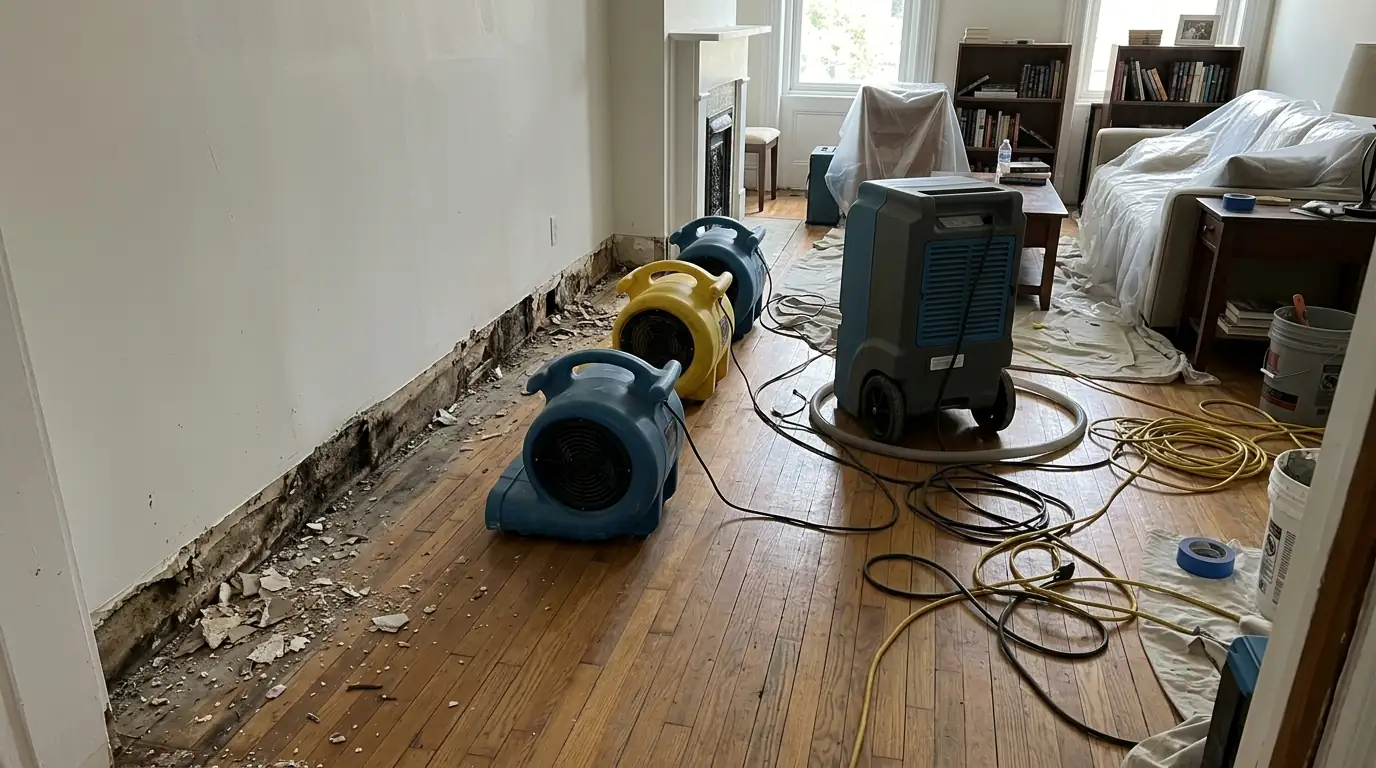
Water damage restoration is the full sequence after a leak or flood: stopping the source, extracting standing water, removing materials that cannot be saved, drying walls and floors with dehumidifiers and air movers, and logging moisture readings until they reach a dry standard.
How we handle it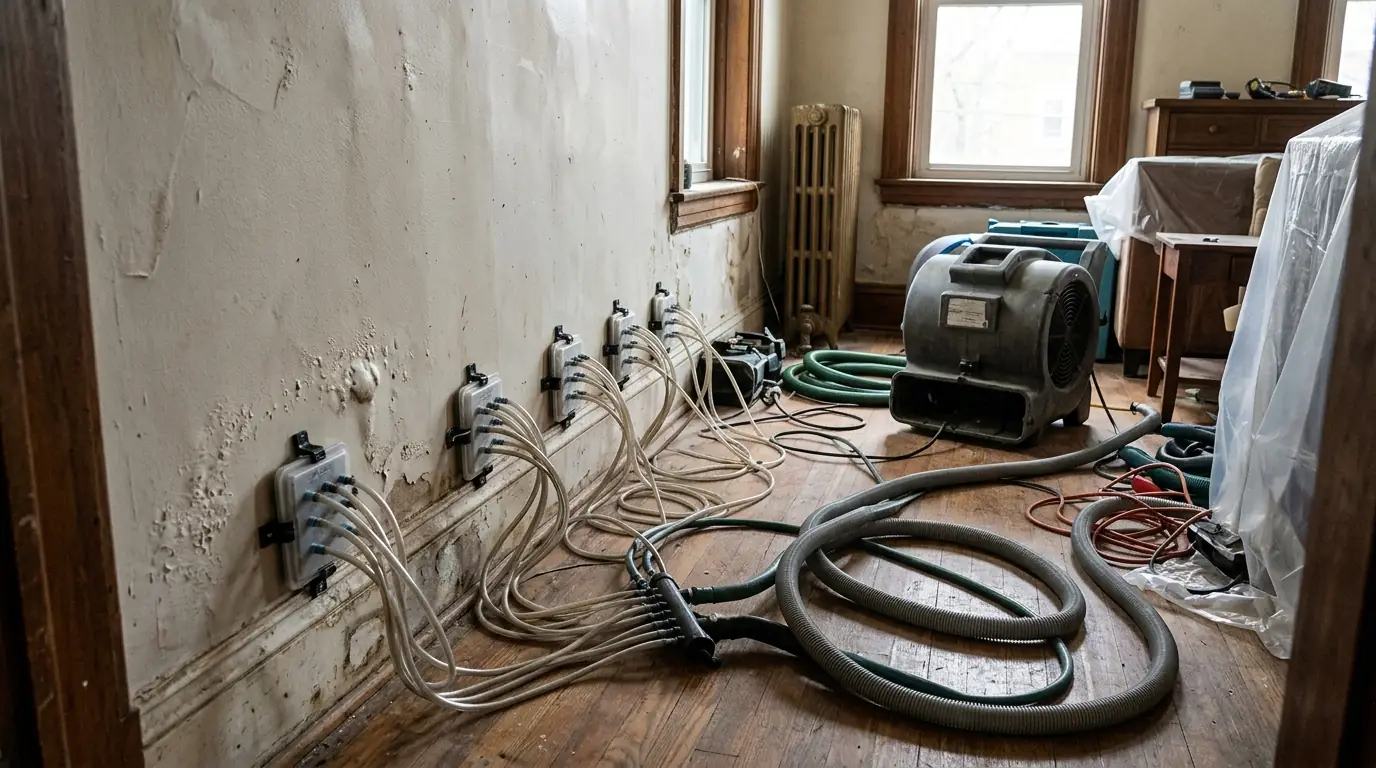
Structural Drying
Structural drying is the controlled removal of moisture from a building's framing, subfloor, wall cavities, plaster and masonry after a water loss.
How we handle it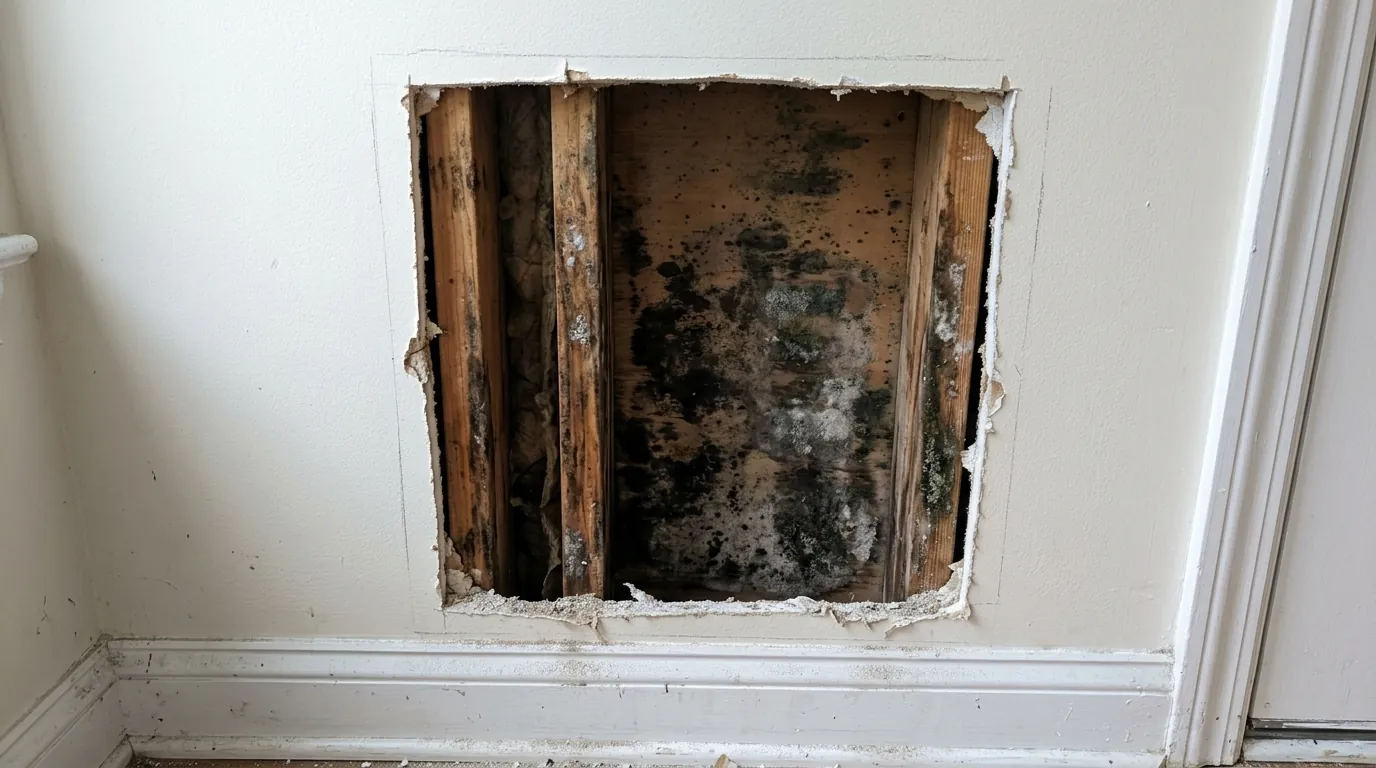
Mold Behind Drywall
Mold behind drywall grows on the back of the paper facing, on studs and on insulation inside a wall that has stayed damp from a slow leak, condensation or an old flood.
How we handle it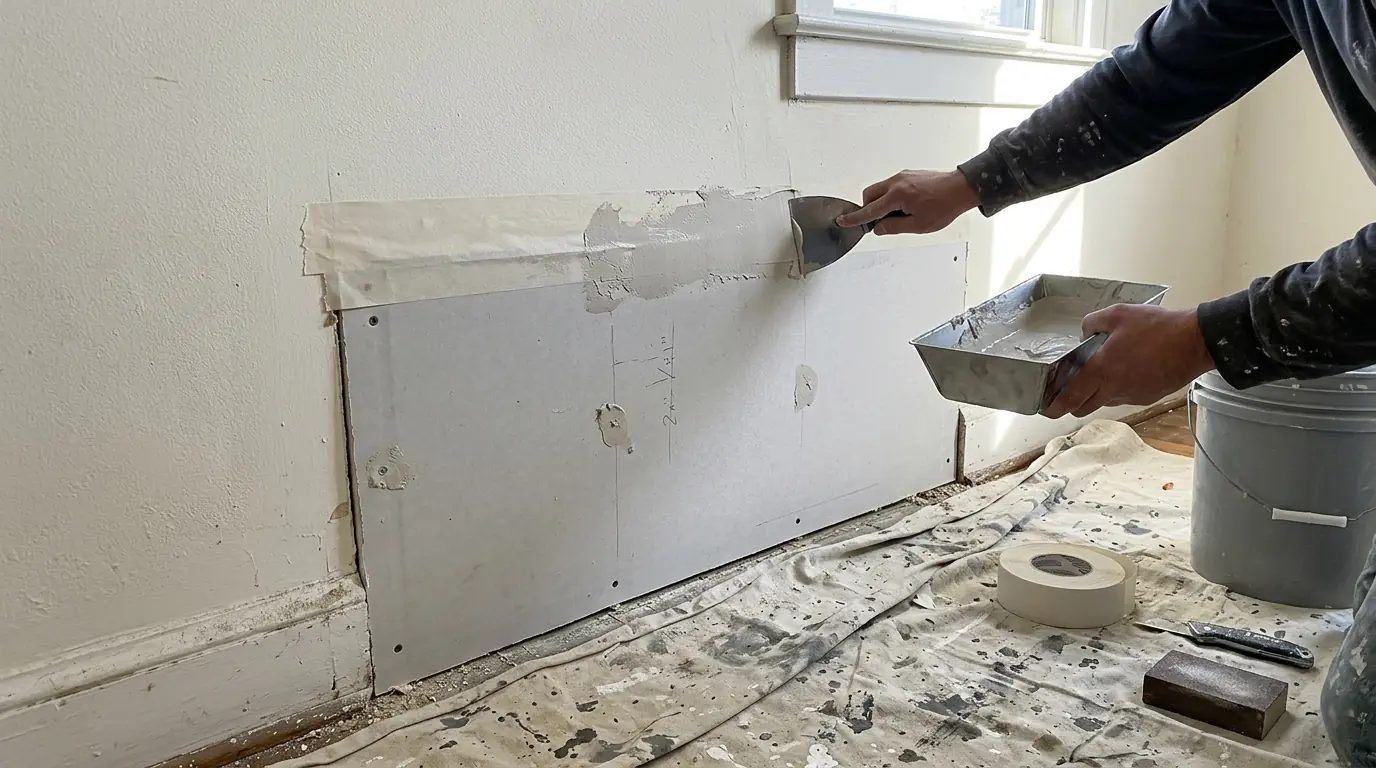
Damage Repair & Rebuild
Damage repair and rebuild is the work that restores a room after water, mold or fire mitigation is finished.
How we handle itQuestions homeowners ask about burst pipe cleanup
If a pipe might be frozen, should I turn up the heat or open the faucet?
Both help. Keep the heat on, open the cabinet doors under the sink so warm air reaches the pipe, and crack open the faucet on that line so pressure has somewhere to go as it thaws. Never use an open flame or a heat gun on the pipe. If you see water or hear hissing, close the main valve right away.
Why is water coming through the ceiling when the break is in a wall upstairs?
Water inside a wall keeps going down until something stops it. It follows studs to the bottom plate, crosses the subfloor, and drops through the ceiling below wherever there is a gap or seam. That is why we check the floor and the ceiling under every burst, even when the room above looks only slightly wet.
Does one leak in an old galvanized line mean more are coming?
Often, yes. Galvanized steel rusts from the inside, narrowing the pipe and thinning its walls and threads, and every run in the house tends to be the same age. One failure, especially at a threaded fitting, is a strong sign the rest are near the end of their life and are worth having inspected before the next freeze.
Can a frozen radiator or heating pipe cause the same kind of damage?
Yes. Hot-water heating systems hold a lot of water, and a boiler outage during a freeze can crack a radiator section, a valve or a branch line. That water is usually discolored with rust and system treatment, so we handle it as gray water. Steam systems hold less water, but their return lines can still freeze and split.
Can wet insulation in the wall dry out on its own?
Fiberglass batts that get soaked sag, compress and hold water against the studs and sheathing, so they rarely dry well in place. We remove them and dry the cavity open. Rigid foam board can sometimes stay if it is intact and the cavity behind it can dry. New insulation goes back in during the repair stage, once readings are normal.
Water in the house or a musty room you can't explain?
Call JEC Restoration any time. We answer 24/7 and talk through what you are seeing before anyone touches a wall.