Water Damage
Ceiling leak damage in Washington, DC homes
A stain or bulge overhead means water is sitting where you cannot reach it. We make the room safe, follow the path the water took, open only the damaged section and dry the cavity before it is patched.
Drying, air and detection equipment on our jobs comes from names like
- Dri-Eaz
- Phoenix
- B-Air
- Abatement Technologies
- Protimeter
- Delmhorst
- FLIR
- Benefect
- Concrobium
- Omnitec
- Sapphire Scientific
- Tramex
Ceiling leak damage work deals with water trapped above a ceiling from a roof, a bathroom, a radiator or an air conditioning line. It covers making sagging plaster or drywall safe, finding the source and path, removing damaged sections, drying the joist bays and insulation, and preparing the ceiling for repair. Call when a stain grows, paint bubbles or the ceiling sags: (202) 989-3053, answered 24/7.
Is a sagging plaster ceiling safe to stand under?
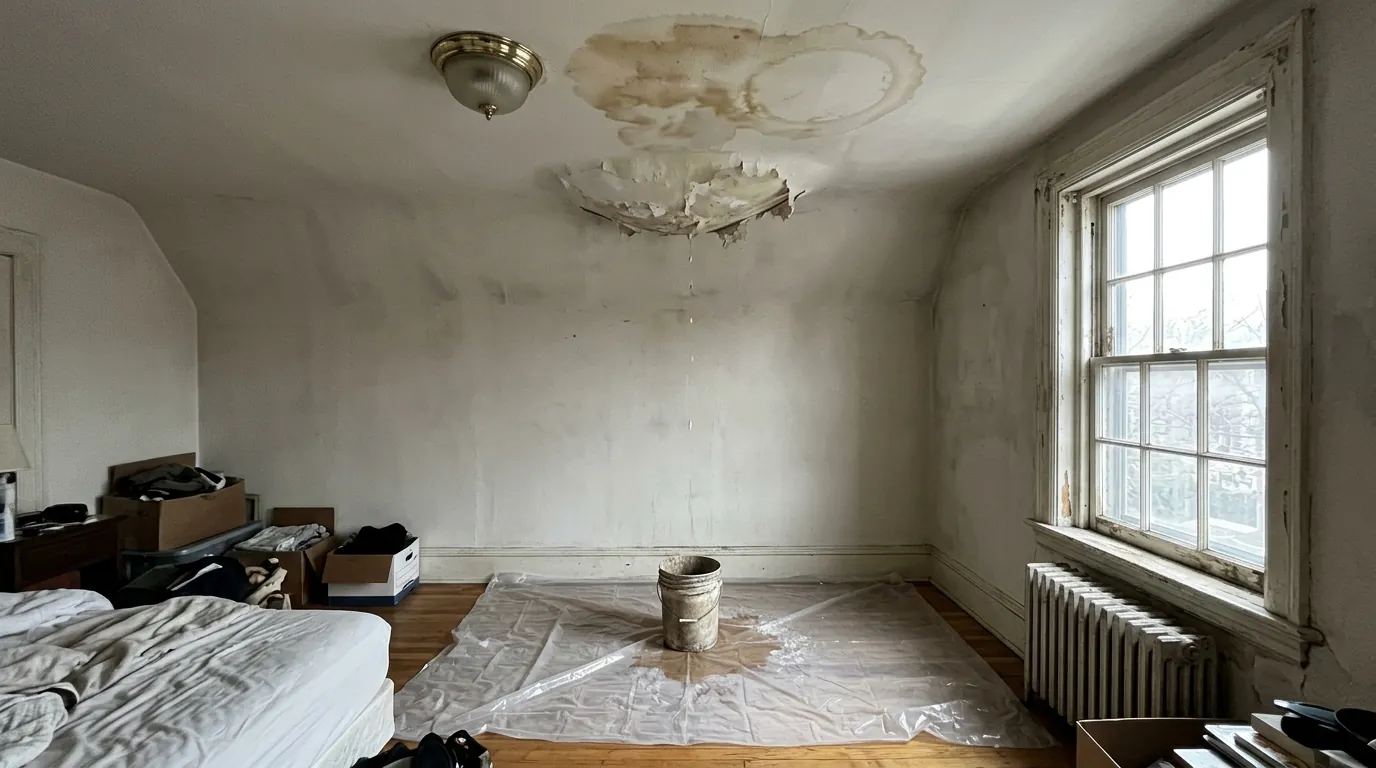
No. Plaster on wood lath is held up by keys, the ridges of plaster that squeezed through the gaps between lath strips when it was applied. Water softens the plaster and swells the lath, the keys break, and the ceiling ends up hanging from fewer and fewer points. Wet plaster is heavy, and when a section lets go it tends to come down all at once. If you see a bulge, a crack that keeps widening, or plaster pulling away around a light fixture, keep people and pets out of the room.
Drywall ceilings fail differently. Water pools on the back of the sheet and forms a bubble until the paper face tears. A small hole at the lowest point over a bucket can relieve that weight, but only on drywall, and only if you can reach it without standing under a wide sag. Turn off the circuit to any light or fan in the wet area either way. Paint in homes built before 1978 may contain lead, so we take damaged plaster down under plastic sheeting with HEPA vacuums and lead-safe work practices.
Which ceiling changes mean water is still getting in?
An old dry stain is cosmetic, while these signs mean water is active or trapped above.
A ring that grows after rain
A brown ring with a new, darker edge after each storm means the roof or parapet is still letting water in.
Bubbling or peeling paint
Paint lifting off a ceiling means moisture is pushing through the plaster or drywall from above.
A bulge or downward sag
Any sag in plaster or bubble in drywall is carrying weight, either water or loose material, and needs attention now.
Cracks spreading from a fixture
Cracks radiating from a light or fan box suggest the plaster keys there are breaking or water is collecting at the opening.
Drips from a light fixture
Water inside a fixture is an electrical hazard; switch off that circuit at the panel before doing anything else.
A musty top-floor room
A damp smell under a flat roof with no visible stain can mean wet insulation sitting above the ceiling.
How do we deal with a leaking ceiling, step by step?
Safety comes first, then the source, then drying the hidden space above.
Make the room safe
We shut off power to fixtures in the wet area, move furniture out, cover the floor and catch active drips. If plaster is sagging, nobody works under it until it is supported or brought down.
Follow the water
Thermal imaging and meters trace the wet area across the ceiling and back toward the source. We check the roof, the bathroom above or the mechanical equipment to confirm where it entered.
Remove what cannot be saved
Damaged plaster and lath or drywall come down under plastic sheeting, with HEPA vacuums capturing the dust. Wet insulation above is bagged and carried out.
Dry the cavity
Dehumidifiers run in the room while air is pushed into the joist bays through the opening or drilled holes. Framing and sheathing are read on every visit until they hit target.
Prepare for repair
With the cavity dry and the source fixed, we document final readings and photos so the ceiling can be patched, primed with a stain blocker and painted.
Is the water coming from the roof, a bathroom or something else?
Timing is the first clue. A stain that grows after rain points to the roof or a parapet. One that darkens after showers points to the bathroom above: a failed wax ring, cracked grout, a leaking shower pan or a worn tub overflow gasket. A ceiling that only gets wet in summer often sits under an air handler or a clogged condensate line. A damp patch near an outside wall in winter may be a radiator valve on the floor above.
Location is less reliable. Water lands on a joist, a pipe or the underside of the roof deck and runs along it before it drips, so the stain can show up several feet from the actual leak. On a flat rowhouse roof, water entering at a parapet flashing can travel across half the top-floor ceiling before it appears. We use a thermal camera and moisture meters to follow the path back, and when the entry point is not obvious, leak detection narrows it down before anything gets opened.
How do you dry the space above a ceiling without tearing it all out?
The space between a ceiling and the floor above, or between a top-floor ceiling and the roof deck, is a closed pocket that air barely moves through. Water trapped there can sit for weeks. We remove only the section that is damaged beyond repair, which also opens the cavity. Where the ceiling is wet but still sound, we drill small holes along the joist bay and push dry air in with an injection system or directed air movers, so the cavity dries without a full tear-out.
Insulation above a top-floor ceiling is the other problem. Wet fiberglass or blown cellulose compresses, holds water against the plaster or drywall and stops insulating, so it usually comes out of the wet area. Roof sheathing and rafters above it are checked for moisture and for growth; if we find mold there, the work follows our attic mold process. Once readings are normal, the opening is ready for patching and paint.
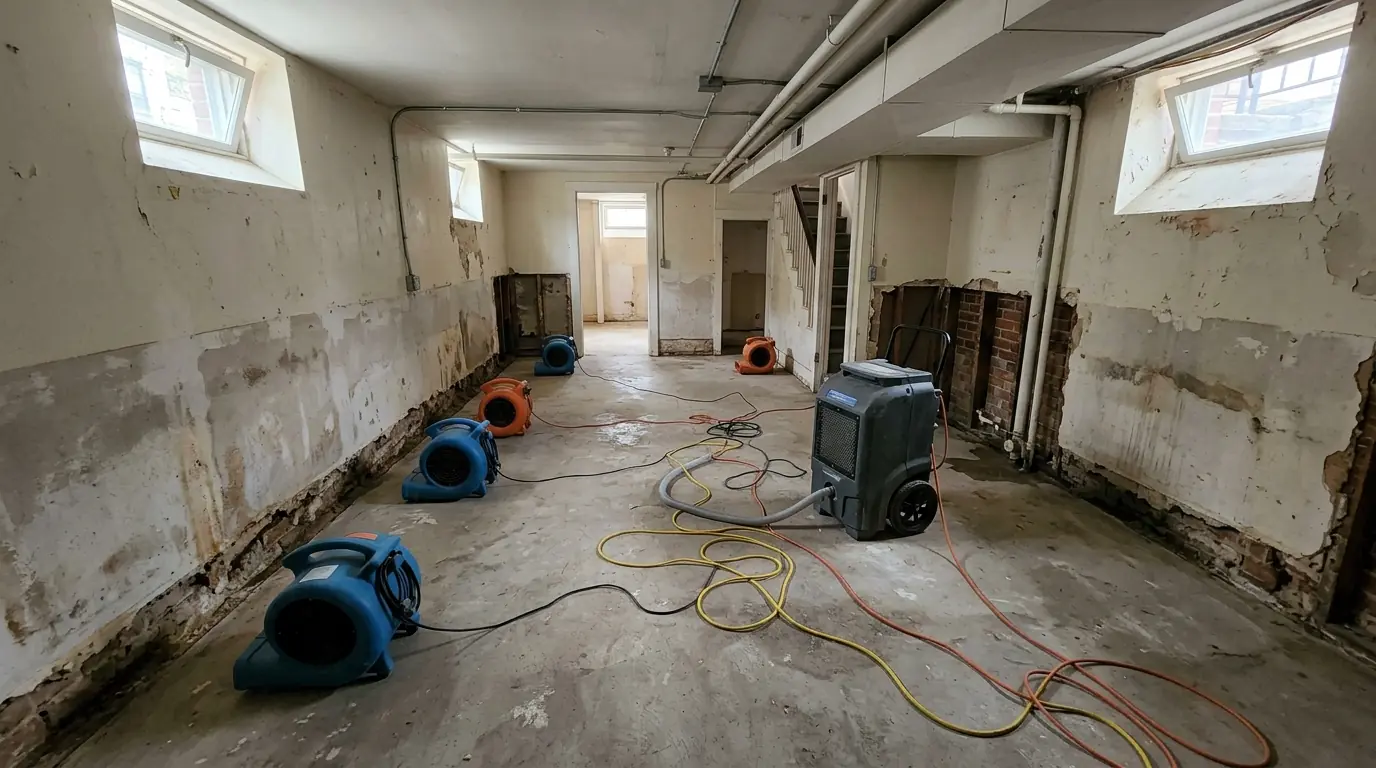
Air movers and a dehumidifier drying a DC basement apartment
Why do DC rowhouse top floors get so many ceiling leaks?
Most DC rowhouses have flat or low-slope roofs hidden behind brick parapets. Water is meant to run toward the back and drain through a scupper into a gutter and downspout. When leaves from street trees clog that scupper, water ponds against the parapet and finds its way in at the flashing, at cracked coping or at an old roof patch. Parapet walls are often shared with the neighbor, so a leak can start on the house next door.
Inside, ceilings are typically plaster on lath, which hides water longer than drywall but fails harder when it goes. Many rowhouses also gained a second-floor bathroom during a renovation, set over an original plaster ceiling with little margin for a slow drip. In apartment buildings and converted rowhouses, a leak from the unit above is as common as a roof leak, and our condo leak page covers how those jobs are coordinated. Summer thunderstorms and snow banked against parapets bring most of these calls.
Where we do this work: Washington, DC and nearby Maryland and Virginia, including:
What does ceiling leak cleanup and drying cost?
Cost depends on whether the ceiling is plaster or drywall, how much has to come down, and what is wet above it. These ranges do not include repairing the roof or plumbing itself.
| Small stain, cavity dried in place | $480-$1,290 |
|---|---|
| Drywall ceiling section removed and dried | $1,170-$2,840 |
| Plaster ceiling taken down in one room, lead-safe | $2,640-$6,350 |
| Top-floor ceiling plus wet attic insulation | $3,180-$7,460 |
These ranges are typical DC-area figures, not quotes; we price your ceiling after an on-site assessment. Compare ranges across all 40 services.
What moves the price
- Plaster or drywall
- Size of the wet area
- Insulation above the ceiling
- Lead-safe work on old paint
- Ceiling height and access
Related work we often do on the same job
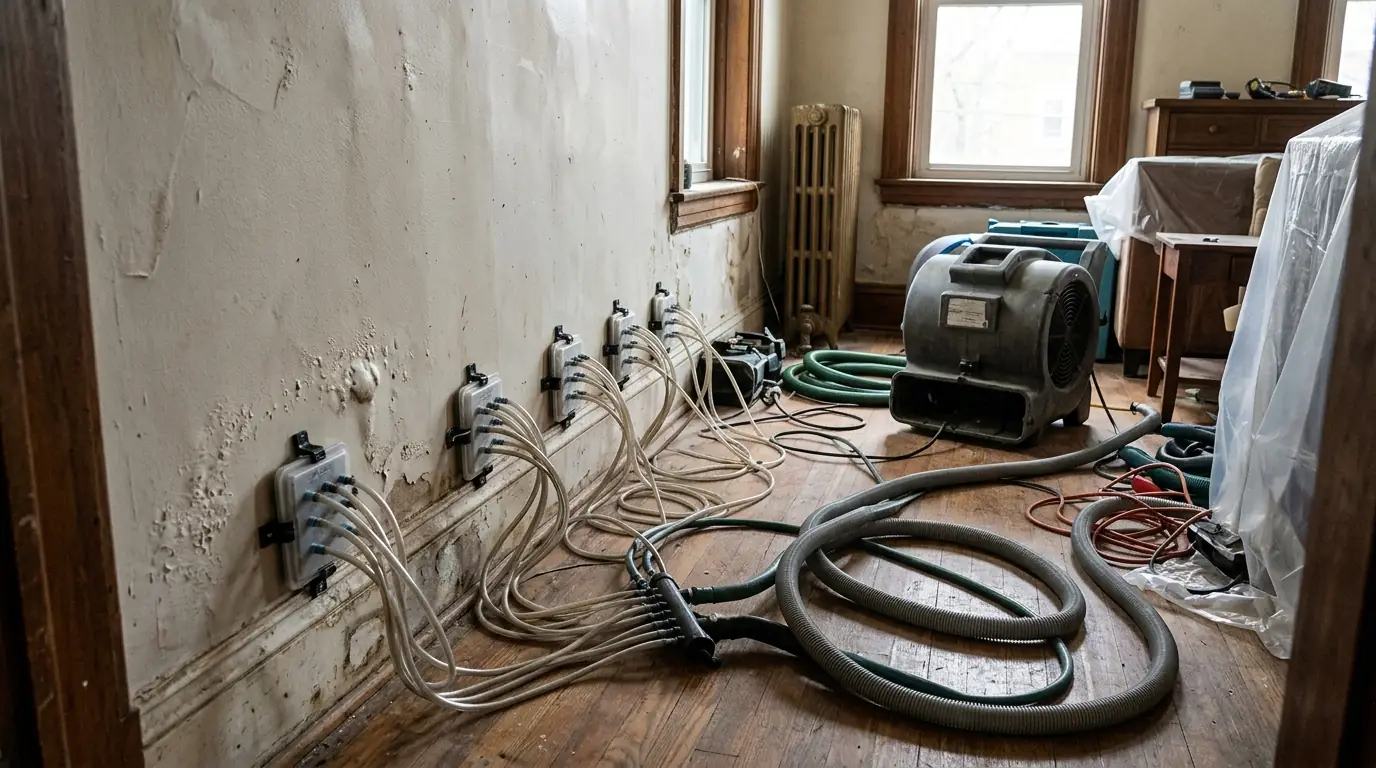
Structural Drying
Structural drying is the controlled removal of moisture from a building's framing, subfloor, wall cavities, plaster and masonry after a water loss.
How we handle it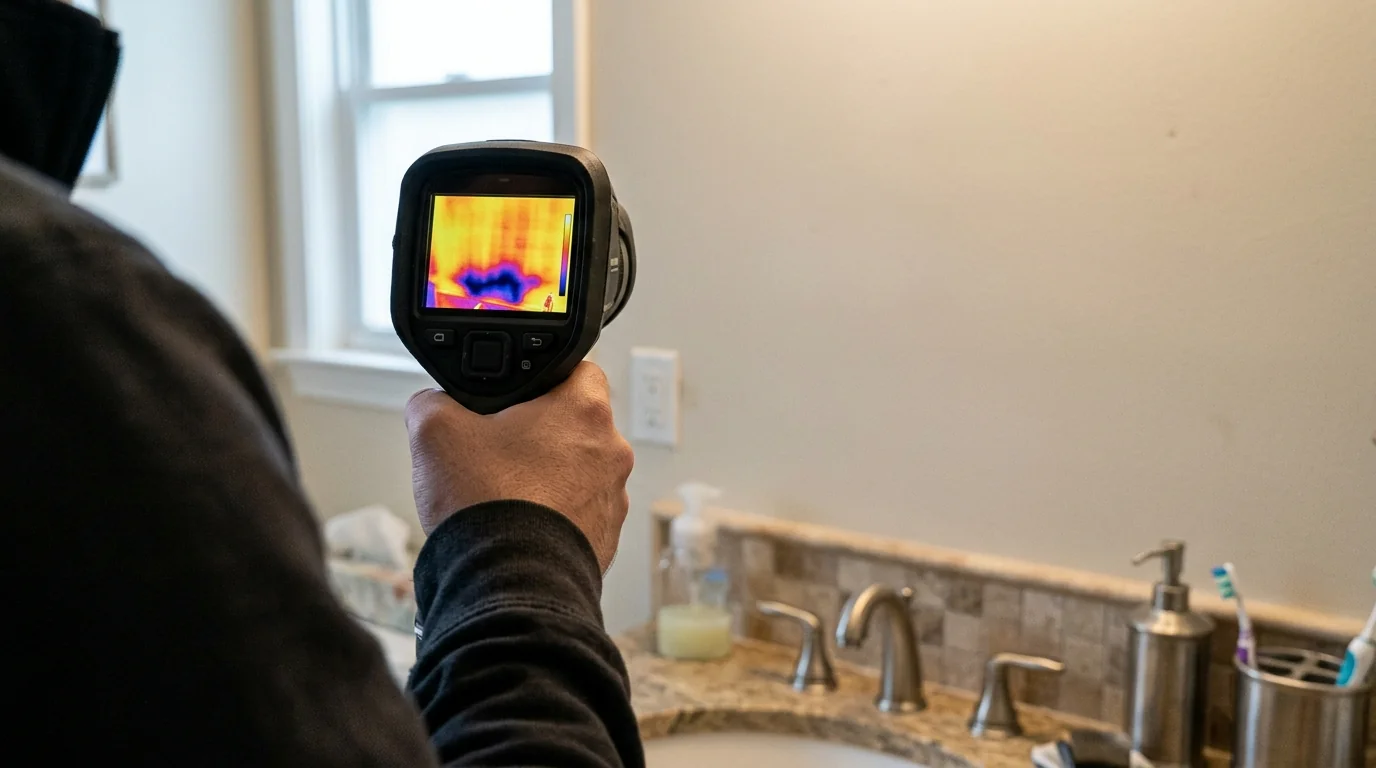
Moisture & Leak Detection
Moisture and leak detection is a non-invasive survey that finds where water is hiding in walls, ceilings and floors and how far it has spread.
How we handle it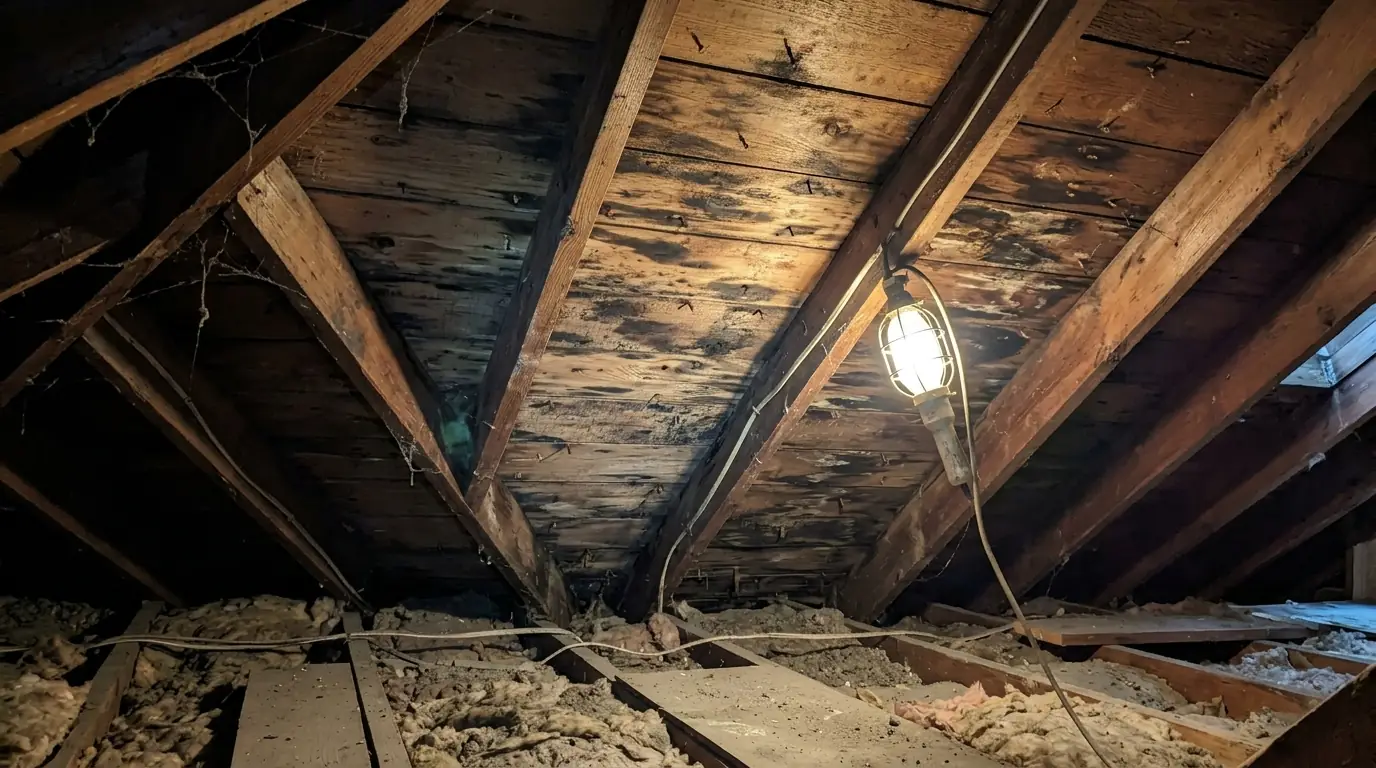
Attic Mold Removal
Attic mold removal cleans growth from roof sheathing, rafters and trusses, removes damaged insulation, and corrects the moisture source, which is usually household air leaking or being vented into the attic and condensing on cold wood in winter.
How we handle it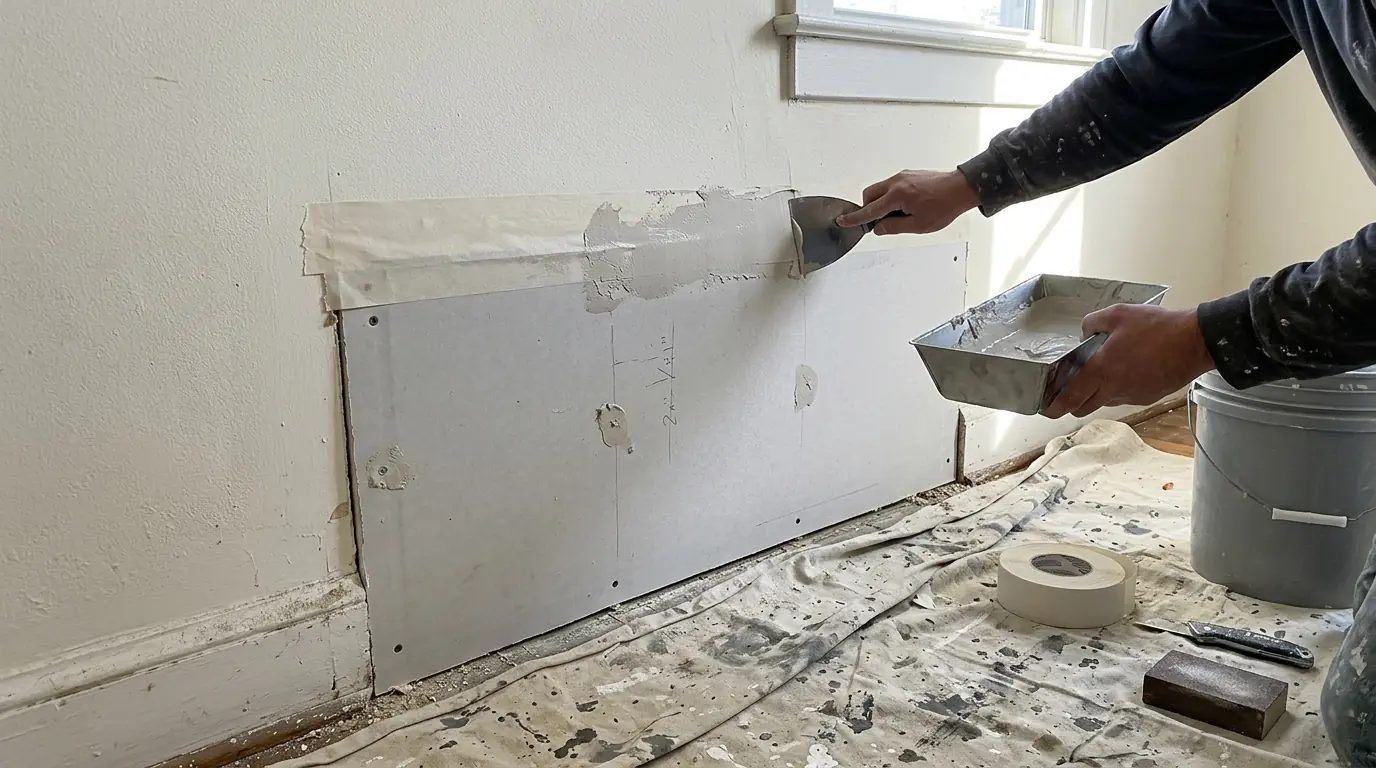
Damage Repair & Rebuild
Damage repair and rebuild is the work that restores a room after water, mold or fire mitigation is finished.
How we handle itQuestions homeowners ask about ceiling leak damage
Can a water-stained ceiling just be painted over?
Only once the ceiling and the space above it are confirmed dry with a meter, and only after the source is fixed. Then a stain-blocking primer goes on before the finish coat, or the stain will bleed through ordinary paint. Painting over a damp ceiling traps the moisture, and the stain and any growth behind it will come back.
Is my old plaster ceiling worth saving after a leak?
Often it is. If the plaster is still firmly keyed to the lath once it dries, a damaged area can be cut out and patched, and loose sections can be reattached with plaster washers and adhesive. If large areas have pulled away from the lath, replacing that ceiling with drywall or a veneer plaster system is usually the more sensible choice.
Does a slow roof leak get treated differently on a claim than a burst pipe?
Often, yes. Many homeowner policies cover sudden and accidental water damage but exclude damage from wear, lack of maintenance or leaks that went on for a long time. A roof that failed in a storm may be treated differently from one that dripped for months. Check your policy, and keep our photos and readings for the adjuster.
How long does a wet ceiling take to dry once it is opened?
A drywall ceiling with the cavity opened often dries in two to four days. Plaster, old lath and the heavy joists in older DC houses usually take longer, sometimes a week or more in humid summer weather. Our structural drying setup is checked on each visit, and the ceiling is not closed until framing matches dry reference readings.
Can water above the ceiling reach the electrical wiring?
Yes, which is why we treat a dripping light fixture as urgent. Water follows wiring and collects in fixture boxes, and the cloth-insulated or knob-and-tube wiring still found in some older DC houses tolerates it poorly. Shut off the circuit at the panel, leave the fixture off until it has dried and been checked by an electrician, and do not touch it while wet.
Water in the house or a musty room you can't explain?
Call JEC Restoration any time. We answer 24/7 and talk through what you are seeing before anyone touches a wall.