Water Damage
Wet carpet drying in Washington, DC: saving the carpet when the water allows it
Carpet can often be saved after a clean-water leak, but the pad underneath rarely can. We test the water, pull what has to go, and dry the carpet, tack strip and subfloor together.
Drying, air and detection equipment on our jobs comes from names like
- Dri-Eaz
- Phoenix
- B-Air
- Abatement Technologies
- Protimeter
- Delmhorst
- FLIR
- Benefect
- Concrobium
- Omnitec
- Sapphire Scientific
- Tramex
Wet carpet drying is the extraction and controlled drying of carpet, pad and the subfloor beneath them after a leak or flood. Whether the carpet is saved depends on the water: clean supply water usually allows drying in place, while gray water or sewage means the carpet and pad come out. Act within the first day or two. Call (202) 989-3053, day or night.
When can wet carpet be dried instead of replaced?
The source of the water decides most of it. The drying trade sorts water into three categories. Category 1 is clean water from a supply line, a burst pipe or a rain-fed leak that has not picked up contaminants. Category 2 is gray water, like a washing machine drain or a dishwasher discharge, which carries soap, food soil and bacteria. Category 3 is grossly contaminated water such as sewage or floodwater that came in from outside.
With Category 1 water caught early, the carpet itself is usually salvageable. With Category 2, cleaning and antimicrobial treatment can sometimes save it when the job starts quickly. With Category 3, porous materials that the water touched, including carpet and pad, are removed. Time also changes the category: clean water sitting for a couple of warm days in a basement can grow bacteria and move into Category 2.
Construction matters too. Woven-back and older carpet can shrink or come apart as it dries, and some loop styles stain from the backing as moisture wicks upward.
How can you tell carpet is still wet underneath?
Carpet can feel dry on top while the pad and subfloor below are still holding water.
Damp when you press with your palm
Push down hard for a few seconds. If your hand comes up cool or damp, the pad below is still wet even if the fibers feel dry.
Musty odor a day or two later
A sour or earthy smell that builds over time usually comes from wet pad and the subfloor, not the carpet face. Left alone, it can call for separate odor treatment later.
Ripples or loose sections
Wet carpet stretches and lifts off the tack strip. Once it dries in that state, it often stays wavy until it is restretched.
Brown or orange spots appearing
Rusting tack strip or tannins wicking up from wood below can surface as stains along walls and seams as the carpet dries.
Baseboards darkening at the bottom
Water travels up drywall from wet carpet. A dark band or soft spot just above the baseboard means the wall needs checking too.
Higher humidity in the room
A cheap hygrometer reading well above the rest of the house points to wet materials still releasing moisture.
How we dry wet carpet without making the damage bigger
The goal is a dry subfloor and a carpet that lies flat again, not just a dry-feeling surface.
Confirm the water category
We find the source and decide whether it is clean, gray or contaminated water. That answer sets everything that follows, including what can be saved.
Extract hard
Weighted or truck-mounted extraction pulls far more water out of carpet and pad than a shop vacuum. More water removed now means fewer days of drying later.
Lift the carpet and pull the pad
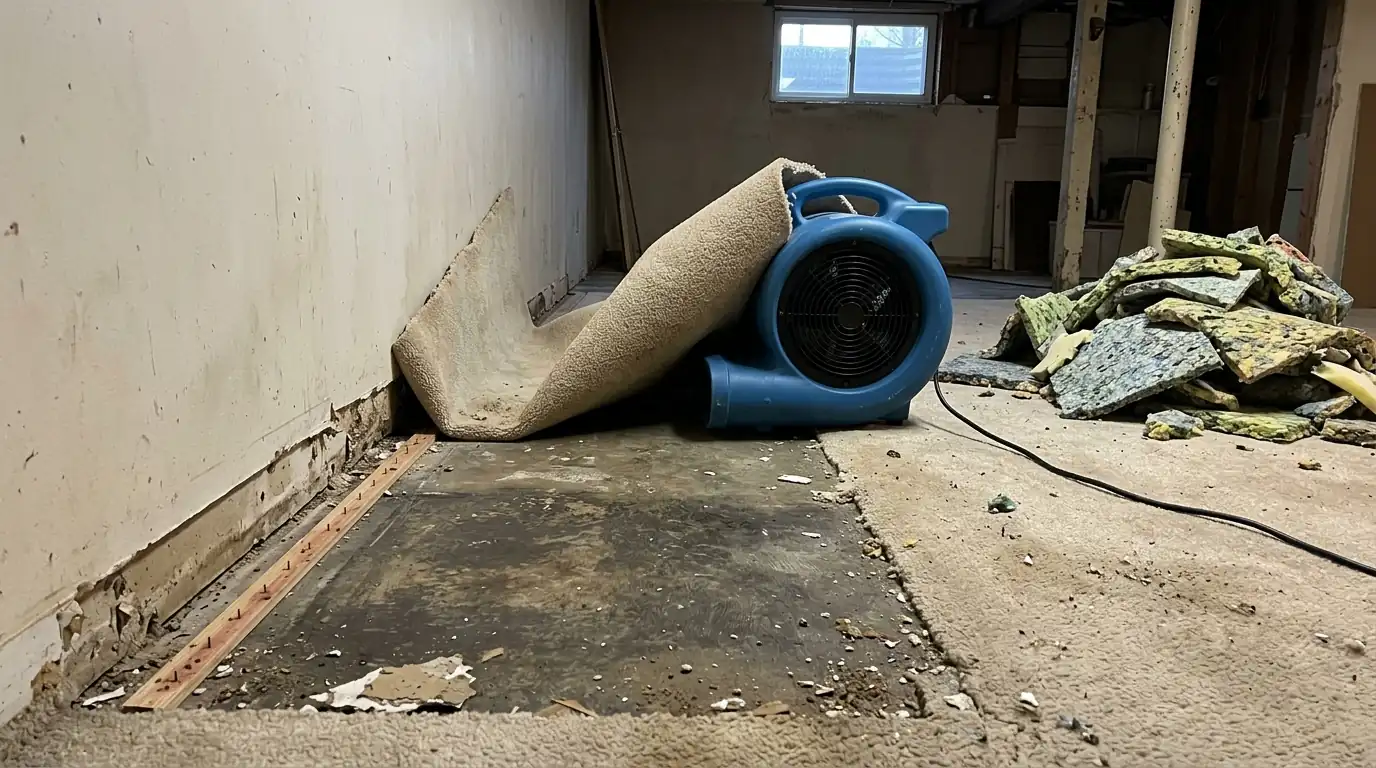
We release the carpet from the tack strip along the wet area, fold it back and cut out soaked pad. Readings mark where wet pad ends and dry pad begins.
Float and dehumidify
Air movers blow under the lifted carpet to float it while a dehumidifier pulls the moisture out of the room. Most clean-water carpet jobs dry in two to four days.
Reset and restretch
Once the subfloor reads dry, new pad goes down, damaged tack strip is replaced and the carpet is stretched back into place and cleaned.
Why does the carpet pad almost always get replaced?
Pad is a sponge by design. Rebond foam, the speckled kind found in most homes, absorbs a large volume of water and gives it up slowly. Drying a soaked pad in place takes far longer than drying the carpet over it, and the longer it stays wet the more likely it starts to smell. Pad is also inexpensive compared with the labor of drying it, so replacing it is usually the sensible call.
We cut out the wet section of pad, leaving dry pad in place where readings show it never got wet. With the pad gone, air can reach both the back of the carpet and the subfloor, which shortens the whole drying job by days (our guide on how long drying actually takes explains why). Shrinking a job's footprint this way also keeps the repair smaller when new pad goes in.
What happens to the tack strip and subfloor under wet carpet?
Tack strip is a thin wood lath with angled nails that grips the carpet edge along every wall. When it soaks, the wood can swell and the nails start to rust. Rusty tacks bleed orange stains into the carpet backing and lose their grip. On Category 1 jobs caught early, the strip often dries fine. Strip that is rusted, crumbling or soaked with dirty water gets replaced.
The subfloor is where hidden damage lives. Over plywood or old plank subfloor on an upper level, water runs along the gaps and into the joist bays. Over a concrete basement slab, the carpet sits on a surface that is already cool and damp, so moisture lingers. We read the subfloor with a pin meter at several points, and if it is wet we lift and float the carpet so dehumidified air can move between the layers.
When the water came from a basement flood rather than a single leak, the job is bigger than the carpet, and basement flood cleanup covers the walls and slab as well.
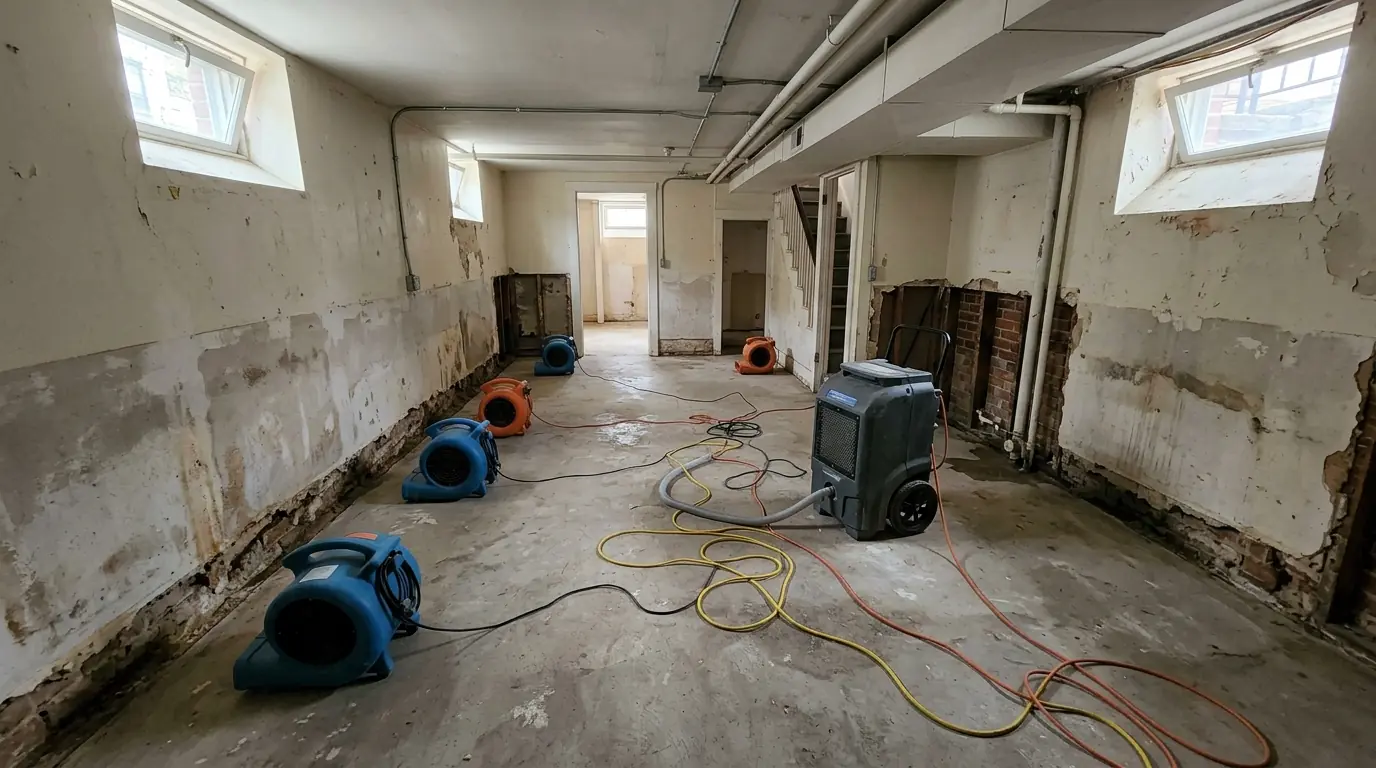
Air movers and a dehumidifier drying a DC basement apartment
Wet carpet in DC basements, rentals and older upper floors
Wall-to-wall carpet in DC tends to show up in two places: finished basements and the bedrooms of older rowhouses where it was laid over the original pine or oak. In English basements rented out as apartments, carpet often sits straight on the slab with thin pad, and a single heavy storm can push water under the front door from a clogged stairwell drain. The slab stays cool well into spring, so the carpet over it dries slowly unless the room is dehumidified.
Upstairs, carpet over old plank subfloor in a 1920s house hides a different risk. Water from a leaking radiator valve or an overflowing tub runs through the board gaps and into the plaster ceiling below. We check the room underneath every time. In detached houses across Montgomery and Prince George's counties, carpeted basement rec rooms built in the 1960s and 1970s often sit next to a sump pit, and a pump that fails during a downpour soaks the whole floor. If that keeps happening, a new sump pump with a backup is worth a look.
Where we do this work: Washington, DC and nearby Maryland and Virginia, including:
How much does wet carpet drying cost in the DC area?
Most of the cost is labor and equipment days, plus replacement pad and any tack strip.
| One bedroom, clean water, dried in place | $640-$1,580 |
|---|---|
| Finished basement rec room, clean water | $1,420-$3,360 |
| Gray water, carpet and pad removed, subfloor dried | $1,870-$4,640 |
| Whole floor with walls and ceiling below involved | $3,250-$8,180 |
These are typical DC-area ranges, not quotes; we price each carpet job after an on-site assessment and moisture readings. Compare ranges across all 40 services.
What moves the price
- Water category and how long it sat
- Square footage of wet carpet and pad
- Slab versus wood subfloor underneath
- Whether walls or the ceiling below got wet
- Furniture that has to be moved and blocked
Related work we often do on the same job
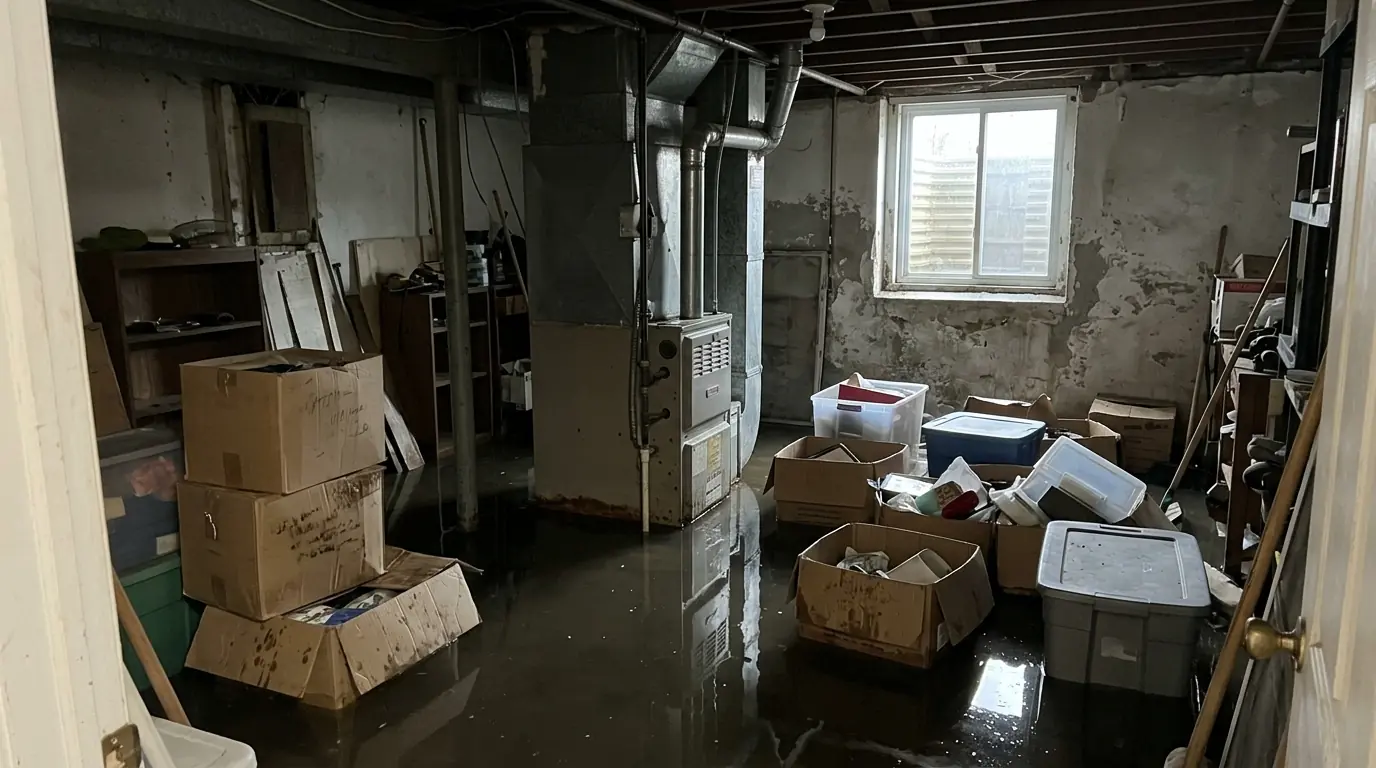
Flooded Basement Cleanup
Flooded basement cleanup removes water from a below-grade space, cleans and sanitizes what it touched, takes out finishes that cannot be saved, and dries the slab, walls and framing.
How we handle it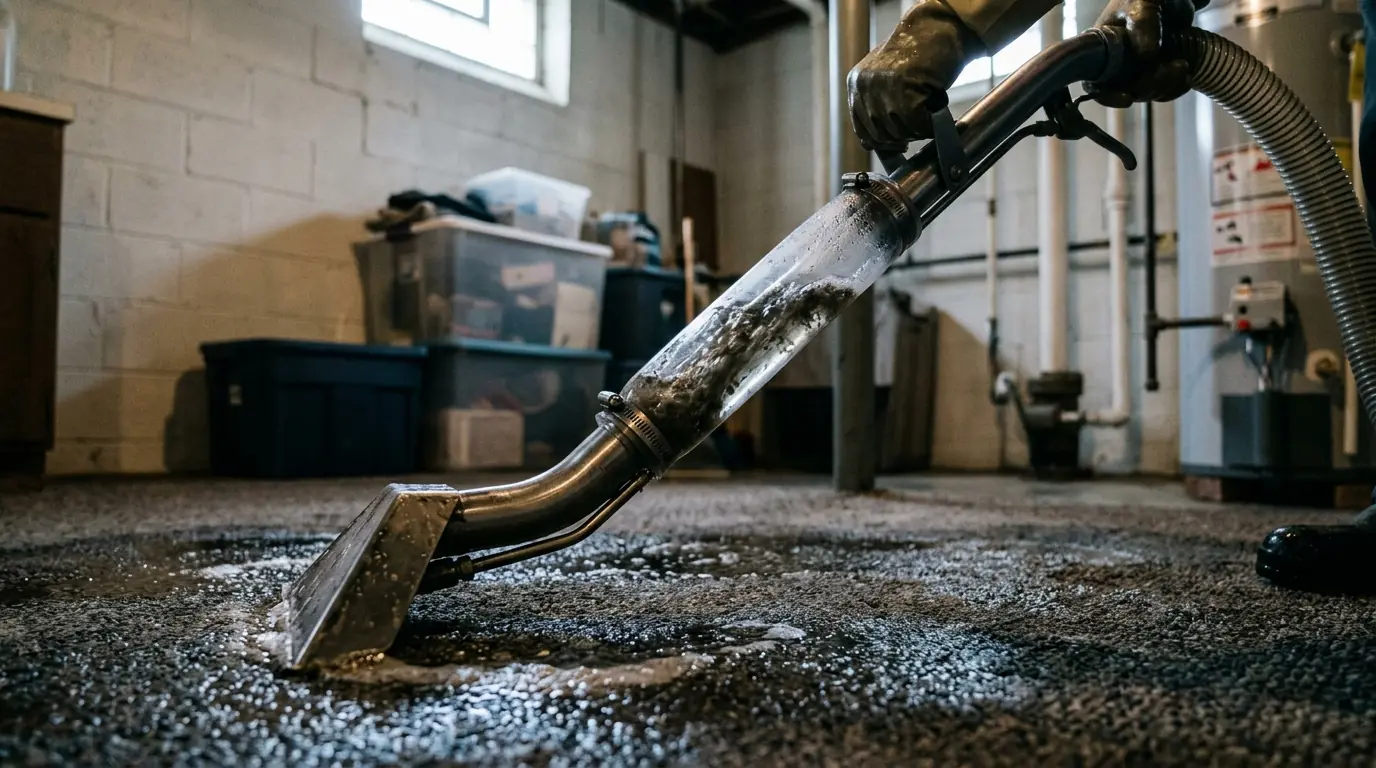
Emergency Water Removal
Emergency water removal is the first stage of a water job: shutting down the source, pumping out standing water, and extracting what has soaked into carpet, pad and hard floors before it moves into walls and subfloor.
How we handle it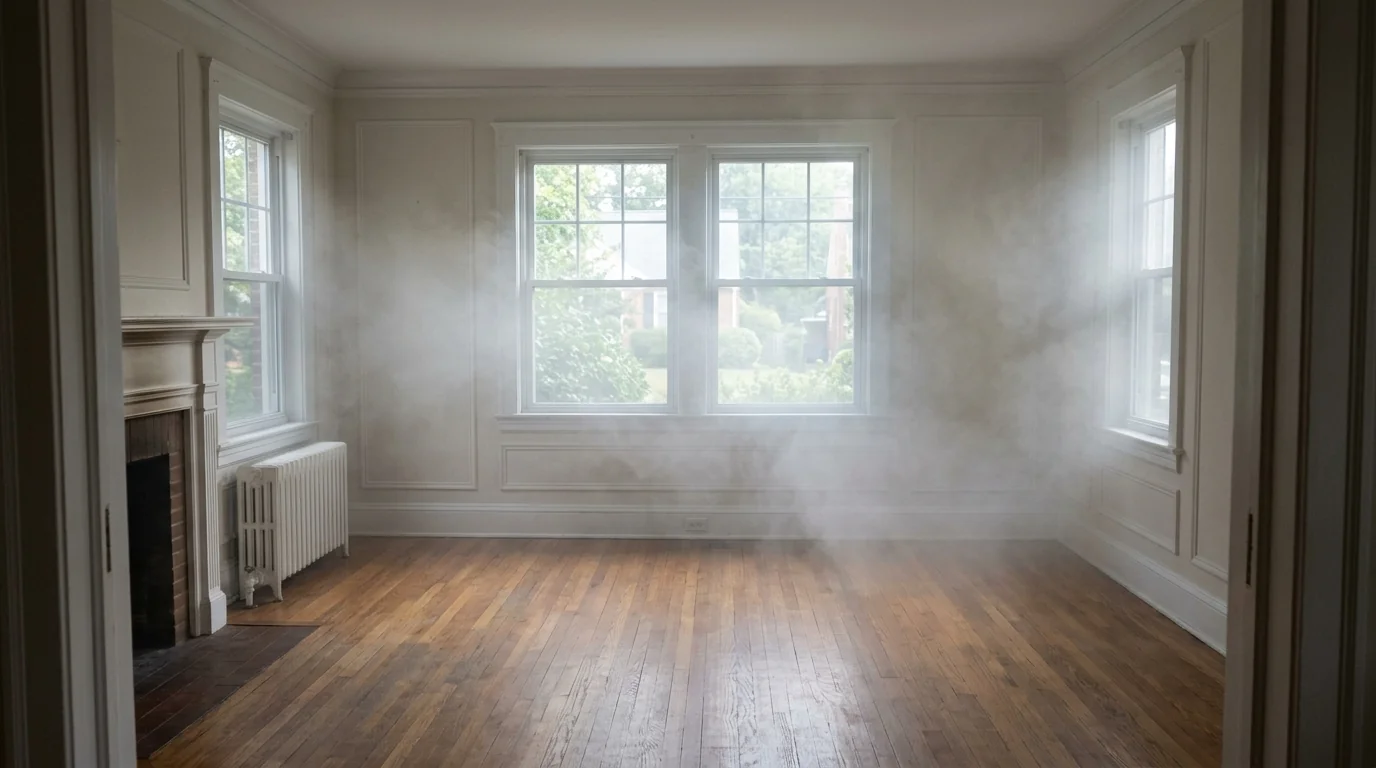
Odor Removal
Odor removal is the process of finding what's causing a persistent smell in a home, removing or cleaning that source, and then treating the remaining odor with methods like thermal fogging, hydroxyl generators or, in empty spaces, ozone.
How we handle it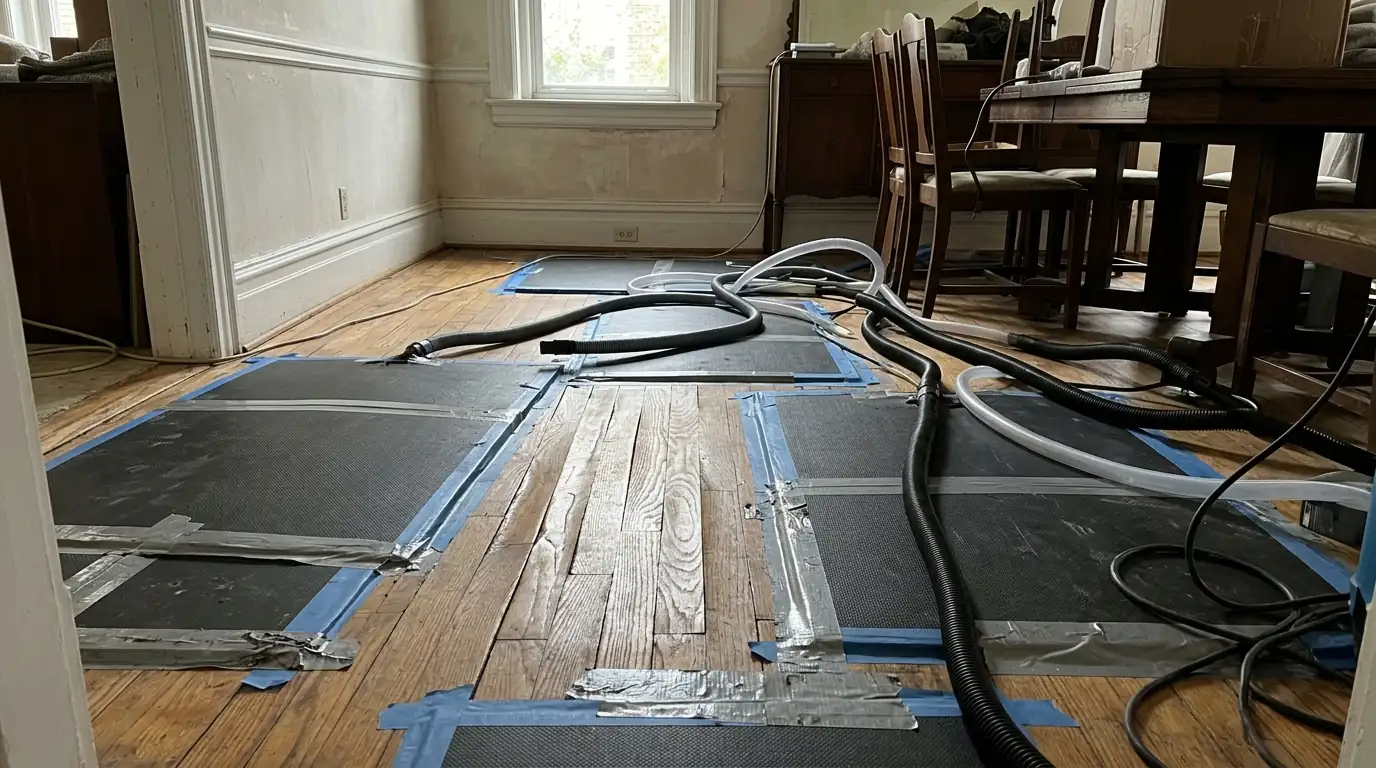
Hardwood Floor Drying
Hardwood floor drying removes water from solid wood flooring and the subfloor beneath it, usually with suction floor mats, dehumidifiers and steady monitoring.
How we handle itQuestions homeowners ask about wet carpet drying
Can I just rent a carpet cleaner and fans to dry it myself?
For a small spill on carpet over a dry room, sometimes. Rental machines leave much more water behind than professional extraction, though, and fans alone cannot reach soaked pad. If more than a small patch got wet, or the water came through a wall or ceiling, the pad and subfloor usually need lifting and dehumidification to dry before odor sets in.
Will my carpet shrink or come loose after drying?
It can. Carpet stretches when it gets wet and lifts off the tack strip, and some woven-back styles shrink as they dry. That is why we restretch after the subfloor is dry rather than before. Most carpet lies flat again once it is stretched with a power stretcher and reattached to sound tack strip.
Does wet carpet pad really have to be thrown out?
In nearly every case, yes. Pad holds a lot of water, dries far more slowly than carpet and costs little compared with the labor of drying it in place. Removing the wet section also lets air reach the subfloor directly. With gray water or sewage, the pad must come out because it cannot be reliably cleaned.
How do I know if the subfloor under the carpet got wet?
You usually cannot tell by touch. A pin meter driven into the plywood or concrete gives a reading we compare with a dry spot elsewhere in the house. Over a slab, we also tape plastic sheeting to the concrete overnight, since condensation under it shows that moisture is still coming up.
Is carpet that got wet from a washing machine overflow safe to keep?
Washer drain water counts as Category 2 because it carries soap, lint and body soil. If the job starts quickly, the carpet can sometimes be saved with hot water extraction and an antimicrobial, but the pad is replaced. If the water sat for more than a day or two in a warm room, replacement is often the safer call.
Water in the house or a musty room you can't explain?
Call JEC Restoration any time. We answer 24/7 and talk through what you are seeing before anyone touches a wall.