County we serve, MD
Water, mold & fire cleanup in Prince George's County, MD 20772
Prince George's County homes take on water from creek-side yards, tired sewer laterals and finished basements that were never built to stay dry. We dry, clean and rebuild after water, mold, fire and sewage damage across the county.
JEC Restoration handles water damage, mold remediation, fire and smoke cleanup and sewage backups in homes throughout Prince George's County, Maryland. Our headquarters is at 8604 Central Ave in Landover, inside the county. The phone is answered 24/7 at (202) 989-3053, and every job starts with moisture readings and a written scope before any demolition.
Which Prince George's County houses take on water, and why?
The county's housing splits roughly along the Capital Beltway. Inside it, towns like Mount Rainier, Brentwood, Cheverly, Riverdale Park and Capitol Heights hold houses from the 1920s to the 1950s: brick and frame bungalows, Cape Cods, small colonials and duplexes. Many have block or stone foundations, original cast-iron drain stacks and basements that were finished decades after the house went up, often with paneling or drywall fastened straight to a damp masonry wall.
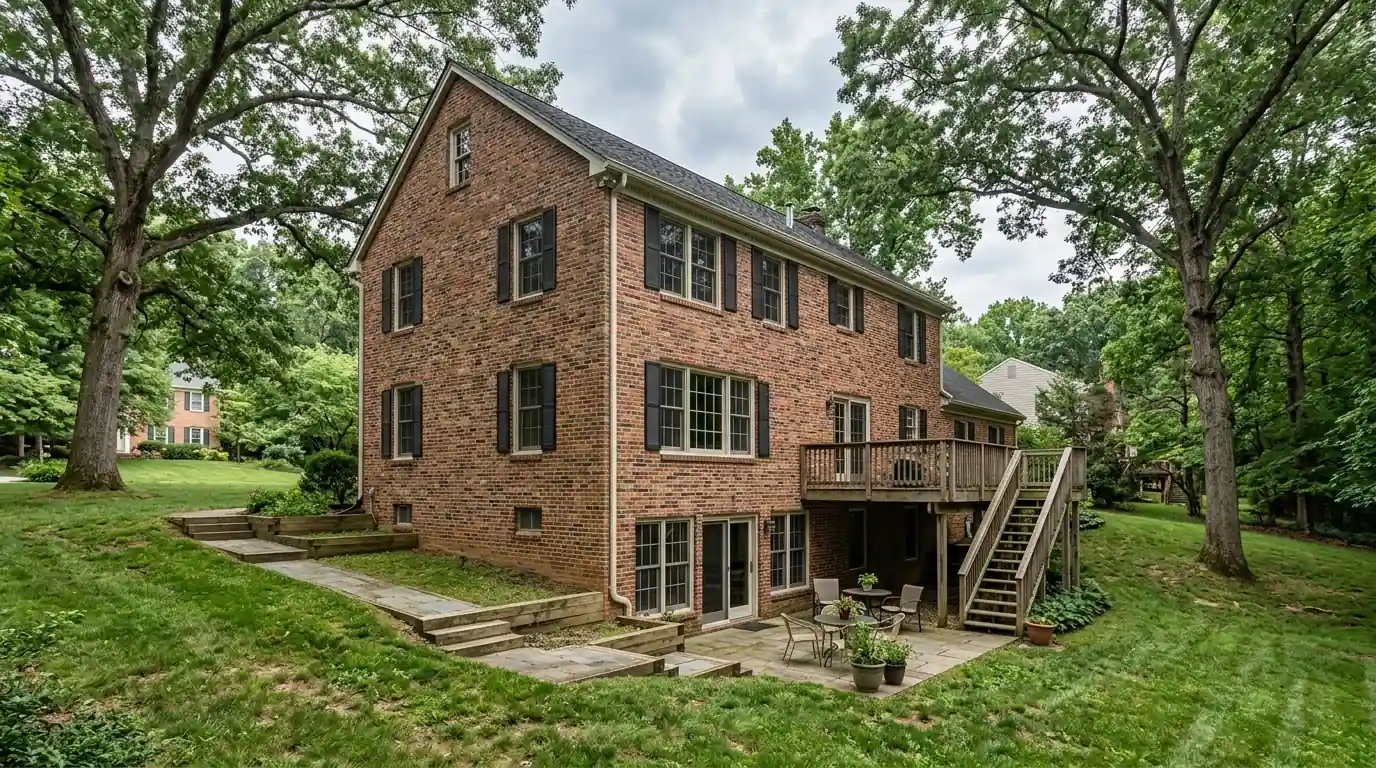
Outside the Beltway, the pattern changes. Post-war subdivisions in places such as Largo, Clinton and Fort Washington lean toward split-levels, ramblers and brick colonials from the 1950s through the 1980s, with sump pits, crawl spaces and lower levels set half into the ground. Then come the townhouse communities built from the 1970s onward, where one failed supply line can wet the unit next door through a shared wall. Each type fails in its own way, so the first thing we work out on a call is which kind of house we are standing in.
Most-called services in Prince George's County
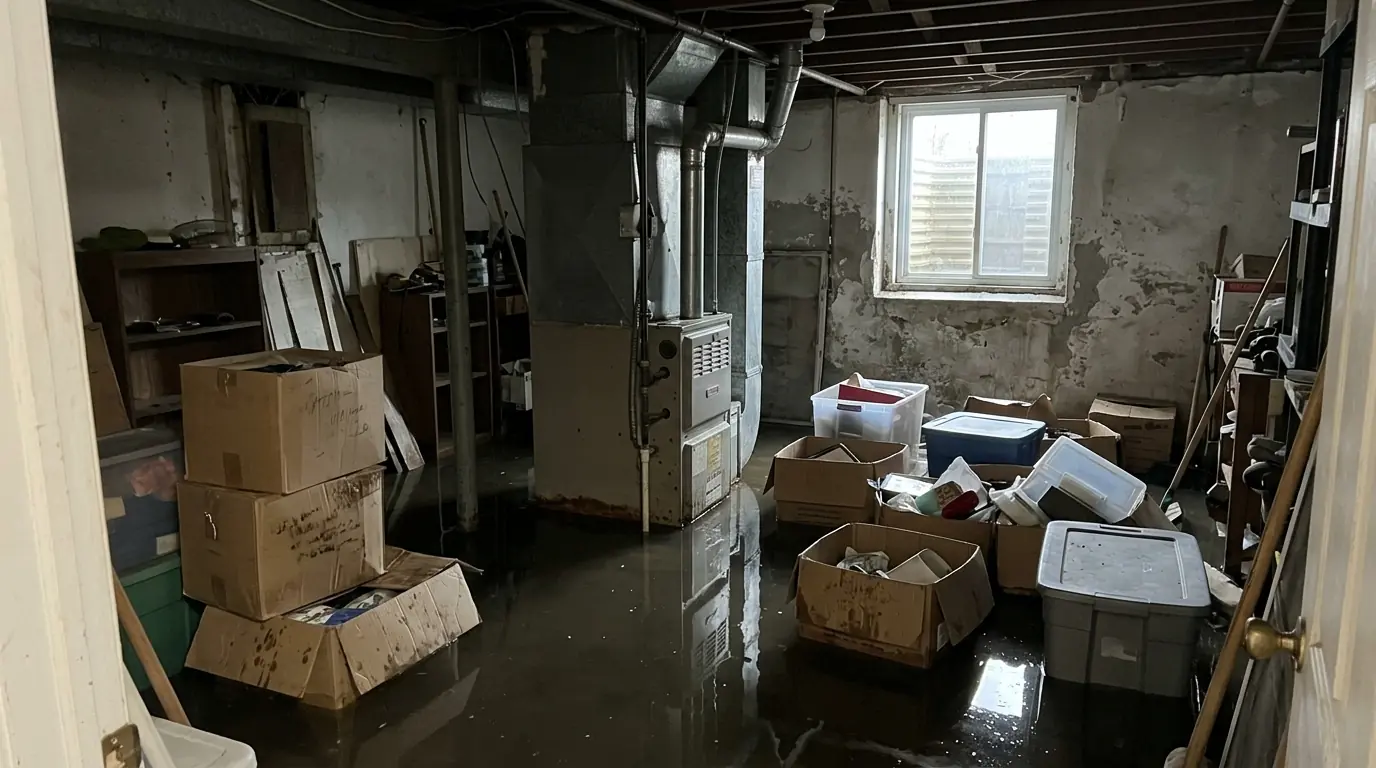
Flooded Basement Cleanup
Flooded basement cleanup removes water from a below-grade space, cleans and sanitizes what it touched, takes out finishes that cannot be saved, and dries the slab, walls and framing.
How we handle it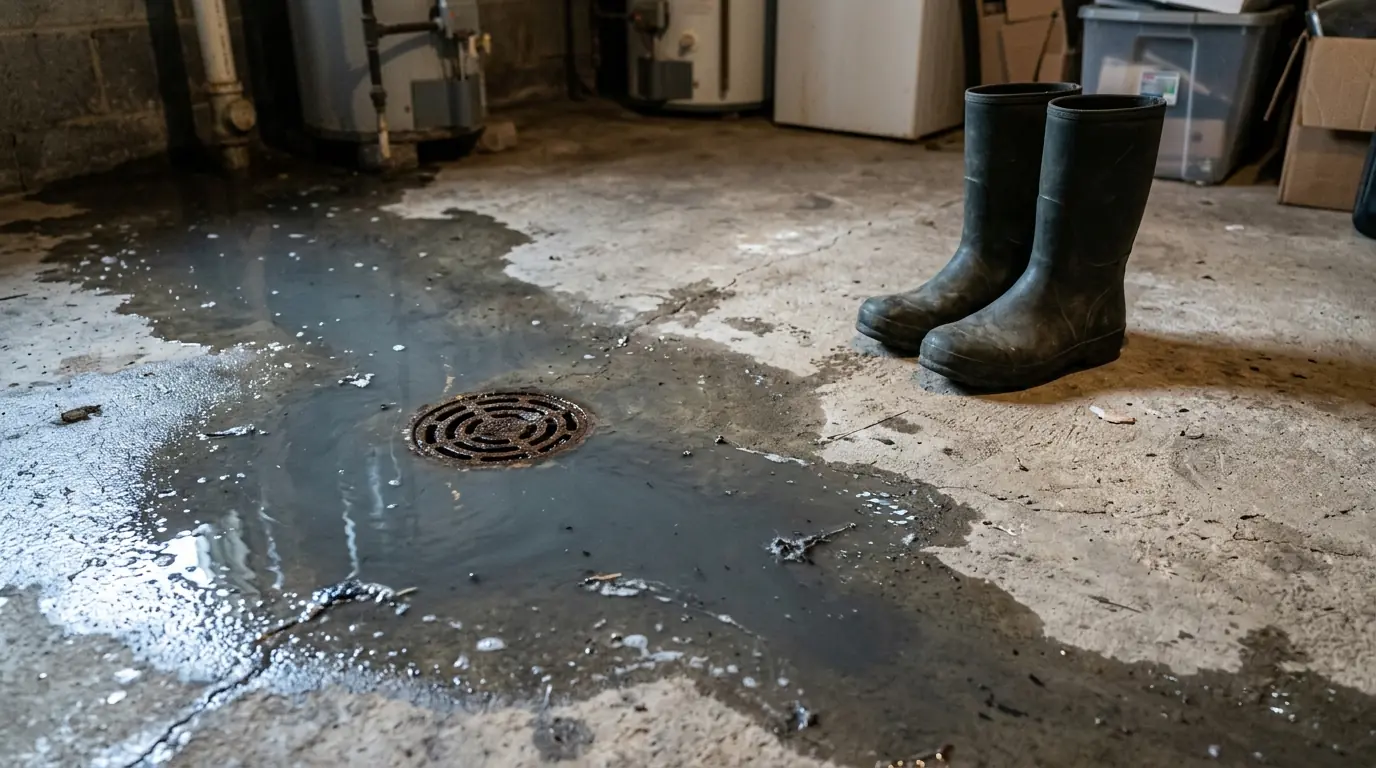
Sewage Backup Cleanup
Sewage backup cleanup is the removal of wastewater and the porous materials it soaked, followed by cleaning, disinfection and drying of the affected area.
How we handle it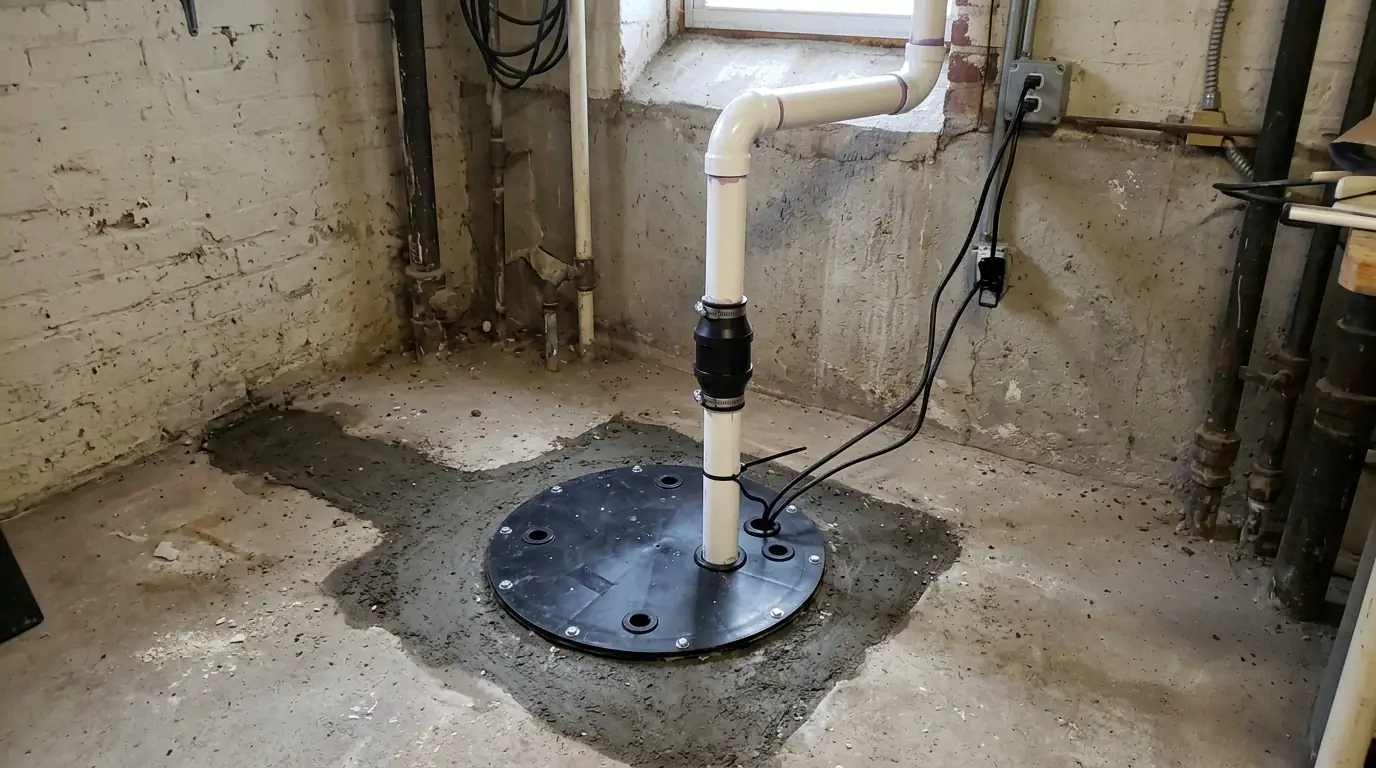
Sump Pump Installation
A sump pump sits in a lined pit at the low point of a basement and pumps out groundwater that collects there from under the slab or from a perimeter drain.
How we handle it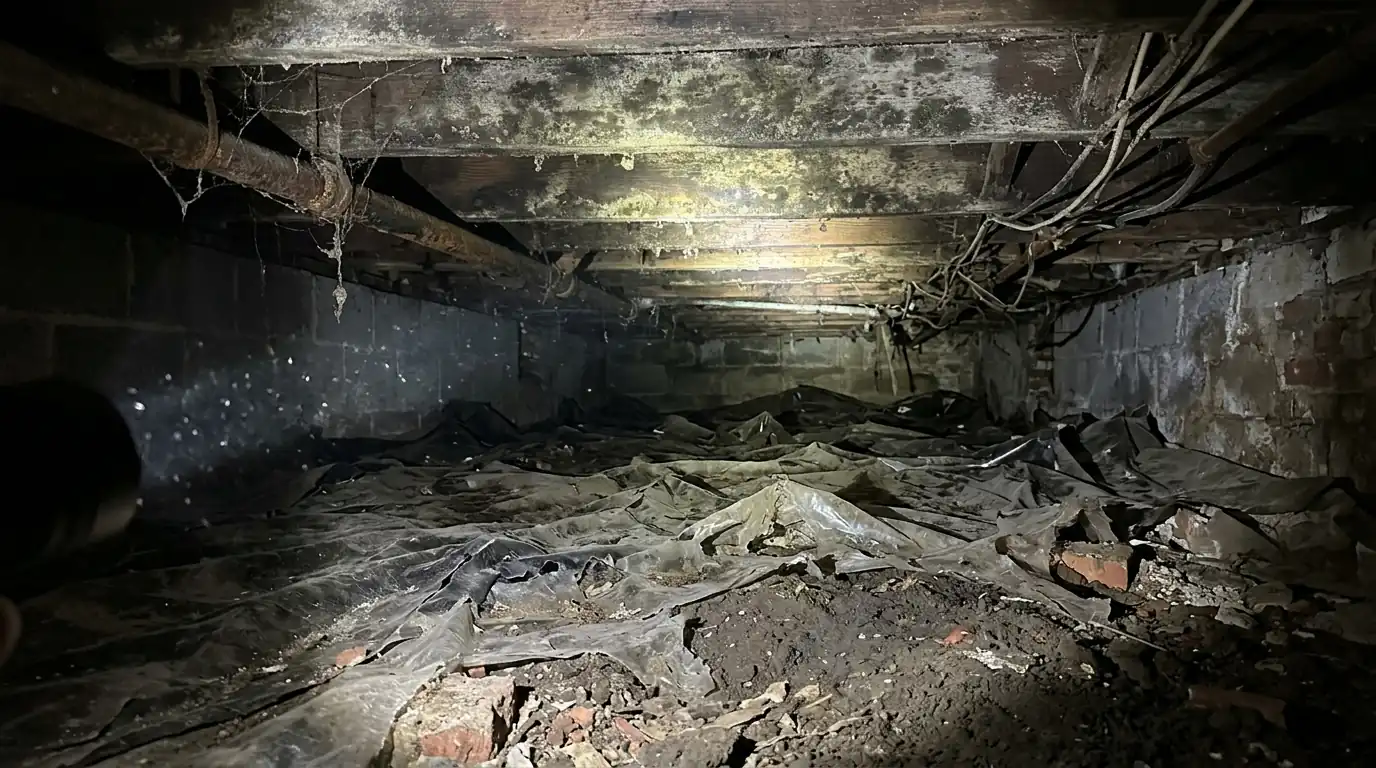
Crawl Space Mold Remediation
Crawl space mold remediation removes mold growth from the floor joists, subfloor, sill plates and beams under a house, then dries the wood so new growth does not start right away.
How we handle it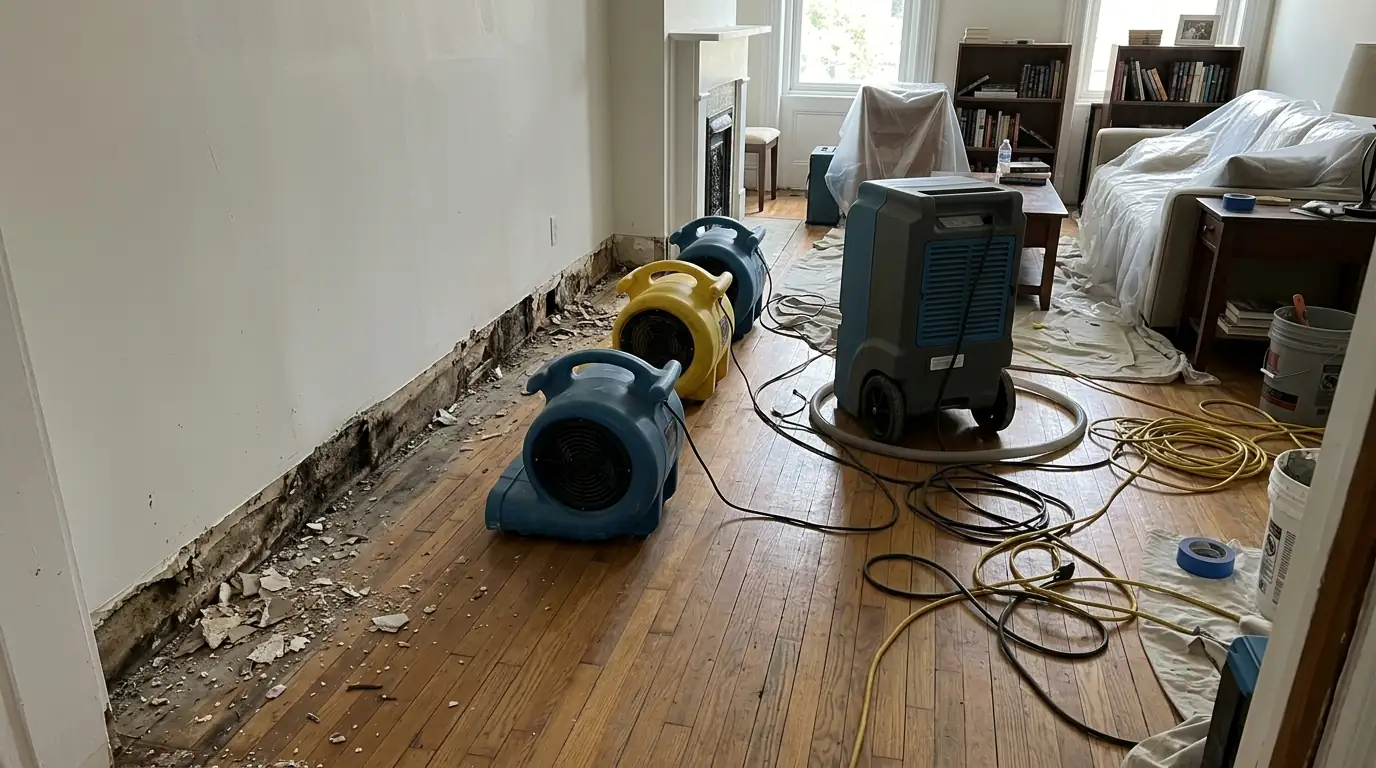
Water Damage Restoration
Water damage restoration is the full sequence after a leak or flood: stopping the source, extracting standing water, removing materials that cannot be saved, drying walls and floors with dehumidifiers and air movers, and logging moisture readings until they reach a dry standard.
How we handle itWhere does the water come from in a county laced with Anacostia tributaries?
The northern and western parts of the county drain toward the Anacostia River through the Northwest Branch, the Northeast Branch, Paint Branch, Sligo Creek and smaller runs such as Indian Creek. Houses built close to those stream valleys sit on low ground with a high water table, so a week of steady rain can push groundwater through slab cracks and the cove joint where floor meets wall. Summer thunderstorms are a different problem: they overwhelm street inlets and yard drains in minutes and send surface water down basement stairwells and window wells.
Farther south and east, the land drains toward the Patuxent and the Potomac, and the clay-heavy soils in many neighborhoods hold water against foundations long after a storm passes. Add January freezes that split pipes in crawl spaces and unheated additions, plus clay and cast-iron sewer laterals that crack with age, and you get a steady mix of Category 1 clean-water losses and Category 3 sewage jobs. When a line backs up, our sewage cleanup work treats every porous surface the water touched as contaminated.
Typical calls we get from Prince George's County
Split-level lower level after a sump failure
A sump pump quits during a long rain and the family room in a 1970s split-level takes an inch of groundwater. We extract the carpet and pad, pull baseboards, cut drywall above the wicking line and set low-grain dehumidifiers. The pit and discharge line get checked before we leave.
Sewer backup in an inside-the-Beltway bungalow
A clay lateral under a 1930s bungalow cracks and the basement floor drain overflows. We treat it as Category 3, remove the porous materials it touched, clean and disinfect the slab and walls, and recommend a camera inspection of the line.
Townhouse supply line leak through a shared wall
An ice maker line under a kitchen in a 1980s townhouse drips for days before anyone notices. Readings show the wet area runs into the adjoining unit, so we dry both sides with the neighbor's permission and document readings for the HOA.
Crawl space mold under a southern county rambler
A rambler near Clinton has a musty smell in the bedrooms and fuzzy growth on the floor joists below. We set up containment, HEPA vacuum and clean the framing, then talk through a vapor barrier or encapsulation so the crawl space stays drier.
How does a restoration job run here, from HOA townhouses to the county seat?
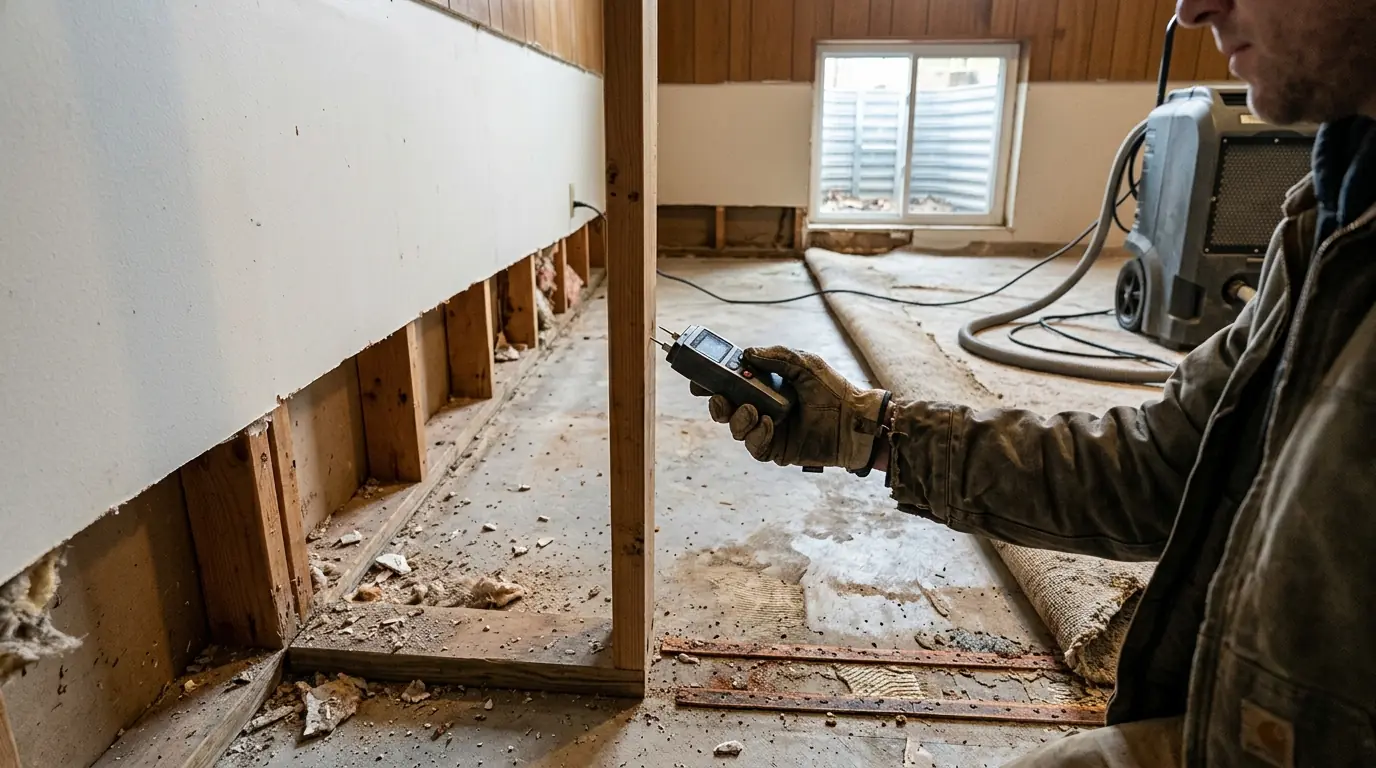
Townhouse and condo communities usually have an HOA or management company with its own rules about contractors, parking and shared walls. We photograph the damage, map the wet area with a pin meter and a thermal camera, and give you a moisture log you can pass to the association and your adjuster. If water crossed a party wall, we ask permission to check the neighbor's side too, because drying only half a wall leaves the wet half to grow mold.
Single-family jobs are easier to stage but often larger. A finished basement in a split-level may need carpet pulled, baseboards removed and the bottom two feet of drywall cut out so air can reach the studs. Sudden pipe bursts are often covered by homeowners policies, while slow leaks, surface flooding and sewer backups often need separate coverage or an endorsement, so check your policy before demolition starts.
The work looks the same from the inner suburbs near the DC line to Upper Marlboro, the county seat in ZIP 20772. Five communities have their own pages with local detail: Hyattsville and its historic district, College Park near the university, the Levitt neighborhoods of Bowie, Landover along Central Avenue and the cooperative rows of Greenbelt.
Typical homes in this part of the DC area
Nearby areas we also cover
Questions from Prince George's County homeowners
Do you cover the whole county, from Laurel down to Fort Washington?
Yes. We take calls from every part of Prince George's County, including the Route 1 towns, the Beltway suburbs, Bowie, Upper Marlboro and the communities along the Potomac. The phone is answered 24/7 at (202) 989-3053. We ask a few questions about the water source and how long things have been wet, so the crew brings the right extraction and drying equipment.
Why does my finished basement near a stream valley keep getting wet after long rains?
Houses built near the Northwest Branch, Sligo Creek or Paint Branch often sit on low ground where the water table rises after several days of rain. Water then seeps through slab cracks and the joint where floor meets wall. Drying fixes the current damage, but an interior drain with a sump, better grading or longer downspout extensions is what stops the next round.
What should I do first if sewage comes up through my basement drain?
Keep people and pets out of the area, and stop using sinks, toilets and the washer so no more water goes down the line. If the air handler sits in that basement, turn the system off. Skip the mop and household cleaners, take photos for your records, then call us. Sewage is Category 3 water, and porous materials it touched are usually removed.
Water or mold trouble in Prince George's County?
Call JEC Restoration any time. We answer 24/7 and talk through what you are seeing before anyone touches a wall.