Mold Remediation
Mold behind drywall and plaster in Washington, DC homes
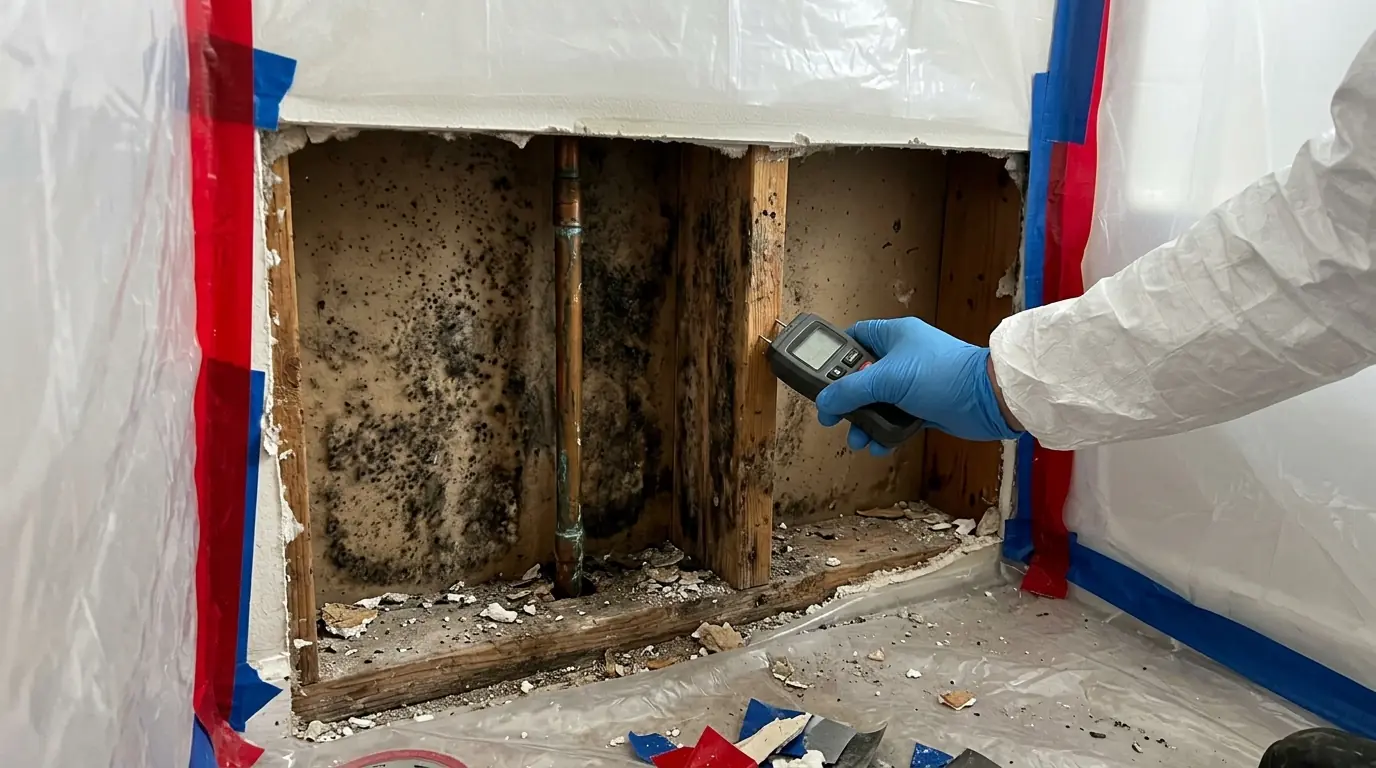
A slow leak inside a wall can feed mold for months before anything shows on the paint. We locate the wet cavity with meters and a thermal camera, open it under containment and remove what has grown.
Drying, air and detection equipment on our jobs comes from names like
- Dri-Eaz
- Phoenix
- B-Air
- Abatement Technologies
- Protimeter
- Delmhorst
- FLIR
- Benefect
- Concrobium
- Omnitec
- Sapphire Scientific
- Tramex
Mold behind drywall grows on the back of the paper facing, on studs and on insulation inside a wall that has stayed damp from a slow leak, condensation or an old flood. You need this service when a stain keeps spreading, paint bubbles or peels, or one wall smells musty. We confirm the wet area, open the wall under containment, remove the growth and dry the cavity.
How does mold get started inside a wall without anyone noticing?
Hidden wall mold almost always traces back to a small, steady water source rather than a dramatic flood. A pinhole in a copper supply line, a shower valve that weeps a little every time it is used, a drain joint behind a vanity or an ice maker line behind the refrigerator can wet a cavity for months. From the outside, failed window flashing and saturated brick do the same thing more slowly.
Drywall makes an easy food source because its facing is paper. The back of that paper sits in a dark, still cavity, and water wicks up from the bottom plate into the gypsum. Paint, vinyl wallpaper and tile on the room side slow down drying, so the back of the board can carry heavy growth while the front looks almost normal. By the time a stain bleeds through, the cavity has usually been wet for a long while. That is also why repainting a stain rarely works: the moisture behind it is still there.
How we open, clean and close a moldy wall
The first cut is the moment spores get disturbed, so the setup comes before it.
Map the wet area
We take pin and pinless meter readings across the wall and compare them with a dry wall elsewhere in the house. The thermal camera shows the shape of the wet zone, and we mark it with tape.
Build containment
Plastic sheeting, a zipper door and a negative air machine with HEPA filtration go up before any cutting. Floors along the path are covered, and even a small opening gets its own containment cell.
Open and remove
Drywall is cut out past the growth and bagged inside the containment. Wet insulation comes out of the bays at the same time.
Clean the framing
Studs and plates are HEPA vacuumed, then sanded or wire-brushed where growth has stained the surface and wiped with an antimicrobial. We probe for soft wood and log stud moisture.
Dry, verify and close
Air movers and a dehumidifier run until the framing reads dry. A clearance check can confirm the area before the wall is closed, and once the leak is fixed, patching, taping and paint finish the job.
Drywall, plaster on lath and plaster on brick: why the wall type changes the job
Drywall is the simplest case. We cut it out past the edge of the growth and the wet zone, bag it inside containment and replace it later. Gypsum board is inexpensive and cannot be cleaned once mold has grown into the paper, so cutting is the right call.
Plaster on wood lath, common in DC houses built before the 1940s, behaves differently. The plaster itself is mineral and rarely supports much growth, but the wood lath and framing behind it can. Removing plaster is heavy, dusty work, and in homes built before 1978 the paint layers may contain lead, so we use lead-safe practices: plastic sheeting, misting and HEPA vacuums. Where readings show a plaster wall is wet but the cavity has no growth, it can often be dried in place instead of torn out.
Plaster applied straight onto brick, typical of rowhouse party walls and exterior walls, has no cavity at all. Mold there grows on the paint or wallpaper surface, and the lasting fix is stopping the moisture moving through the brick.
Which wall symptoms usually mean something is growing behind the surface?
One of these alone may be minor; two or more on the same wall is worth checking.
Stains that spread or ring
Tan or brown rings that grow slowly, or that return through fresh paint, mean water is still reaching the board.
Bubbling or peeling paint
Blisters that hold water, or paint lifting at a corner or along the baseboard, point to moisture behind the surface.
Musty smell at one wall
An odor concentrated in a closet, behind a dresser or beside a bathroom is often coming from the cavity, not the room.
Soft or crumbling drywall
Board that gives when pressed near the floor, or a baseboard that has swollen, has been wet for a long time.
Gaps along the baseboard
Baseboards pulling away, cracked caulk and nail pops along one stretch of wall can follow a slow leak.
Spots inside cabinets
Growth on the back panel of a vanity or kitchen sink cabinet often means the wall behind it is affected too.
Why we cut inspection openings before we demolish anything
Meters and a thermal camera tell us where a wall is wet. They do not tell us whether anything is growing behind it. So before deciding how much wall comes out, we look inside. The usual method is to pull the baseboard and cut a small opening behind it, where the patch will be hidden later, or to drill a hole and look through a borescope.
Seeing the cavity prevents two mistakes: tearing out a whole wall when the growth covers a foot of one stud bay, and patching a small hole while growth continues two bays over. It also shows us the water source. If the cause is not obvious, tracing the leak comes before removal, because cleaning a wall that is still getting wet only resets the clock. Inside the opening we check:
- The back of the drywall paper and the gypsum core
- Studs, bottom plate and any blocking
- Insulation in the bay
- Exterior sheathing or the back of the brick
- Pipe joints, valves and drain fittings
How big is the mold patch?
Measure the visible growth and enter it in feet. The EPA uses about 10 square feet as the line between a homeowner cleanup and a job that needs containment.
Measure the visible growth, including any faint edges.
Growth inside walls, in ductwork or after sewage or floodwater needs professional cleanup at any size.
What does it cost to remove mold from inside a wall in DC?
Wall jobs are priced by the area opened and the wall type, with the rebuild listed separately.
| Small opening, under 10 sq ft of growth | $780-$1,690 |
|---|---|
| One wall or a closet, about 10 to 30 sq ft | $1,840-$3,960 |
| Several walls in a room, or plaster on lath | $4,120-$8,350 |
These are typical DC-area ranges, not quotes; we price your wall after seeing it on site, and patching and paint are a separate line. Compare ranges across all 40 services.
What moves the price
- Drywall or plaster and lath
- Square footage of wall opened
- Lead-safe work on older paint
- Insulation inside the cavity
- Drying time before closing
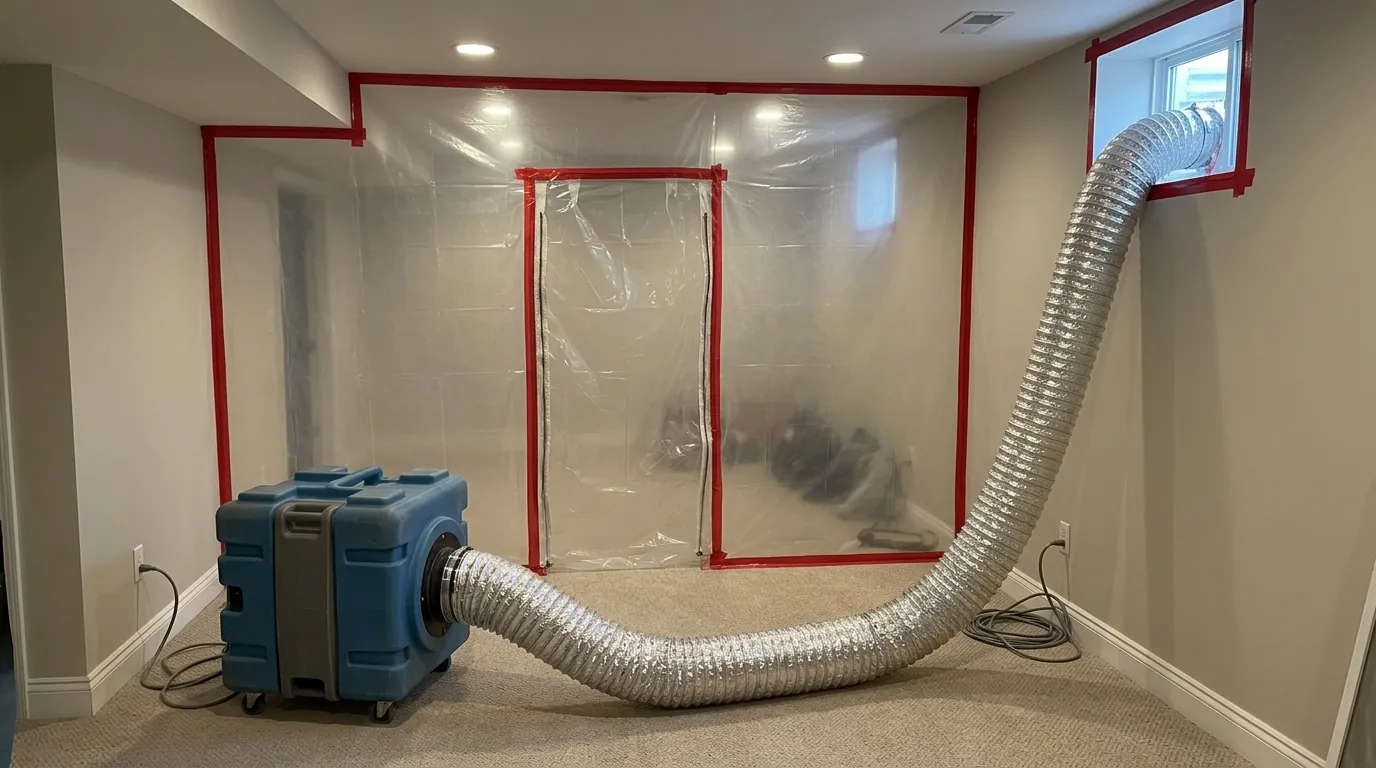
Sealed containment with HEPA filtration on a basement mold job
Hidden wall mold in DC rowhouses, condos and postwar houses
In rowhouses, hidden wall mold often starts at the top. A parapet or flat-roof leak sends water down the inside face of a brick wall, behind the plaster, and the first sign is a stain at the top-floor ceiling line or a musty corner in a bedroom. Gutters that spill against the side of an end unit do the same lower down. On Capitol Hill and in similar neighborhoods, we also see it in English basements where a renovation furred out drywall over damp brick or block with no gap or barrier between them.
Condo conversions stack bathrooms and kitchens directly above one another, so a slow leak in the unit upstairs can travel down a wall cavity into yours before anyone notices. Our guide to water coming from the unit above covers the first steps. In the detached colonials and Tudors of upper Northwest, the usual culprit is failed window or door flashing letting wind-driven rain into the wall.
Where we do this work: Washington, DC and nearby Maryland and Virginia, including:
Related work we often do on the same job
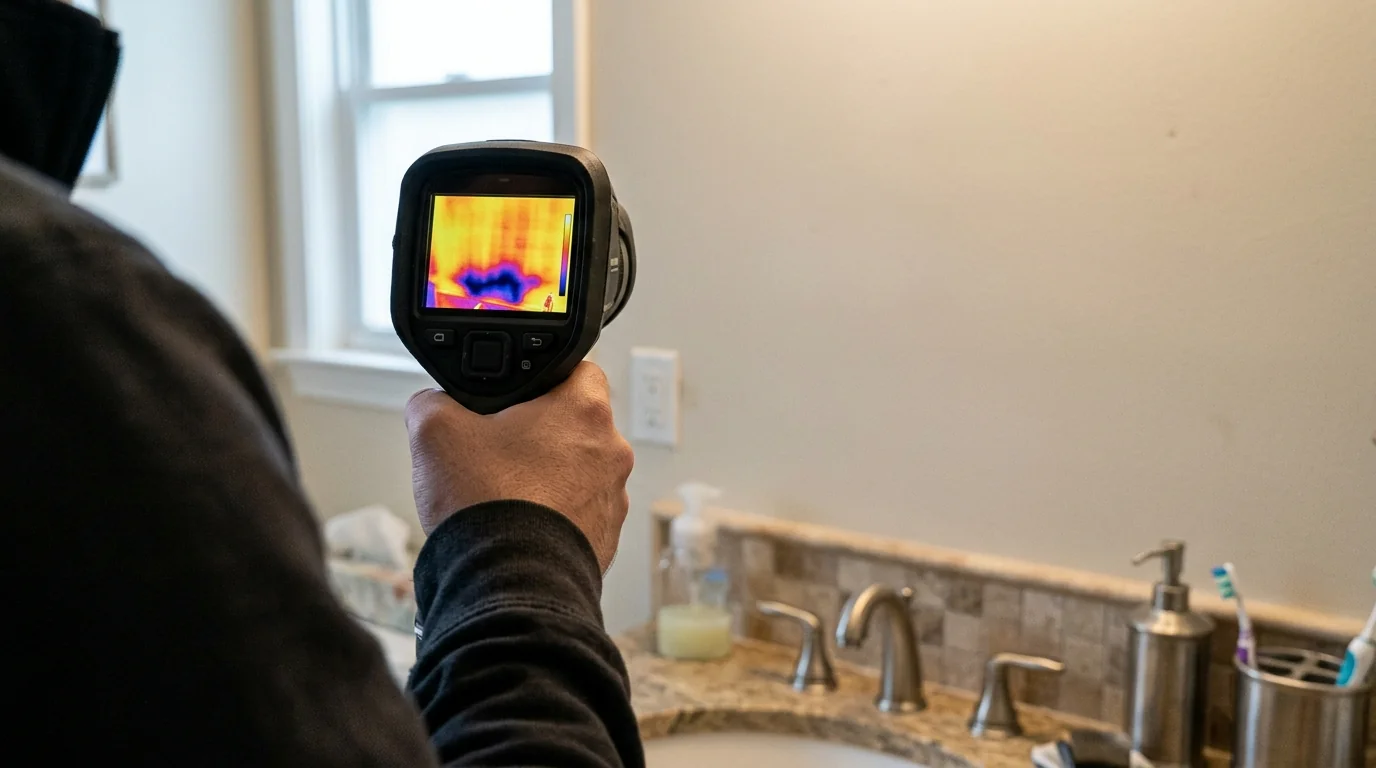
Moisture & Leak Detection
Moisture and leak detection is a non-invasive survey that finds where water is hiding in walls, ceilings and floors and how far it has spread.
How we handle it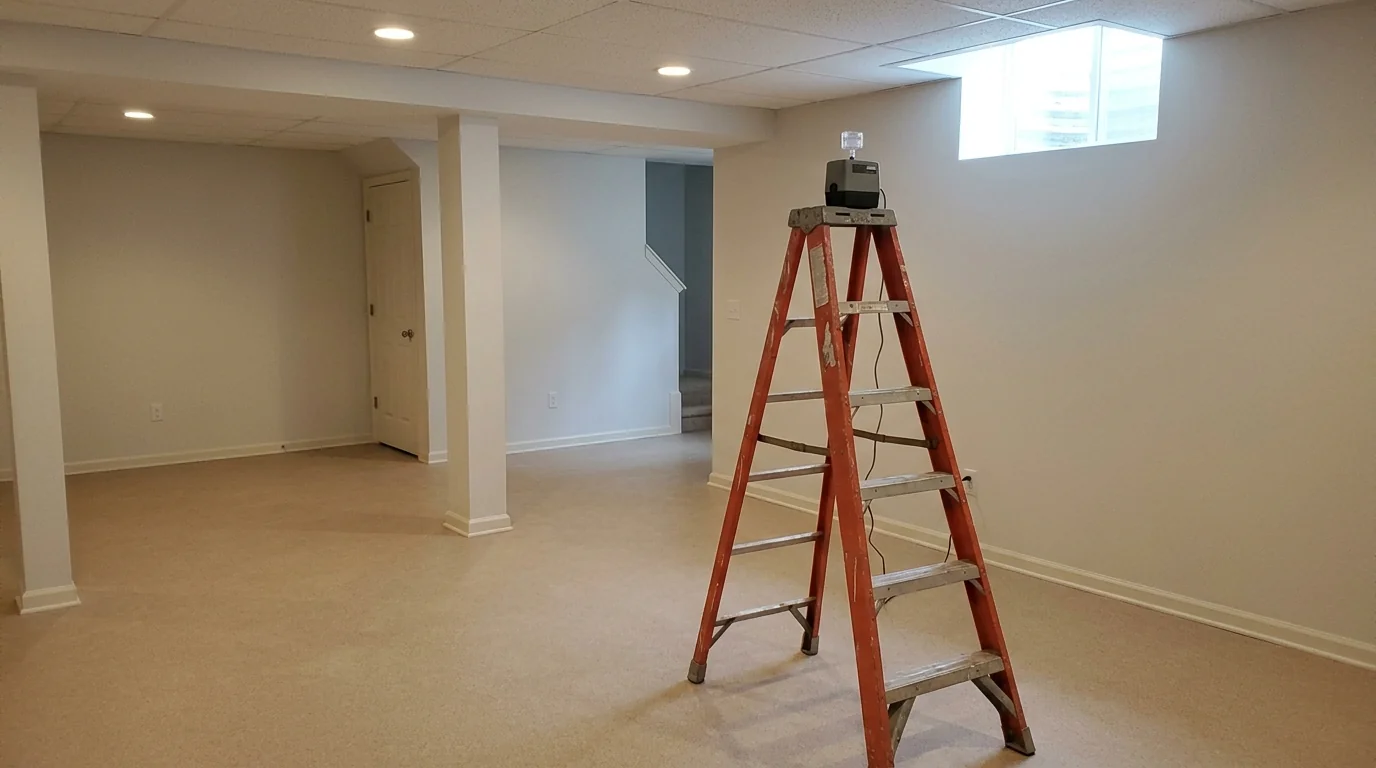
Mold Clearance Testing
Mold clearance testing, also called post-remediation verification, checks a work area after mold removal and before the walls are closed.
How we handle it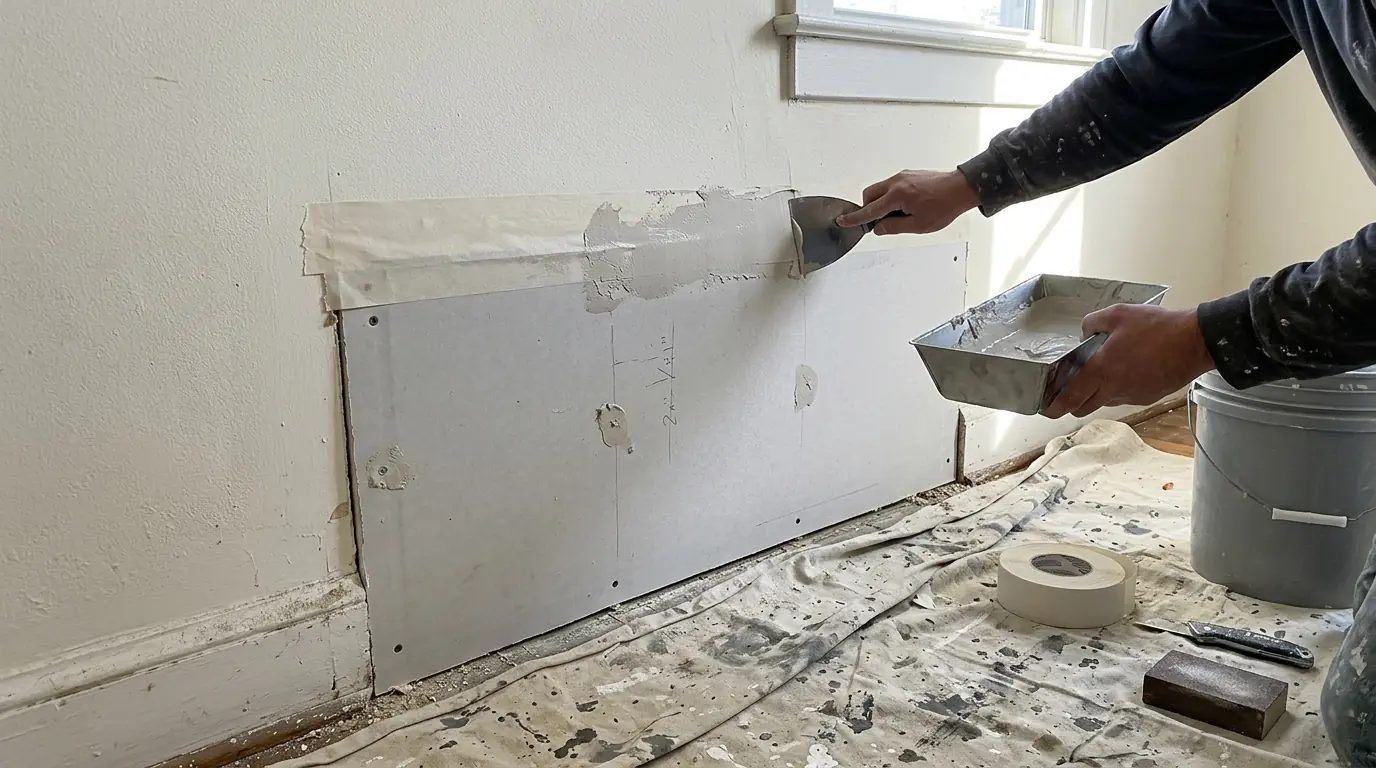
Damage Repair & Rebuild
Damage repair and rebuild is the work that restores a room after water, mold or fire mitigation is finished.
How we handle it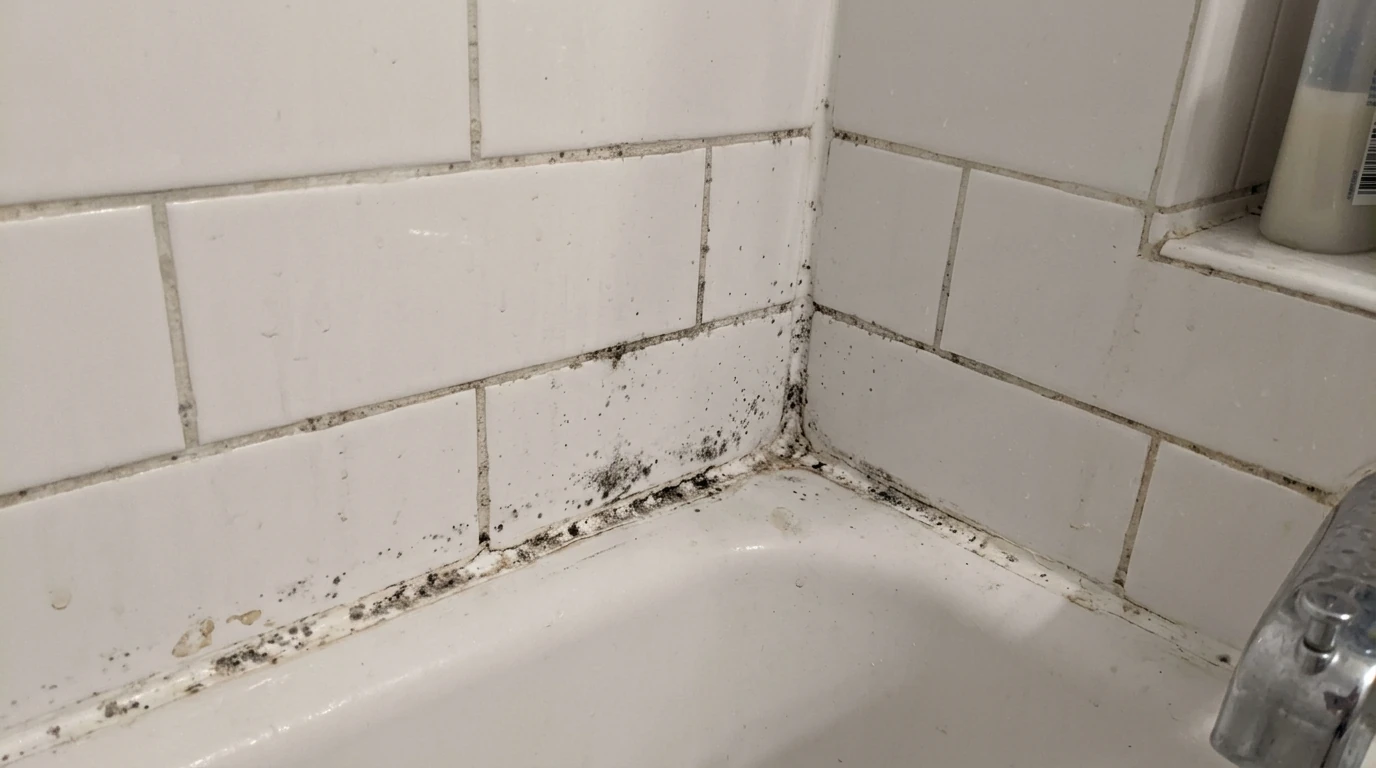
Bathroom Mold Removal
Bathroom mold removal ranges from cleaning surface growth on grout, caulk and painted ceilings to opening tile walls where a failed shower pan, valve or drain has wet the cavity.
How we handle itQuestions homeowners ask about mold behind drywall
Can I paint over a mold stain with stain-blocking primer?
Primer covers the color, not the growth on the back of the board. If the wall is still wet, the stain will usually return and the growth keeps spreading. Check moisture first. If a meter shows the wall is dry, the leak was fixed long ago and there is no growth behind it, a stain-blocking primer is a reasonable fix for an old water mark.
How big a hole do you cut to check inside a wall?
Usually small. We often pull the baseboard and cut a few inches high behind it, or drill a hole for a borescope, so the patch ends up hidden. A larger opening only happens once we see growth, and then the cut follows the extent of the growth and the wet area rather than a fixed size.
Is hidden mold more harmful than mold I can see?
Not by nature. The color or location of mold does not tell you how harmful it is. Hidden growth matters because it is often larger than expected and the moisture feeding it has gone on longer. Mold can trigger allergy and asthma symptoms in sensitive people, so anyone with those conditions should stay out of the work area until it is cleaned.
Does the insulation inside the wall have to be replaced?
Fiberglass batts that got wet and grew mold come out, because they cannot be cleaned reliably. Closed-cell spray foam absorbs very little water and can often stay if it is intact and clean on the surface, while open-cell foam holds water and usually has to be cut out where it was soaked. We decide bay by bay.
Will my old plaster walls have to come down entirely?
Rarely. We open the wall where growth is and leave sound plaster alone. A wet plaster wall with no growth behind it can often be dried in place. Where plaster does come out, the patch can be done in new plaster or in drywall built out to match the thickness, a choice we talk through when we price the repair.
Water in the house or a musty room you can't explain?
Call JEC Restoration any time. We answer 24/7 and talk through what you are seeing before anyone touches a wall.