Fire & Smoke
Emergency board-up and roof tarping for Washington, DC homes
A shattered window, a forced door or a roof opened by a falling limb lets rain, cold air and strangers into the house. We close those openings with plywood and heavy tarps so the damage stops where it is.
Drying, air and detection equipment on our jobs comes from names like
- Dri-Eaz
- Phoenix
- B-Air
- Abatement Technologies
- Protimeter
- Delmhorst
- FLIR
- Benefect
- Concrobium
- Omnitec
- Sapphire Scientific
- Tramex
Emergency board-up and roof tarping is temporary protection put on a house right after damage opens it to the outside. We cover broken windows and doors with fitted plywood, tarp roof and wall openings, and secure the property after a fire, a storm, a fallen limb or a vehicle strike. It holds until the permanent repair. Call (202) 989-3053, day or night, once the scene is safe.
Why does a flat rowhouse roof need a different tarp setup than a pitched one?
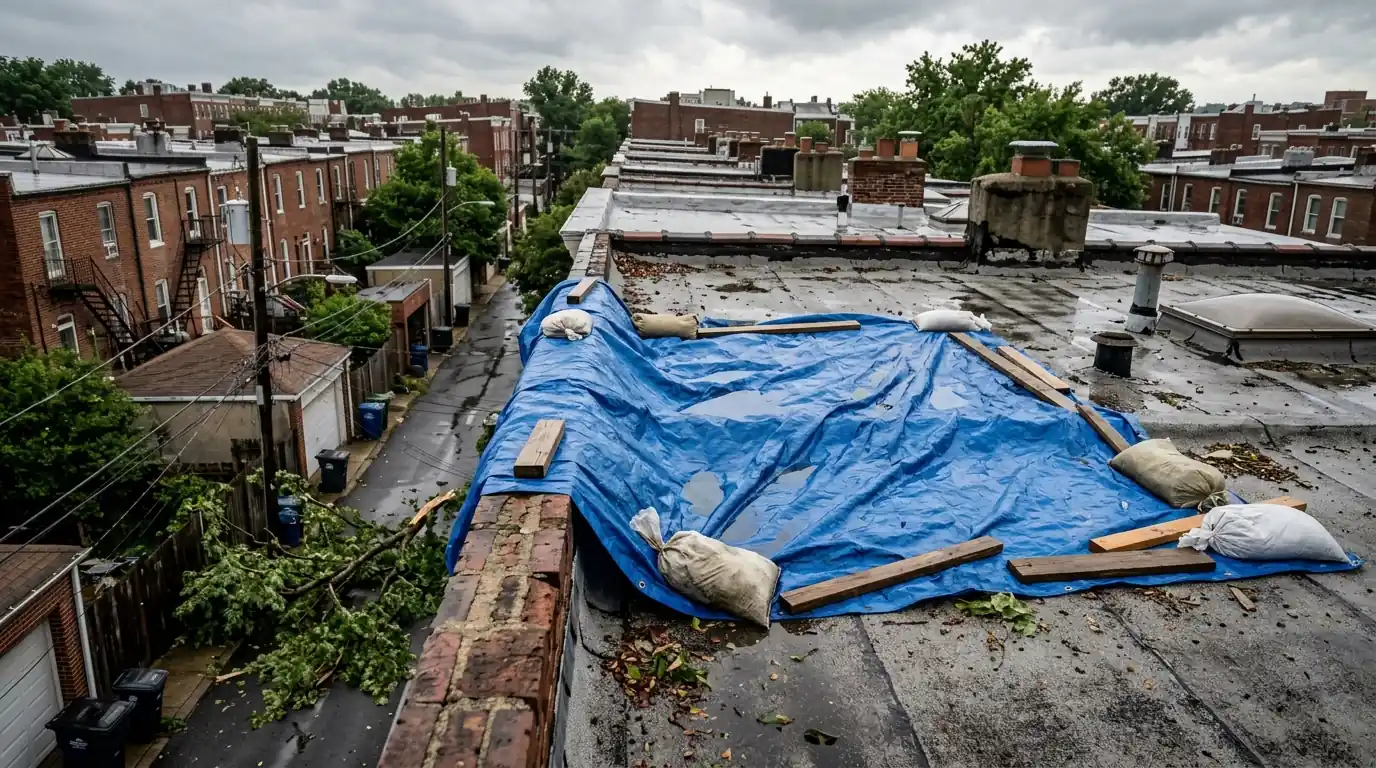
Most DC rowhouses have a flat or low-slope roof behind a brick parapet, covered with a rubber membrane, modified bitumen or old coated metal. Water doesn't run off these roofs quickly. It sits, drifts to the low corner and follows any gap it finds, so a tarp that only covers the hole lets rain pool at its edge and slip underneath.
On a flat roof we spread the tarp well past the damage and carry its high edge up and over the parapet coping. The rest is held down with sandbags and 2x4 battens rolled into its edges, not with nails driven through a membrane that is still sound. We keep the scupper or roof drain open, since a tarp lying across it turns the roof into a shallow pool.
Pitched roofs on detached houses work differently. Slate cracks underfoot, so our technicians work from ladders and roof brackets, and the top of the tarp is carried over the ridge onto the far slope. Fasteners stay at the damaged area and the ridge where possible, and each one is photographed for the roofer.
Which kinds of damage mean the house should be covered tonight?
Some openings look minor in daylight and turn into water, cold air or an easy way in by morning.
Cracked glass left in the sash
A split pane still in the frame can drop out when the wind gusts or the temperature falls overnight.
Daylight in the attic
Light through roof boards or around a skylight means the roof is open, even before any water shows.
Slates or shingles in the yard
Pieces on the ground or in the gutter after a storm point to a gap that the next rain will find.
A door that won't latch
A forced or twisted frame leaves the house open to anyone. A padlocked panel keeps people and weather out until the frame is rebuilt.
Ponding around a puncture
Water collecting at a hole or torn seam on a rowhouse roof keeps feeding the ceiling below until the spot is covered.
Plastic taped over the hole
Sheeting held with duct tape rarely lasts a windy night, so it needs a proper cover before dark.
How a board-up and tarping visit runs from first look to handoff
The order stays the same on every job, whether the cause was fire, wind, a tree or a car.
Confirm it's safe
We check that the fire department or tree crew has cleared the area and that no wires are down nearby.Nobody works under a sagging ceiling or a cracked rafter until it is supported or removed.
Photograph and measure
Each opening is photographed outside and inside before it is covered. We measure every window, door and roof hole and note the material around it for the trades and your adjuster.
Cover and fasten
Plywood is cut to fit and fastened into framing or clamped with interior braces. Roof openings get a heavy tarp carried well past the damage, then weighted, battened or fastened to suit the roof.
Protect the inside
Furniture and rugs are moved away from the openings and floors are covered. If rain already got in, storm water cleanup and drying starts as its own job.
Photograph again and hand off
After photos show every cover in place. You get the keys to any padlocked panel, a list of materials used and the measurements, ready for the trades and the claim.
How do you board an old double-hung window or a front bay without wrecking it?
Plenty of DC houses still have their original wood double-hung windows, with rope-hung sashes, hidden weights and wavy old glass. When a pane breaks, the sash is usually worth saving. We pick out loose shards, tape cracked panes still in place, and fit plywood to the outside of the opening so it bears on the brickmold trim or the masonry, not the sash.
Drilling into soft old mortar or face brick leaves damage that outlasts the emergency, so in brick openings we often run carriage bolts through the plywood to a 2x4 brace inside the window. The board then clamps the opening from both sides. A front bay gets a separate panel for each face, cut to its angles, with caulked seams so rain can't run between them.
Doors are covered so you can still get in. On a forced front door or a broken slider at a rear addition, we usually build a hinged plywood panel with a hasp and padlock and hand you the keys. At an English basement door under the stoop, the cover often fits neatly behind the iron gate.
What if a tree limb, a car or a fire crew left the house open?
A limb that comes through a roof is often still lodged in the hole, its weight on rafters that may be cracked. Taking it down is work for a tree company with rigging, and sometimes a crane on a tight rowhouse block. We coordinate timing with the tree crew so the tarp goes on as soon as the limb is off, meanwhile protecting the rooms below with plastic, containers and furniture moved out of the drip line.
A vehicle into the front of a house leaves a broken wall, a smashed bay or a porch post knocked out. After the tow, a structural engineer or a building inspector decides whether a contractor needs to shore the wall first. Once that's settled, we frame the gap with 2x4s, sheathe it with plywood and wrap it in heavy plastic so the room stays dry and locked.
Fire crews often leave broken sashes, a forced door and a vent hole in the roof. Covering those comes before anything else in the rest of a fire cleanup, and on a flat rowhouse roof that vent hole gets the weighted tarp described above.
Who handles the permanent repair once the house is covered?
Board-up and tarping are built to hold a house for weeks, not years. The permanent fix goes to the trade that does that work: a roofer for the membrane or slate, a glazier or window restorer for sashes and glass, a carpenter for the door and frame. Each of them gets our photos and the measurements of every opening.Damaged ceilings, plaster and floors inside can be put back through our repair and rebuild work.
In historic districts such as Capitol Hill and Georgetown, plywood and tarps are temporary and leave the original fabric of the house in place. Replacing a front window, a door, a slate roof or a cornice there is different: the permanent work may need to go through the city's historic preservation review first, so ask about it early. The temporary cover keeps the house dry while that gets worked out.
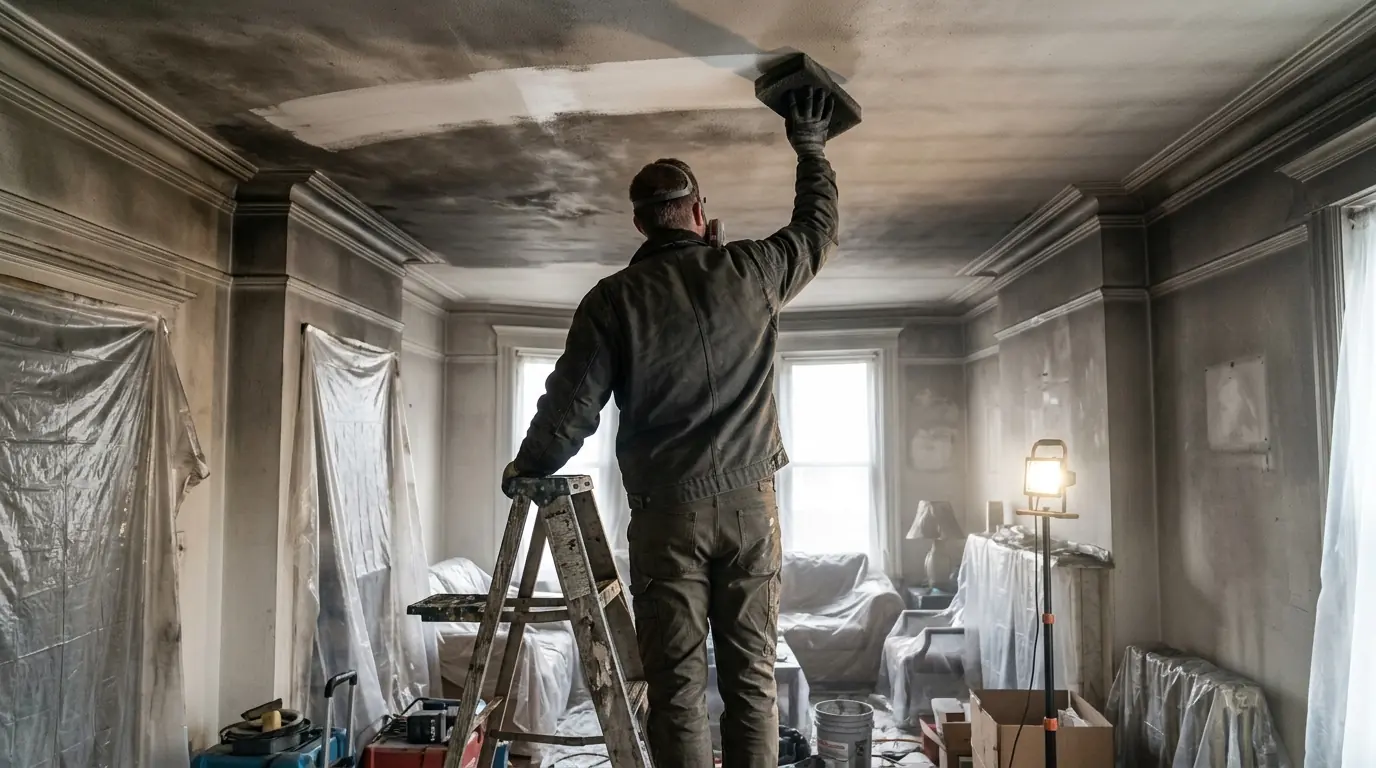
Dry-sponge soot cleanup on a rowhouse ceiling
What makes board-up and tarping harder on DC rowhouses and older detached homes?
Getting onto a DC rowhouse roof is often the hardest part.Many have no outside access beyond a roof hatch in a top-floor closet or a ladder raised from a narrow rear alley, and the parapet the tarp laps over may be shared with the neighbor. Rear additions add a second, lower roof, and the seam where it meets the main wall is a common place for wind or a limb to open things up. Front bays in Petworth, Bloomingdale and Capitol Hill hang over the sidewalk, so ladders and plywood cutting have to fit on a crowded street.
Upper Northwest is a different job. In Spring Valley, Chevy Chase DC and the Palisades, detached colonials and Tudors sit under tall oaks and tulip poplars, often with slate or steep shingle roofs two and a half stories up. Those houses need longer ladders, roof brackets and careful footing, and the tree work usually has to come first.
Where we do this work: Washington, DC and nearby Maryland and Virginia, including:
How much does a board-up or emergency roof tarp usually run in DC?
Board-up is usually the smallest part of a damage bill. Its price follows the size and height of the openings more than the cause.
| One or two windows or a single door boarded | $385-$1,140 |
|---|---|
| Flat rowhouse roof opening tarped and weighted | $680-$1,870 |
| Pitched slate or shingle roof tarped after a limb | $940-$2,760 |
| Wall opening from a vehicle framed and sheathed | $1,480-$4,320 |
These are typical DC-area figures, not quotes; we price each job once we have seen the openings on site. Compare ranges across all 40 services.
What moves the price
- Number and size of openings
- Roof height, pitch and material
- Ladder access from alley or street
- Framing needed behind plywood
- Work at night or during a storm
Related work we often do on the same job
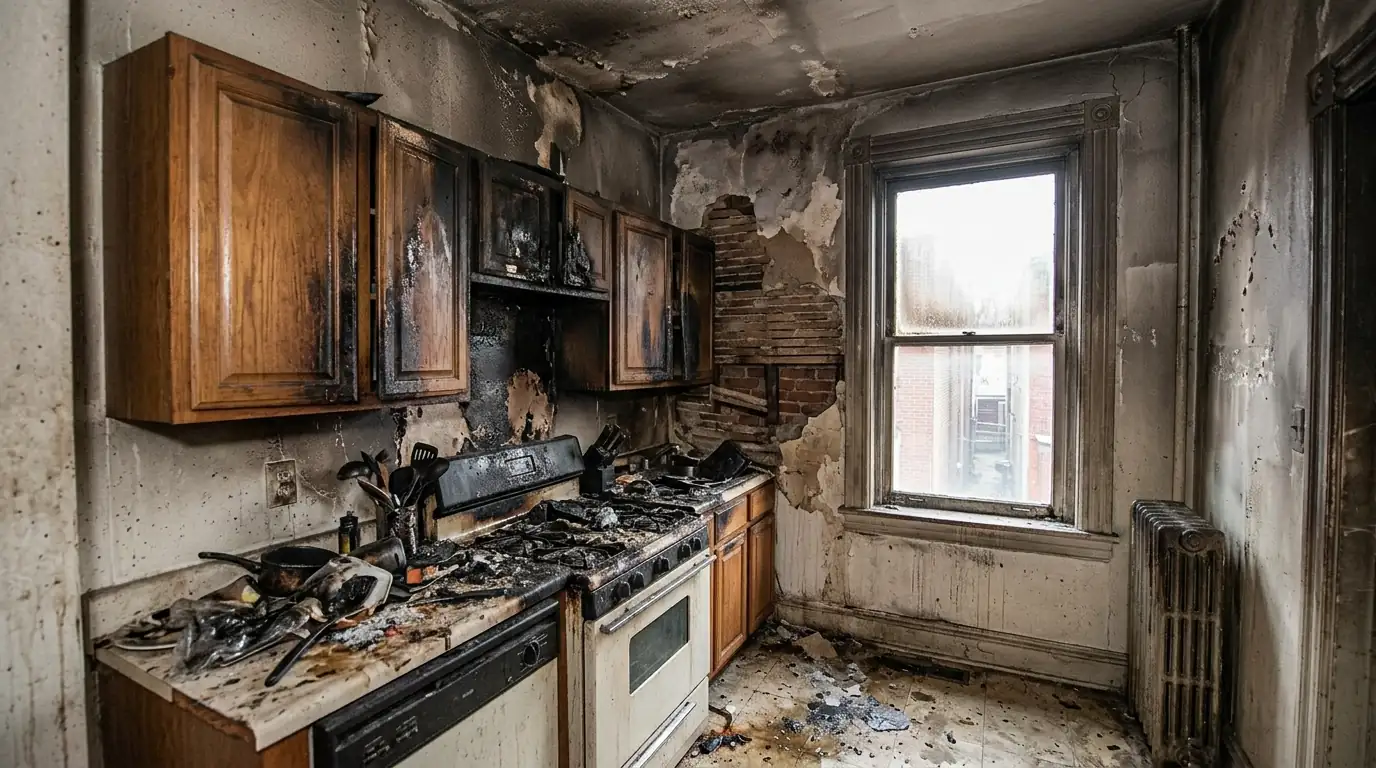
Fire Damage Restoration
Fire damage restoration is the full recovery of a home after a fire: boarding and tarping openings, removing firefighting water, cleaning soot and smoke residue, treating odor, handling contents and preparing for repairs.
How we handle it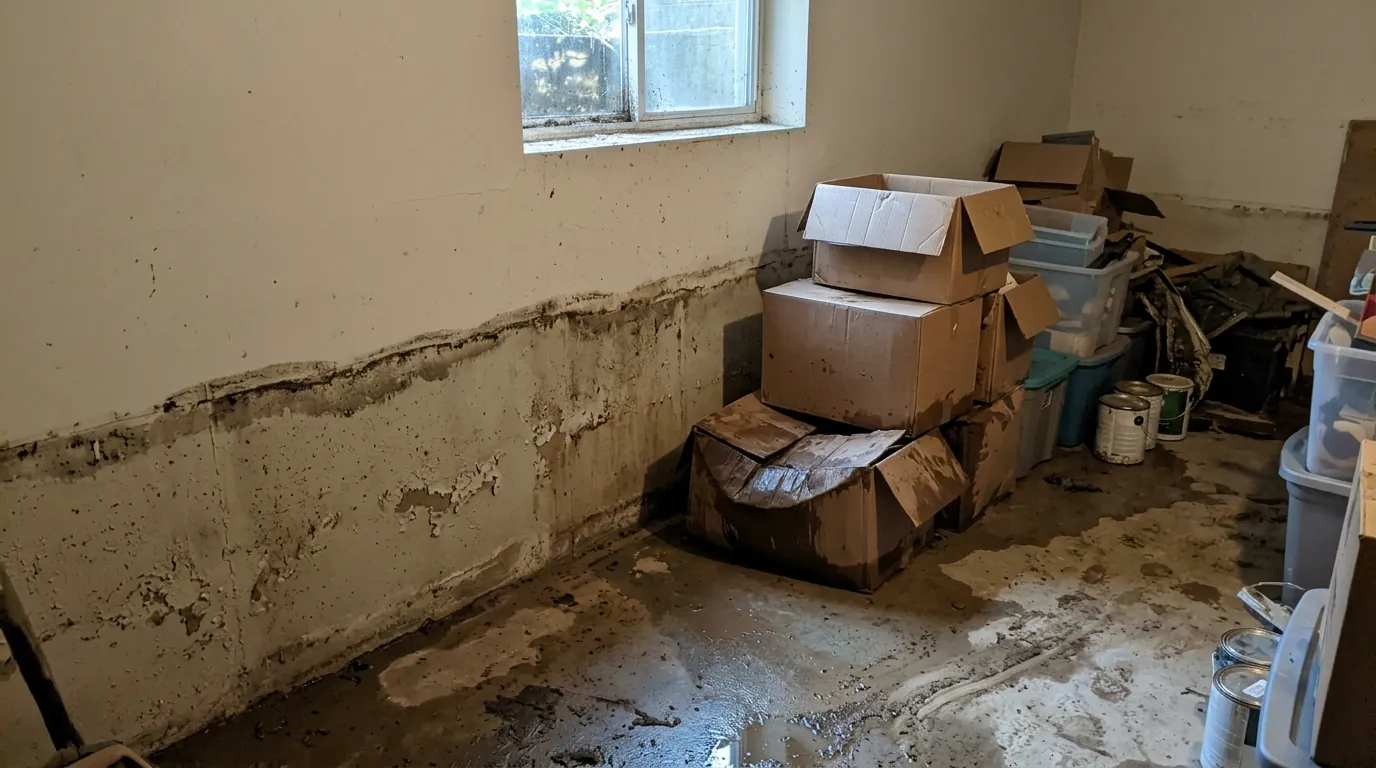
Storm & Flood Cleanup
Storm and flood cleanup covers water that enters a home from outside during heavy weather: flash flooding at basement doors and window wells, overflowing areaway drains, wind-driven rain through walls and windows, and roof openings from fallen limbs.
How we handle it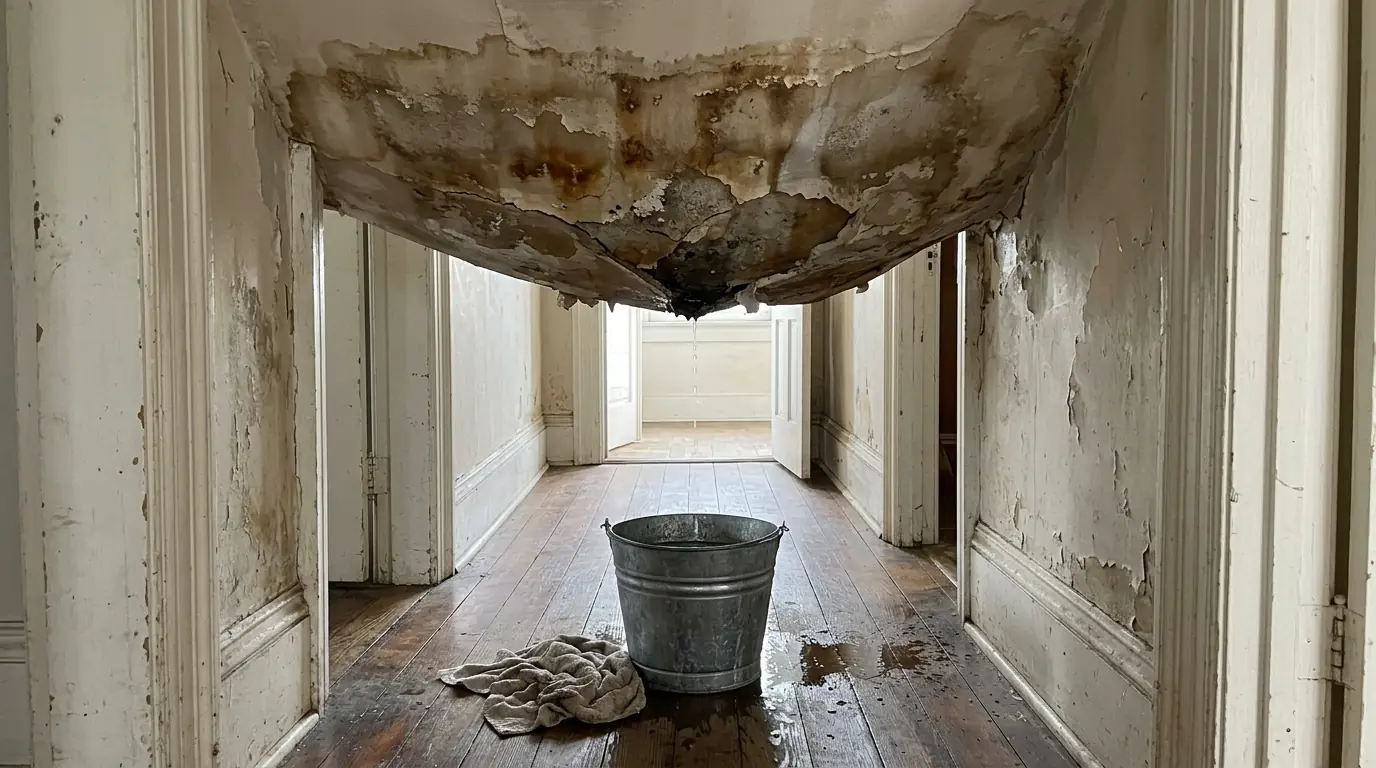
Ceiling Leak Damage
Ceiling leak damage work deals with water trapped above a ceiling from a roof, a bathroom, a radiator or an air conditioning line.
How we handle it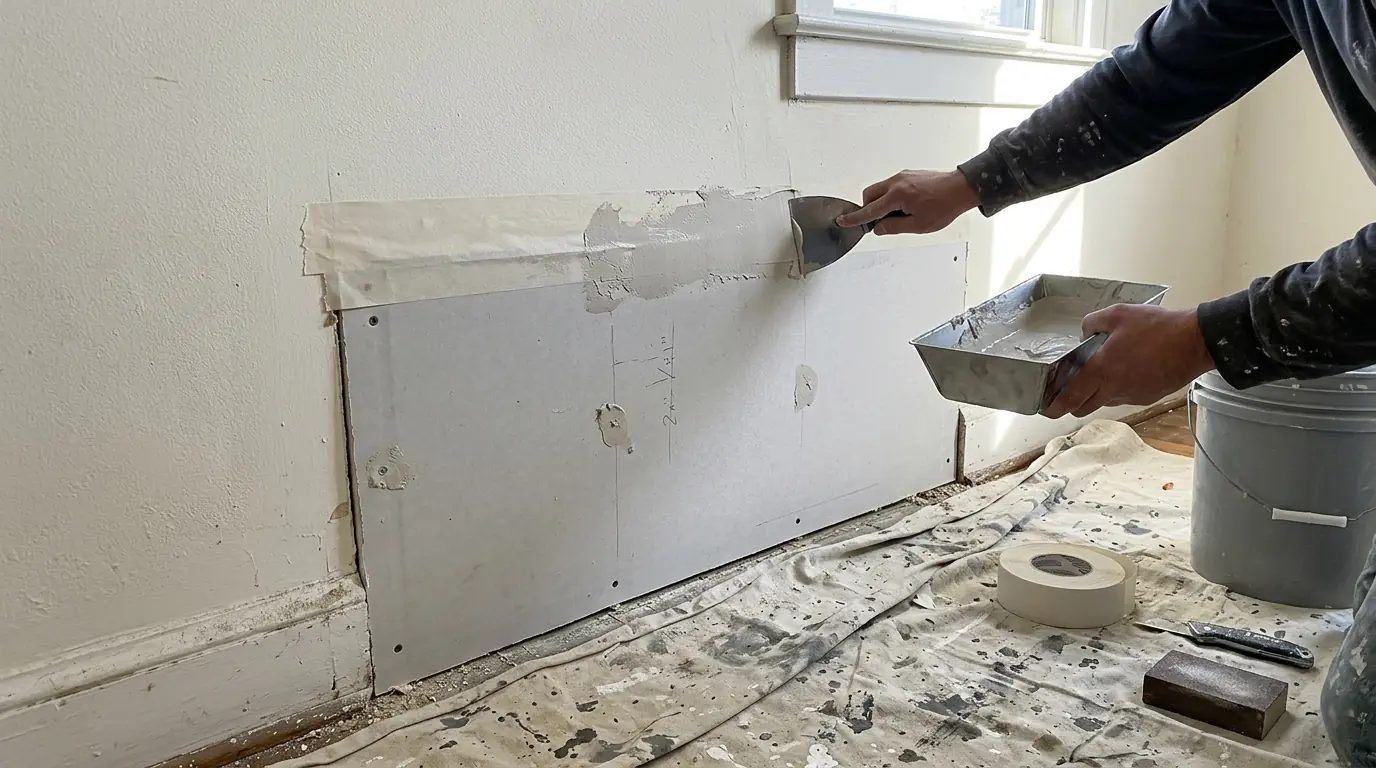
Damage Repair & Rebuild
Damage repair and rebuild is the work that restores a room after water, mold or fire mitigation is finished.
How we handle itQuestions homeowners ask about emergency board-up & roof tarping
Will a tarp damage my flat rubber or modified bitumen roof?
It shouldn't if it is set up for a flat roof. We hold the tarp with sandbags and lumber battens rolled into its edges and lap the high side over the parapet, so fastening through the membrane is rarely needed. Any fastener that can't be avoided goes into the photo log for the roofer to patch.
How long can plywood and a roof tarp stay up before the permanent repair?
Plan on weeks, and a few months at most. Sun breaks down tarp fabric, wind works at the battens, and plywood edges swell after repeated rain, so the sooner the permanent repair starts, the better. If a tarp loosens or a panel shifts after high wind, call us and we'll re-secure it.
Is it safe to cover a broken window myself until the board-up is done?
For a ground-floor window, usually yes. Photograph it first, wear gloves and hard-soled shoes, and pick up the large shards. Heavy plastic stapled or taped to the inside trim keeps rain out for a night. Leave upper-floor windows and anything on the roof to us, especially in wind, rain or darkness.
Will my insurer reimburse an emergency board-up done before the adjuster visits?
Often, but check your policy. Many homeowner policies ask you to protect the property from further loss and count reasonable emergency repairs as part of the claim. Photograph the damage before it is covered, keep our invoice and any supply receipts, and tell your carrier the work was done. Our help with claim paperwork covers what adjusters usually ask for.
Can tenants stay in an English basement apartment while its door or window is boarded?
That depends on whether the unit is still safe, dry and heated, and for a rental, on the housing rules and lease terms that apply. The cover itself shouldn't trap anyone. When a boarded door or bedroom window is a way out of the unit, we build a hinged panel that latches on the inside and opens without a key.
Water in the house or a musty room you can't explain?
Call JEC Restoration any time. We answer 24/7 and talk through what you are seeing before anyone touches a wall.