Mold Remediation
Basement mold removal for Washington, DC homes
Basements in DC sit against damp soil and fill with humid summer air. We remove mold from block, stone, framing and finished walls, then set up humidity control so the space stays dry after we leave.
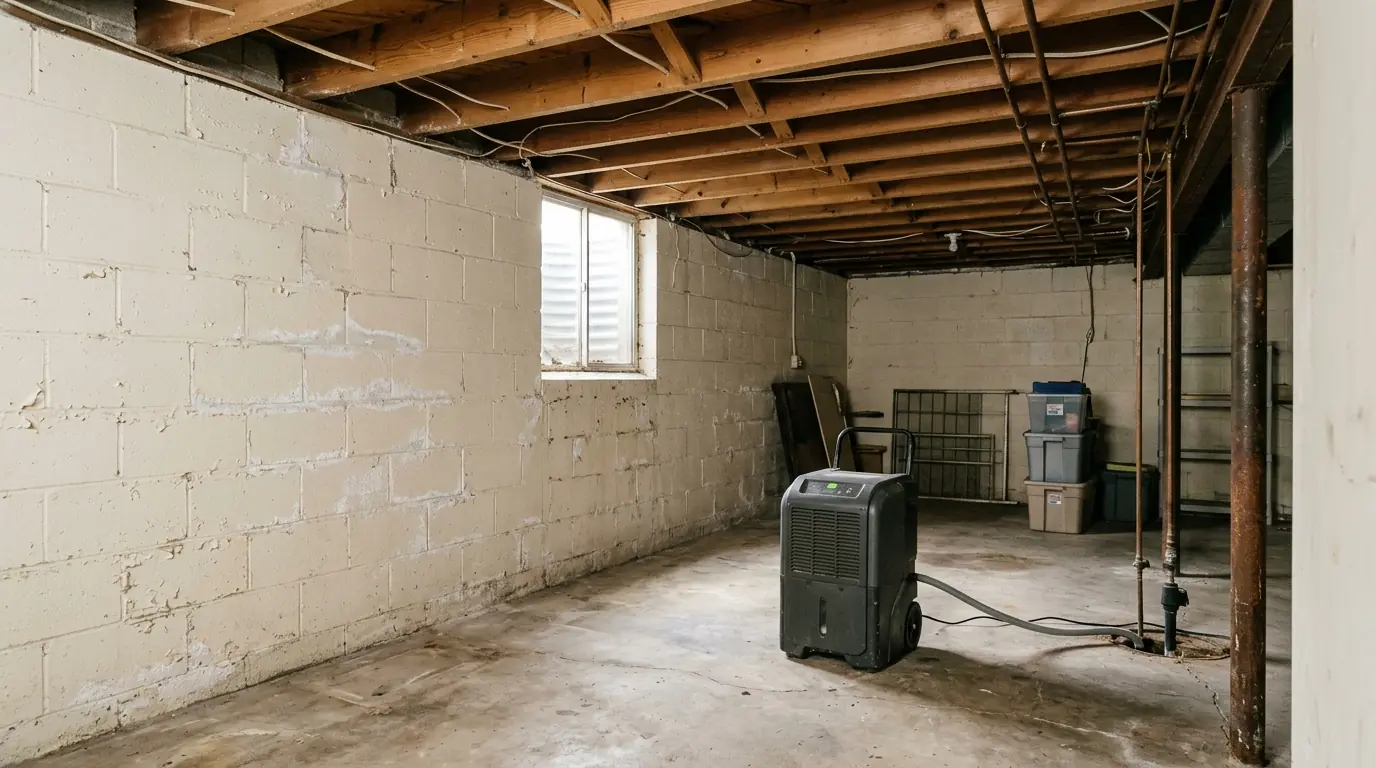
Drying, air and detection equipment on our jobs comes from names like
- Dri-Eaz
- Phoenix
- B-Air
- Abatement Technologies
- Protimeter
- Delmhorst
- FLIR
- Benefect
- Concrobium
- Omnitec
- Sapphire Scientific
- Tramex
Basement mold removal cleans or removes growth on foundation walls, framing, finished drywall, carpet and stored contents below grade, then corrects the moisture that caused it. In most DC basements that means a mix of seepage through masonry and high summer humidity. Removal without a dehumidification plan rarely lasts, so both are part of the job.
Is that white crust on the basement wall mold or efflorescence?
This is one of the most common questions we get from basement owners, and the answer changes the whole plan. Efflorescence is mineral salt left behind when water moves through brick, block or concrete and evaporates at the surface. It looks white, chalky or crystalline, crumbles to powder between your fingers, and dissolves in a few drops of water. It is not alive and does not need removal by a mold crew, though it does tell you water is passing through the wall.
Mold on masonry looks different. It is fuzzy or cottony, often gray, green, white or black, and it smears rather than crumbles. On bare block or stone it usually grows on the dust, paint or soap film on the surface rather than the masonry itself, which is why bare foundation walls clean up well. Where you see mold in a basement, look at what sits against the wall: wood furring strips, drywall, cardboard, carpet tack strip. Those organic materials are where growth takes hold and where most of our removal effort goes.
How we clear mold from a basement and keep it dry
Basement jobs move from diagnosis to removal to long-term moisture control.
Separate seepage from humidity
We map wall and slab moisture, log relative humidity and dew point, and check gutters, downspouts, window wells and floor drains. This tells us whether water is coming in, condensing, or both.
Contain and protect the stairs
The basement is sealed from the floors above at the stair opening, and HVAC returns in the basement are closed. HEPA negative air exhausts out a window or the basement door.
Remove finishes with growth
Drywall, insulation, carpet, pad and tack strip with growth are cut out and bagged. Contents are sorted into clean, cleanable and discard.
Clean masonry and framing
Block, stone and concrete are HEPA vacuumed and scrubbed. Joists, plates and furring are cleaned and sanded where stained, then dried to target readings.
Set humidity control and verify
Dehumidification is set up for the space, and we return to log readings once the job is complete. Water-entry repairs are scheduled or written up.
How cinder block and fieldstone foundations behave differently
Hollow concrete block, common in DMV homes from the 1940s through the 1970s, has open cores that can hold water after a storm and release it slowly into the basement for days. Block walls show damp horizontal bands, efflorescence along mortar joints, and peeling paint or waterproofing coatings. Mold on block is usually cleaned with HEPA vacuuming and scrubbing, but a finished wall built against wet block often needs the drywall and insulation removed.
Fieldstone and rubble foundations, found under older Takoma Park, Brookland and Georgetown houses and some early rowhouses, are irregular and porous. Lime mortar softens with age, and the wall breathes moisture constantly. We do not seal a stone wall with a coating, which can trap water and push it into the mortar. Instead we clean the surface, remove any organic material touching it, and manage the room with ventilation and dehumidification. Poured concrete walls are the most forgiving, though cracks and tie-rod holes still let water through and are worth a look during the visit.
What basement mold usually looks and smells like first
Basement growth rarely announces itself with a large visible patch. Watch for these.
Musty smell at the stairs
The odor often collects at the bottom of the stairs or in a closet under them, where air moves least.
Gray line along the baseboard
A narrow band of discoloration at floor level on finished walls suggests moisture wicking up from the slab or through the foundation.
Spots on stored boxes and furniture
Cardboard, leather, wicker and the backs of wooden dressers grow mold early in a humid basement.
Fuzzy growth on floor joists
White or green growth on joists and subfloor overhead, especially near rim joists along exterior walls.
Carpet that feels cool and damp
Carpet on slab that feels clammy or smells after rain usually has growth in the pad underneath.
Condensation on pipes and ducts
Sweating cold-water pipes and AC ducts in summer show the air is humid enough to wet nearby surfaces.
What changes when the basement is finished living space?
A finished basement hides the wall from view, which is where most of our discoveries happen. Common builds stack fiberglass batts and drywall against a block wall with no vapor control, or lay carpet and pad straight on a slab that wicks moisture. Each layer traps humidity against a cold surface, and the first signs are a musty odor, a gray line along the baseboard, or a rug that smells after a rainy week.
Removing mold here means opening the wall at least to the height of the growth, often a flood cut at two or four feet, plus taking up carpet pad and any tack strip that has grown. For the rebuild, we suggest rigid foam board against the masonry, a gap at the slab, and moisture-tolerant finishes. If water is actively coming through the wall, our waterproofing work comes before any new drywall goes up.
Why the dehumidifier is part of the remediation, not an extra
Mold can start growing on materials once relative humidity stays above about 60 percent for days at a time, and DC basements easily sit at 70 percent or higher from July into September. A small portable unit that fills a bucket twice a day cannot keep up with a full basement. We size dehumidification to the space and log readings after the job so you can see the room holding between 40 and 50 percent.
For basements that will be lived in or used for storage, a ducted or standalone whole-basement dehumidifier draining to a pump or floor drain is usually the long-term answer. Keep the door to the basement closed on humid days, run the bathroom fan, and avoid drying laundry on lines downstairs.
How big is the mold patch?
Measure the visible growth and enter it in feet. The EPA uses about 10 square feet as the line between a homeowner cleanup and a job that needs containment.
Measure the visible growth, including any faint edges.
Growth inside walls, in ductwork or after sewage or floodwater needs professional cleanup at any size.
What does basement mold removal cost in the DMV?
Basement prices depend mostly on how much finished material is involved. Unfinished basements are often less than people expect.
| Unfinished basement: clean masonry, joists and stored items | $1,890-$4,350 |
|---|---|
| Partial finished basement, one wall run flood-cut | $3,120-$6,840 |
| Full finished basement or English basement apartment | $6,750-$15,900 |
| Whole-basement dehumidifier after remediation | $1,480-$2,960 |
These ranges are typical DC-area figures rather than quotes, and we price after seeing the basement on site. Compare ranges across all 40 services.
What moves the price
- Finished versus unfinished walls
- Carpet, pad and flooring removed
- Contents to sort, clean or discard
- Exterior door versus interior stair access
- Water-entry repairs needed first
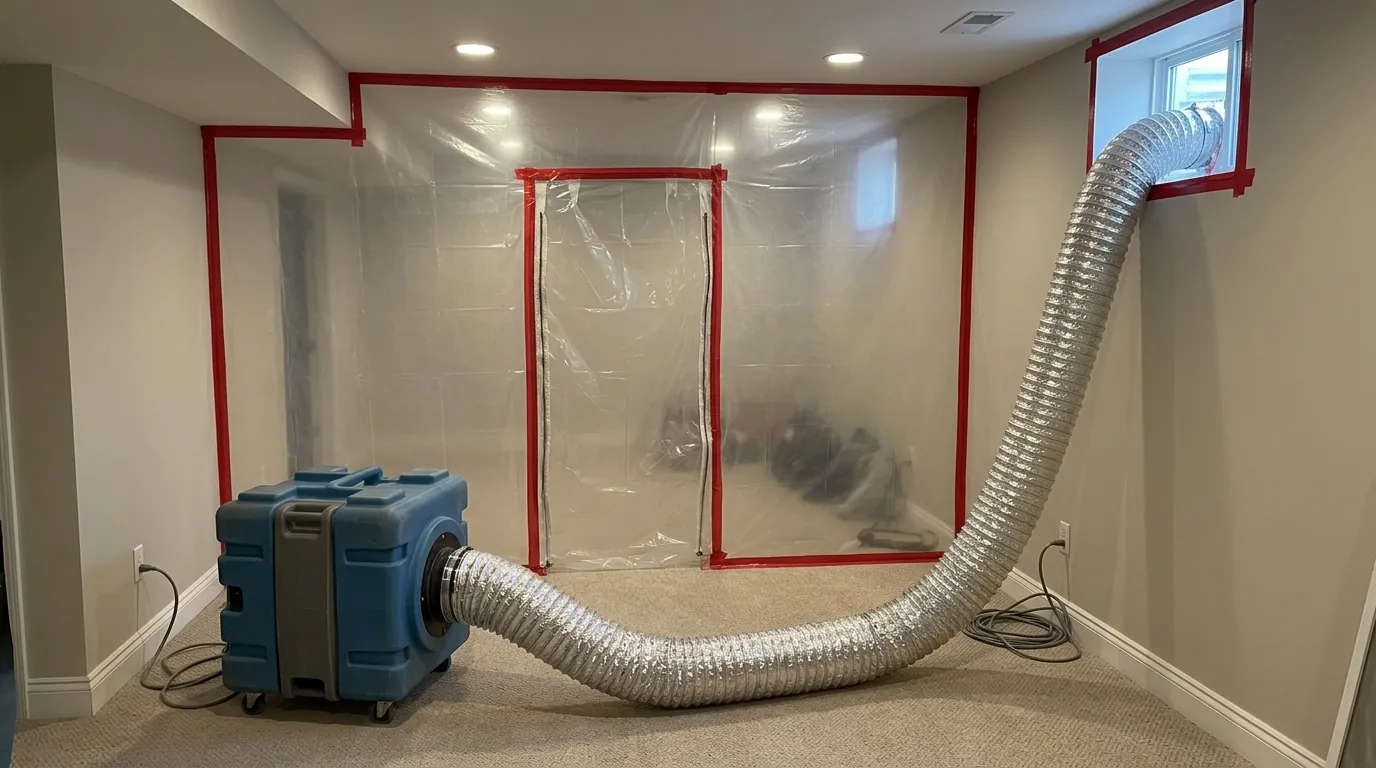
Sealed containment with HEPA filtration on a basement mold job
English basements and DC summers: why below-grade rooms grow mold here
Washington's English basements sit roughly half below the sidewalk, with a front door under the stoop and a stairwell drain at the bottom of a few steps. When that drain clogs with leaves, rain backs up against the door and the front foundation wall. The back of the house has its own areaway drain, and both are older terra-cotta or cast-iron lines prone to blockage. Add brick party walls shared with the neighbor, and it is common to find growth on the drywall that a past owner hung over the brick.
Many of these basements are rented as apartments in Capitol Hill, Shaw, Columbia Heights and Bloomingdale, which brings tenants, leases and timing into the job. Further out, Silver Spring, Wheaton and Bowie split-levels have finished lower levels with sump pits and slab floors, and the problem is more often humidity than seepage. During a heavy storm, older parts of the city on the combined sewer system can push water up through basement floor drains. The sewer backup or groundwater guide helps you tell which one you have.
Where we do this work: Washington, DC and nearby Maryland and Virginia, including:
Related work we often do on the same job
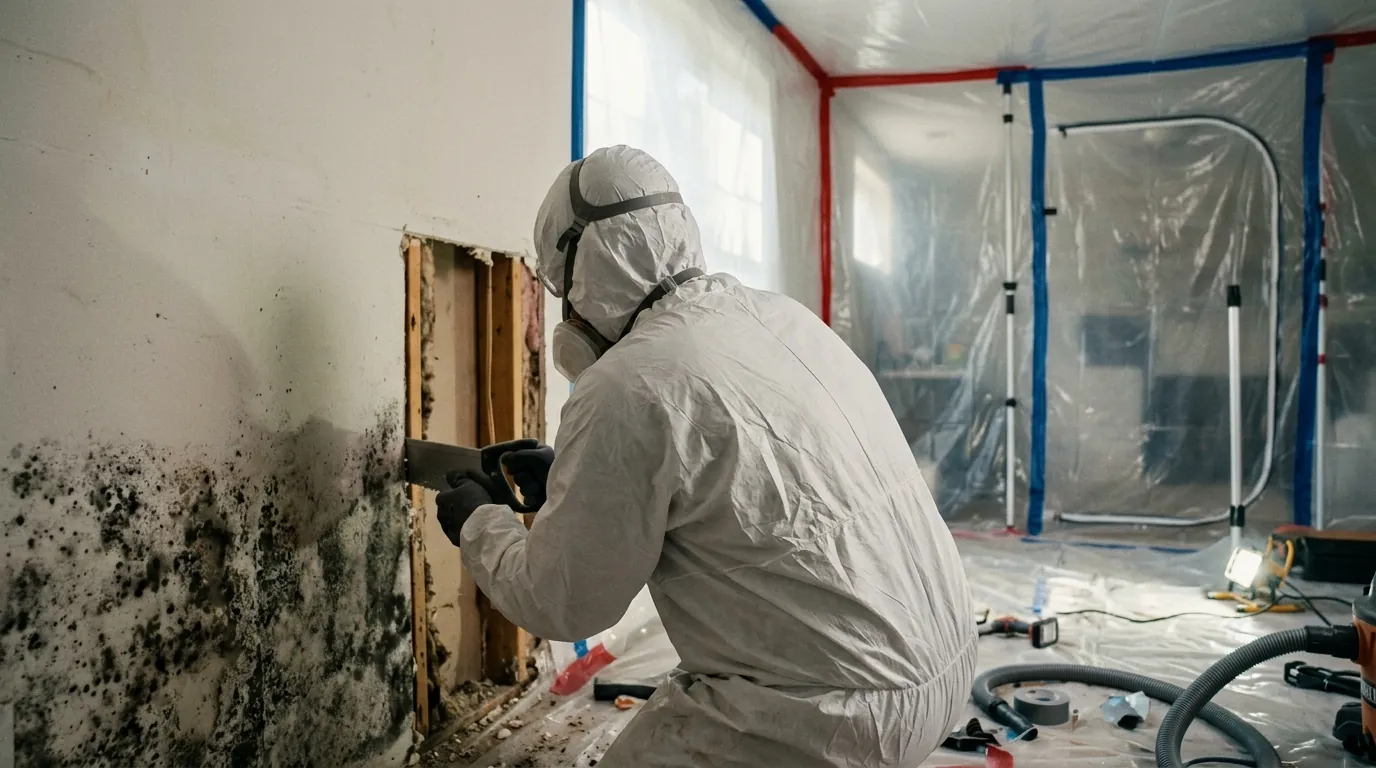
Mold Remediation
Mold remediation is the controlled removal of mold growth from a building.
How we handle it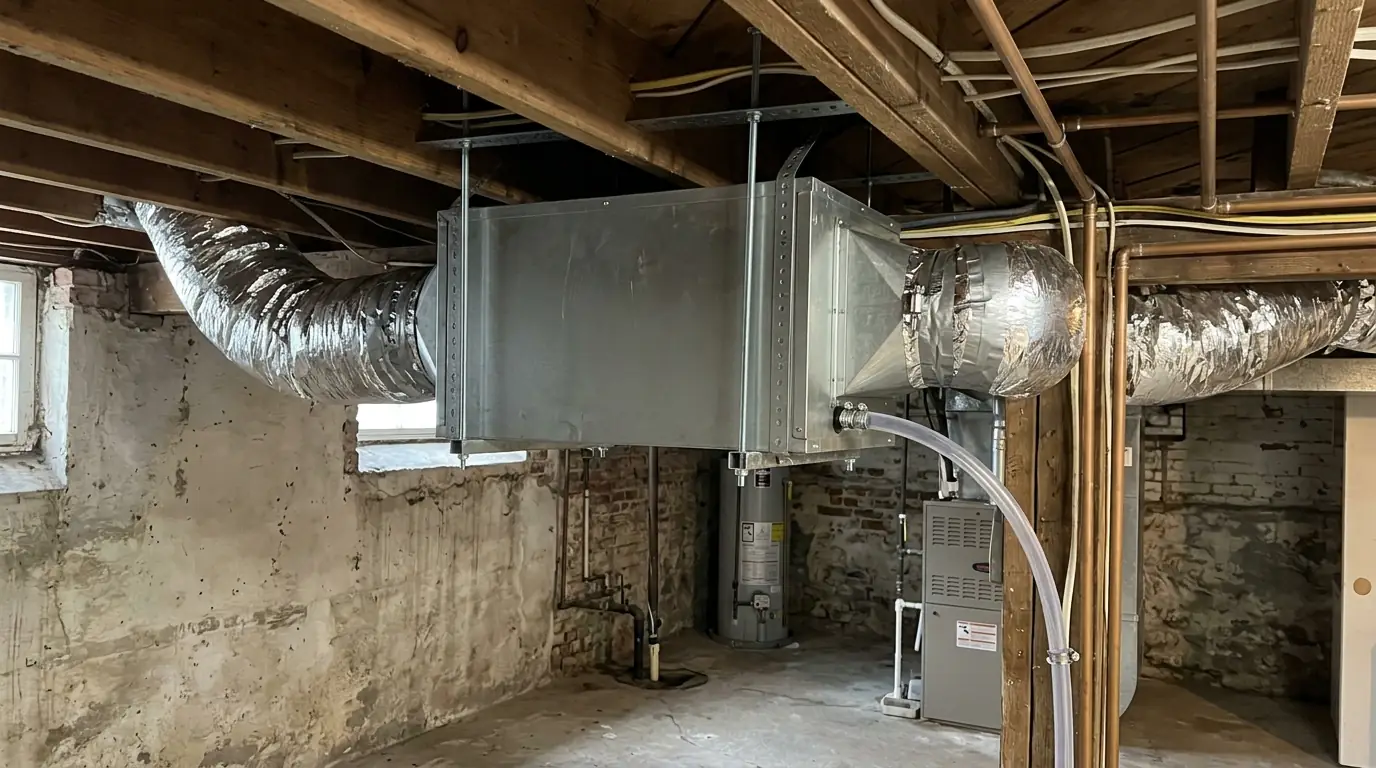
Dehumidifier Installation
A whole-basement dehumidifier is a fixed unit that pulls moisture from the air in a basement or crawl space and drains it continuously through a hose or condensate pump.
How we handle it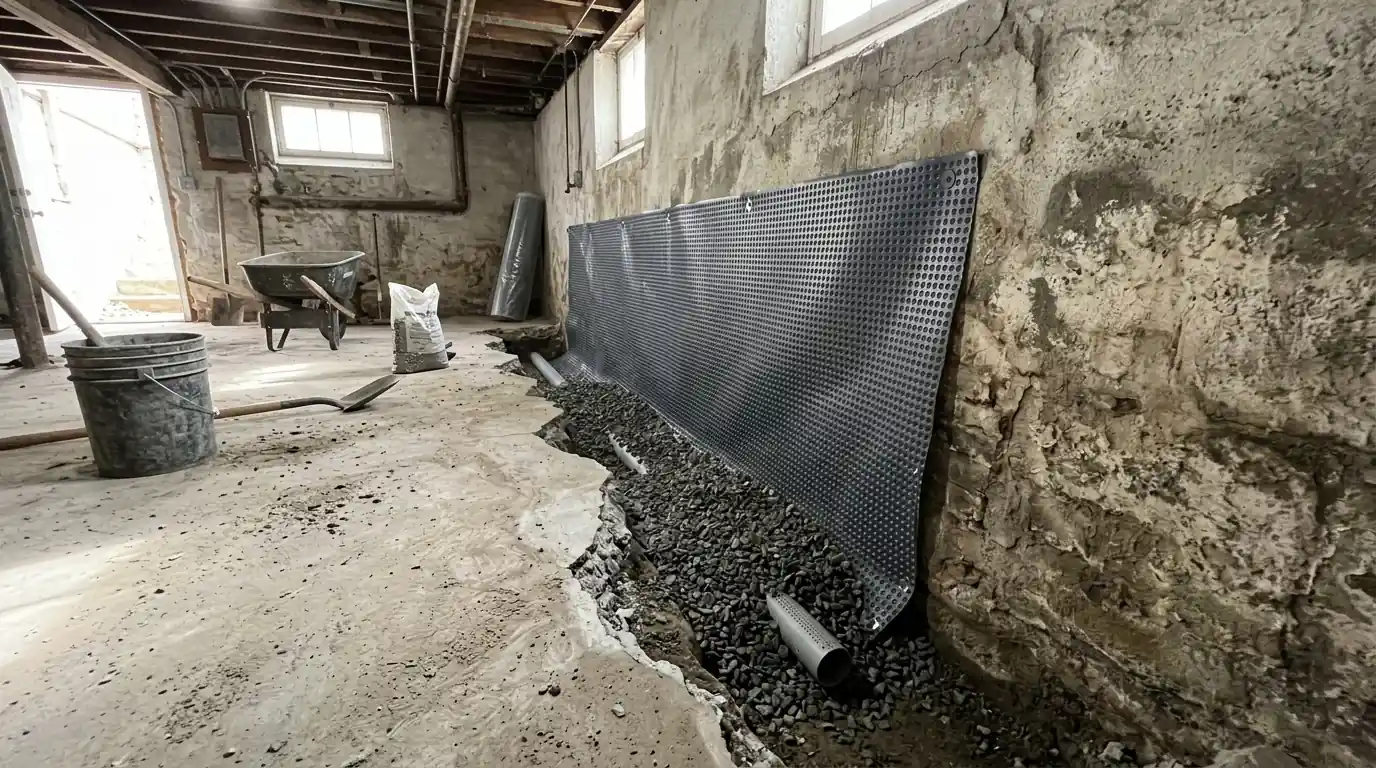
Basement Waterproofing
Basement waterproofing means stopping or managing the water that reaches a basement from outside: through wall cracks, mortar joints, the cove joint at the base of the wall, or a clogged stairwell drain.
How we handle it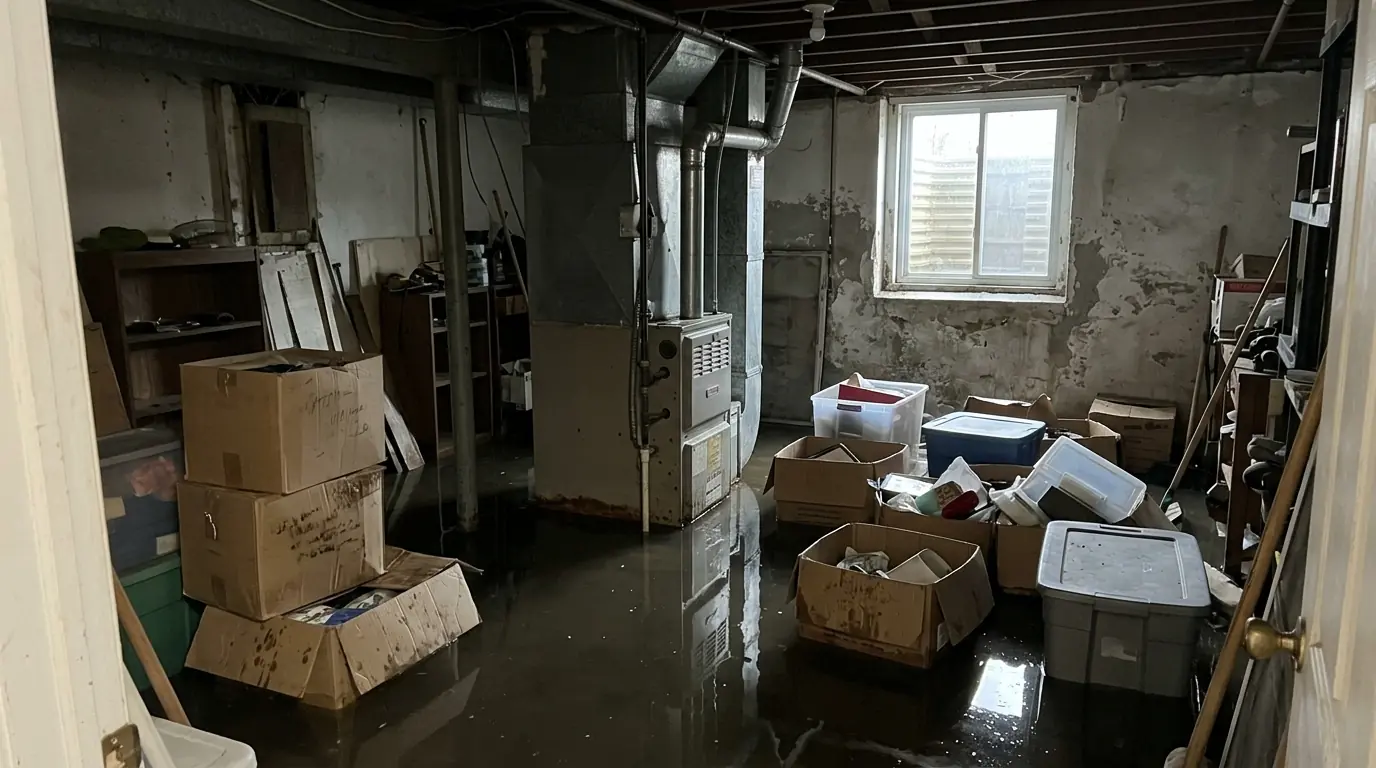
Flooded Basement Cleanup
Flooded basement cleanup removes water from a below-grade space, cleans and sanitizes what it touched, takes out finishes that cannot be saved, and dries the slab, walls and framing.
How we handle itQuestions homeowners ask about basement mold removal
Can I seal my basement walls with waterproof paint to stop mold?
Waterproofing paint can reduce dampness on poured concrete and some block walls, but it often peels when water pushes from the soil side, and it should not be used on fieldstone or soft lime mortar. It also does nothing for summer humidity, which causes much of the mold we see. Fix drainage outside first, then decide on coatings, and control humidity either way.
What humidity should I keep my basement at to prevent mold?
Aim for 40 to 50 percent relative humidity, and keep it below 60 percent at all times. An inexpensive digital hygrometer placed away from the dehumidifier will show you the real level. If the reading creeps above 55 percent in summer even with a unit running, the dehumidifier is undersized or the basement is getting outside air or water you need to address.
Is mold on basement joists a sign of a bigger problem?
Mold on the underside of the subfloor and on joists is usually a humidity problem, and it is often worst at rim joists where warm outside air meets cool wood. It can usually be cleaned and the wood dried. If the joists are soft, cracked or darkly stained in one area, there may be a plumbing leak from above, which we trace before cleaning.
Do you remove mold in a rented English basement with a tenant living there?
Yes, though it needs planning. The tenant usually needs to stay elsewhere for the days the containment is up and drywall is being removed. We work with the owner and tenant on access through the basement door, set the schedule before demolition, and keep the containment sealed so the upstairs unit is not affected. Lease and relocation questions are between owner and tenant.
Should I keep stored items in my basement after mold removal?
You can, with changes. Swap cardboard boxes for sealed plastic bins, keep items on shelving at least a few inches off the slab and away from exterior walls, and leave space for air to move. Avoid storing paper, leather or upholstered furniture in a basement that has not shown it can hold humidity below 50 percent through a full summer.
Water in the house or a musty room you can't explain?
Call JEC Restoration any time. We answer 24/7 and talk through what you are seeing before anyone touches a wall.