Knowledge Base
English basement leaks: where water gets in
An English basement sits half below the sidewalk, with its own door under the stoop and brick walls that were never meant to stay dry. Most leaks come through a short list of weak spots, and each one leaves a different clue.
By Winifred Larkin, Knowledge Base EditorUpdated 7 min read
The short version
- Clear the front stairwell drain and the rear areaway drain before every storm season.
- A wet strip starting at the door points to the drain or threshold; a damp band on the wall points to parging or grading.
- Water rising through the floor drain during heavy rain is usually a combined sewer backup and should be handled as sewage.
- Fix the entry point before drying and repairing, or the work will need to be repeated.
Why do English basements leak more than other basements?
The rowhouses that line Capitol Hill, Bloomingdale, Shaw and Petworth were built between the late 1800s and the 1940s with brick foundation walls laid in lime mortar. Those walls were designed to breathe: some dampness passes through, then evaporates. That worked when the space held coal and canned goods. It works poorly once the room gets drywall, carpet and a tenant.
The layout adds risk. Because the floor sits four to six feet below grade, the front door sits at the bottom of a stairwell, and the rear door often opens onto a sunken areaway. Both are low spots that collect every drop running off the sidewalk, the stoop and the yard. Each depends on one small drain, usually with an old cast-iron or clay line underneath.
The sections below follow the usual path, front to back, then up through the floor.
Is the front stairwell drain the problem?
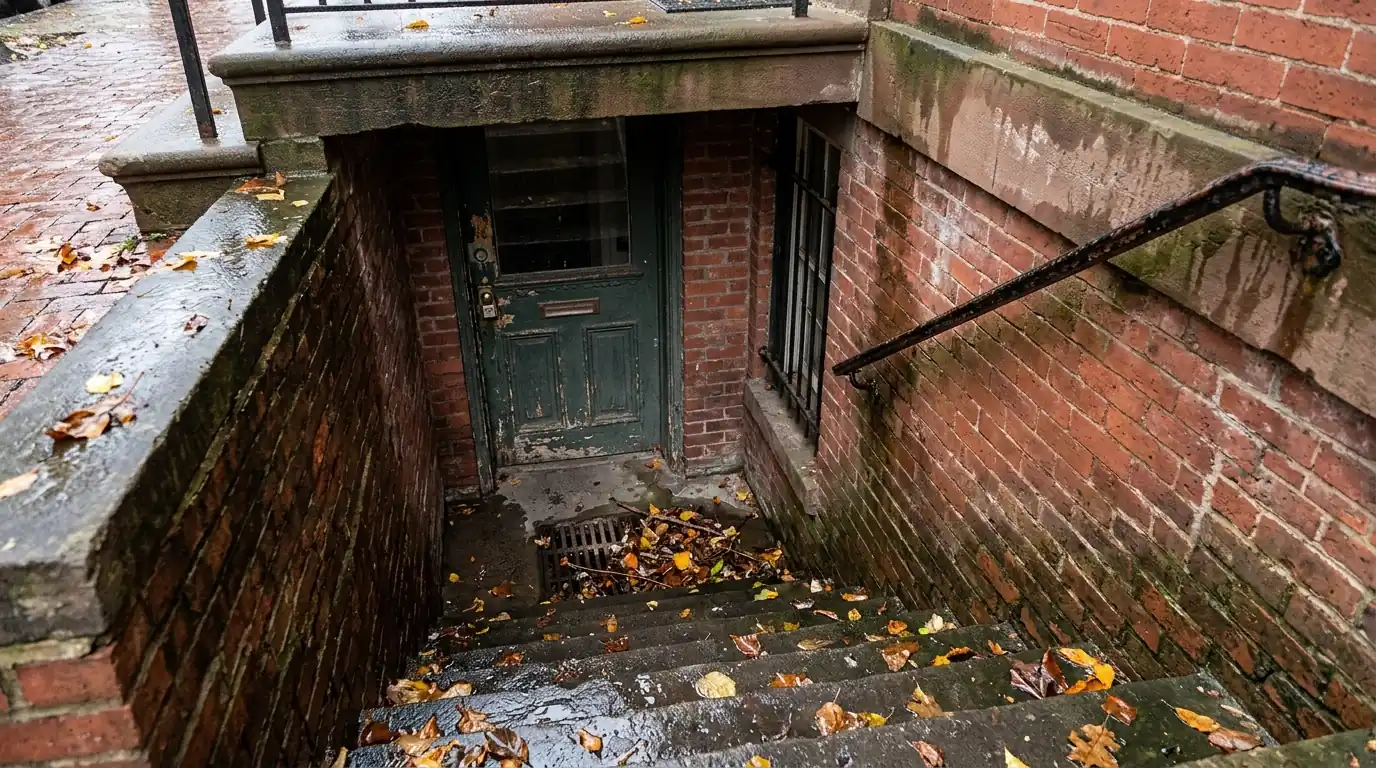
Start here. The front stairwell drain sits at the foot of the steps, just outside the basement door, and it is the only exit for rain that lands in the stairwell. Street trees drop leaves and seed pods into it every fall, and a single summer thunderstorm can fill the well faster than a half-clogged grate can drain it. When the water rises above the door sill, it pours straight in.
The clue is a wet strip that starts at the door and fans out across the floor, with the worst damage right inside the threshold. Pull the grate and you will often find a packed mat of leaves, grit and trash. Clearing it fixes many leaks. If water still stands in the drain after you clean the grate, the line below is blocked, collapsed or rooted, and a plumber with a camera can show you which.
A loose or rotted threshold makes it worse. Gaps under the sill, cracked caulk at the jambs or a settled door that misses its weatherstrip let water in even when the drain keeps up. Shine a flashlight along the bottom of the closed door at night; any light that shows through is a path for water.
What goes wrong in the rear areaway and window wells?
The rear areaway behind the house works like the front stairwell, often with less attention. It collects runoff from the yard, the alley and sometimes a downspout, and its drain is easy to forget under a pile of leaves, snow or a recycling bin. When it backs up, water reaches the bottom of the rear door or the base of the back wall, and the damage shows up along the kitchen or laundry corner of the basement apartment.
Window wells behave the same way on a smaller scale. A well without a drain, or with a drain buried under soil and debris, fills with rain and leaks around the window frame. Look for a stain that starts at the window's lower corners and runs down the wall, or for peeling paint and powdery white residue below the sill. Clear plastic covers keep leaves and snow out.
- Lift the areaway grate each spring and fall and run a garden hose into it for a minute; water should disappear without pooling.
- Keep the areaway floor clear of bins, planters and stored items that hide the drain.
- Dig out window wells so the gravel bed sits several inches below the sill.
Can water come through the brick walls themselves?
It can, by three usual routes. The first is through the parging, the thin coat of cement or lime plaster spread over the outside of the foundation where it meets the soil. After a century of freeze and thaw, parging cracks, bulges and falls off in patches, leaving soft mortar joints exposed to every rain. Inside you see damp, discolored bands on the wall, efflorescence (the white, salty crust left as water evaporates) and paint that bubbles and flakes.
The second is the party wall you share with the house next door. A neighbor's clogged downspout, leaking basement pipe or poorly graded garden can soak the shared brick and show up on your side. The damp patch usually sits low and may not line up with anything on your property; a talk over the fence often turns up the cause.
Downspouts that dump at the base of the wall are the third usual route and the simplest to fix. A flat rowhouse roof can send its whole load down one leader, straight into the soil against your basement. Extend the downspout away from the house or connect it to a working drain line.
What does it mean when water rises through the floor drain?
Older parts of DC are served by a combined sewer, which carries both storm water and household sewage in the same pipe. During a heavy downpour, the system can run full, and water looks for the lowest opening it can find. In an English basement, that is often the floor drain. Water coming up through the drain during a storm, especially with a sewage odor, is a combined sewer backup, not groundwater.
This kind of leak is a health issue as well as a water issue. Treat the water as Category 3, keep children and pets away, and avoid walking through it without boots and gloves. Carpet, pad and the bottom of drywall that it touches usually need to be removed, which is the type of job our crews handle as sewage backup cleanup. A backwater valve installed on the main sewer line is the standard fix for repeat backups, and DC Water has offered rebate programs for them in some years, so check its current offerings. For the clues that separate the two sources, see our guide to sewer water versus groundwater.
How do we find a leak that doesn't have an obvious source?
Some leaks only show up as a musty smell, a soft spot in the drywall or a faint stain that grows over months. When a homeowner can't find the cause, our technicians start with a pin meter and a thermal camera, mapping wet areas without opening walls. Readings taken after a rain and again a few dry days later show whether the moisture comes from outside or from inside, such as a slow drip from a radiator valve or a washer hose.
Once the source is clear, the order of work matters. Fix the entry point first, then dry the structure, then repair finishes. Drying a wall that's still taking on water is wasted effort. If the leak has been going for a while, check behind baseboards and under the carpet pad for growth; persistent dampness in a basement apartment is how many basement mold problems start. Our leak detection visit ends with a written moisture map you can share with a plumber, mason or landlord.
Long-term fixes range from repointing and new parging to interior drainage and a sump. Before choosing, read through what waterproofing an old rowhouse basement involves. If water is coming in now, call (202) 989-3053, any hour.
Questions readers ask
My front stairwell fills up with water, but the drain looks clear. What else could it be?
The grate may be clean while the pipe below is blocked by silt, roots or a collapsed section of old clay or cast iron. Pour a bucket of water into the drain; if it backs up or drains slowly, the line itself is the problem. A plumber can run a camera through it to locate the blockage. In some houses that drain was tied into the main sewer, so a blocked main can show up here first.
Is the white powder on my English basement walls mold?
Usually not. A white, crystalline crust that dissolves in water is efflorescence, salt left behind as water moves through brick and mortar and evaporates. It is harmless itself, but it proves water is moving through the wall. Mold tends to look fuzzy or spotted and often smells musty. If you are unsure, a moisture reading and a close look will tell the difference.
Water is coming through our shared wall. Do I need my neighbor's permission to fix it?
You can usually dry and repair your side of a party wall without permission, but stopping the leak may require work on their side, such as fixing a downspout, regrading a garden or repointing their brick. Talk to your neighbor first and share photos and moisture readings. If the houses are part of a condo association, check its documents, since the shared wall may fall under common elements.
Winifred Larkin, Knowledge Base Editor at JEC Restoration. She writes and updates these guides from the questions homeowners ask our crews on DC area jobs.
Services this guide connects to
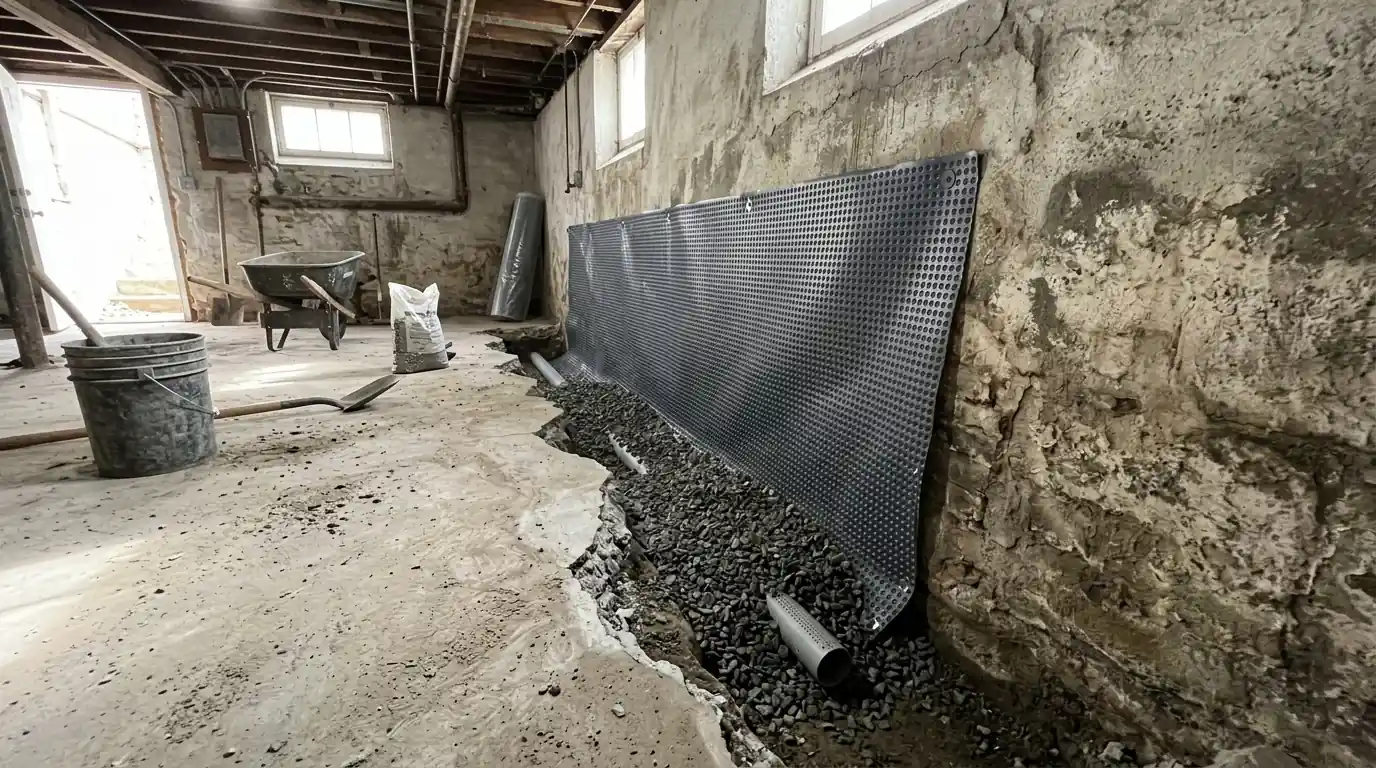
Basement Waterproofing
Basement waterproofing means stopping or managing the water that reaches a basement from outside: through wall cracks, mortar joints, the cove joint at the base of the wall, or a clogged stairwell drain.
How we handle it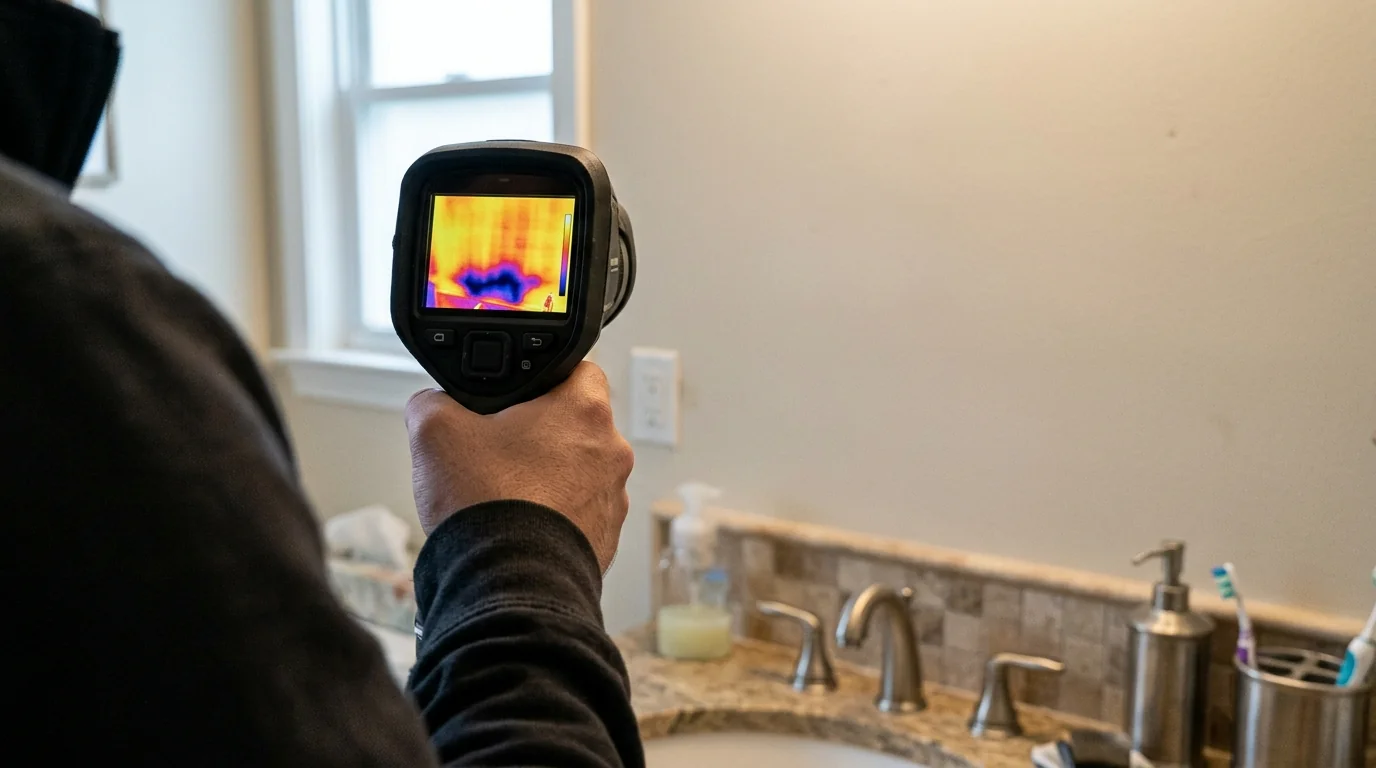
Moisture & Leak Detection
Moisture and leak detection is a non-invasive survey that finds where water is hiding in walls, ceilings and floors and how far it has spread.
How we handle it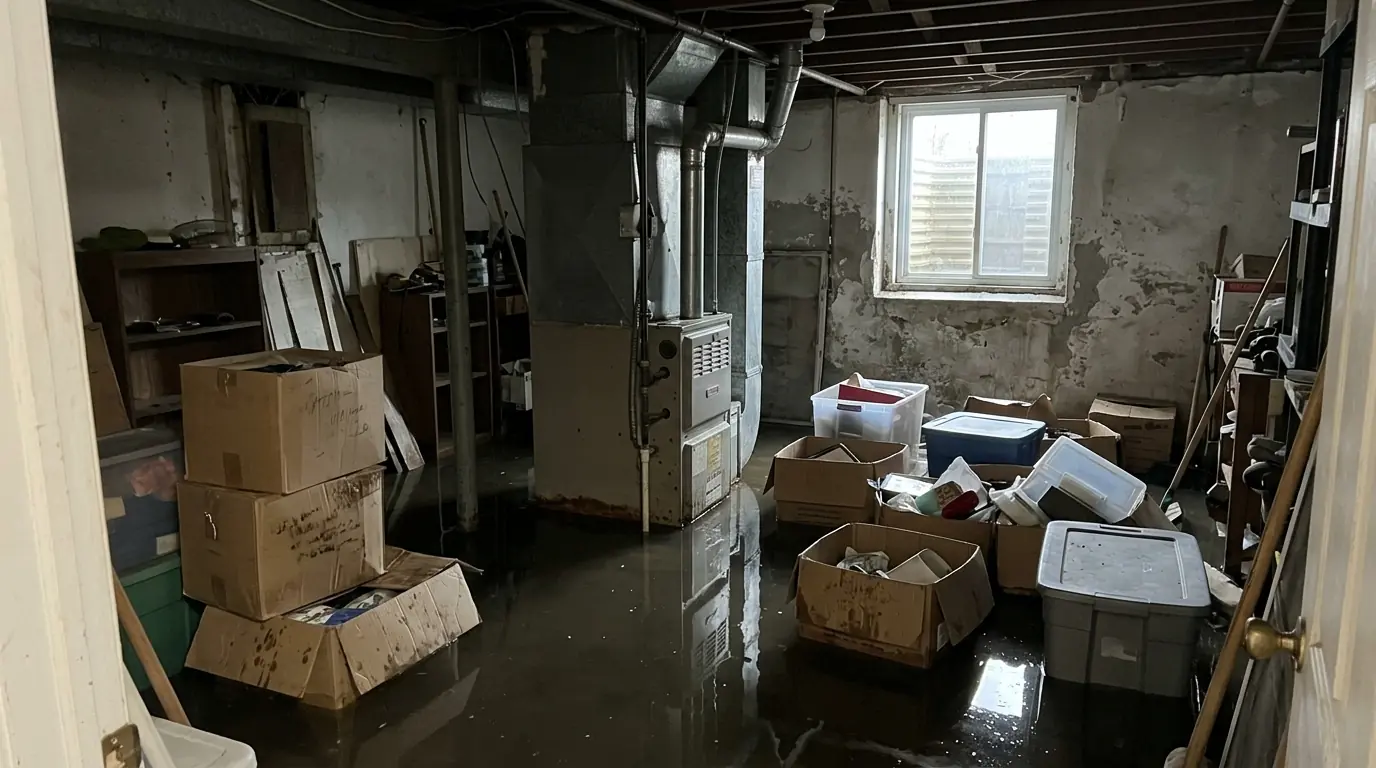
Flooded Basement Cleanup
Flooded basement cleanup removes water from a below-grade space, cleans and sanitizes what it touched, takes out finishes that cannot be saved, and dries the slab, walls and framing.
How we handle itNeed someone to look at it today?
Call (202) 989-3053. We answer 24/7 and can talk you through the next safe step on the phone.