Washington, DC neighborhood
Flood cleanup & mold removal in Georgetown, Washington, DC 20007
Georgetown's Federal and Victorian rowhouses stand on fieldstone and soft brick, with plaster walls, old wood floors and cellars that were never meant to stay dry. We dry them carefully, remove mold and protect the original materials worth keeping.
JEC Restoration handles water damage, mold, smoke and sewage cleanup in Georgetown (20007), from the hilltop blocks near Georgetown University down to the C&O Canal. Call (202) 989-3053 at any hour; the line is answered 24/7. We favor drying original plaster and wood floors in place where readings allow, instead of tearing them out.
Why do Georgetown's oldest rowhouses need a gentler drying plan?
Many Georgetown houses predate the rest of the city's rowhouse stock by decades. Federal-era brick fronts, Victorian additions, and wood-frame houses stand shoulder to shoulder on narrow, deep lots. Below them are foundations of fieldstone rubble or soft handmade brick set in lime mortar, and cellars with earth or thin concrete floors. Upstairs you find plaster on wood lath, wide heart pine or oak boards, paneled doors and built-in cabinetry that can't be bought new.
Those materials change the plan. Lime mortar and old brick are meant to breathe, so sealing a damp cellar wall with the wrong coating can trap moisture and push the problem somewhere else. Plaster on lath often dries well in place with dehumidifiers and gentle airflow, while modern drywall over the same wall would have to come out. Wide-plank floors can cup when wet and usually flatten again if drying is controlled, which is why we lean on careful hardwood drying with drying mats and slow, monitored dehumidification. We pin-meter each layer, tell you what can be saved, and remove only what the numbers show is too wet or contaminated.
Most-called services in Georgetown
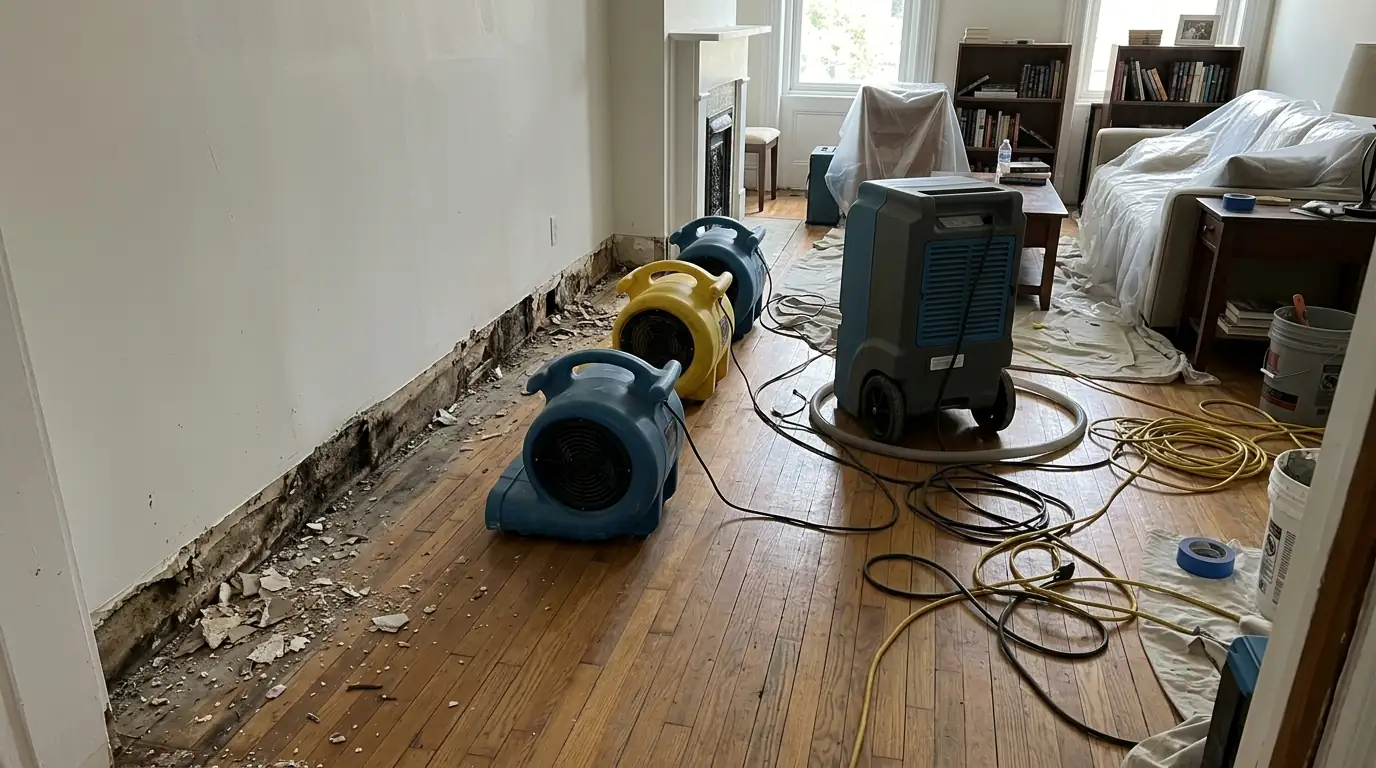
Water Damage Restoration
Water damage restoration is the full sequence after a leak or flood: stopping the source, extracting standing water, removing materials that cannot be saved, drying walls and floors with dehumidifiers and air movers, and logging moisture readings until they reach a dry standard.
How we handle it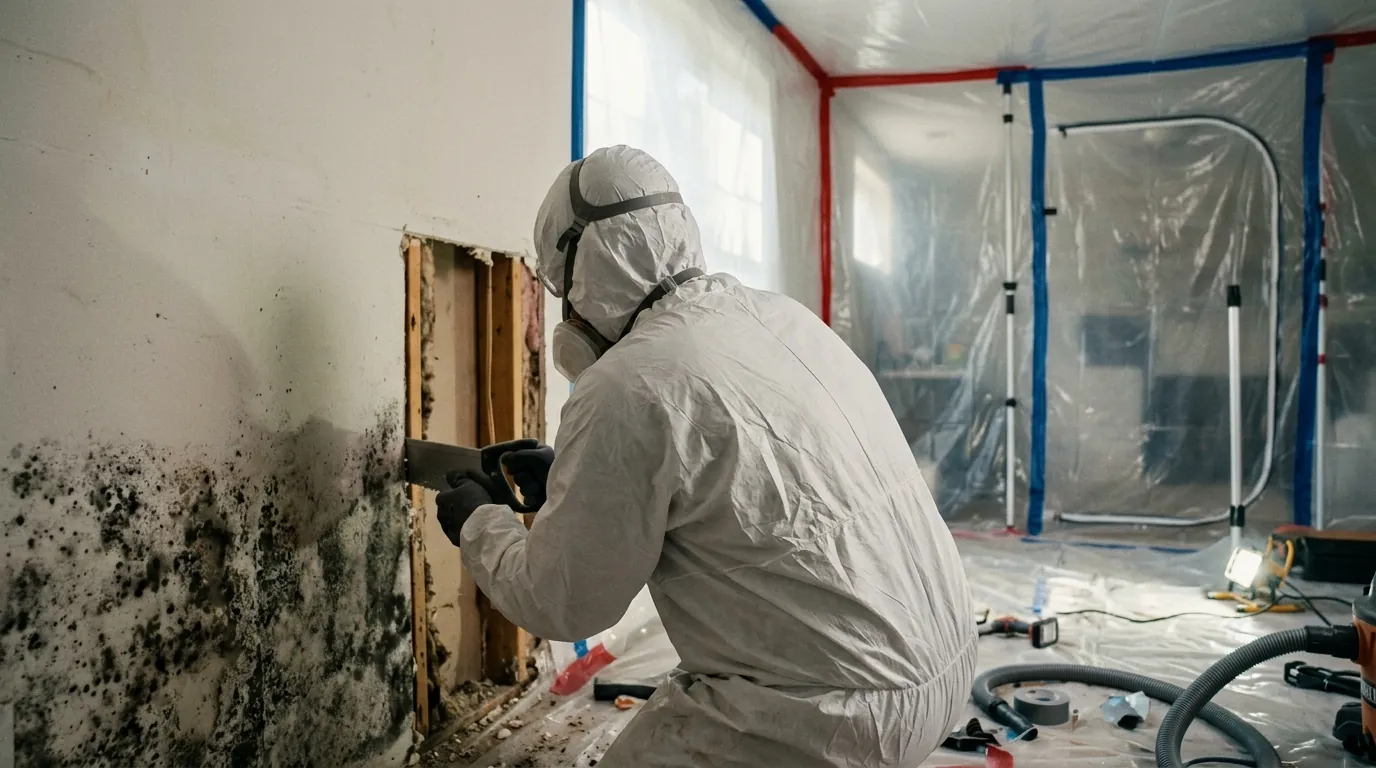
Mold Remediation
Mold remediation is the controlled removal of mold growth from a building.
How we handle it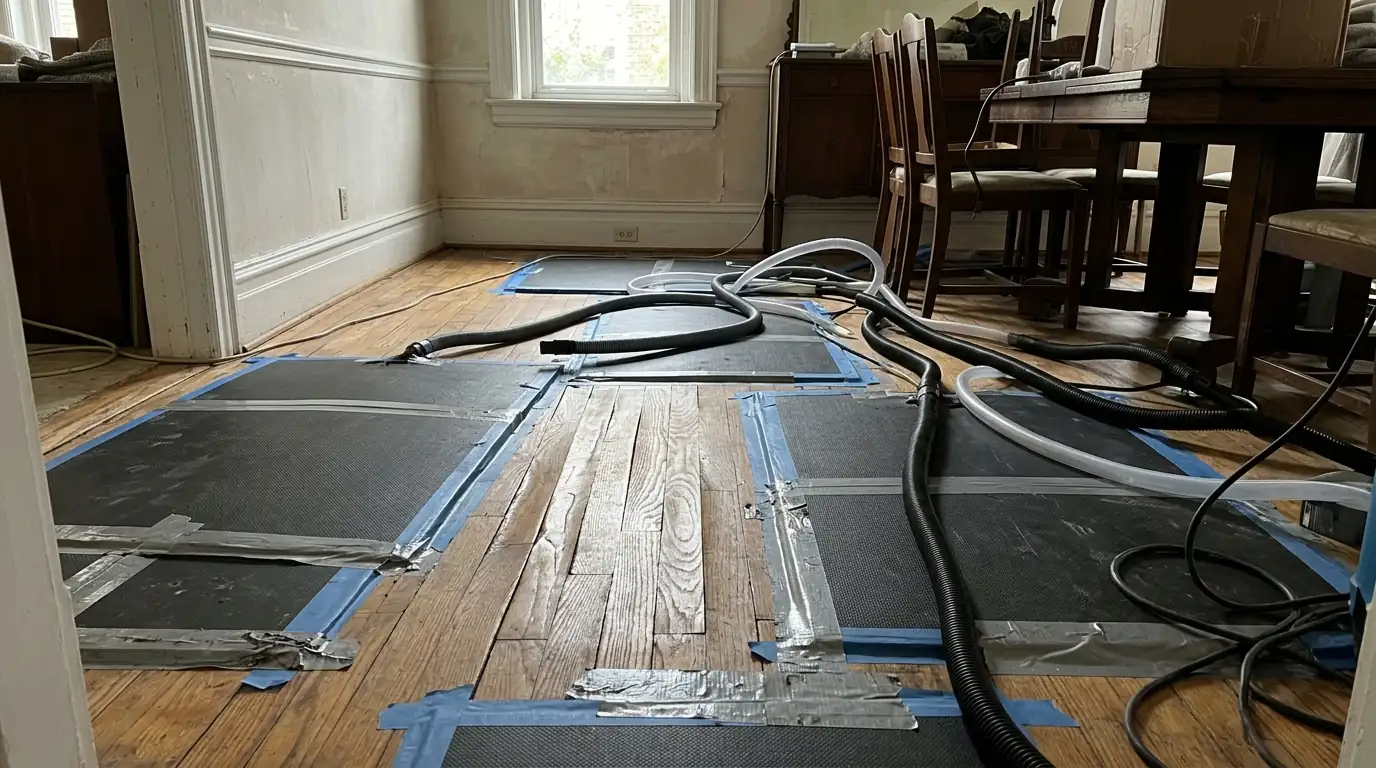
Hardwood Floor Drying
Hardwood floor drying removes water from solid wood flooring and the subfloor beneath it, usually with suction floor mats, dehumidifiers and steady monitoring.
How we handle it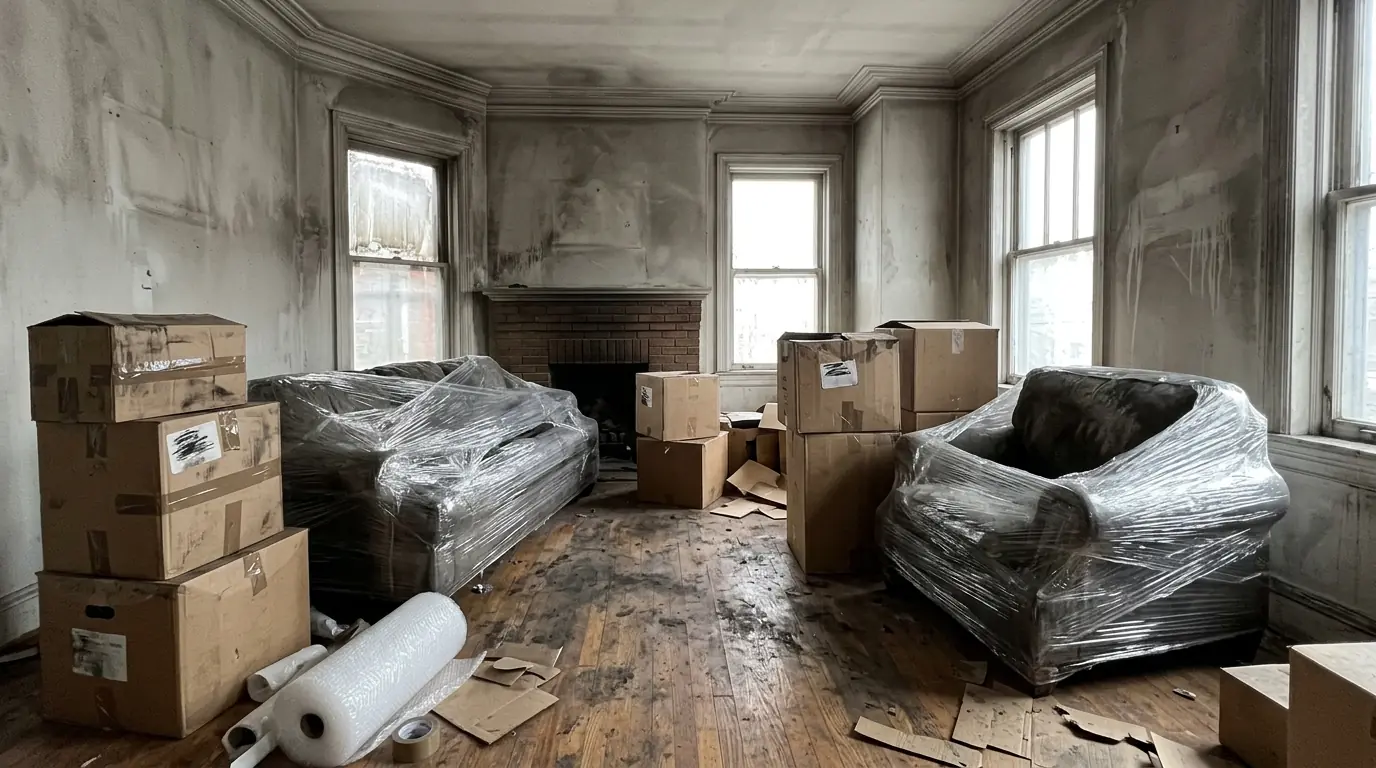
Contents Cleaning & Pack-Out
A contents pack-out is the inventory, packing and removal of belongings from a home damaged by fire, smoke, water or sewage, so the structure can be cleaned and repaired while items are cleaned and stored elsewhere.
How we handle it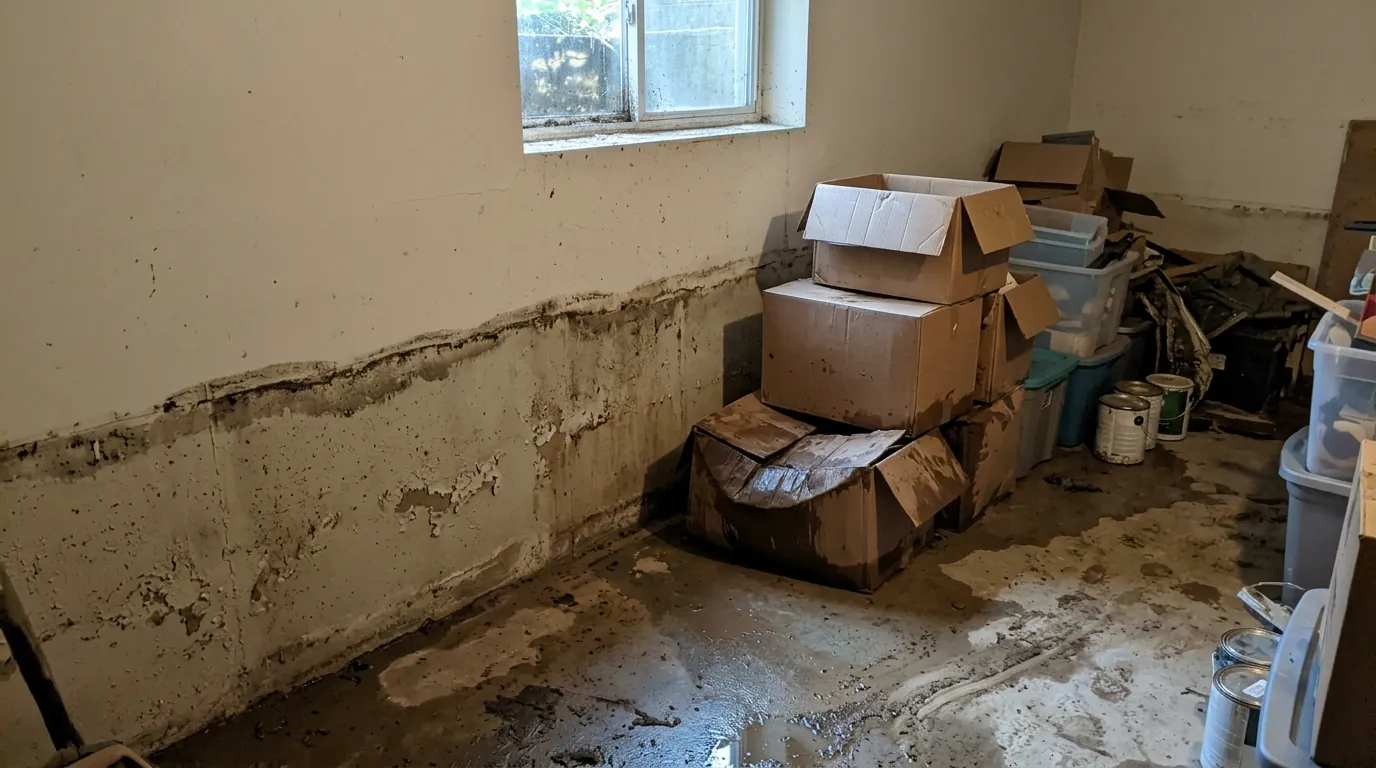
Storm & Flood Cleanup
Storm and flood cleanup covers water that enters a home from outside during heavy weather: flash flooding at basement doors and window wells, overflowing areaway drains, wind-driven rain through walls and windows, and roof openings from fallen limbs.
How we handle itHow does water reach a Georgetown house on a hill above the river?
The neighborhood falls steeply from Wisconsin Avenue and the blocks around Dumbarton Oaks down toward M Street, the canal and the Potomac waterfront. That slope does most of the work. In a summer thunderstorm, runoff pours down the streets and through walled rear gardens, and the lowest door on many lots is a back cellar entry or a below-grade kitchen. Brick garden paving that pitches toward the house sends water straight to the foundation.
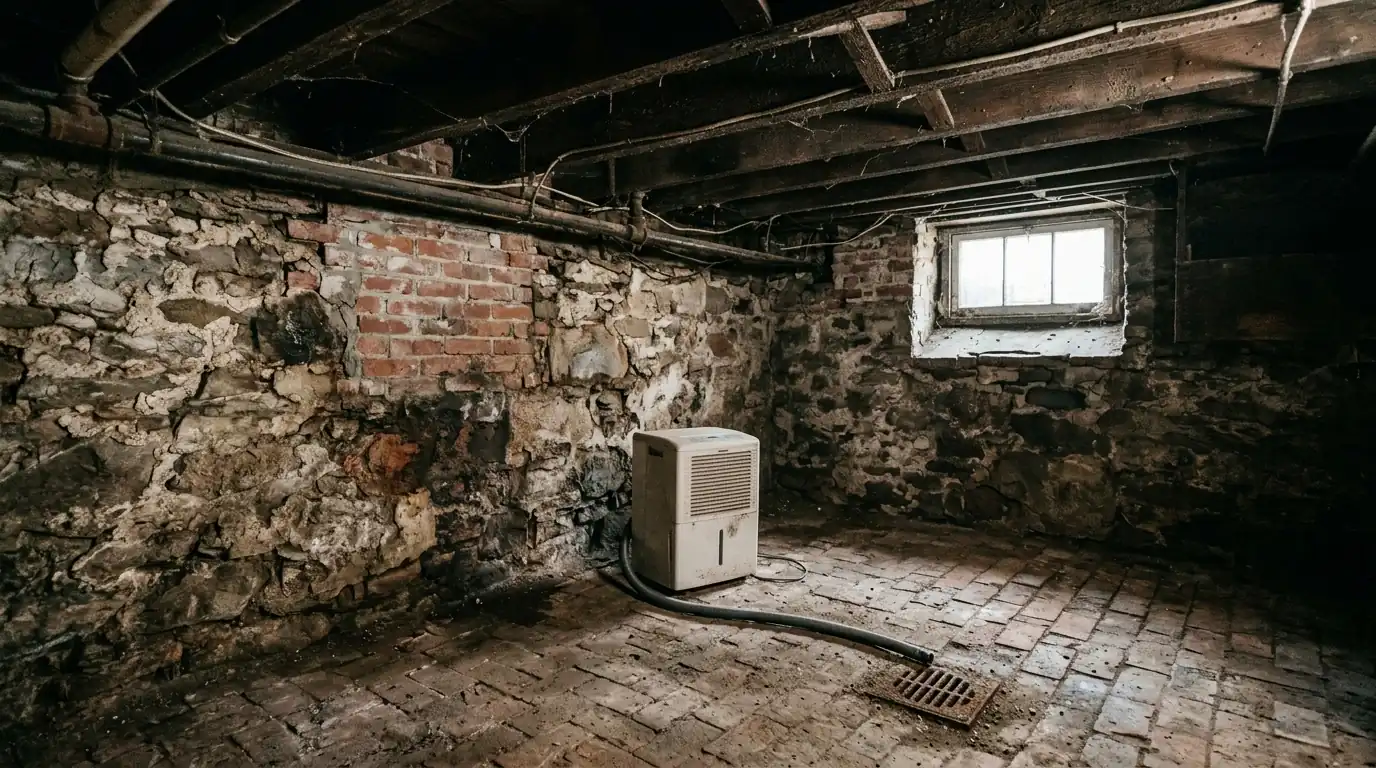
Cellars here also take on groundwater through rubble walls after long rainy stretches, and the musty air that follows feeds mold on stored boxes, wood shelving and the undersides of floor joists. River and canal flooding affects only the lowest waterfront blocks, and some buildings there have their own flood barriers, but heavy storms still overwhelm older drains in the lower streets. Inside, the familiar culprits apply too: a radiator valve, a cracked supply line in an exterior wall during a January freeze, or a leaking slate or tin roof valley. For mold found in a cellar or behind plaster, our mold remediation work uses containment and HEPA filtration sized to these small rooms.
Typical calls we get from Georgetown
Garden runoff into a below-grade kitchen
A storm sends water across brick garden paving and under the rear door of a cellar-level kitchen. We extract it, lift the baseboards, dry the plaster and floor in place, and point out where the paving pitches back toward the house.
Musty fieldstone cellar with mold on the joists
Damp rubble walls keep cellar humidity high, and mold spreads across the undersides of old floor joists and wood shelving. We contain the cellar, HEPA vacuum and clean the framing, remove damaged shelving, and recommend continuous dehumidification over sealing the stone.
Frozen supply line inside an exterior wall
During a cold snap, a pipe in a north-facing wall splits and soaks plaster in two rooms. We locate the wet area with a thermal camera, open only where needed, and dry the wall cavity and floor below before plaster repairs begin.
Wide-plank floors cupped after a radiator leak
A leaking radiator valve wets a section of old heart pine boards in a front parlor. We set drying mats on the floor, control humidity in the room, and monitor moisture daily until the boards settle back as close to flat as they will go.
What changes about the job inside Georgetown's historic district?
Exterior changes in the Georgetown Historic District go through design review, and the Old Georgetown Board advises on work visible from public streets. Our drying, mold removal and cleanup happen inside the house, so they rarely touch that process. When the water damage points to an exterior fix (a failing areaway, a cracked front step, a roof valley or window), we document it with photos and readings so your architect or contractor can plan the repair and any review it needs.
Access takes planning. Narrow streets, residential permit parking and tight sidewalks mean we bring compact extraction units, run hoses through the rear garden where we can, and protect stair treads and door frames on the way in. Attached houses share party walls, so a leak can cross into the neighbor's cellar, and we will check both sides if your neighbor agrees. If furniture, art or rugs need to move while floors dry, our contents pack-out crew inventories and stores them.

Typical homes in this part of the DC area
Nearby areas we also cover
Questions from Georgetown homeowners
Can plaster walls in a Georgetown house be dried instead of replaced?
Often, yes. Plaster on wood lath tolerates clean water better than drywall, and it usually dries in place with dehumidifiers and controlled airflow. We check that the plaster is still keyed to the lath and has not softened or bulged. Plaster soaked by sewage or water that sat for days is a different case, and we would explain why before removing any of it.
Should I seal my Georgetown cellar walls to stop the dampness?
Be careful. Old brick and fieldstone laid in lime mortar need to release moisture, and many modern sealers and cement coatings trap it, which can damage the masonry over time. Managing water outside (gutters, grading, garden drainage) and running a dehumidifier inside usually works better. If you are considering a coating, talk with a mason who works on historic buildings first.
Does mold cleanup in a cellar affect the rest of the house?
It can if it isn't contained. Disturbing mold releases spores, and in a Georgetown rowhouse the cellar stairs and floor gaps connect to the rooms above. We isolate the cellar with plastic sheeting and run negative air so air flows into the work area, not out of it. Mold can trigger allergy and asthma symptoms in sensitive people, so containment matters even for small jobs.
Water or mold trouble in Georgetown?
Call JEC Restoration any time. We answer 24/7 and talk through what you are seeing before anyone touches a wall.