Sewage & Cleanup
Toilet overflow cleanup in Washington, DC homes and condos
An overflowing toilet rarely stays in the bathroom. It runs under the tile, through the subfloor and into the ceiling below. We clean it up based on what was in the water, then dry everything it reached.
Drying, air and detection equipment on our jobs comes from names like
- Dri-Eaz
- Phoenix
- B-Air
- Abatement Technologies
- Protimeter
- Delmhorst
- FLIR
- Benefect
- Concrobium
- Omnitec
- Sapphire Scientific
- Tramex
Toilet overflow cleanup is the removal, disinfection and drying that follows water escaping from a toilet bowl, tank, supply line or wax ring seal. Clean tank or supply-line water is handled as Category 1 or 2; bowl water with waste is Category 3 and porous materials it soaked are removed. If it leaked to a floor below, call (202) 989-3053 before the ceiling sags.
Is toilet overflow water Category 2 or Category 3?
It depends on where in the toilet the water came from. Water from the supply line, the shut-off valve or the tank is clean when it leaves the fixture, so it starts as Category 1. Once it runs across a bathroom floor and picks up whatever is there, it is usually handled as Category 2.
Water from the bowl is different. An overflow that carries urine or feces is Category 3, the same class as sewage, and it is handled that way: porous materials it soaked are removed, and everything else is cleaned and disinfected before drying. A bowl that overflowed with only clean flush water and no waste sits closer to Category 2, but if you are not sure, it is treated as Category 3.
Time pushes everything in the same direction. Even a clean-water leak that sat for a day or two in a warm subfloor cavity can grow bacteria, so a slow leak discovered late often gets the more careful treatment.
Signs a toilet has been leaking under the floor
These clues usually show up before anyone sees water on the bathroom floor.
Toilet rocks when you sit
A toilet that moves even slightly can break its wax seal, and every flush then leaks a little into the subfloor.
Soft or spongy floor at the base
Rot in the subfloor around the flange feels like give in the tile or vinyl right next to the toilet.
Stained caulk or grout at the base
Yellow or brown discoloration in the caulk line around the toilet often means water is coming from underneath.
Ceiling stain directly below the bathroom
A brown ring on the ceiling under the toilet location is a classic wax ring or flange leak sign.
Sewer smell in the bathroom
A failed wax seal can let sewer gas escape at the base of the toilet, even when no water is visible.
Water on the supply line or valve
Beads of water, mineral crust or rust on the shut-off valve or line connection mean a slow leak is already running.
How we clean up after a toilet overflow
We sort out the water first, then follow it down through the house.
Stop it and classify it
We confirm the toilet's shut-off is closed and figure out where the water came from: tank, supply line, bowl or wax ring. That decides the cleanup level.
Follow the water down
Our technicians read the bathroom floor, the walls around it and the ceiling of the room below with meters and a thermal camera. Light fixtures under the bathroom are checked with power off.
Remove and clean
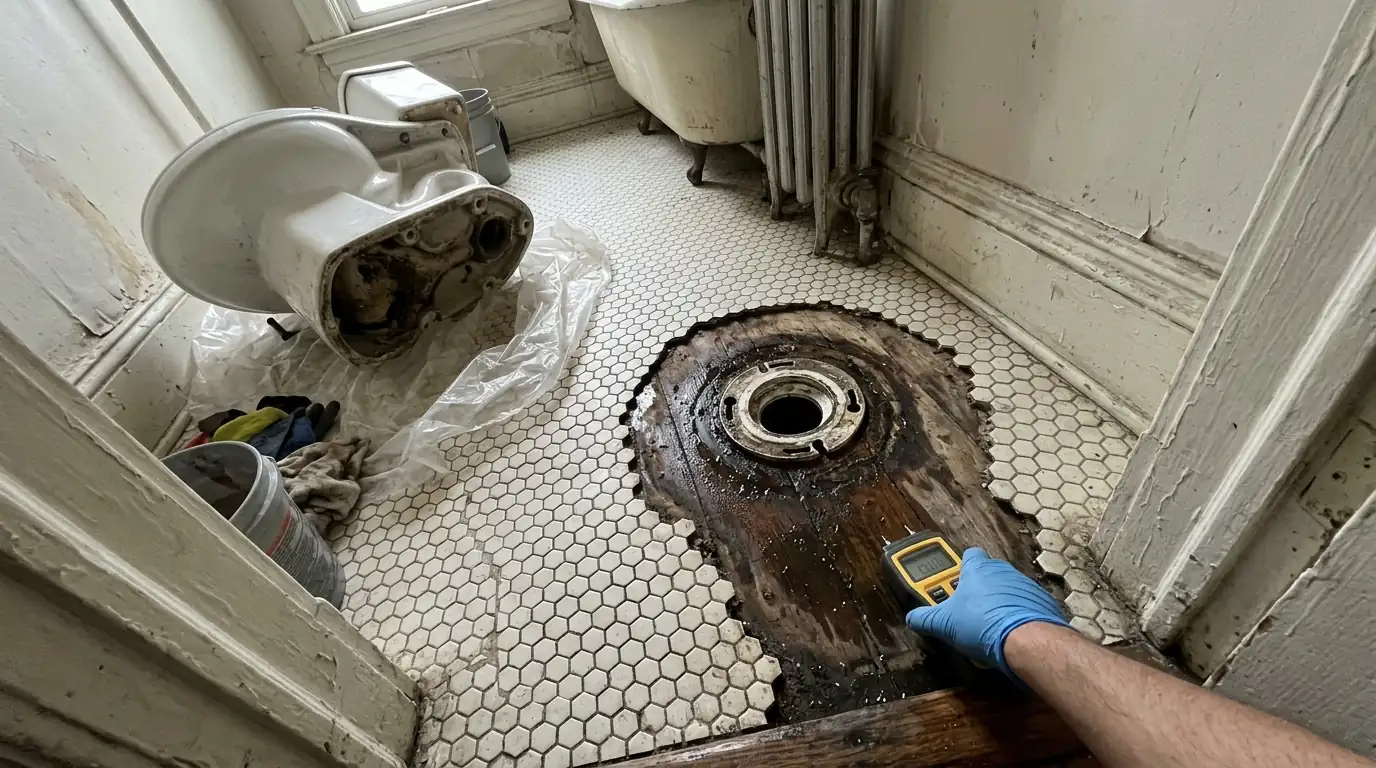
Standing water is extracted. With waste-contaminated water, rugs, baseboard and any soaked drywall below are removed, and hard surfaces are cleaned with a disinfectant.
Dry the floor and ceiling
Dehumidifiers, air movers and sometimes injection lines into the joist bays dry the subfloor and ceiling. Small bathroom jobs often dry in two to four days.
Hand off for repair
We give you the readings and photos, and note any rotted subfloor around the flange for the plumber. The toilet should be reset on a new wax ring before anyone uses it.
How does an upstairs toilet overflow damage the ceiling below?
Bathroom floors are built to shed water across the surface, not to hold it. Water finds the gap at the base of the toilet, the grout lines and the edge of the tub, then soaks into the subfloor and runs along the joists. In older houses with plank subfloors, it drops through the board gaps almost immediately.
Below, it pools on top of the ceiling. A drywall ceiling softens and sags; plaster on lath holds water longer, then cracks or loosens from the lath. Ceiling light fixtures are a common exit point, so if water is coming from a light, turn off that circuit at the panel and stay out of the room. We open small holes to drain trapped water, read the ceiling and joist bays, and decide whether the ceiling can be dried in place. Our ceiling leak page covers that side in more depth.
If the overflow carried waste, a wet drywall ceiling below is cut out rather than dried, since contaminated water soaked the paper and gypsum.
Why do wax ring and supply line leaks go unnoticed for so long?
Not every toilet leak is an overflow. Two of the most damaging ones never put water on top of the floor at all. The wax ring is the seal between the bottom of the toilet and the drain flange. When a toilet rocks, the flange is cracked or the ring dries out, a little water escapes with every flush and runs straight down into the subfloor. Nothing shows on the tile until the floor around the toilet feels soft or a stain appears on the ceiling below.
Supply lines fail in a different way. Older braided lines with plastic nuts can crack at the connection, and solid plastic tubes get brittle with age. A slow drip behind the toilet runs down the wall and under the baseboard. A sudden failure sprays at full pressure until someone closes the valve.
Both kinds of slow leak often bring rot in the subfloor around the flange and sometimes mold inside the wall or ceiling below. Our leak detection work can trace a mystery stain back to the toilet when it is not obvious.
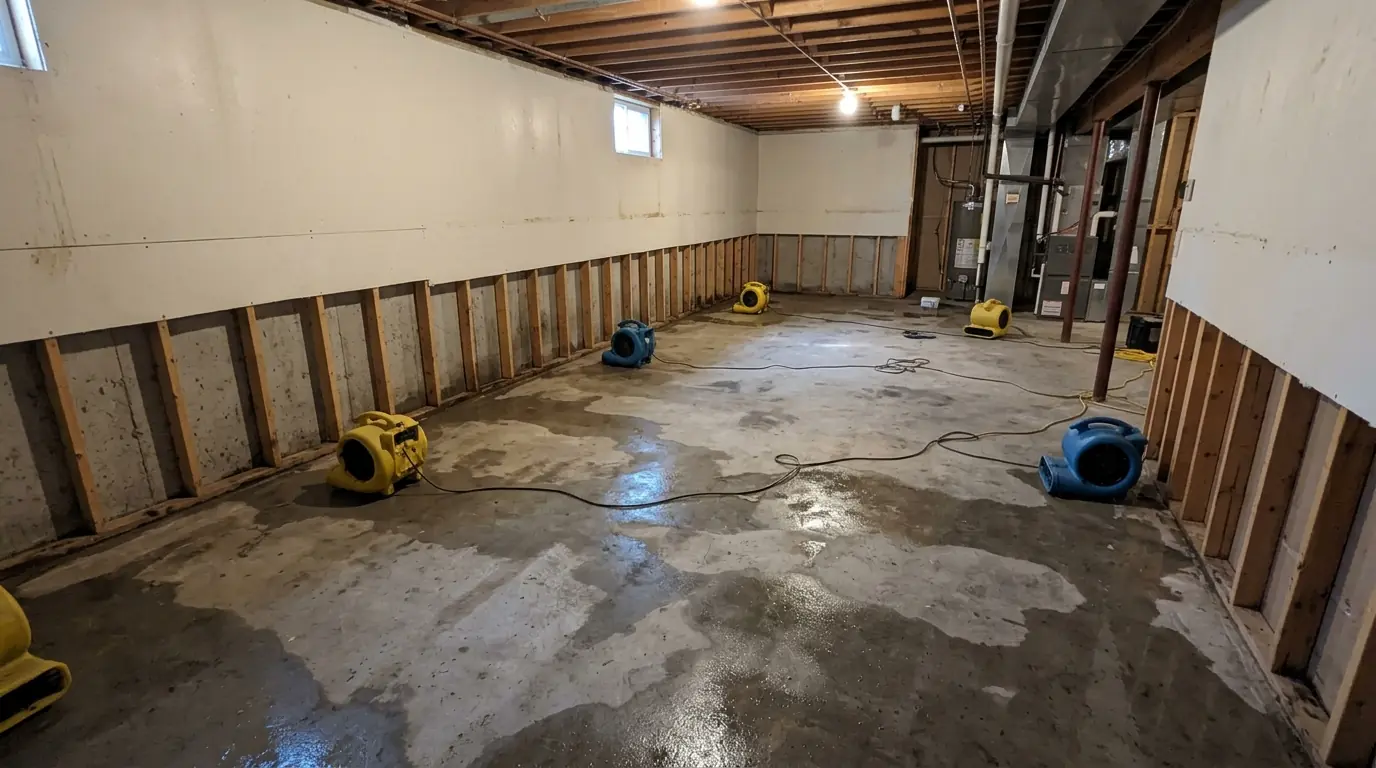
A basement floor drying after sewer backup cleanup
Toilet overflows in DC rowhouses, condos and basement apartments
Toilet leaks travel in predictable ways through DC housing. In a classic rowhouse, the second-floor bathroom usually sits over the dining room or kitchen, so a wax ring that has leaked for months shows up as a stain in plaster with a crown molding below. In homes where an English basement is rented out, a clog in the shared building sewer can push water up through the basement toilet first, which means it may be a sewer line backup rather than a toilet problem.
Condo buildings, from converted rowhouses to newer towers in NoMa and Navy Yard, stack bathrooms directly on top of each other. An overflow on the fifth floor can reach the fourth and third through shared plumbing chases. Condo boards usually want documentation of where the water started and which units it reached, so we photograph and read each unit separately. Older apartment buildings near Connecticut Avenue and in Columbia Heights add another wrinkle: cast-iron closet bends and lead or brass flanges that crack, so the leak may keep returning until the flange itself is repaired.
Where we do this work: Washington, DC and nearby Maryland and Virginia, including:
What toilet overflow cleanup costs around DC
The water category and whether the ceiling below got wet decide most of the cost.
| Clean tank or supply line water, bathroom floor only | $480-$1,260 |
|---|---|
| Bowl overflow with waste, bathroom cleaned and disinfected | $870-$2,190 |
| Upstairs overflow reaching the ceiling below | $1,640-$4,370 |
| Long-term wax ring leak with subfloor and ceiling drying | $2,120-$5,480 |
These are typical DC-area ranges, not quotes; we price toilet overflow cleanup after an on-site assessment. Compare ranges across all 40 services.
What moves the price
- Clean tank water versus waste-contaminated water
- Whether the ceiling below is drywall or plaster
- How long the leak ran before discovery
- Tile and subfloor that must be opened
- Number of condo units the water reached
Related work we often do on the same job
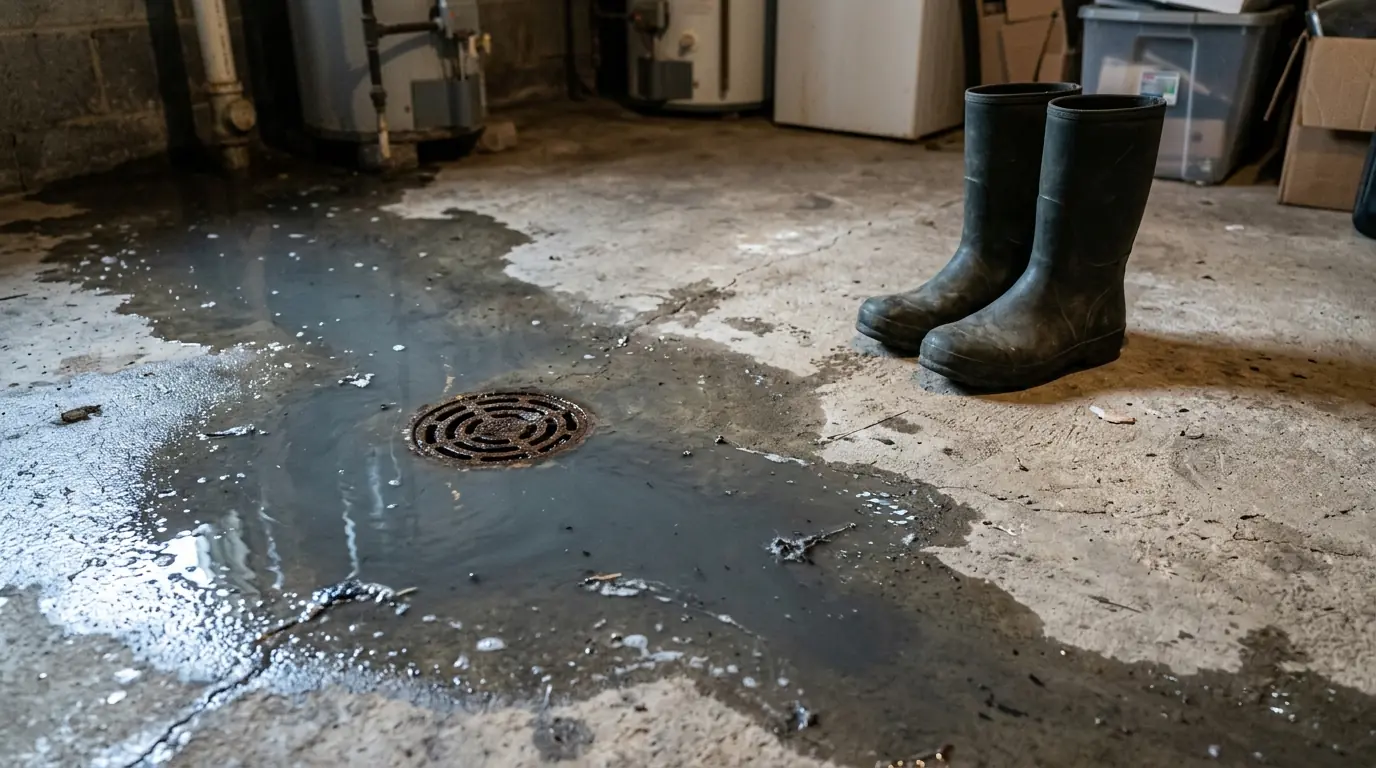
Sewage Backup Cleanup
Sewage backup cleanup is the removal of wastewater and the porous materials it soaked, followed by cleaning, disinfection and drying of the affected area.
How we handle it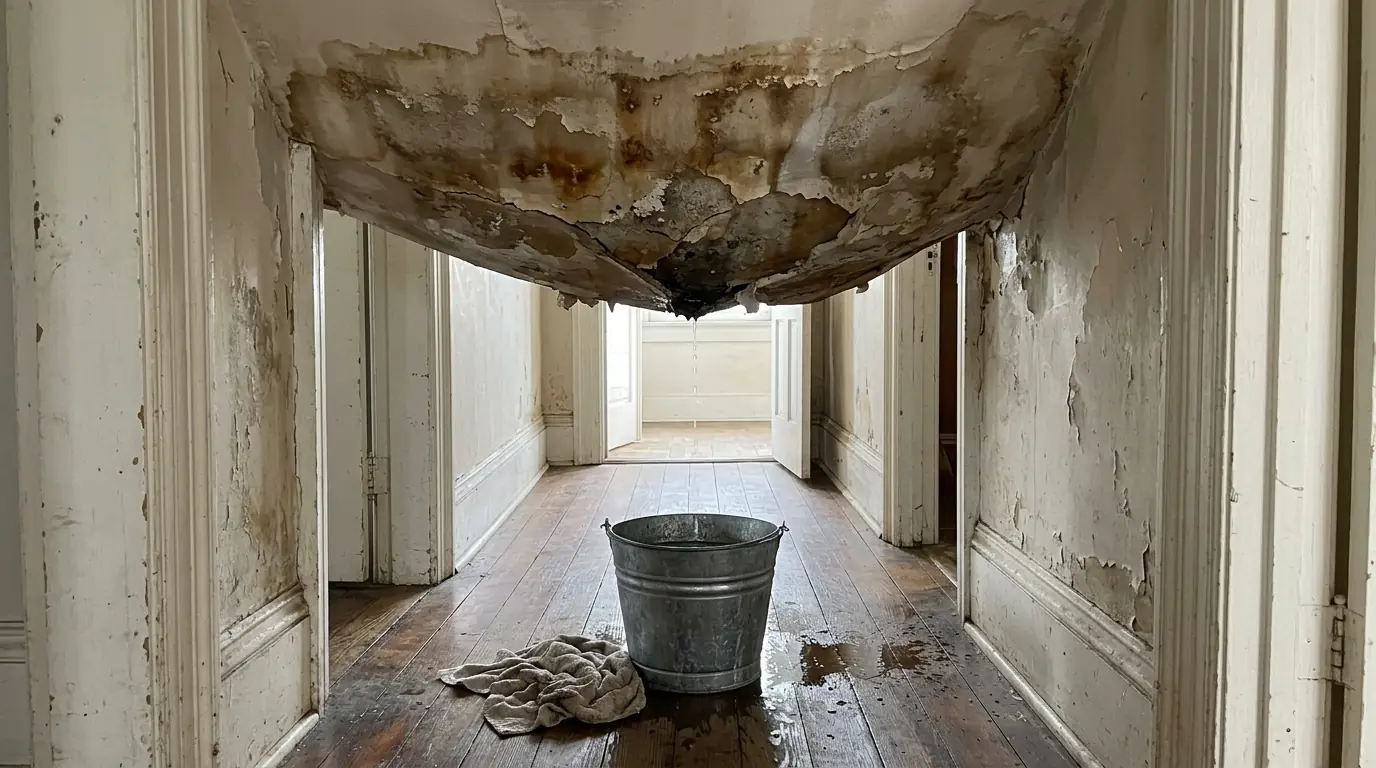
Ceiling Leak Damage
Ceiling leak damage work deals with water trapped above a ceiling from a roof, a bathroom, a radiator or an air conditioning line.
How we handle it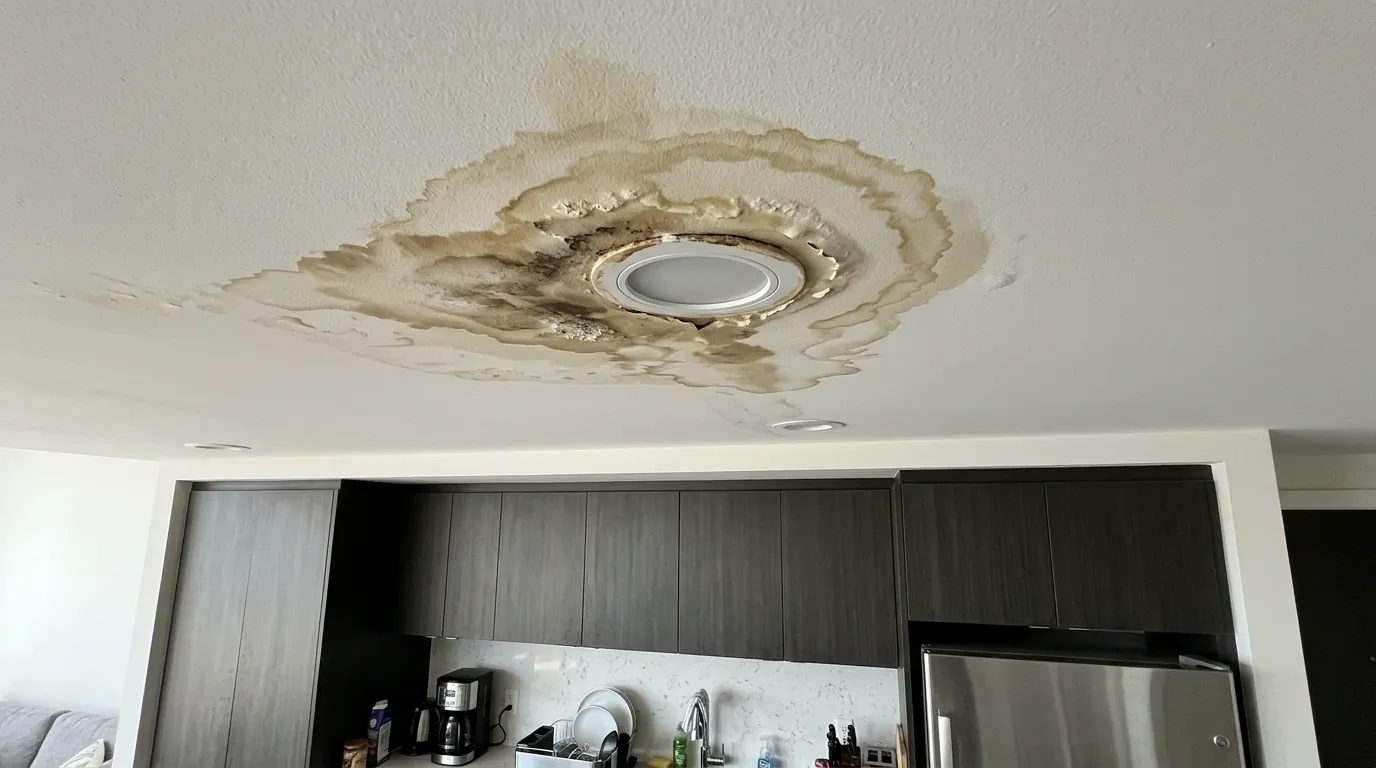
Condo Water Damage
Condo water damage work covers leaks that cross unit lines: water from the unit above, a failed riser, a shared wall or a roof over the top floor.
How we handle it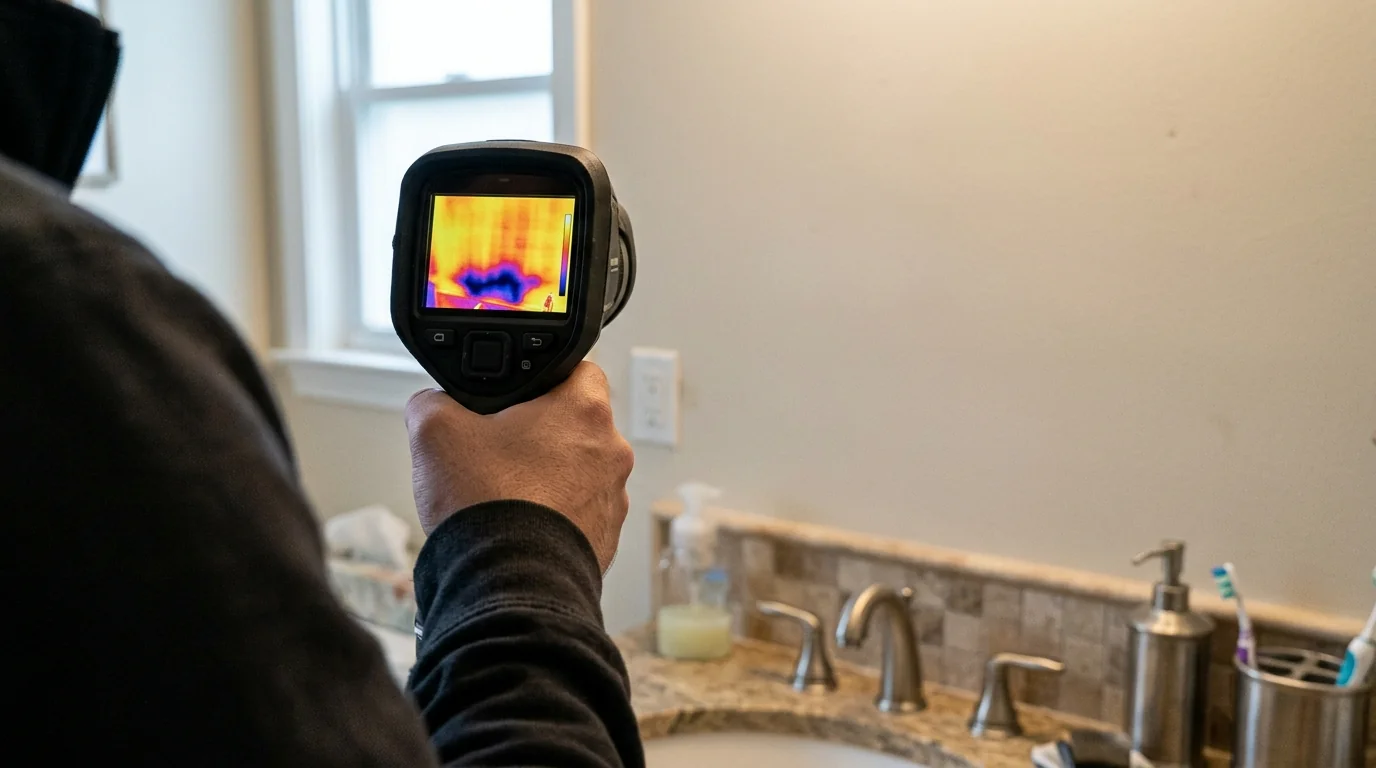
Moisture & Leak Detection
Moisture and leak detection is a non-invasive survey that finds where water is hiding in walls, ceilings and floors and how far it has spread.
How we handle itQuestions homeowners ask about toilet overflow cleanup
What should I do in the first few minutes of a toilet overflow?
Turn the oval shut-off valve behind the toilet clockwise until it stops. If it will not turn, lift the tank lid and pull up the float to stop the fill, then close the main. Put towels down to slow the spread, keep people out of the room below, and turn off any ceiling light circuit under the bathroom.
Can water from a toilet supply line ruin the ceiling below?
Yes. Supply line water is clean, but a failed line sprays at full house pressure until someone closes the valve. That volume runs through the subfloor quickly and can soak a drywall ceiling enough to sag, or saturate plaster on lath. Clean water gives us more options to dry the ceiling in place rather than replace it.
My toilet rocks a little. Does that mean it is leaking?
Not always, but it is a common first step toward a leak. Rocking can break the wax seal, and each flush then pushes some water under the toilet. Have a plumber reset it on a new wax ring and check the flange. If the floor around it is already soft, we can read the subfloor before the plumber resets it.
Does a toilet that overflowed with waste need professional cleanup?
A small overflow contained to a tiled floor can be cleaned with gloves, paper towels and a household disinfectant. If waste-contaminated water soaked into a bath mat, baseboard, the subfloor or the ceiling below, porous materials need removal and the hidden spaces need disinfection and drying, which is where professional cleanup makes sense.
Who pays when a condo toilet overflow damages the unit below?
It depends on your condo documents, the cause and each owner's policy. Often the unit owner where the toilet failed is responsible for damage that originated there, while the association covers common elements. Check your policy and your bylaws, and keep photos and our moisture readings for both units. Our condo leak guide covers the first steps.
Water in the house or a musty room you can't explain?
Call JEC Restoration any time. We answer 24/7 and talk through what you are seeing before anyone touches a wall.