Water Damage
Hardwood floor drying in Washington, DC for oak strip and pine plank floors
Wet hardwood swells, cups and gaps, but a lot of it settles back if it is dried slowly and correctly. We pull water out of the boards and subfloor with floor drying mats and tell you honestly when a floor can be saved.
Drying, air and detection equipment on our jobs comes from names like
- Dri-Eaz
- Phoenix
- B-Air
- Abatement Technologies
- Protimeter
- Delmhorst
- FLIR
- Benefect
- Concrobium
- Omnitec
- Sapphire Scientific
- Tramex
Hardwood floor drying removes water from solid wood flooring and the subfloor beneath it, usually with suction floor mats, dehumidifiers and steady monitoring. Done early, it lets many cupped oak and pine floors flatten back and be refinished rather than torn out. It applies after clean-water leaks; floors soaked by sewage or outside floodwater usually come up. Call (202) 989-3053 day or night.
What is the difference between cupping and crowning in a wet wood floor?
Cupping is when the edges of each board rise higher than the center, so the floor looks like a row of shallow troughs. It happens because the bottom of the board, sitting on a wet subfloor, takes on more moisture and swells more than the top. Cupping is the floor telling you there is still water underneath.
Crowning is the opposite shape: the center of the board stands higher than its edges. It usually shows up when a cupped floor gets sanded flat too soon. The high edges are sanded off, the board finishes drying, the bottom shrinks back and the middle ends up high. Crowning is permanent once it happens, which is why timing matters so much.
Some floors also buckle, lifting right off the subfloor in a hump. Buckling means the boards swelled with nowhere to go, usually against a wall or a threshold, and those sections often need to be pulled and relaid.
How we dry a hardwood floor and the subfloor below it
Slow, even drying is what lets a cupped floor lie flat again more often than not.
Read the floor in a grid
We take pin meter readings across the wet boards and on a dry section of the same floor in another room. The dry reading becomes the drying goal.
Check below
Where there is a basement or crawl space under the floor, we read the subfloor and joists from underneath and open a ceiling section only if readings call for it.
Set mats and dehumidify
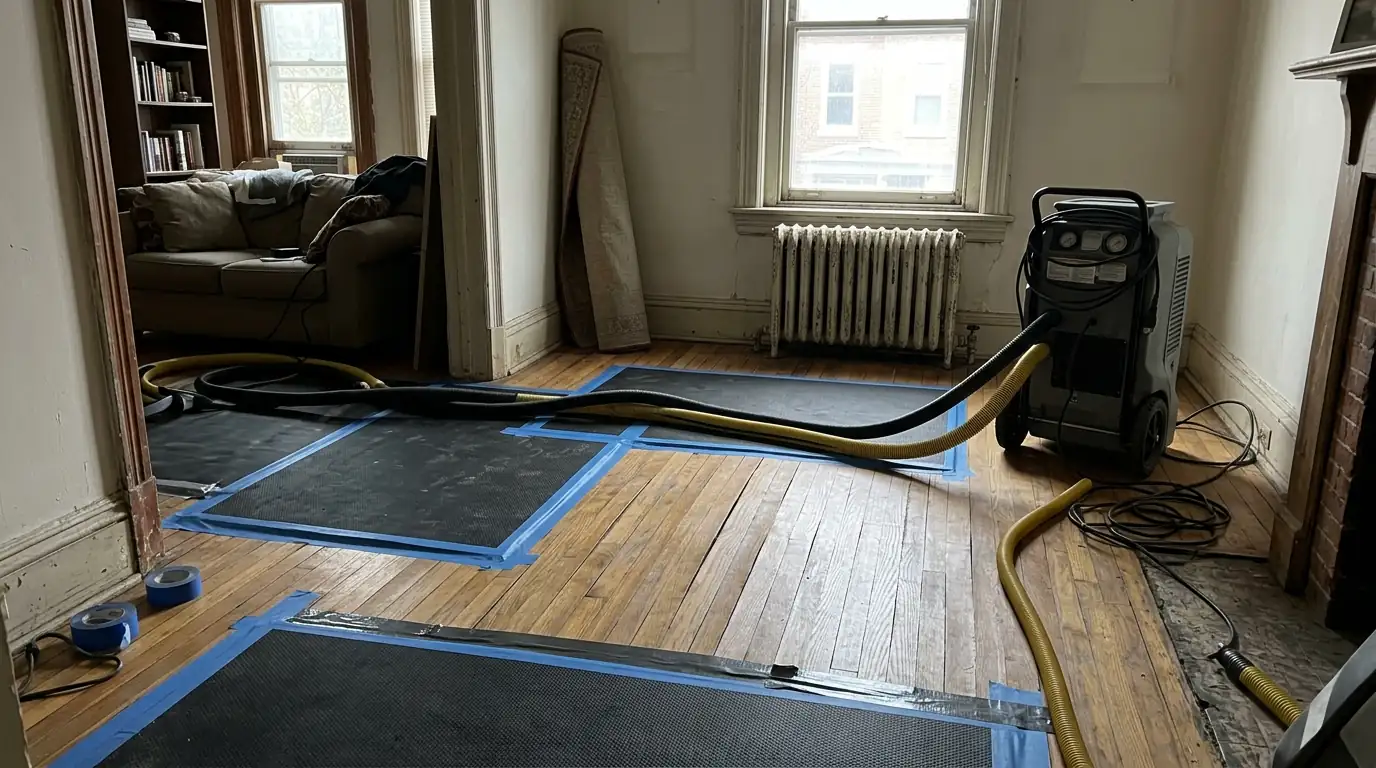
Floor drying mats go down over the wettest areas, with a low-grain dehumidifier controlling the room. Airflow stays moderate to avoid drying the top too fast.
Track cupping and readings daily
Our technicians log readings and measure board shape at the same marked spots. Most oak floors reach goal in five to ten days.
Advise on timing
We give you the final readings and a recommendation on how long to wait before sanding. If boards need replacing, we mark exactly which ones.
How do floor drying mats pull water out of hardwood?
Floor drying mats are flat panels laid over the wet boards and sealed around their edges with tape. A unit attached to the mats pulls a gentle vacuum, drawing moisture up through the wood and out of the gaps between boards. Because they work from the top while dehumidified air circulates in the room, they dry the boards more evenly than air movers blowing across the surface.
When the space below is open, like an unfinished basement ceiling, we also dry from underneath, directing warm, dry air at the subfloor between the joists. Drying from both sides brings the top and bottom of each board back into balance, which is what lets cupping relax.
Air movers alone tend to dry the top surface fast while the bottom stays wet, which can actually make cupping worse. We keep airflow moderate on wood floors and rely on dehumidification, mats and patience.
Signs your wood floor is holding water
Wood floors often show damage gradually, a day or two after the water seemed to be gone.
Edges rising into ridges
Cupping you can see in raking light or feel in socks means the bottom of the boards is wetter than the top.
Boards lifting near walls
Swollen boards with no room to expand push against walls and thresholds and can rise off the subfloor.
Dark gray or black staining
Water reacting with tannins in oak leaves dark stains, often along board ends and around nails, that sanding may not remove.
Finish turning white or cloudy
Moisture trapped under the finish shows as hazy white patches, especially on older wax or shellac finishes.
Gaps or squeaks that were not there before
As wet boards dry unevenly, some shrink back more than others and new gaps or noises appear.
Musty smell from floor vents or registers
A damp odor rising from floor registers can mean the subfloor or the space beneath it is still wet.
When does a wet hardwood floor need sanding, and when does it need replacing?
Most mild to moderate cupping flattens a great deal once the boards and subfloor are dry. What is left is often a slight ridge at the board edges that a light sand and refinish removes. Floors with a thick wear layer, like solid oak strip, can take that sanding and still have plenty of life.
Replacement comes into it when boards have buckled off the nails, split, stained black from water and iron reacting with the tannins in oak, or stayed wet long enough to start decaying. Engineered flooring with a thin veneer may not survive sanding at all, and some glued-down or floating products delaminate once wet. Floors soaked by sewage or outside floodwater are porous and generally removed.
Partial replacement is common in older houses. We can lift and dry the damaged section, and a flooring installer weaves in matching boards before the whole room is sanded together through our repair and rebuild work.
Why should you wait before refinishing a floor that got wet?
Wood keeps moving until its moisture content settles into balance with the room, the same principle behind drying the framing and walls around it. If you sand while the bottom of the board is still wetter than the top, you are cutting away wood that would have flattened on its own, and the floor may crown later. Finish applied over damp wood can also cloud, peel or fail to bond.
We usually recommend letting the floor sit for a few weeks after it reaches its drying goal, with the house at normal temperature and humidity, then checking readings again before any sanding. The goal comes from a dry section of the same floor elsewhere in the house, not a chart.
How much hardwood floor drying costs around DC
Most of the cost is mat systems and equipment days; sanding, refinishing and board replacement are separate.
| One room of oak strip, clean-water leak | $1,160-$2,840 |
|---|---|
| Two connected rooms with subfloor dried from below | $2,240-$5,170 |
| Whole first floor of a rowhouse, mats plus dehumidification | $3,690-$8,420 |
These are typical DC-area ranges, not quotes; we price floor drying after reading the boards and subfloor on site. Compare ranges across all 40 services.
What moves the price
- Square footage of wet flooring
- Solid wood versus engineered or glued-down
- Access to dry the subfloor from below
- How long the boards sat wet before drying
- Board replacement or lacing in afterward
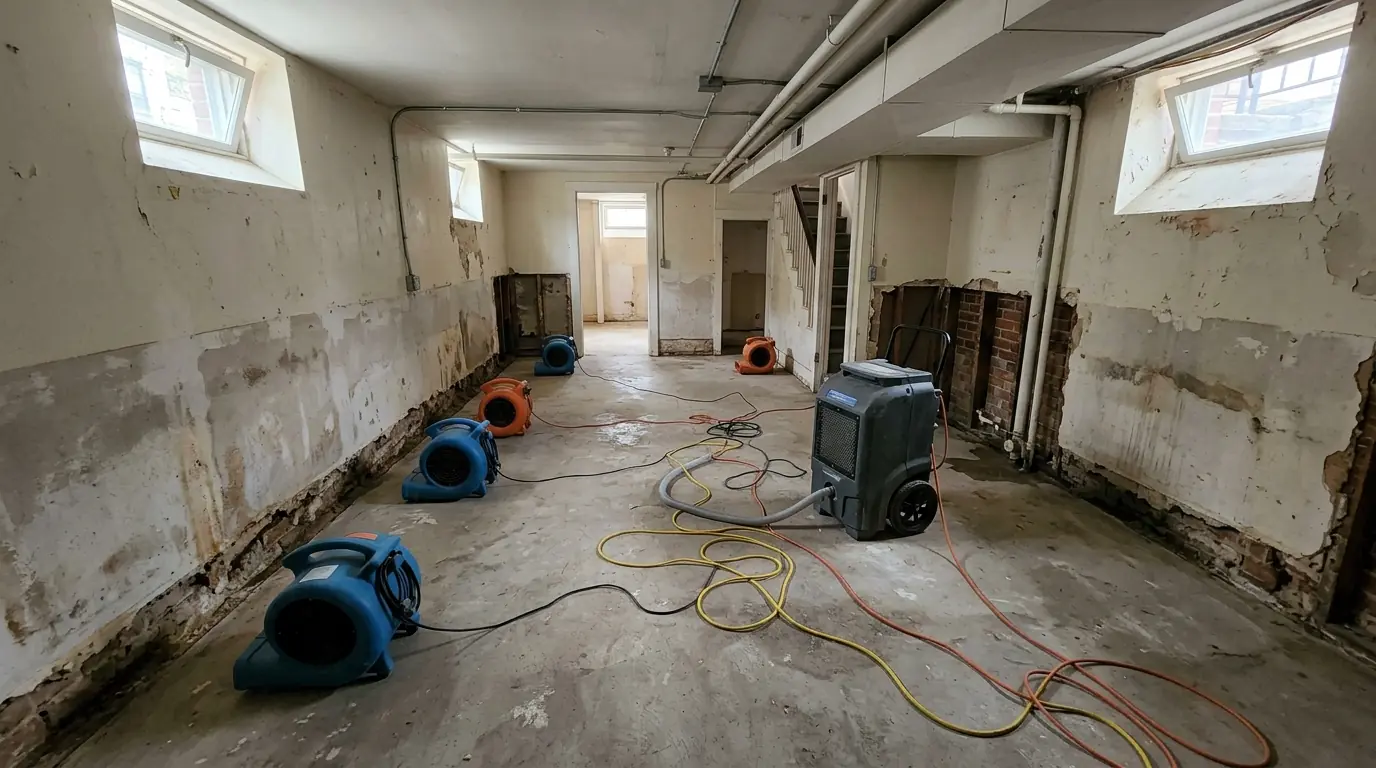
Air movers and a dehumidifier drying a DC basement apartment
Oak strip and heart pine floors in older DC houses
A large share of DC houses built between about 1900 and the 1940s have narrow oak strip flooring, often laid over a diagonal plank subfloor on wood joists. Many Capitol Hill, Shaw and LeDroit Park rowhouses also have original pine floors upstairs, sometimes wide heart pine in the older houses. These floors have usually been sanded several times, so we check how much wear layer remains before anyone plans another sanding.
The common causes here are specific. A radiator valve weeps for weeks and stains the oak around the radiator feet. A dishwasher in a renovated rowhouse kitchen leaks onto oak that runs continuously into the dining room. In condo conversions, water from the unit above runs down through the ceiling and lands on a floor that is half the building's character. In detached houses in Chevy Chase DC, Cleveland Park and Takoma Park, oak floors over an unfinished basement can be dried from below as well as above, which helps a lot. If moisture keeps returning from the basement, a whole-basement dehumidifier helps keep those boards stable.
Where we do this work: Washington, DC and nearby Maryland and Virginia, including:
Related work we often do on the same job
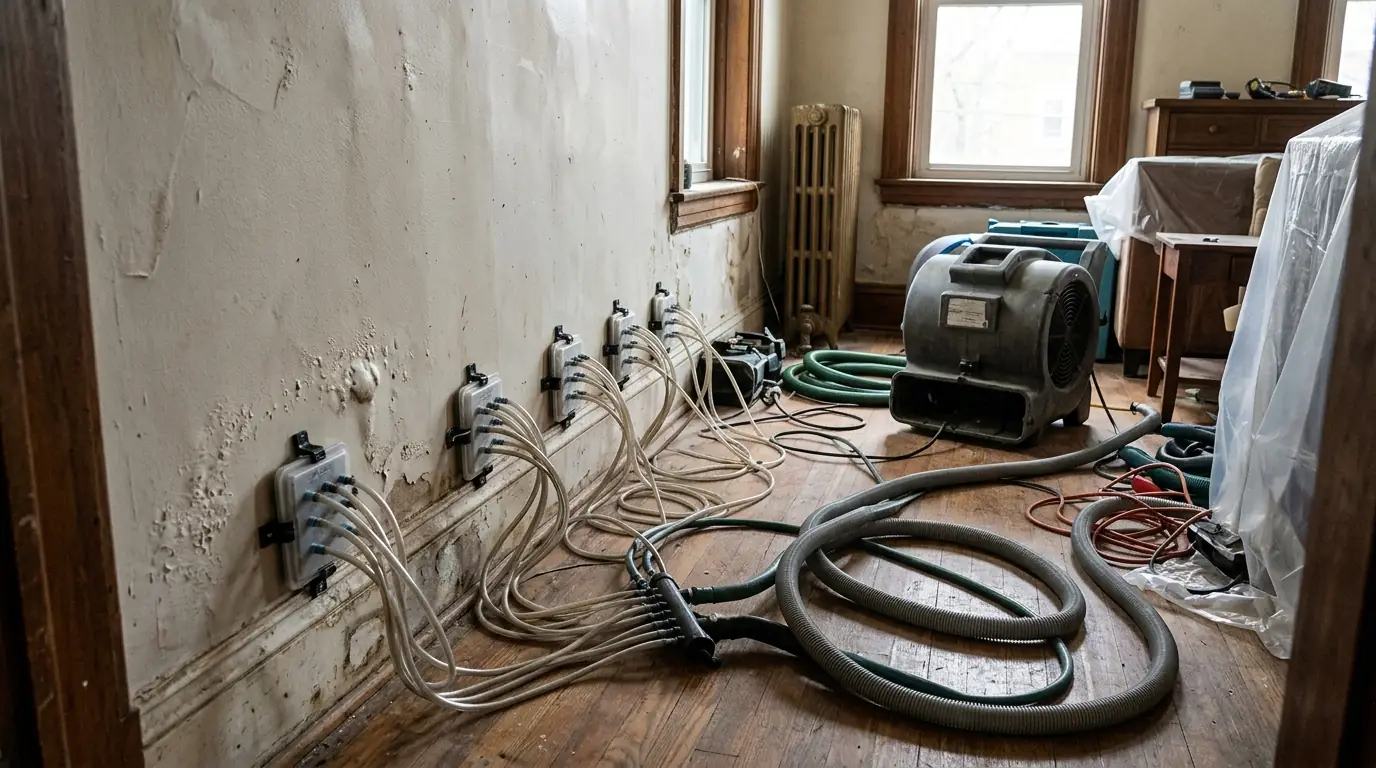
Structural Drying
Structural drying is the controlled removal of moisture from a building's framing, subfloor, wall cavities, plaster and masonry after a water loss.
How we handle it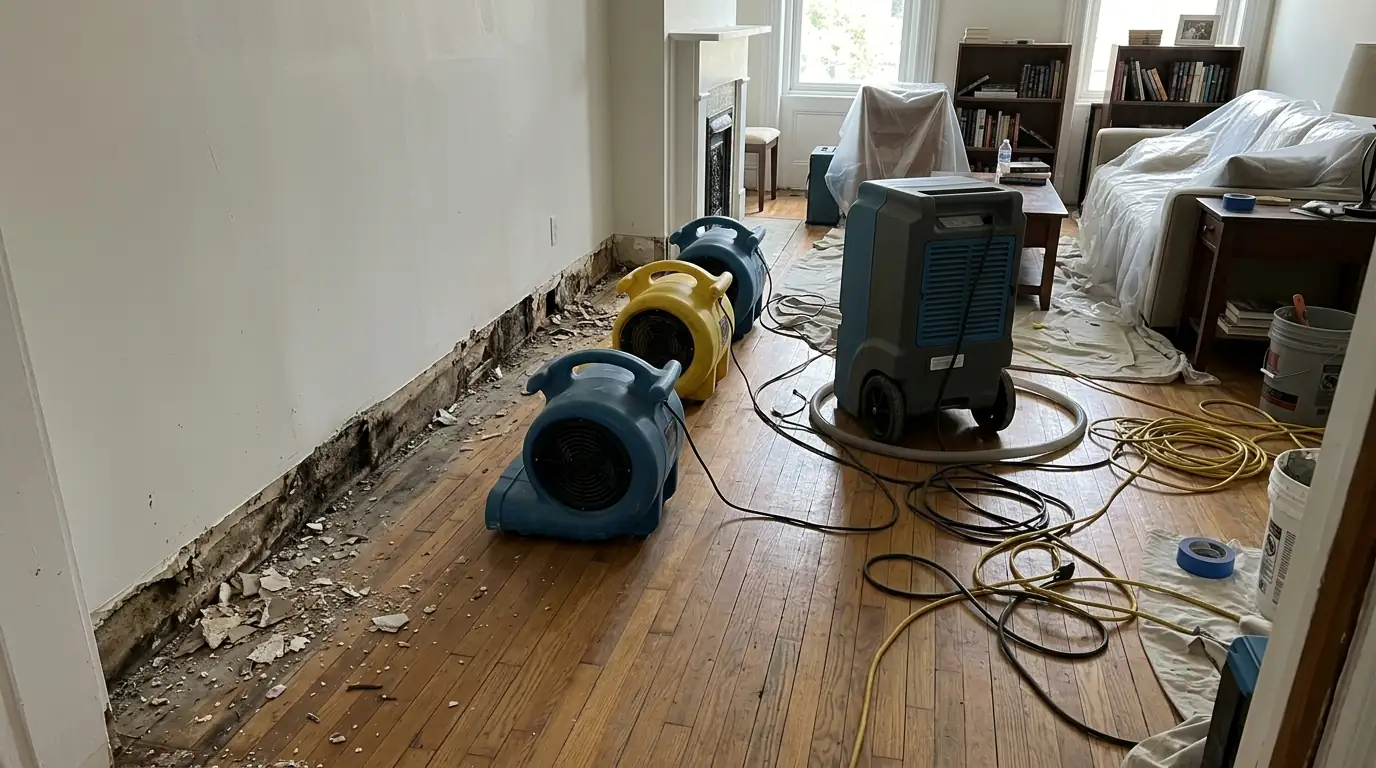
Water Damage Restoration
Water damage restoration is the full sequence after a leak or flood: stopping the source, extracting standing water, removing materials that cannot be saved, drying walls and floors with dehumidifiers and air movers, and logging moisture readings until they reach a dry standard.
How we handle it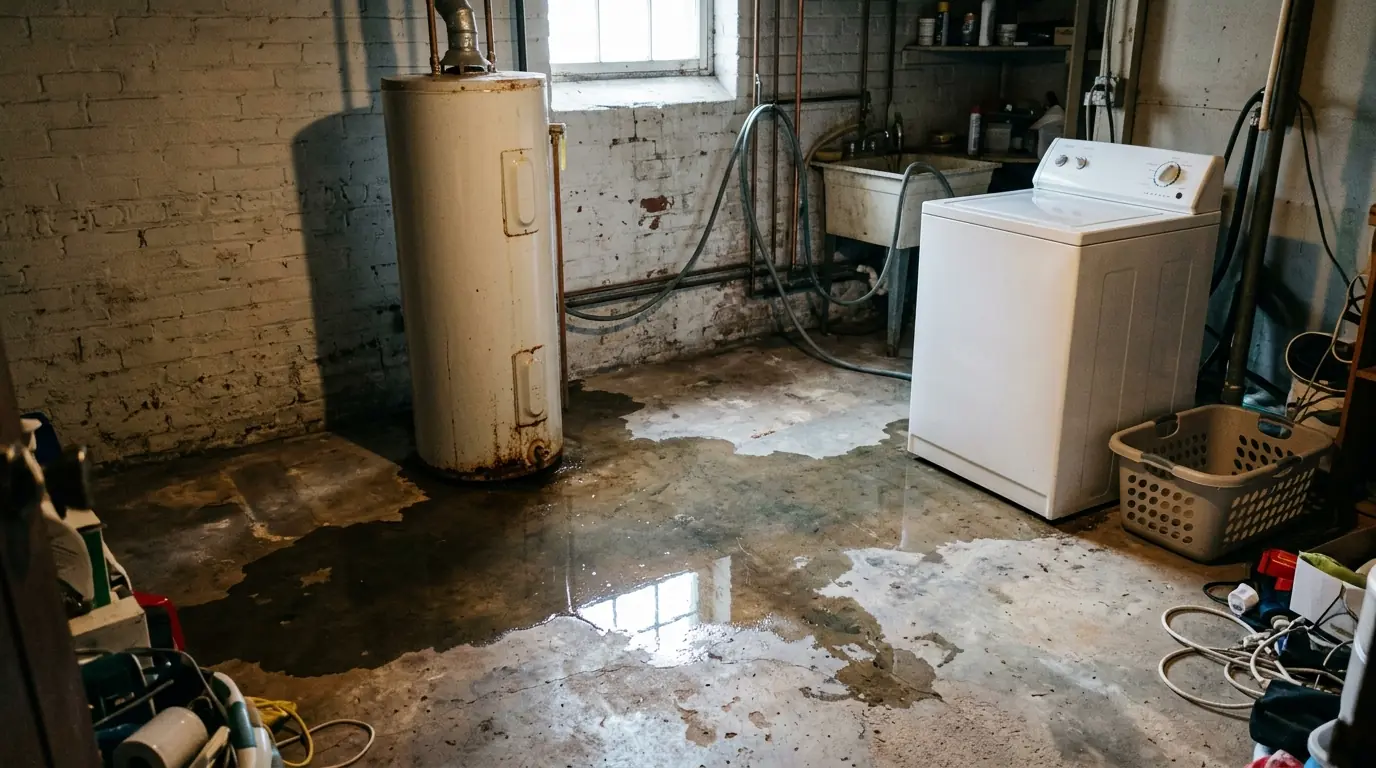
Appliance Leak Cleanup
Appliance leak cleanup is the extraction, drying and cleanup that follows water escaping from a water heater, washing machine, dishwasher, refrigerator ice maker or air conditioner condensate line.
How we handle it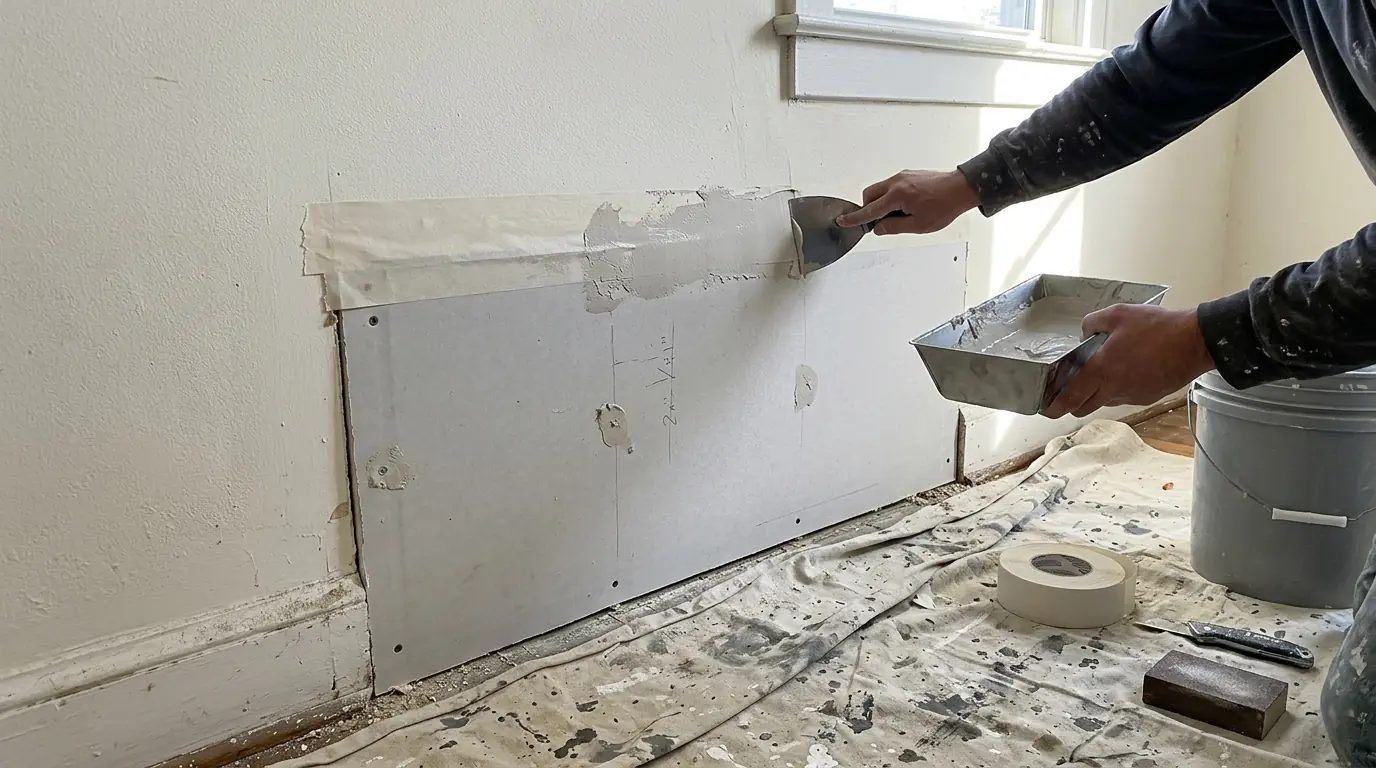
Damage Repair & Rebuild
Damage repair and rebuild is the work that restores a room after water, mold or fire mitigation is finished.
How we handle itQuestions homeowners ask about hardwood floor drying
Will my cupped oak floor go back to flat?
Often, yes, if the water was clean and drying starts early. Cupping is a symptom of a wet subfloor, and as the bottom of the boards dries back to match the top, much of it relaxes. Some floors keep a slight ridge at the edges, which a light sand removes once the wood has fully settled.
How long should I wait after drying before sanding my floors?
We usually suggest a few weeks after the floor reaches its drying goal, with the house at its normal temperature and humidity. Then we, or your flooring contractor, take readings again. Sanding too early is the main cause of crowning, where board centers end up higher than their edges after the wood finishes drying.
Can engineered hardwood be dried like solid wood?
Sometimes. Engineered flooring with a thick wear layer and a plywood core can dry with mats much like solid wood. Products with a thin veneer, a fiberboard core or a glued-down install often delaminate or swell at the edges, and drying them may not be worth it. We check the product and readings before recommending either path.
Can the black stains from water on oak be sanded out?
Shallow gray staining sometimes sands out. Deeper black stains come from water reacting with tannins in the oak, often near nails, and they can run through the board. Wood bleach treatments help in some cases, but replacing the stained boards and lacing in matching oak is often the cleaner result.
Should I run my air conditioning or heat while the floor dries?
Keep the house at a normal, steady temperature and let our dehumidifiers manage humidity in the room. Cranking heat dries the top of the boards too fast and can worsen cupping or crack old finishes. Running air conditioning in summer is fine and helps, since it removes some moisture as it cools.
Water in the house or a musty room you can't explain?
Call JEC Restoration any time. We answer 24/7 and talk through what you are seeing before anyone touches a wall.