Mold Remediation
Crawl space mold remediation for homes in and around Washington, DC
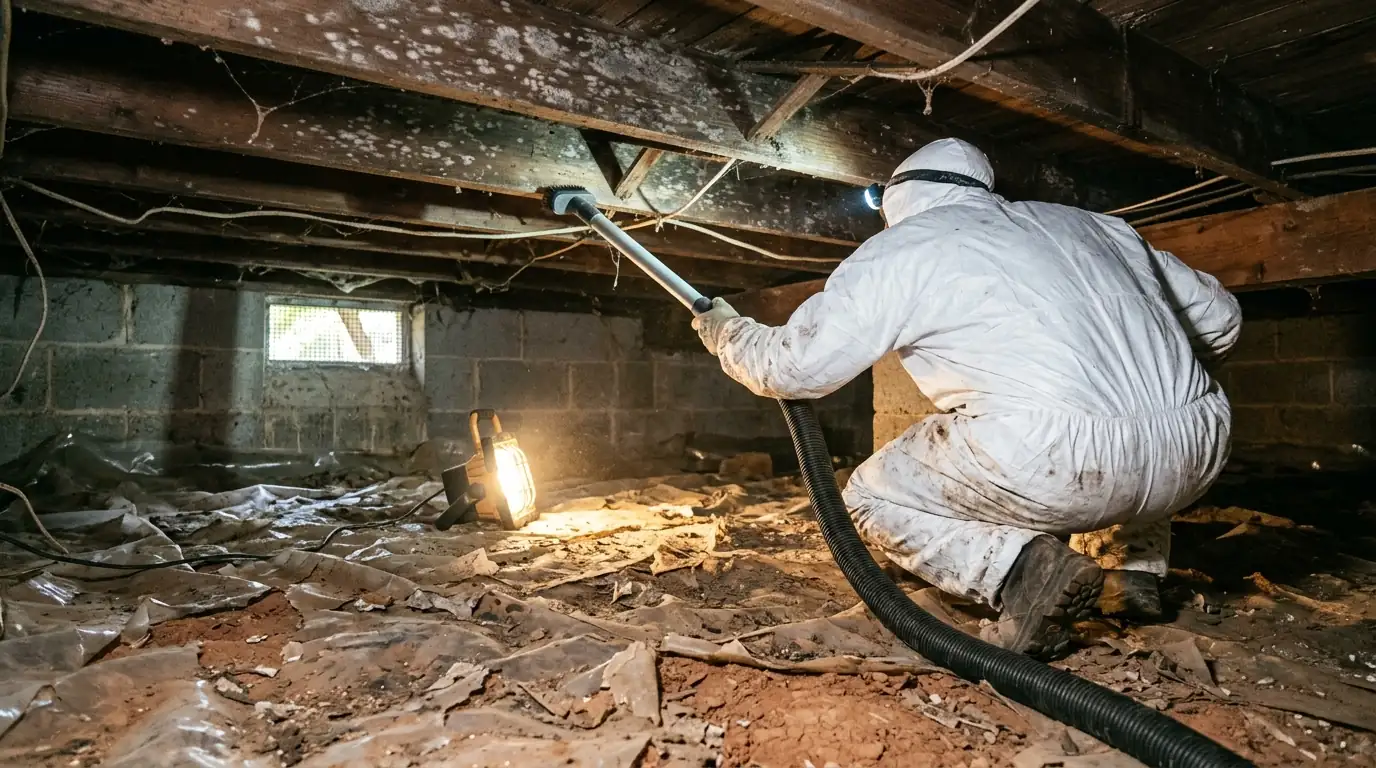
White fuzz on the floor joists, dark spotting on the subfloor and an earthy smell rising through the floor registers usually mean a crawl space has stayed damp for a long time. We clean the framing and dry the space out.
Drying, air and detection equipment on our jobs comes from names like
- Dri-Eaz
- Phoenix
- B-Air
- Abatement Technologies
- Protimeter
- Delmhorst
- FLIR
- Benefect
- Concrobium
- Omnitec
- Sapphire Scientific
- Tramex
Crawl space mold remediation removes mold growth from the floor joists, subfloor, sill plates and beams under a house, then dries the wood so new growth does not start right away. You need it when you see fuzzy or dark growth on the framing, notice a musty smell in the rooms above, or find wet insulation sagging between joists. Call (202) 989-3053 to have the space assessed.
Why do vented crawl spaces grow mold every summer?
Most crawl spaces built around Washington between the 1950s and the 1980s have small foundation vents, on the theory that moving air would carry moisture away. That logic holds on a dry day. From July through September, though, the outside air in the DMV is hot and heavy with moisture, and the vents pull it straight under the house.
Underneath, that air meets surfaces cooler than itself: soil-chilled joists, the underside of the subfloor, cold-water pipes and ductwork carrying air-conditioned air. Right at those surfaces the relative humidity climbs toward saturation, and on the coldest spots water beads up. Wood that sits above roughly 19 percent moisture content for weeks at a time gives mold what it needs, and the joists closest to the vents and ducts usually show it first.
Bare soil adds to the load. A dirt floor evaporates water all year, and a vapor barrier that was torn by a plumber, never lapped at the seams or never installed at all lets that moisture rise into the framing. The space the vents were supposed to dry ends up wetting itself every summer.
How a crawl space mold job runs from access hatch to dry framing
Every job follows the same five stages, though the time each takes depends on the space.
Crawl and measure
A technician goes under with a pin meter for the joists, a hygrometer for the air and a thermal camera for the rim joist and foundation. We photograph the growth and look for the water source, whether that is a downspout, a plumbing drip or summer condensation.
Seal off the access
We build poly containment at the hatch or interior access door and run a negative air machine that exhausts outdoors. Floor registers above the work area are taped so loosened spores are pulled away from the living space.
Strip out debris and insulation
Wet batts, torn vapor barrier, old cardboard and construction scraps are bagged inside the crawl space and carried out through the containment. This step alone often removes most of the smell.
Clean the framing
Joists, beams, sill plates and subfloor are HEPA vacuumed, then scrubbed, sanded or blasted depending on how deep the growth goes. An antimicrobial goes on the cleaned wood, and soft or rotted members are flagged for repair.
Dry and verify
A low-grain dehumidifier runs until the wood reads dry against an unaffected reference. We recheck every area we cleaned, and post-remediation clearance testing can confirm the result before the space is closed up.
What we clean on joists, beams and the underside of the subfloor
Crawl space work is almost entirely on wood. Light surface growth, the white, gray or greenish spotting on joist sides and subfloor sheathing, comes off with HEPA vacuuming followed by scrubbing with an antimicrobial cleaner. Where growth has rooted into the grain, we sand or wire-brush the wood, and in large, open crawl spaces media blasting can clean the framing faster than hand work.
Some dark staining often remains after the growth is gone. That staining is usually cosmetic: the goal is to remove the mold and the spores and debris around it, not to bleach every joist back to new-lumber color. We probe soft spots with an awl, because wood that has started to rot at the sill plate or the joist ends needs repair, not just cleaning. Here is what typically comes out and what gets cleaned:
- Fiberglass batts that are wet, moldy or hanging loose: removed and bagged
- Kraft paper facing with growth on it: removed with the batt
- Old vapor barrier, cardboard and construction scraps: hauled out
- Joists, beams, sill plates and subfloor: HEPA vacuumed and cleaned
- Duct wrap with growth: assessed, then cleaned or replaced
What does a crawl space mold problem look like from above and below?
Some of these show up in the rooms over the crawl space long before anyone goes underneath.
Musty floors in summer
The smell is strongest in July and August on the first floor, especially in closets and near floor registers, and fades in winter.
White fuzz on wood framing
White mold on joists is common and often mistaken for dust. Efflorescence on block walls looks similar but is crystalline and never grows on wood.
Sagging, dripping insulation
Batts drooping out of the joist bays are holding water. Pull one back and the subfloor above it is often spotted.
Sweating ducts and pipes
Beads of water on ductwork or cold-water lines in summer drip onto the ground cover and keep the space wet.
Cupping floors above
Oak strip flooring over a damp crawl space can cup during the humid months, with board edges standing higher than the centers.
Puddles after storms
Standing water, wet soil or a mud line on the foundation wall after heavy rain means water is getting in, not only humidity.
Where remediation ends and encapsulation begins
Cleaning removes what grew. It does not change why it grew, and if the vents stay open and the soil stays bare, the next humid summer starts the cycle over. That is why we treat remediation and moisture control as two steps that happen in order: clean first, then seal and encapsulate the crawl space, because a liner laid over framing that is still growing mold only hides it.
Not every house needs the full treatment. A crawl space with a dry floor, working gutters and light growth near one vent may only need cleaning, a new ground cover lapped and taped at the seams, and downspouts carried farther from the foundation. A space with standing water after storms, a high water table or ductwork that sweats all summer usually needs the walls lined, the vents closed and a dedicated crawl space dehumidifier running. We tell you which situation you are in based on the readings, not on a package price.
How big is the mold patch?
Measure the visible growth and enter it in feet. The EPA uses about 10 square feet as the line between a homeowner cleanup and a job that needs containment.
Measure the visible growth, including any faint edges.
Growth inside walls, in ductwork or after sewage or floodwater needs professional cleanup at any size.
What does crawl space mold remediation cost in the DC area?
Price follows the square footage of framing to clean and how much material has to come out before cleaning can start.
| Partial crawl space, up to about 400 sq ft | $1,460-$3,280 |
|---|---|
| Full crawl space under a 1,000 to 1,400 sq ft rambler | $3,870-$7,640 |
| Heavy growth with insulation and vapor barrier tear-out | $6,920-$12,450 |
These are typical DC-area ranges, not quotes; we price your crawl space after an on-site assessment. Compare ranges across all 40 services.
What moves the price
- Square footage and clearance height
- Amount of insulation to remove
- Cleaning method the wood needs
- Hatch size and access route
- Days of drying equipment
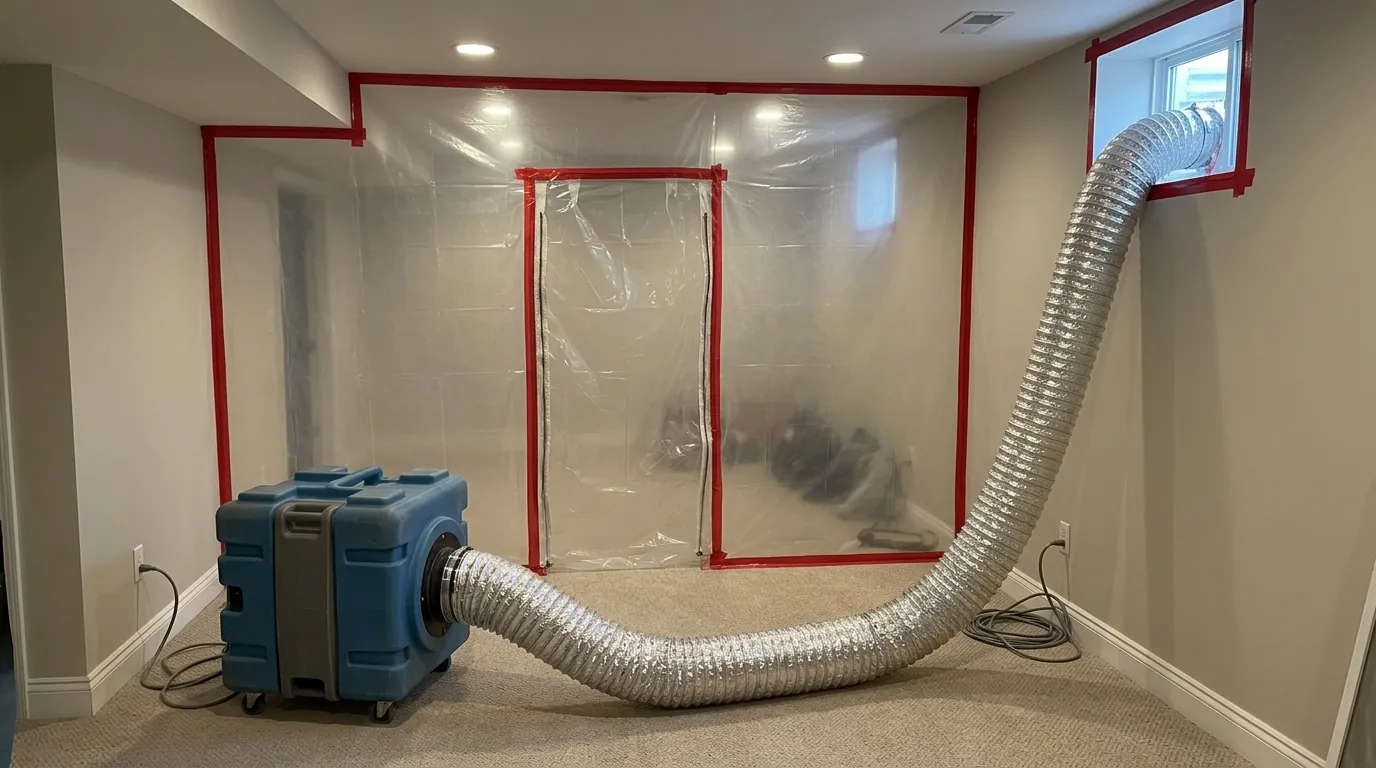
Sealed containment with HEPA filtration on a basement mold job
Crawl spaces around DC: suburban ramblers, split-levels and the odd bungalow
Inside the District, most rowhouses sit on full or English basements, so crawl spaces are the exception. We find them under rear additions, enclosed back porches and sunrooms, and under some of the 1910s to 1940s bungalows and Cape Cods in neighborhoods like Brookland and Chevy Chase DC. These are often shallow, with barely room to crawl, and an addition's crawl space may share no airflow at all with the basement beside it.
The suburbs are where crawl spaces are routine. Ramblers and split-levels built across Montgomery, Prince George's and Fairfax counties from the 1950s to the 1980s often have a crawl space under one wing or under the upper level of the split. The region's clay-heavy soils hold water against foundation walls after storms, and lots that slope toward Sligo Creek, Northwest Branch or Four Mile Run send runoff toward the house. Add a humid summer and open vents, and joist mold becomes one of the most common things we find under these homes. Our piece on mold after a humid DC summer explains why the season matters.
Where we do this work: Washington, DC and nearby Maryland and Virginia, including:
Related work we often do on the same job
Crawl Space Encapsulation
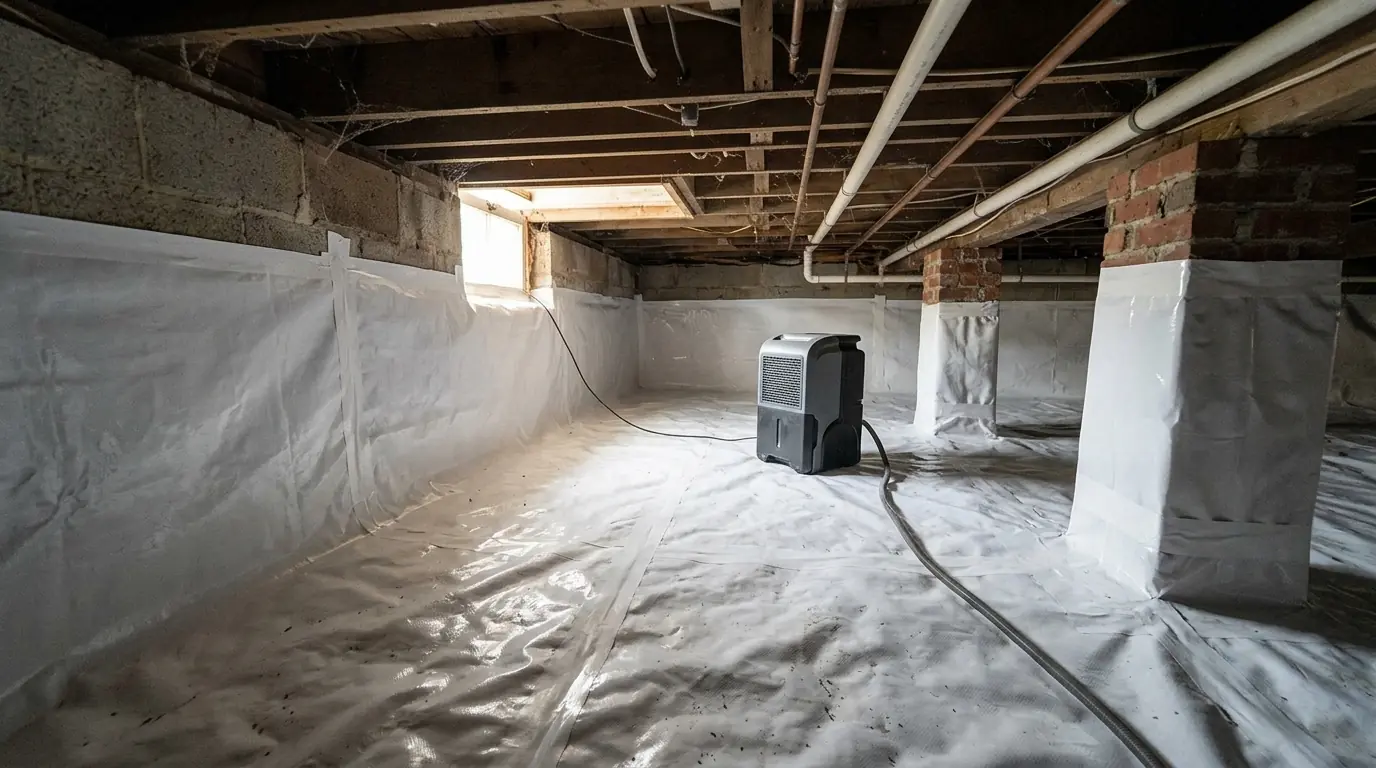
Crawl space encapsulation closes a dirt or gravel crawl space off from outdoor air and ground moisture.
How we handle it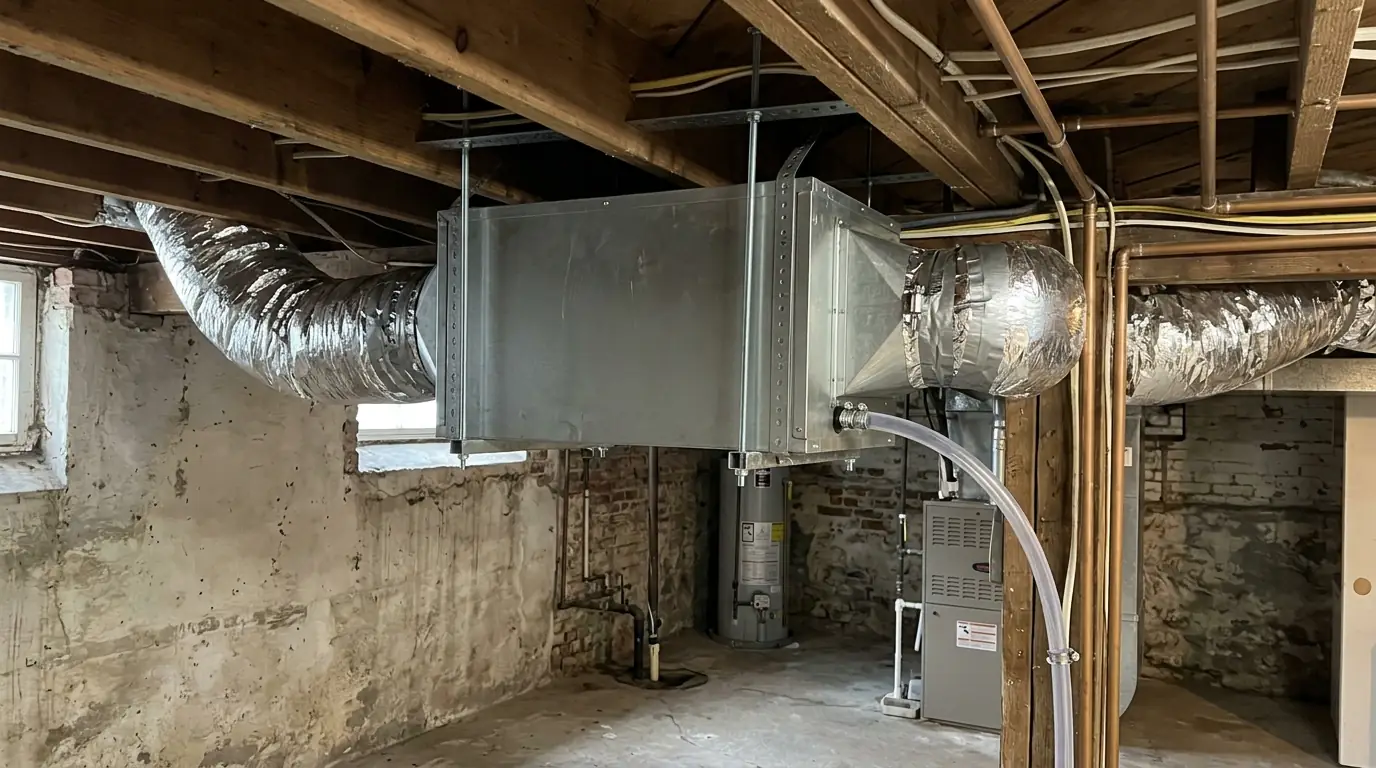
Dehumidifier Installation
A whole-basement dehumidifier is a fixed unit that pulls moisture from the air in a basement or crawl space and drains it continuously through a hose or condensate pump.
How we handle it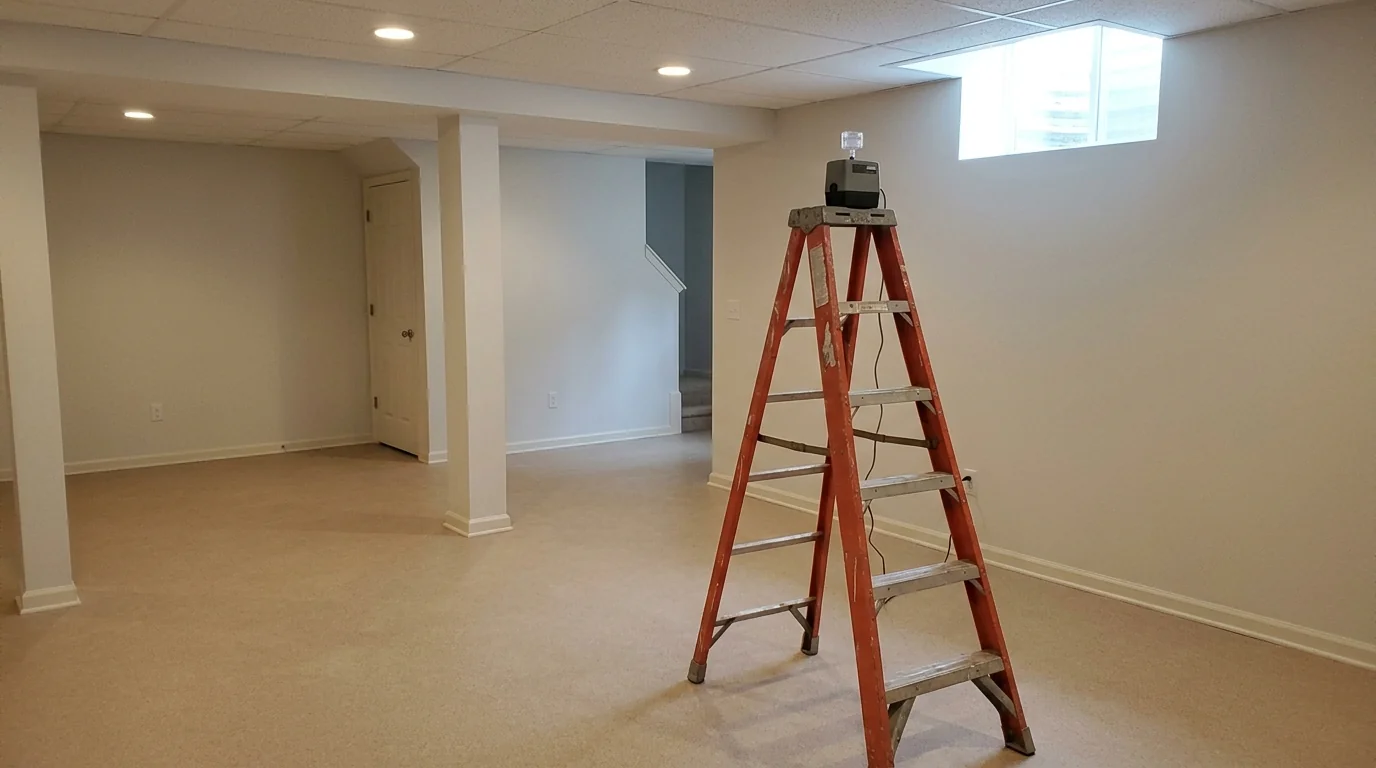
Mold Clearance Testing
Mold clearance testing, also called post-remediation verification, checks a work area after mold removal and before the walls are closed.
How we handle it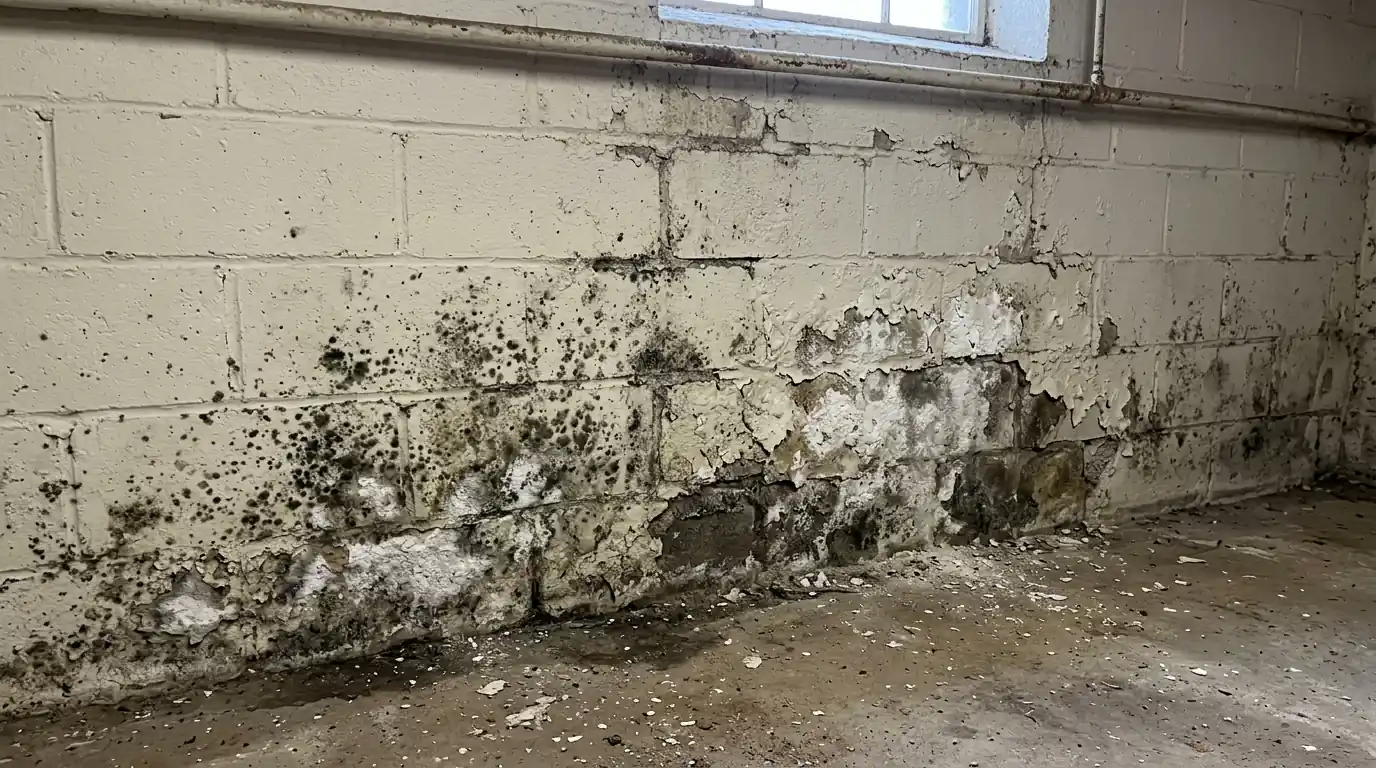
Basement Mold Removal
Basement mold removal cleans or removes growth on foundation walls, framing, finished drywall, carpet and stored contents below grade, then corrects the moisture that caused it.
How we handle itQuestions homeowners ask about crawl space mold remediation
Can I just spray bleach on the crawl space joists?
Bleach is mostly water. On porous wood the chlorine stays near the surface while the water soaks in, so it can lighten the color without removing the growth, and it adds moisture to wood that is already too wet. Dead mold and spores can still bother sensitive people, which is why physical removal by HEPA vacuuming and cleaning matters more than any spray.
Should I close my crawl space vents during the summer?
Closing the vents on their own, without a sealed ground cover and a way to control humidity, can trap moisture and make things worse. Closed vents are one part of a sealed crawl space system that also includes a liner and usually a dehumidifier. Building codes in the region allow unvented crawl spaces when they are built that way, so plan it as a whole.
Is the white coating on my crawl space walls mold or efflorescence?
On concrete block or brick foundation walls, a white, powdery or crystalline crust is usually efflorescence, mineral salts left behind as water moves through the masonry. It crumbles to powder and dissolves in water. Mold on wood looks fuzzy or cottony and grows on the joists and subfloor. Efflorescence is not mold, but it does tell you water is coming through that wall.
Do we need to move out while you work under the house?
Usually not. The containment at the access point and the negative air machine keep air flowing from the house into the crawl space, not the other way around, and we tape the floor registers above the work area. Expect some equipment noise during working hours, and keep pets away from the hatch while technicians are underneath.
How soon after cleaning can the crawl space be encapsulated?
As soon as the framing reads dry. After cleaning, a dehumidifier typically runs for a few days until the joists and subfloor match a dry reference reading. Sealing in damp wood just moves the problem under the liner, so we check moisture at the same spots we measured at the start before any liner or wall insulation goes in.
Water in the house or a musty room you can't explain?
Call JEC Restoration any time. We answer 24/7 and talk through what you are seeing before anyone touches a wall.