County we serve, VA
Condo leak & flood cleanup in Arlington County, VA 22201
In Arlington the call is often a ceiling stain spreading under a neighbor's unit in a Clarendon tower, or a 1930s Lyon Park basement taking water after a storm. We extract, dry, clean and rebuild in both.
Arlington County calls for leaks, floods, mold, smoke or sewage go to JEC Restoration at (202) 989-3053, any hour. We work in the condo towers along the Rosslyn-Ballston corridor and the older detached houses of Lyon Park, Cherrydale and Westover, from the first moisture reading through drying, cleaning and repair.
What fails first in a 1930s brick colonial or bungalow in Lyon Park or Cherrydale?
Much of north Arlington was built out between the 1920s and the 1940s: brick colonials and frame bungalows with deep porches. In Lyon Park, Ashton Heights and Cherrydale, many still have plaster walls, original cast-iron drain stacks, and basements cut into hillsides. When water gets in, it soaks the bottom courses of masonry and wicks upward, so paint blisters a foot or more above the actual puddle.
Two failures show up again and again. Old sewer laterals crack and fill with roots, and the first sign is gray water rising through the basement floor drain on laundry day. Old galvanized water pipes narrow with scale and eventually weep at a threaded joint hidden in a wall. Both mean opening walls in the right places, and moisture readings decide where we cut. In basements finished later with drywall and carpet, we check behind the baseboards first, because that is where hidden basement mold usually starts.
Along Columbia Pike and in Buckingham, brick garden apartments from the late 1930s and 1940s stack units on shared plumbing walls, so one failed supply line upstairs can wet three kitchens.
Most-called services in Arlington County
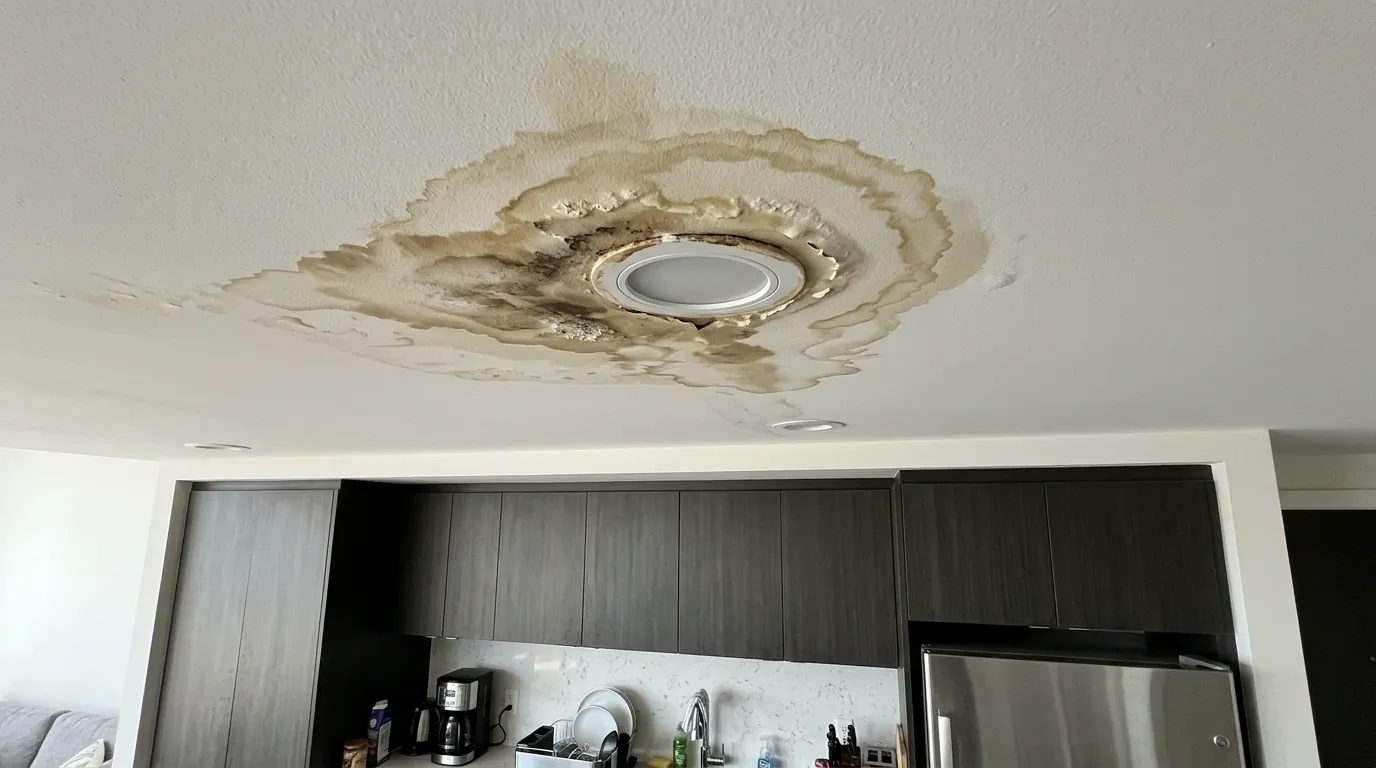
Condo Water Damage
Condo water damage work covers leaks that cross unit lines: water from the unit above, a failed riser, a shared wall or a roof over the top floor.
How we handle it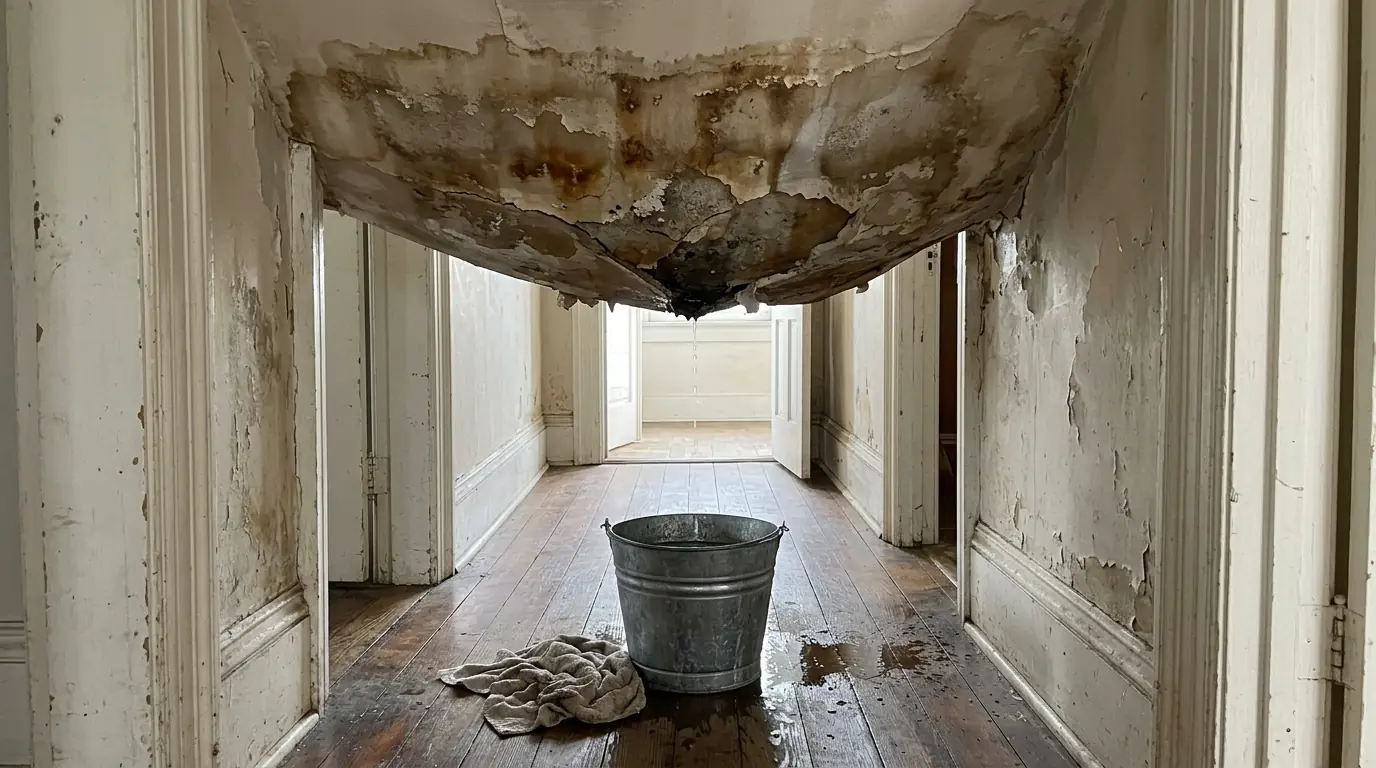
Ceiling Leak Damage
Ceiling leak damage work deals with water trapped above a ceiling from a roof, a bathroom, a radiator or an air conditioning line.
How we handle it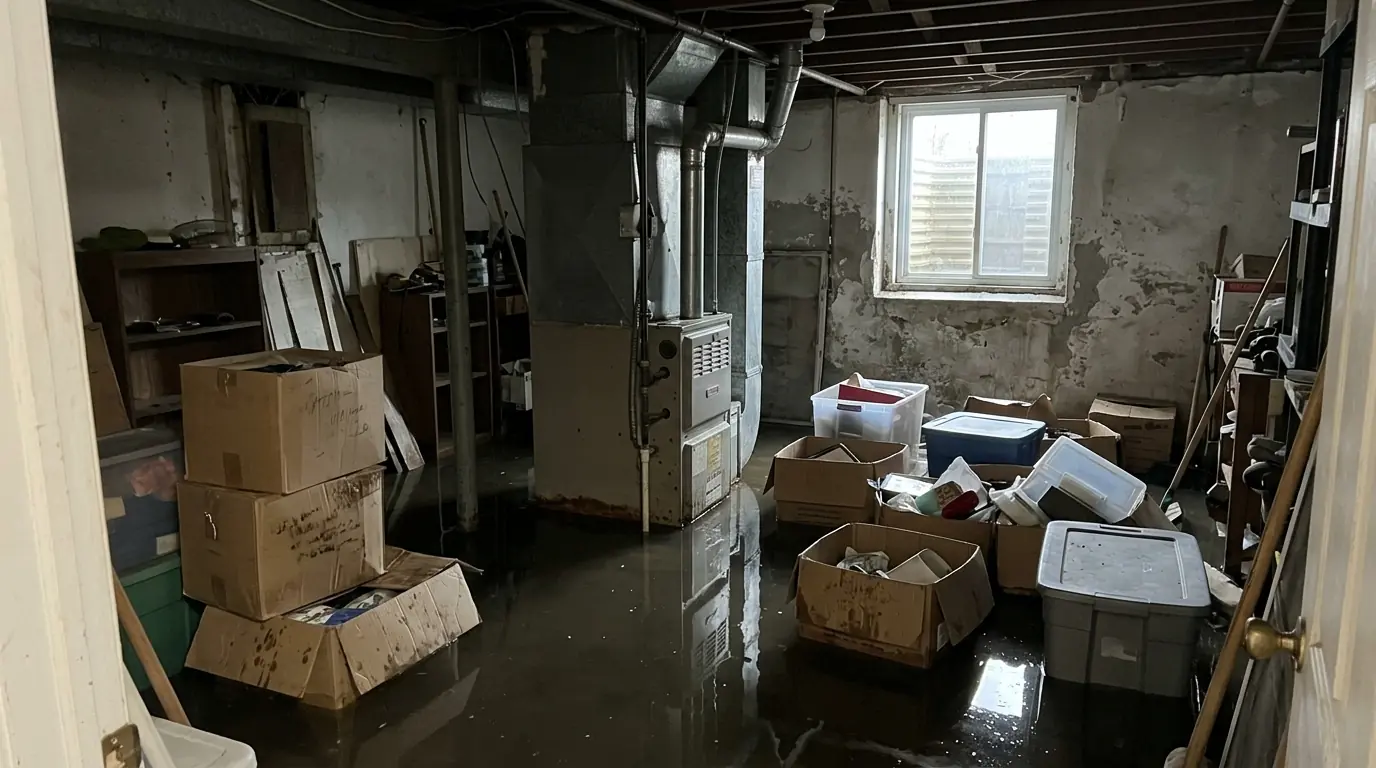
Flooded Basement Cleanup
Flooded basement cleanup removes water from a below-grade space, cleans and sanitizes what it touched, takes out finishes that cannot be saved, and dries the slab, walls and framing.
How we handle it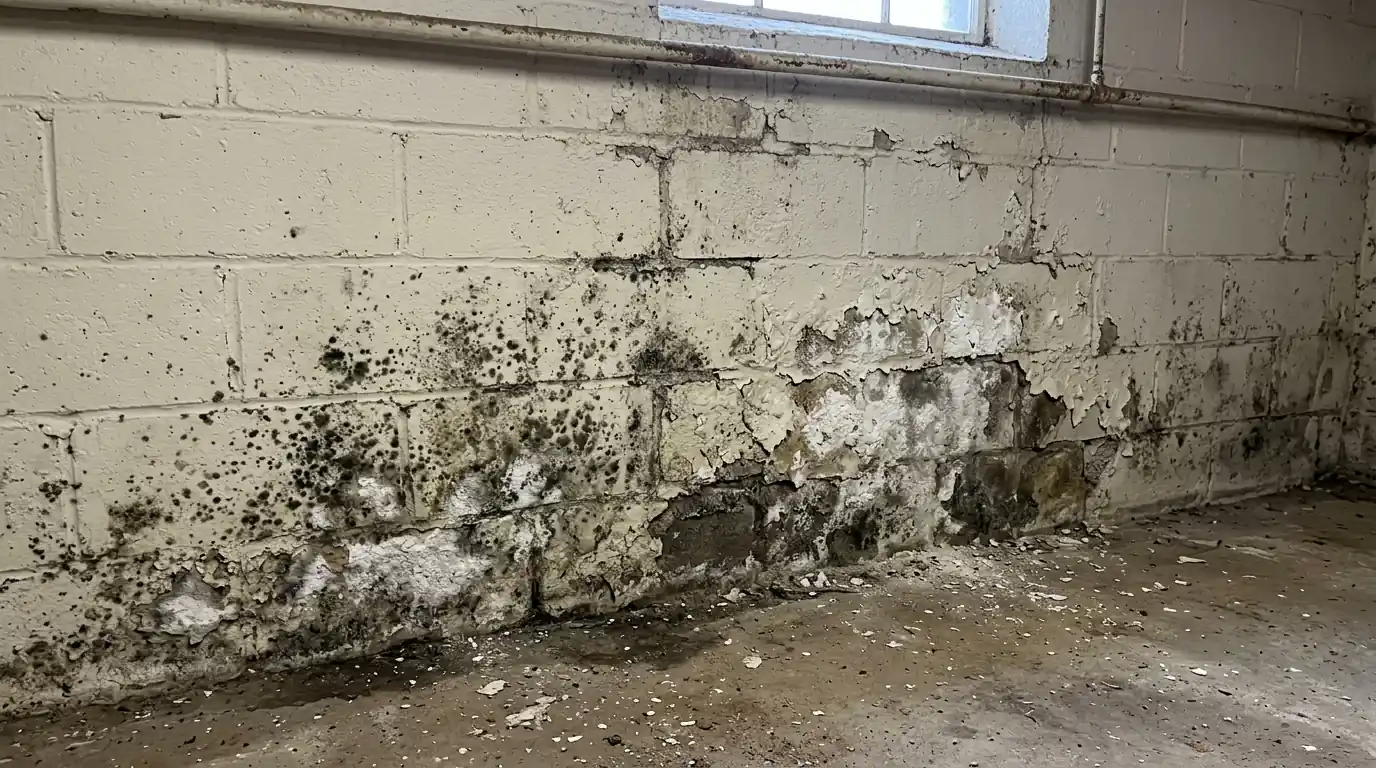
Basement Mold Removal
Basement mold removal cleans or removes growth on foundation walls, framing, finished drywall, carpet and stored contents below grade, then corrects the moisture that caused it.
How we handle it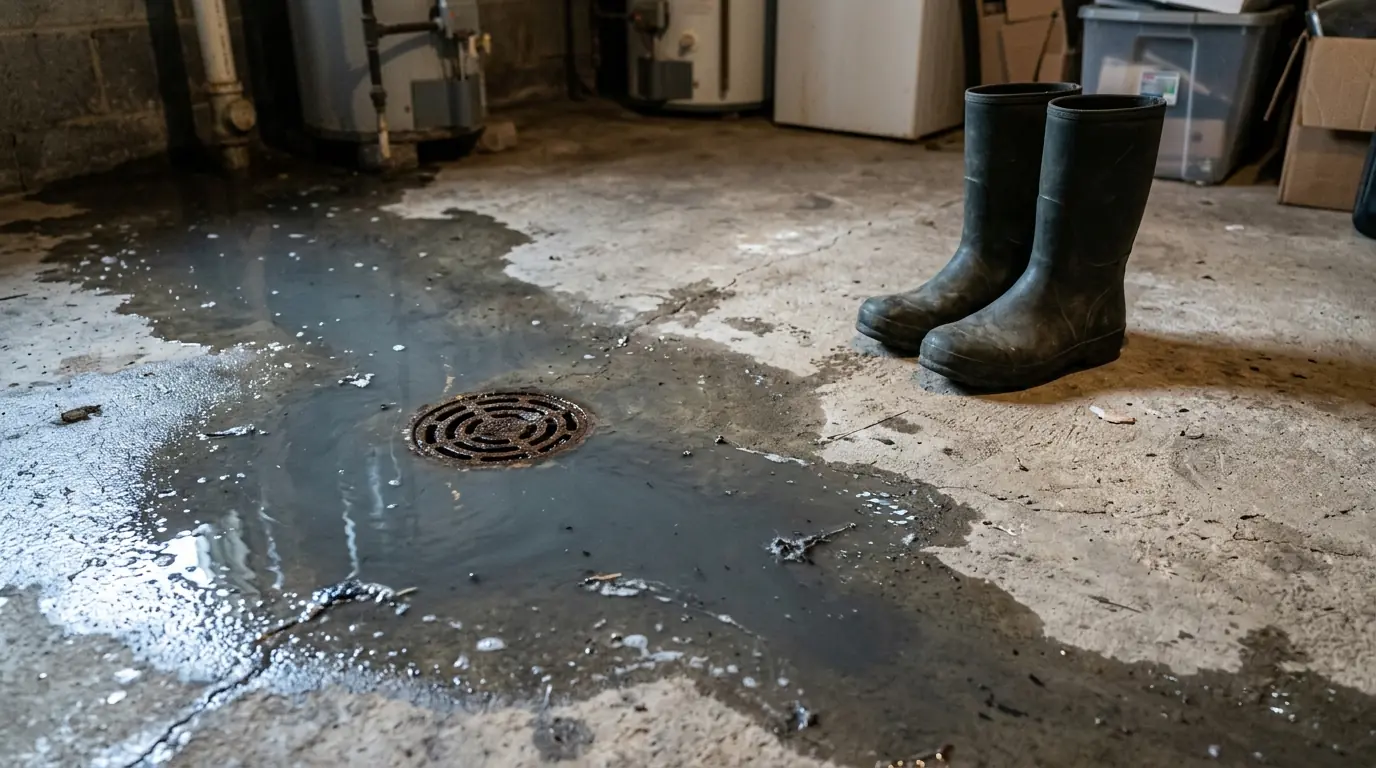
Sewage Backup Cleanup
Sewage backup cleanup is the removal of wastewater and the porous materials it soaked, followed by cleaning, disinfection and drying of the affected area.
How we handle itWhy does one leak in a Rosslyn or Ballston high-rise reach three units?
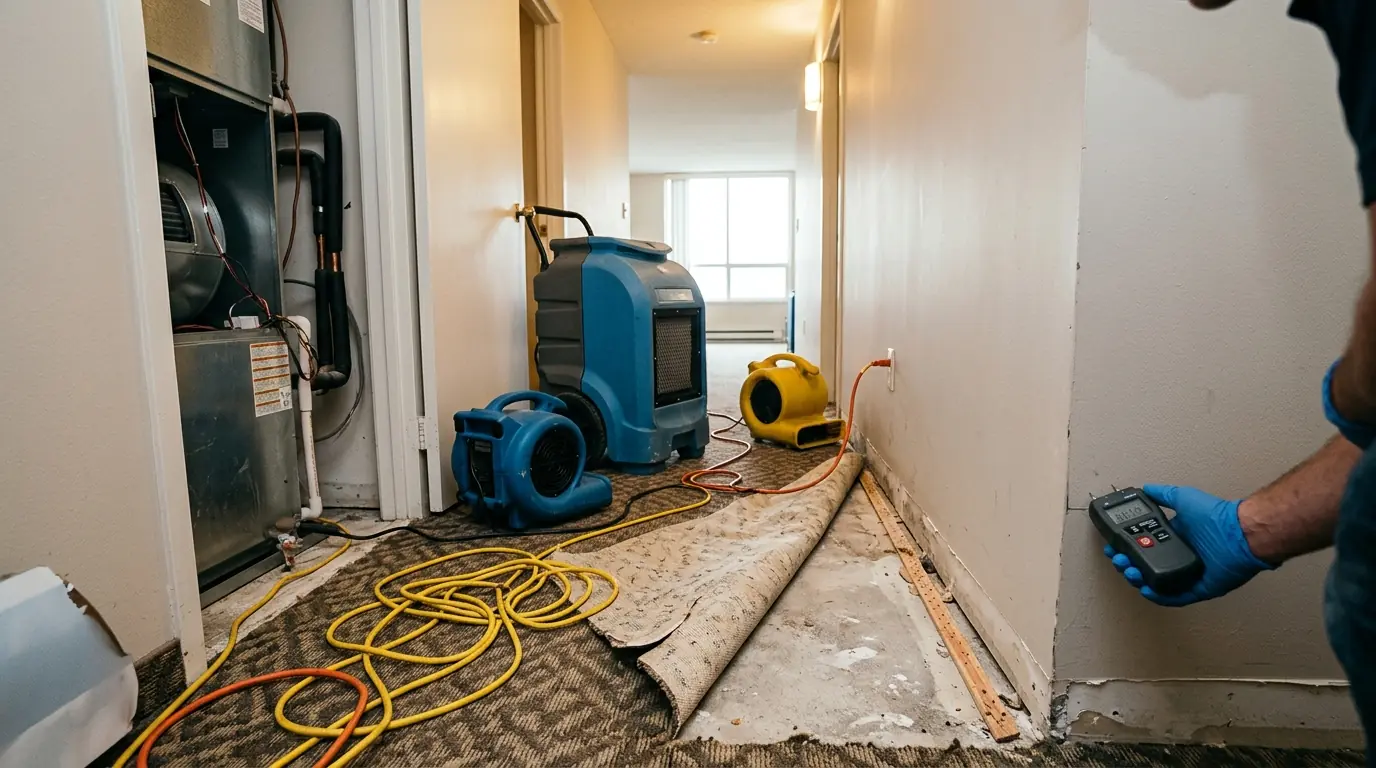
The towers along Wilson and Clarendon Boulevards have stacked kitchens and baths, closet fan coil units and sprinkler lines in every ceiling. Water from a clogged condensate pan or cracked supply valve runs along the slab, finds pipe penetrations and drops into the unit below, often several feet from the real source.
We map moisture in every affected unit, not just the one that called, and keep separate readings and photos for each owner. That record matters because the association's master policy and each owner's unit policy usually split the damage along a line drawn in the bylaws. Our guide on what to do when water comes from the unit above covers the first steps, and our page on drying out stacked condo units explains the rest.
Typical calls we get from Arlington County
Fan coil overflow in a Clarendon tower
A clogged condensate line lets a closet fan coil unit overflow into the hallway carpet and down into the unit below. We extract both units, open the lower ceiling only where readings call for it, and dry with low-grain dehumidifiers while the building engineer clears the drain.
Root-blocked lateral in a Cherrydale basement
Gray water rises through the floor drain while the washer empties, soaking carpet and the bottom of paneled walls. It is Category 3 water, so we pull out the wet carpet, pad and lower wall finishes, clean and apply antimicrobial, then dry. A camera inspection of the lateral should come before the room is rebuilt.
Top-floor leak in a Columbia Pike garden apartment
A toilet supply line fails on the third floor and water passes through two kitchens below. We dry each unit as its own job, log readings per unit for the property manager, and remove only the plaster and cabinets that test wet.
Stairwell drain flood in a Westover basement
Leaves clog the drain at the foot of the exterior basement stairs, and storm water backs up across the threshold onto the paneled family room floor. We extract, cut away soaked drywall along the bottom, dry the studs and show you how to keep that drain clear.
Where does storm water come from on Arlington's hills and along Four Mile Run?
Arlington is hillier than people expect. Many houses in Cherrydale, Waverly Hills and Westover sit below the street, so a summer thunderstorm sends runoff down the driveway toward an exterior basement stairwell. The drain at its foot fills with leaves by October, and the next heavy rain comes under the door.
In south Arlington, Four Mile Run collects runoff from much of the county, and its lower reach forms the line with Alexandria. After a fast storm the run and its tributaries rise quickly and storm drains on low streets back up. That water is Category 3 the moment it crosses a threshold. January brings the other risk: pipes in unheated sunrooms and exterior walls freeze and split, and the leak only shows at the thaw.
What should you expect when we work in a condo building or on a permit-parking block?
High-rise jobs start with the management office. We ask the building engineer to reserve the freight elevator and loading dock, confirm garage clearance for our van, and find out which risers were shut off. Many buildings want a schedule for each equipment check, and we provide one.
In the single-family neighborhoods, parking is the planning problem. Blocks near the Metro stations are often limited to permit holders during the day, so we settle where the truck will sit before unloading. Hoses and cords are routed clear of neighbors' driveways, and original oak floors get runners before any equipment comes through the door. From ZIP 22201 to south Arlington, someone picks up at any hour.
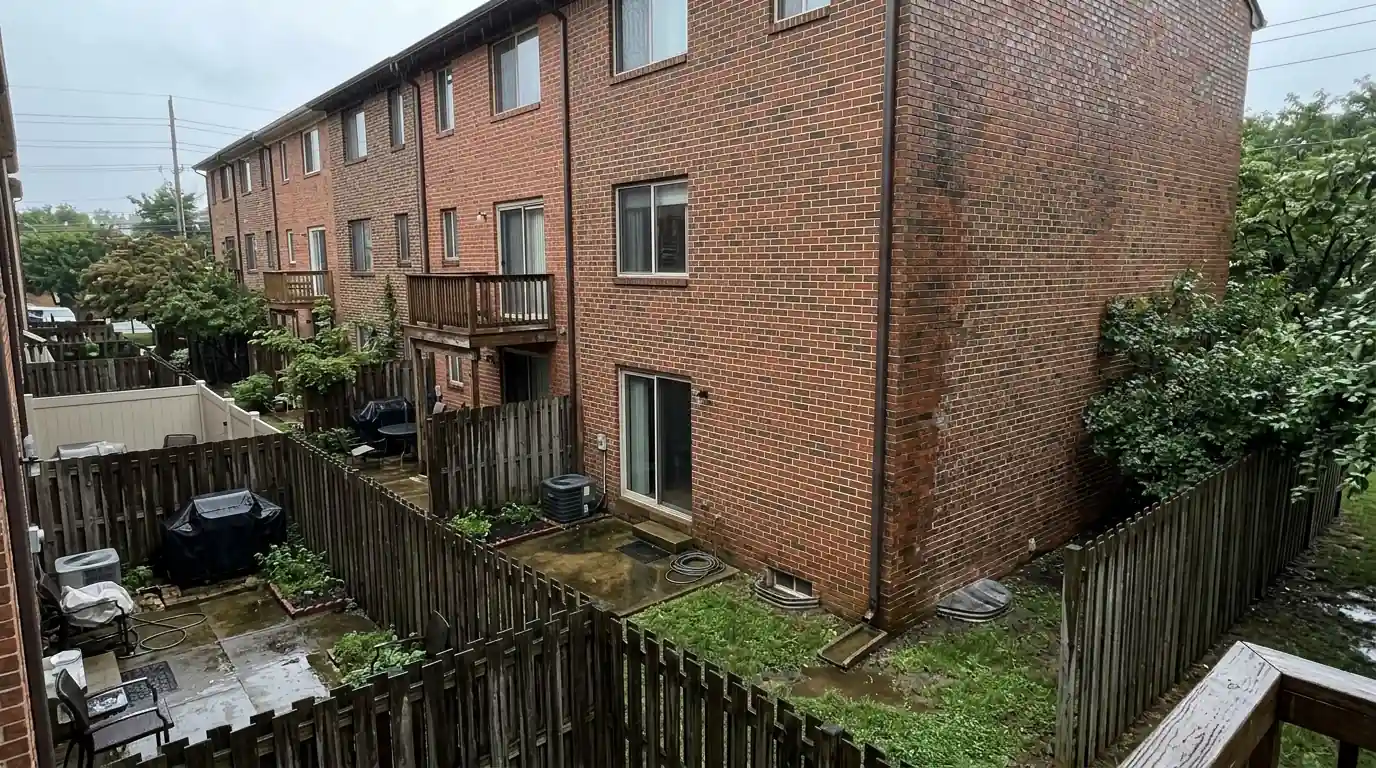
Typical homes in this part of the DC area
Nearby areas we also cover
Questions from Arlington County homeowners
Who pays when water comes from the condo above mine in an Arlington building?
It depends on your association's bylaws and the policies involved. The master policy often covers common elements and original building materials, while your unit policy may cover finishes, upgrades and belongings. Check your policy and bylaws before assuming either way. We keep moisture readings, photos and drying logs for each unit separately, so every adjuster works from the same record.
Can you dry the plaster walls in an older Arlington house instead of tearing them out?
Often, yes. Plaster tolerates a short soaking better than drywall does, and it can usually be dried in place with dehumidifiers and directed airflow. We remove it only when it has bulged away from the lath, crumbled, or stayed wet behind vinyl wallcovering. Daily pin meter readings tell us whether the wall is actually drying or only looks dry on the surface.
What should I do if a sprinkler head goes off in my Arlington condo?
Call the front desk or building engineer first, because only the building can shut that sprinkler zone. Do not touch the head. Move electronics and papers out of the spray, then call (202) 989-3053. Water that has sat in sprinkler pipes for years is often dark and smells, so we treat it as at least Category 2 and dry your unit and any unit below.
Water or mold trouble in Arlington County?
Call JEC Restoration any time. We answer 24/7 and talk through what you are seeing before anyone touches a wall.