Water Damage
Water damage restoration for Washington, DC homes
Water that soaks into plaster, subfloors and brick keeps doing damage after the puddle is gone. We trace where it went, pull it out, dry the structure to measured targets and set up the repairs that follow.
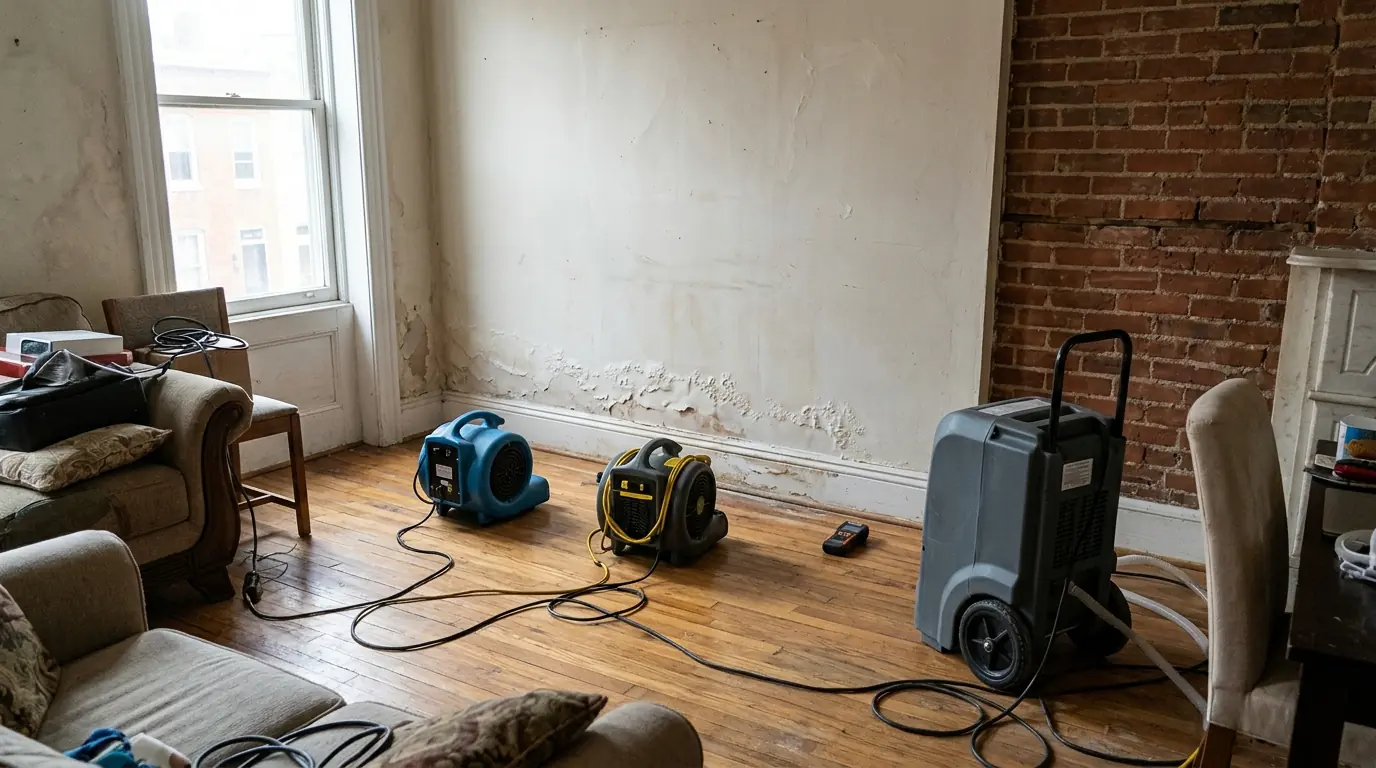
Drying, air and detection equipment on our jobs comes from names like
- Dri-Eaz
- Phoenix
- B-Air
- Abatement Technologies
- Protimeter
- Delmhorst
- FLIR
- Benefect
- Concrobium
- Omnitec
- Sapphire Scientific
- Tramex
Water damage restoration is the full sequence after a leak or flood: stopping the source, extracting standing water, removing materials that cannot be saved, drying walls and floors with dehumidifiers and air movers, and logging moisture readings until they reach a dry standard. You need it whenever water has soaked into the building itself, not only the surface. Call (202) 989-3053, day or night.
What does restoration handle that a wet vac and box fans cannot?
Most of the water in a leak does not stay where you can mop it. It runs under baseboards, soaks the bottom edge of drywall, slips between oak strip flooring and the subfloor, and settles into the sill plate. Plaster on wood lath absorbs it slowly and gives it back even more slowly. A room can look and feel dry within a day while the wall cavities and floor framing are still saturated.
That hidden moisture is what causes the trouble weeks later: cupped floors, peeling paint, rusted nail heads, a musty smell and mold growth inside the wall. Restoration is built around finding it and removing it. Our technicians map the wet area with a thermal camera, confirm every suspect spot with pin and pinless meters, and mark a moisture line on the walls so you can see how far the water actually traveled. The drying plan is written from those numbers, not from how the room looks.
Which signs mean water went further than you can see?
These tend to show up hours or days after a leak and usually mean moisture is sitting inside the structure.
Paint blistering low on a wall
Bubbles near the baseboard mean water wicked up from the floor into the plaster or drywall behind the paint.
Baseboards pulling away
Swollen trim that separates from the wall is a sign the bottom plate and the drywall edge stayed wet.
Floorboards cupping
Edges of oak strips rising above their centers tell you the subfloor below is wetter than the surface.
A stain that keeps spreading
A ceiling or wall stain that grows after the leak is fixed means water is still moving through the cavity.
Musty odor a few days later
A damp, earthy smell often appears before any visible growth and points to moisture trapped in a closed space.
Soft spots underfoot
Flooring that flexes near a tub, dishwasher or back door often sits on swollen subfloor or softening sheathing.
How does a water damage job run from the first call to the last reading?
Every job moves through the same five stages, though the time spent in each depends on the category and class.
Source and safety
We confirm the water is shut off, check whether outlets, fixtures or the panel are involved, and identify the category. If the source is still active, stopping it comes before anything else.
Moisture mapping
A thermal camera shows likely wet zones and meters confirm them. We photograph each room, mark the wet line on walls and record starting readings for every material.
Extraction and removal
Standing water and soaked carpet are extracted first, since that removes far more water than evaporation can. Pad, wet insulation and anything that cannot be dried comes out, with flood cuts made only as high as the readings require.
Drying and daily checks
Dehumidifiers are sized to the room volume and air movers are aimed across wet surfaces. We return to take readings, adjust or move equipment, and pull units out of rooms as they reach target.
Dry standard and handoff
When readings match the dry reference, we take final photos and close out the log. The repair scope is then written from the same map so rebuilding starts on dry framing.
How do Category 1, 2 and 3 water change what can be saved?
The source of the water decides how we treat everything it touched, and the category often matters more than the amount. The trade sorts water into three groups based on how contaminated it is when it reaches your floors.
Categories also shift with time. Clean water that sits for two or three days in a warm basement picks up bacteria from dust, carpet backing and wood, and we treat it as Category 2 or worse. That is why a leak discovered after a weekend away gets handled more aggressively than the same leak caught within hours. Here is how the three categories usually play out:
- Category 1, clean water: a broken supply line, a sink overflow fed by clean water, a leaking water heater. Carpet, pad and drywall can often be dried in place if work starts early.
- Category 2, gray water: washing machine discharge, a dishwasher overflow, a cracked aquarium, a toilet overflow with urine but no solids. Pad usually comes out and surfaces are cleaned and treated.
- Category 3, black water: sewage, a backed-up floor drain, creek or river floodwater, anything that crossed soil. Porous materials it touched are removed and cleanup follows sewage cleanup protocols.
Why does the drying class decide how much equipment comes in?
Category tells us how dirty the water is. Class tells us how much water there is to evaporate and how stubbornly the materials will hold it. Class 1 is a small, partial area with mostly low-porosity materials, such as a kitchen floor wet from a dishwasher leak. Class 2 is a whole room with wet carpet and pad, with water wicking up the walls less than about two feet. Class 3 is the heaviest evaporation load, usually water from above that has soaked ceilings, walls, insulation and carpet together.
Class 4 covers materials that bind water tightly: hardwood, plaster, brick, concrete and stone. These dry slowly no matter how many fans run, so we bring low-grain refrigerant or desiccant dehumidifiers, directed airflow and injection systems, and we plan for a longer timeline. Plenty of DC rowhouses land in Class 4 because of their plaster walls and oak strip floors. The equipment side of that work is laid out on our structural drying page.
What happens once the readings say the house is dry?
Dry has a definition on our jobs. We take reference readings from unaffected materials of the same type elsewhere in your house, and the work is not finished until the wet areas match them. That comparison, logged visit by visit with photos, becomes the record showing the structure was dried before anything was closed up.
From there the work turns to putting rooms back together: drywall or plaster repair where we made flood cuts, baseboard and trim, flooring, primer and paint. Our repair and rebuild scope is written from the same moisture map, so nothing gets patched over a damp cavity. You also keep copies of the photos, readings and equipment logs, which an adjuster will usually ask to see. Our guide to documenting a water claim explains which receipts and photos to hold on to.
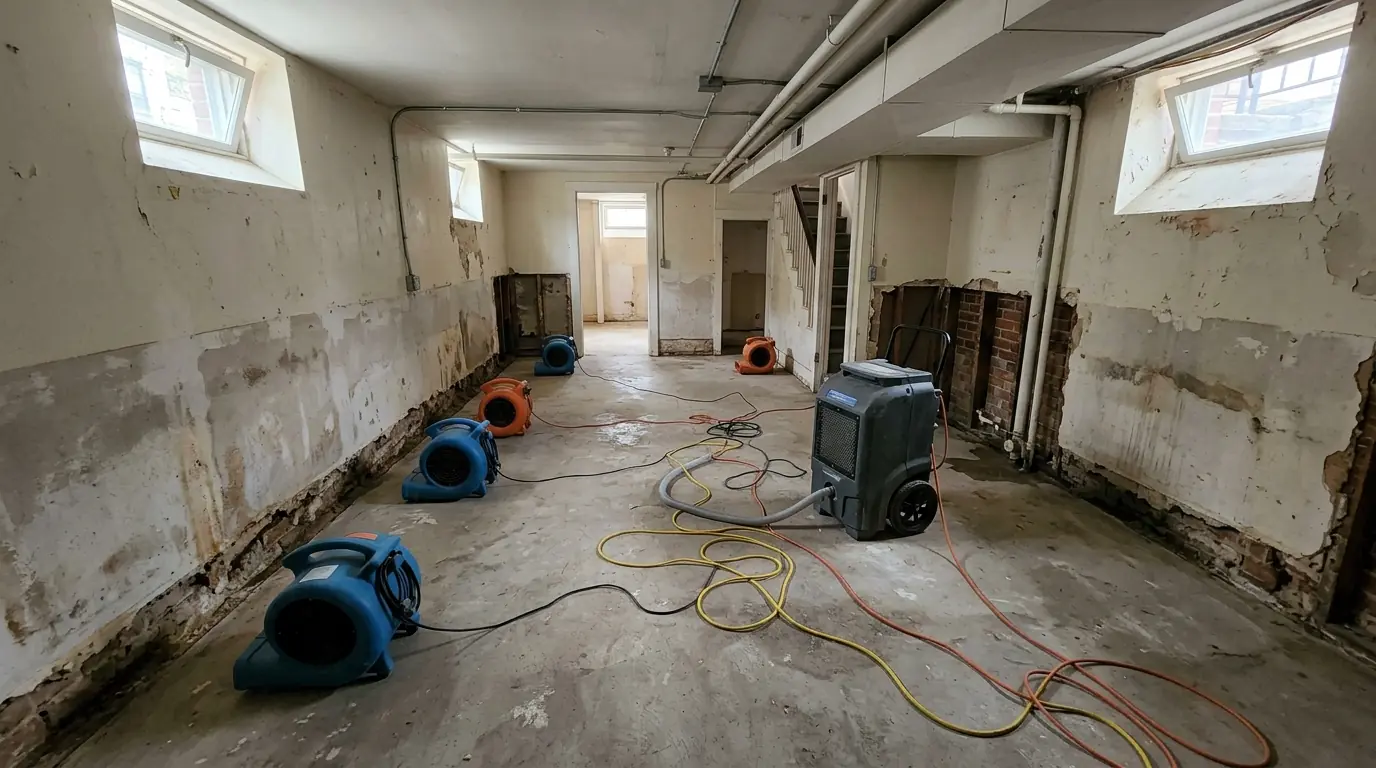
Air movers and a dehumidifier drying a DC basement apartment
Why do DC rowhouses and condo buildings hold water longer than newer homes?
Washington's older housing was built from materials that soak up water and release it slowly. A late 1800s rowhouse in Capitol Hill or Bloomingdale typically has plaster on wood lath, brick party walls, oak strip flooring over plank subfloor, and an English basement set half below the sidewalk. Brick wicks water sideways into the neighbor's wall and upward from a wet floor. Plaster can feel dry to the touch while the lath behind it is still soaked.
The weather works against drying too. From July to September, outdoor air is humid enough that opening windows adds moisture rather than removing it, so drying depends on closed rooms and dehumidifiers. In condo buildings, water travels down through floor assemblies, plumbing chases and risers, and one failed supply line can wet three units before anyone notices. Steam and hot-water radiators add another source: a weeping valve can leak for weeks behind a sofa. We plan drying around all of this anywhere in the District and the close-in Maryland and Virginia suburbs.
Where we do this work: Washington, DC and nearby Maryland and Virginia, including:
What does water damage restoration usually cost in the DC area?
Price follows category, class and how much material has to come out. These are typical ranges for jobs across the District and nearby suburbs.
| One room, Category 1, carpet or vinyl | $1,240-$3,480 |
|---|---|
| Finished basement, Category 2, partial flood cuts | $3,150-$7,860 |
| Two floors wet from above, Class 3, ceilings opened | $6,720-$14,850 |
| Category 3 basement, full tear-out and sanitizing | $8,390-$21,600 |
These ranges are typical DC-area figures, not quotes; we price your job after an on-site assessment. Compare ranges across all 40 services.
What moves the price
- Water category
- Square footage that got wet
- Plaster versus drywall
- Days of equipment on site
- Material removed and hauled
Related work we often do on the same job
Emergency Water Removal
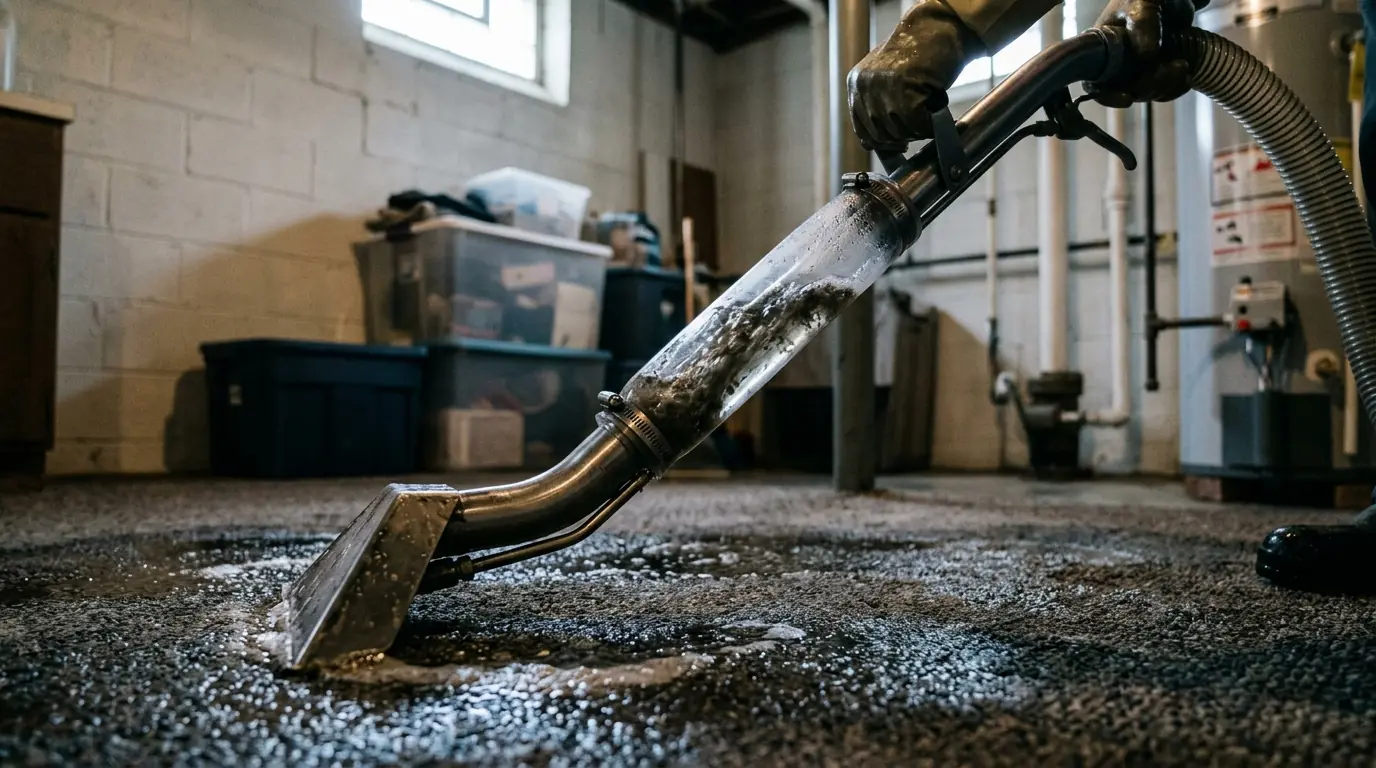
Emergency water removal is the first stage of a water job: shutting down the source, pumping out standing water, and extracting what has soaked into carpet, pad and hard floors before it moves into walls and subfloor.
How we handle it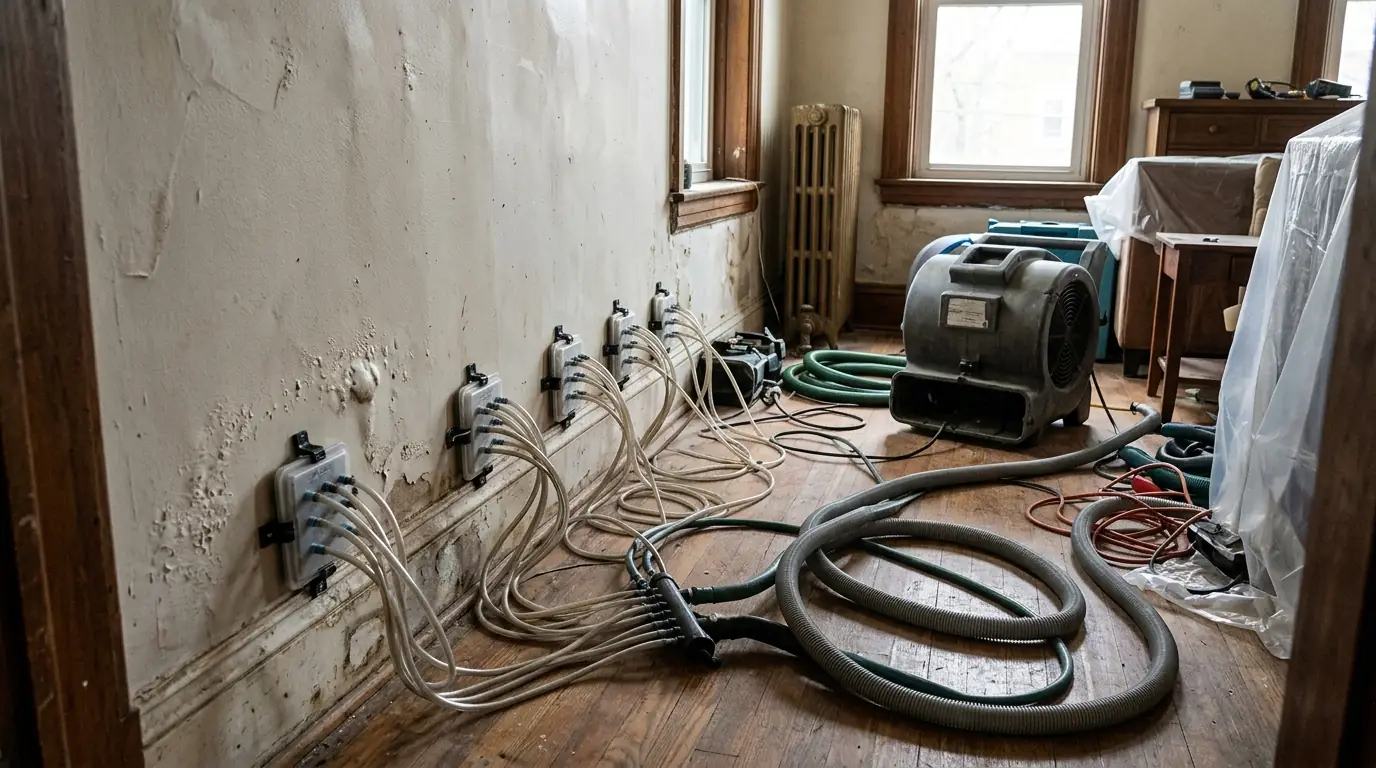
Structural Drying
Structural drying is the controlled removal of moisture from a building's framing, subfloor, wall cavities, plaster and masonry after a water loss.
How we handle it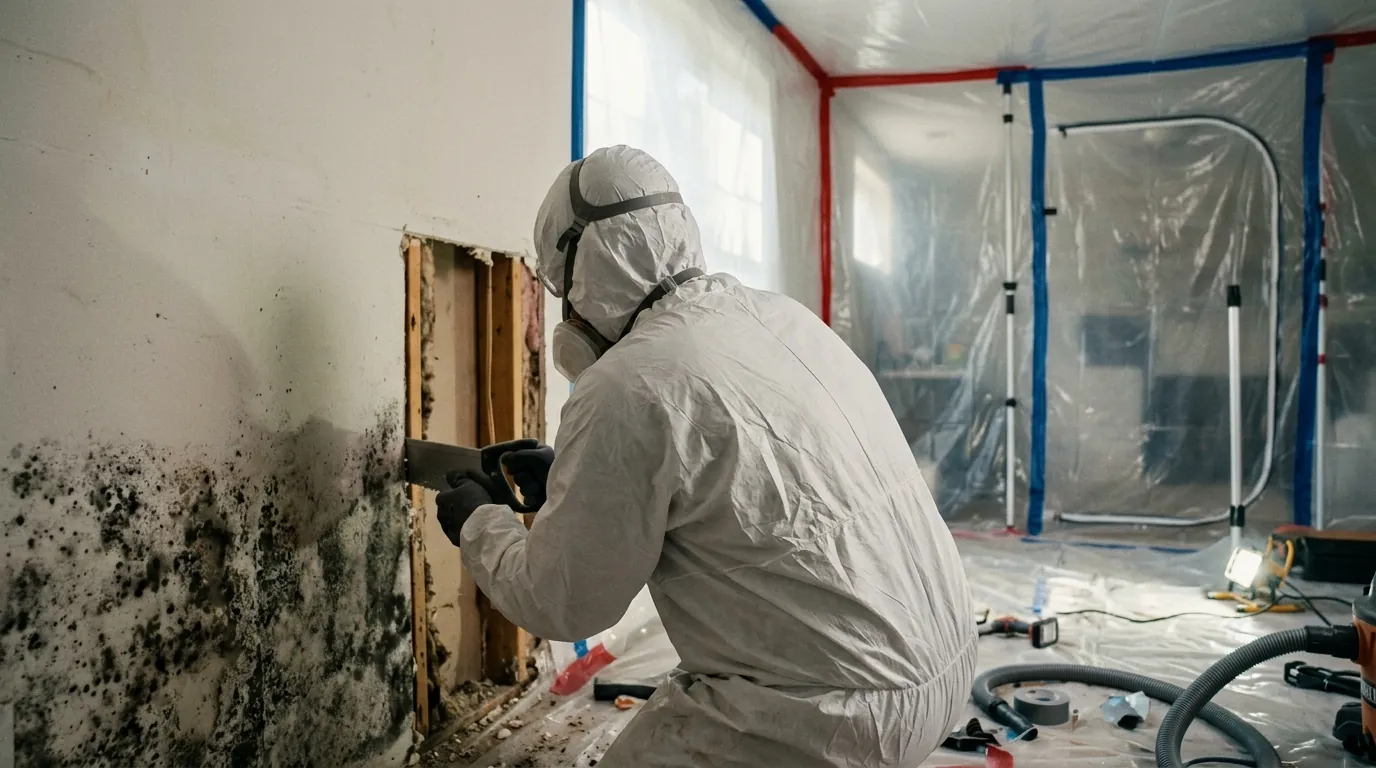
Mold Remediation
Mold remediation is the controlled removal of mold growth from a building.
How we handle it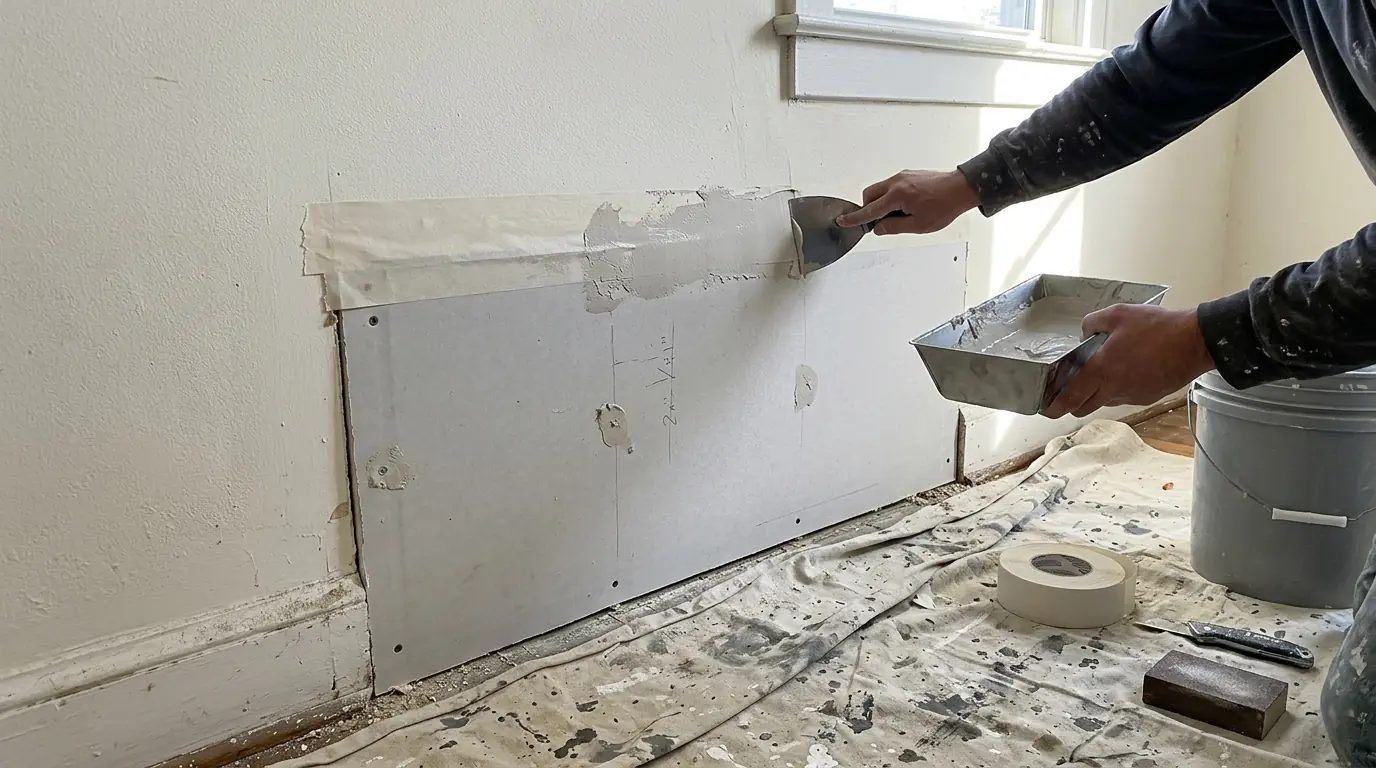
Damage Repair & Rebuild
Damage repair and rebuild is the work that restores a room after water, mold or fire mitigation is finished.
How we handle itQuestions homeowners ask about water damage restoration
How do you decide my walls are actually dry?
We take readings from the same kind of material in a part of your house the water never reached, such as an interior wall upstairs. That number becomes the target. Wet areas are logged on every visit, and drying ends only when they match the reference, not when the surface feels dry or a set number of days has passed.
Can soaked drywall be dried in place, or does it always come out?
It depends on the water and the timing. Drywall wet with clean water that still feels firm can often be dried in place by venting the cavity and pushing air into it. Drywall that has swollen, crumbled at the bottom edge, or touched Category 3 water comes out, along with any wet insulation behind it.
Why would water from a clean pipe be treated as contaminated?
Clean water does not stay clean once it sits. After a day or two in contact with carpet, dust, wood and the soil under a slab, it carries bacteria and is handled as Category 2. If it ran through a ceiling and picked up debris, or sat for several days in a warm basement, we may treat it as Category 3.
Should I open windows or run the air conditioner to help things dry?
In a humid DC summer, opening windows usually brings in more moisture than it removes. Central air helps a little, but it is not built to pull water out of walls. In winter, dry outdoor air can help in some rooms. We set up drying around closed rooms and dehumidifiers and will tell you what to run or leave off.
What records will I have at the end of the job?
You get dated photos of each room before and during the work, the moisture map, daily readings for each wet material, and a list of what was removed and why. Sudden and accidental leaks are often covered while slow leaks and flooding often are not, so check your policy, but either way those records answer most adjuster questions.
Water in the house or a musty room you can't explain?
Call JEC Restoration any time. We answer 24/7 and talk through what you are seeing before anyone touches a wall.