Prevention & Repairs
Whole-basement dehumidifier installation in Washington, DC
A musty basement in August is usually a humidity problem before it is a mold problem. We size and install fixed dehumidifiers with permanent drain lines, so the air stays dry from July to September without anyone emptying a bucket.
Drying, air and detection equipment on our jobs comes from names like
- Dri-Eaz
- Phoenix
- B-Air
- Abatement Technologies
- Protimeter
- Delmhorst
- FLIR
- Benefect
- Concrobium
- Omnitec
- Sapphire Scientific
- Tramex
A whole-basement dehumidifier is a fixed unit that pulls moisture from the air in a basement or crawl space and drains it continuously through a hose or condensate pump. It is worth installing when basement humidity stays above about 60 percent in summer, when the space smells musty, or when portable units fill up daily and still cannot keep up. The goal is steady humidity under roughly 50 to 60 percent.
Portable or whole-basement: which dehumidifier does your basement need?
Portable units from a home store work fine in a small, tight room that only gets damp in a few weeks of summer. They struggle in a typical DC-area basement. Most are rated to remove a lot of water at test conditions warmer than a basement, so in cooler air they pull less than the box suggests. Buckets fill overnight, the unit shuts off, and humidity climbs again until someone empties it. Many also stop working well once the room drops into the 60s Fahrenheit, because their coils frost.
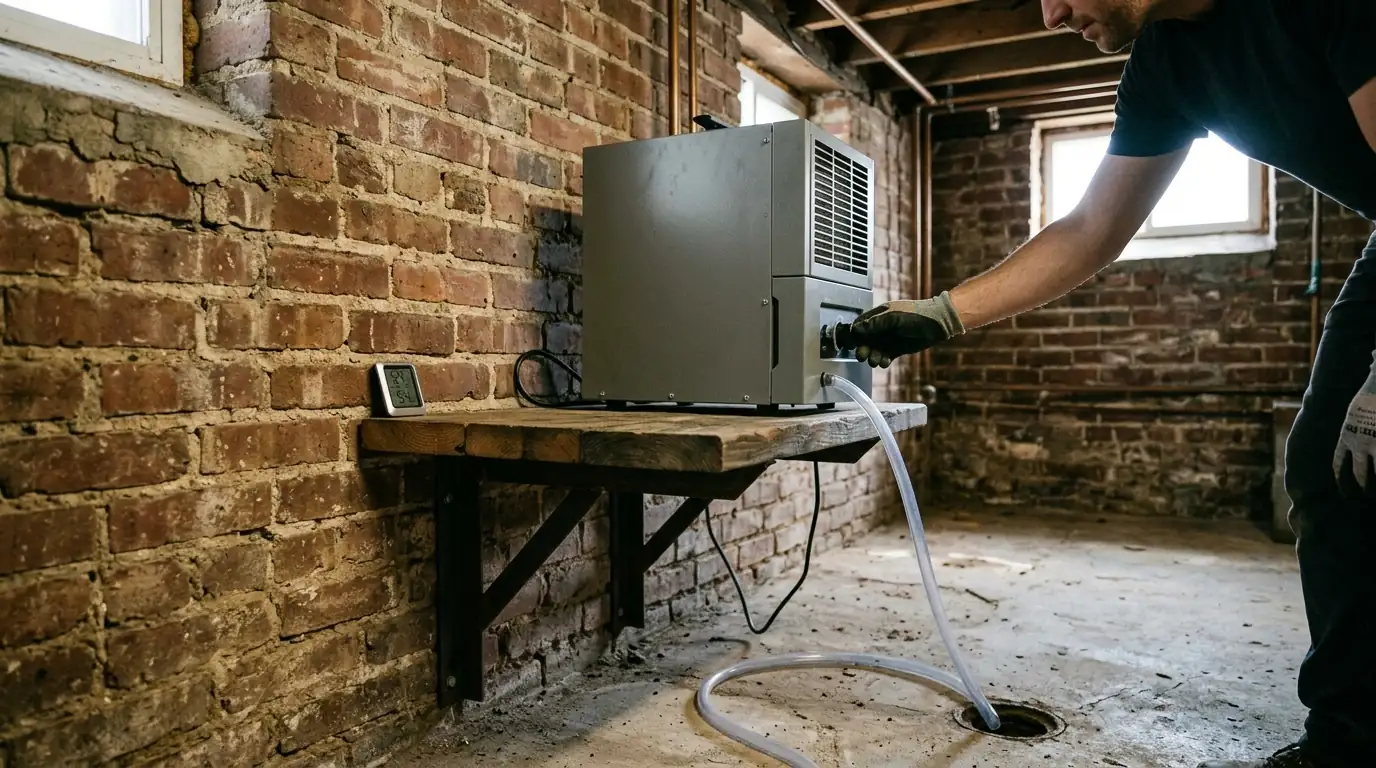
A whole-basement unit is built for exactly that setting. It moves more air, keeps working in cooler spaces, drains through a permanent line, and usually sits up on a shelf or hangs from the joists out of the way. It can also be ducted, pulling air from one end of a long rowhouse basement and returning dry air to the other. The upfront cost is higher, but it does the job without daily attention, and in a finished basement or rented English basement apartment that matters more than the price difference.
Signs your basement air is too wet
These tend to show up from late June through September and fade in winter.
Musty smell that comes and goes
If the basement smells worse on humid summer days and better in winter, the air itself is carrying the moisture.
Sweating pipes and ducts
Cold water lines and supply ducts that drip in summer are cooling humid air past its dew point.
Mold on stored items
Light growth on cardboard boxes, leather goods or wooden furniture stored in the basement points to long periods of high humidity.
Hygrometer above 60 percent
An inexpensive hygrometer that reads in the 60s or 70s for weeks at a time is the clearest signal.
Portable unit always full
A home-store dehumidifier that fills its bucket daily and still leaves the room clammy is undersized for the space.
Damp, clammy carpet
Carpet on a basement slab that feels cool and slightly damp underfoot in summer is absorbing moisture from the air and the floor.
What does a whole-basement dehumidifier cost to install near DC?
The unit is most of the price. Ducting and a long or pumped drain line add to it.
| Whole-basement unit with gravity drain, open basement | $1,640-$2,780 |
|---|---|
| Unit with condensate pump and line through the rim joist | $2,090-$3,360 |
| Ducted unit serving a long or divided basement | $2,870-$4,920 |
Numbers shown are typical for DC-area installs, not quotes; we price yours after measuring the basement and planning the drain run on site. Compare ranges across all 40 services.
What moves the price
- Basement size and layout
- Unit capacity
- Gravity or pumped drain
- Ducting to far rooms
- Electrical outlet needed
How we size and install a basement dehumidifier
Most installs take half a day once the unit and drain route are chosen.
Measure the space
We take humidity and temperature readings in several spots and measure the square footage and ceiling height. We also look for water coming in from outside, which a dehumidifier cannot fix.
Pick the unit
We size the dehumidifier to the volume of the space and how damp it runs, and decide whether it needs ducting to reach far corners of a long basement.
Plan the drain
We find the shortest dependable route for the water, by gravity where possible and by condensate pump where not.
Mount and connect
The unit goes on a shelf, a raised stand or joist hangers with clearance for filter changes. We hook up the drain line, any ducting and a dedicated outlet if needed.
Set and verify
We set the humidity control, leave a hygrometer where you can see it, and check readings again after the unit has run for a while.
What humidity should a DC basement stay at, and why does the number matter?
Mold and dust mites both thrive when relative humidity stays high for long stretches. EPA guidance puts the indoor target under 60 percent, with 30 to 50 percent as the ideal band. For a basement in this area, holding it under about 50 to 60 percent through the summer is the practical target. Below that range, mold on drywall paper, stored cardboard and wood has a hard time getting started; above it for weeks at a time, growth becomes likely on the coolest surfaces.
Humidity is not the same everywhere in a basement. The air near a cold concrete floor or an exterior wall is wetter than the air in the middle of the room, which is why boxes stored against the wall go moldy first. We place a hygrometer near the problem spots, not just by the stairs, and set the unit's control a little below the target so the whole space stays in range. If you are seeing growth already, read our guide on what counts as normal summer mustiness before assuming the worst.
Where does the water go once the dehumidifier collects it?
A whole-basement unit in a humid summer can pull many gallons of water a day out of the air, so the drain line is as important as the machine. The simplest setup is a gravity drain: a hose or rigid line running downhill to a floor drain, a laundry standpipe or a sump pit. Where nothing sits lower than the unit, a small condensate pump lifts the water up and out, usually to a utility sink or through the rim joist to the outside.
In older DC rowhouses the floor drain may be a century-old cast-iron line that clogs or backs up in heavy storms, so we check it before relying on it. Lines run outside need to stay clear of the foundation and protected from freezing. We also make sure the condensate pump has an overflow switch that shuts the dehumidifier off if the pump fails, so a stuck pump does not become a leak of its own.
- Gravity drain to a floor drain, sump pit or standpipe
- Condensate pump with overflow shutoff
- Line routed through the rim joist with freeze protection outside
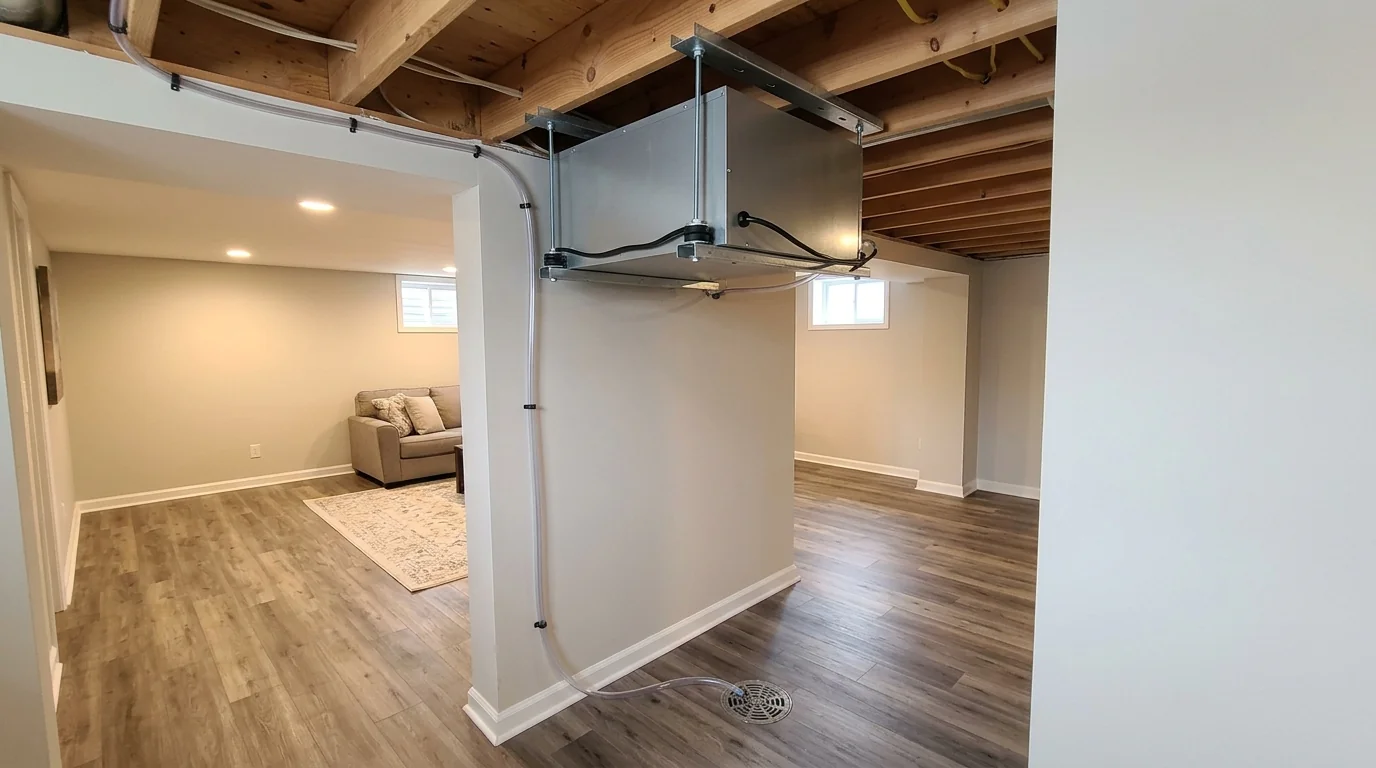
A whole-basement dehumidifier holding humidity down after the work
Why do DC basements get so damp from July to September?
Washington summers are long, hot and humid, and dew points in the upper 60s and 70s are common for weeks at a stretch. When that air reaches a basement wall or slab that sits in the 60s, its relative humidity jumps. Old rowhouse basements on Capitol Hill, in Columbia Heights and in Petworth add their own moisture through brick foundation walls laid in lime mortar, which wick ground water up and release it into the room. English basement apartments have it worse because the front windows sit at or below the sidewalk and rarely get opened. In Silver Spring, Bethesda and Fairfax County, finished basements in 1960s and 1970s houses often have carpet laid straight on the slab and drywall run to the floor, two materials that hold moisture all summer. Running the central air helps upstairs but does little below grade, where supply vents are few and the space cools without drying. Crawl spaces under rear additions get the same treatment, usually paired with a sealed vapor barrier.
Where we do this work: Washington, DC and nearby Maryland and Virginia, including:
Related work we often do on the same job
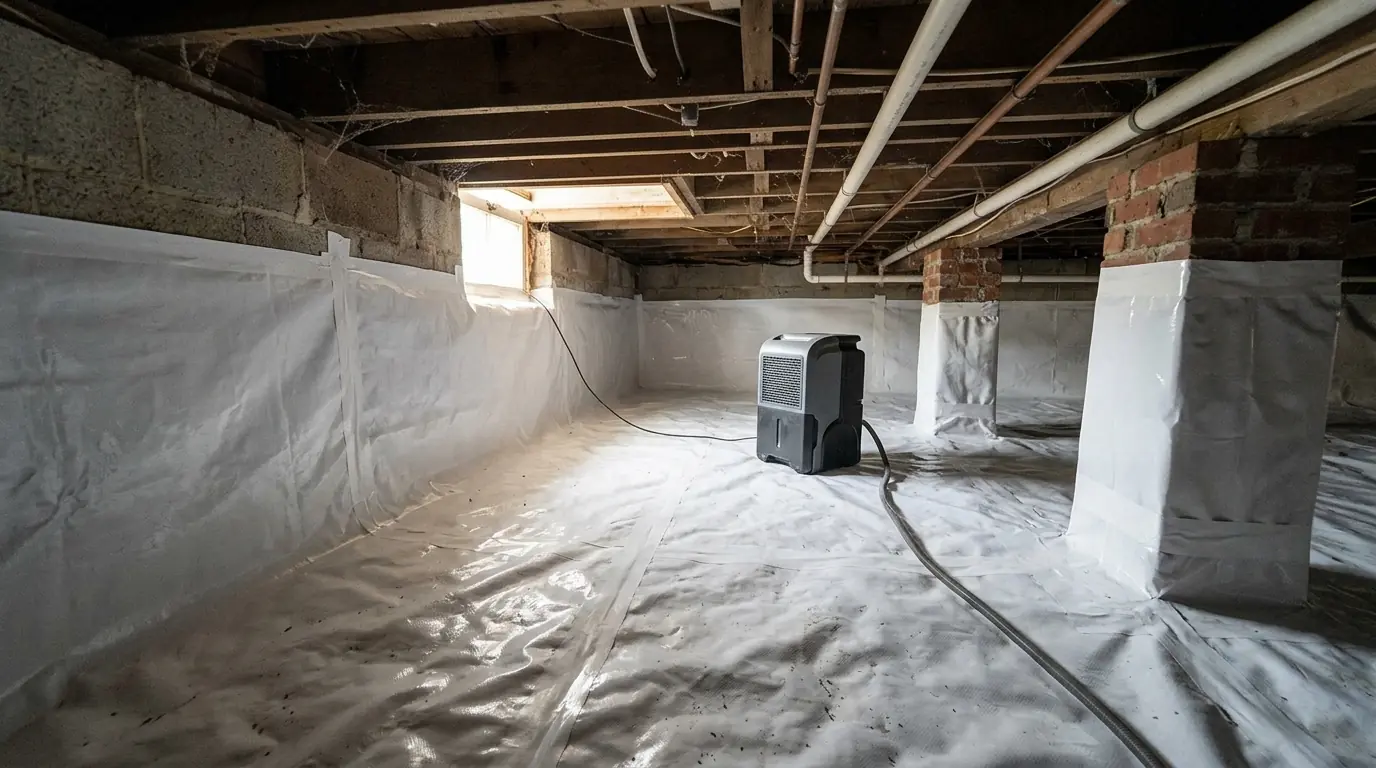
Crawl Space Encapsulation
Crawl space encapsulation closes a dirt or gravel crawl space off from outdoor air and ground moisture.
How we handle it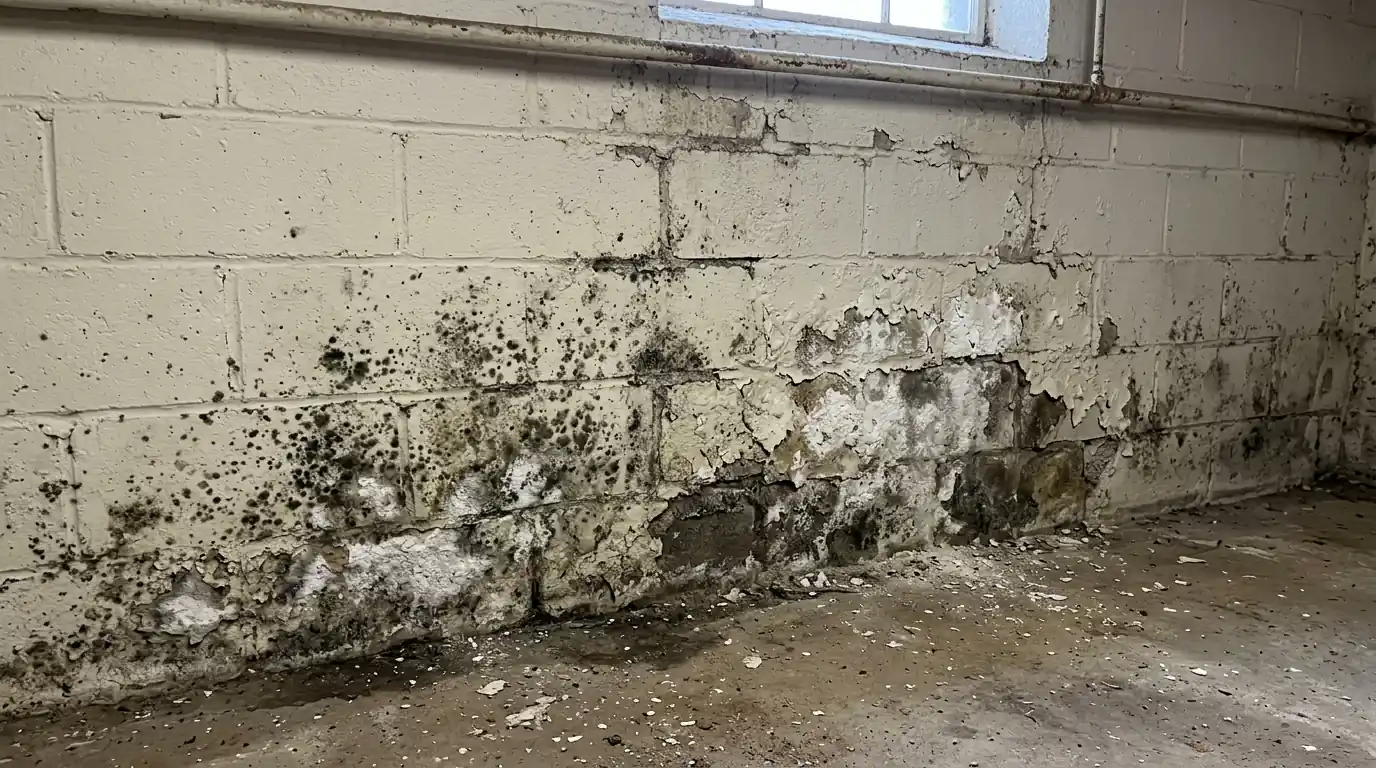
Basement Mold Removal
Basement mold removal cleans or removes growth on foundation walls, framing, finished drywall, carpet and stored contents below grade, then corrects the moisture that caused it.
How we handle it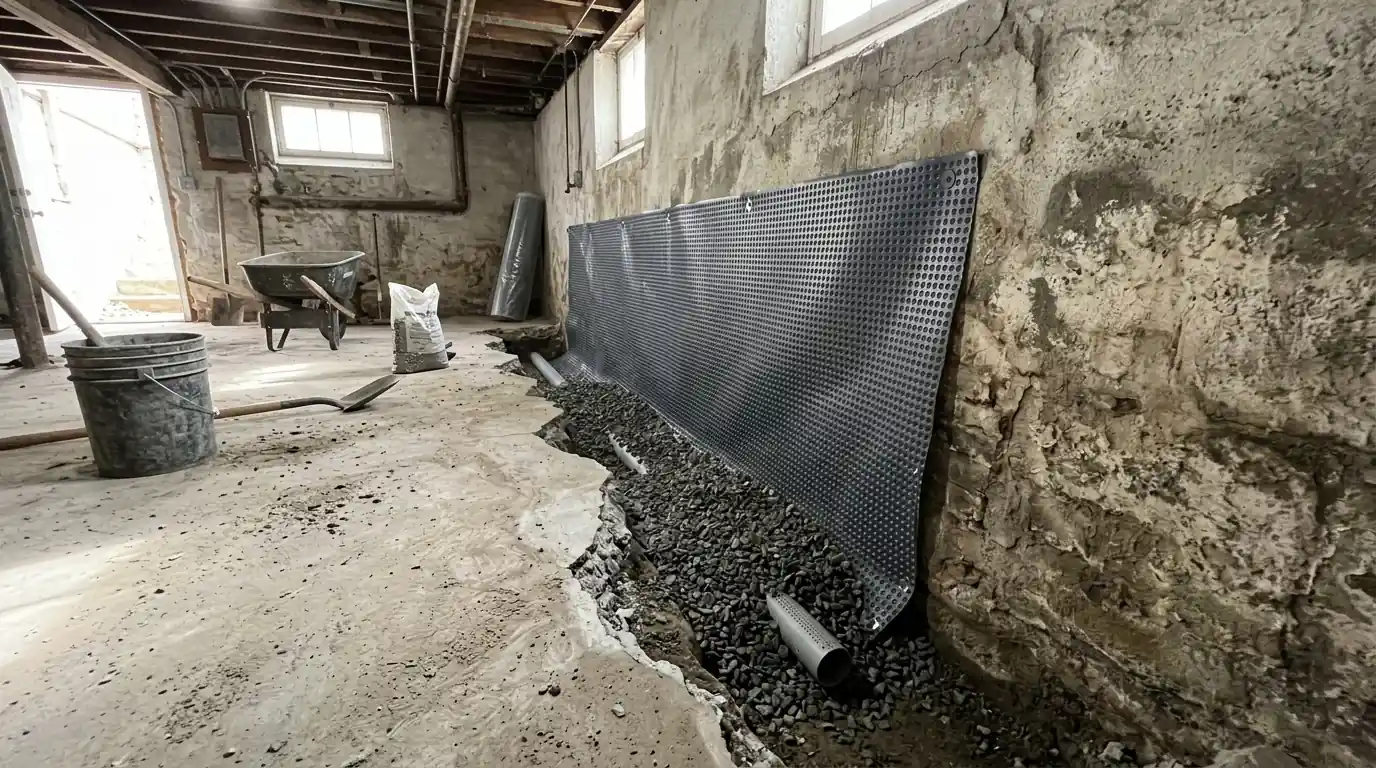
Basement Waterproofing
Basement waterproofing means stopping or managing the water that reaches a basement from outside: through wall cracks, mortar joints, the cove joint at the base of the wall, or a clogged stairwell drain.
How we handle it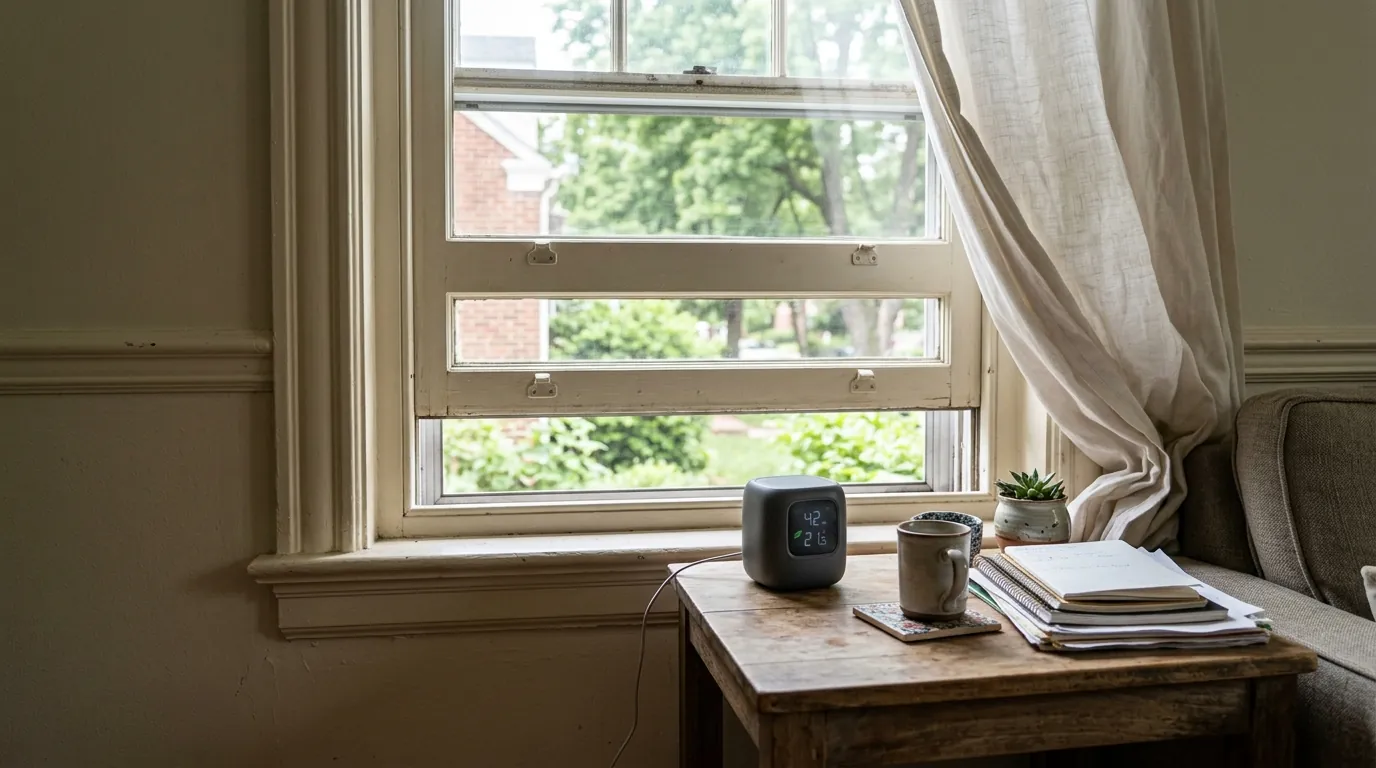
Indoor Air Quality Testing
Indoor air quality testing measures conditions in your home's air: relative humidity, temperature, fine particulates, volatile organic compounds and carbon dioxide, plus mold spores when a moisture problem is suspected.
How we handle itQuestions homeowners ask about dehumidifier installation
Can I run a dehumidifier and air conditioning at the same time?
Yes, and in many DC basements you should. Central air removes some moisture as it cools, but basements usually have few supply vents, so the air down there cools without drying much. A dedicated basement dehumidifier fills that gap. Its warm exhaust air can raise the basement temperature slightly, which is normal and does not affect the rooms upstairs much.
How often does a whole-basement dehumidifier need maintenance?
Clean or replace the air filter every few months during summer, more often if the basement is dusty. Once a year, check that the drain line flows freely, since algae and sediment can clog it, and vacuum dust from the coils. If you have a condensate pump, pour some water into it each spring to make sure it kicks on. Most units show a filter or error light on their control panel.
Will a dehumidifier stop water coming through my basement walls?
No. A dehumidifier only removes moisture already in the air. If water runs down a wall, pools at the base of the walls after rain or rises through the floor, it needs a water management fix like grading, gutter repair or interior drainage. A dehumidifier then handles the dampness that remains. Installing one without fixing an active leak just means the machine runs constantly.
What setting should the basement dehumidifier be on?
Set it to hold the basement between about 45 and 55 percent relative humidity. Going much lower uses more electricity without much benefit in a basement, and it can dry out wood floors and furniture stored there. Check a separate hygrometer near the coolest wall for the first few weeks, because the unit's built-in sensor reads the air right beside it.
Can a dehumidifier go in an English basement apartment with a tenant?
Yes. A whole-basement unit is quieter than most portables and usually mounts in a utility closet or mechanical room, with ducts reaching the bedroom and living area. It runs without the tenant having to empty buckets, which removes the most common reason portable units end up unplugged. If the unit sits in a shared space, we leave the control and filter where the owner can reach them.
Water in the house or a musty room you can't explain?
Call JEC Restoration any time. We answer 24/7 and talk through what you are seeing before anyone touches a wall.