Washington, DC neighborhood
Gutter leak & basement drying in Chevy Chase DC, Washington, DC 20015
Chevy Chase DC's colonials and Tudors sit under some of the city's largest trees, and their gutters, downspouts and old yard drains struggle every fall. We dry the finished basements and plaster walls that pay the price.
JEC Restoration provides water damage restoration, mold remediation, fire and smoke cleanup and sewage cleanup in Chevy Chase DC, from Connecticut Avenue and Chevy Chase Circle at the Maryland line south through the residential streets. Call (202) 989-3053. It is answered 24/7, and we also work on the Maryland side of the circle.
How do 1910s to 1930s colonials and Tudors take on water?
Most of Chevy Chase DC was built out between the 1910s and the 1930s: center-hall colonials, foursquares, and Tudors with steep roofs, cross gables and steel casement windows. The houses are solid, but they were drained by the standards of their day. Many downspouts still feed underground clay or cast-iron lines that run to the street or to a dry well in the yard. Those lines crack, fill with roots and silt, and quietly stop carrying water, so every storm dumps a roof's worth of runoff right at the foundation.
Tudors add their own weak points. Complex roof valleys, dormers and chimneys mean a lot of flashing, and old steel casements rust at the bottom rail and let wind-driven rain into the wall below the sill. That water shows up as bubbling paint or a damp stripe in the plaster, often well below the window. A moisture and leak survey with a thermal camera usually finds the path before we open anything.
Most-called services in Chevy Chase DC
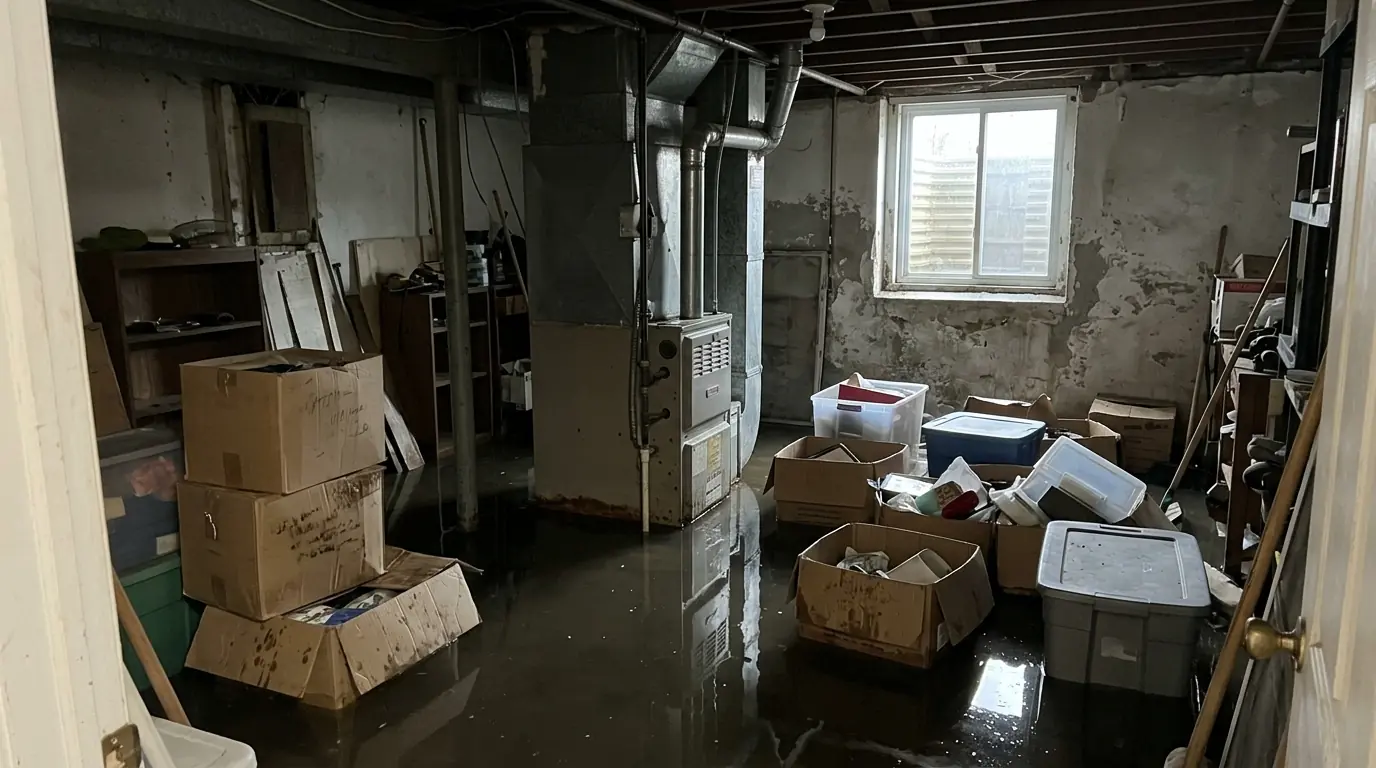
Flooded Basement Cleanup
Flooded basement cleanup removes water from a below-grade space, cleans and sanitizes what it touched, takes out finishes that cannot be saved, and dries the slab, walls and framing.
How we handle it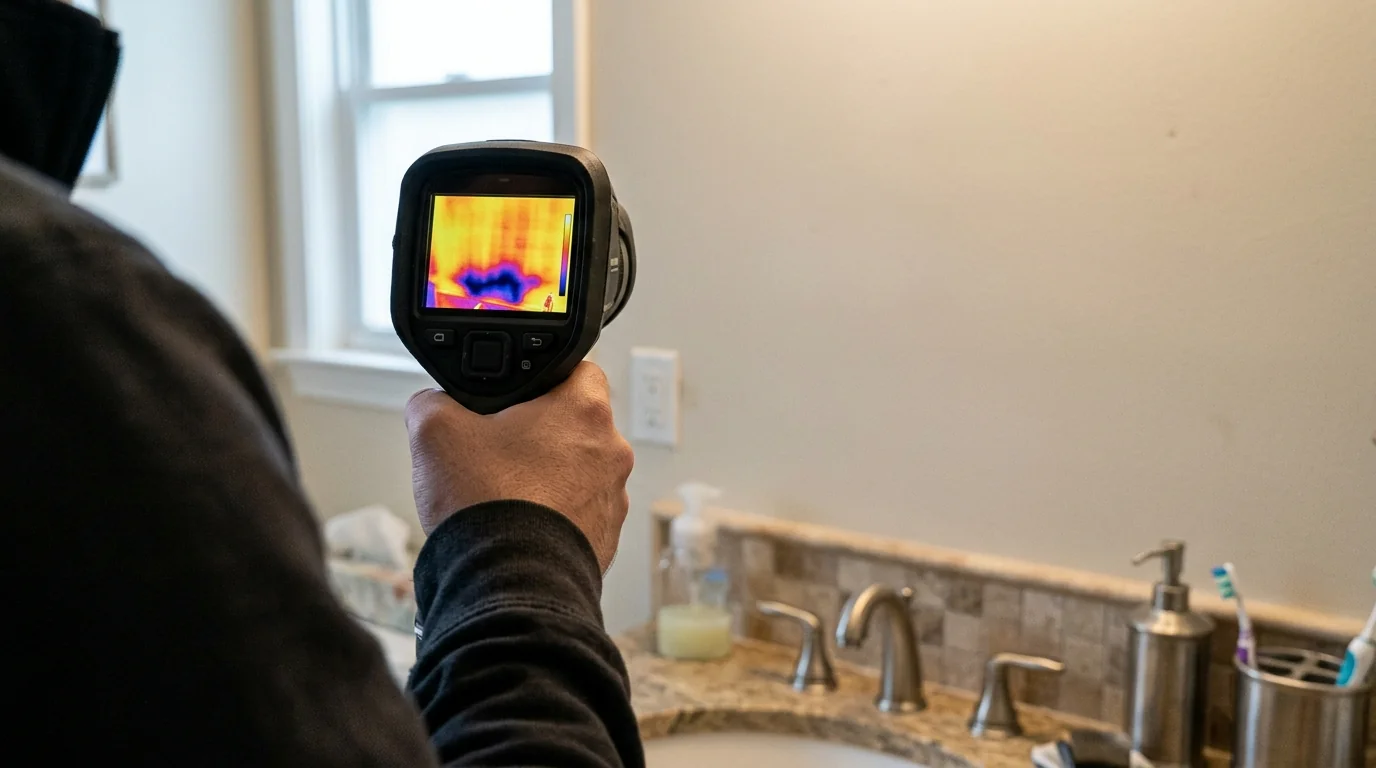
Moisture & Leak Detection
Moisture and leak detection is a non-invasive survey that finds where water is hiding in walls, ceilings and floors and how far it has spread.
How we handle it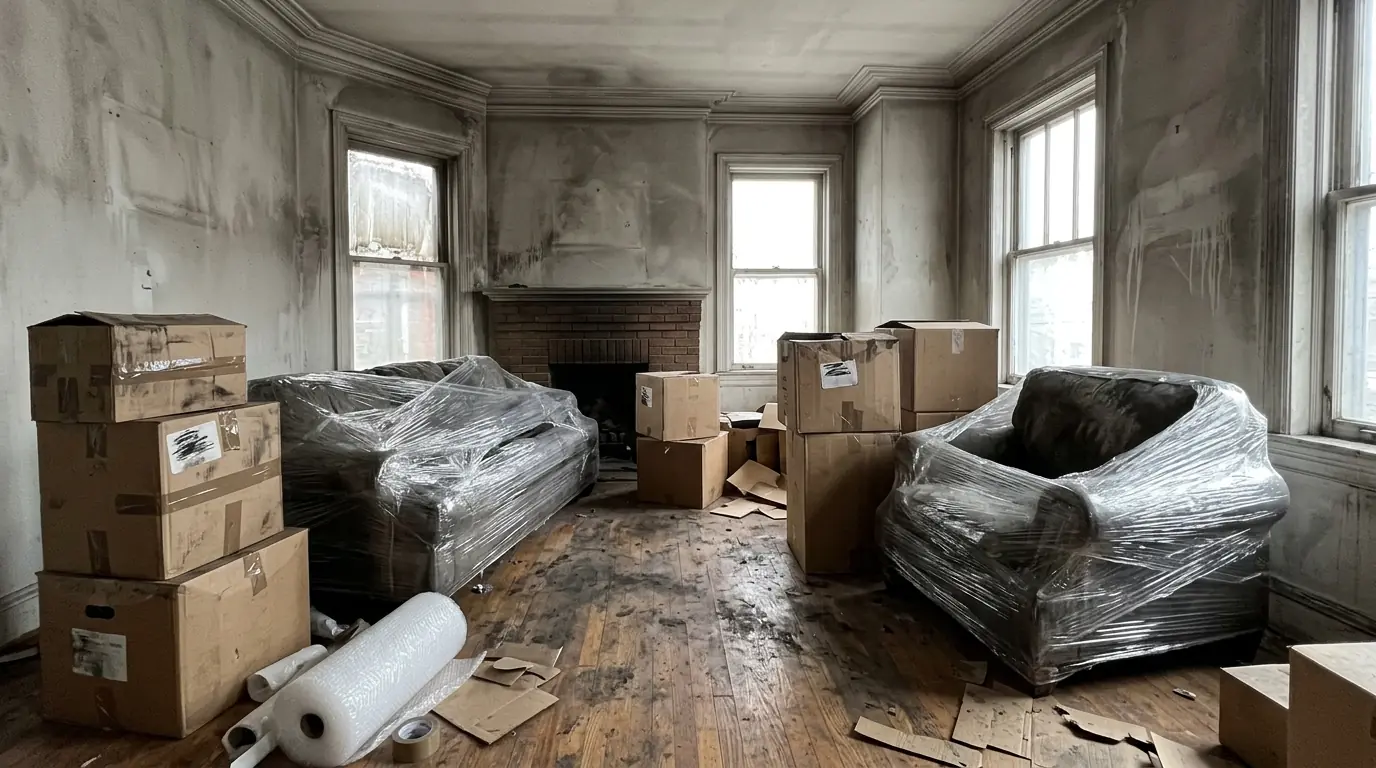
Contents Cleaning & Pack-Out
A contents pack-out is the inventory, packing and removal of belongings from a home damaged by fire, smoke, water or sewage, so the structure can be cleaned and repaired while items are cleaned and stored elsewhere.
How we handle it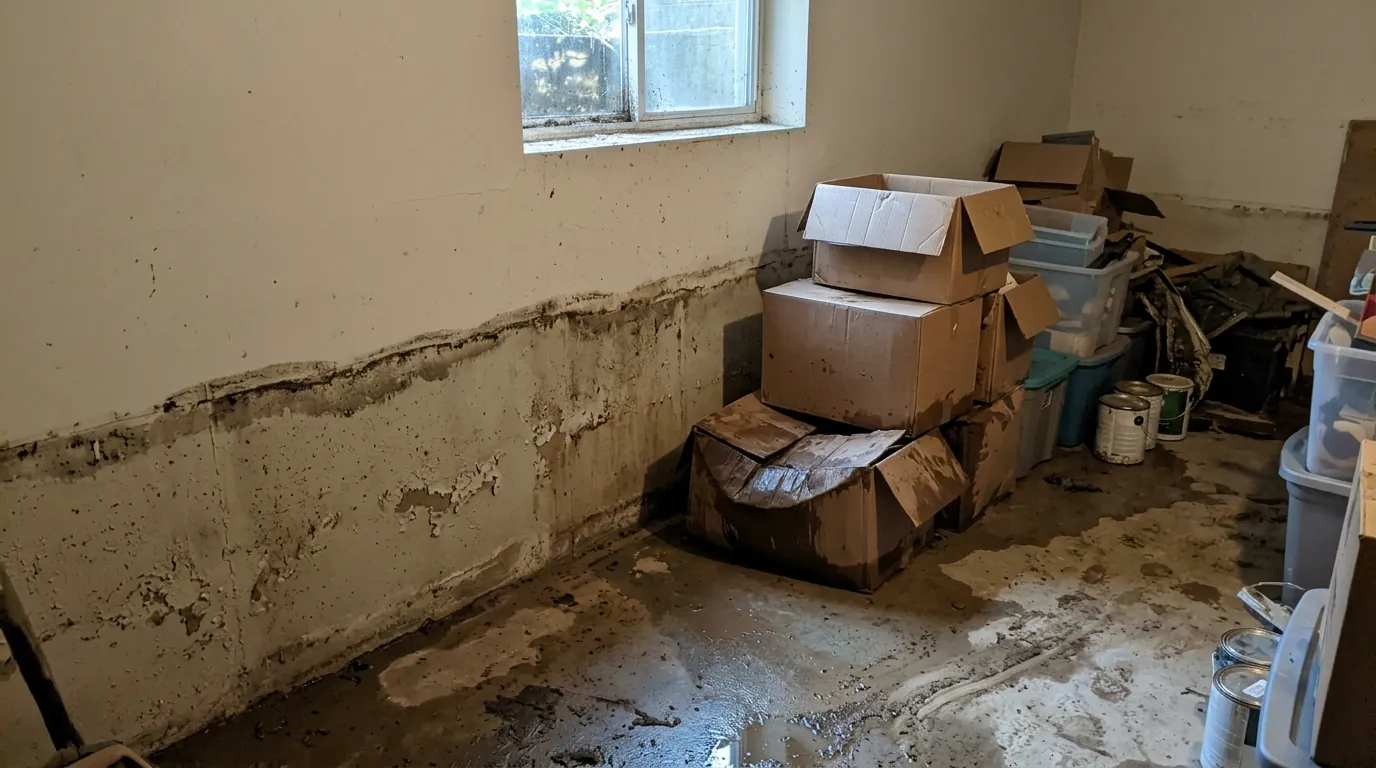
Storm & Flood Cleanup
Storm and flood cleanup covers water that enters a home from outside during heavy weather: flash flooding at basement doors and window wells, overflowing areaway drains, wind-driven rain through walls and windows, and roof openings from fallen limbs.
How we handle it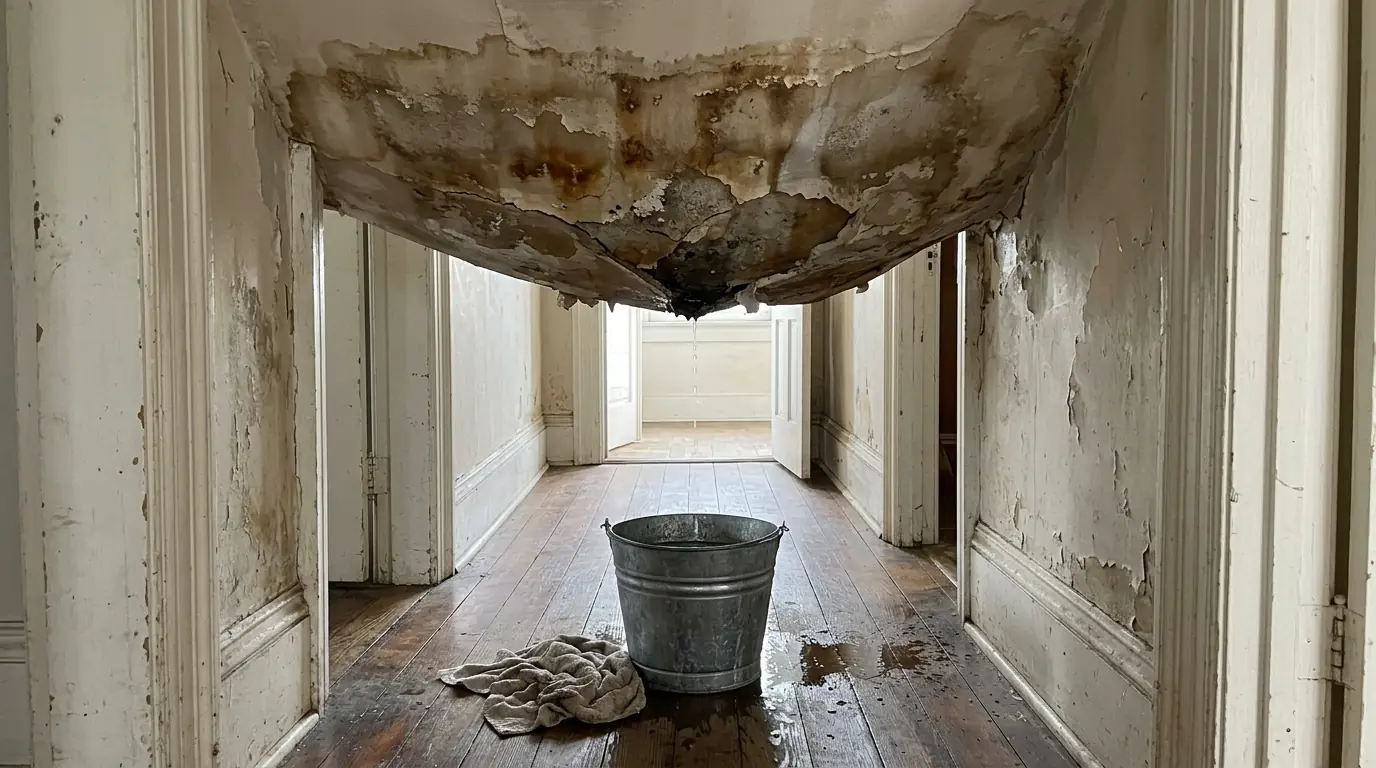
Ceiling Leak Damage
Ceiling leak damage work deals with water trapped above a ceiling from a roof, a bathroom, a radiator or an air conditioning line.
How we handle itWhat do big trees and leaf season mean for your basement?
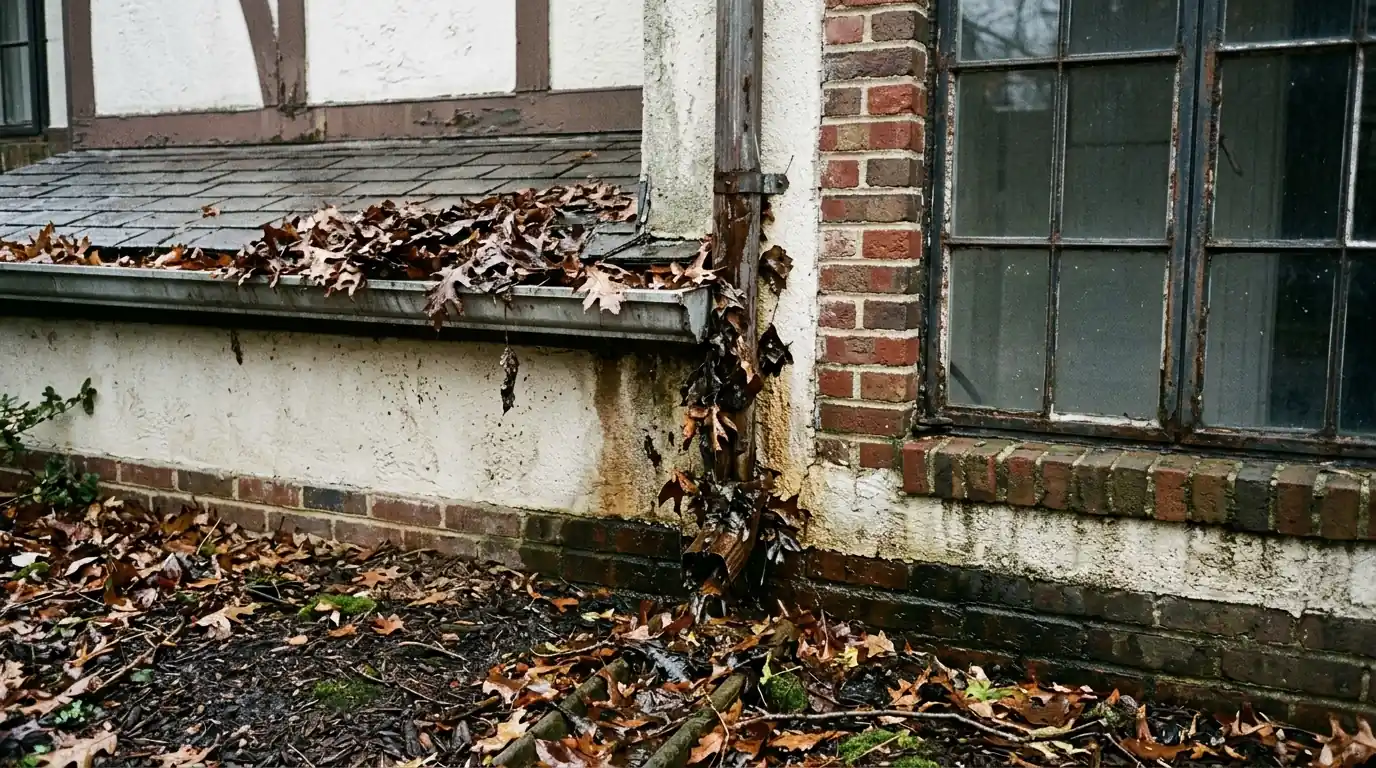
Tall oaks and tulip poplars shade these streets, and from October into December they bury gutters in leaves. A clogged gutter overflows behind the fascia, runs down the wall and soaks the soil next to the foundation, which is exactly where a finished basement's drywall, carpet and built-in shelving sit. Add a winter freeze, and ice can form at the eaves and push meltwater under the roofing into exterior walls.
Summer thunderstorms bring wind, and wind brings limbs through roofs and attic sheathing. Once the opening is covered, the attic insulation, plaster ceilings and anything stored up there need drying or removal. Finished basements also hold storage, home offices and playrooms, so a basement flood here is often as much about packing out and cleaning belongings as about the building itself.
Typical calls we get from Chevy Chase DC
Collapsed yard drain soaking a basement wall
A downspout's buried clay line has filled with roots, so roof water spills out underground right beside the foundation. We remove wet drywall and carpet along that wall, dry the framing and masonry and show you where the drain line failed.
Ice dam leak behind a Tudor dormer
Meltwater backs up under the roof at a dormer during a January freeze and stains the plaster in a bedroom below. We dry the attic insulation and ceiling, check the rafters and sheathing for mold, and keep the room usable while equipment runs.
Rusted steel casement leaking into plaster
Wind-driven rain gets in at the bottom rail of an old casement window and runs inside the wall to the baseboard. We locate the wet area with a thermal camera, open the plaster below the sill only where needed and dry the cavity.
Storm limb through the attic
A large limb falls during a summer thunderstorm and punches through the roof over a third-floor room. After the hole is covered, we remove soaked insulation, dry the sheathing and ceiling plaster and pack out stored items that got wet.
How does a cleanup run on the DC side of Chevy Chase Circle?
Detached lots with driveways give us room to stage dehumidifiers, air movers and a debris container without blocking the street, and side yards let us reach basement doors without carrying wet materials through the house. Inside, we protect original oak floors and stair runners, set up plastic containment where materials come out and keep a moisture log for each room so you can see the drying curve. A typical basement in 20015 dries in three to five days once the source is stopped. Soaked masonry takes longer.
Insurance questions come up most after limb damage and basement backups. Sudden events like a falling limb are often covered, while groundwater seepage and sewer backups may need separate coverage or an endorsement, so check your policy. We give you dated photos, moisture logs and an itemized list of removed materials, which is what an adjuster typically asks for. Our claim paperwork help page explains what we prepare.

Typical homes in this part of the DC area
Nearby areas we also cover
Questions from Chevy Chase DC homeowners
Where do the downspouts on an older Chevy Chase house actually drain?
Many still feed buried clay or cast-iron pipes installed when the house was built, running to the street, the alley or a dry well. If water spills out at the joint where the downspout meets the ground, or the soil near that spot stays soggy, the line is probably blocked or broken. Rerouting downspouts to splash blocks or new pipe often stops seepage on that wall.
Can a finished basement dry without removing all the drywall?
Often it can. With clean water, we typically cut only the lower section of drywall where readings stay high, or dry the wall cavity through small holes behind the baseboard. Insulated exterior walls and paneling glued to masonry are harder to dry in place. Water from a sewer backup is different: anything porous it reached has to come out.
Do you work on the Maryland side of Chevy Chase Circle too?
Yes. The neighborhood continues across the line into Montgomery County with the same era of houses and the same drainage habits, and we serve both sides. Homeowners a bit farther out can check our Bethesda page. The phone number is the same either way: (202) 989-3053, answered 24/7.
Water or mold trouble in Chevy Chase DC?
Call JEC Restoration any time. We answer 24/7 and talk through what you are seeing before anyone touches a wall.