Prevention & Repairs
Moisture and hidden leak detection in Washington, DC homes
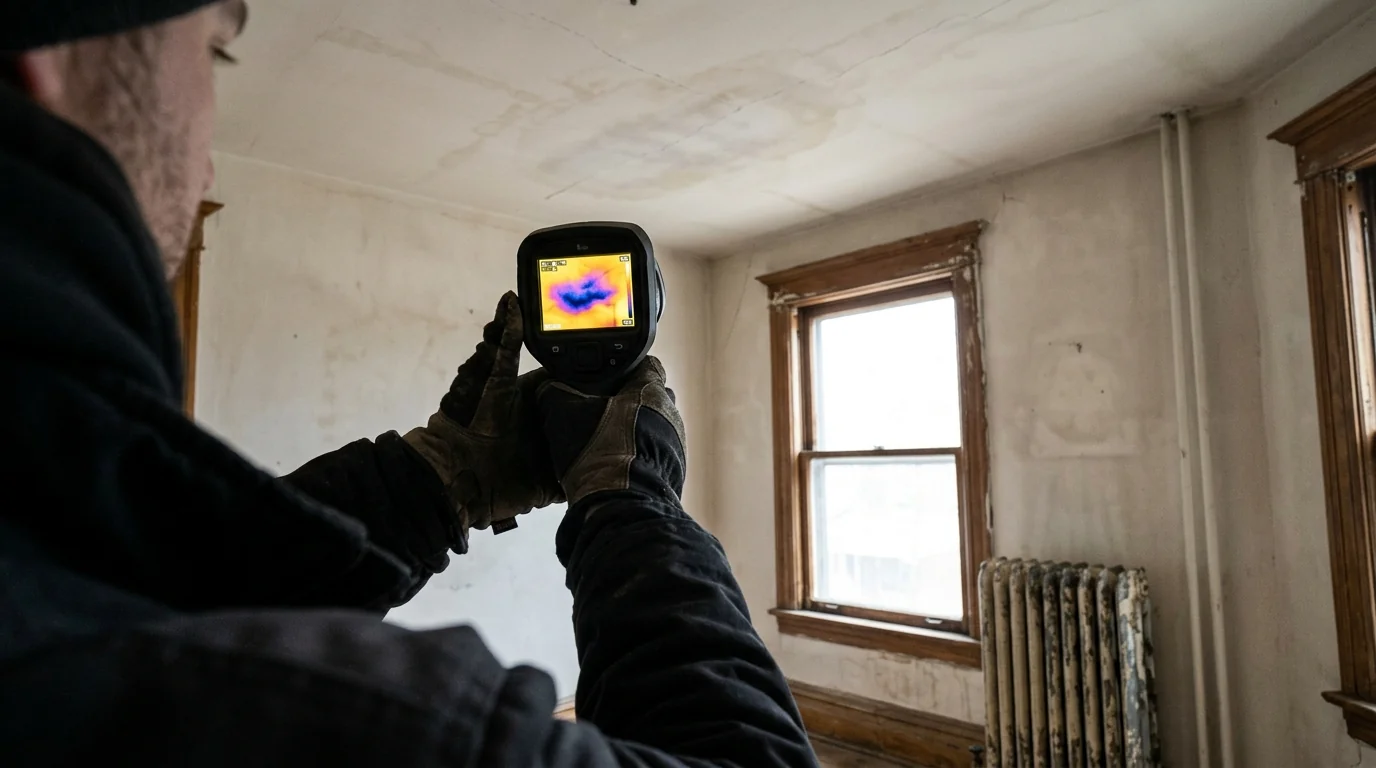
A stain that keeps spreading, a floor that feels soft or a smell with no source usually means water is moving somewhere you cannot see. We map it with thermal cameras and moisture meters before anyone cuts into a wall.
Drying, air and detection equipment on our jobs comes from names like
- Dri-Eaz
- Phoenix
- B-Air
- Abatement Technologies
- Protimeter
- Delmhorst
- FLIR
- Benefect
- Concrobium
- Omnitec
- Sapphire Scientific
- Tramex
Moisture and leak detection is a non-invasive survey that finds where water is hiding in walls, ceilings and floors and how far it has spread. We use thermal imaging, pin and pinless moisture meters and hygrometers to trace a slow leak to its source area. You need it when you see stains, peeling paint, warped flooring or a rising water bill but cannot find where the water comes from.
What can a thermal camera see, and what does it miss?
A thermal camera does not see water. It sees surface temperature. Wet drywall and plaster cool as the water in them evaporates, so a damp patch shows up as a cooler shape on the screen, often with a telltale drip line or a spreading fan below a pipe. That makes the camera fast at scanning a whole wall or ceiling and showing where to look closer.
It also gets fooled. A cold exterior wall, a missing patch of insulation, an air leak around a window or a duct behind the drywall can all look like moisture. A sunny wall can hide a damp spot entirely. We never call a leak from a thermal image alone. Every cool area gets checked with a moisture meter on the surface, and where readings are high, we confirm the extent before writing anything down. Thermal imaging works best when there is a temperature difference between inside and outside, so in mild weather we may run heat or air conditioning for a while first to sharpen the picture.
Signs a slow leak is hiding somewhere in your home
Slow leaks rarely drip where you can see them; they show up as these clues instead.
Stains that grow
A ceiling or wall stain that gets larger, darker or develops a ring after a few weeks has a water supply that is still running.
Bubbling or peeling paint
Paint that lifts in a bubble or a soft patch on plaster or drywall usually has moisture behind it.
Warped or cupped flooring
Hardwood boards that cup or laminate that swells at the seams near a kitchen or bathroom often sit over a wet subfloor.
Water bill creeping up
A steady rise in water use with no change in habits can point to a hidden supply leak or a toilet that runs.
Musty smell in one room
An odor that stays in one closet, cabinet or corner, and gets stronger when the room is closed up, is worth a meter.
Loose tile or soft grout
Tiles that sound hollow or grout that crumbles near a shower or tub can mean water is getting behind the tile.
What does moisture and leak detection cost in Washington, DC?
Detection is priced by the size of the area surveyed. Drying, if needed, is priced separately once we know what got wet.
| Single room or one stain, thermal scan and meter readings | $285-$540 |
|---|---|
| Whole floor or multiple rooms with mapped report | $495-$960 |
| Condo stack survey across units above and below | $780-$1,530 |
These ranges are DC-area norms and not quotes; the actual price depends on the area surveyed and the access we find on site. Compare ranges across all 40 services.
What moves the price
- Number of rooms surveyed
- Access to units above or below
- Ceiling height and attic access
- Report detail needed for a claim
- Return visit to retest after repair
How a leak detection visit works
Most homes take one to three hours, depending on how many rooms show signs and how far the water may have traveled.
Talk through the clues
We ask when you first noticed the stain or smell, what sits above or behind it, and whether it changes with weather or water use. That narrows the starting point.
Scan with thermal imaging
We scan ceilings, walls and floors in the affected rooms and the rooms around them, looking for cool patterns that match water.
Confirm with meters
Every suspect area gets checked with pinless and pin meters against a dry reference, and readings are marked on a floor plan or photo.
Isolate the source area
Where it helps, we run a fixture or shower and watch readings change, or check whether readings rise after rain, to point to plumbing, roofing or condensation.
Report and plan drying
You get the readings, photos and our findings, ready to share with your plumber or roofer and your insurer, plus a drying plan for the wet materials.
How do pin and pinless meters follow water through plaster, drywall and subfloor?
Once the camera narrows the search, meters measure the material itself. A pinless meter, like those from Protimeter or Delmhorst, reads moisture through a flat pad pressed against the surface. It does not mark the wall and can scan drywall, tile, wood flooring and painted plaster quickly, reading somewhere below the surface. A pin meter pushes two small pins into the material and gives a more exact reading at a set depth, which matters in wood subfloors, baseboards and framing, where the number tells us whether the wood is actually wet or just slightly above normal.
We take readings on a grid and mark them on a floor plan or photo, comparing every damp spot against a dry reference area of the same material elsewhere in the house. The pattern tells the story. Readings that peak right below a shower valve and fade outward point to the valve. A long wet line along a baseboard points to a supply line or a drain under the floor. A thermo-hygrometer records air temperature and humidity in the room, which helps separate a real leak from condensation.
Who repairs the pipe once we find the leak?
Our part is finding where the water is, how far it has traveled, and drying out what got wet. The pipe, valve, fitting or drain that is actually leaking gets repaired by your plumber, and we coordinate with them directly: we share the moisture map and photos so they can open the smallest possible hole in the right spot, and we schedule drying around their repair. If the source is a roof, a parapet or a window, the same applies with a roofer or window contractor.
Once the leak is stopped, the wet materials need to dry before anything gets closed up or repainted. Small areas often dry in place with air movers and a dehumidifier. Larger soaked areas may need some drywall cut out or drying set up inside the wall cavity. We take readings each day until the materials match the dry reference, so you know when the area is actually dry rather than just dry to the touch.
- A moisture map with readings and photos
- Your plumber or roofer gets the same map
- Daily drying readings until values reach dry reference
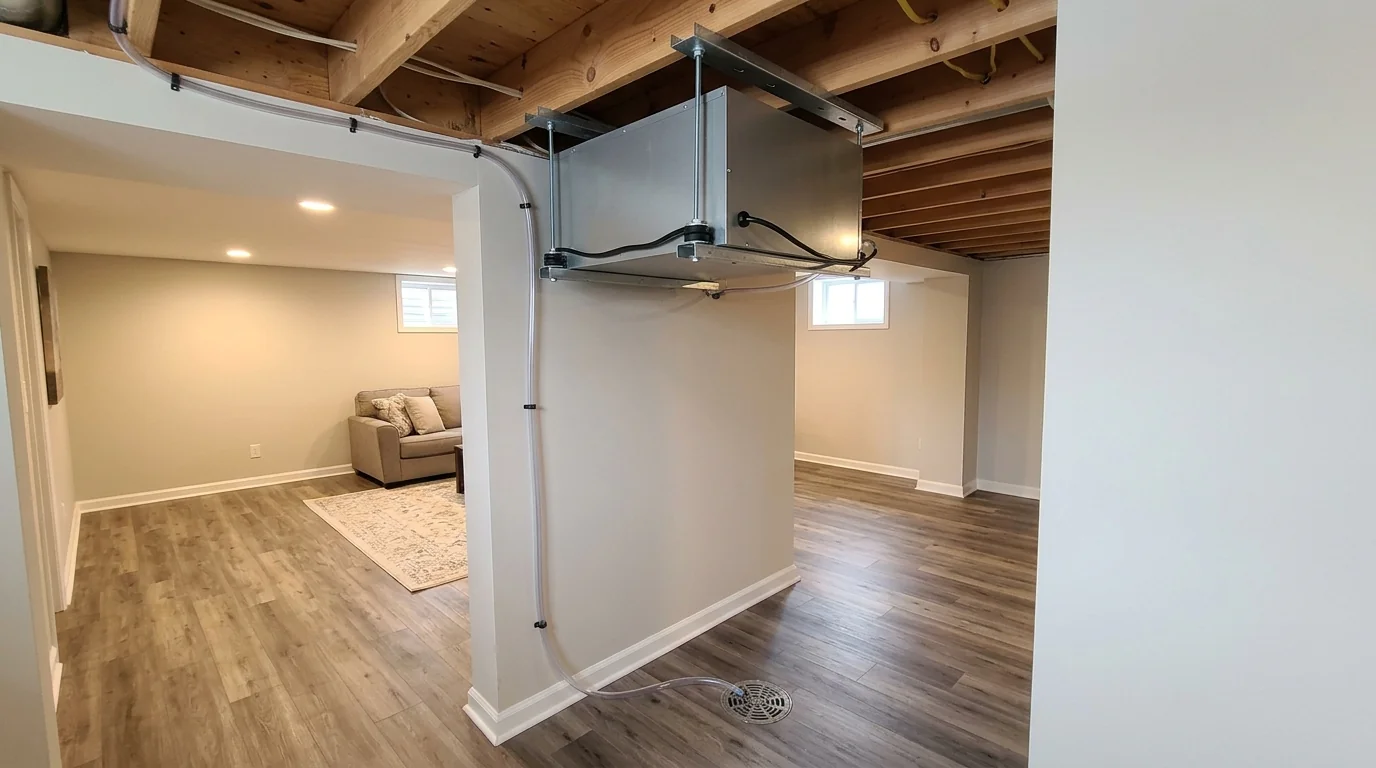
A whole-basement dehumidifier holding humidity down after the work
Where do hidden leaks tend to hide in DC homes?
Condo and co-op buildings produce more hidden leak calls than any other home type in the District. A stain on your ceiling in a Dupont Circle or Columbia Heights building could come from the unit directly above, the one two floors up, a shared riser or a roof drain, and mapping moisture across ceilings and walls helps the building and the owners agree on where it started. In rowhouses, plaster on wood lath hides water well: it can soak a wide area before showing a stain, and it often reads damp for weeks. Steam and hot-water radiators leak slowly at valves and unions, staining the ceiling below. Galvanized supply lines from the early 1900s rust from the inside and pinhole inside walls. Flat rowhouse roofs with parapets leak at the flashing and send water down the inside of a party wall far from where it came in. In suburban houses, a common source is a shower valve or a supply line to an upstairs bathroom.
Where we do this work: Washington, DC and nearby Maryland and Virginia, including:
Related work we often do on the same job
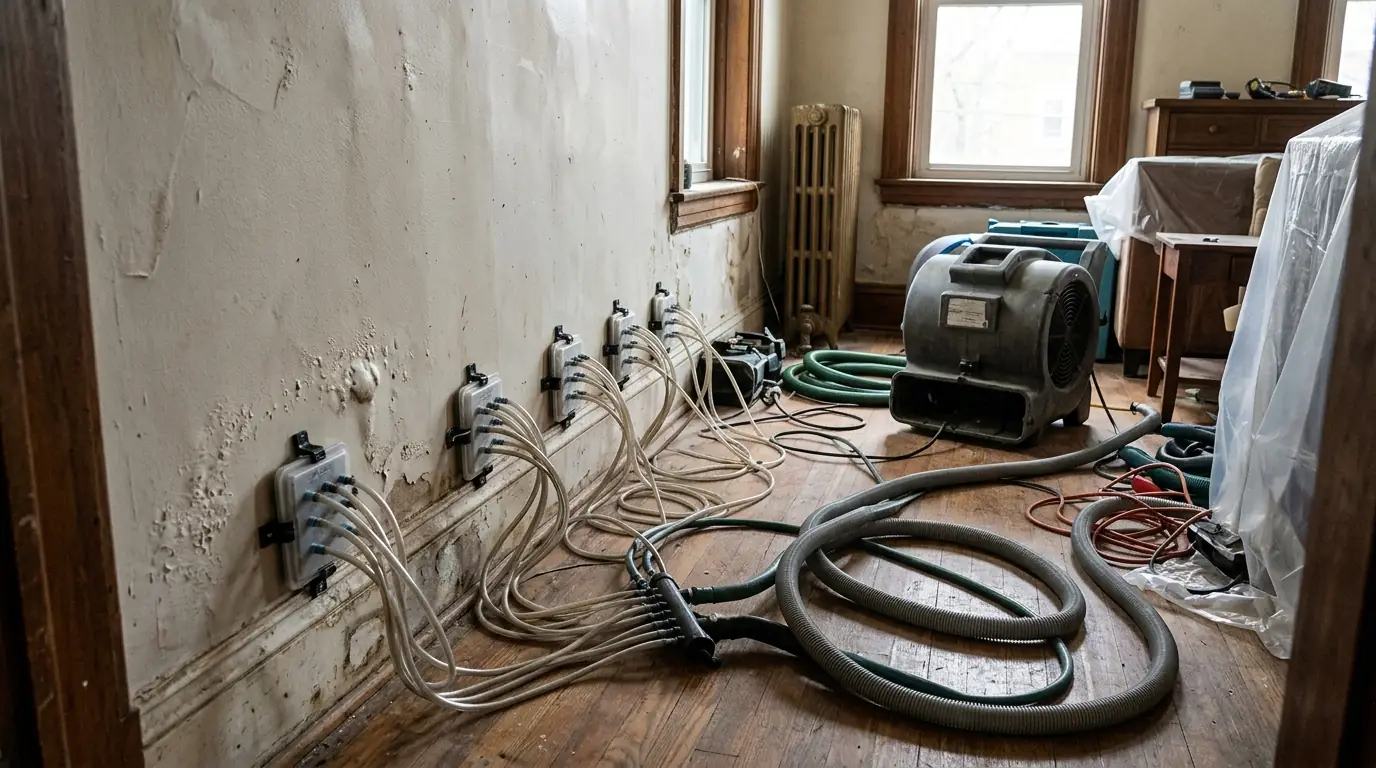
Structural Drying
Structural drying is the controlled removal of moisture from a building's framing, subfloor, wall cavities, plaster and masonry after a water loss.
How we handle it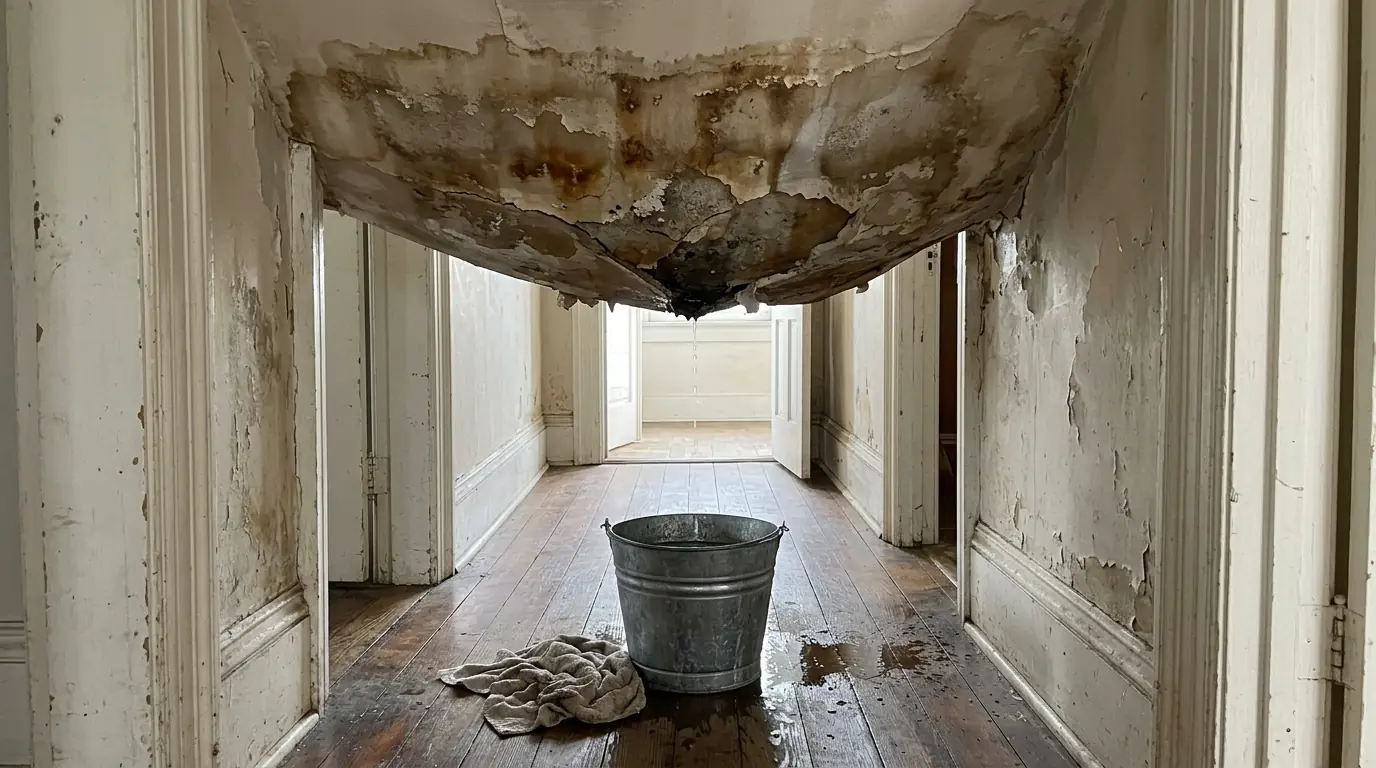
Ceiling Leak Damage
Ceiling leak damage work deals with water trapped above a ceiling from a roof, a bathroom, a radiator or an air conditioning line.
How we handle it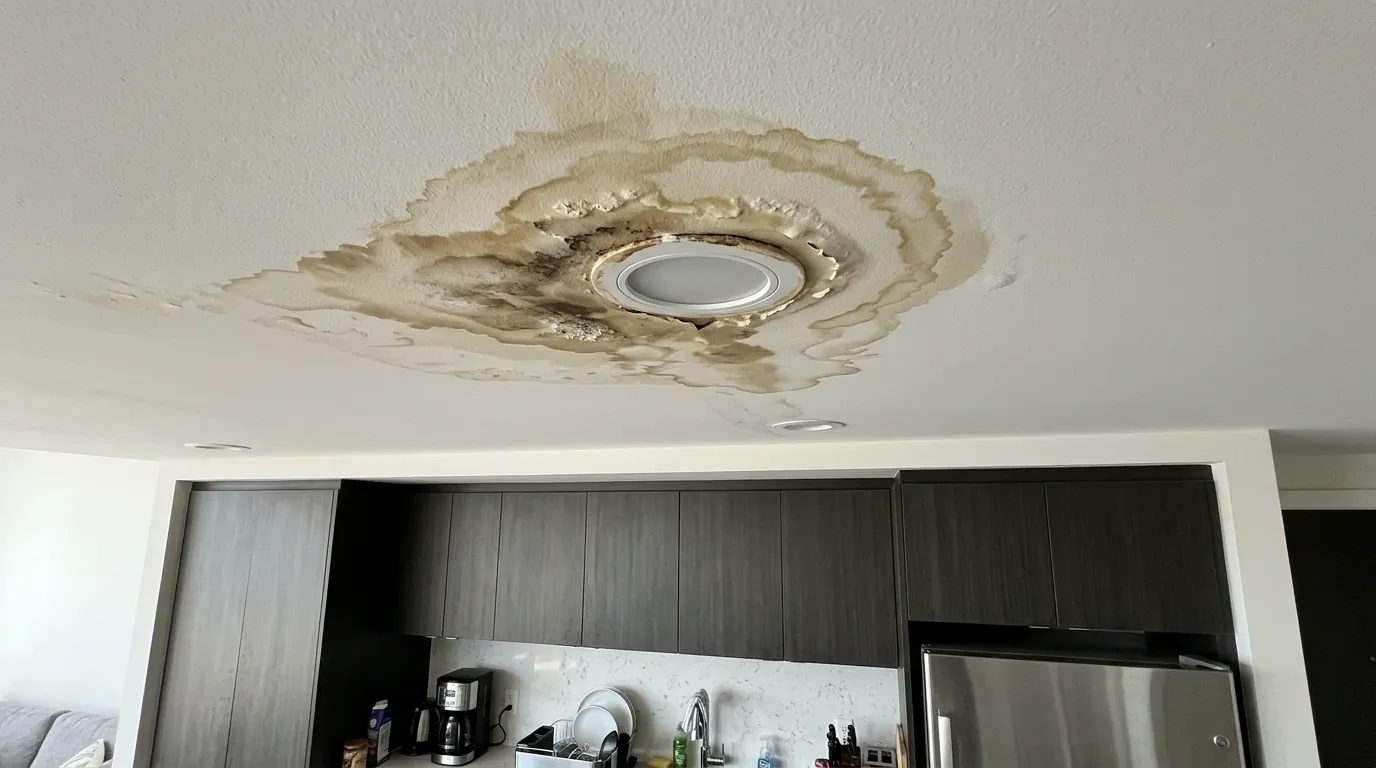
Condo Water Damage
Condo water damage work covers leaks that cross unit lines: water from the unit above, a failed riser, a shared wall or a roof over the top floor.
How we handle it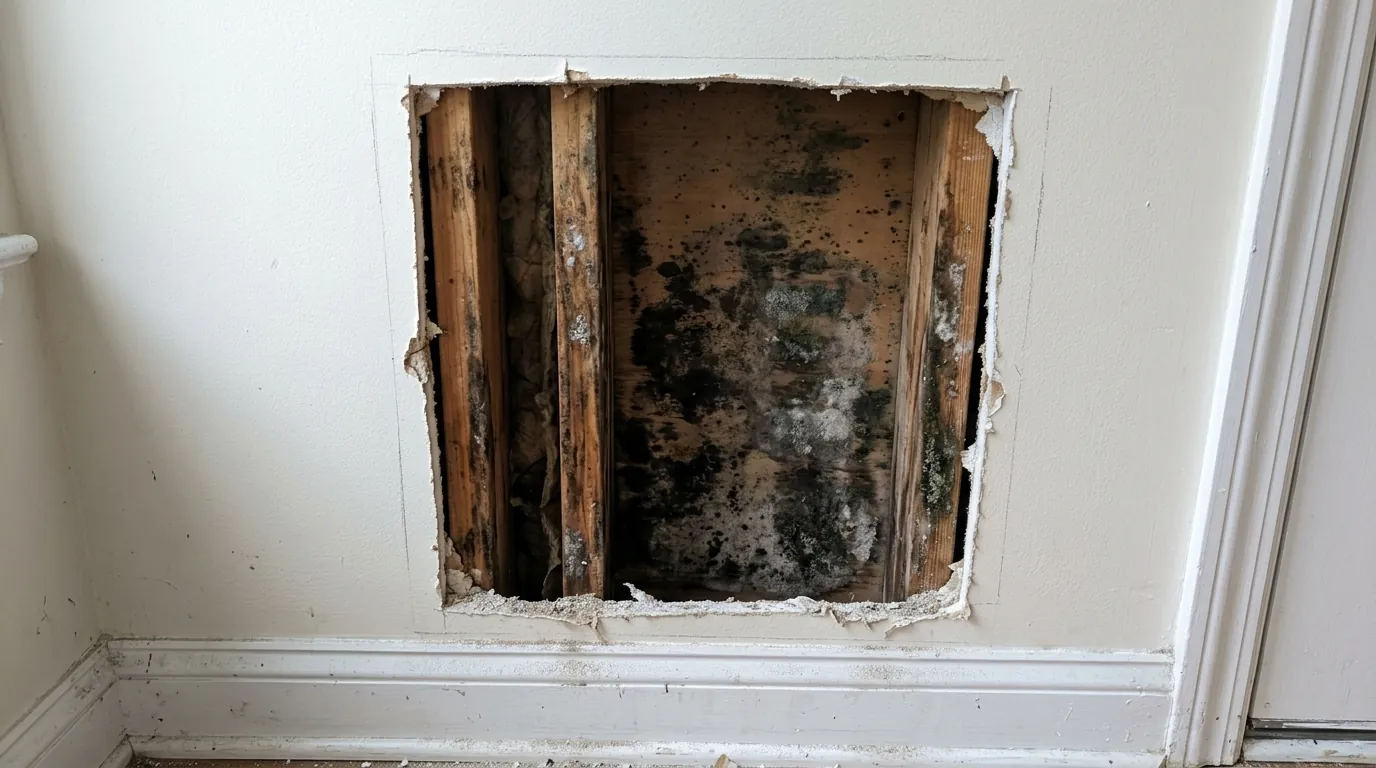
Mold Behind Drywall
Mold behind drywall grows on the back of the paper facing, on studs and on insulation inside a wall that has stayed damp from a slow leak, condensation or an old flood.
How we handle itQuestions homeowners ask about moisture & leak detection
Can you find a leak without cutting into the wall?
In most cases, yes. Thermal imaging and moisture meters narrow the source to a small area without opening anything. What we usually cannot do is see the exact fitting or crack inside the wall. Your plumber then opens a small, targeted hole where the readings peak, instead of tearing out a whole wall. Many homeowners find the total repair is much smaller because of that.
Why does the stain on my ceiling only appear after heavy rain?
That points away from plumbing and toward the roof, a parapet, flashing around a chimney or a window above. Water can travel along a rafter or down the inside of a brick wall before it shows up, so the stain may be several feet from where water enters. We check readings in dry weather and again after rain to see whether they change, which separates a roof leak from a plumbing one.
Can a moisture meter tell the difference between a leak and condensation?
On its own, not always. Condensation forms on cold surfaces like exterior walls, window frames and pipes when indoor humidity is high, and those spots read damp too. We compare surface moisture with air humidity and temperature readings. If the dew point and the surface temperature are close, condensation is likely. If the damp area follows a pipe or a drip line, a leak is more likely.
Is leak detection useful for an insurance claim?
Yes. Adjusters want to know where the water came from, how long it may have been going on and how far it spread, because that affects what a policy covers. Our readings, photos and moisture map document all three. Coverage depends on the cause and your policy, so check your policy. See how we document a claim for what we provide and what we leave to you and your insurer.
My condo neighbor says the leak is not from their unit. Can you check?
We can survey the affected ceilings and walls in your unit and, with access, the unit above and the shared spaces. Moisture readings often show which way water traveled and whether a shared riser or roof drain is involved. That gives you, your neighbor and the building manager facts to work from. Our page on leaks between condo units covers what usually happens next.
Water in the house or a musty room you can't explain?
Call JEC Restoration any time. We answer 24/7 and talk through what you are seeing before anyone touches a wall.