Prince George's County, MD
Sump failure & water cleanup in Bowie, MD 20715
Bowie's 1960s Levitt houses and the subdivisions built after them depend on sump pumps, crawl space vents and grading that have aged. When those fail, lower levels flood and crawl spaces turn musty. We dry, clean and repair them.
For flooded lower levels, crawl space mold, fire and smoke damage or sewage backups in Bowie, call JEC Restoration at (202) 989-3053, answered 24/7. We work in Belair at Bowie, Old Town Bowie and the newer subdivisions to the south, with moisture mapping, extraction, drying and repairs.
What goes wrong in a Levitt-built Bowie house as it ages?
Levitt and Sons began building Belair at Bowie in the early 1960s, and its curving streets still hold the original models: Cape Cods, ramblers, split-levels and two-story colonials built from a handful of floor plans. That repetition means the same failure points show up house after house. Once you know where a model's ducts run, where the water heater sits and which wall faces uphill, you know where to look first.
The weak spots are predictable. Ramblers often sit over crawl spaces with vents that pull humid summer air onto cool joists, so the underside of the floor sweats and grows mold. Split-levels put the family room half below grade on a slab, where groundwater finds the floor-wall joint after a wet spell. Slab houses can hide supply lines in floors and walls, so a leak travels under flooring before it shows. And many houses here are on their second or third water heater, often in a utility closet beside finished rooms.
Newer subdivisions from the 1980s onward, mostly in the southern part of the city, add full basements with sump pits, walkout lower levels and townhouse rows with shared walls. They are tighter houses, which means less natural air movement and more condensation when summer humidity climbs.
Most-called services in Bowie
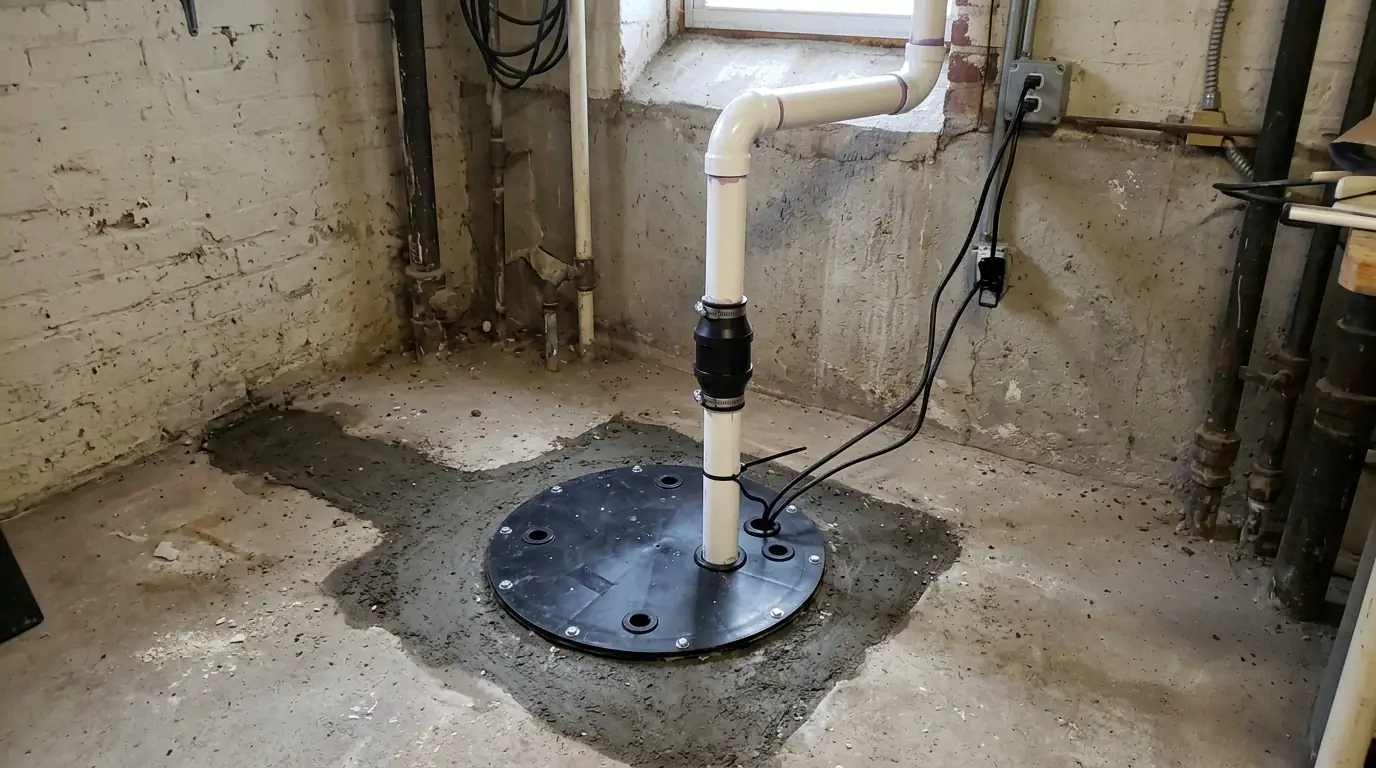
Sump Pump Installation
A sump pump sits in a lined pit at the low point of a basement and pumps out groundwater that collects there from under the slab or from a perimeter drain.
How we handle it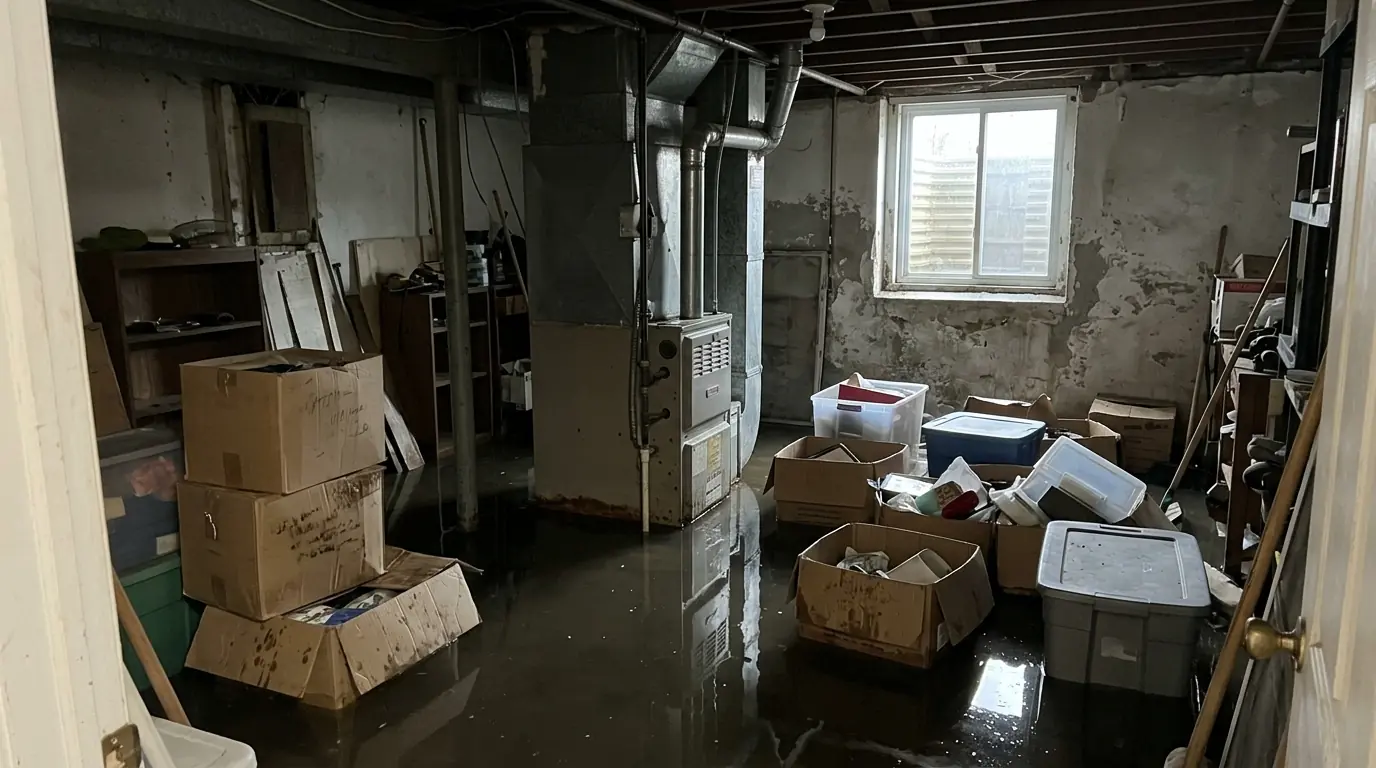
Flooded Basement Cleanup
Flooded basement cleanup removes water from a below-grade space, cleans and sanitizes what it touched, takes out finishes that cannot be saved, and dries the slab, walls and framing.
How we handle it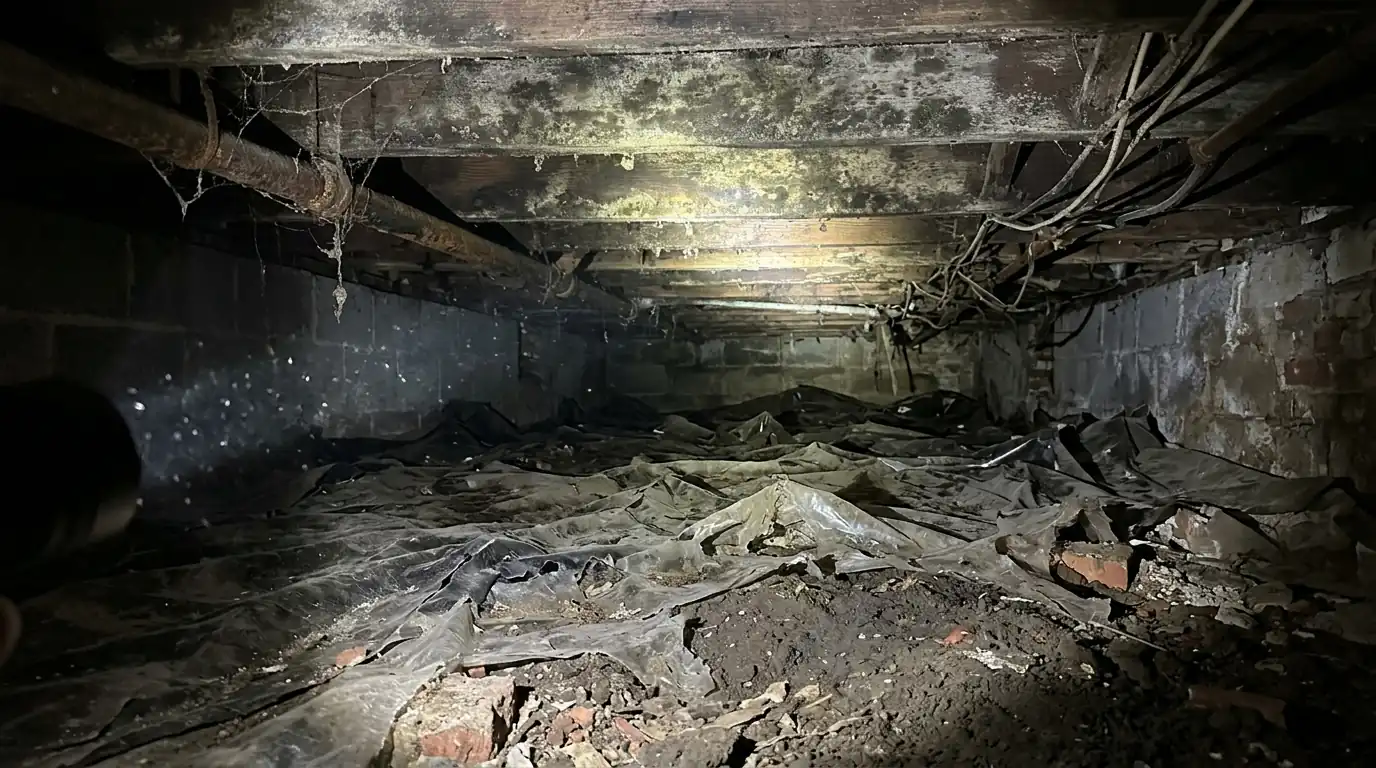
Crawl Space Mold Remediation
Crawl space mold remediation removes mold growth from the floor joists, subfloor, sill plates and beams under a house, then dries the wood so new growth does not start right away.
How we handle it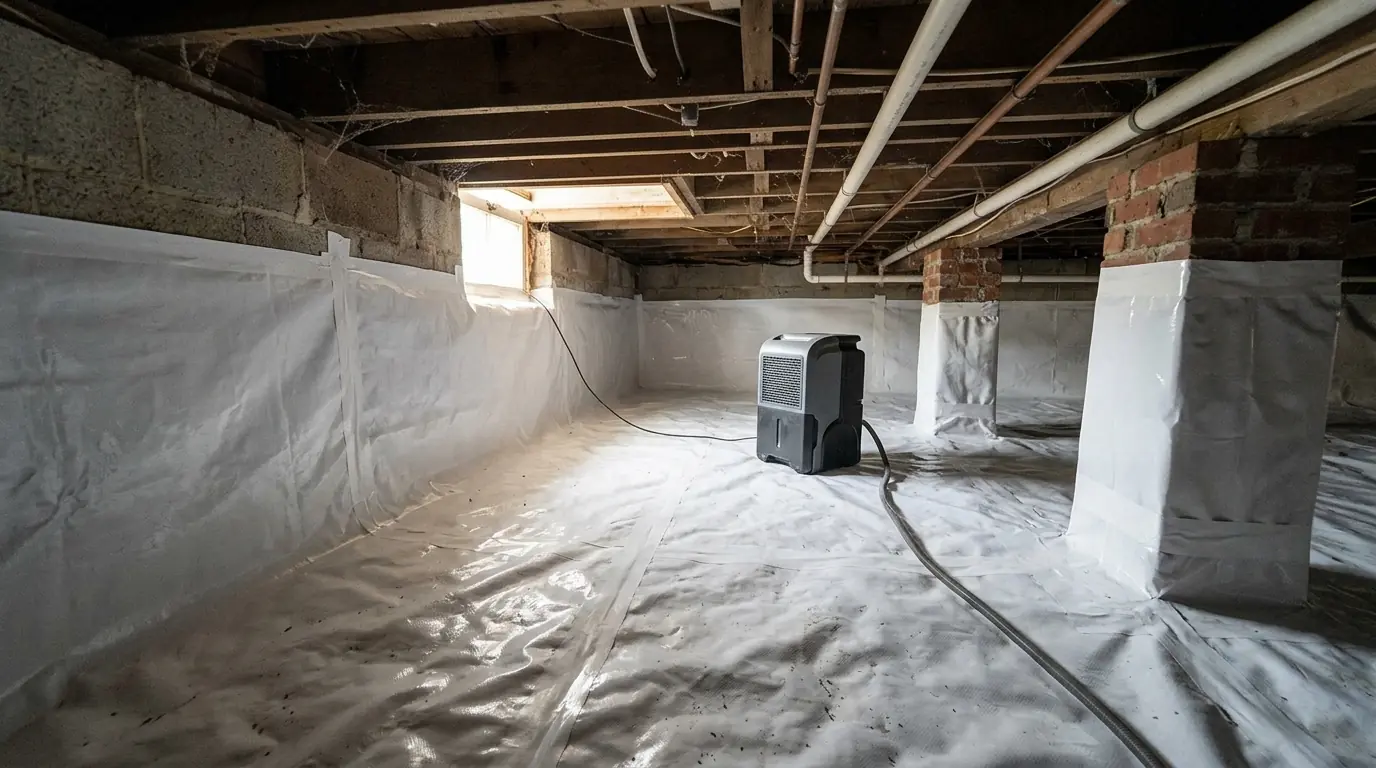
Crawl Space Encapsulation
Crawl space encapsulation closes a dirt or gravel crawl space off from outdoor air and ground moisture.
How we handle it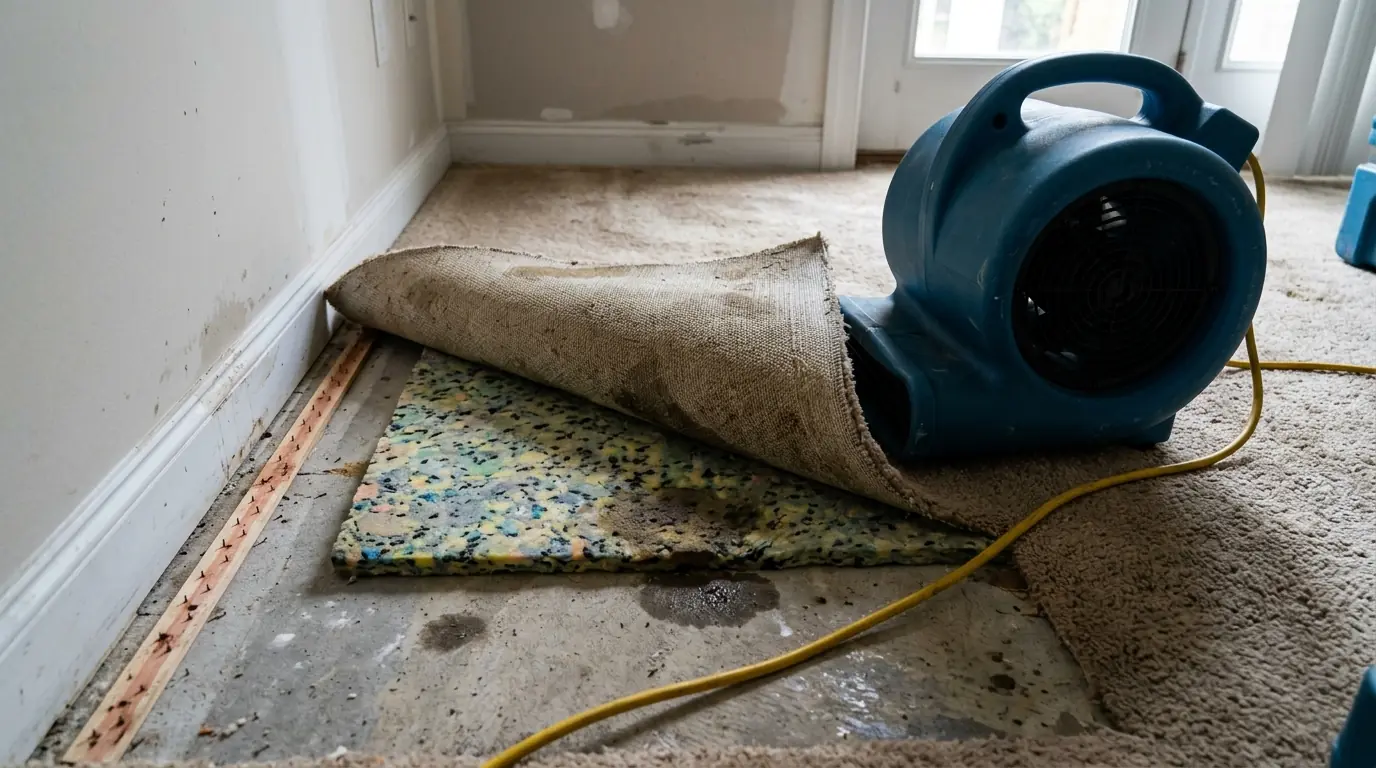
Wet Carpet Drying
Wet carpet drying is the extraction and controlled drying of carpet, pad and the subfloor beneath them after a leak or flood.
How we handle itWhy does the sump pump decide whether a Bowie basement stays dry?
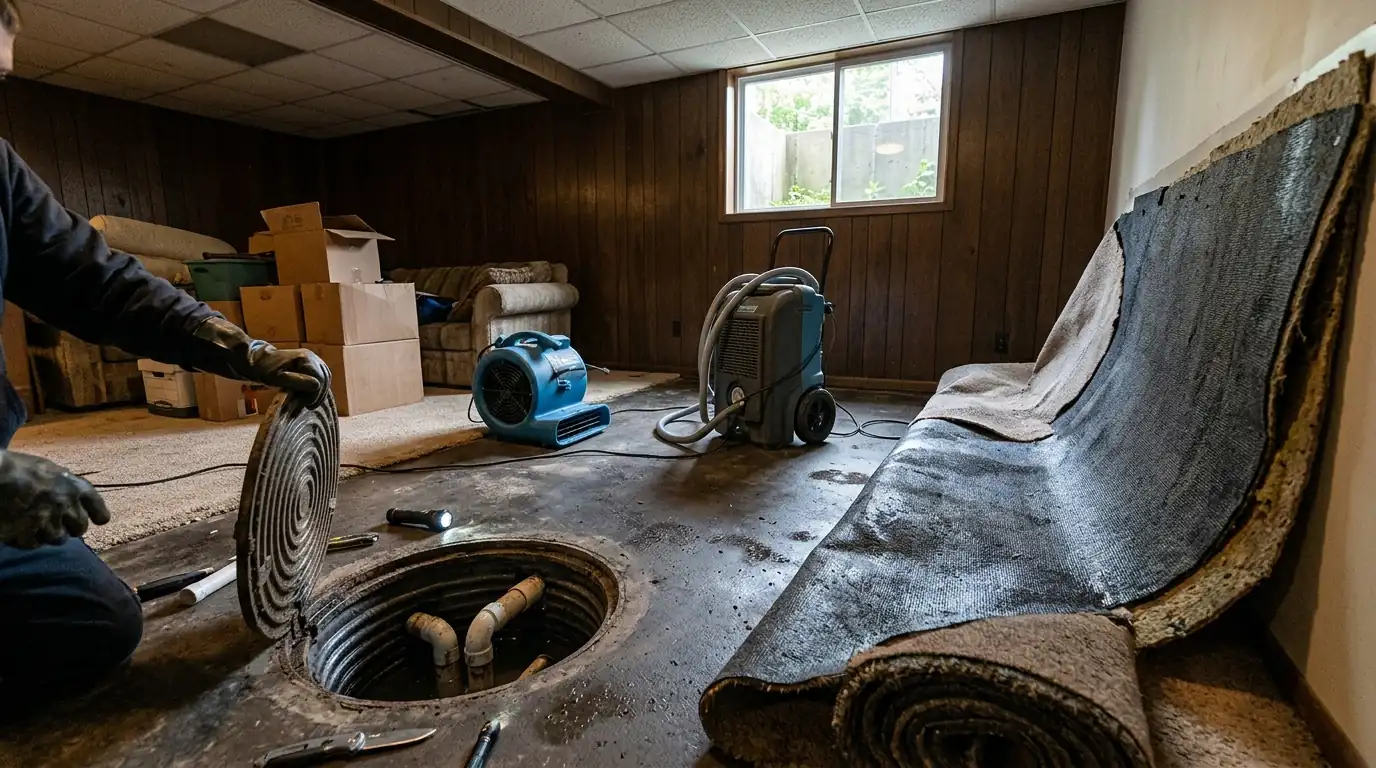
Bowie sits on gently rolling coastal plain that drains east toward the Patuxent River and through smaller streams within the city. Many lots were graded decades ago and have settled, so downspouts that once threw water clear of the foundation now drop it against the wall. Where the builder put in a sump pit, that pump is the only thing standing between the water table and your carpet.
Pumps fail in familiar ways: the float hangs up on the pit wall, the motor wears out after years of cycling, the check valve lets water fall back, or the power drops during the same thunderstorm that fills the pit. Ice in the discharge line during a January freeze can push water back into the pit as well. When a pump quits, water spreads from the pit corner across the slab, soaking carpet pad first and wicking up drywall. Across 20715 and the rest of the city, we check the pit, float and discharge line on every flooded basement call, and our sump pump work covers replacements and battery backups.
Typical calls we get from Bowie
Split-level family room after a sump pump quits
A float switch sticks during a long rain, and water spreads from the utility room across the carpeted lower level. We extract, pull pad and baseboards, cut wet drywall and set dehumidifiers. Before we leave, the pump gets tested and the discharge line checked.
Crawl space sweat under a Levitt rambler
Musty air in the bedrooms traces to a vented crawl space where the joists are damp and spotted. We clean the framing under containment, dry the space, and talk through a vapor barrier or full encapsulation.
Water heater failure in a slab house closet
A tank rusts through in a first-floor utility closet, and water runs under laminate into the hall and bedrooms. We remove the flooring, dry the slab and the bottoms of the walls, and check the cabinet bases in the kitchen next door.
Washer hose burst in a townhouse row
A washing machine hose bursts in an upper-floor laundry closet of a 1990s townhouse and wets the unit next door through the party wall. We dry both sides with the neighbor's permission and give the HOA a moisture log for each unit.
How does a drying job work in a Bowie single-family home or HOA townhouse?
In single-family neighborhoods, we park in the driveway and run hoses straight to the basement door or walkout. In townhouse communities, parking is assigned and HOAs sometimes restrict equipment left outside, so everything stays indoors and we plan around the neighbors. If water crossed a shared wall, we ask for access to the next unit and record readings on both sides.
Drying a slab-level family room usually takes three to five days with low-grain dehumidifiers and air movers. Crawl space jobs take longer to set up because of tight access, and if mold is on the joists, we treat it under containment before talking about sealing the crawl space. Sump failures are a common gray area for insurance: many policies exclude water that comes up from below unless you added a water backup endorsement, so check your policy before filing. The same drying approach applies to homes elsewhere in Prince George's County.
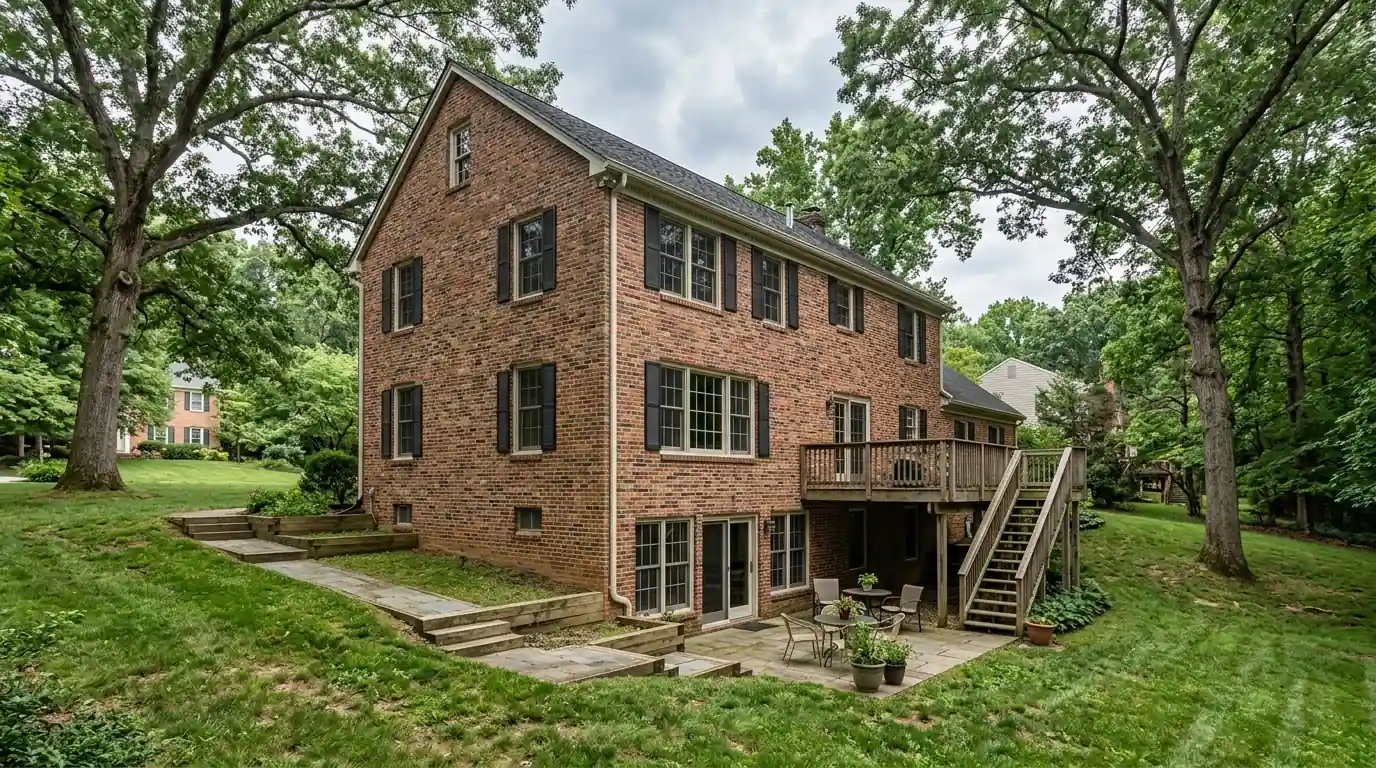
Typical homes in this part of the DC area
Nearby areas we also cover
Questions from Bowie homeowners
My Belair at Bowie house has a crawl space. Should it be vented or sealed?
Vents were standard when these houses were built, but in a humid Maryland summer they often bring in more moisture than they remove, so the joists sweat. Sealing the crawl space with a heavy vapor barrier, closed vents and a dehumidifier usually keeps it drier. The right answer depends on drainage, the condition of the framing and whether any gas appliance draws combustion air from that space.
How can I tell if my sump pump is about to fail?
Warning signs include the pump running when it has not rained, cycling on and off every few seconds, grinding or rattling noises, a float that catches on the pit wall, and rust on the discharge pipe. Pour a bucket of water into the pit every few months to confirm it starts and empties the pit. A battery backup helps during storms that knock the power out.
Can the carpet in a flooded split-level family room be saved?
It depends on the water. If the source was clean, like a supply line, and it was caught early, carpet can sometimes be dried in place, though the pad underneath usually has to go. If the water came up from a sewer line or sat for more than a couple of days, both carpet and pad are removed. We check the backing and the pad before deciding.
Water or mold trouble in Bowie?
Call JEC Restoration any time. We answer 24/7 and talk through what you are seeing before anyone touches a wall.