Washington, DC neighborhood
Condo leak & water damage help in Columbia Heights, Washington, DC 20010
Columbia Heights stacks condo conversions, rented basement units and pop-up top floors onto narrow rowhouse lots, so one failed hose can wet three households. We find the source, dry every affected unit and deal with the mold that tends to follow.
JEC Restoration handles water damage, mold, fire and smoke, and sewage cleanup across Columbia Heights, from the 14th Street and Columbia Road corridor to the rowhouse blocks between 16th Street and Georgia Avenue. Call (202) 989-3053 at any hour. The line is answered 24/7, and we work with owners, tenants and condo associations in the same building.
Why does one leak in a converted rowhouse reach every unit below it?
Most houses here are brick rowhouses from the early twentieth century, and a large share have been split into two or three condos. Conversions moved kitchens, bathrooms and stacked washer-dryers into places the original framing never planned for. New supply lines run through old joists, shower pans sit on patched subfloor, and laundry closets often land directly over someone else's bedroom. When a fitting lets go on the top floor, the water follows pipes and joist bays down through every ceiling in its path.
The basement unit usually takes the worst of it. Water collects on the slab under floating laminate, wicks into the bottom of the drywall and stays there long after the ceilings above look dry. Many buildings also mix materials: original plaster on lath along the brick party walls, new drywall on the partitions, engineered flooring over old pine. Each dries at a different rate, so we take pin meter readings in every material on every floor before anything gets torn out.
Most-called services in Columbia Heights
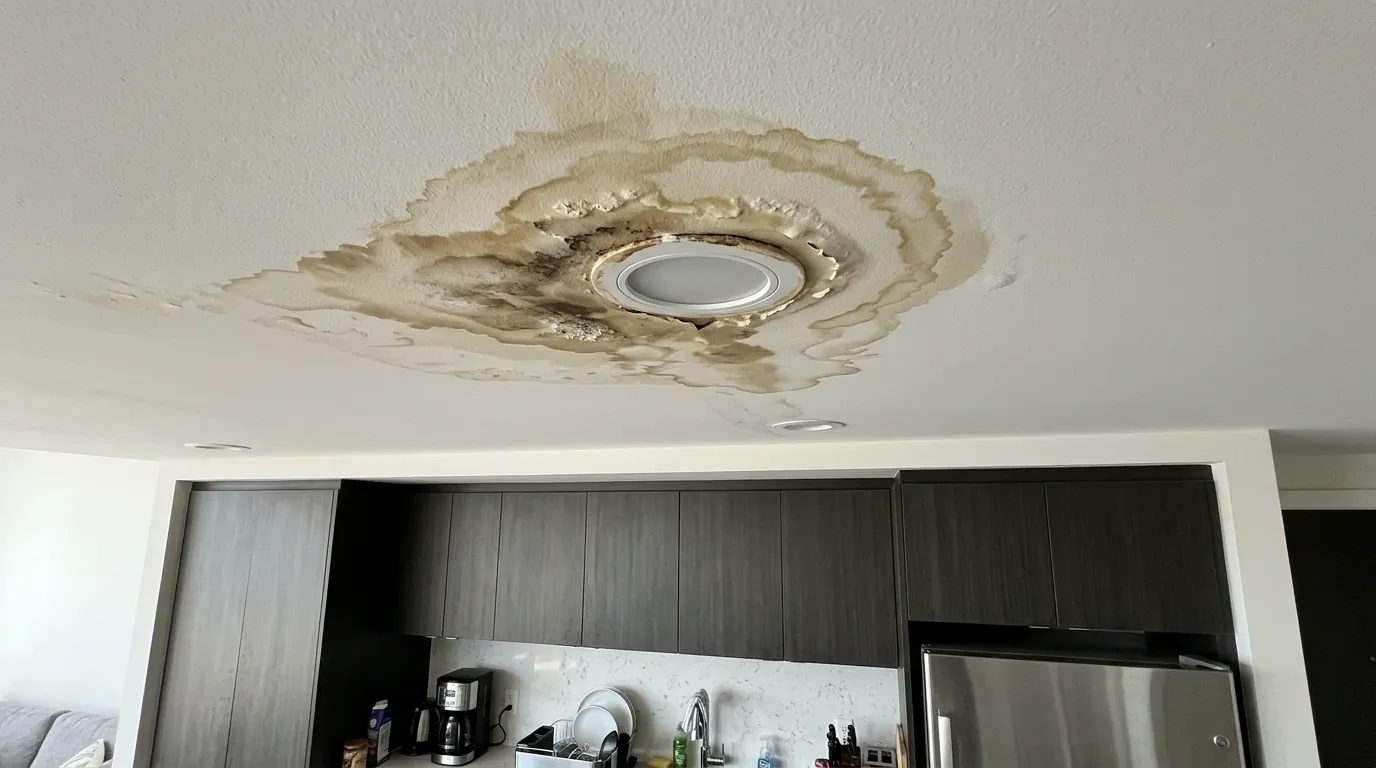
Condo Water Damage
Condo water damage work covers leaks that cross unit lines: water from the unit above, a failed riser, a shared wall or a roof over the top floor.
How we handle it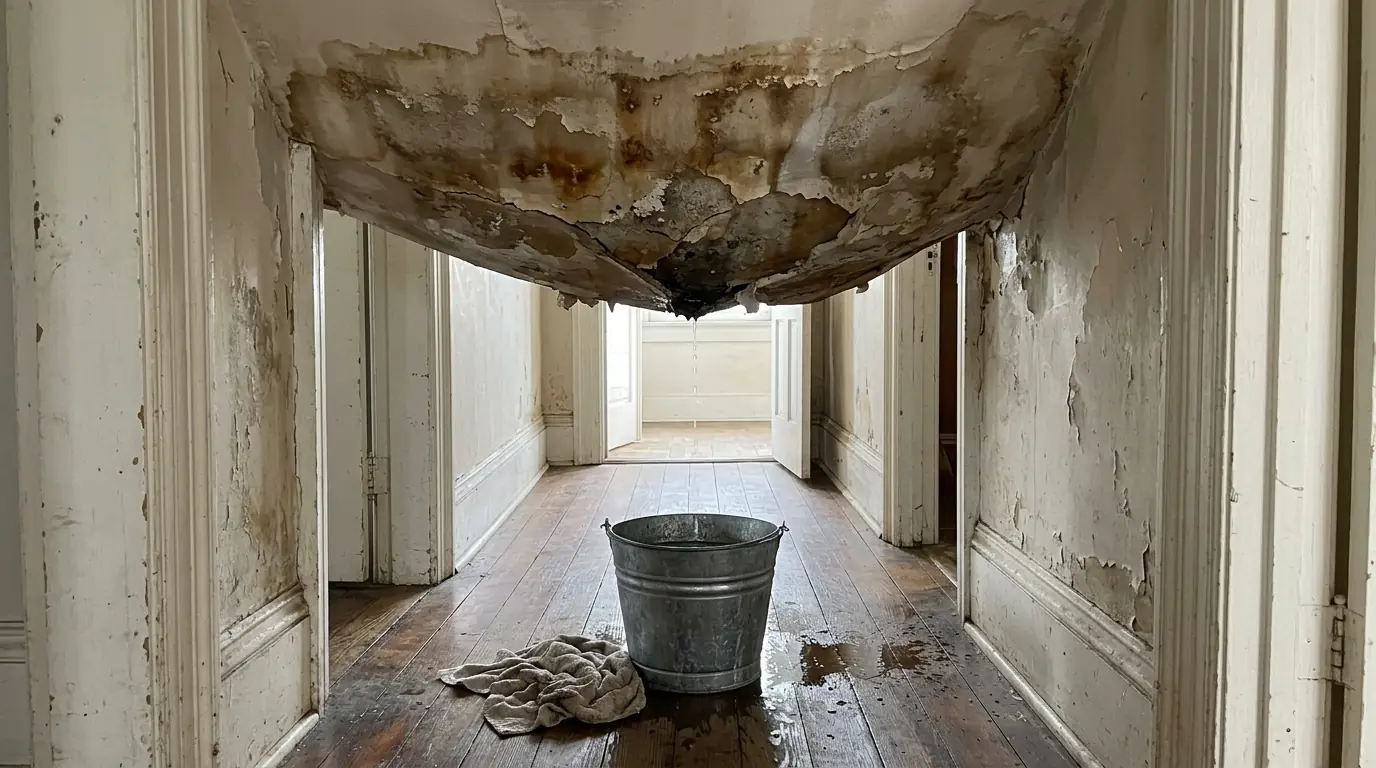
Ceiling Leak Damage
Ceiling leak damage work deals with water trapped above a ceiling from a roof, a bathroom, a radiator or an air conditioning line.
How we handle it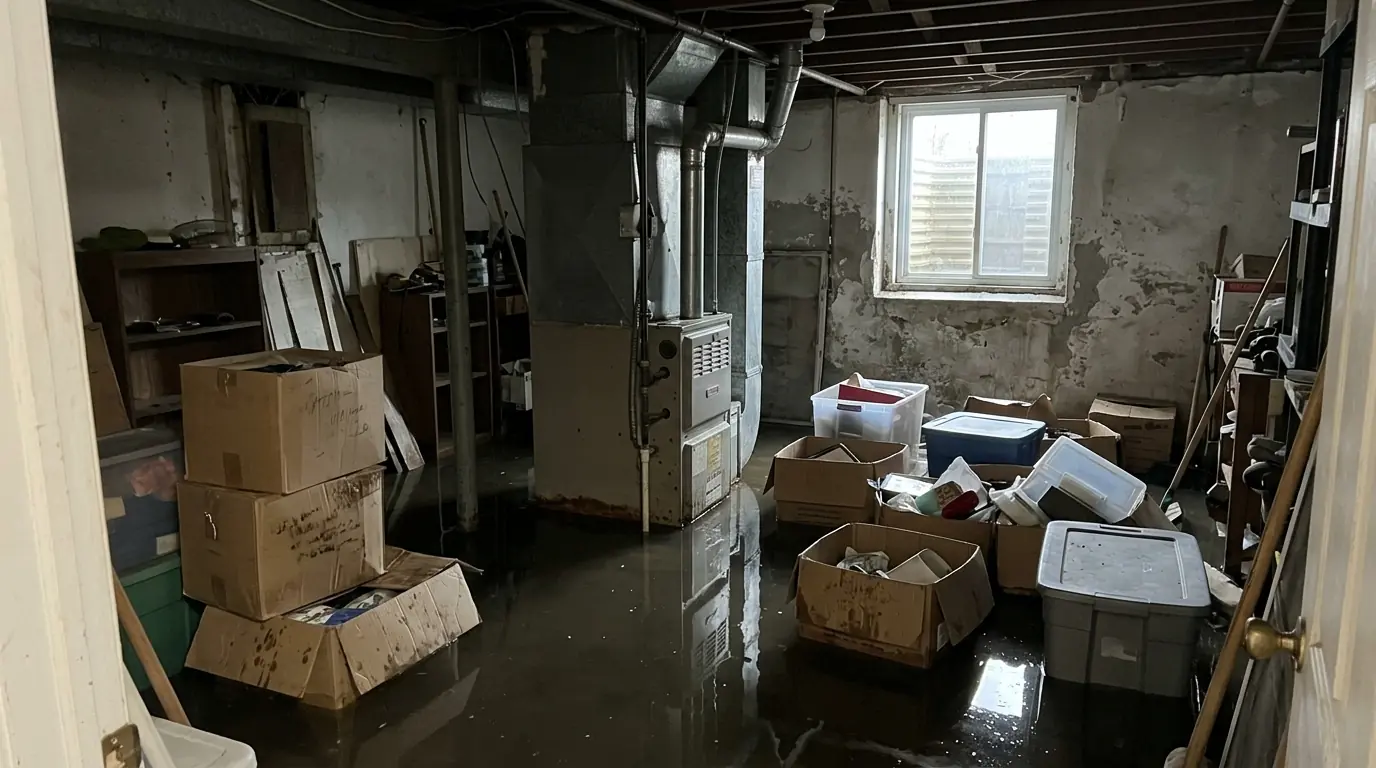
Flooded Basement Cleanup
Flooded basement cleanup removes water from a below-grade space, cleans and sanitizes what it touched, takes out finishes that cannot be saved, and dries the slab, walls and framing.
How we handle it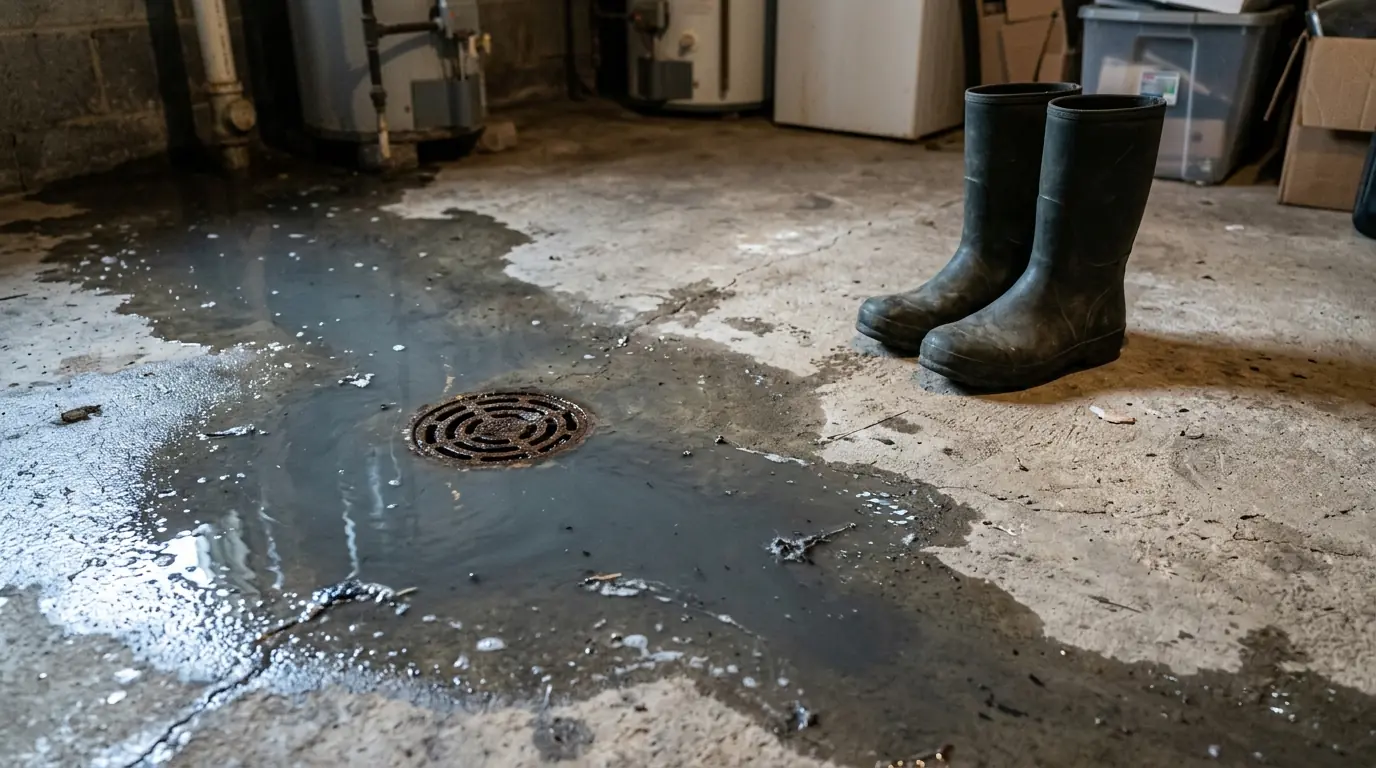
Sewage Backup Cleanup
Sewage backup cleanup is the removal of wastewater and the porous materials it soaked, followed by cleaning, disinfection and drying of the affected area.
How we handle it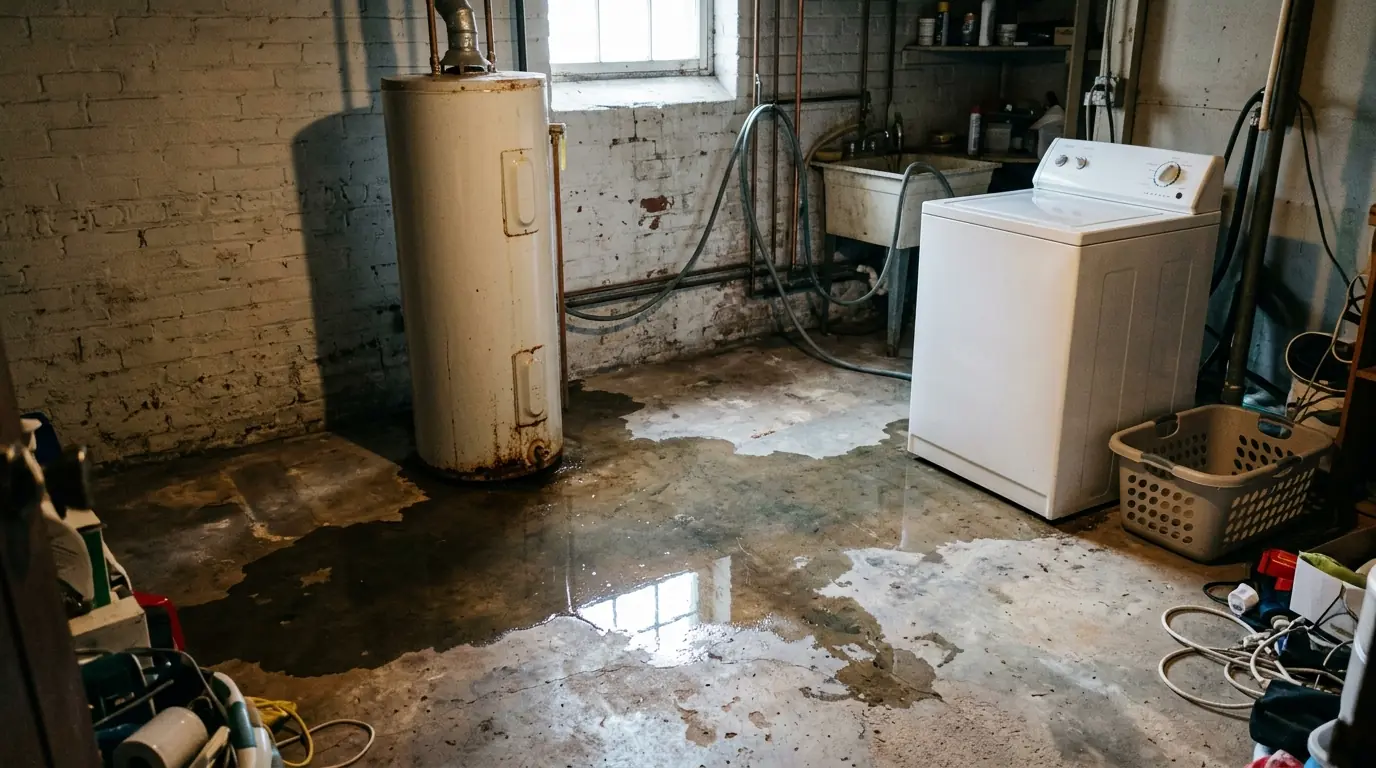
Appliance Leak Cleanup
Appliance leak cleanup is the extraction, drying and cleanup that follows water escaping from a water heater, washing machine, dishwasher, refrigerator ice maker or air conditioner condensate line.
How we handle itWhere does storm water get into basements near 14th Street and Columbia Road?
This is one of the densest parts of the city, mostly roofs, alleys and pavement, so a summer thunderstorm sends a lot of water somewhere in a hurry. Behind many rowhouses, a rear areaway collects runoff from the alley and the yard. If its drain is packed with leaves, food wrappers or silt, water climbs the steps and comes in under the basement door. The front stairwell drain under the stoop fails the same way.
Like other older sections of DC, these blocks have sewer lines that can surcharge in a heavy downpour and push dirty water up through a basement floor drain. That water is Category 3, treated as contaminated, and it calls for sewage-grade cleanup instead of a mop and a fan. A backwater valve on the main line helps. Pop-up additions bring their own trouble: the flashing where a new top floor meets the neighbor's parapet is a frequent source of stains on top-floor ceilings. Our guide to how English basements take on water covers the common entry points.
Typical calls we get from Columbia Heights
Stacked washer leak in a top-floor condo
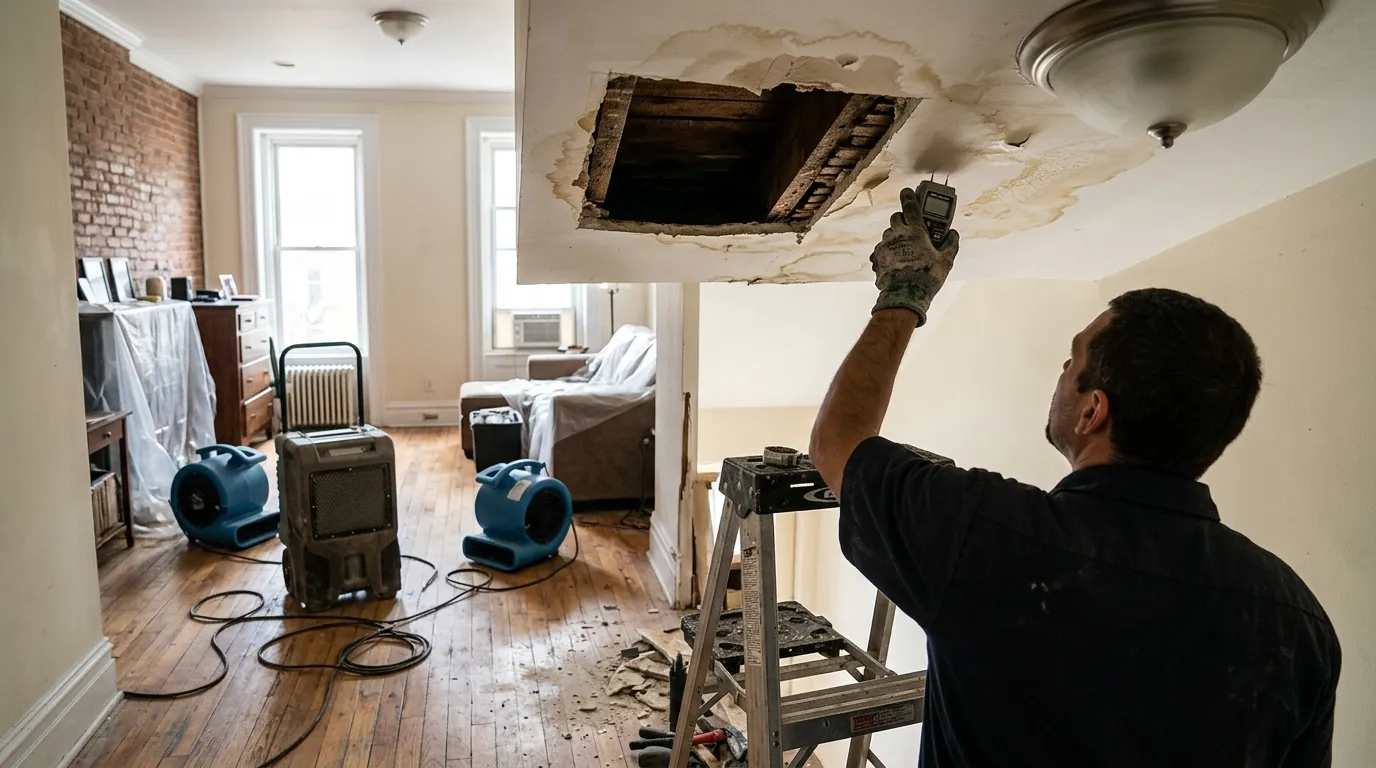
A supply hose splits behind a laundry closet and water runs through two plaster ceilings before anyone notices. We open the ceiling at the lowest stain, extract standing water and set dehumidifiers and air movers in each unit, with drying mats over the oak floor in the middle unit.
Floor drain backup in a rented basement apartment
A cloudburst pushes sewer water up through the floor drain into a basement unit. We remove wet carpet and pad, cut drywall above the wicking line, clean and disinfect the slab, then dry the space and confirm readings before anything is rebuilt.
Pop-up flashing leak over a bedroom
Rain gets past the flashing where a newer top floor meets an older parapet, and a gray spot spreads across the drywall ceiling. We trace it with a thermal camera, set up containment, remove the moldy drywall and dry the framing once the roof side has been sealed.
Musty basement unit every August
A garden-level apartment runs humid all summer, and the backs of closet walls and stored shoes start to show mold. We clean the affected surfaces under containment and size a ducted or portable dehumidifier for the space.
How does a job run when an owner, a tenant and a condo board are all involved?
We start in the unit where the water came from and work down, logging moisture readings, photos and a floor sketch for each unit separately. That record matters, because the source owner, the affected owners and the association may each carry a different policy. Sudden pipe bursts are often covered while slow leaks often are not, but check your policy and your condo bylaws before assuming either way. Our page on drying out condo units explains how we split that documentation.
Parking along 14th Street is tight, so we often bring dehumidifiers and air movers in from a side street and keep cords and hoses off shared stairs. Basement tenants should expect equipment running around the clock for several days. We explain what is running, why it stays on and when the next readings are due, so nobody unplugs a dehumidifier halfway through a dry-out.
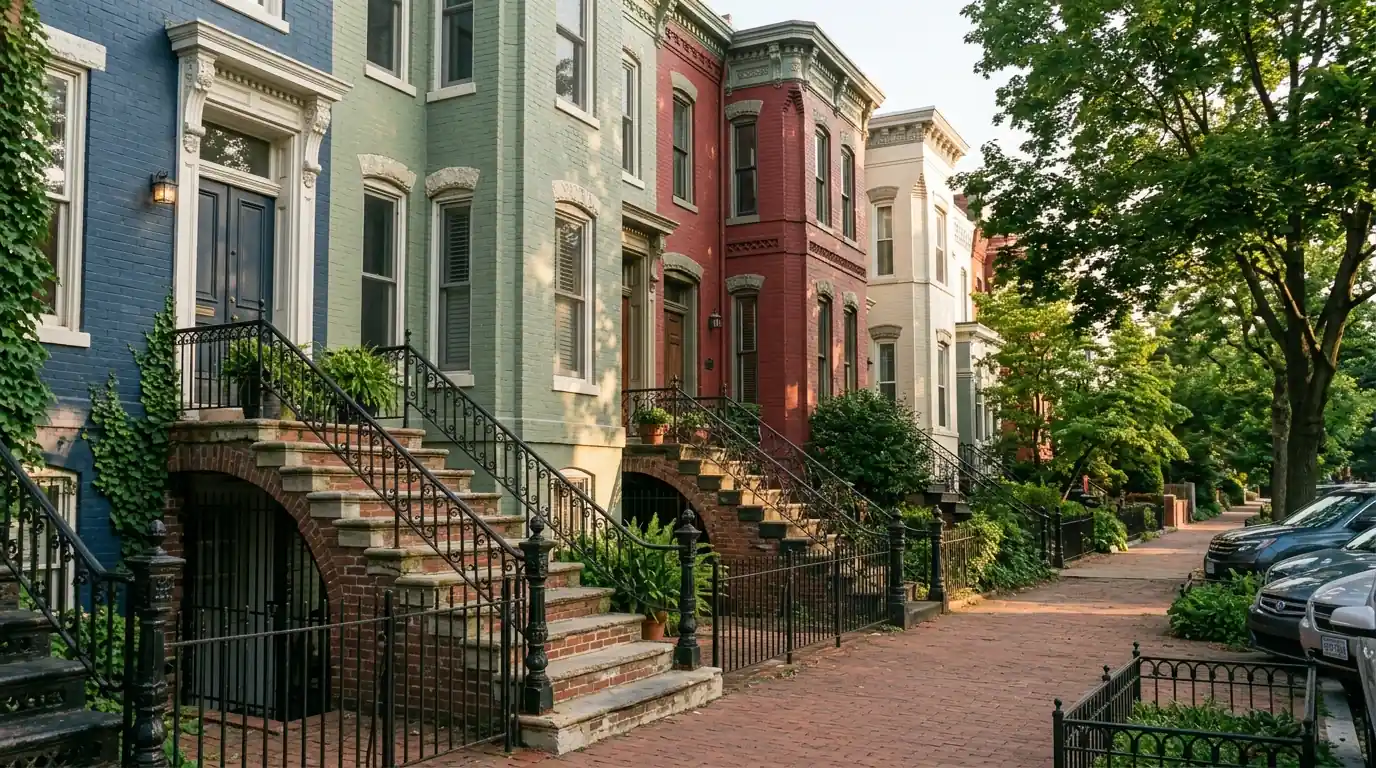
Typical homes in this part of the DC area
Nearby areas we also cover
Questions from Columbia Heights homeowners
The leak came from the condo above me. Should I call you or wait for that owner?
Call as soon as you see water. Drying in your unit should not wait for the source unit to be repaired, and we can work in both units at once if both owners agree. We document the source and the damage in each unit separately, so the owners and the association can sort out responsibility under their own policies and bylaws later.
Can a basement tenant stay in the unit while it dries?
With a clean-water leak, many tenants stay while equipment runs, though it is noisy and warm. If the water came up through a floor drain or toilet, the area should stay empty until the contaminated materials are out and the surfaces are cleaned and disinfected. We tell you which situation you are in after the first inspection.
Why does my rowhouse basement in 20010 smell musty every summer?
Basement walls here are old brick or block below grade, and July through September brings long humid stretches. Moist air meets cool masonry, relative humidity climbs, and mold starts on dust, cardboard and the paper face of drywall. A dehumidifier sized for the space usually fixes the smell. Visible growth over about 10 square feet calls for proper basement mold cleanup.
Water or mold trouble in Columbia Heights?
Call JEC Restoration any time. We answer 24/7 and talk through what you are seeing before anyone touches a wall.