Mold Remediation
Mold clearance testing after remediation in Washington, DC
Clearance testing answers one question: is the work area clean and dry enough to take the containment down and rebuild? We inspect, take readings and collect air samples before the plastic comes down, no matter who did the removal.
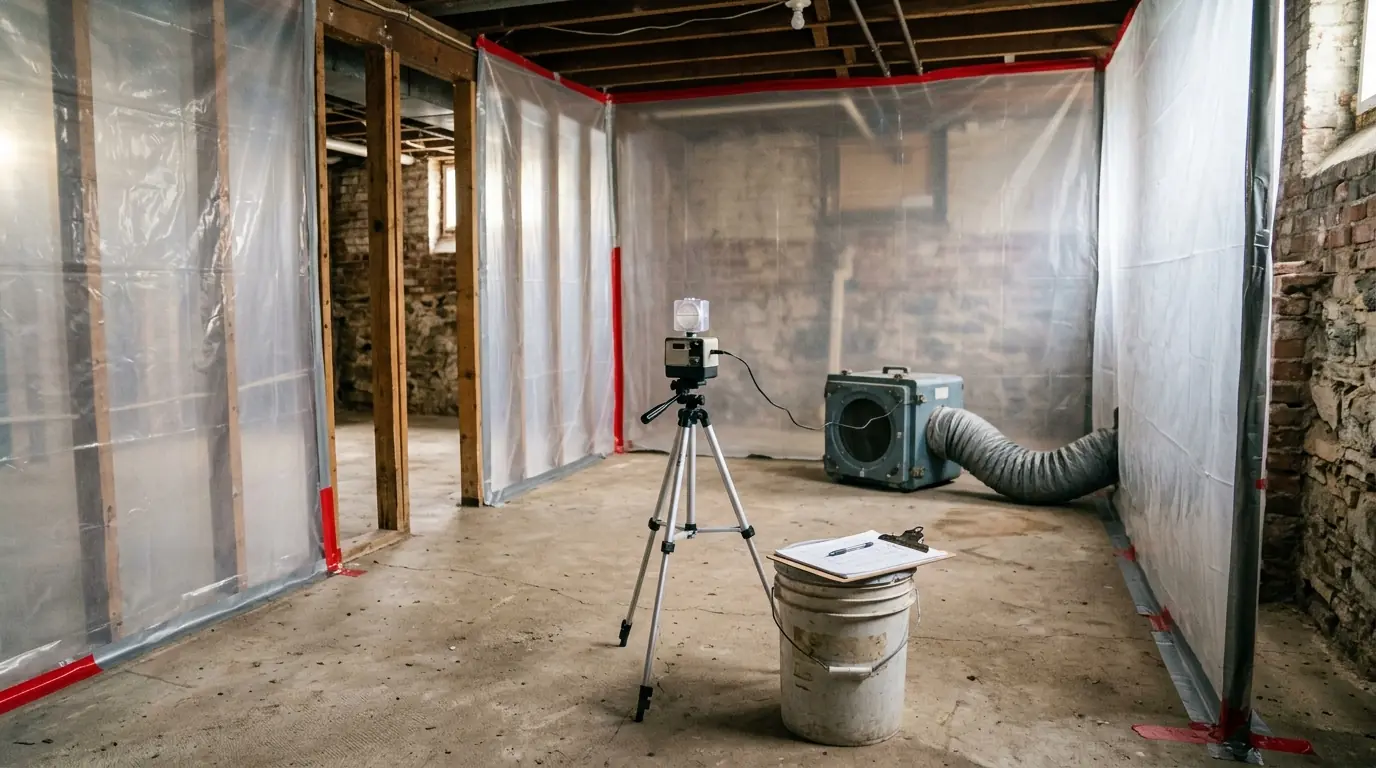
Drying, air and detection equipment on our jobs comes from names like
- Dri-Eaz
- Phoenix
- B-Air
- Abatement Technologies
- Protimeter
- Delmhorst
- FLIR
- Benefect
- Concrobium
- Omnitec
- Sapphire Scientific
- Tramex
Mold clearance testing, also called post-remediation verification, checks a work area after mold removal and before the walls are closed. It combines a visual inspection for leftover growth and dust, moisture readings on the materials, and air samples compared with an outdoor sample taken the same day. You need it before rebuilding, before selling, or to confirm that another contractor's work is finished.
What does clearance testing check that a quick look cannot?
A clearance visit has three parts, and each one can fail on its own. The first is visual. Inside the containment, every cleaned surface should show no growth, and horizontal surfaces such as top plates, sill plates and the floor should carry no settled dust or debris. We run a strong flashlight along the framing and do a wipe test on ledges where dust collects.
The second is moisture. Studs, subfloor and sheathing need to read dry compared with unaffected materials elsewhere in the house. A spotless cavity that is still wet will grow mold again, so a moisture failure is a failure even if every lab number looks good.
The third is air sampling. A calibrated pump draws a measured volume of air through a spore trap cassette inside the work area, and another sample is taken outdoors. An independent lab counts and identifies the spores on each. Where a cleaned surface needs a closer look, tape lifts or swabs can be added.
How a clearance visit runs from walkthrough to report
The visit itself usually takes a few hours; the lab sets the rest of the timeline.
Review the scope
We go over what was removed, where the water came from and whether that source has been repaired. Photos and notes from the remediation tell us where to look hardest.
Visual and wipe check
Inside the containment we inspect framing, plates, corners and floor edges with a strong light and wipe-test ledges for dust. Visible growth or debris ends the visit early, since there is no point sampling an area that is not clean.
Take moisture readings
Pin meter readings on studs, subfloor and sheathing are logged against a dry reference. Each reading location is photographed so the numbers can be checked later.
Collect air samples
Spore trap samples are drawn inside the work area and outdoors on the same visit, using a calibrated pump. Samples travel to an independent lab with a chain-of-custody form.
Report and next step
Lab results typically come back in a few business days, sooner with rush processing. You get the raw lab report, the readings, photos and a plain-language summary of whether the area passed and what to do if it did not.
What does a passing result generally look like?
There is no federal numeric limit for mold spores in indoor air, so clearance is judged by comparison rather than by a single cutoff. Outdoor air always contains spores, and the outdoor sample shows what normal looked like that day. A cleaned work area should look like a quieter version of the outdoors, not like a different environment.
The lab report gives the numbers; the judgment comes from reading them alongside the visual and moisture findings. When the picture is mixed, for example clean air but one damp stud, we say so plainly, and the area does not pass until that is resolved. In general terms, a pass means all of these are true:
- No visible growth or settled debris inside the containment
- Moisture readings at or near the dry reference
- Indoor spore counts lower than or similar to the outdoor sample
- Indoor spore types roughly matching the outdoor mix
- No indoor spike in types linked to water damage, such as Stachybotrys or Chaetomium
When is a clearance test worth ordering?
These are the situations where a documented check before rebuilding pays for itself.
Walls about to be closed
Once drywall goes back over a cleaned cavity, such as after removing mold from inside a wall, nobody can check the framing again without cutting.
Large or multi-room work
The bigger the containment, the more corners and ledges where growth or dust can be missed.
Someone sensitive at home
Mold can trigger allergy and asthma symptoms in sensitive people, so households with those conditions benefit from confirmation.
A sale or purchase
Buyers, sellers and lenders often want results on paper rather than a verbal assurance.
Work you did not see
If you were away during remediation, there are no photos, or a smell lingers, testing settles the question.
Condo boards and landlords
Boards, property managers and basement apartment tenants may ask for documentation before a unit is reoccupied.
Can you test after another contractor's work, or before you buy a house?
Yes. We regularly test areas where someone else did the removal. Ask the remediator to leave the containment up and the area closed after their final cleaning, and share their scope and photos if you have them. We sample the area as it stands and report what we find. If it fails, the remediator re-cleans and we test again.
Clearance testing is not the same as a mold inspection before work starts. An inspection looks for the problem and its source; clearance checks that the fix worked in a defined area. If you are buying a home that discloses past mold remediation, testing the treated areas along with moisture readings tells you more than paperwork alone. And if a seller or a neighbor has raised alarming claims about mold color, our article on black mold myths is a good place to start.
What does mold clearance testing cost in the DC area?
The number of containment areas and lab samples drives the price more than the size of the house.
| One work area, two indoor samples plus outdoor | $385-$640 |
|---|---|
| Multi-room job, four to six samples | $590-$1,140 |
| Retest after a failed clearance | $260-$520 |
These are typical DC-area ranges, not quotes; we price after reviewing the scope and seeing the work area. Compare ranges across all 40 services.
What moves the price
- Number of containment areas
- Air and surface samples needed
- Lab turnaround speed
- Access and travel in the region
- Records review for outside work
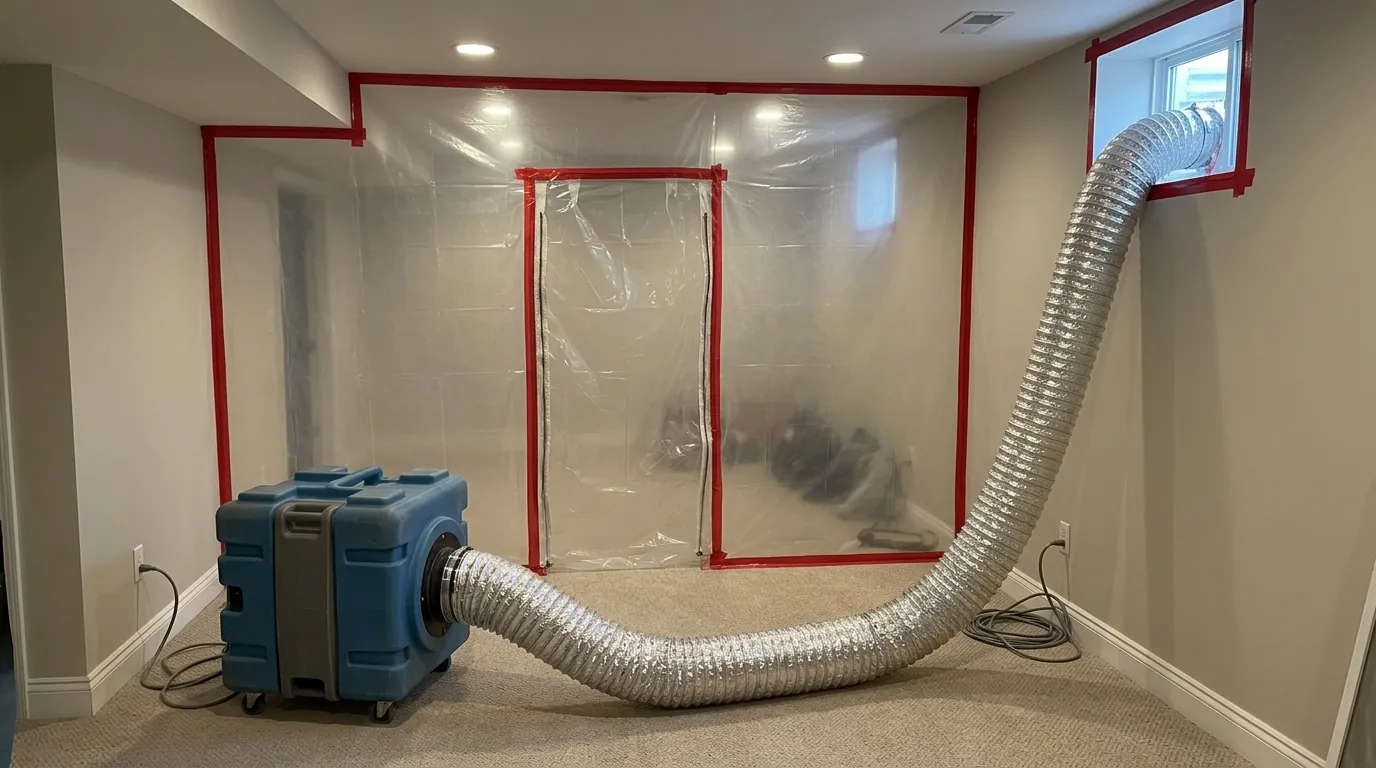
Sealed containment with HEPA filtration on a basement mold job
Why outdoor baselines in DC swing so much from season to season
Outdoor spore levels in Washington rise and fall with the weather. Hot, humid summers and the leaf litter of early fall push counts up, especially in tree-heavy neighborhoods near Rock Creek Park and Glover Archbold Park, while a cold, dry January can bring them down sharply. A rainy week shifts the mix again. That is why a clearance sample is always compared with an outdoor sample taken the same day, never with a number from a chart.
The housing stock adds its own wrinkles. In rowhouses with shared party walls, the basement next door may have its own moisture problem, so we note conditions outside the containment as well as inside it. English basement apartments are a common reason for testing, because landlords want documentation before a new tenant moves in. In condo buildings we coordinate access with management and sample with the unit's ventilation running normally, so the results reflect how the space is actually used.
Where we do this work: Washington, DC and nearby Maryland and Virginia, including:
Related work we often do on the same job
Mold Remediation
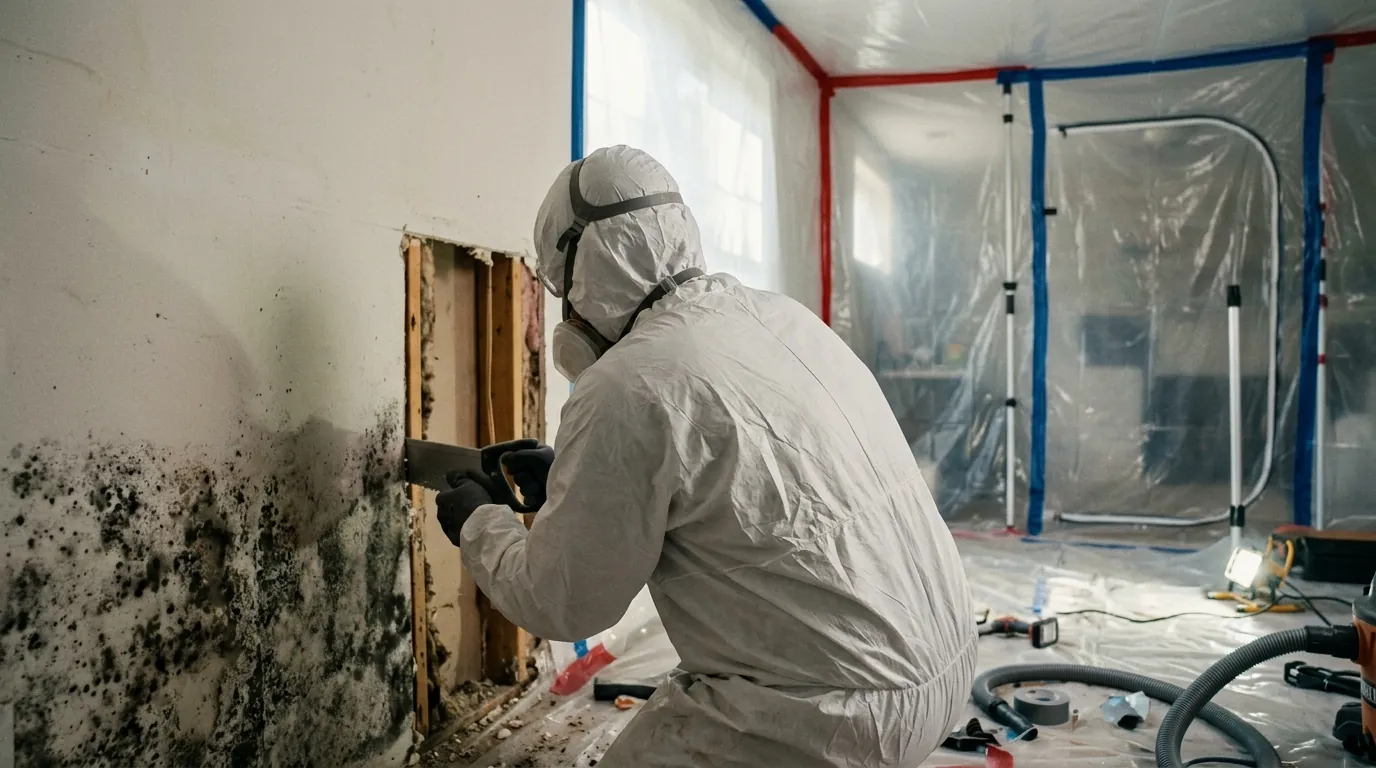
Mold remediation is the controlled removal of mold growth from a building.
How we handle it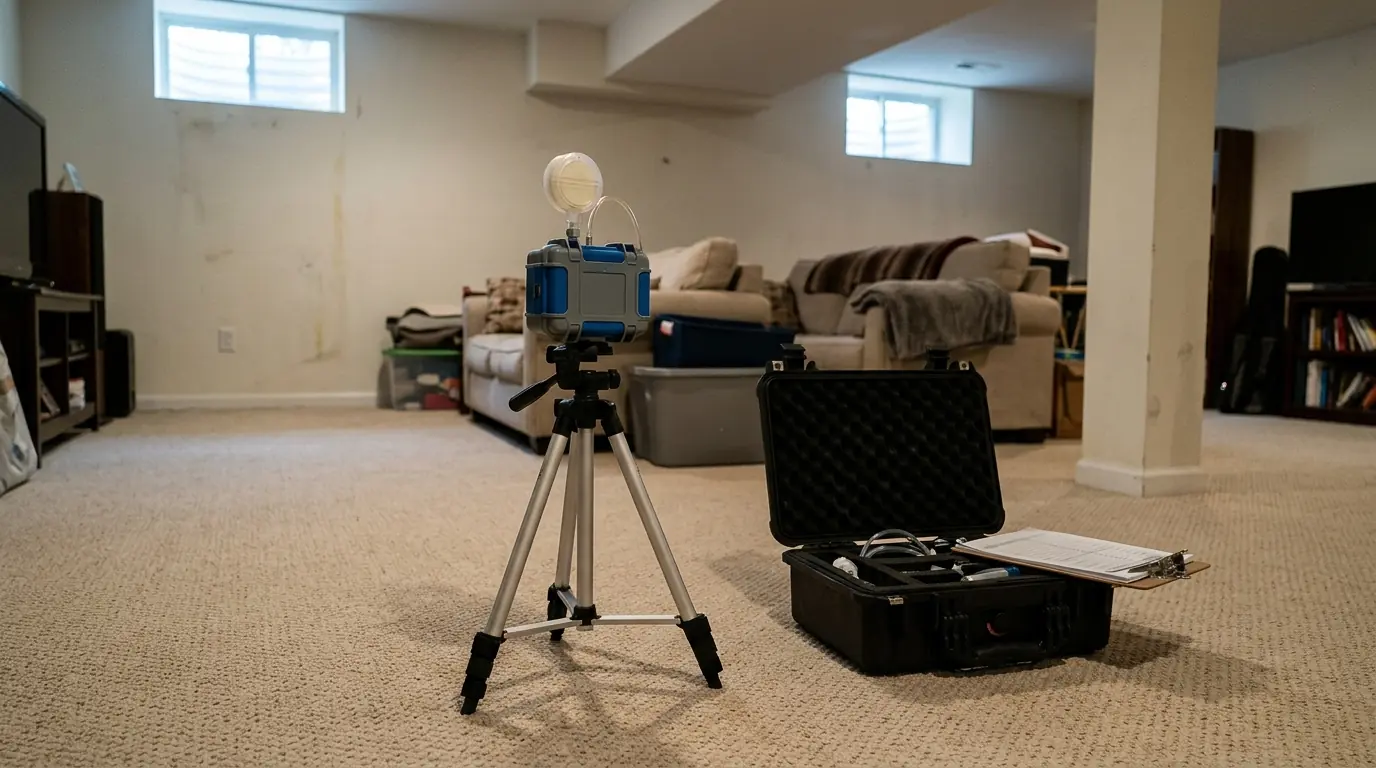
Mold Inspection & Testing
A mold inspection is a room-by-room check for visible growth and the moisture that feeds it, using a moisture meter, a thermal camera and a hygrometer.
How we handle it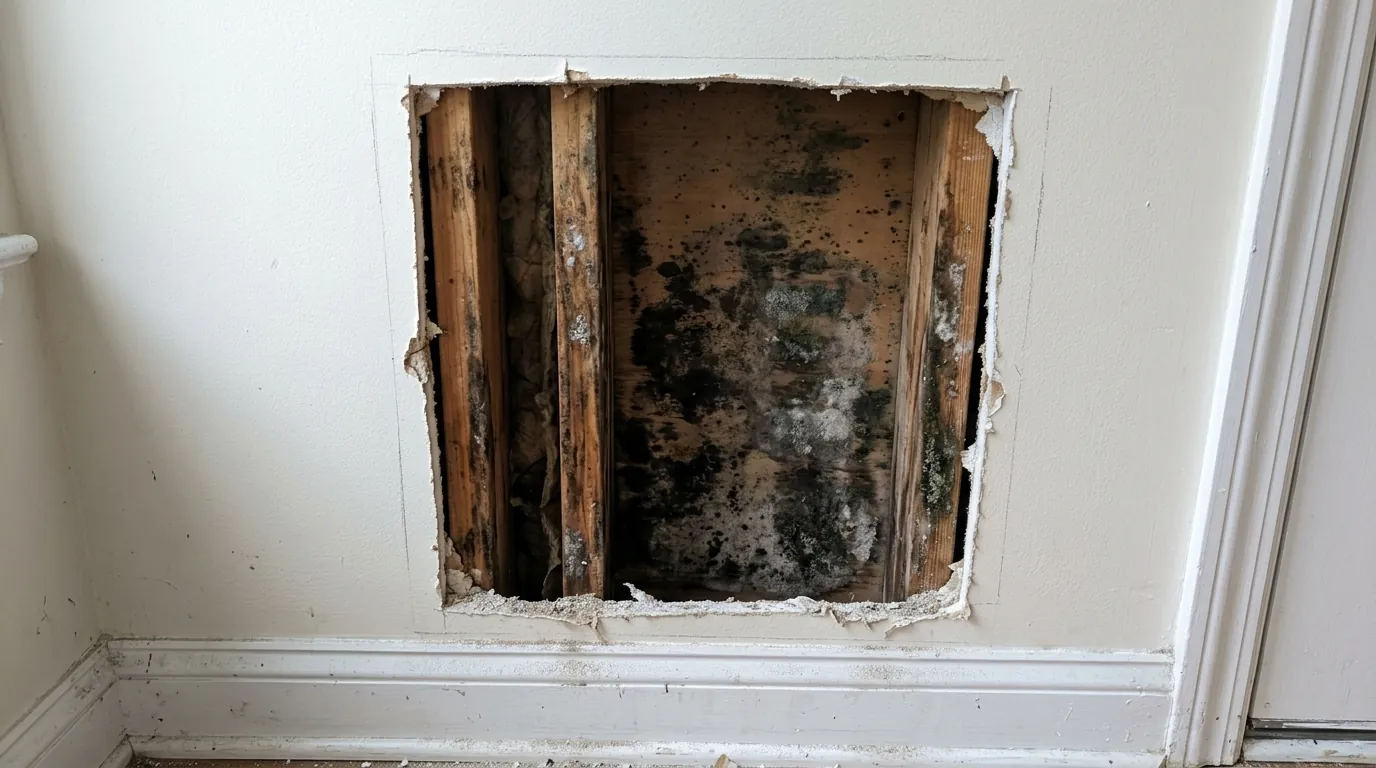
Mold Behind Drywall
Mold behind drywall grows on the back of the paper facing, on studs and on insulation inside a wall that has stayed damp from a slow leak, condensation or an old flood.
How we handle it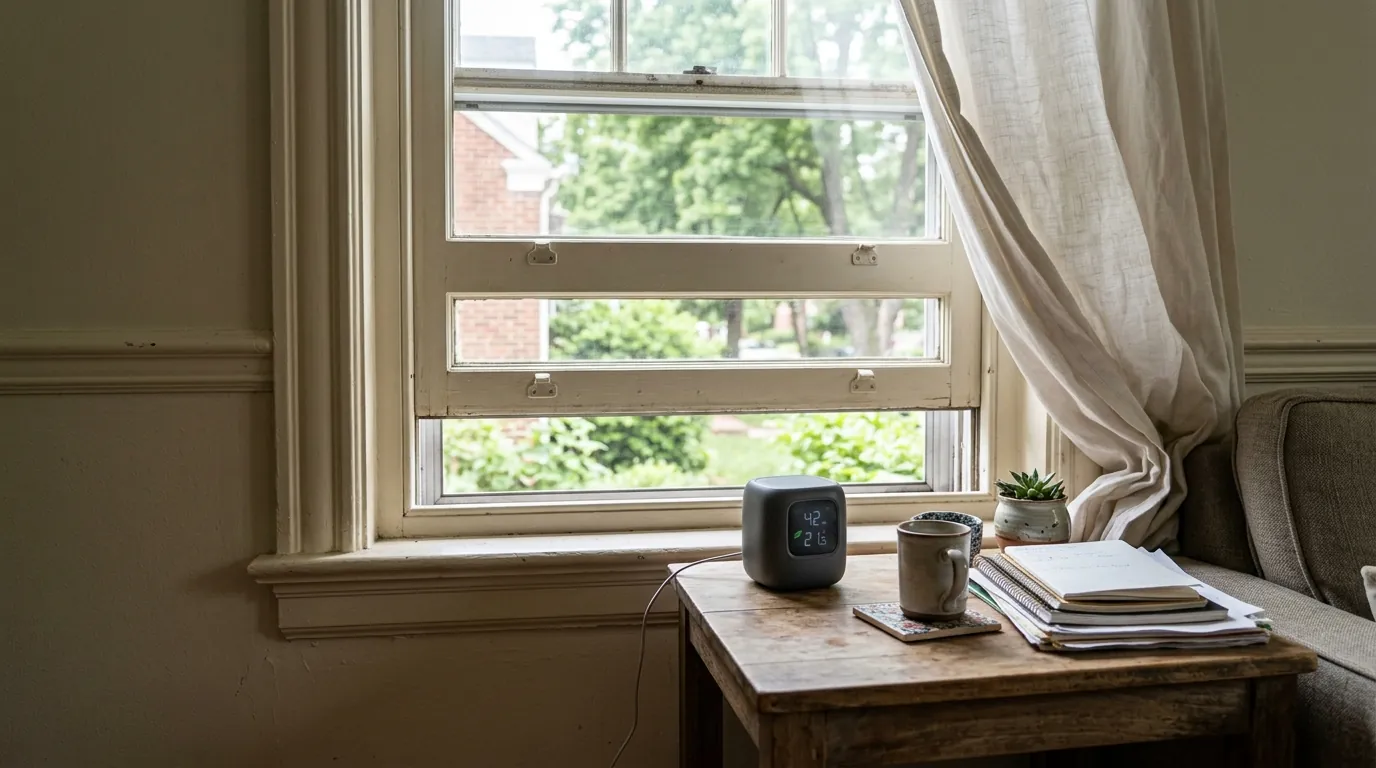
Indoor Air Quality Testing
Indoor air quality testing measures conditions in your home's air: relative humidity, temperature, fine particulates, volatile organic compounds and carbon dioxide, plus mold spores when a moisture problem is suspected.
How we handle itQuestions homeowners ask about mold clearance testing
Should the company that removed the mold also do the clearance test?
Many homeowners prefer a separate tester, and that is a reasonable choice. When we did the remediation and also test it, you get the raw lab report, the readings and the photos, so the result does not rest on our word, and you can always bring in someone else. When another contractor did the removal, we test it the same way.
Can clearance testing happen after the drywall is already back up?
Air samples can still be taken, but the most useful parts of the test are lost: nobody can see the framing or measure its moisture through finished walls. A clean air result in a closed room says little about the cavity behind it. Test while the containment is still up and the framing is still exposed.
Why does a clearance test need an outdoor air sample?
Spores are always present outdoors, and their numbers and types change with the season and the weather. The outdoor sample shows what normal air looked like on the day of the test. The indoor results are read against it, so a work area is judged by how it compares, not by a fixed number that ignores the season.
What happens if the area fails clearance?
The containment stays up and the area is cleaned again: HEPA vacuuming, wiping and, if growth was found, more removal or sanding. If moisture was the problem, drying continues. Then the area is retested. A failure is not unusual on large jobs, and it is far cheaper to fix while the walls are still open.
Does passing clearance mean there is no mold anywhere in the house?
No. Clearance applies to the work area that was tested, at the time it was tested. Other rooms are not covered, and new growth can start anywhere a fresh leak or high humidity appears later. If you have concerns about the rest of the house, a broader inspection or an air quality assessment is a separate step.
Water in the house or a musty room you can't explain?
Call JEC Restoration any time. We answer 24/7 and talk through what you are seeing before anyone touches a wall.