Water Damage
Condo water damage cleanup in Washington, DC
A condo leak rarely stays in one unit. We dry every wet unit, work within building rules and management, and keep separate moisture records for each owner so the question of who pays can be settled on facts.
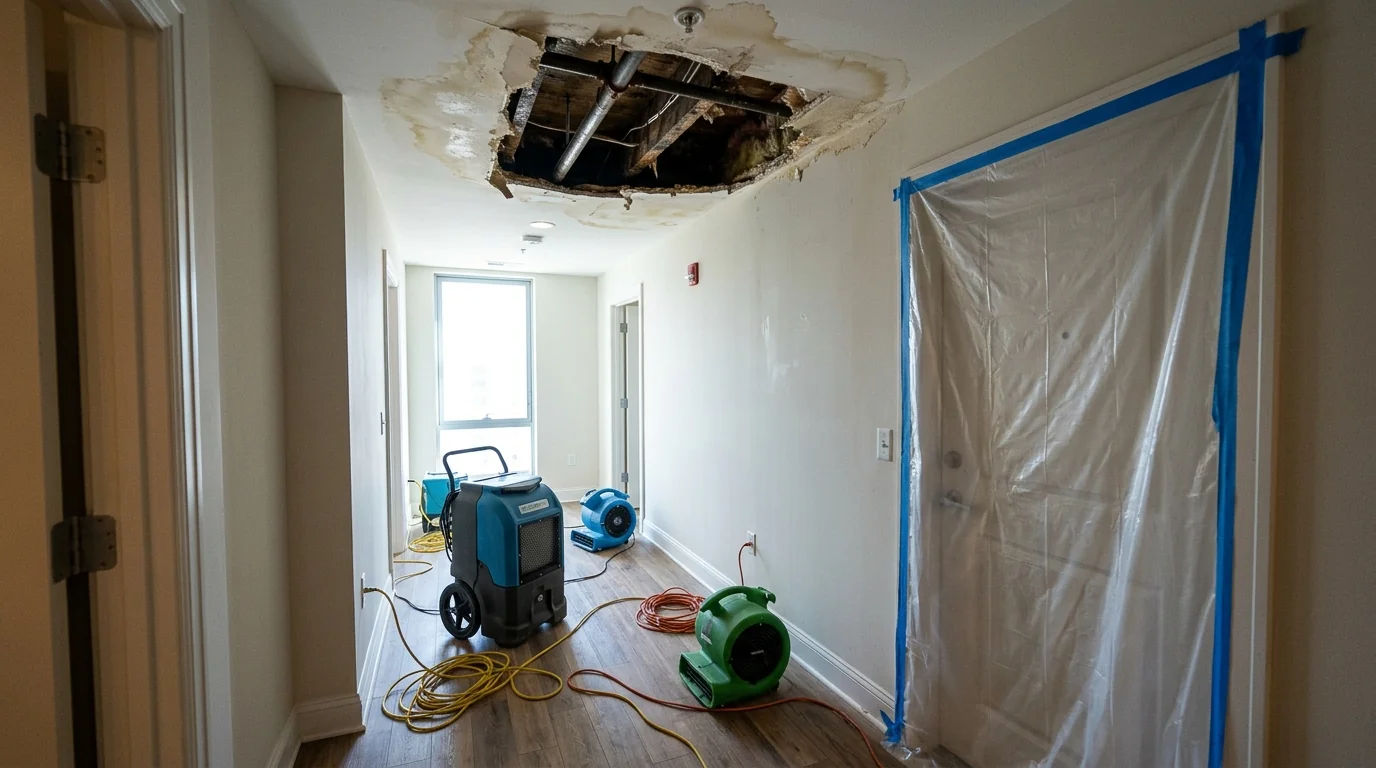
Drying, air and detection equipment on our jobs comes from names like
- Dri-Eaz
- Phoenix
- B-Air
- Abatement Technologies
- Protimeter
- Delmhorst
- FLIR
- Benefect
- Concrobium
- Omnitec
- Sapphire Scientific
- Tramex
Condo water damage work covers leaks that cross unit lines: water from the unit above, a failed riser, a shared wall or a roof over the top floor. It includes stopping the source with building staff, extracting and drying each affected unit, and documenting damage owner by owner. Call (202) 989-3053 as soon as water appears; the phone is answered 24/7.
Who is responsible when water comes from the unit above?
It depends on your building's documents, and the answer is not always the owner upstairs. In many associations, the declaration and bylaws make the association responsible for common elements such as the roof, exterior walls, risers and pipes inside shared walls, while each owner is responsible for what is inside their unit: finishes, fixtures, appliances and upgrades. The owner of a failed dishwasher hose or toilet supply line is often responsible for that fixture, but documents vary, and some assign repair costs by where the damage is rather than where the leak started.
Insurance usually follows a similar split. A master policy carried by the association typically covers the building structure and common elements, while an HO-6 policy covers your interior finishes, improvements, belongings and sometimes your share of an association assessment. Check your policy and your condo documents before assuming who pays. Fault is settled between the owners, the association and their insurers. We record where the water went and what it damaged, which is the information both sides need, and our claim documentation is organized with that in mind.
Which signs in a condo point to a leak you cannot see?
Condo leaks often hide in shared walls and ceilings before they show up in your unit.
Stain where ceiling meets wall
A stain at the ceiling line along a shared wall often traces to a bathroom or kitchen in the unit above or next door.
Water at a sprinkler head or light
Water collecting at a fixture or a sprinkler escutcheon means it is running along the slab or framing above.
Swollen baseboard on a shared wall
Trim that swells along a demising wall can mean water is wicking through from the neighbor's side.
Damp HVAC closet
Wet flooring around a fan coil or air handler closet usually means a clogged or cracked condensate line.
Engineered floor lifting
Floating floors over a concrete slab trap water in the underlayment, and the boards start to lift at the seams.
Odor near a plumbing chase
A musty smell from a closet or chase wall can point to a slow drip from a riser or a fixture above.
How does a condo leak job run when more than one unit is wet?
The sequence matches any water job, with extra steps for access and for keeping records separate.
Stop the source with building staff
We work with management or the engineer to shut the right valve or riser and locate the unit where the leak started. Nobody in the stack should use water on that line until it is fixed.
Map every affected unit
Each unit along the water path is metered and photographed, including units above and beside the obvious one. Starting readings are recorded unit by unit.
Extract and protect
Standing water is removed, contents are moved out of wet areas and hallways are protected. Wet flooring and drywall are removed only where readings call for it.
Dry each unit
Dehumidifiers and air movers are sized for each unit, and wall and ceiling cavities are vented or injection-dried. We adjust equipment as each unit reaches target.
Close out per owner
Each owner receives final readings, photos and a repair scope for their unit, which can go to their own adjuster or to the association.
Why does one leak end up in three units?
Water in a multi-unit building follows the structure down. In a converted rowhouse condo with wood framing, it moves through the floor between units, runs along joists and comes out through ceilings, light fixtures and the tops of walls below. In concrete buildings, it spreads across the slab until it finds a penetration: a plumbing chase, a sprinkler pipe sleeve, a gap around a fan coil unit or a duct. From there it drops to the next floor, and sometimes the one below that.
Shared walls add a sideways path. Water can wick into the drywall on both sides of a demising wall, so the unit next door may be wet even though no water crossed its floor. We meter every unit along the water path, including ones where owners have not noticed anything yet, and draw a separate moisture map for each. That is the only way to dry a building completely, because one wet cavity left behind can turn into mold inside a wall that shows up months later.
How do we work inside a building with management, neighbors and rules?
Condo jobs run on the building's schedule. Many DC buildings require elevator reservations and wall pads, use of the loading dock, advance notice and work only during set hours. A riser shutoff usually needs the building engineer or the management office, and that is often the first call we make together with you. In small self-managed rowhouse condos there may be no manager at all, so we work directly with the other owners and whoever holds the key to the shared utility room.
Inside each unit, equipment needs power, floor space and clear hallways, so we plan circuits, place dehumidifiers away from bedrooms when we can, and keep unit doors closed to protect common areas from noise and dust. Each owner gets their own photo log, reading log and repair scope, even when a single leak caused all of it. When the main damage is a ceiling below, the steps on our ceiling leak page apply as well.
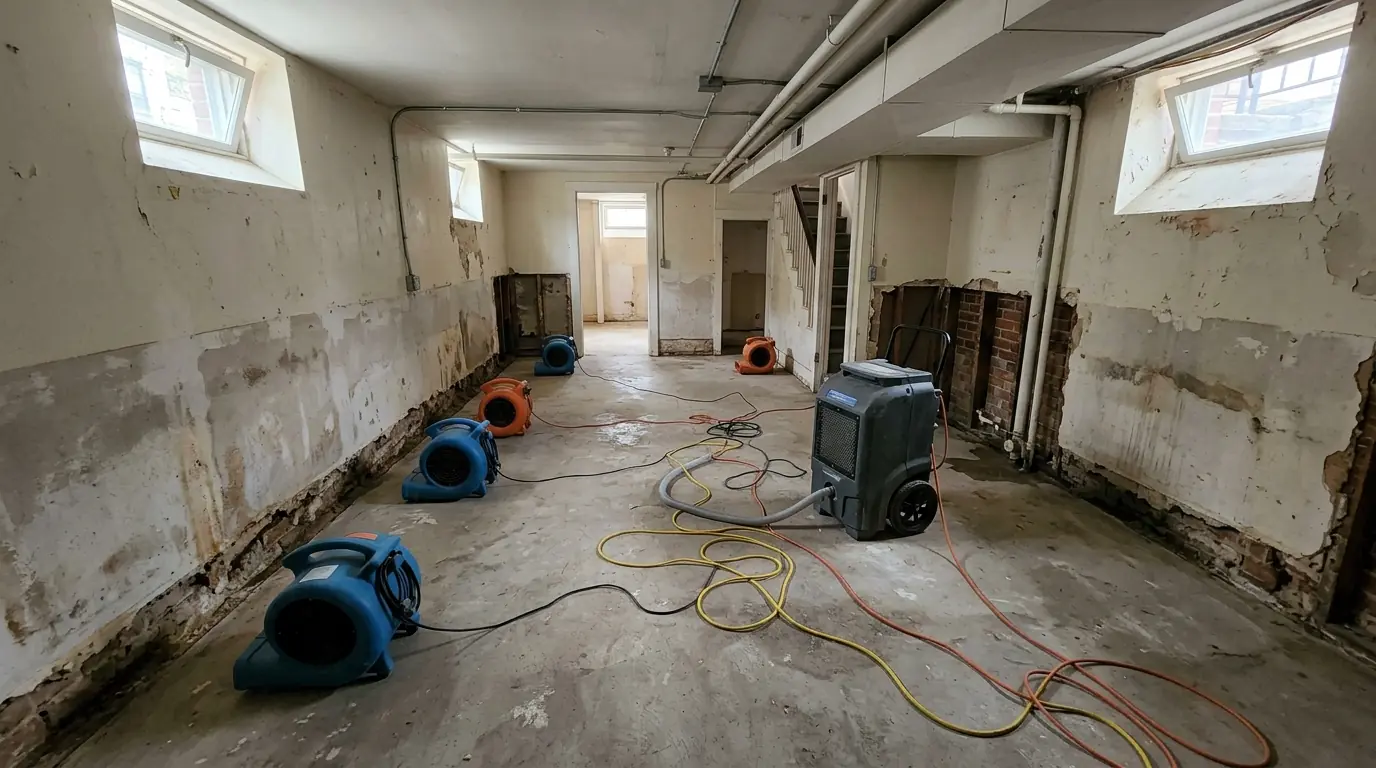
Air movers and a dehumidifier drying a DC basement apartment
How do condo leaks differ across DC's buildings?
The District has a wide mix of condo and co-op housing, and each type leaks in its own way. Converted rowhouses in Columbia Heights, Petworth and Logan Circle often hold two to four units in a wood-framed shell, with plumbing stacked in walls that were never designed for it and a small association that manages itself. Water moves fast through those floors, and one bathroom can wet every unit below it.
Older apartment buildings along Connecticut Avenue, some of them co-ops, have aging risers and steam or hot-water heat with valves that weep for years. Newer towers in Navy Yard and NoMa have concrete slabs, sprinkler systems and fan coil units in each apartment, so leaks come from condensate lines, sprinkler fittings and washer hoses, and access rules are strict. Co-op residents hold shares rather than deeded units, so check the proprietary lease and the co-op's policy as well as your own coverage. Our guide to water from the condo above covers the first steps.
Where we do this work: Washington, DC and nearby Maryland and Virginia, including:
What does condo water damage cleanup cost?
Condo jobs are priced per unit, and building access rules and the number of units involved drive much of the cost.
| One unit, ceiling and one wall from above | $1,320-$3,740 |
|---|---|
| Bathroom and hallway, floating floor removed | $2,450-$6,180 |
| Leak through two or three stacked units | $5,860-$15,300 |
These ranges are typical DC-area figures, not quotes; we price each unit after an on-site assessment. Compare ranges across all 40 services.
What moves the price
- Number of units affected
- Building access rules and hours
- Flooring and underlayment type
- Concrete slab or wood framing
- Records needed for each owner
Related work we often do on the same job
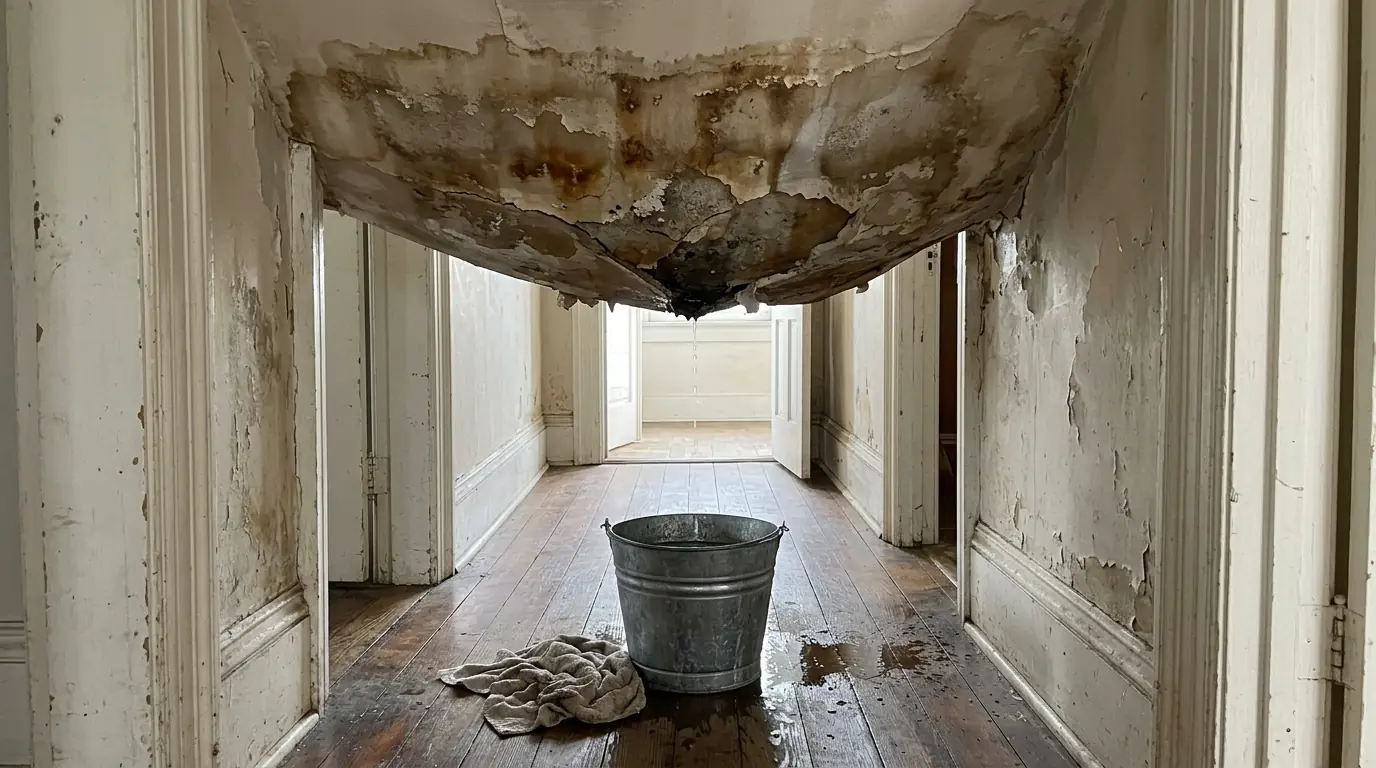
Ceiling Leak Damage
Ceiling leak damage work deals with water trapped above a ceiling from a roof, a bathroom, a radiator or an air conditioning line.
How we handle it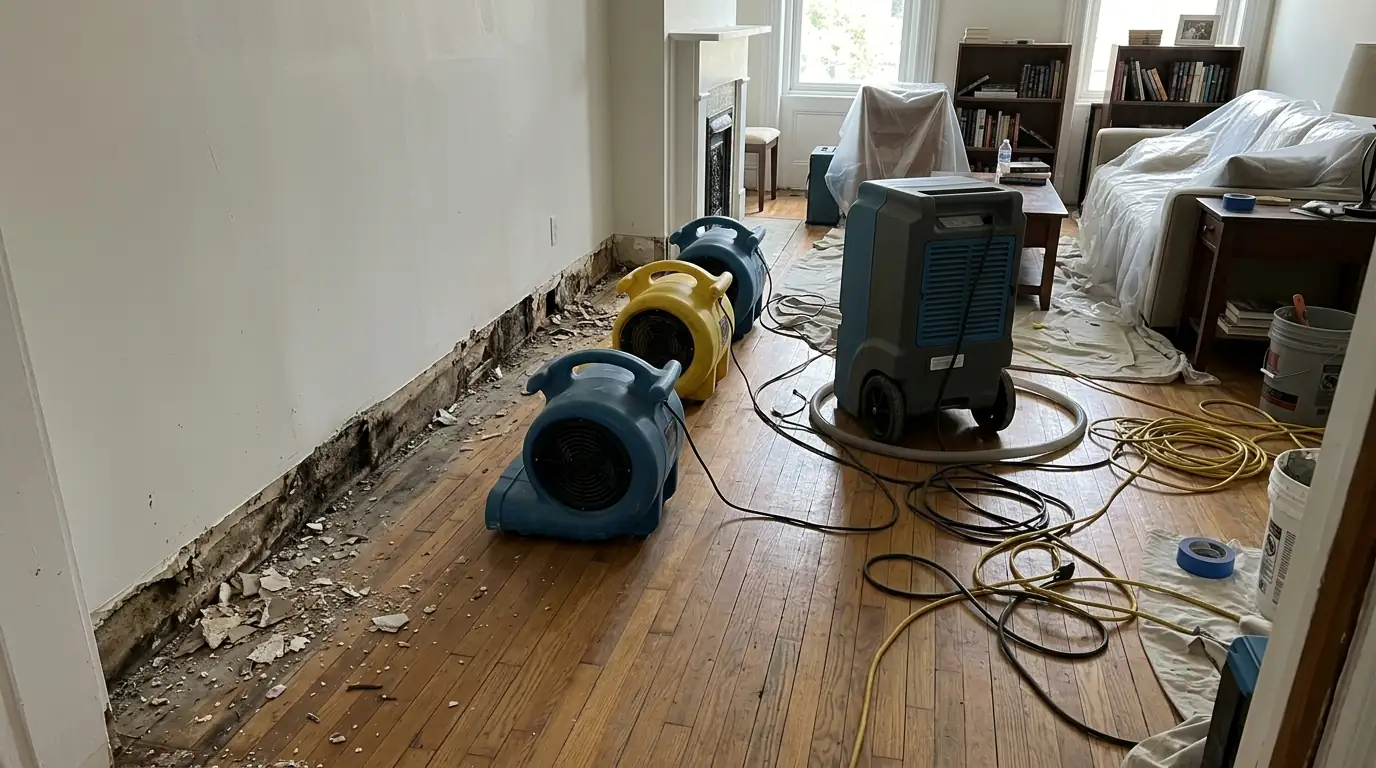
Water Damage Restoration
Water damage restoration is the full sequence after a leak or flood: stopping the source, extracting standing water, removing materials that cannot be saved, drying walls and floors with dehumidifiers and air movers, and logging moisture readings until they reach a dry standard.
How we handle it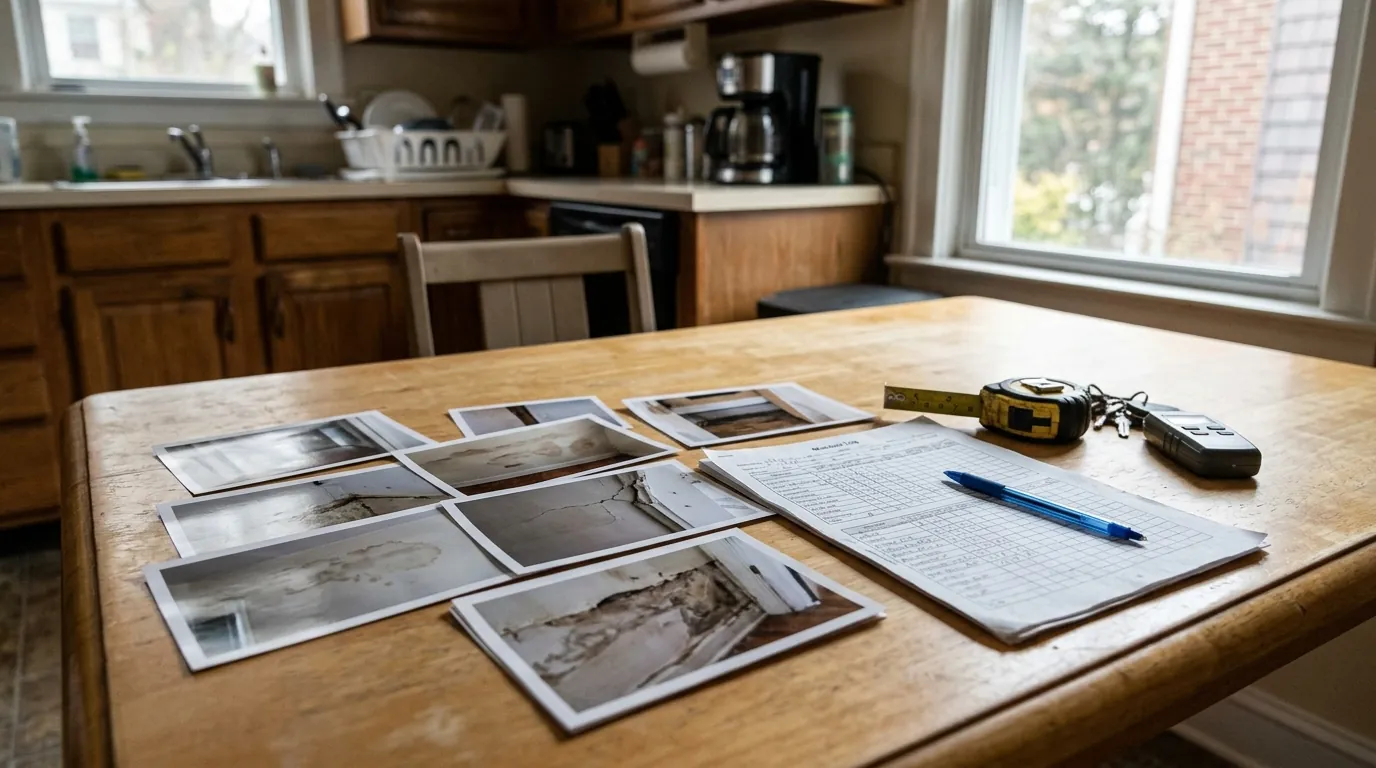
Insurance Claim Help
Insurance claim help, as we provide it, means documenting the damage and the work so you have what your insurer asks for: dated photos, moisture readings, daily drying logs, equipment records and an itemized repair scope.
How we handle it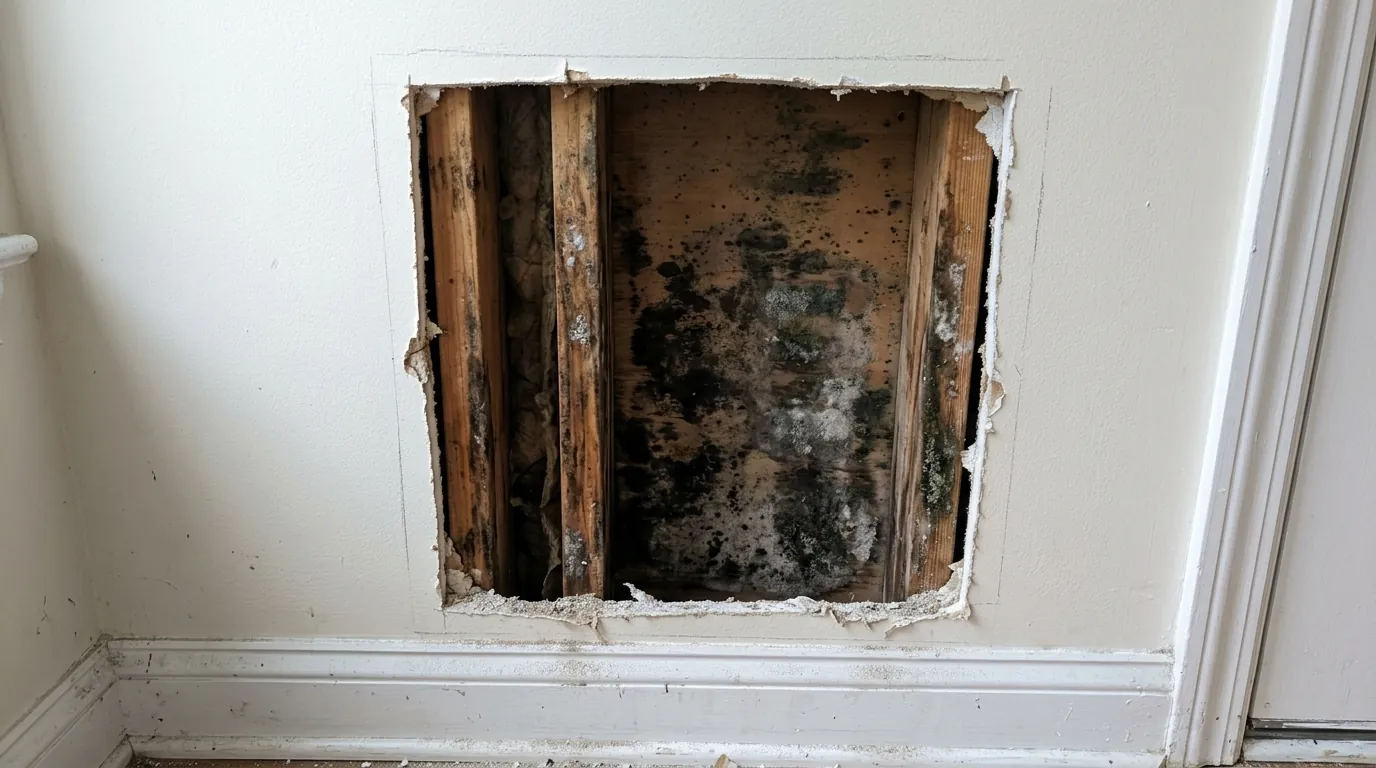
Mold Behind Drywall
Mold behind drywall grows on the back of the paper facing, on studs and on insulation inside a wall that has stayed damp from a slow leak, condensation or an old flood.
How we handle itQuestions homeowners ask about condo water damage
Should I call building management or a restoration company first?
Both, close together. Management or the building engineer may be the only people who can shut off a riser or get into the unit above, so they need to know right away. Then call us to start extraction in your unit. Take photos and video of the water before anything is moved, and note the time you first saw it.
What happens if my HO-6 adjuster and the association's adjuster disagree?
We stay out of the coverage question, because it turns on your policy and your condo documents, not on drying. What we provide is a moisture map, photos and readings showing where water traveled and what it damaged, kept separately for each unit. That record usually settles the factual side of the disagreement, and the adjusters work out the rest.
Can you dry my unit if the owner upstairs is away or will not open the door?
Yes, we can dry your unit as long as the source has been stopped, which management can often do from a shared valve or riser. Many condo documents give the association a right of entry in an emergency, so management is the right party to handle access to the unit above, not you.
Why does my engineered floor have to come up when the surface looks fine?
Floating engineered and laminate floors sit on a foam or felt underlayment over the slab. Water that gets under them spreads across the concrete with no way out, so it stays wet for weeks while the top looks normal. Lifting a section lets us dry the slab and check for damage, and boards in good shape can sometimes be reinstalled.
Does a leak inside a shared wall need mold testing before it is closed?
Not automatically. If the cavity dried within a day or two and readings are back to normal, testing is usually unnecessary. If the drywall stayed wet longer, smells musty or shows growth on its back side when opened, we look more closely before anything is closed, since growth in a shared wall affects the units on both sides.
Water in the house or a musty room you can't explain?
Call JEC Restoration any time. We answer 24/7 and talk through what you are seeing before anyone touches a wall.