Montgomery County, MD
Water damage & mold cleanup in Kensington, MD 20895
Kensington's Victorian and early 1900s frame houses have plaster walls, porch roofs and cellars that were never meant to be finished. When water gets in, we dry the old materials carefully and keep what can be kept.
In Kensington, JEC Restoration dries out leaks, removes mold, and cleans up after smoke and sewage, working in houses from the historic town center and Antique Row to the streets near Rock Creek and Kensington Parkway. Old plaster and wood floors get dried in place wherever they can be. Reach us at (202) 989-3053, day or night.
What happens when water reaches plaster and old framing in a Kensington Victorian?
Kensington began as a railroad suburb in the late 1800s, and the historic district around the town center still has the houses to prove it: Queen Anne and Shingle Style Victorians with wraparound porches, steep roofs and turrets, plus early 1900s foursquares and bungalows. Many sit on lots shaded by old oaks. Inside, the walls are often plaster on wood lath, the floors are heart pine or oak, and the trim is original. The basements started as cellars with stone or brick foundation walls.
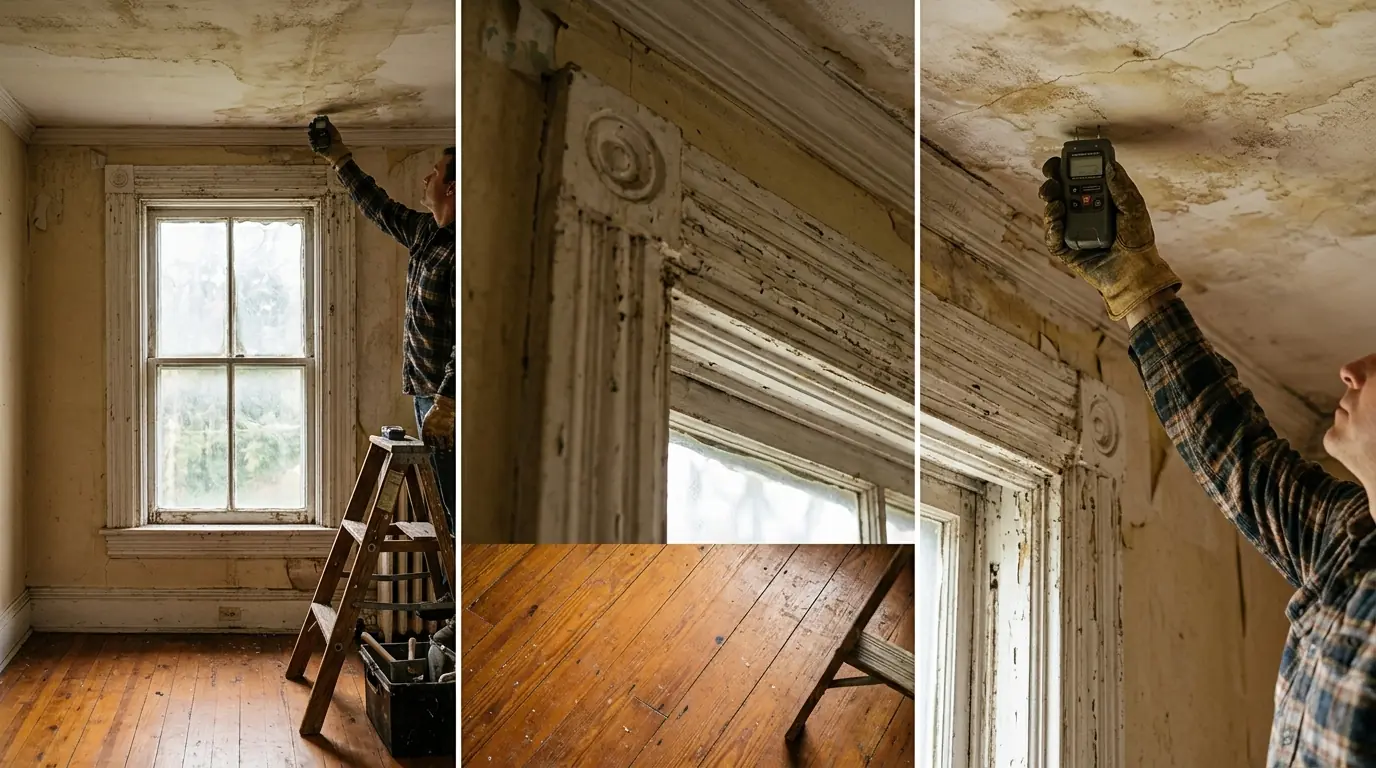
Old materials react to water differently than drywall. Plaster holds moisture for a long time and dries slowly, and when the keys behind it break, a ceiling can sag without warning. Old-growth framing is dense and stable, but it soaks up water at the end grain and needs time to dry. We test plaster with a meter and by touch before deciding what stays. Removing only what has failed keeps the original walls, trim and floors that make these houses worth owning, and it usually costs less too.
Most-called services in Kensington
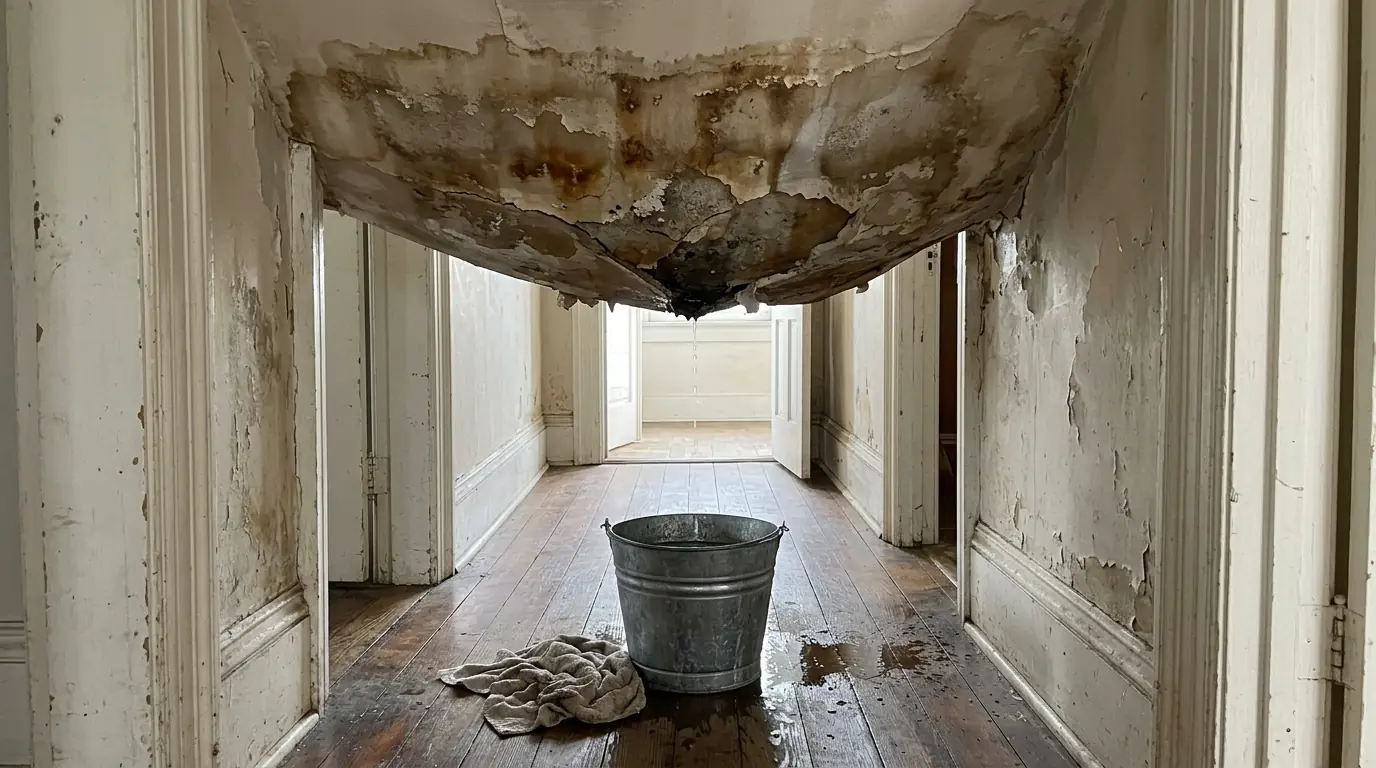
Ceiling Leak Damage
Ceiling leak damage work deals with water trapped above a ceiling from a roof, a bathroom, a radiator or an air conditioning line.
How we handle it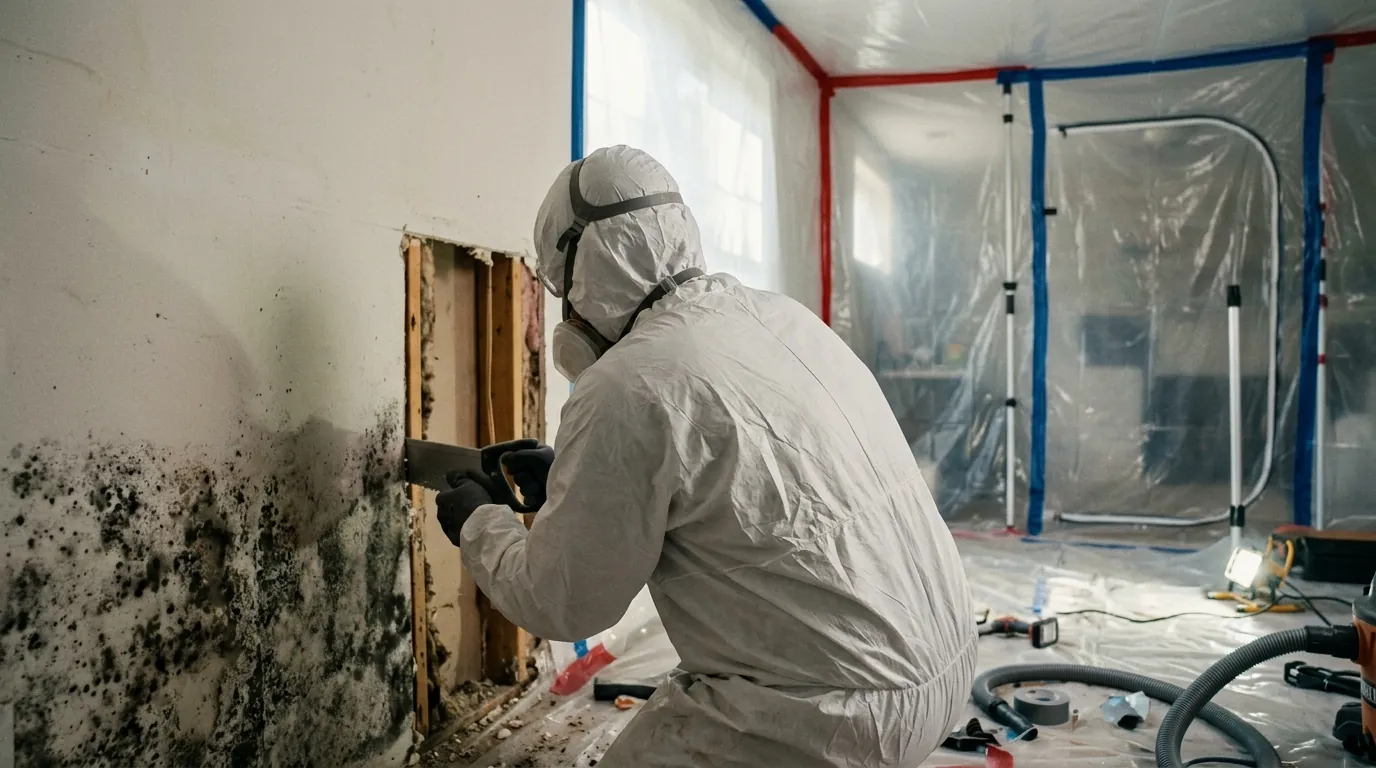
Mold Remediation
Mold remediation is the controlled removal of mold growth from a building.
How we handle it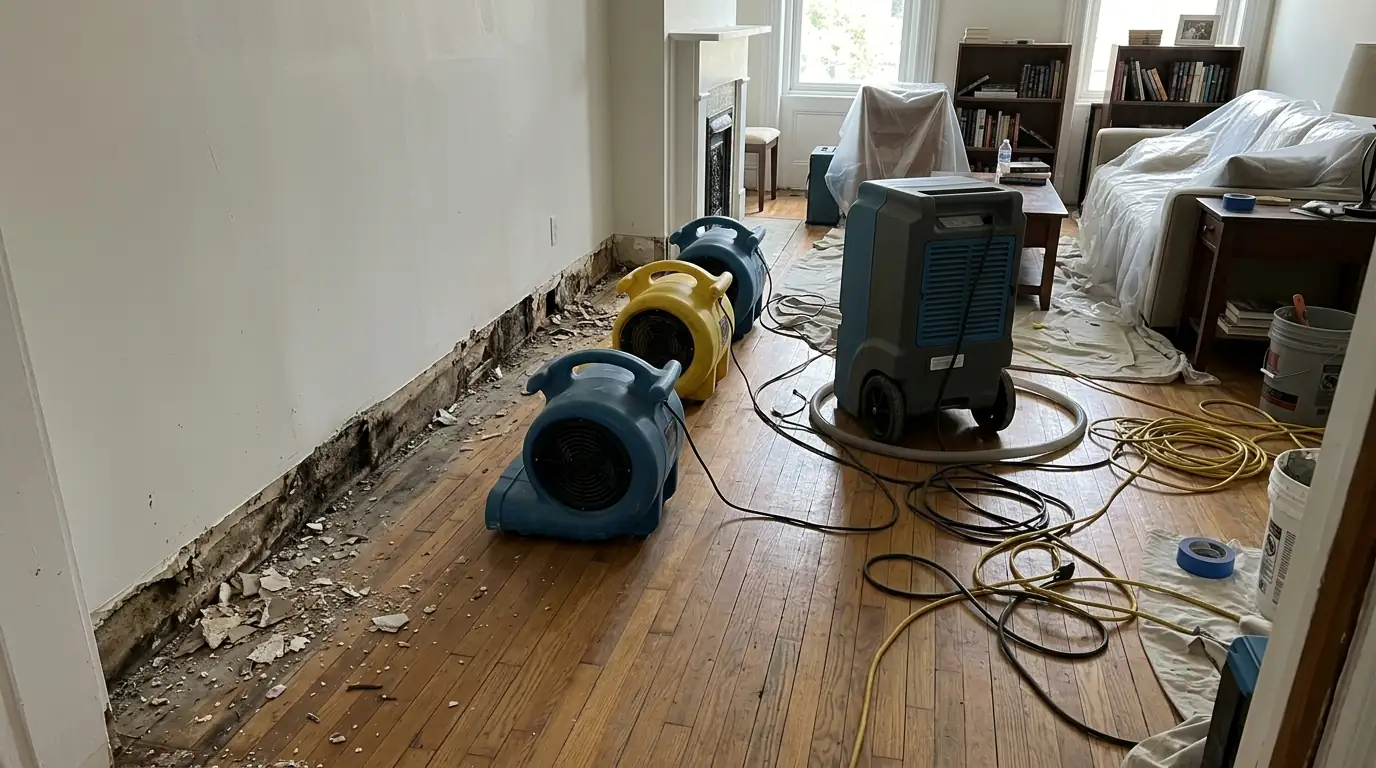
Water Damage Restoration
Water damage restoration is the full sequence after a leak or flood: stopping the source, extracting standing water, removing materials that cannot be saved, drying walls and floors with dehumidifiers and air movers, and logging moisture readings until they reach a dry standard.
How we handle it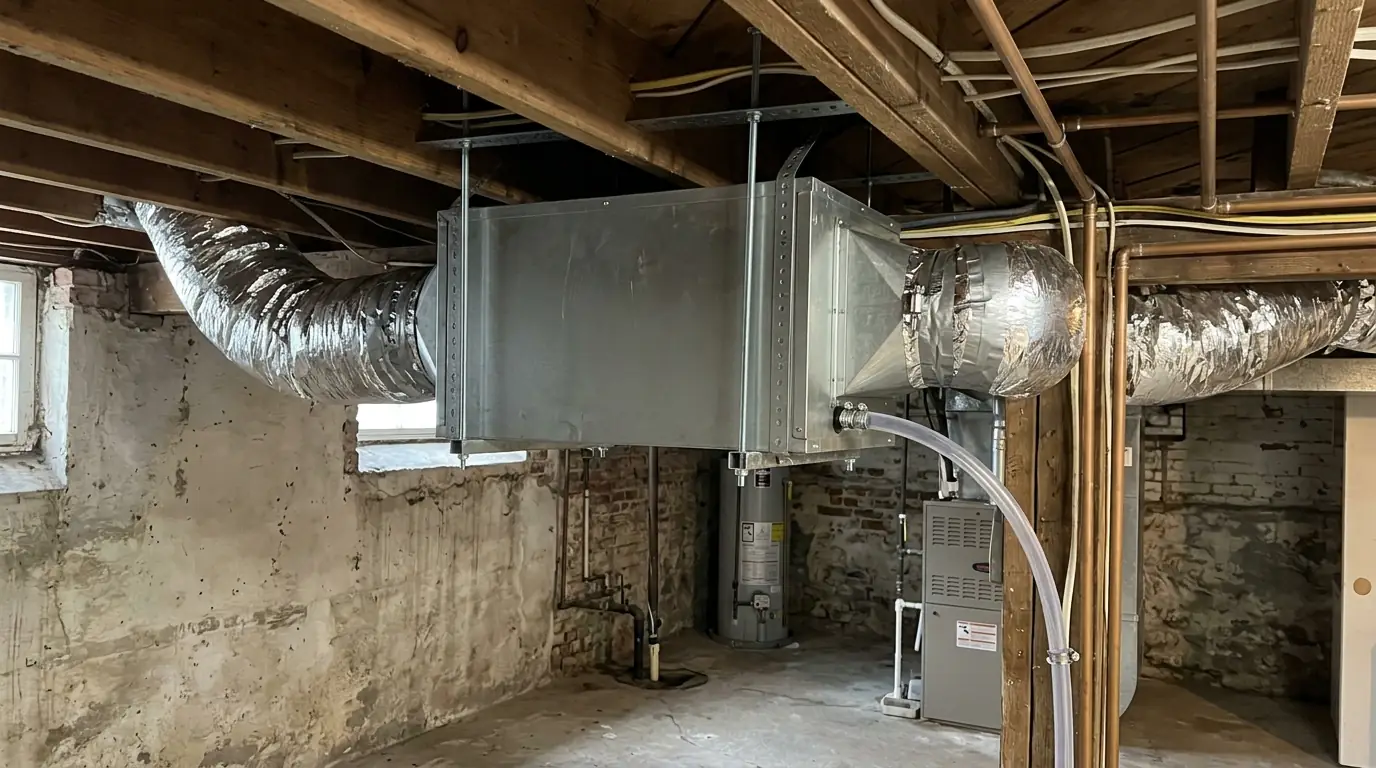
Dehumidifier Installation
A whole-basement dehumidifier is a fixed unit that pulls moisture from the air in a basement or crawl space and drains it continuously through a hose or condensate pump.
How we handle it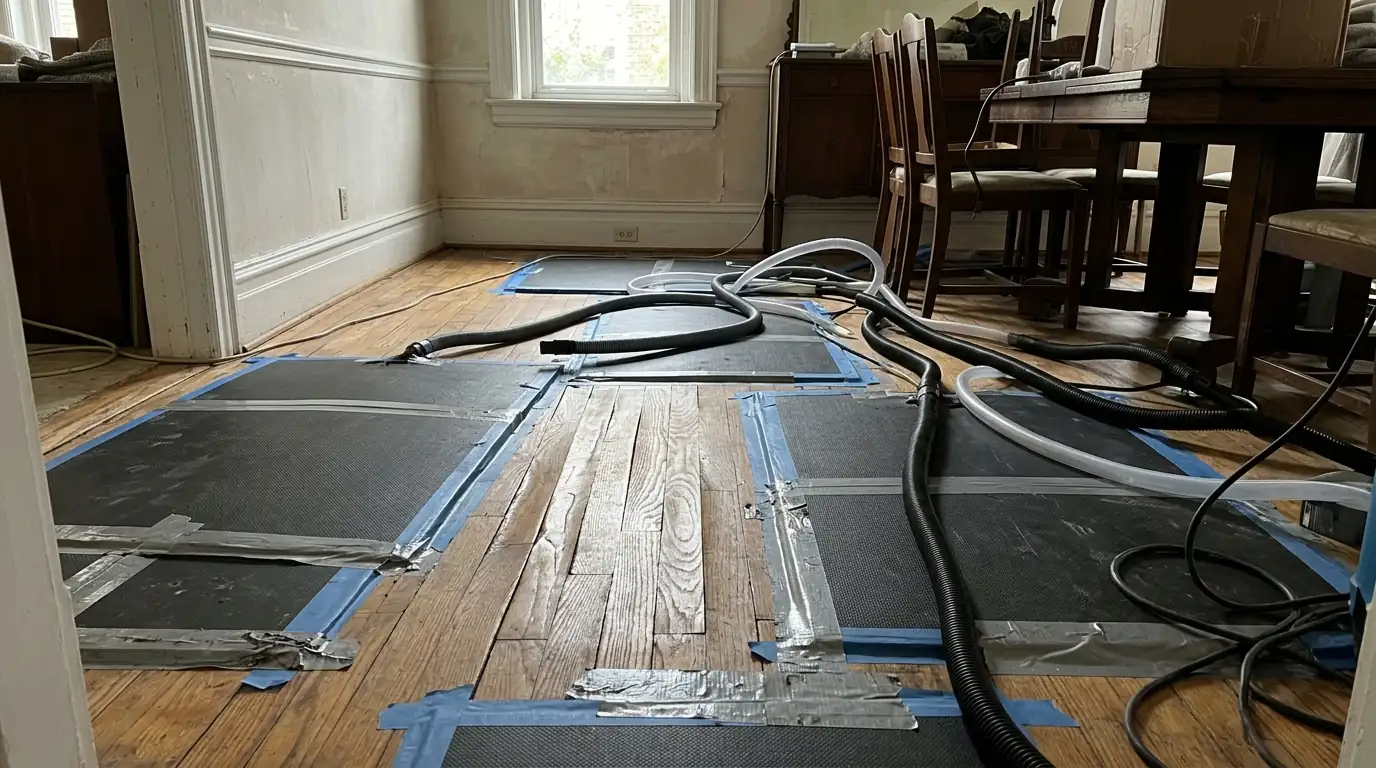
Hardwood Floor Drying
Hardwood floor drying removes water from solid wood flooring and the subfloor beneath it, usually with suction floor mats, dehumidifiers and steady monitoring.
How we handle itHow do porch roofs, gutters and the Rock Creek slope bring water inside?
The town sits on rolling ground that falls toward Rock Creek on the west side. Houses on the lower streets in 20895 deal with water moving downhill through the soil after storms, and stone cellar walls let it through at the mortar joints. Many owners have finished part of the cellar since, which hides the dampness until it shows up as peeling paint, efflorescence or a musty smell.
Up top, the shapes of these houses create their own leaks. Porch roofs that tie into the main wall, valleys between roof sections, built-in gutters hidden behind trim, and the flashing around turrets and dormers all age. Leaf-filled gutters overflow behind the fascia and run down inside the wall. Old radiators and their supply valves leak slowly onto floors, and galvanized supply pipes from earlier renovations corrode from the inside. In winter, plumbing in an unheated rear addition or mudroom can freeze.
Typical calls we get from Kensington
Built-in gutter overflow into a plaster wall
Leaves clog a built-in gutter on a Victorian, and water runs inside the wall cavity, staining the plaster in a second-floor bedroom. We locate the wet area with a thermal camera, open only what we need to, and dry the cavity with directed air.
Radiator valve leak onto heart pine floors
A steam radiator valve drips for weeks, darkening the floor and the ceiling below. We dry the boards with mats and the subfloor from below, test the plaster ceiling, and leave the radiator for a heating contractor to repair.
Musty stone cellar with a finished corner
A cellar with stone walls and a paneled corner office smells musty every summer. We remove the paneling, clean mold from the stone and framing with HEPA vacuums and antimicrobial, and suggest a dehumidifier sized for the space.
Porch roof leak at the house wall
Water gets behind failed flashing where a porch roof meets the main wall and soaks the framing around a front window. We dry the wall from inside, check for rot, and note what the roofer needs to fix.
How do we work in Kensington's historic district and along Howard Avenue?
The historic district has its own review process for exterior changes, and the county's preservation rules apply to work visible from the street. Interior drying and cleanup do not change the outside of the house, but if repairs involve siding, windows or porch elements, check with the town and the county before starting. We keep exterior work to what is needed and document the original condition with photos.
Most streets have room to park a van, but some driveways are narrow and steep, so we bring compact equipment when needed. For the shops and apartments along Antique Row on Howard Avenue, we coordinate with owners and tenants on access around business hours. In the houses, our approach to mold remediation in cellars favors cleaning the stone and framing over tearing it out. For water coming through a ceiling, see how we dry plaster and joists after a leak; for a cellar that stays damp, a permanent dehumidifier often makes the biggest difference.
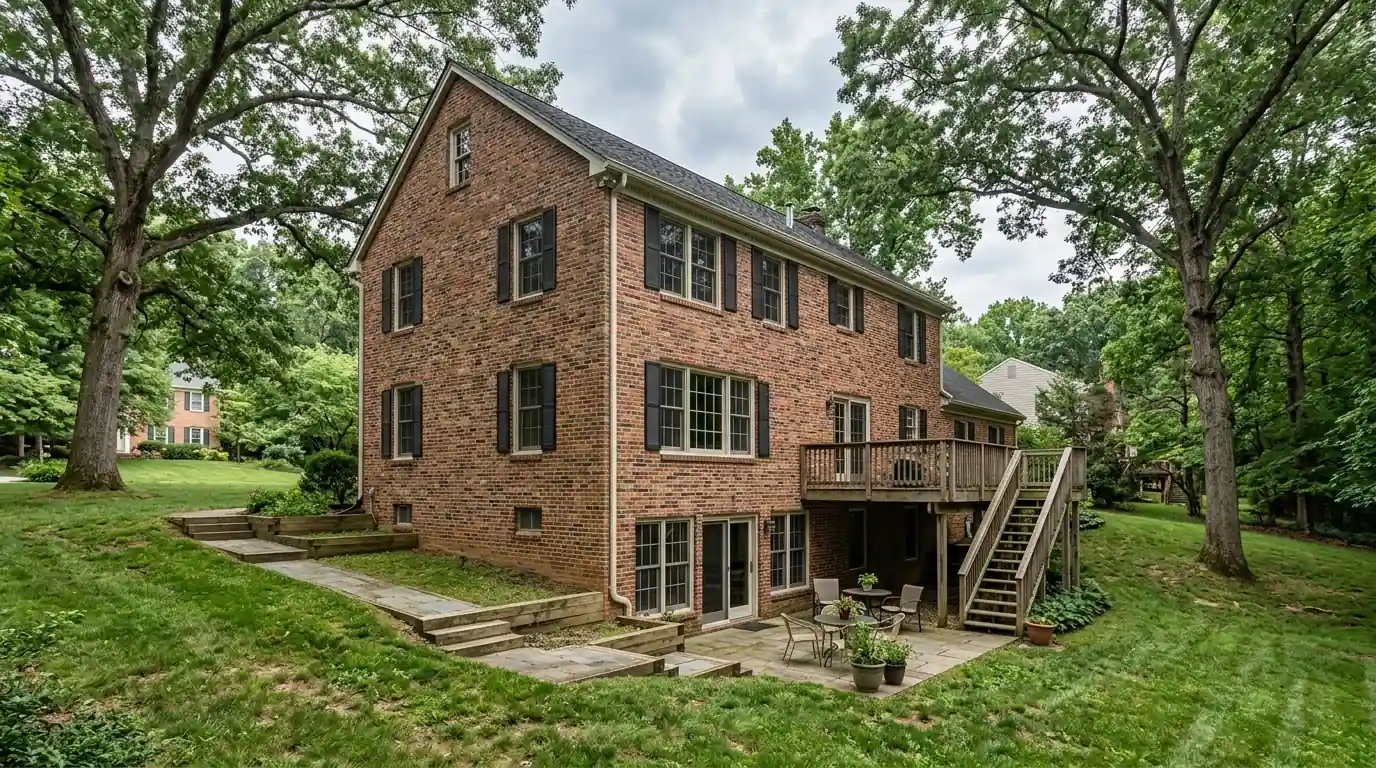
Typical homes in this part of the DC area
Nearby areas we also cover
Questions from Kensington homeowners
Can wet plaster in a Kensington house be saved, or does it all have to come out?
Much of it can be saved. Plaster tolerates water better than drywall if it stays attached to the lath. We check moisture levels and press gently to find areas where the keys have broken. Sound plaster can be dried in place and patched, while sagging or crumbling sections are removed. That approach keeps original walls and avoids the dust and cost of a full tear-out.
Do I need historic district approval before water damage repairs in Kensington?
Interior drying and cleanup usually do not, because they do not change how the house looks from the street. Exterior repairs, such as replacing siding, windows, porch parts or roofing, may need review by the town and county preservation staff. Check with them before ordering materials. We document the original condition with photos so the repair can match it.
Why does my Kensington cellar smell musty even though it never floods?
Stone and brick cellar walls let moisture through slowly, and summer air holds a lot of humidity. When that warm air hits cool walls and floors, it condenses. Mold can then grow on paneling, stored boxes and wood framing. Mold can trigger allergy and asthma symptoms in sensitive people. A dehumidifier, clear airflow and removing cardboard storage solve most cases; visible growth needs cleaning.
Water or mold trouble in Kensington?
Call JEC Restoration any time. We answer 24/7 and talk through what you are seeing before anyone touches a wall.