Mold Remediation
HVAC and duct mold cleaning for Washington, DC homes and condos
If the house smells musty the moment the air conditioning starts, the source is often inside the air handler: a wet drain pan, a slimy coil or growth on the duct lining. We find it and clean it under negative air.
Drying, air and detection equipment on our jobs comes from names like
- Dri-Eaz
- Phoenix
- B-Air
- Abatement Technologies
- Protimeter
- Delmhorst
- FLIR
- Benefect
- Concrobium
- Omnitec
- Sapphire Scientific
- Tramex
HVAC and duct mold cleaning removes growth from the parts of a heating and cooling system that stay wet: the evaporator coil, drain pan, blower and the ducts closest to them. Metal ducts can be cleaned; fiberglass duct board with mold in it usually has to be replaced. You need it when a musty odor follows the AC cycle or growth shows at the registers.
Why does the musty smell start when the air conditioning kicks on?
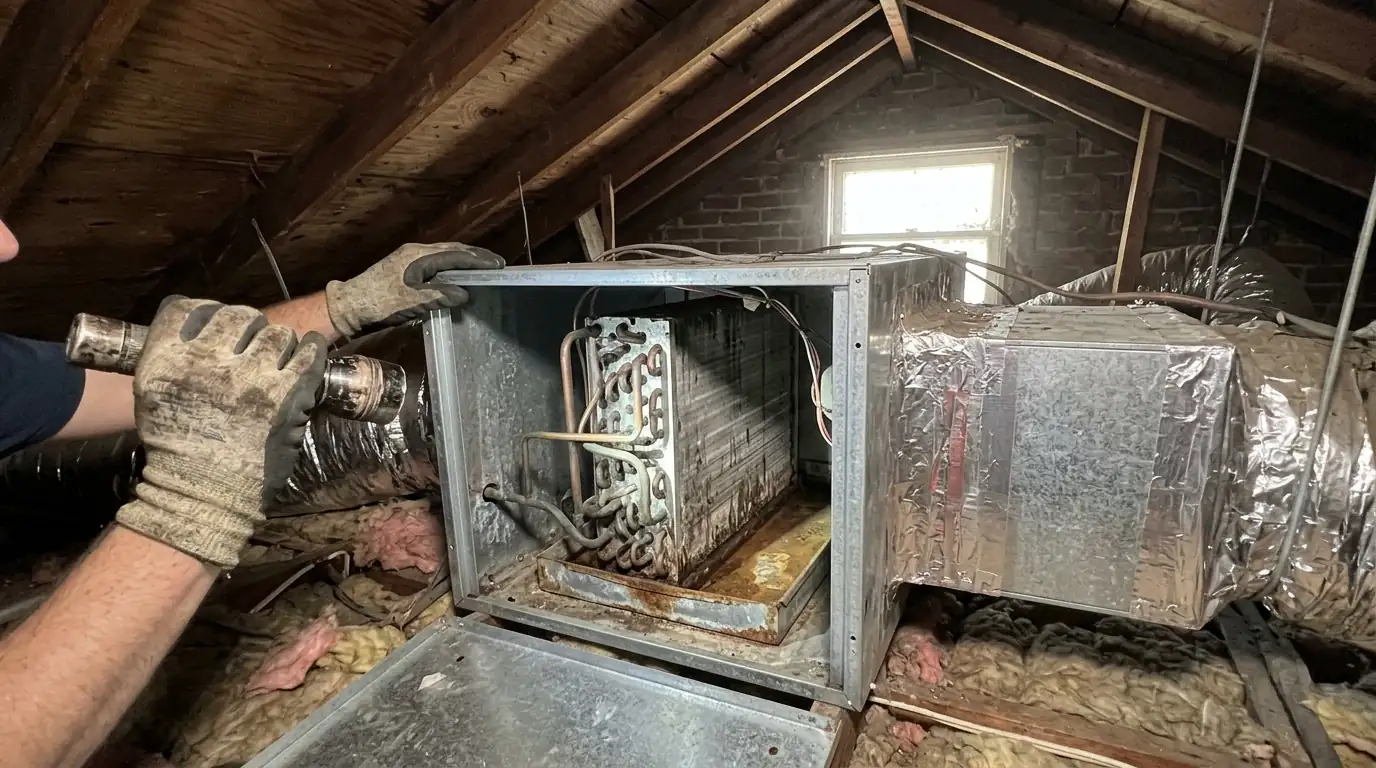
An air conditioner is also a dehumidifier. Warm house air passes over the cold evaporator coil, moisture condenses on the fins, and that water drips into a drain pan and leaves through the condensate line. On a humid DC afternoon the system pulls a steady stream of water out of the air, and every part of that path stays wet for months.
Trouble starts when the water stops moving. Algae and slime clog the condensate line, a metal pan rusts through, or the unit sits slightly out of level so water pools in one corner. Dust that slipped past a loose filter coats the coil, and wet dust feeds growth. The blower wheel sits right downstream and picks up a film of its own.
When the system has been idle and starts again, the first air across that damp coil carries the odor through every supply register. The smell often fades after a few minutes, which is a useful clue: it points to the air handler, not to the rooms. Ducts running through a hot attic can add a second source, because cold supply air makes poorly sealed duct jackets sweat.
How we clean an HVAC system without spreading what is inside it
Containment on a duct job is mostly about controlling where the air goes.
Inspect from the source out
We start at the air handler and the first few feet of supply and return plenum, then run a camera into the ducts. The inspection tells us which runs are metal, which are duct board or flex, and how far the growth has traveled.
Shut down and seal
The system is turned off and the registers are covered. A negative air machine with HEPA filtration is attached to the trunk so anything we loosen is drawn out of the ductwork.
Clean the air handler
Coil, drain pan, blower wheel and cabinet are cleaned, and the condensate line is flushed until water runs clear to the drain or pump.
Clean or remove ducts
Metal runs are agitated and HEPA vacuumed. Duct board and flex sections with growth are cut out, bagged at the opening and replaced.
Restart and recheck
A correctly sized filter goes in, we confirm the pan drains, and we run the system to check for odor at each register. A follow-up check after a few days of normal cooling confirms the smell has not returned.
Metal ducts, flex duct and duct board: what gets cleaned and what gets replaced
Sheet metal ducts have a smooth, nonporous inside surface, so they can be cleaned. We put the trunk under negative pressure with a HEPA machine, then work rotary brushes and air whips through each run so loosened debris is pulled toward the collection point instead of into the rooms. Accessible sections near the plenums are wiped by hand.
Fiberglass duct board and internally lined metal ducts are a different story. The inside is a fibrous mat, mold grows into it, and brushing it hard tears fibers loose. EPA's guidance on duct cleaning says wet or moldy insulation inside ducts generally cannot be cleaned effectively and should be removed and replaced, which matches what we see in the field. Flex duct, with its thin plastic inner liner, belongs in the same group. In practice, the split looks like this:
- Sheet metal trunks and branches: HEPA cleaned under negative air
- Fiberglass duct board with growth: cut out and replaced
- Lined plenums: liner removed, bare metal cleaned
- Flex duct with growth on the liner: replaced
Which signs point to mold in the HVAC system rather than in the rooms?
The pattern of a symptom matters as much as the symptom itself.
Odor that follows the cycle
A musty smell that is strongest in the first minutes after the AC starts, then fades, usually begins at the coil or drain pan.
Dark spots at supply registers
Spotting on grilles and the ceiling around them can be growth or dust collecting where cold air meets humid room air. A tape sample tells them apart.
Water around the air handler
Rust lines on the cabinet, a wet closet floor or a ceiling stain under an attic unit mean the drain path is failing.
Overflow switch shutting the AC off
A float switch that keeps tripping usually means the condensate line is clogged with slime.
Symptoms that ease outdoors
Mold can trigger allergy and asthma symptoms in sensitive people, and relief after leaving the house is worth noting.
Dripping attic ducts
Ducts that sweat in summer soak the insulation around them, stain the ceiling below and can feed mold on the roof sheathing.
What we check inside the air handler before touching a single duct
Cleaning ducts while the coil and pan stay wet only buys a few weeks. So the work starts at the cabinet. We open the air handler, light the coil faces, look into the drain pan and trap, pull the blower wheel when it is coated, and check the filter rack for gaps that let unfiltered air slip past. Photos of each part go into your file before anything is cleaned.
The coil gets a coil cleaner and rinse, the pan is cleaned and treated, the condensate line is flushed, and the blower housing is wiped down. If the coil is corroded or the system needs refrigerant work, that part goes to your HVAC technician; our job is the contamination. When the real problem is a system that cools the house without drying it, we may suggest whole-house dehumidification, and follow-up humidity and air quality readings can show whether the change worked.
How much does HVAC mold cleaning cost around Washington, DC?
Most of the cost sits in two places: how much of the air handler needs work, and how much duct has to be replaced rather than cleaned.
| Condo fan coil unit, cleaned and treated | $420-$960 |
|---|---|
| Air handler: coil, drain pan, blower and condensate line | $640-$1,480 |
| Air handler plus HEPA cleaning of a metal duct system | $1,270-$2,860 |
| Replacing moldy duct board or flex runs | $2,340-$6,750 |
These are typical DC-area figures, not quotes; we price the job after opening the air handler and inspecting the ducts on site. Compare ranges across all 40 services.
What moves the price
- Number of air handlers or fan coils
- Duct material and total length
- Attic or closet access
- How far growth spread past the coil
- Duct runs that need replacing
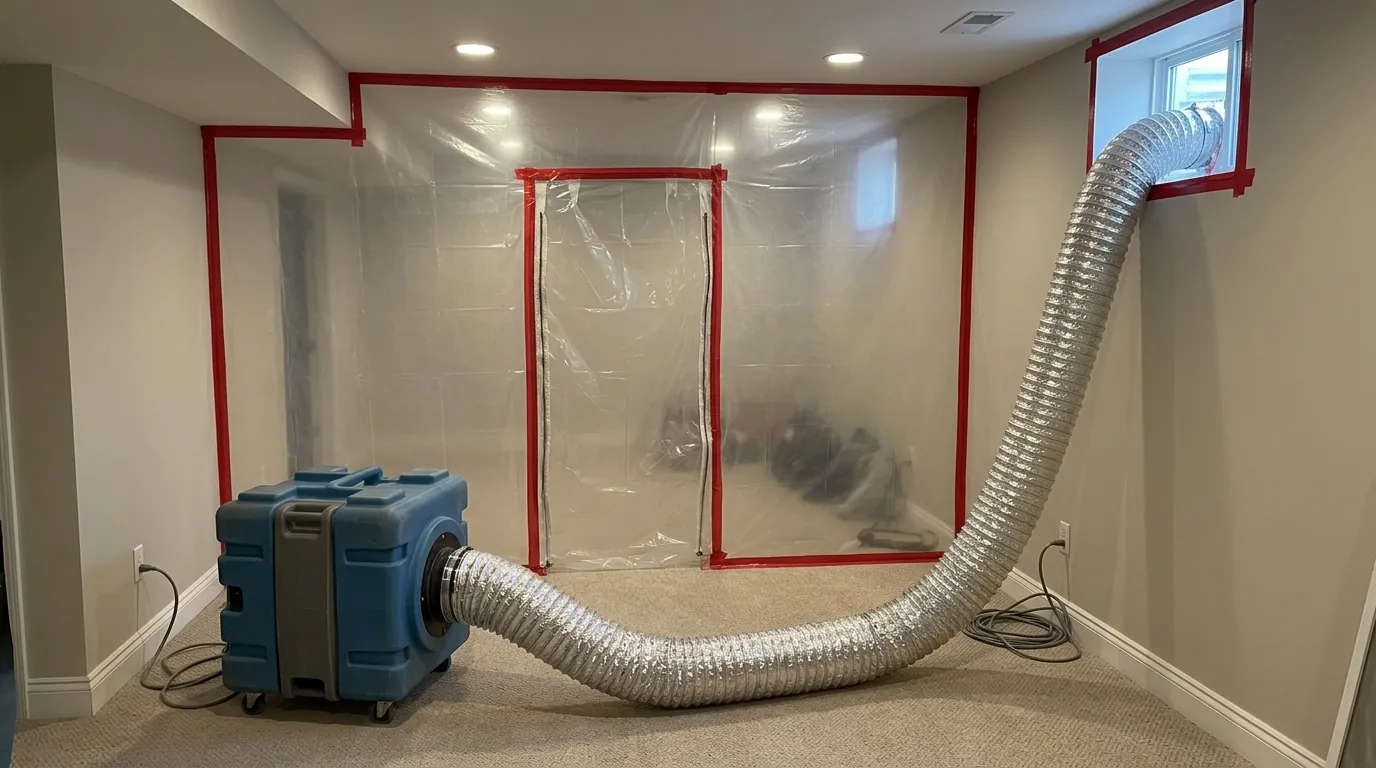
Sealed containment with HEPA filtration on a basement mold job
Attic air handlers, basement units and condo fan coils across DC
Most DC rowhouses were built for radiators, and central air came later. That often put the air handler in a top-floor closet or a shallow attic under the flat roof, with ducts snaking through space that bakes in July. Those ducts sweat, and a pan overflow up there stains the ceiling of the top-floor bedroom. Some owners chose small-duct, high-velocity systems to avoid opening plaster walls; their narrow insulated tubing behaves like flex duct and is replaced rather than cleaned when it grows mold.
In English basements, the air handler often drains to a floor drain that can back up in a heavy storm, which puts water right under the unit. Many condo towers in Navy Yard and NoMa use fan coil units in each apartment, each with a small drain pan that clogs and a cabinet that holds odor. Those jobs mean scheduling with building management, and sometimes the riser or the drain line is the building's responsibility rather than yours.
Where we do this work: Washington, DC and nearby Maryland and Virginia, including:
Related work we often do on the same job

Indoor Air Quality Testing
Indoor air quality testing measures conditions in your home's air: relative humidity, temperature, fine particulates, volatile organic compounds and carbon dioxide, plus mold spores when a moisture problem is suspected.
How we handle it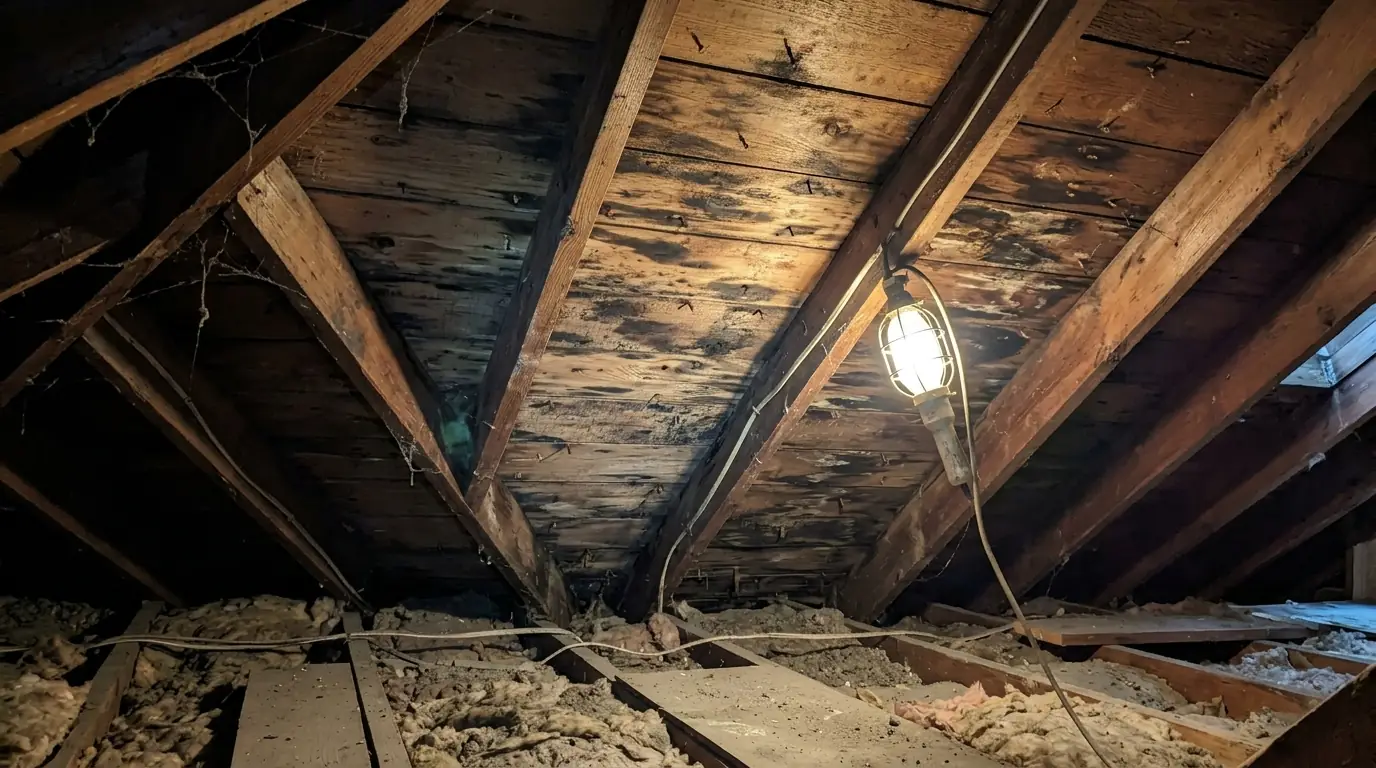
Attic Mold Removal
Attic mold removal cleans growth from roof sheathing, rafters and trusses, removes damaged insulation, and corrects the moisture source, which is usually household air leaking or being vented into the attic and condensing on cold wood in winter.
How we handle it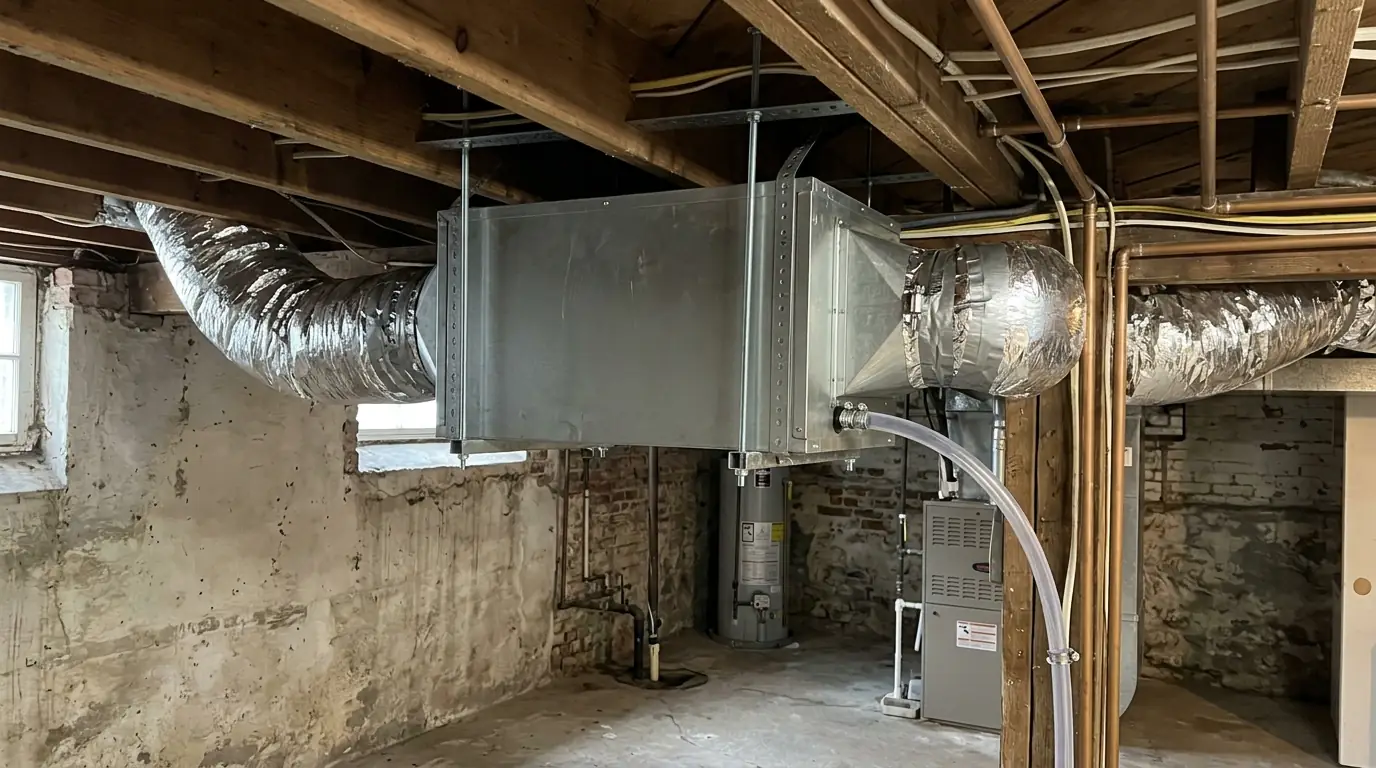
Dehumidifier Installation
A whole-basement dehumidifier is a fixed unit that pulls moisture from the air in a basement or crawl space and drains it continuously through a hose or condensate pump.
How we handle it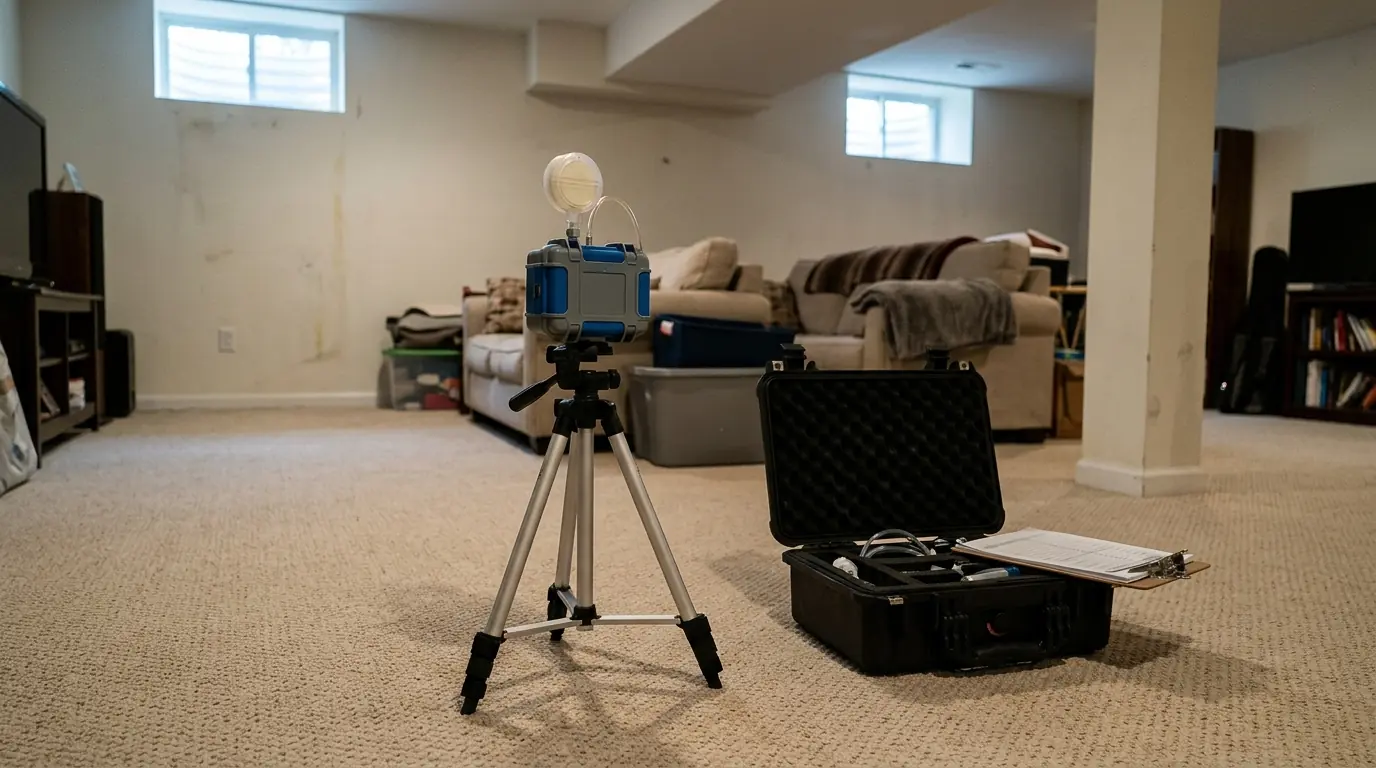
Mold Inspection & Testing
A mold inspection is a room-by-room check for visible growth and the moisture that feeds it, using a moisture meter, a thermal camera and a hygrometer.
How we handle itQuestions homeowners ask about hvac & duct mold cleaning
Is a routine duct cleaning the same as duct mold cleaning?
No. A routine cleaning removes dust and debris from the ducts. A mold job starts at the coil and drain pan, where the moisture is, uses negative air to keep loosened material out of the rooms, and decides which porous duct sections need replacing. Cleaning ducts while a wet coil keeps growing mold upstream will not stop the smell for long.
Can you fog or spray the ducts instead of cleaning them?
Spraying does not remove the growth or the dust it grows on, so the odor and the allergens tend to come back. EPA advises that any product used inside ductwork be registered for that use and applied only after the system has been cleaned. We use labeled products sparingly, on cleaned metal surfaces, and skip them where they add nothing.
Should I keep running the AC if I suspect mold in it?
In a DC summer, shutting the AC off lets indoor humidity climb, which can make mold worse elsewhere in the house. Usually the better move is a fresh filter, a check that the condensate line is draining, and an inspection soon. If the pan is overflowing onto a ceiling, turn the system off to prevent water damage.
Do UV lights stop mold from growing on the coil?
A UV-C lamp aimed at the coil can help keep the coil surface cleaner when it is installed and maintained correctly. It does not remove growth that is already there, it cannot reach most of the duct system, and it does nothing about a clogged drain. Think of it as an add-on after cleaning, not a replacement for it.
What can I do between seasons to keep the drain pan from growing mold?
Before cooling season starts, pour a little water into the pan and make sure it drains quickly. Check that the condensate line outlet is clear, change the filter on schedule and make sure it fits the rack without gaps. If your unit has an overflow switch, test it. These small checks prevent most pan problems.
Water in the house or a musty room you can't explain?
Call JEC Restoration any time. We answer 24/7 and talk through what you are seeing before anyone touches a wall.