Prevention & Repairs
Crawl space encapsulation for Washington, DC bungalows and suburban homes
A damp crawl space sends humid air, musty odor and wood-rot risk up into the house above it. We seal the ground, vents and rim joists, then add a dehumidifier so the space stays dry through DC summers.
Drying, air and detection equipment on our jobs comes from names like
- Dri-Eaz
- Phoenix
- B-Air
- Abatement Technologies
- Protimeter
- Delmhorst
- FLIR
- Benefect
- Concrobium
- Omnitec
- Sapphire Scientific
- Tramex
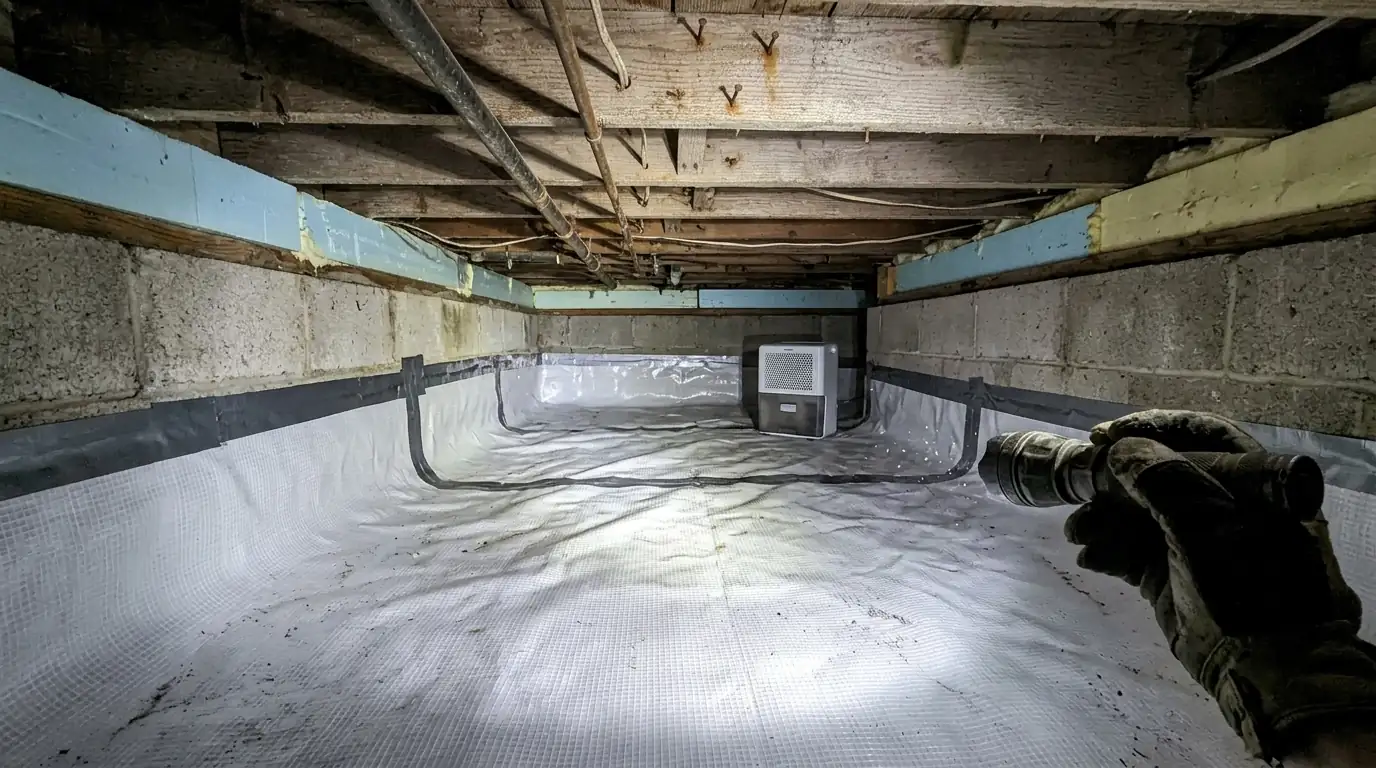
Crawl space encapsulation closes a dirt or gravel crawl space off from outdoor air and ground moisture. A heavy plastic vapor barrier covers the floor and runs up the walls, vents and openings are sealed, the rim joist is insulated, and a dehumidifier keeps humidity in check. It makes sense when the crawl space smells musty, the floor joists read damp, or insulation is sagging and wet.
Why do vented crawl spaces get wetter in a DC summer, not drier?
For decades, builders put vents in crawl space walls on the idea that outdoor air would carry moisture away. In a climate like ours, it often does the opposite. From July through September the outdoor air around Washington is hot and loaded with water vapor. When that air flows through the vents into a crawl space that sits several degrees cooler, its relative humidity climbs, and on the coolest surfaces, like ductwork, water pipes and the underside of the subfloor, it condenses into droplets.
The ground underneath is the second source. Even ground that looks dry gives off moisture continuously, and in a crawl space with no barrier or a torn one, that vapor has nowhere to go but up into the framing. The result is wood that stays damp most of the summer, which is the condition mold and wood-decay fungi need. Fiberglass batts stapled between the joists soak up that moisture, sag and fall. Encapsulation fixes the cause by closing the space off from both sources of water: outdoor air and the ground.
Signs your crawl space is too damp
You can check most of these with a flashlight from the access door.
Musty smell in the rooms above
Air from the crawl space moves up into the house through gaps around pipes and floor registers, carrying the odor with it.
Insulation sagging or on the ground
Fiberglass batts that have absorbed moisture get heavy and fall out from between the joists.
Water drops on ducts and pipes
Condensation on cold metal in summer means the crawl space air is humid enough to wet the framing too.
Cupping or soft hardwood floors
Oak strip flooring that cups along its edges is often reacting to moisture coming up from below.
Fuzzy or dark spots on joists
Visible growth on the subfloor or joists near vents points to long periods of high humidity.
Torn or missing vapor barrier
A thin, ripped sheet of plastic on the dirt, or none at all, lets the ground release moisture straight into the space.
What does crawl space encapsulation cost in the DC area?
Square footage, height and what has to come out first drive the price more than anything else.
| Small crawl under a rear addition or porch | $1,960-$4,370 |
|---|---|
| Typical crawl space, 600-1,000 sq ft | $5,840-$11,250 |
| Large or very low crawl with drainage added | $10,900-$18,600 |
| Crawl space dehumidifier with drain line | $1,680-$2,940 |
All figures are typical for the DC area and are not quotes; we set a price only after crawling the space and taking readings. Compare ranges across all 40 services.
What moves the price
- Square footage and height
- Old insulation and debris to remove
- Standing water or drainage needed
- Mold on framing
- Barrier thickness and wall coverage
How we encapsulate a crawl space
A typical crawl space takes two to four days, depending on its size, its height and how much has to come out first.
Inspect and measure
We record humidity, take wood moisture readings on the joists and subfloor, and note any standing water, mold, pests or damaged framing. You see the readings and photos before anything is decided.
Clear and clean
Old insulation, debris and the existing plastic come out in sealed bags. If mold is present, remediation happens at this stage under containment.
Fix water entry
Where water pools after storms, we add a drain and pit or regrade the soil inside. Outside, we check gutters and the slope of the yard along the foundation.
Seal and insulate
We lay and tape the vapor barrier, run it up the walls and piers, seal the vents and the access door, and insulate the rim joist.
Dry and monitor
The dehumidifier goes in with its drain line routed outside or to a pump. We check humidity over the next weeks to confirm the space holds steady.
What goes into a sealed crawl space?
Every encapsulation we do has the same core parts, scaled to the size and condition of the space. The details change from house to house, but leaving out any one of these tends to undo the rest.
We do not seal a crawl space that has active water coming in during storms. Standing water under a vapor barrier is worse than no barrier at all, so if water pools after rain, a drain and a small sump pit go in first, along with gutter and grading fixes outside.
- Debris removal: old insulation, construction scraps and anything organic come out first
- Vapor barrier: a reinforced polyethylene liner, usually 12 to 20 mil, across the floor and up the walls, with seams overlapped and taped
- Sealed openings: vents closed with rigid foam and sealant, the access door gasketed, and gaps around pipes and wires sealed
- Rim joist: the band of framing on top of the foundation wall insulated with rigid foam or closed-cell spray foam
- Moisture control: a crawl space dehumidifier with its drain line routed out, or a small supply of conditioned air from the HVAC system
- A hygrometer you can read from the access door
What if the crawl space already has mold on the joists?
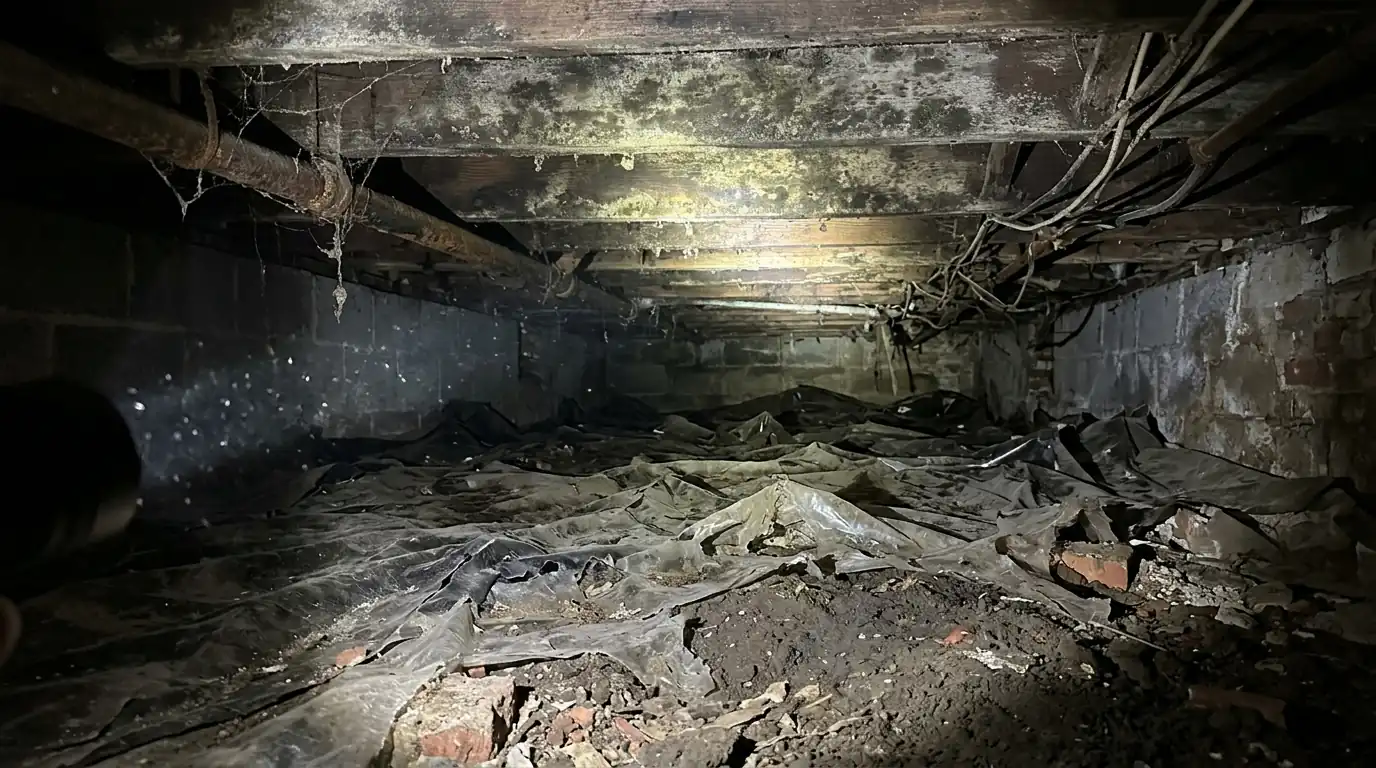
It is common to find some growth when we open up an old crawl space, usually light surface growth on the subfloor and joists near the vents or along the north wall. Sealing over it is not the answer. The mold does not stop being there just because the air dries out, and disturbing it later during plumbing or electrical work spreads spores into the house.
Cleaning wood framing is its own job with its own setup: containment at the access opening, negative air pressure, HEPA vacuuming, sanding or soda blasting where growth has rooted into the grain, and an antimicrobial treatment. That work has its own page: cleaning mold off crawl space framing. When both are needed, we do the remediation first, take moisture readings on the cleaned framing, and lay the barrier only after the wood is back to a normal moisture content.
Soft or crumbling wood is a separate concern. If a probe sinks into a joist or sill plate, the framing needs repair by a carpenter or structural contractor, and we hold the encapsulation until that work is done.
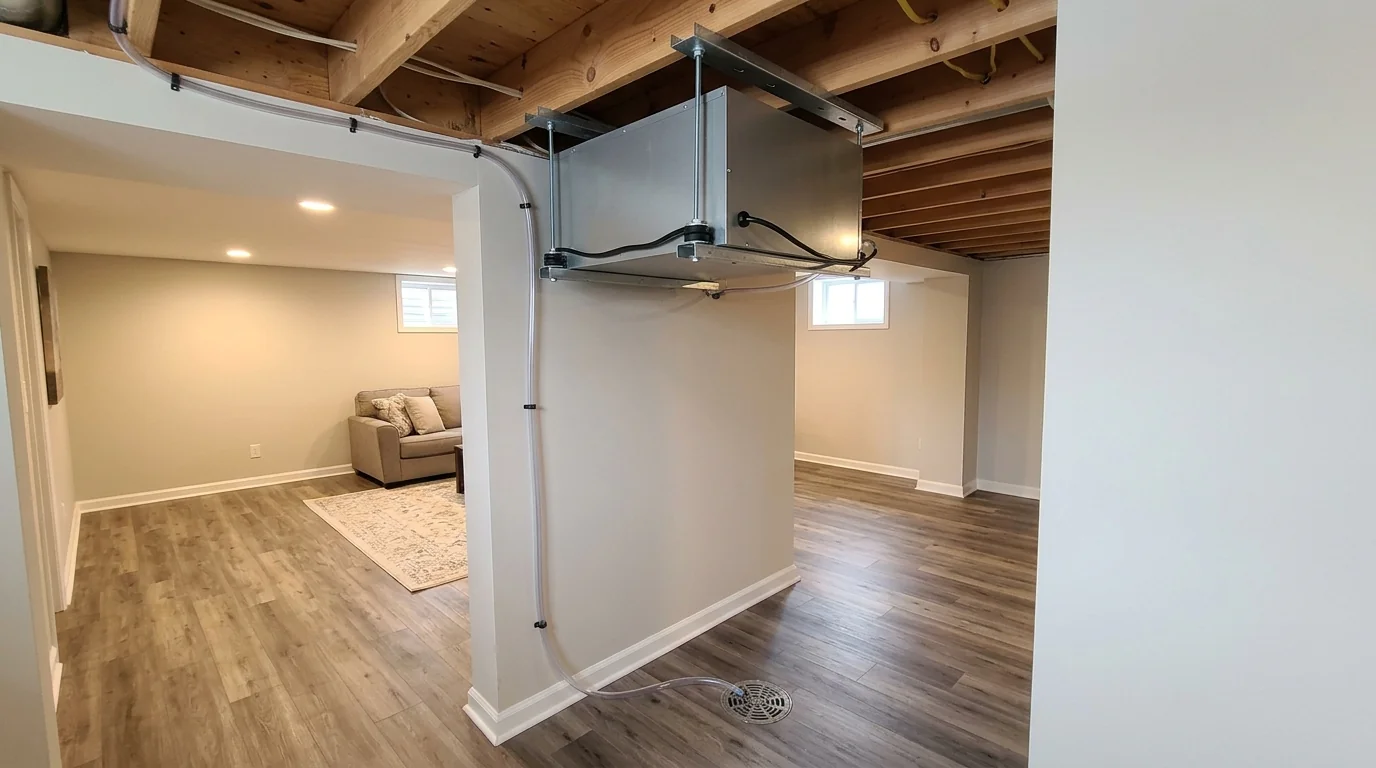
A whole-basement dehumidifier holding humidity down after the work
Where do crawl spaces show up in DC and the nearby suburbs?
Crawl spaces are less common inside the District than in the suburbs, but they are there. Bungalows and small frame houses from the 1910s through the 1940s in Brookland, Deanwood, Takoma and parts of Chevy Chase DC often sit partly on a crawl space, and many rowhouses have one under a rear kitchen or porch addition, where it is also the spot where pipes freeze in January. Out in Montgomery and Prince George's counties, ramblers and split-levels from the 1950s through the 1970s frequently pair a partial basement with a crawl space under one wing, and Northern Virginia is similar, with plenty of them in Falls Church, Annandale and McLean. Clay soils across much of the region drain slowly, so a crawl space on low ground near a stream valley, say off Sligo Creek in Takoma Park or below Four Mile Run in Arlington, can hold water for days after a storm. Many of these spaces are under two feet high, which shapes how we work and what equipment fits.
Where we do this work: Washington, DC and nearby Maryland and Virginia, including:
Related work we often do on the same job
Crawl Space Mold Remediation
Crawl space mold remediation removes mold growth from the floor joists, subfloor, sill plates and beams under a house, then dries the wood so new growth does not start right away.
How we handle it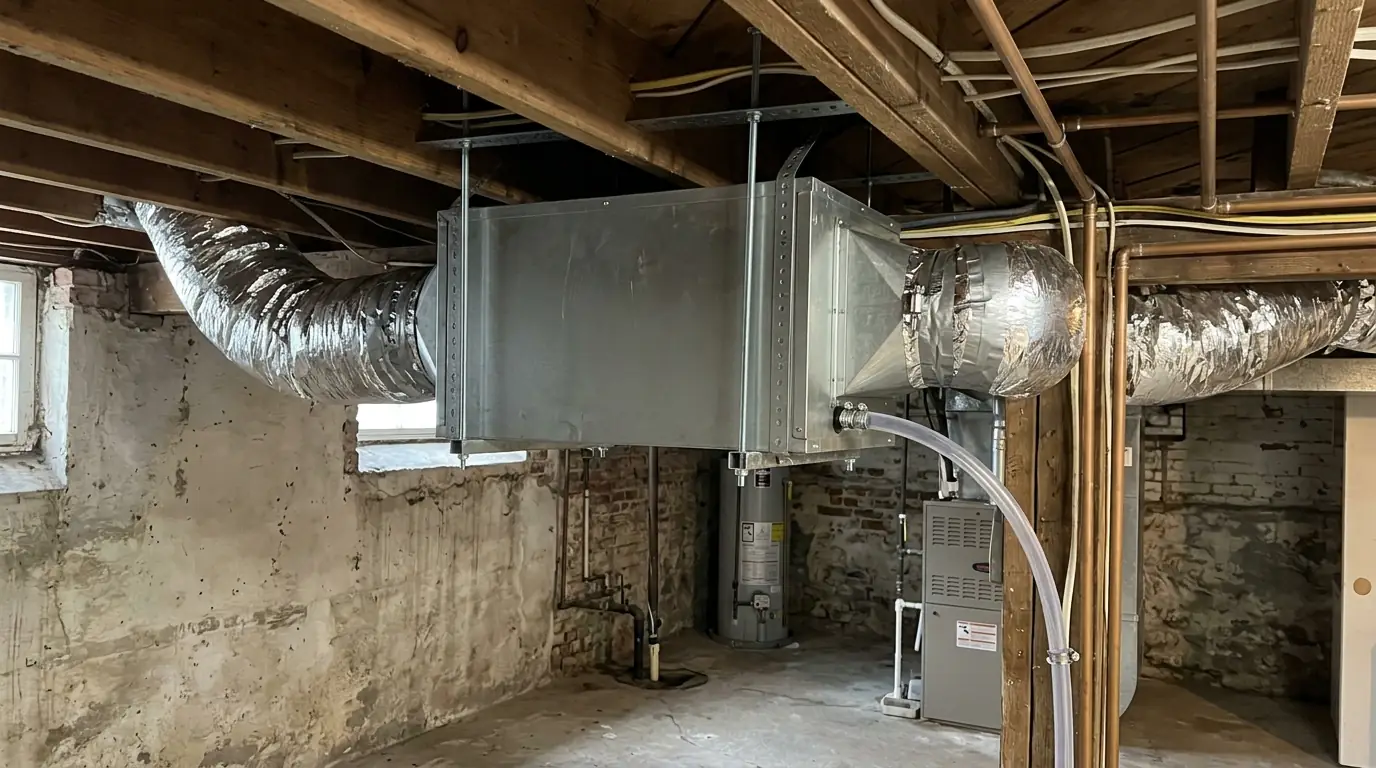
Dehumidifier Installation
A whole-basement dehumidifier is a fixed unit that pulls moisture from the air in a basement or crawl space and drains it continuously through a hose or condensate pump.
How we handle it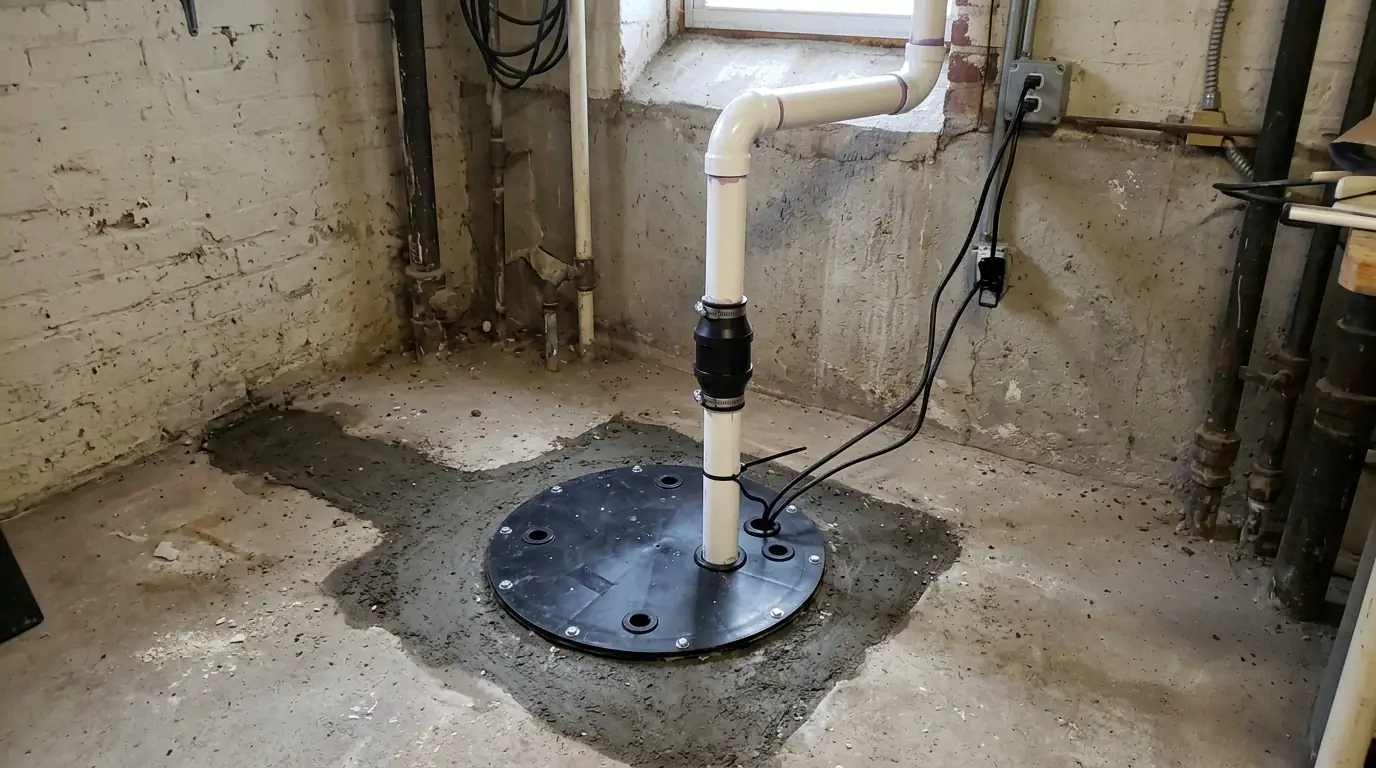
Sump Pump Installation
A sump pump sits in a lined pit at the low point of a basement and pumps out groundwater that collects there from under the slab or from a perimeter drain.
How we handle it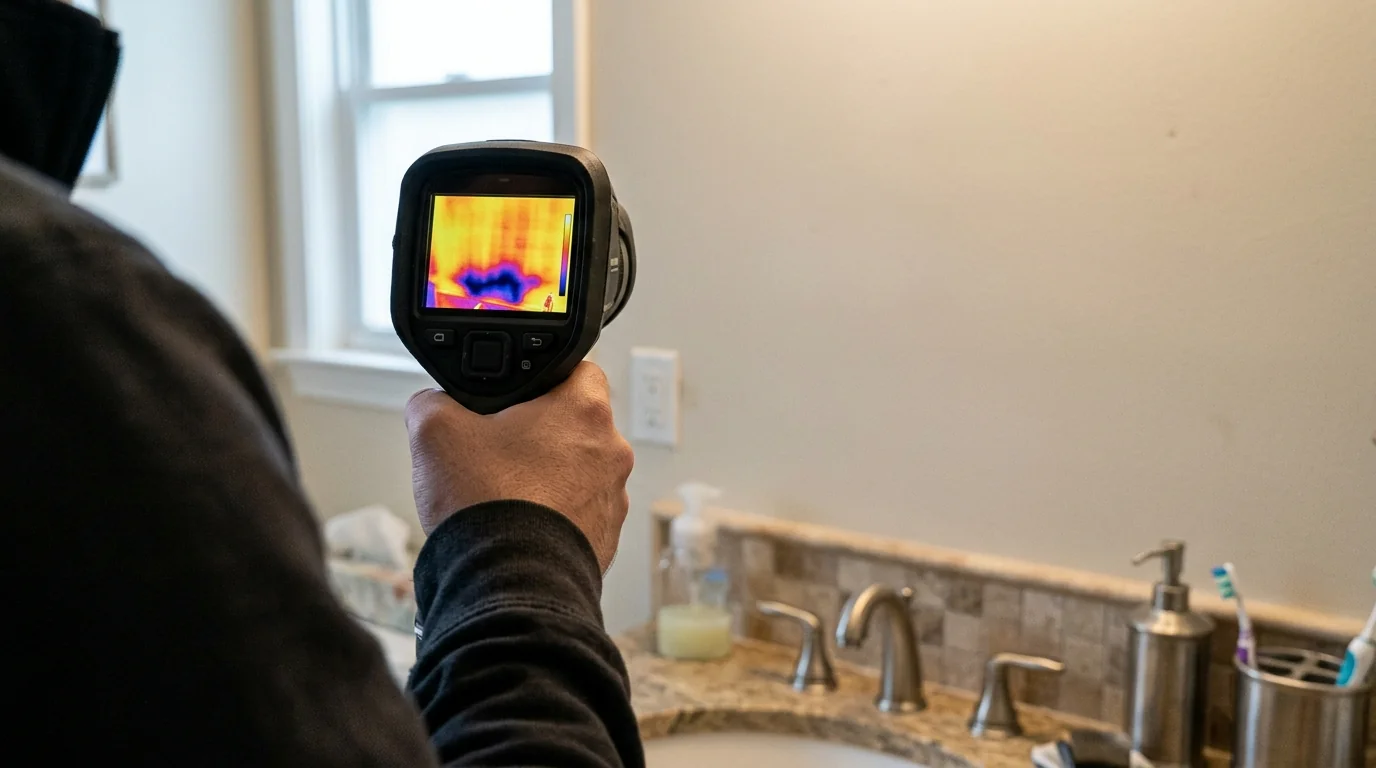
Moisture & Leak Detection
Moisture and leak detection is a non-invasive survey that finds where water is hiding in walls, ceilings and floors and how far it has spread.
How we handle itQuestions homeowners ask about crawl space encapsulation
Should the crawl space vents be closed or left open in summer?
If the crawl space is not sealed, leaving vents open in summer usually brings in more humid air than it removes. Simply closing them without a vapor barrier and some form of drying can trap ground moisture, though. Vents work best as part of a full plan: barrier down, vents sealed, rim joist insulated and a dehumidifier running. Closing vents halfway rarely helps much on its own.
Do I need a dehumidifier if the crawl space is fully sealed?
In most DC-area homes, yes. A sealed crawl space stops new moisture from coming in, but it still needs something to remove what is already there and what seeps through the walls. That can be a dedicated crawl space dehumidifier or a small duct of conditioned air from the HVAC system. We size the dehumidifier to the space and route its drain so you never empty a bucket.
Can the crawl space floor be sealed if there are plumbing lines and ducts down there?
Yes. The vapor barrier goes on the ground and up the walls, so pipes and ducts hanging from the joists stay accessible. We cut and tape the liner around piers and any lines that run down into the soil. If a plumber or HVAC technician needs to crawl in later, they can work on top of the barrier. Reinforced liners hold up well to being crawled over.
Will encapsulation help with pests in the crawl space?
It helps by removing what attracts many of them: damp wood, wet insulation and easy openings. Sealed vents and a gasketed access door close the usual entry points, and the liner makes droppings easy to spot. If mice or rats are already living there, they need to be dealt with first, and we can handle cleaning up the droppings and nesting before the barrier goes down.
How do I know the encapsulation is working?
Check the hygrometer we leave near the access door. In a sealed crawl space with a working dehumidifier, relative humidity should stay at or below the 50 to 60 percent range through summer. The musty smell upstairs usually fades within a few weeks. If readings climb, look for a new tear in the liner, a drain line that stopped flowing, or water coming in after storms.
Water in the house or a musty room you can't explain?
Call JEC Restoration any time. We answer 24/7 and talk through what you are seeing before anyone touches a wall.