Mold Remediation
Mold inspection and testing in Washington, DC
A musty smell, a stain you are not sure about, a home you are about to buy. We inspect for moisture first, because that is where mold lives, and we sample only when a lab result will change the decision.
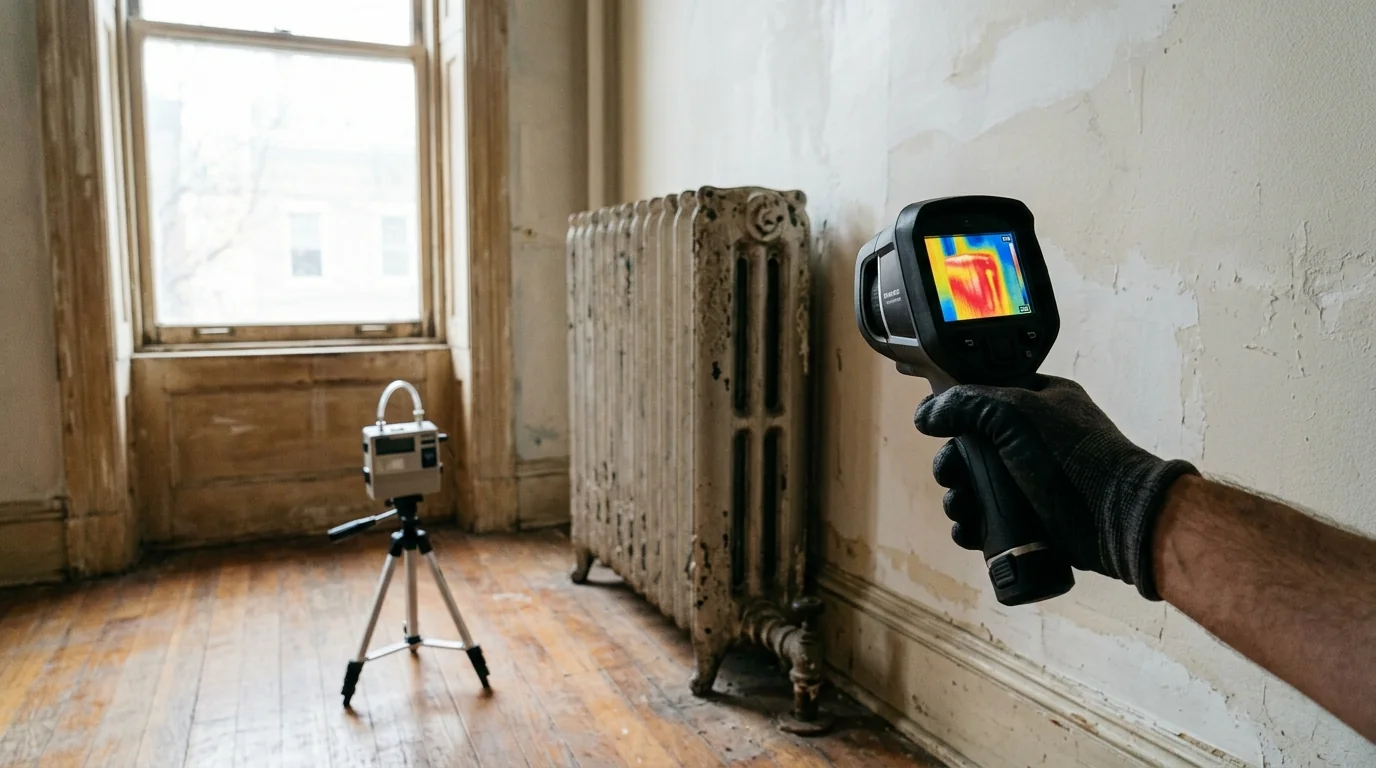
Drying, air and detection equipment on our jobs comes from names like
- Dri-Eaz
- Phoenix
- B-Air
- Abatement Technologies
- Protimeter
- Delmhorst
- FLIR
- Benefect
- Concrobium
- Omnitec
- Sapphire Scientific
- Tramex
A mold inspection is a room-by-room check for visible growth and the moisture that feeds it, using a moisture meter, a thermal camera and a hygrometer. Testing means collecting air or surface samples for a lab to identify and count. You need an inspection when you smell mustiness without seeing mold, after a leak, or before buying an older home; testing helps when the answer is not visible.
Why does a good mold inspection start with water, not spores?
Mold spores are present in nearly every indoor and outdoor air sample in the DC area, so the useful question is not whether mold exists in your house but whether it is growing somewhere. Growth needs moisture, and moisture leaves evidence you can measure. Our inspection begins with a moisture map: we take readings with a pin meter in wood and drywall and a pinless meter across larger surfaces, and log relative humidity in each room with a thermo-hygrometer.
A thermal camera speeds the search. It does not see mold or water directly. What it shows is surface temperature, and a damp patch of drywall usually reads a few degrees cooler than the dry wall around it because evaporation pulls heat away. When the camera shows a cool shape below a bathroom or along a baseboard, we confirm it with a meter before calling it wet. That two-step approach keeps us from cutting open a wall because of a cold draft or a missing piece of insulation, which can look the same on screen.
What happens during a mold inspection visit
A typical single-family home or rowhouse inspection takes two to three hours on site.
History and walk-through
We ask about past leaks, renovations, odors and who in the home has symptoms. Then we walk every level from the basement or crawl space to the attic hatch.
Moisture readings and thermal scan
Meters and a thermal camera check walls, ceilings, floors and framing near plumbing, exterior walls and roof lines. Readings are logged on a floor sketch.
Targeted look behind finishes
Where readings justify it and you agree, we use a borescope through a small hole, or pull a register or outlet cover to see into the cavity.
Samples where they answer a question
Air samples are taken indoors and outdoors with matched volumes, and tape lifts are taken from specific stains. Chain-of-custody forms go with every sample to the lab.
Written findings and plan
You receive photos, the moisture map, lab results when samples were taken, and a plain-language plan. If remediation is needed, the scope is spelled out.
When is air or surface sampling worth paying for?
Sampling is a tool for specific questions, and we tell you plainly when it will not help. If you can see growth on a wall, the EPA's position is that testing is usually unnecessary, since the plan does not depend on the species. Removal and drying are the same either way. Where a lab result does earn its cost:
- A persistent musty odor with no visible growth, where air samples can show whether indoor spore levels run higher than outdoors
- A suspicious stain or residue that might be mold, dirt, soot or efflorescence, where a tape-lift sample settles it
- A rental or real estate situation where you need written documentation of conditions
- After remediation, when clearance testing confirms the work area is clean before rebuild
- Someone in the home has asthma or allergies and the household wants a baseline before deciding on next steps
Situations where an inspection usually pays for itself
Most calls for inspection come from one of these six situations.
A smell you cannot place
Earthy, musty odor that is stronger in one room, after rain, or when the air conditioning first starts up.
An old leak that was never opened
A pipe or roof leak was repaired, the stain was painted over, and nobody checked what the wall cavity looked like.
Buying an older rowhouse
Basements, rear additions and top-floor ceilings under flat roofs are the places a standard home inspection may only glance at.
Condensation on windows and walls
Wet window sills in winter and damp exterior corners point to humidity levels that can support growth on cold surfaces.
Discolored caulk or ceiling spots
Small gray or brown spots that could be mold, dirt or soot, where you want an answer before spending money.
Before and after remediation
A baseline helps define the scope, and a post-work check shows the area is clean before walls are closed.
How to read a mold lab report without a microbiology degree
Air samples are collected with a pump that draws a set volume of air through a spore trap cassette. The lab counts and identifies spores under a microscope and reports them per cubic meter of air. On their own, those numbers mean little. What matters is the comparison with an outdoor sample taken the same day. If the indoor count of a mold type is much higher than outdoors, or a type shows up indoors that barely appears outside, something is likely growing inside.
Surface samples, taken with clear tape or a swab, answer a simpler question: is this mold, and roughly what kind? Reports usually name the genus, such as Cladosporium, Penicillium/Aspergillus or Stachybotrys, and describe how heavy the growth looked. No federal standard sets a safe indoor spore count, so we interpret results against the outdoor control and the moisture map rather than a single magic number. We send samples to independent third-party labs and walk you through the report line by line.
How much does a mold inspection cost in Washington, DC?
The visit itself is priced by the size of the home, and lab work is added per sample.
| Condo or apartment inspection with moisture map | $285-$465 |
|---|---|
| Rowhouse or single-family inspection, all levels | $395-$690 |
| Air sample set: indoor rooms plus outdoor control | $145-$215 per sample |
| Tape-lift or swab surface sample | $85-$135 per sample |
These ranges are typical DC-area figures rather than quotes, and we confirm the price after an on-site assessment. Compare ranges across all 40 services.
What moves the price
- Square footage and number of levels
- Number of air and surface samples
- Attic or crawl space access
- Lab turnaround time requested
- Written report detail for a sale or lease
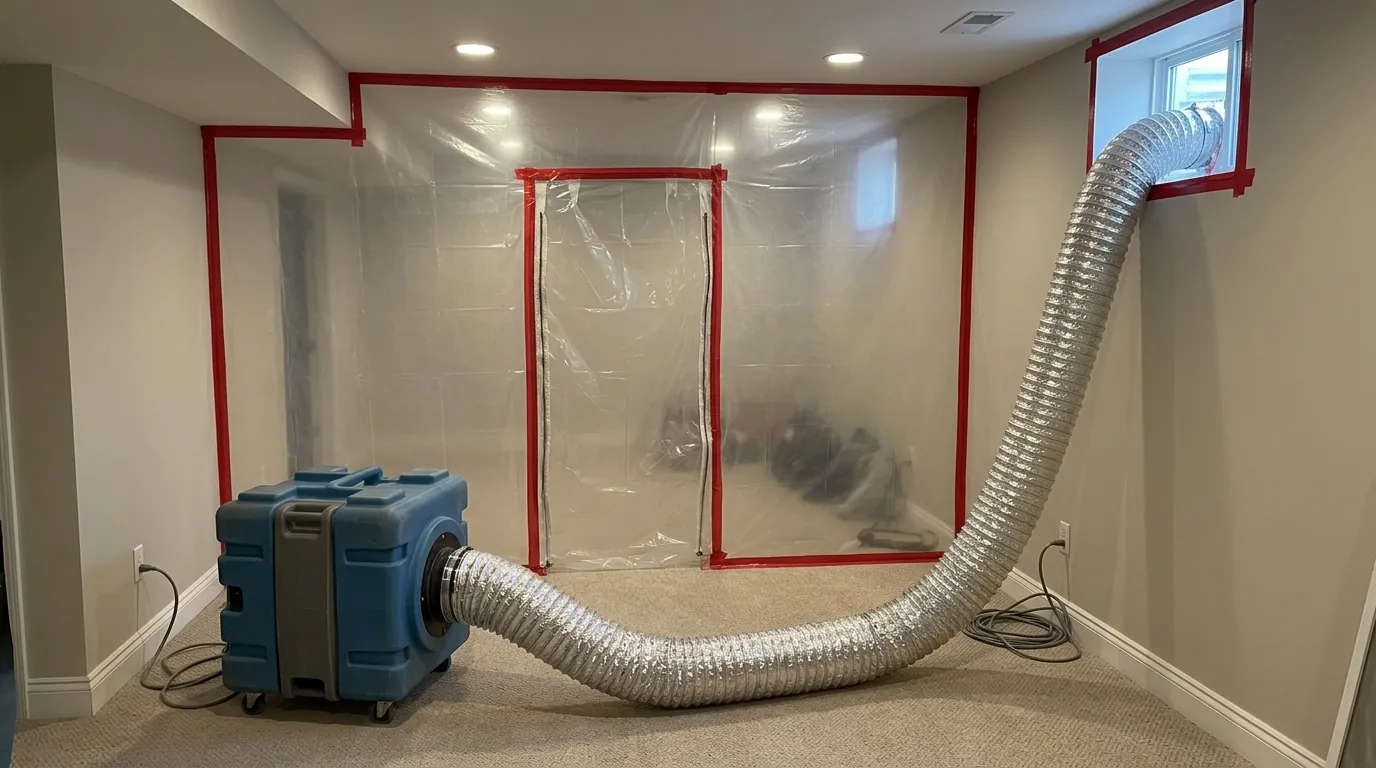
Sealed containment with HEPA filtration on a basement mold job
What we look for first in DC rowhouses and upper Northwest homes
Housing type decides where we point the meters. In a Capitol Hill or Bloomingdale rowhouse, the first stops are the English basement's front wall below the stoop, the rear wall near the areaway drain, and the top-floor ceiling under the flat roof and parapet. Old plaster on lath can hide damp lath strips that read wet only at certain points, so we take more readings there than on modern drywall. Steam radiator valves and old cast-iron stacks get a close look too.
In the detached colonials and Tudors of Chevy Chase DC, Tenleytown and the Palisades, the pattern shifts. Attics with bathroom fans that never reached the roof, window wells along the basement, and finished basements with carpet laid straight on slab are the common finds. Condo owners in Columbia Heights or Navy Yard usually call about a ceiling stain from the unit above, and we inspect to show exactly how far moisture traveled, which helps when two owners and a building manager are sorting out the repair. Our guide to English basement leaks covers the masonry side in detail.
Where we do this work: Washington, DC and nearby Maryland and Virginia, including:
Related work we often do on the same job
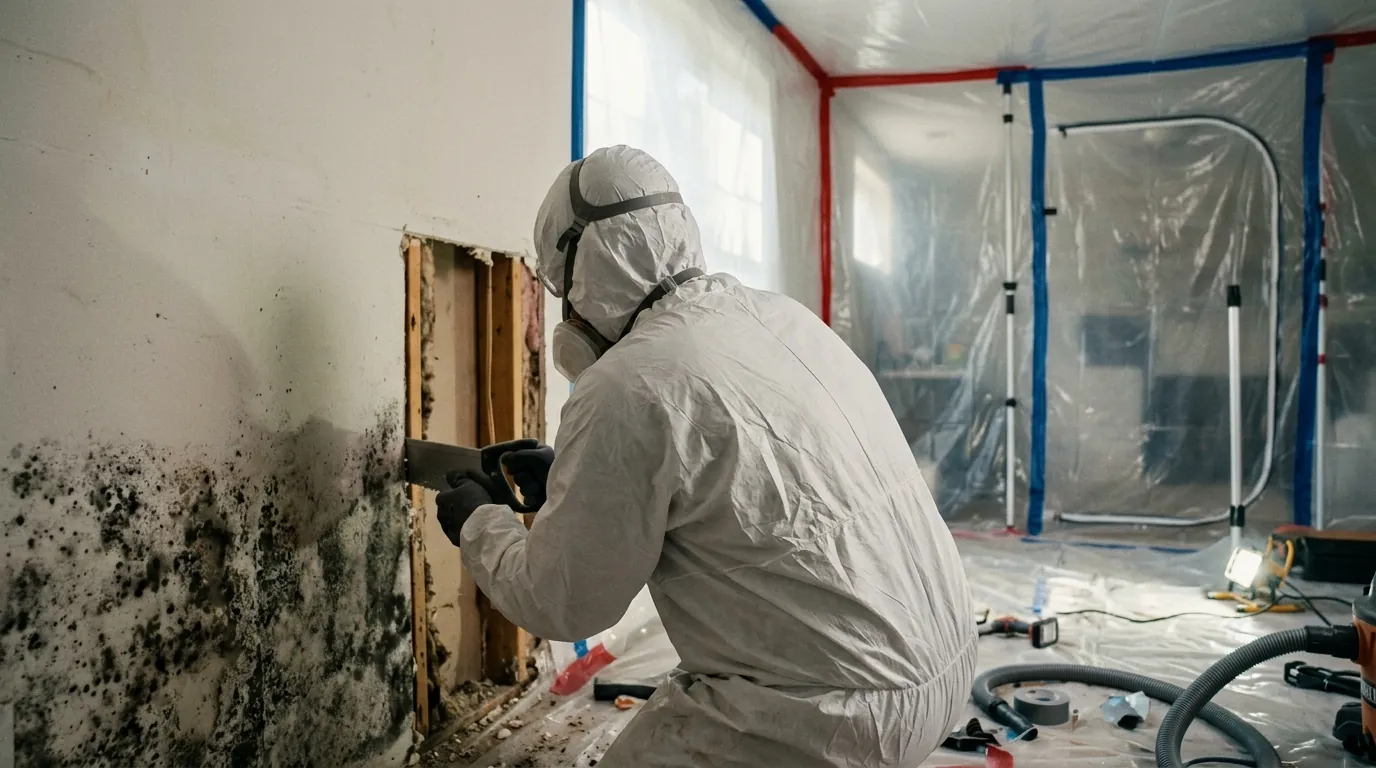
Mold Remediation
Mold remediation is the controlled removal of mold growth from a building.
How we handle it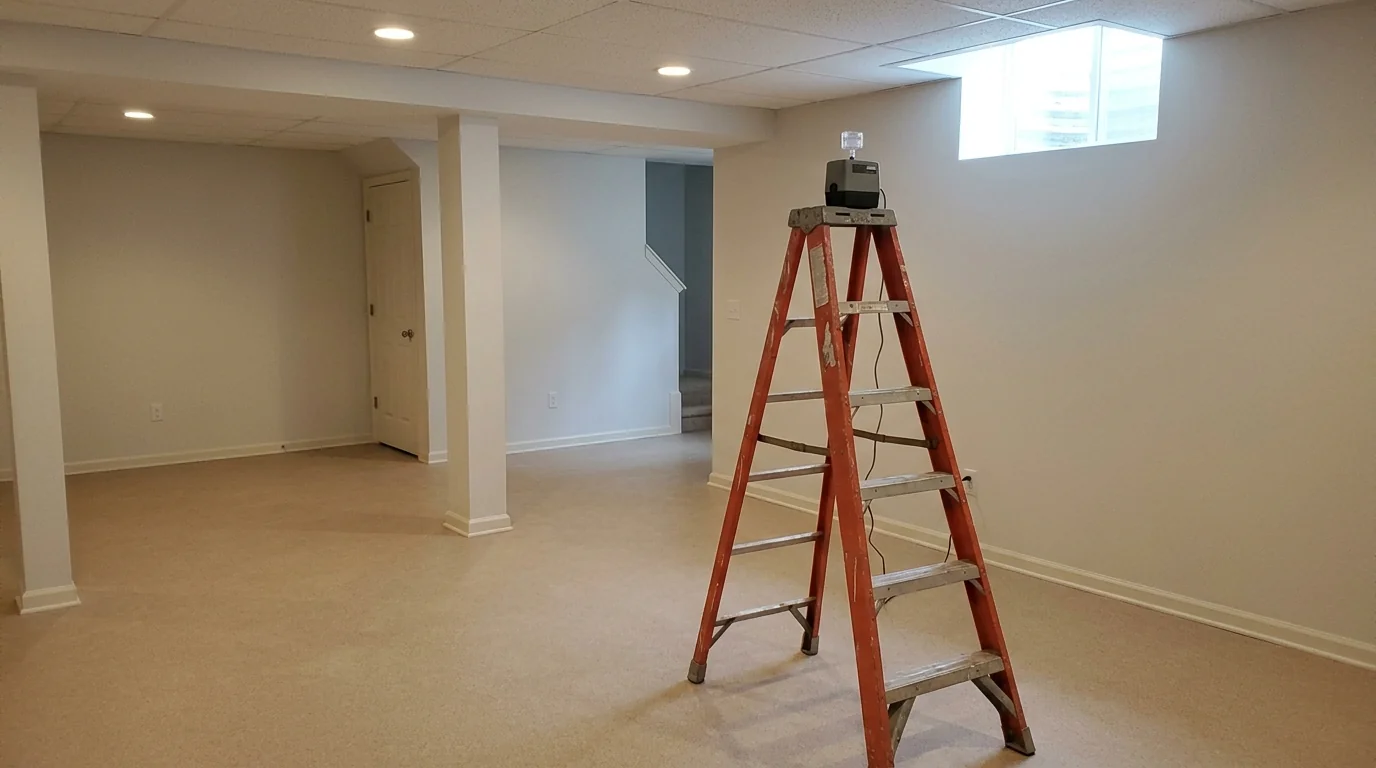
Mold Clearance Testing
Mold clearance testing, also called post-remediation verification, checks a work area after mold removal and before the walls are closed.
How we handle it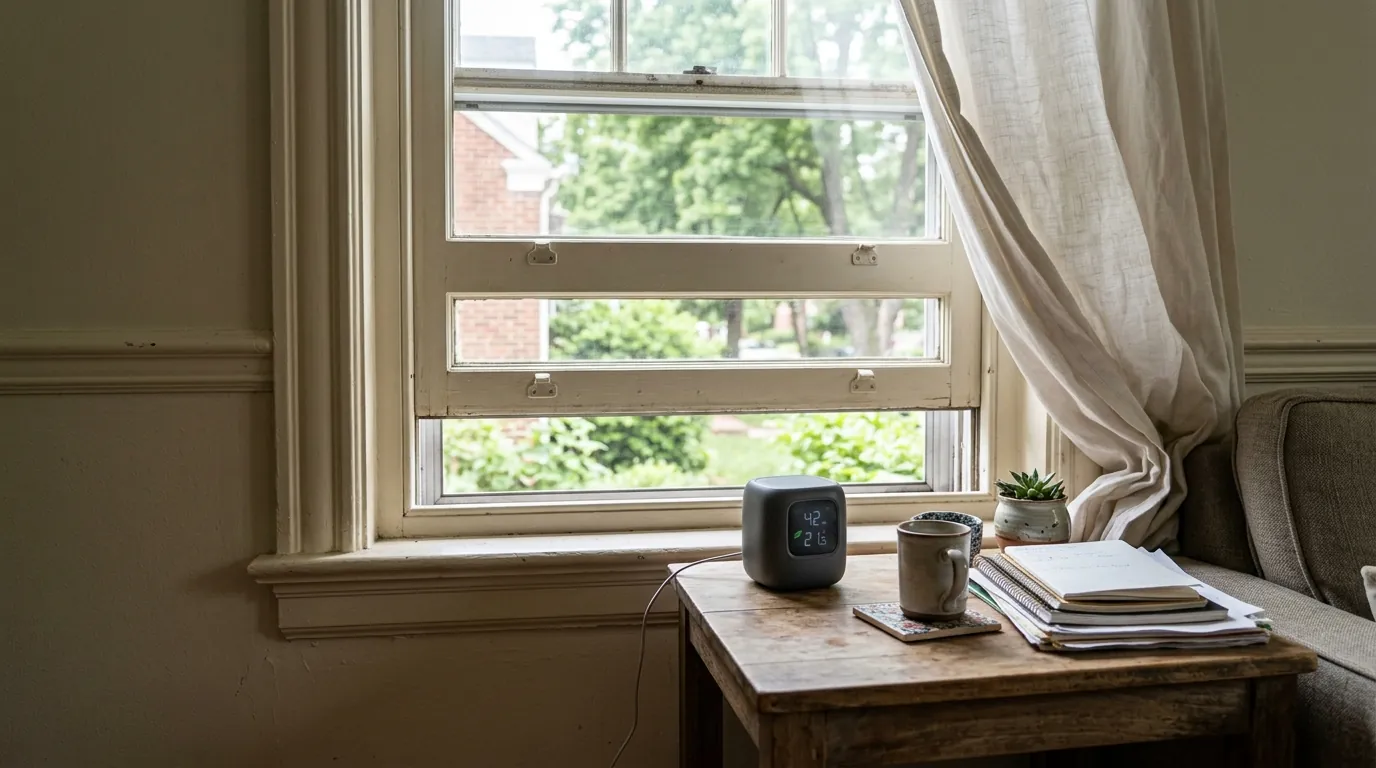
Indoor Air Quality Testing
Indoor air quality testing measures conditions in your home's air: relative humidity, temperature, fine particulates, volatile organic compounds and carbon dioxide, plus mold spores when a moisture problem is suspected.
How we handle it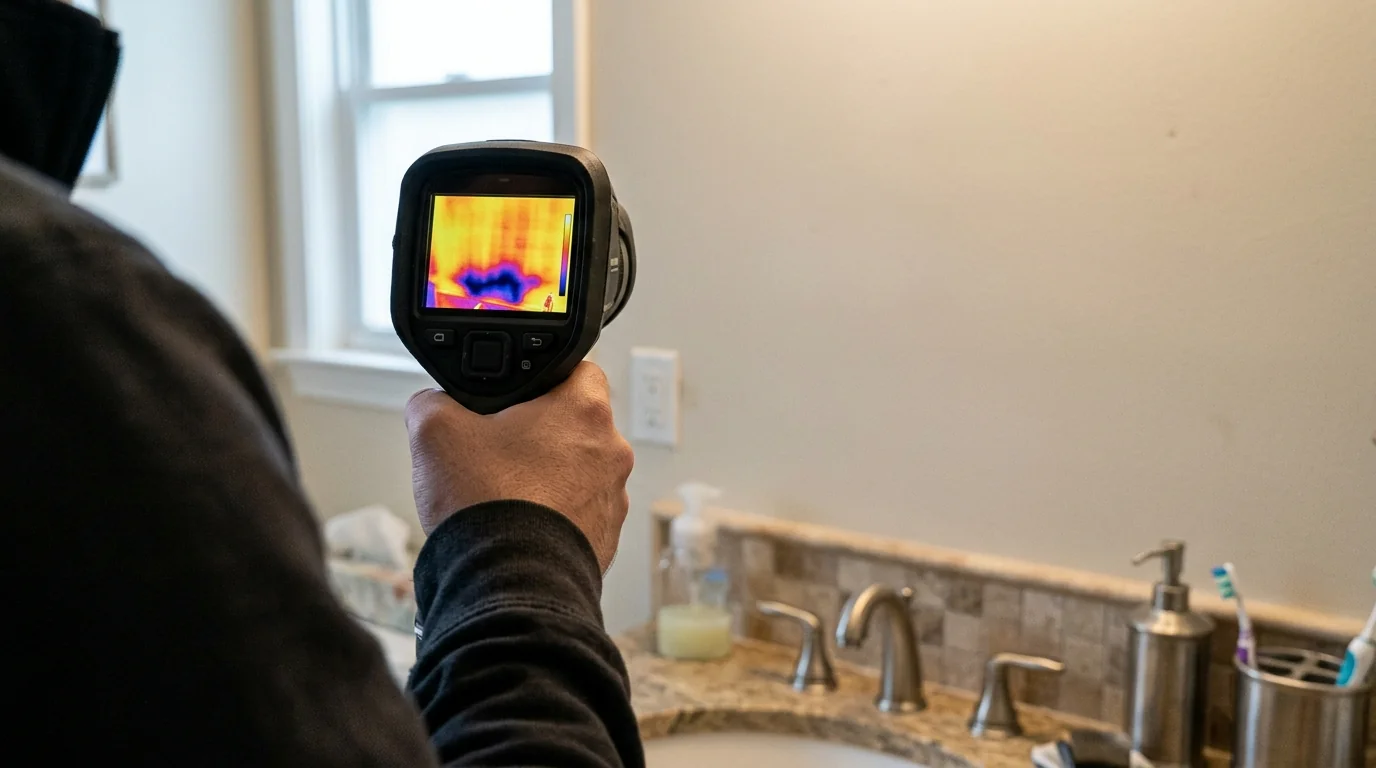
Moisture & Leak Detection
Moisture and leak detection is a non-invasive survey that finds where water is hiding in walls, ceilings and floors and how far it has spread.
How we handle itQuestions homeowners ask about mold inspection & testing
Are home mold test kits from the hardware store reliable?
Settle-plate kits that sit open on a counter will grow mold almost every time, because spores are in all indoor air. They give no volume of air sampled and no outdoor comparison, so a positive plate does not tell you whether anything is growing in the house. A moisture map and, when needed, a matched indoor and outdoor air sample give a far more useful answer.
Can you find mold inside a wall without opening it?
Often we can find the moisture that makes mold likely. High meter readings and a cool area on the thermal camera suggest a wet cavity, and a borescope through a hole the size of a pencil lets us look inside. A wall cavity air sample, drawn through a small port, can also show whether spores are concentrated behind the surface. Confirming growth fully sometimes still requires opening a section.
Should I test for mold before buying a house in DC?
If the house is an older rowhouse with a finished basement, has a flat roof, or shows signs of past water such as fresh paint on a single ceiling patch, an inspection focused on moisture is worth scheduling within your inspection window. Sampling is optional and most useful when the seller has disclosed past leaks or the basement smells musty.
Which mold types on a lab report should worry me?
No single genus on a report is a verdict. Stachybotrys and Chaetomium are worth attention because they indicate long-term wetting of materials like drywall paper. Penicillium and Aspergillus are common indoors and outdoors, so the comparison with the outdoor sample matters. Cladosporium often comes in from outside. We read the whole report against the moisture findings before recommending anything.
How long do mold lab results take?
Standard turnaround for spore trap air samples and tape lifts is usually two to three business days after the lab receives them. Faster processing is available at a higher lab fee when a closing date or a lease deadline is close. Culture-based tests, which grow the sample to identify species, take a week or longer and are rarely needed for a home.
Water in the house or a musty room you can't explain?
Call JEC Restoration any time. We answer 24/7 and talk through what you are seeing before anyone touches a wall.