Fire & Smoke
Kitchen fire cleanup in Washington, DC
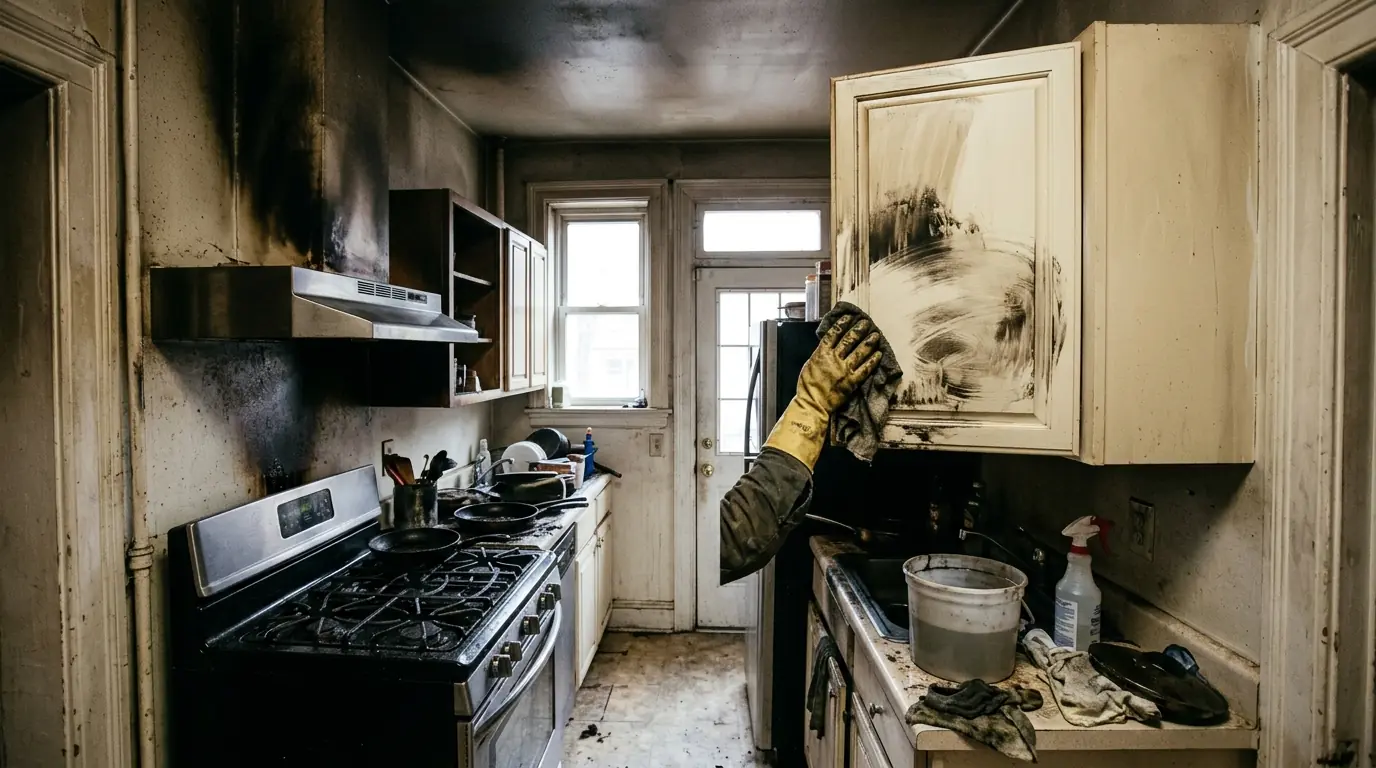
A grease flare-up or a pot left on a burner can be out in a minute and still coat the whole kitchen in sticky residue and smell. We degrease cabinets, hoods and walls and treat the odor at its source.
Drying, air and detection equipment on our jobs comes from names like
- Dri-Eaz
- Phoenix
- B-Air
- Abatement Technologies
- Protimeter
- Delmhorst
- FLIR
- Benefect
- Concrobium
- Omnitec
- Sapphire Scientific
- Tramex
Kitchen fire cleanup removes the grease and protein residue a cooking fire leaves on cabinets, range hoods, walls, ceilings and appliances, then deals with the odor that settles into wood and paint. You need it after any stovetop or oven fire that left a film, yellowing or a smell that hasn't faded in a few days, even if the flames never left the pan. Call (202) 989-3053.
Why does a kitchen look clean after a fire but still smell terrible?
A burned pot of beans, rice or meat produces protein residue, a thin film that's often almost invisible. It doesn't leave the black soot people expect from a fire. Instead it lays a slightly tacky, yellowish coat on every surface the smoke touched, and it carries one of the strongest odors of any fire residue. People wipe the counters, open the windows and assume the job is done, then find the smell still there a week later.
Run a finger across the top of a cabinet door or the inside of a window. If it feels slightly sticky or squeaks, protein residue is there. It also tends to show up as yellow streaks when a damp cloth touches white paint. Because the film is so thin, it soaks quickly into flat latex paint, unsealed cabinet boxes and grout, and it keeps releasing odor whenever the kitchen warms up. Cleaning has to reach all of it, including the surfaces you don't see. Our knowledge base explains why kitchen smoke odor hangs on in more detail.
What signs mean a kitchen fire left more than you can wipe off?
The damage from a cooking fire is easy to underestimate because so much of it is invisible.
Tacky cabinet doors
A sticky feel on cabinet faces and tops means protein or grease residue settled there and is holding odor.
Yellow streaks when you wipe
White paint that turns yellow under a damp cloth shows residue that has started to soak into the finish.
Smell in other rooms
If bedrooms or a hallway closet smell like burned food days later, smoke spread beyond the kitchen.
Dark soot above the stove
A black plume on the backsplash, hood and ceiling marks a hot, oily fire that needs degreasing, not just wiping.
Dull or discolored grout
Backsplash and floor grout that darkened or yellowed has absorbed residue and may need deep cleaning or sealing.
Extinguisher powder everywhere
Dry chemical powder is corrosive to metal and electronics and spreads far beyond the stove, so it needs careful removal.
How do we clean a kitchen after a cooking fire?
Kitchen jobs follow a set order so grease and residue from one surface don't end up on another.
Assess and empty
We check how far smoke spread and test residue types. Cabinets are emptied, and dishes and cookware are moved to a clean area or boxed for cleaning.
Remove loose residue
Soot and dry chemical powder come off with HEPA vacuums before any liquid touches the surfaces. This keeps powder and soot from turning into paste.
Degrease from top down
Ceilings, hood, upper cabinets, walls, counters and floors are cleaned in that order with degreasers or enzyme cleaners matched to the residue.
Clean hidden surfaces
Cabinet interiors, behind appliances, the hood duct and light fixtures are cleaned. Grout is scrubbed and contents are washed or set aside for replacement.
Treat odor and seal
Remaining odor is treated with thermal fogging or hydroxyl generators. Porous surfaces that still hold stain or smell are sealed before any repainting.
How is a grease fire different from a burned-pot fire?
Grease fires burn hotter and dirtier. Oil that ignites in a pan throws up thick, oily black smoke that coats the range hood, the cabinets directly above the stove and the ceiling in a heavy layer. If someone tried to put it out with water, burning oil may have splattered across the counters and floor. The residue is a mix of soot and grease that smears badly, so dry cleaning methods alone won't touch it.
Our technicians start grease jobs by lifting loose soot with HEPA vacuums and then move to alkaline degreasers that break down the oily layer, working in small sections and rinsing as they go. Protein fires need a different approach: enzyme and specialty cleaners that break down the food film, followed by careful odor treatment. Many kitchen fires leave both. A pan of oil that caught while chicken was frying gives you grease near the stove and protein film across the rest of the room, so we test as we move away from the burner and adjust the cleaner.
Can smoke-damaged cabinets be saved, or do they need replacing?
Most can be cleaned, and the deciding factors are the finish and the box material. Factory-finished cabinets with a hard lacquer or catalyzed coating clean up well inside and out. Painted cabinets often clean but may need light sanding, a shellac-based sealer and repainting if residue soaked in. Unfinished particleboard or MDF cabinet boxes absorb odor and grease, and the lower edges near a fire can swell from extinguisher residue or water, so those sometimes need replacing even when the doors look fine.
We empty every cabinet, since odor settles on the inside faces, shelves and the stored dishes. Hinges and drawer slides get degreased, and the space behind the cabinets, where the box meets the wall, is checked because smoke travels there too. Cabinets directly above a range that took real heat may have delaminated finishes or scorched wood, and those are the ones most likely to come out. We show you what we found before recommending any cabinet replacement.
What happens to the range hood, ductwork and appliances?
The range hood takes the worst of a kitchen fire. Grease filters are usually replaced, and the hood interior, fan blades and motor housing are degreased. If the hood vents outside, the duct run carries grease and soot all the way to the wall or roof cap, and a grease-lined duct can catch fire on its own later, so we clean it or recommend replacement depending on how much buildup is inside. Recirculating hoods common in DC condos need new charcoal filters.
Appliances near the fire need checking. Plastic knobs and trim that softened or discolored often need replacing. The refrigerator's exterior, door gaskets and the coils underneath collect residue, and food that was out during the fire or in an open container should be thrown away. Microwaves above the range frequently take enough heat to damage internal components. We clean what can be cleaned and note anything that should be looked at by an appliance technician before you use it.
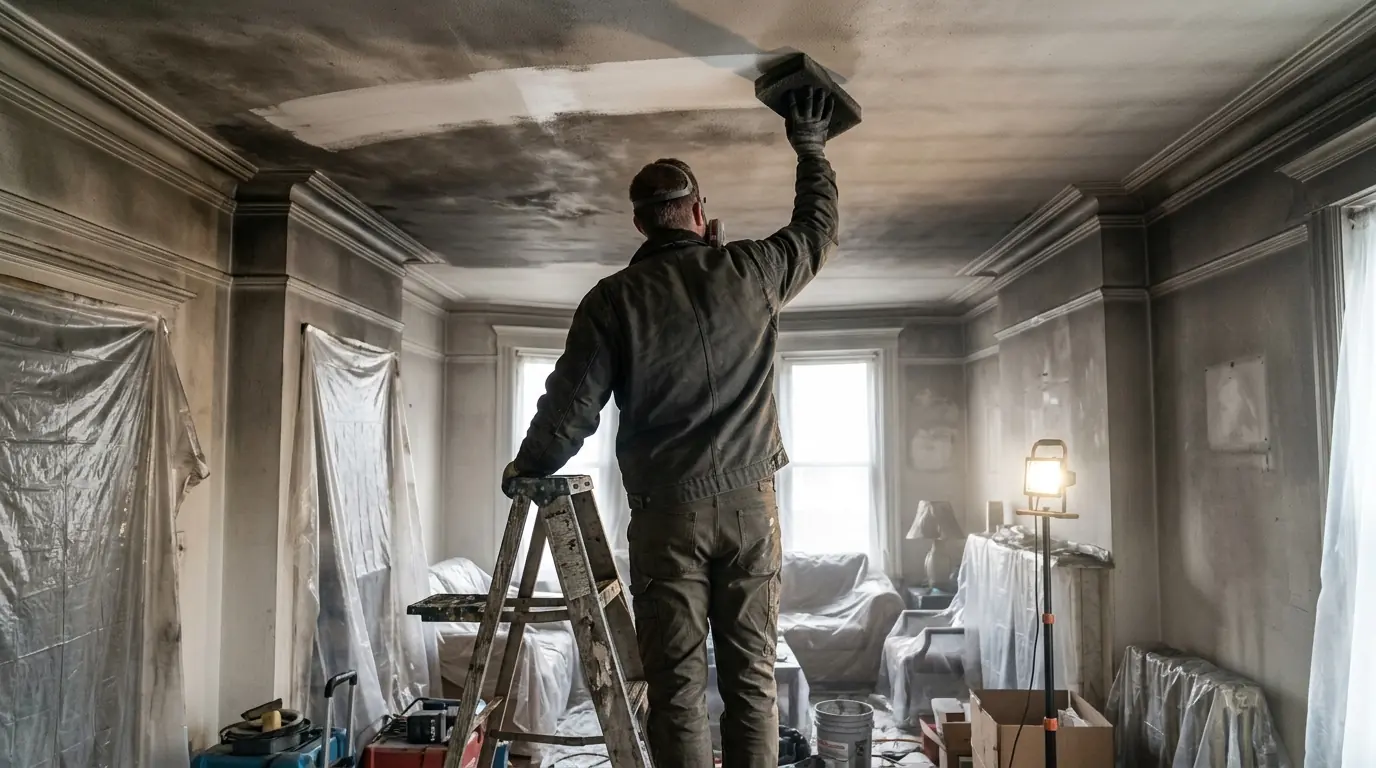
Dry-sponge soot cleanup on a rowhouse ceiling
What makes kitchen fires in DC rowhouses and condos harder to clean?
Many DC rowhouse kitchens sit at the back of the house, often in a rear addition with a low ceiling and one window, so smoke has nowhere to go but up the stairwell and through the house. In English basement apartments, kitchens are small, tucked under the main floor and close to bedrooms, which means a stovetop fire can push residue into every room of the unit and into the floor framing above. Condo kitchens in newer buildings around Navy Yard, NoMa and Columbia Heights usually have open layouts and recirculating hoods, so smoke spreads across the living area and the odor reaches hallways, and the building may require us to work around fire alarm resets and elevator bookings. In older apartment buildings along Connecticut and Wisconsin Avenues, kitchen exhaust shafts can carry odor to other units. Detached houses in the suburbs have more space, but the forced-air system tends to carry the smell everywhere if it was running at the time.
Where we do this work: Washington, DC and nearby Maryland and Virginia, including:
What does kitchen fire cleanup typically cost?
Most kitchen fire jobs are cleaning jobs, not demolition, so cost depends mostly on how far the residue spread and whether cabinets can be saved.
| Stovetop flare-up, kitchen only | $720-$2,180 |
|---|---|
| Burned-pot protein residue, kitchen plus adjacent rooms | $1,640-$4,370 |
| Grease fire with hood, cabinets and ceiling | $3,280-$8,960 |
| Fire with cabinet removal and whole-unit odor treatment | $7,450-$19,300 |
These ranges are typical DC-area figures and not quotes; we price after we see the kitchen in person. Compare ranges across all 40 services.
What moves the price
- Grease or protein residue
- Rooms smoke reached
- Cabinet finish and material
- Hood duct cleaning
- Extinguisher powder cleanup
Related work we often do on the same job
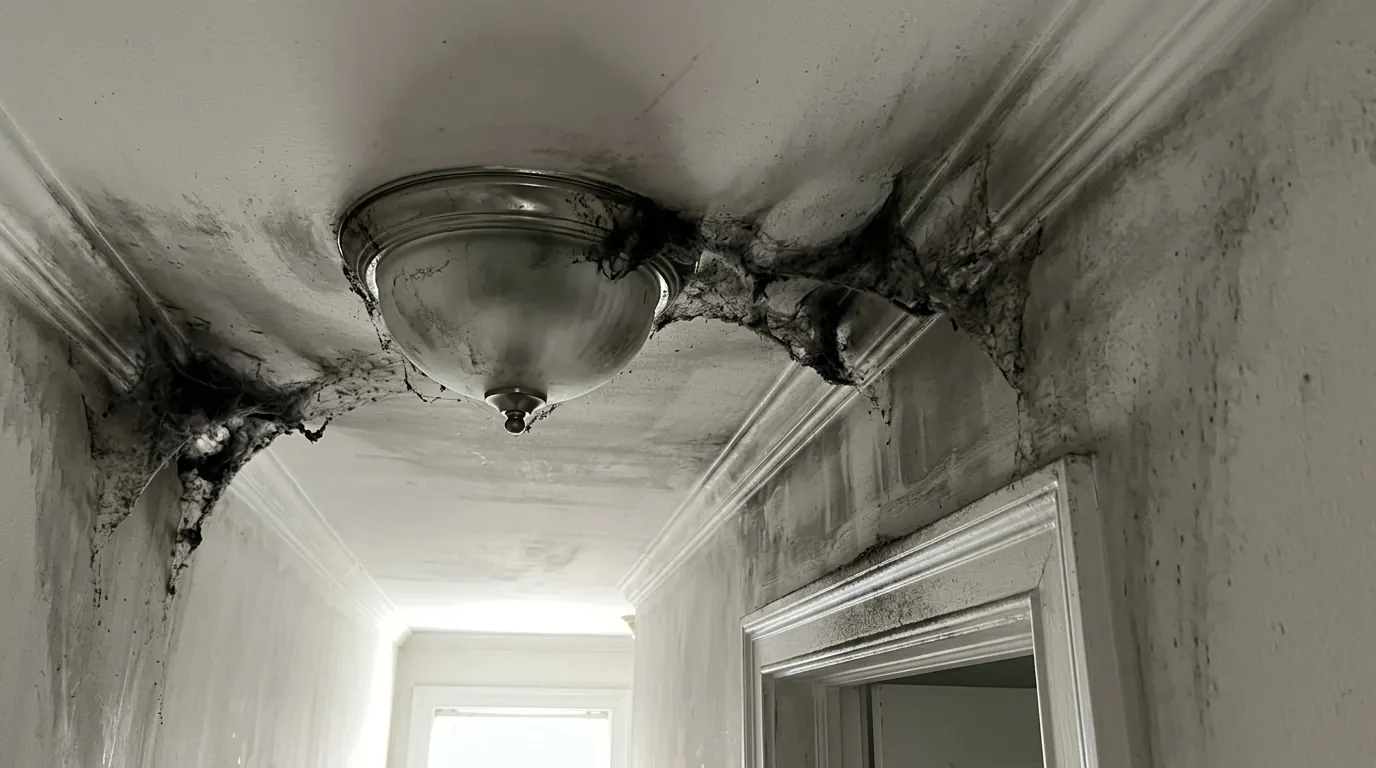
Smoke Damage Cleanup
Smoke damage cleanup removes the residue a fire leaves on walls, ceilings, ducts and belongings, then neutralizes the odor tied to it.
How we handle it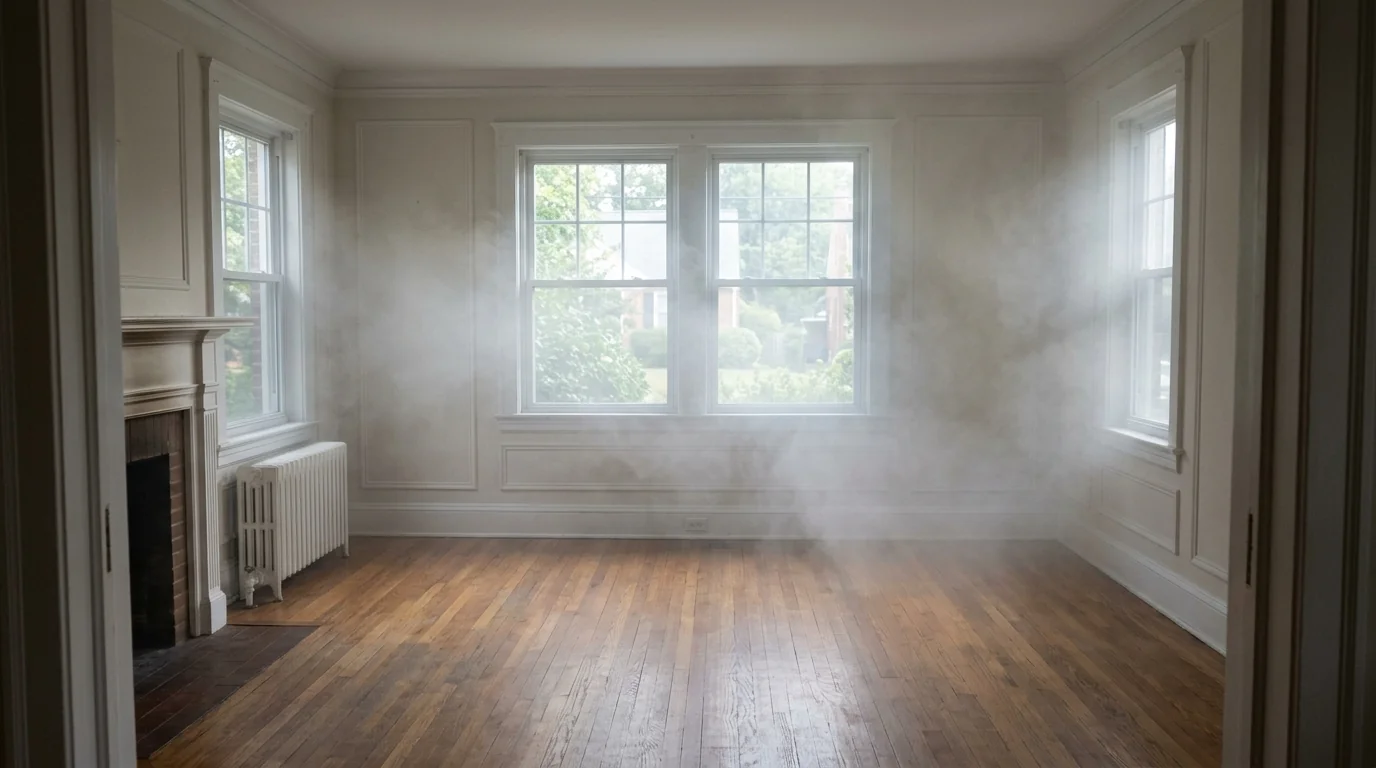
Odor Removal
Odor removal is the process of finding what's causing a persistent smell in a home, removing or cleaning that source, and then treating the remaining odor with methods like thermal fogging, hydroxyl generators or, in empty spaces, ozone.
How we handle it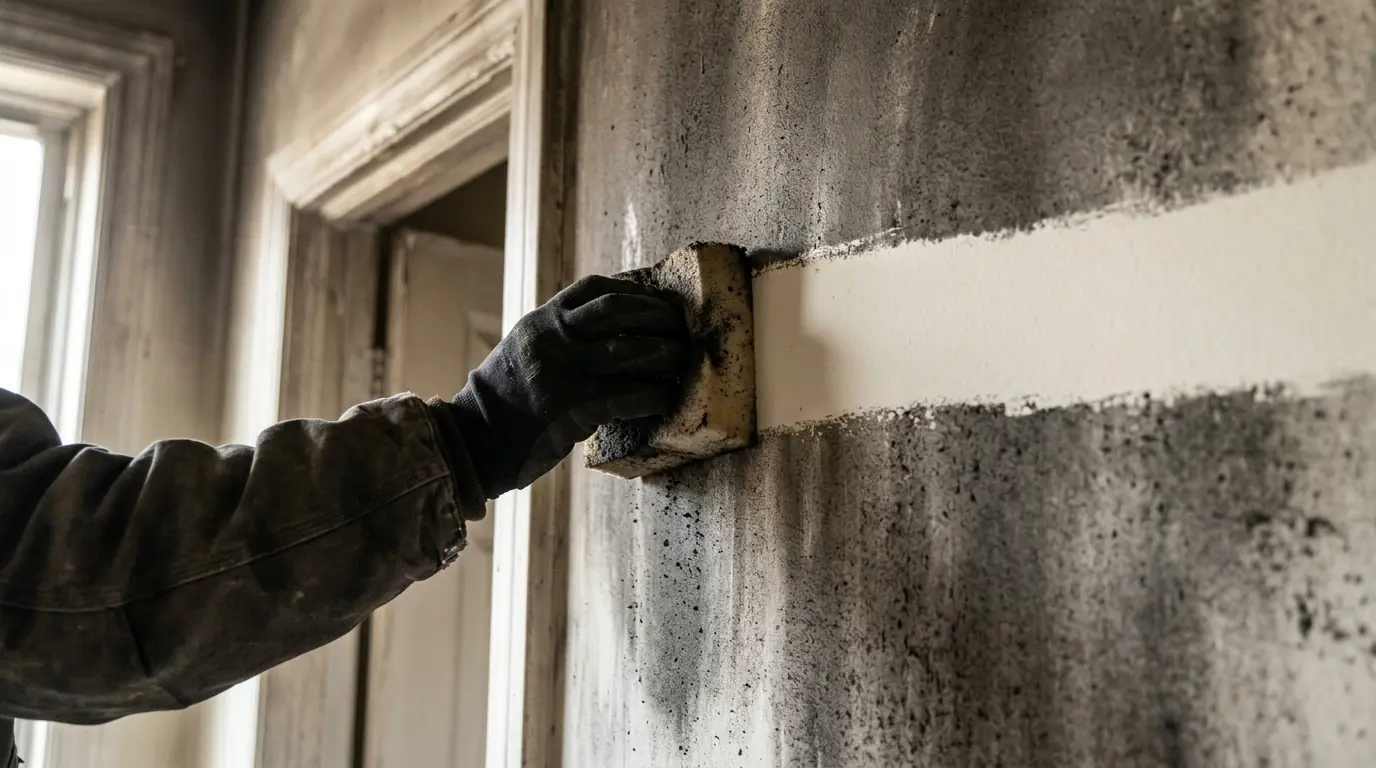
Soot Removal
Soot removal is the careful cleaning of the black or gray carbon film a fire, candle, furnace puffback or fireplace leaves on interior surfaces.
How we handle it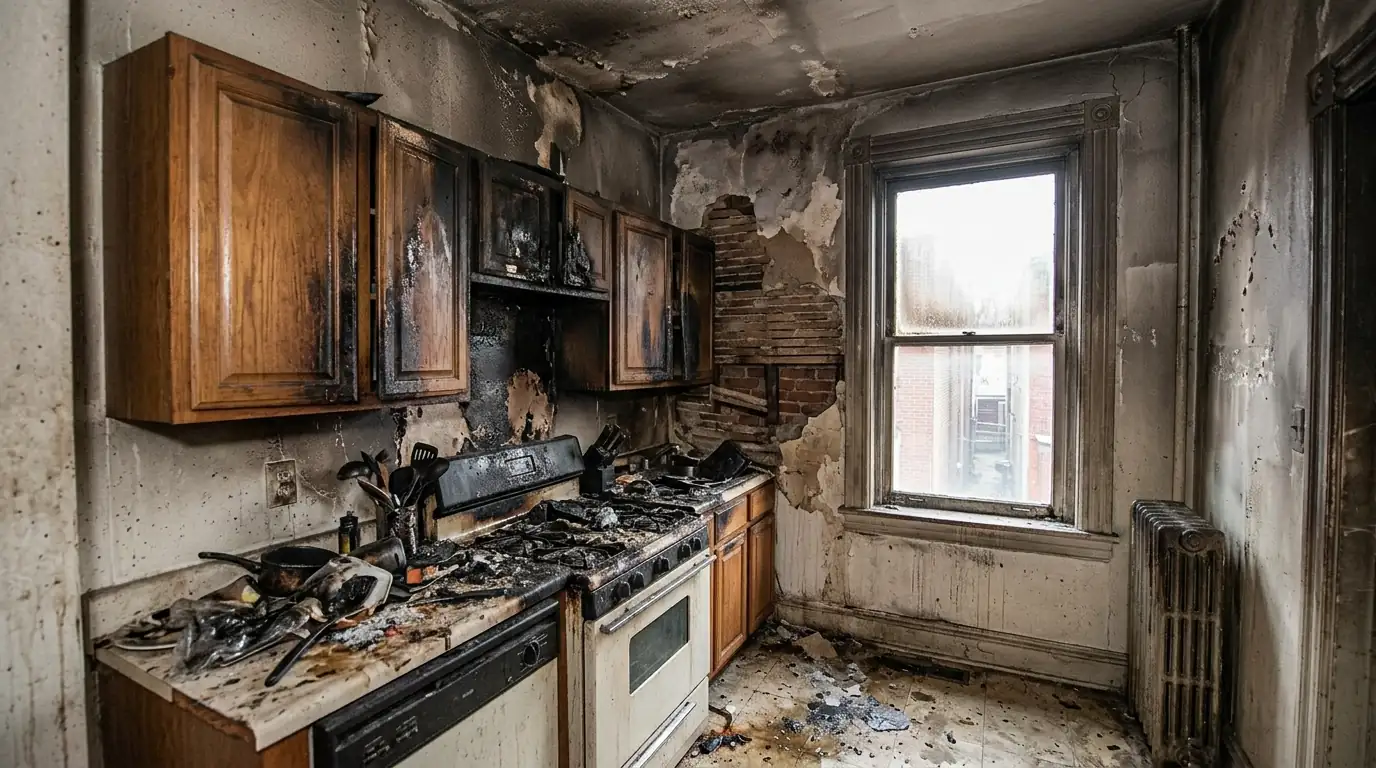
Fire Damage Restoration
Fire damage restoration is the full recovery of a home after a fire: boarding and tarping openings, removing firefighting water, cleaning soot and smoke residue, treating odor, handling contents and preparing for repairs.
How we handle itQuestions homeowners ask about kitchen fire cleanup
How do I clean up fire extinguisher powder in my kitchen?
Dry chemical extinguisher powder is mildly corrosive and turns into a paste when it gets wet. Vacuum it first, ideally with a HEPA vacuum, before wiping anything. Then clean surfaces with warm water and a mild detergent. Electronics and appliances that got a heavy dusting should be checked before use. If the powder spread across several rooms, we can handle it along with the smoke residue.
Is it safe to use my stove after a small kitchen fire?
Not until it's been checked. Heat can damage burner controls, wiring, gas connections and oven insulation. Plastic knobs may have softened, and grease in the hood or duct can reignite. Have a qualified appliance or gas technician look at the range before using it, and replace hood filters. We clean the surfaces and note any heat damage we see during cleanup.
Should I throw out food after a kitchen fire?
Throw out any food that was open, unwrapped or stored in permeable packaging like cardboard, paper or plastic bags, and anything in a refrigerator that lost power for long. Smoke and fumes can penetrate these. Canned goods with no heat damage or swelling can be kept after their outsides are washed. When in doubt, discard it, since smoke residue can carry irritants.
Why does my kitchen still smell after I painted over the stains?
Standard latex paint doesn't block smoke odor or stains. The residue underneath keeps releasing smell, especially on warm or humid days, and stains often bleed back through within weeks. The surface needs to be cleaned, then sealed with a stain and odor blocking primer, usually shellac-based, before any finish paint. Our residue removal work handles the cleaning stage.
Can protein residue damage my cabinets and counters?
Yes, over time. Protein residue is acidic and keeps discoloring paint, varnish and plastic laminate, and it sets deeper into porous finishes the longer it sits. Stone counters usually clean well, but unsealed grout and painted cabinets can stain permanently. Cleaning within the first few days gives you a much better chance of saving finishes without sanding or refinishing.
Water in the house or a musty room you can't explain?
Call JEC Restoration any time. We answer 24/7 and talk through what you are seeing before anyone touches a wall.