Washington, DC neighborhood
Mold removal & water damage in Spring Valley, Washington, DC 20016
Spring Valley's brick and stone Colonials age slowly, yet their slate roofs, copper flashing, plaster ceilings and paneled basements still let water in. We dry those rooms, clean soot after a boiler puffback and remove the mold that follows.
For water damage, mold, fire and smoke, or sewage in Spring Valley, from Massachusetts Avenue and the Spring Valley Shopping Center to the curving streets beside American University, call JEC Restoration at (202) 989-3053, a line answered 24/7. Our Washington, DC office is on 50th Street NW, in this same corner of upper Northwest.
Where do slate roofs and plaster ceilings give way in a Miller-built Colonial?
The W.C. & A.N. Miller company built much of Spring Valley from the late 1920s into the 1940s: Colonial Revival and Georgian-style homes in brick and stone, set back on deep lots along curving streets. Many still have slate roofs, copper valleys, tall brick chimneys and plaster over wood or gypsum lath, with oak floors throughout. Their weak points sit high up and out of sight, so a leak can run for weeks before anyone sees it.
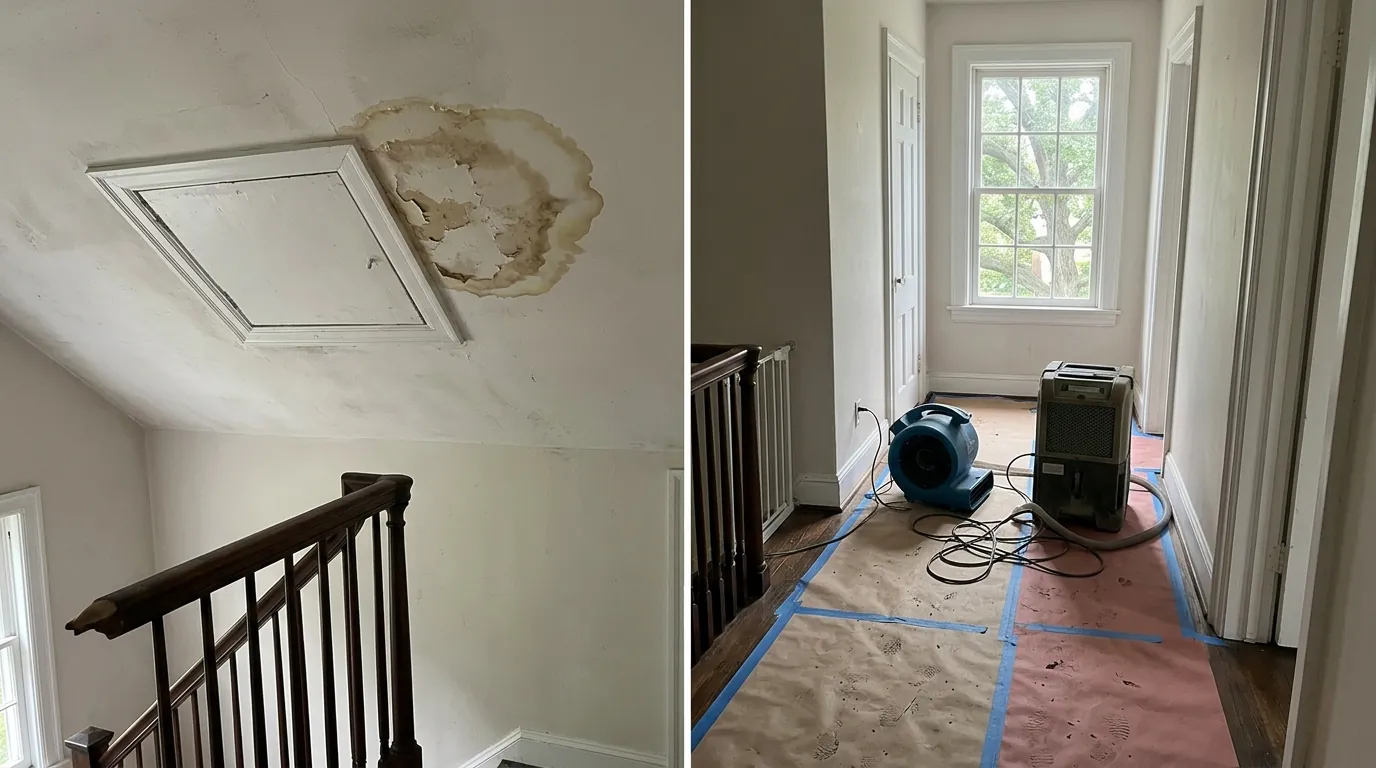
Slate can outlast several owners, but the copper flashing at chimneys and dormers, the nails holding each slate and the soldered seams of older gutters wear out sooner. A slate cracked by a falling branch, or by a foot during gutter cleaning, lets water onto the sheathing, where it follows a rafter before dripping. By the time a brown ring shows on a bedroom ceiling, the attic insulation and the top of the wall below are often wet. We trace that path with a thermal camera and a pin meter and open only what the readings call for. Our page on stained and leaking ceilings explains how we decide what plaster can stay.
Some houses still run an oil-fired boiler, and a misfiring burner can blow oily soot through the basement and up the stairs. That film smears when wiped, so it comes off with dry chemical sponges and HEPA vacuuming before any wet cleaning, as our soot cleanup page describes.
Most-called services in Spring Valley
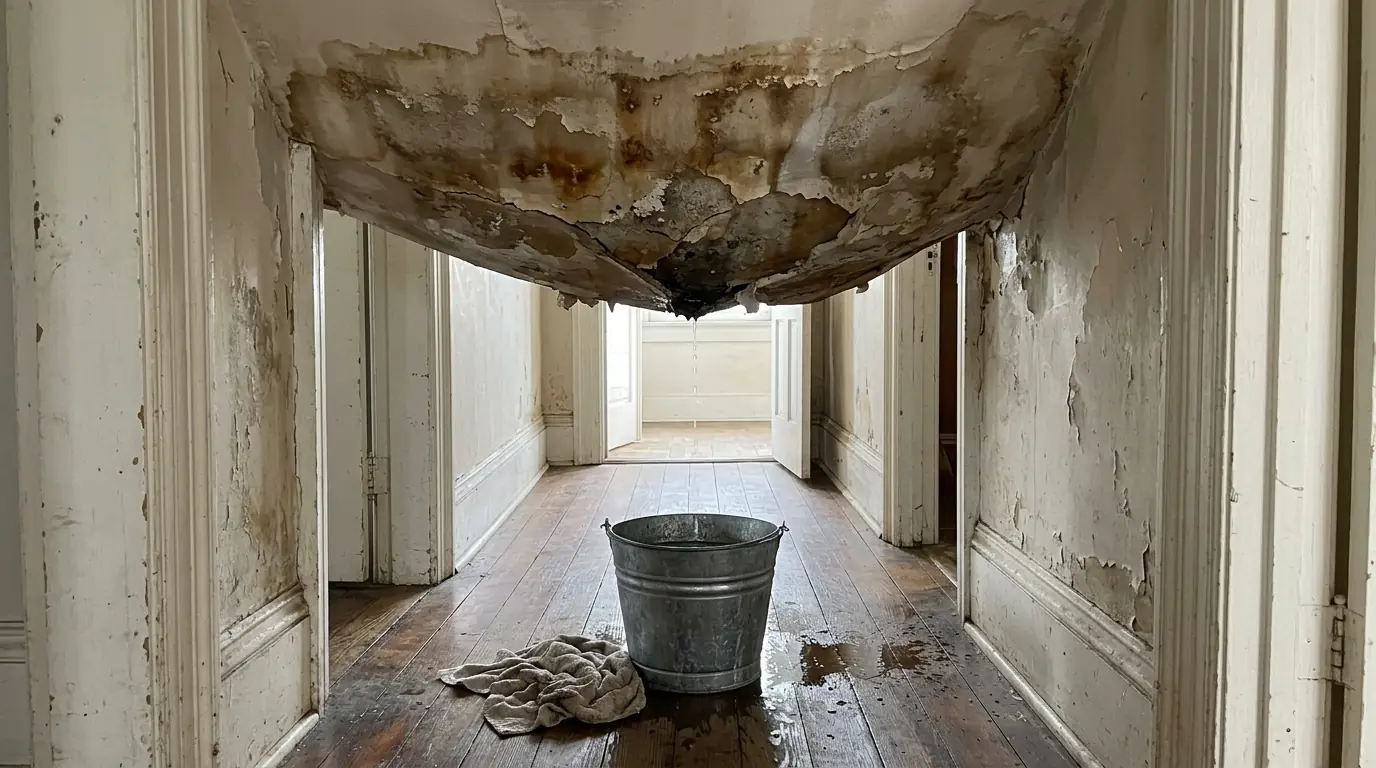
Ceiling Leak Damage
Ceiling leak damage work deals with water trapped above a ceiling from a roof, a bathroom, a radiator or an air conditioning line.
How we handle it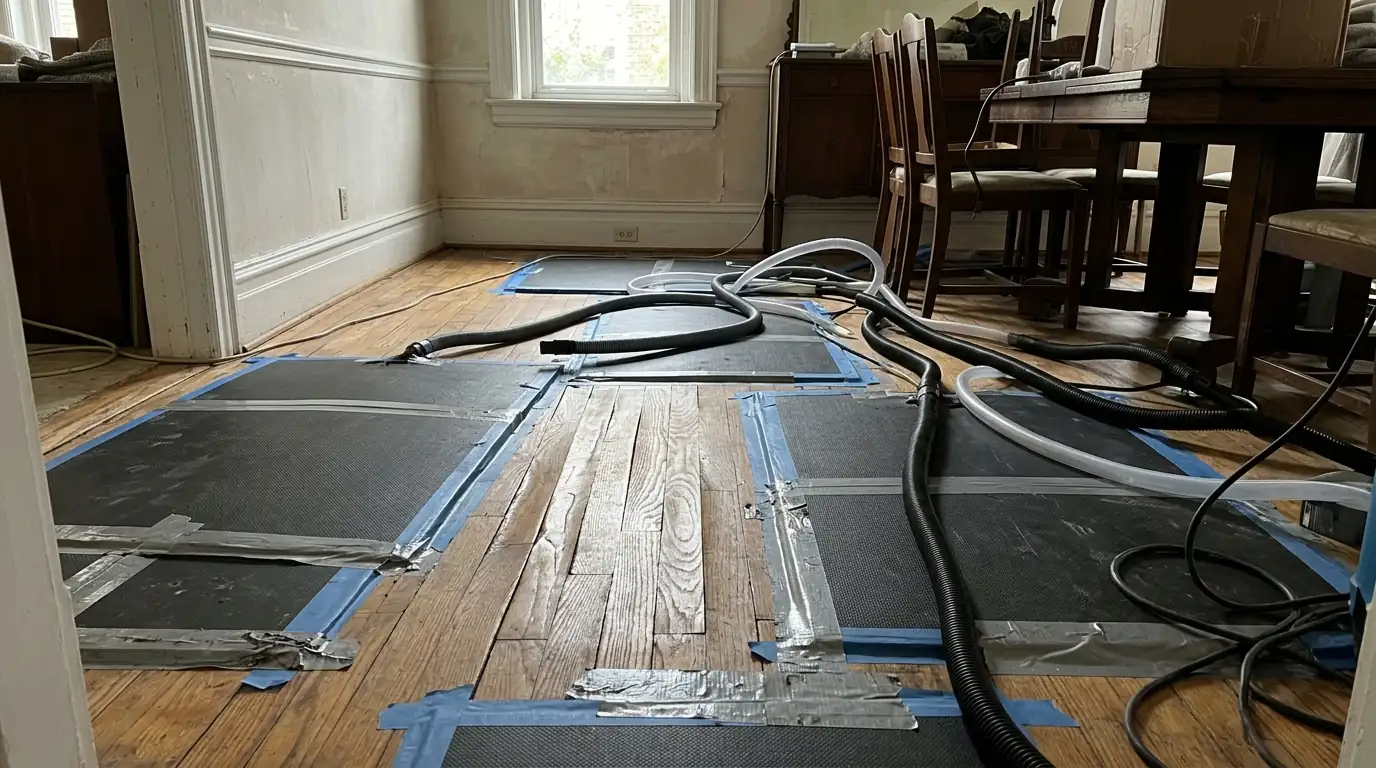
Hardwood Floor Drying
Hardwood floor drying removes water from solid wood flooring and the subfloor beneath it, usually with suction floor mats, dehumidifiers and steady monitoring.
How we handle it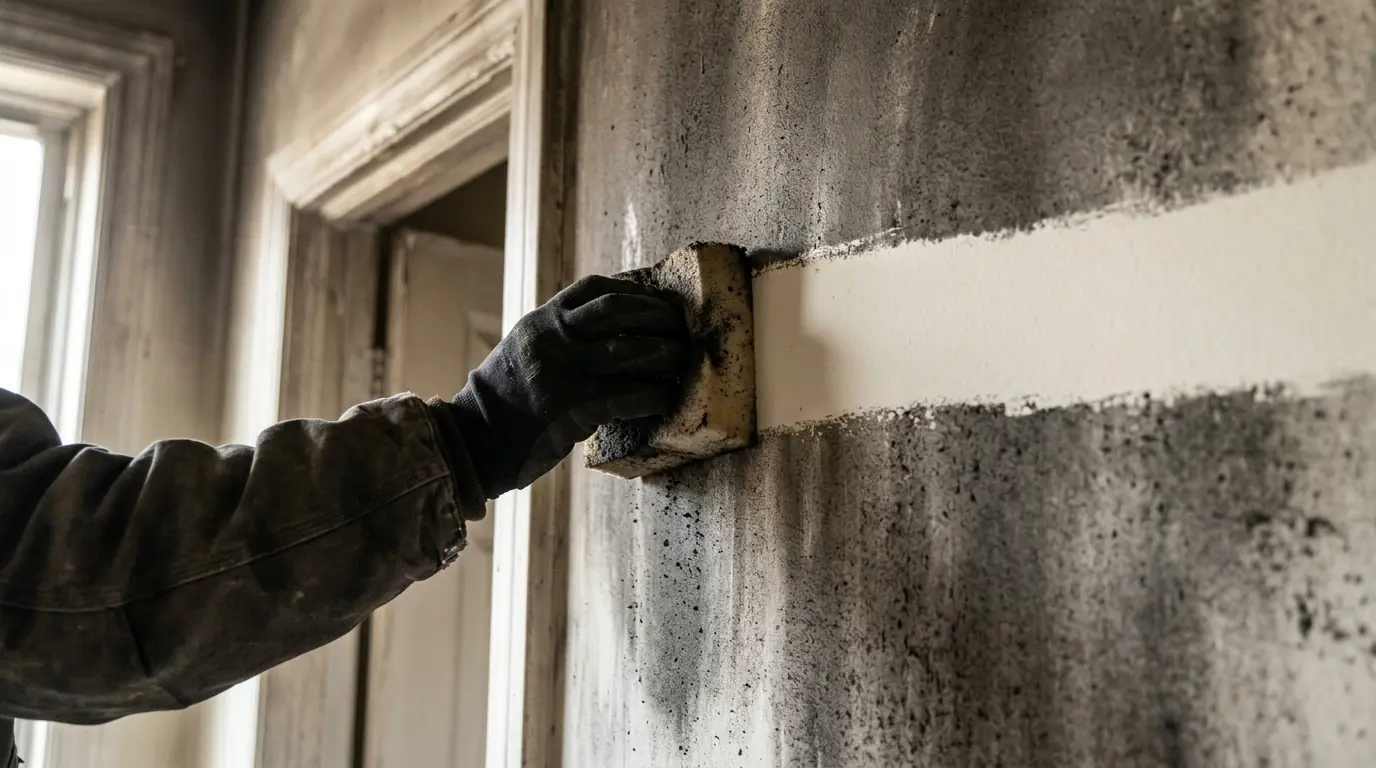
Soot Removal
Soot removal is the careful cleaning of the black or gray carbon film a fire, candle, furnace puffback or fireplace leaves on interior surfaces.
How we handle it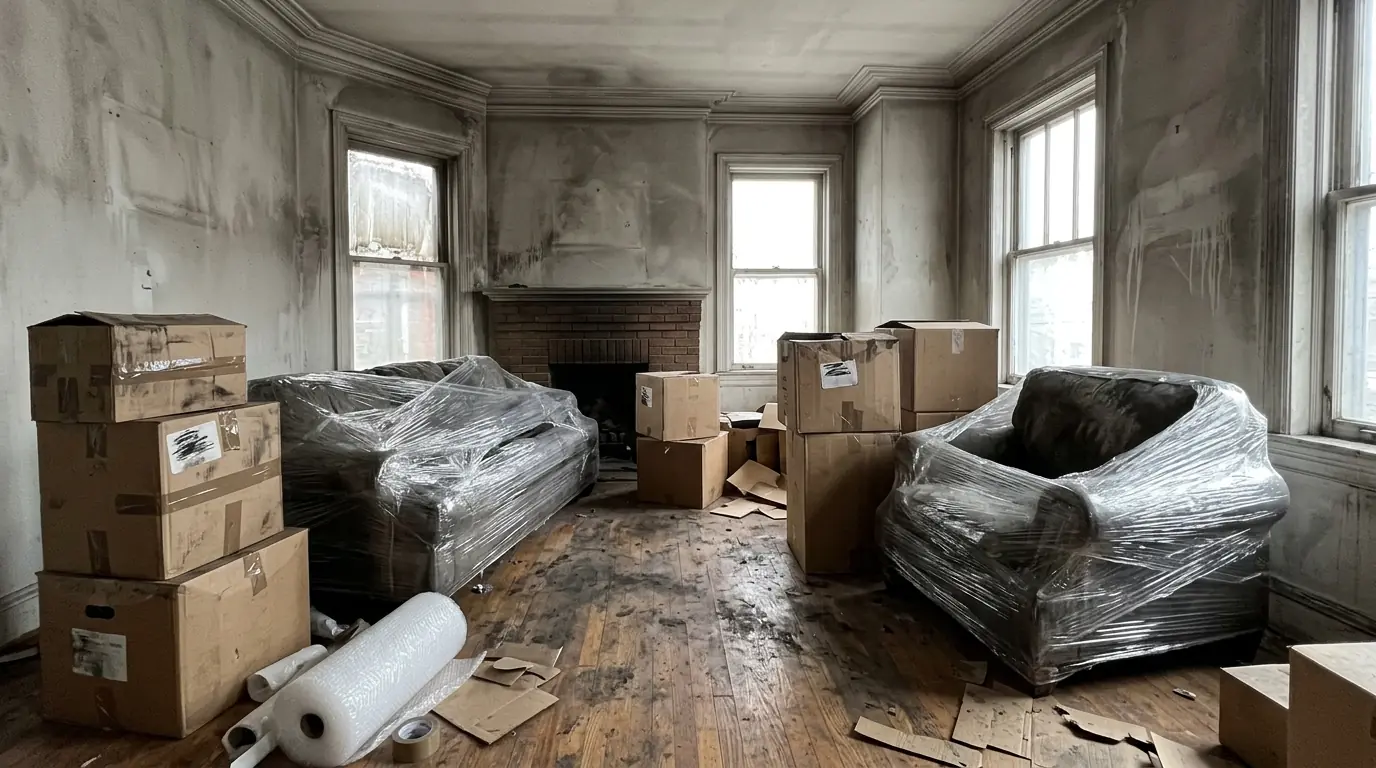
Contents Cleaning & Pack-Out
A contents pack-out is the inventory, packing and removal of belongings from a home damaged by fire, smoke, water or sewage, so the structure can be cleaned and repaired while items are cleaned and stored elsewhere.
How we handle it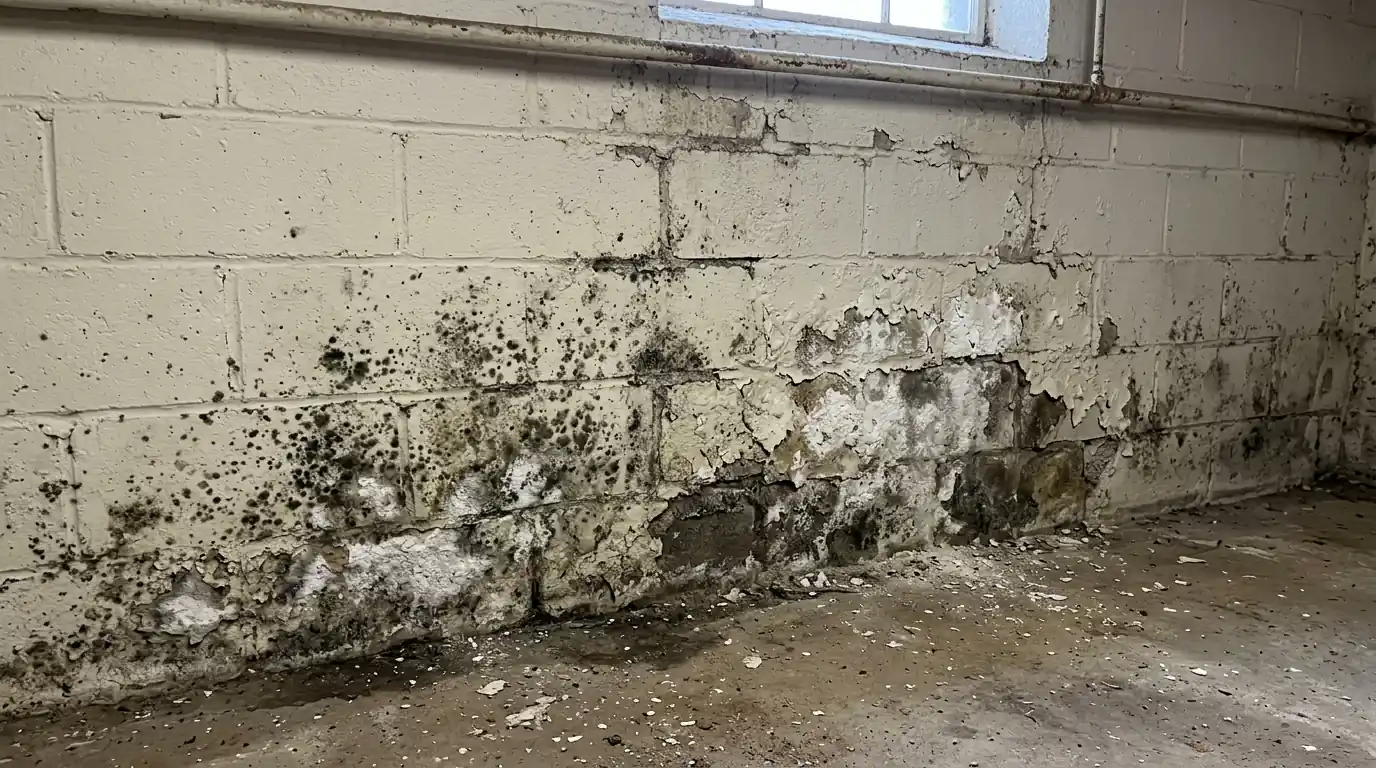
Basement Mold Removal
Basement mold removal cleans or removes growth on foundation walls, framing, finished drywall, carpet and stored contents below grade, then corrects the moisture that caused it.
How we handle itWhat do deep wooded lots and sprinkler systems send toward the foundation?
Big oaks and tulip poplars shade most lots, and they shape the water problems too. Leaves pack gutters and the drains at the foot of exterior basement stairs each fall, and summer thunderstorms drop limbs that crack slates. Where a lot slopes with the street, runoff from the uphill yard gathers against one side of the house. Lawn irrigation is a quieter source: a sprinkler head aimed at the foundation, or knocked sideways in a flower bed, can wet the same stretch of wall every morning all summer.
Many basements were finished decades ago as paneled recreation rooms, with carpet on the slab and built-in cabinets against the outside walls. Paneling and carpet hide moisture well, and a slow seep plus a humid summer gives mold a foothold on the back of the paneling and on stored cardboard. Mold can trigger allergy and asthma symptoms in sensitive people, so do not sand or dry-scrub it. EPA guidance treats patches under about 10 square feet as a homeowner job. Beyond that, plan on containment and HEPA cleanup in the basement.
Typical calls we get from Spring Valley
Chimney flashing leak into a paneled study
Water slips past worn copper flashing where a tall chimney meets the slate, then runs down the chase into the ceiling and built-in shelves of a first-floor study. We dry the attic framing and plaster, move books off the wet shelves and open the chase wall only where readings stay high.
Oil burner puffback in a finished basement
A misfire in an older oil burner sends a cloud of oily soot across the furnace room and into the rec room next door. Once the burner has been serviced, we HEPA vacuum loose soot, clean ceilings, paneling and stored items with dry sponges and degreasers, and treat the odor left in carpet and upholstery.
Upstairs bath leak over a formal dining room
A failed tub drain on the second floor drips into the dining room ceiling for days before a stain appears, and the oak floor below starts to cup. We dry the ceiling cavity through small openings, lay injection mats on the floor and keep logging readings until the wood is back to its normal range.
Sprinkler-soaked wall behind basement paneling
An irrigation head pointed at the foundation keeps one basement wall damp all summer, and a musty smell finally leads to the paneling. We take down the affected panels and furring under containment, clean and dry the masonry, and show you which sprinkler zone started it.
What changes when the job is in our office's own neighborhood?
Our Washington, DC office is on 50th Street NW in 20016, so Spring Valley is our own neighborhood, not a distant corner of a service map. We know how the streets curve off Massachusetts Avenue and which houses have driveways long enough to stage equipment. Call (202) 989-3053 at any hour and a person answers, and we send a crew as soon as one is available.
Inside, the work centers on protecting finishes. We cover oak floors and stair runners, lift area rugs before they wick water and move books, art and furniture out of wet rooms, which our contents cleaning and storage page covers. If a claim is involved, sudden events like a split supply line are often covered while gradual seepage often is not, so check your policy. Neighbors across Massachusetts Avenue can read our AU Park page.

Typical homes in this part of the DC area
Nearby areas we also cover
Questions from Spring Valley homeowners
What should I do right after an oil burner puffback?
Turn the heating system off so the burner and blower stop moving soot, and keep doors to affected rooms closed. Do not wipe walls or furniture, because oily soot smears and sets into paint and fabric. Have the burner checked before it runs again. Puffbacks are sudden events that many policies cover, but check your policy and photograph the rooms before anything is moved.
Could my lawn sprinkler system explain one damp basement wall?
It is worth checking, especially if the dampness starts in late spring and fades by fall. Watch the system run once: a head spraying the brick, a broken line soaking a bed by the foundation or a zone that runs too long can each keep one wall wet. We take moisture readings before and after an irrigation cycle, which usually settles the question.
We are away for part of the year. How do we follow the drying from out of town?
We keep a dated log of moisture readings for every affected room, with photos of what was removed and where the water came from, and share it as the job moves along. Someone local, often a neighbor or house sitter, needs to give us access and keep the equipment plugged in. We tell you when readings reach normal so repairs can be planned.
Water or mold trouble in Spring Valley?
Call JEC Restoration any time. We answer 24/7 and talk through what you are seeing before anyone touches a wall.