Washington, DC neighborhood
Roof leak & attic mold help in Cleveland Park, Washington, DC 20008
Cleveland Park's porched Victorians and early 1900s houses age from the top down: slate slips, built-in gutters rot and water hides in plaster walls. We dry those leaks, remove attic and wall mold, and handle basement water too.
For water damage, mold, fire and smoke, and sewage cleanup in Cleveland Park, JEC Restoration works in the detached houses off Connecticut Avenue, the streets around Rosedale and the apartment buildings near the Uptown Theater. Call (202) 989-3053 any time. It is answered 24/7, and we assess older plaster, wood and slate with care.
Where do century-old Cleveland Park houses let water in?
Cleveland Park grew as a streetcar suburb from the 1890s into the 1920s, and many of its large frame and shingle houses still stand, with wraparound porches, steep roofs and deep attics. Slate roofs last a long time, but the flashing in their valleys and around chimneys does not, and a single slipped slate can send water into an attic for months. Many houses also have built-in box gutters set into the cornice. When their metal lining cracks, water runs into the wall framing instead of the downspout, and it shows up as peeling paint or a soft spot in the plaster a floor below.
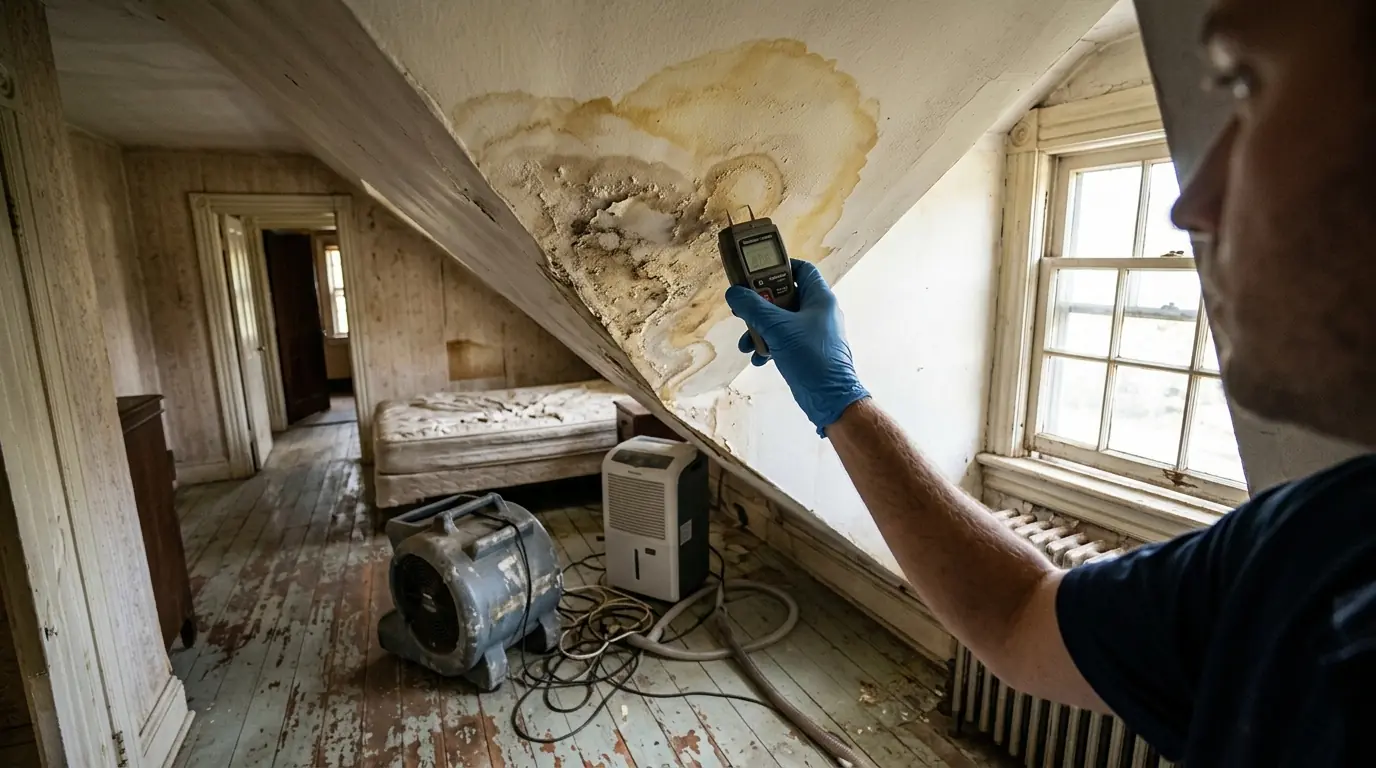
Inside, walls are plaster on wood lath, often original, and the trim is old-growth wood that tolerates wetting fairly well if it is dried properly. Attics with limited ventilation grow mold on the underside of the roof boards after a slow leak or a winter of warm, damp air rising from the house. We check sheathing and rafters with a meter and a probe, and when growth is present, we handle it as attic mold removal with containment and HEPA vacuuming.
Most-called services in Cleveland Park
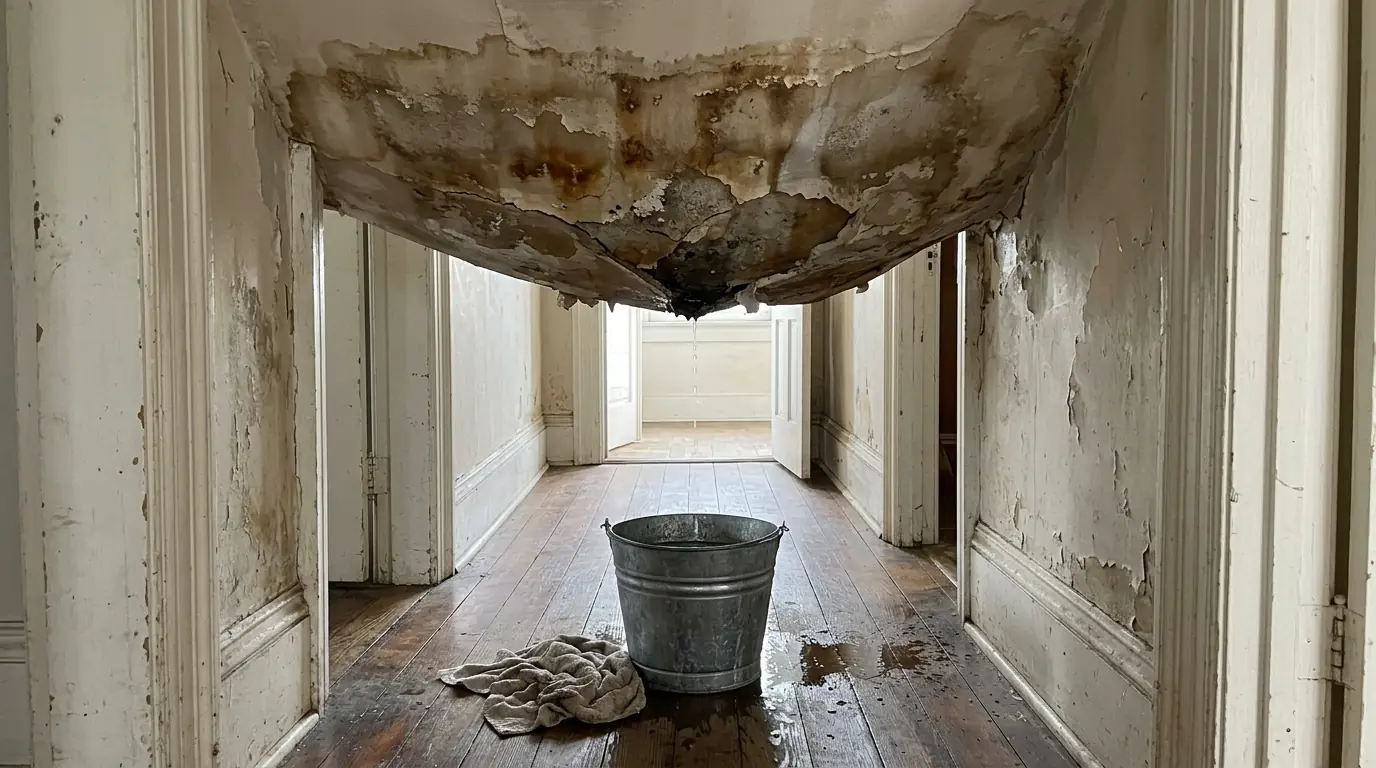
Ceiling Leak Damage
Ceiling leak damage work deals with water trapped above a ceiling from a roof, a bathroom, a radiator or an air conditioning line.
How we handle it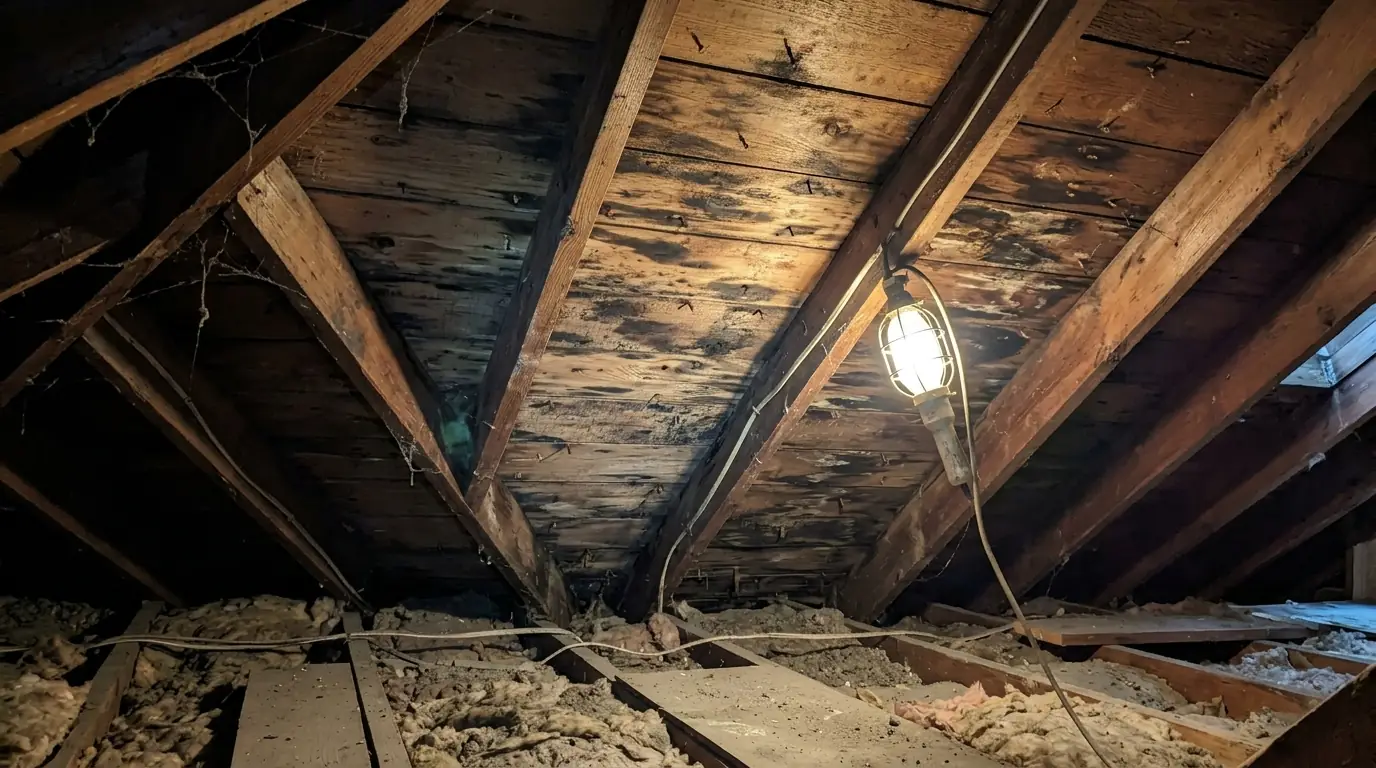
Attic Mold Removal
Attic mold removal cleans growth from roof sheathing, rafters and trusses, removes damaged insulation, and corrects the moisture source, which is usually household air leaking or being vented into the attic and condensing on cold wood in winter.
How we handle it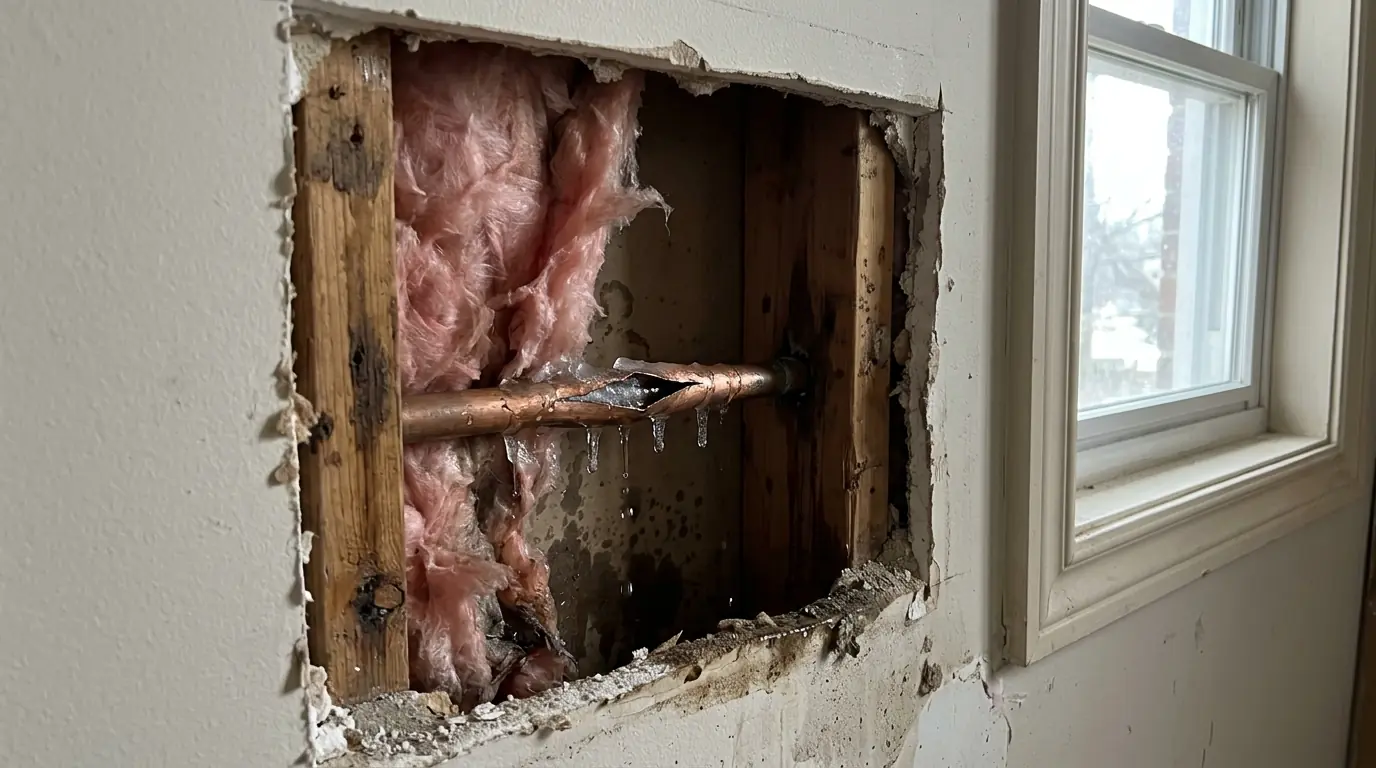
Burst Pipe Cleanup
Burst pipe cleanup deals with the water a split supply or heating line leaves inside walls, floors and ceilings: opening the wall at the break, extracting water, removing soaked insulation, and drying the cavities and the rooms below.
How we handle it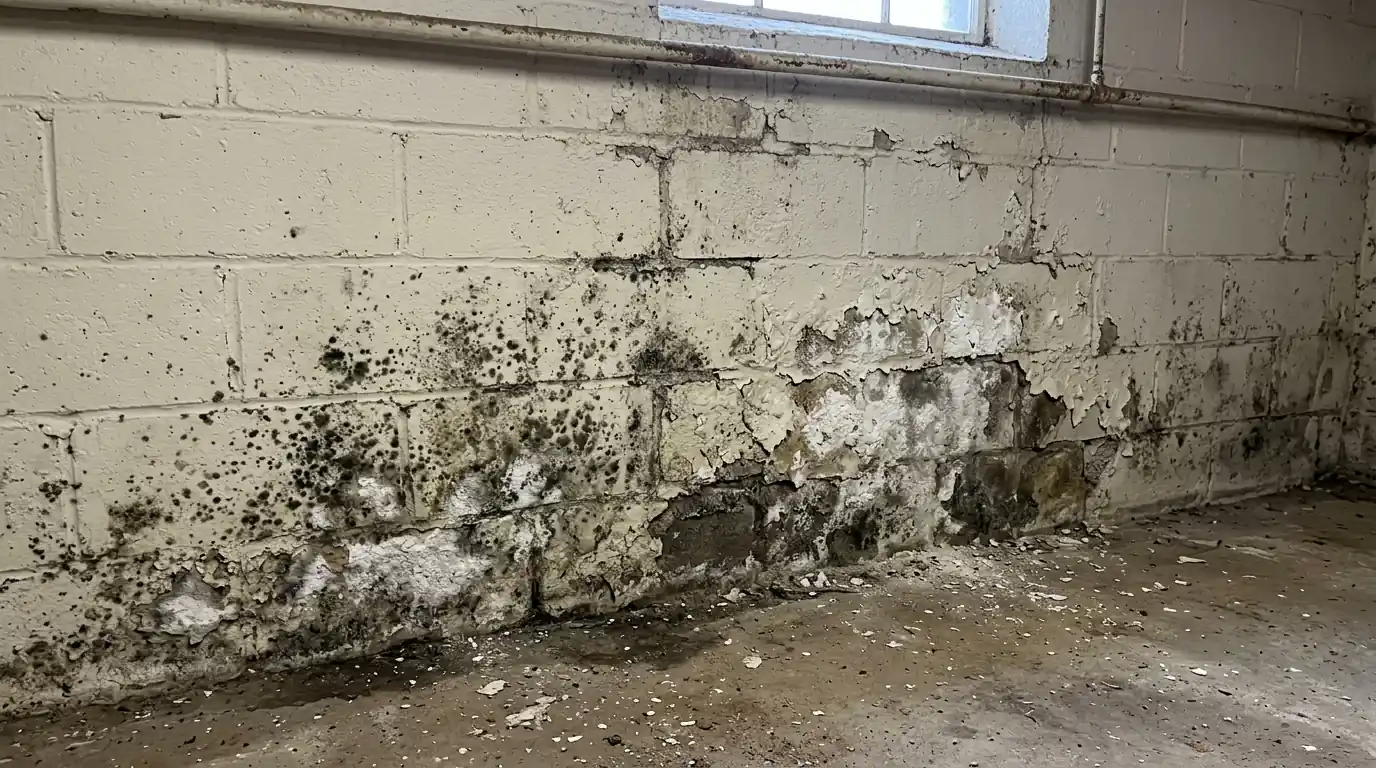
Basement Mold Removal
Basement mold removal cleans or removes growth on foundation walls, framing, finished drywall, carpet and stored contents below grade, then corrects the moisture that caused it.
How we handle it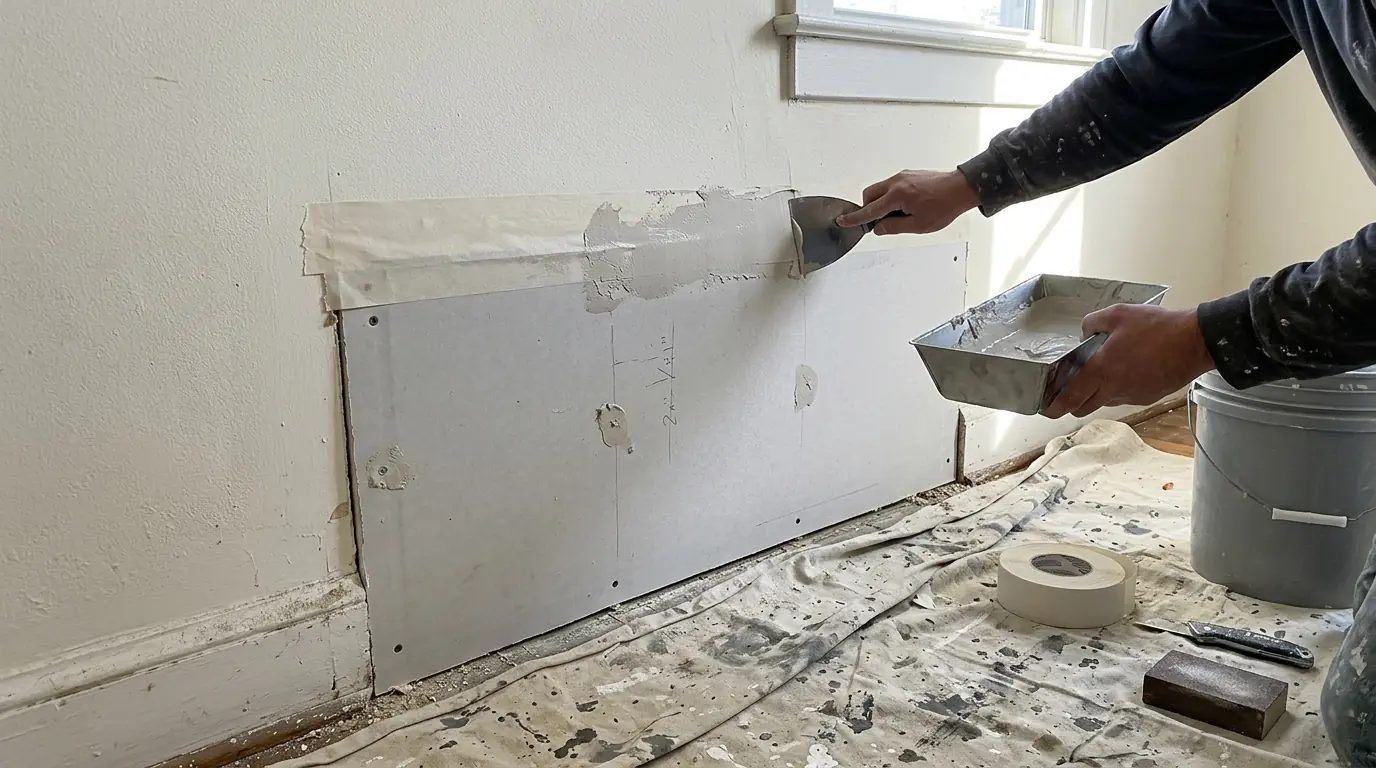
Damage Repair & Rebuild
Damage repair and rebuild is the work that restores a room after water, mold or fire mitigation is finished.
How we handle itWhat do winter cold snaps and summer storms do to these houses?
January cold snaps are hard on older houses with plumbing in exterior walls, enclosed sleeping porches and kitchens added onto the back. A hot-water heating line or a supply pipe running along an uninsulated porch wall can freeze and split, then pour water once it thaws. Ice can also build at the eaves of a steep roof and back water up under the slate. Our notes on where pipes freeze in older DC homes list the usual trouble spots.
Summer brings the opposite problem: thunderstorms that drop heavy rain in a short time, mature oaks and tulip poplars that shed limbs onto roofs, and basements with stone or brick foundation walls that seep when the soil is soaked. Many basements here are partly finished over old floor drains, so a storm that overwhelms the drain can wet carpet and the bottom of newer drywall at once.
Typical calls we get from Cleveland Park
Cracked box gutter liner soaking a cornice wall
A built-in gutter's metal lining splits, and every rain sends water into the wall behind a second-floor bedroom. We open the plaster where readings are high, remove wet insulation and any moldy material, and dry the framing so the wall and cornice repairs can follow.
Slate valley leak under a third-floor dormer
Water gets past a worn valley flashing and spreads across a plaster ceiling under a dormer. We dry the attic boards and the ceiling plaster in place, check the rafters for mold and keep the attic under negative air if any growth has to be removed.
Split heating pipe on a sleeping porch
A hot-water heating line in an enclosed porch freezes during a cold snap and splits when it thaws, wetting the floor and the ceiling below. We extract water, open the ceiling where it sags and dry the joists and old fir flooring with targeted airflow.
Musty stone basement with a finished corner
A partly finished basement smells damp through the summer, and mold appears on the back of wall paneling. We remove the affected paneling under containment, clean the stone and joists and recommend a dehumidifier sized for the space.
Does the historic district change how a cleanup and rebuild go?
Cleveland Park is a designated historic district, so exterior changes such as new windows, roofing materials or porch work can need review by the city's historic preservation staff. Interior drying, mold removal and cleanup generally fall outside that review. When a repair touches the outside of the house, we document existing materials carefully so the rebuild can match them.
Larger houses in 20008 mean long cord runs, several floors of equipment and furniture that has to be moved or protected. Many owners have driveways or side yards, which makes staging easier than on rowhouse blocks. In the apartment buildings along Connecticut Avenue near the Uptown Theater and the Metro, the work looks more like a condo job, with a building manager and neighbors above and below. If you live farther north, our Chevy Chase DC page covers similar housing closer to the Maryland line.

Typical homes in this part of the DC area
Nearby areas we also cover
Questions from Cleveland Park homeowners
Does wet plaster always have to come out after a roof leak?
No. Plaster on wood lath holds a lot of water but often dries in place if it stays firmly attached. We check for sagging, cracks and a hollow sound that tells us the plaster keys have broken, and we measure moisture over several days. Sections that have failed come down. The rest dries with dehumidifiers and airflow, which saves both money and original finishes.
Is the white crust on my stone basement wall mold?
Usually it is efflorescence: mineral salts left behind when water moves through masonry and evaporates. It is powdery, dissolves in water and does not grow. Mold looks fuzzy or spotty and grows on organic material like wood, paper and dust. Both point to moisture coming through the wall, so either one is a reason to find the water source.
Our attic still smells musty after the roof was repaired. What should we check?
Look at the underside of the roof boards near the old leak and at any insulation that got wet. Dark spotting or a dusty white bloom on the wood suggests mold growth. Mold can trigger allergy and asthma symptoms in sensitive people, so if it covers more than about 10 square feet, the EPA guideline is to have it handled by trained workers using containment.
Water or mold trouble in Cleveland Park?
Call JEC Restoration any time. We answer 24/7 and talk through what you are seeing before anyone touches a wall.