Washington, DC neighborhood
Water damage & fire cleanup in Mount Pleasant, Washington, DC 20010
Mount Pleasant's porch-front rowhouses step down steep blocks toward Rock Creek Park, and their roofs, hidden drain pipes and basement units each fail differently. We dry the leaks, clean up after kitchen fires and remove mold behind old plaster.
Water through a ceiling, smoke from a basement kitchen or sewage in a floor drain: in Mount Pleasant, JEC Restoration handles all of it, from the shops on Mount Pleasant Street to the rowhouse blocks between 16th Street and the edge of Rock Creek Park. Call (202) 989-3053, answered 24/7, and tell us which unit or floor is affected.
Why does a rowhouse on a slope leak where it meets the house next door?
Mount Pleasant, in 20010, grew from the late 1800s into the early 1900s and is now one of the city's historic districts. Most streets are lined with brick rowhouses, many with front porches, projecting bays or a corner turret, plus some large detached houses and early apartment buildings on 16th Street and Mount Pleasant Street. Inside are plaster on wood lath, pine floors and English basements, many of them rented.
Because the ground falls toward Rock Creek, a row on a hillside cannot share one flat roofline. Each house steps down from the one above, so your uphill neighbor's brick side wall rises a few feet above your roof. The flashing along that wall, tucked into the mortar joints and patched many times, is the most common roof leak on these blocks. Water slips behind it, runs down inside the brick and shows up as a stain in a top-floor bedroom or a bubble in the stairwell plaster. Our guide to water coming through a shared wall explains how to tell whose side the problem is on.
Older apartment buildings hide a different weak point: cast-iron leaders that carry roof water down inside the building. After a century they rust through at the joints, and a heavy rain sends water into a wall cavity two or three floors down, where it soaks plaster and feeds mold out of sight.
Most-called services in Mount Pleasant
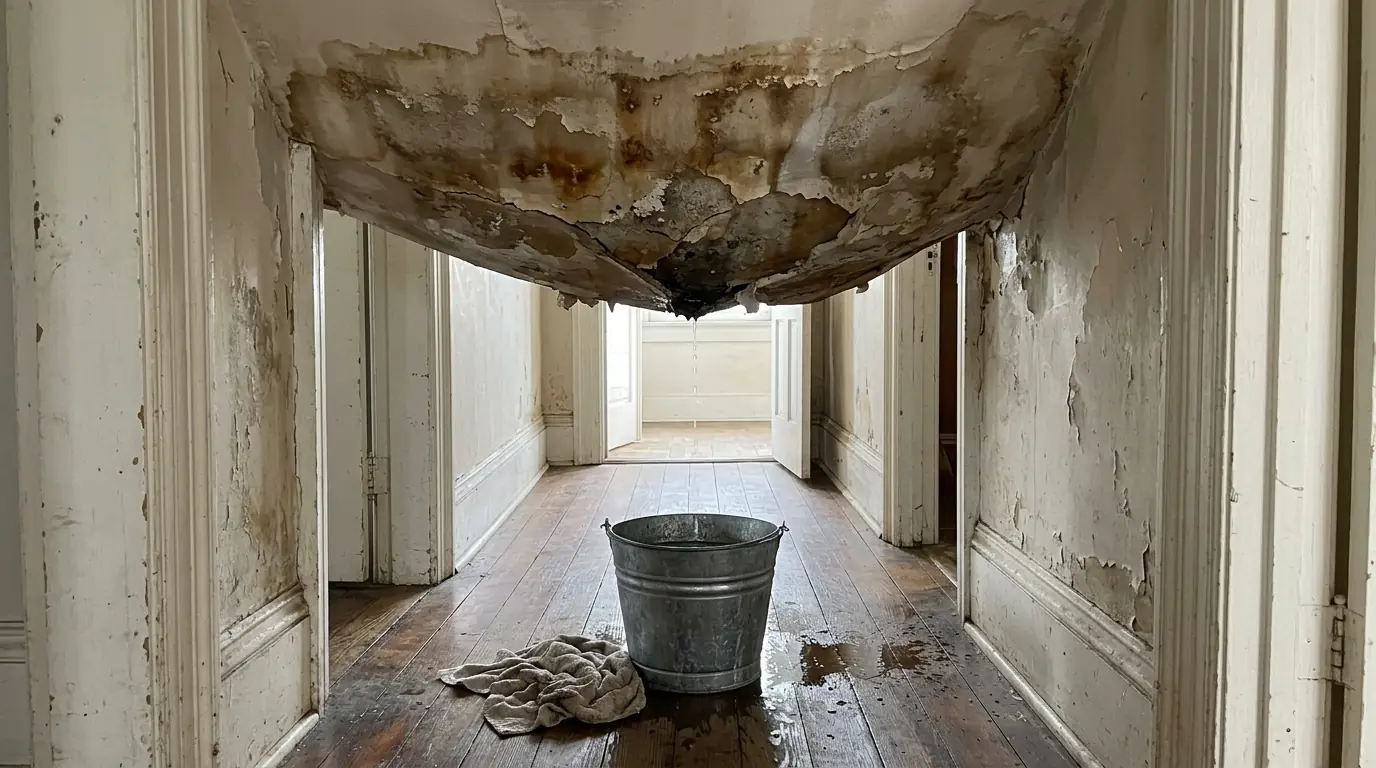
Ceiling Leak Damage
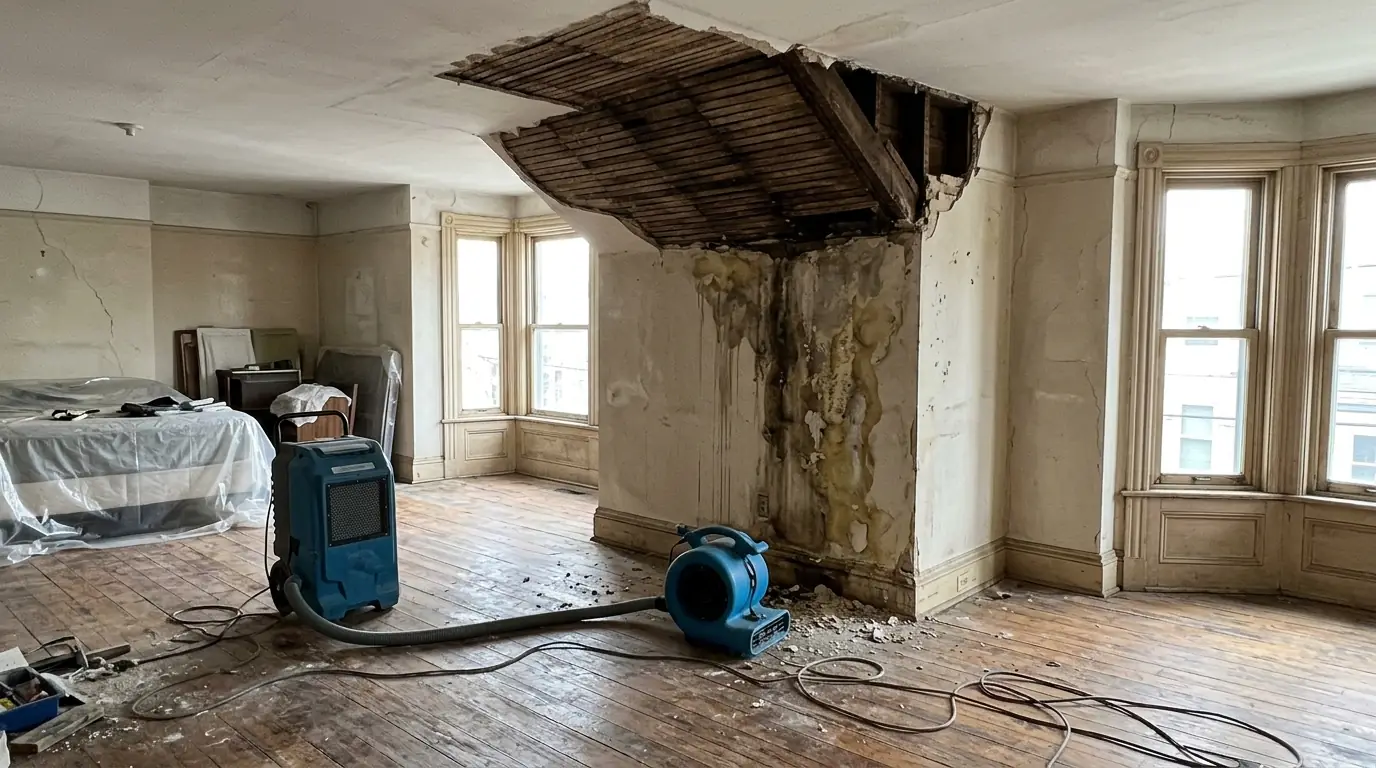
Ceiling leak damage work deals with water trapped above a ceiling from a roof, a bathroom, a radiator or an air conditioning line.
How we handle it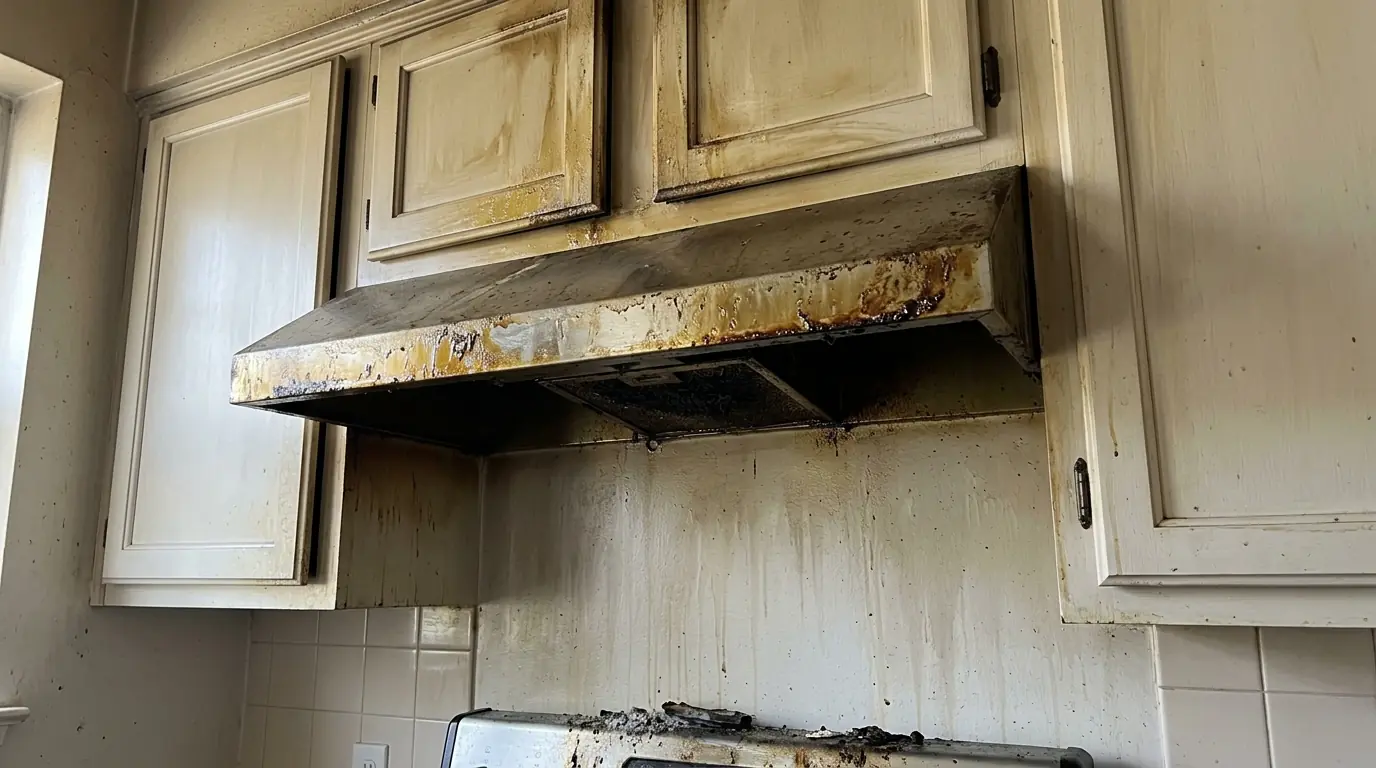
Kitchen Fire Cleanup
Kitchen fire cleanup removes the grease and protein residue a cooking fire leaves on cabinets, range hoods, walls, ceilings and appliances, then deals with the odor that settles into wood and paint.
How we handle it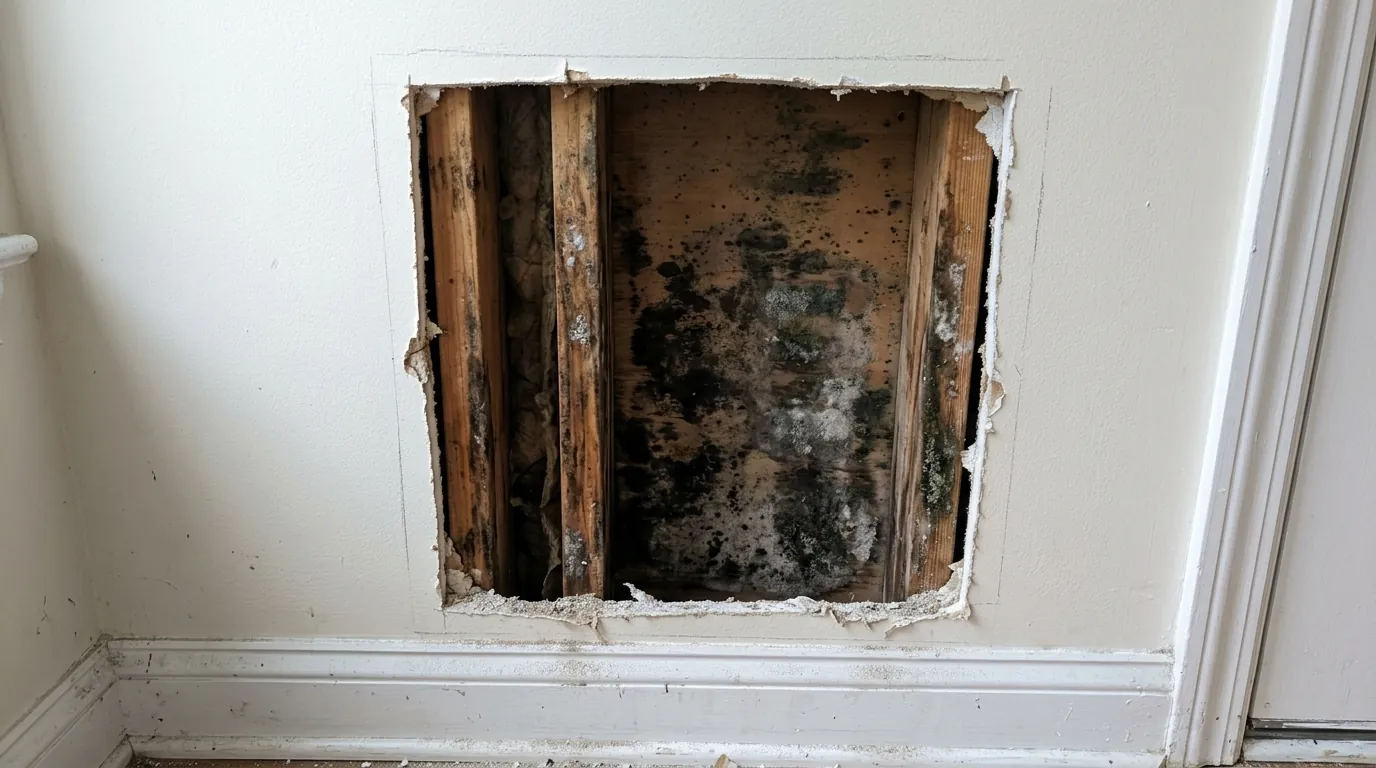
Mold Behind Drywall
Mold behind drywall grows on the back of the paper facing, on studs and on insulation inside a wall that has stayed damp from a slow leak, condensation or an old flood.
How we handle it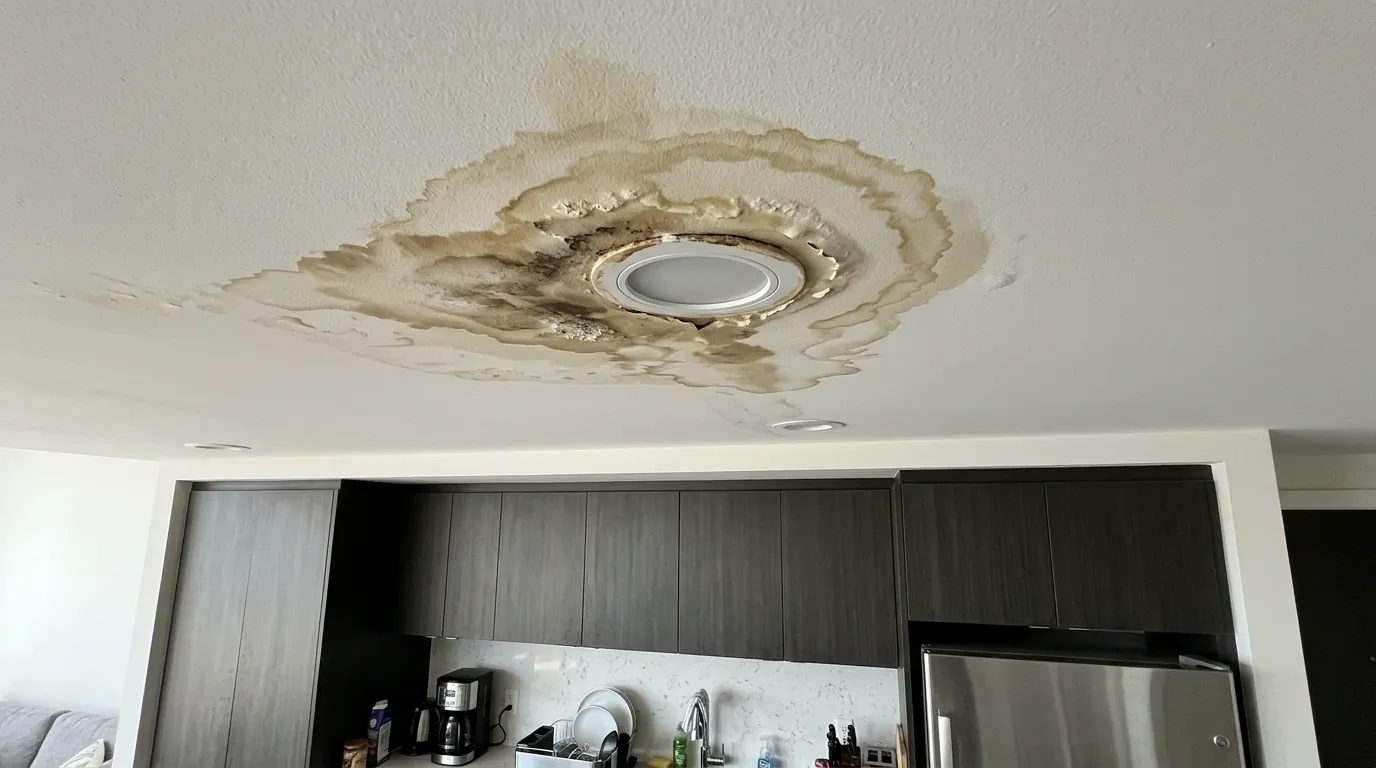
Condo Water Damage
Condo water damage work covers leaks that cross unit lines: water from the unit above, a failed riser, a shared wall or a roof over the top floor.
How we handle it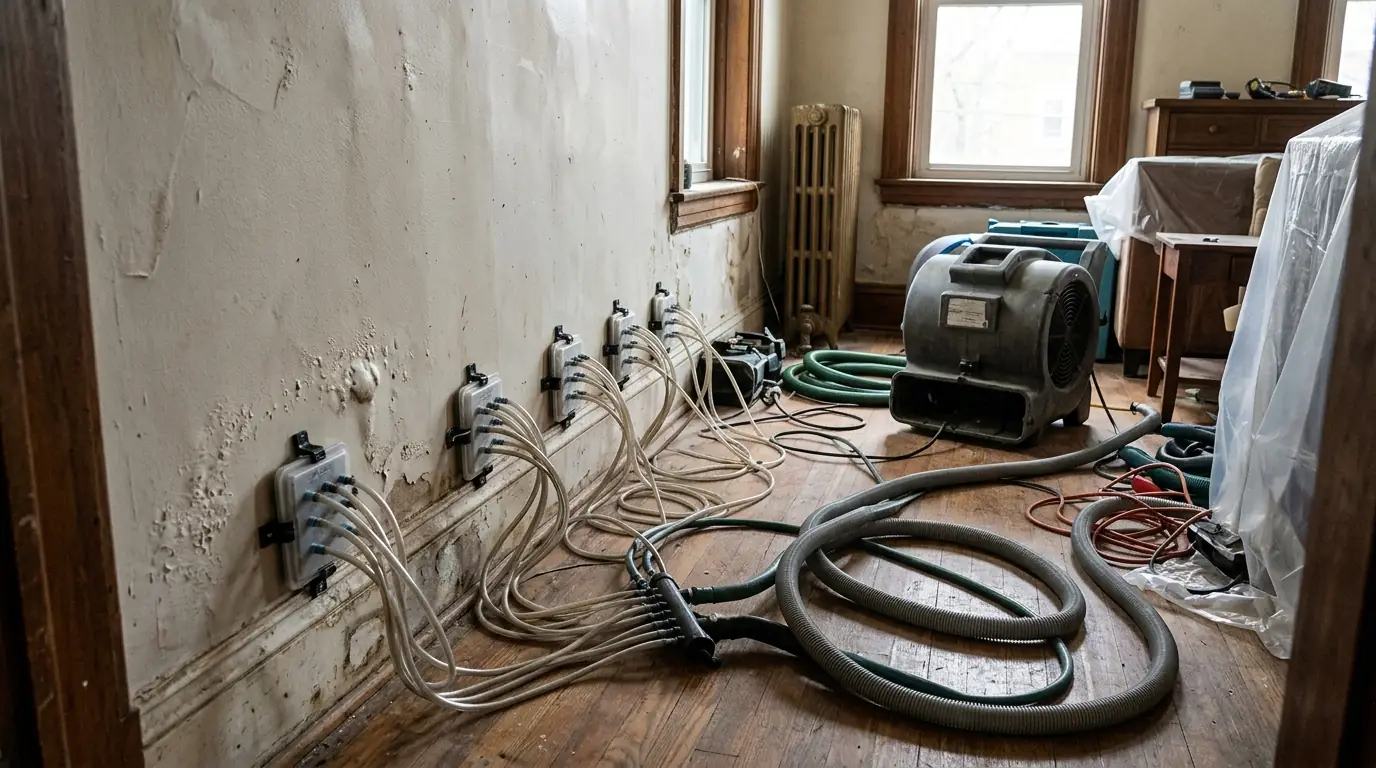
Structural Drying
Structural drying is the controlled removal of moisture from a building's framing, subfloor, wall cavities, plaster and masonry after a water loss.
How we handle itWhat does the drop toward Rock Creek Park mean for basements and back walls?
West of Mount Pleasant Street, many blocks fall steeply toward Rock Creek Park, with the National Zoo across the creek. On the downhill side, a house can be three stories at the front and four at the back, with a basement buried at the street and fully exposed at the rear. That tall rear wall takes summer storms head-on, and old basement windows and doors with rotted sills let wind-driven rain in at floor level.
Houses on the uphill side get the reverse. Their back yards sit higher than the basement floor, and alley runoff collects against the rear foundation. Brick and stone walls laid in soft lime mortar were never waterproofed, so a long wet spell shows up as damp plaster and flaking paint near the floor. Wherever the water enters, drying the masonry and framing has to be confirmed with readings before anything is closed up.
Typical calls we get from Mount Pleasant
Flashing leak where a taller rowhouse steps above yours
Rain gets behind tired flashing along the neighbor's exposed side wall and runs into a top-floor bedroom ceiling and the party wall plaster. Once the roof side is sealed, we open the ceiling at its low point, dry the joists and the wall, and remove only plaster that has pulled away from its lath.
Rusted roof leader inside an apartment building wall
A cast-iron leader carrying roof water down through an older apartment building leaks only in storms, and a third-floor closet wall turns musty. We find the wet section with a thermal camera after a rain, open the wall under containment, remove moldy plaster and lath, and dry the cavity before it is closed.
Pan fire in a garden-level kitchen
A stovetop fire in a basement apartment is put out quickly, but smoke climbs the interior stair and slips through floor gaps into the owner's unit above. We HEPA vacuum soot, wash both kitchens and the shared stair with degreasing cleaners and treat odor in cabinets and closets on both floors, as our kitchen fire cleanup page outlines.
Storm water under a rear basement door on a downhill lot
On a lot that drops toward the park, a summer storm drives rain against the tall back wall, and water comes in at a rotted door sill and the window beside it. We extract, pull the wet flooring, dry the framing and the base of the wall, and show you where the sill failed.
How do condo owners, basement tenants and historic rules shape the work?
Many rowhouses here are now two or three condo units, and many owners rent out an English basement with its own entrance under the stoop or porch. One leak can involve the owner where it started, the owner below, a tenant and a small self-managed association. We keep separate photos, readings and floor sketches for each unit, as our page on leaks between condo units explains.
Interior drying and cleanup go ahead without waiting on preservation review. Exterior changes visible from the street, such as new windows or porch parts, generally go through the city's historic preservation process, so we photograph original trim and plaster details we remove so they can be matched during repairs. Parking near the Mount Pleasant Street shops is tight and many front steps are steep, so we carry equipment in by hand and keep hoses off shared stairs.
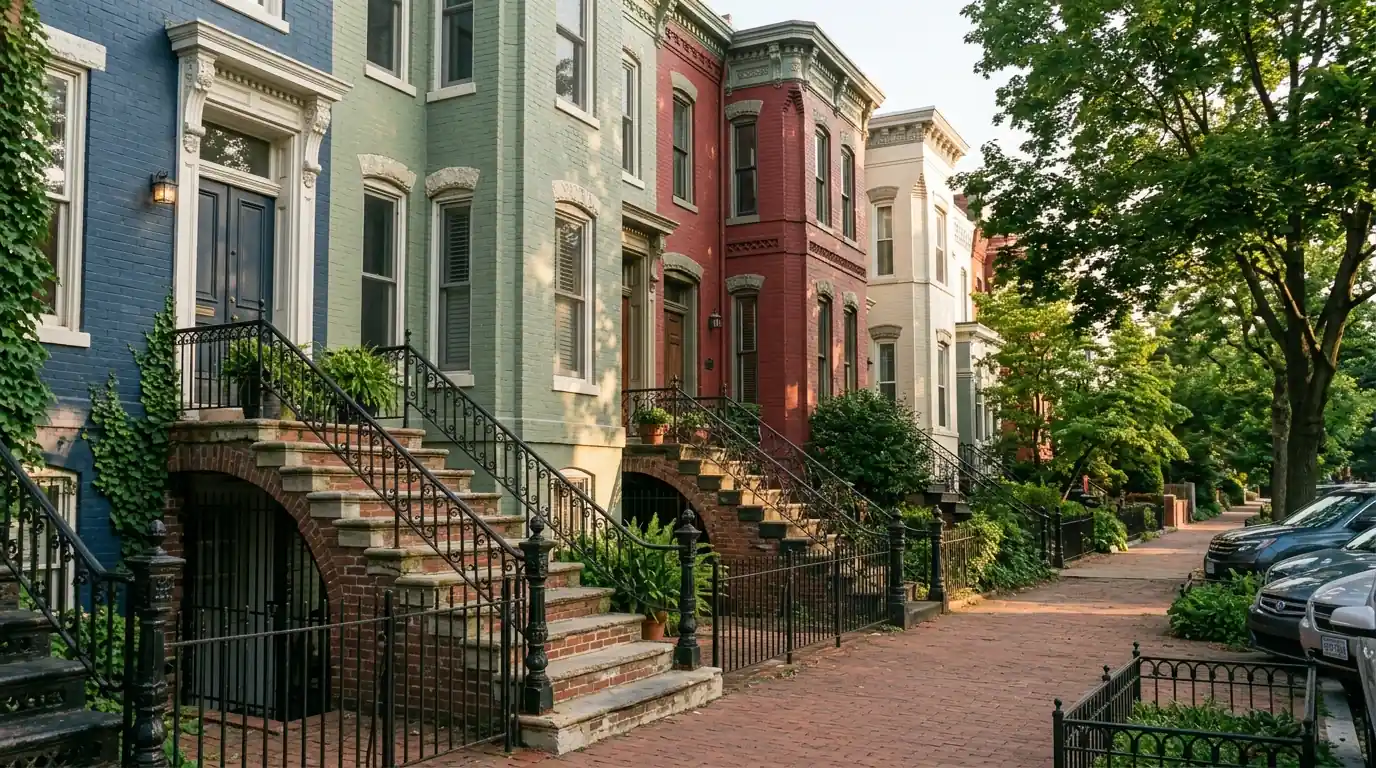
Typical homes in this part of the DC area
Nearby areas we also cover
Questions from Mount Pleasant homeowners
The flashing that leaks is on my neighbor's wall. Who repairs it?
On a stepped roofline, the flashing usually lies on your roof but is tucked into the neighbor's brick, so a lasting repair often needs both owners to cooperate. We document where water enters with photos and readings, which gives both of you the same facts. Drying your side should not wait for that conversation, and coverage depends on each owner's policy, so check yours.
Why does the stain on my apartment wall grow only after heavy rain?
A stain that spreads during storms and shrinks in dry weather points to roof water, not plumbing that runs all the time. In older buildings, the usual suspects are a corroded interior roof leader, failed parapet flashing or a clogged roof drain. We read the wall with a moisture meter and thermal camera soon after a rain, when the wet path is easiest to see.
Will smoke from a basement apartment fire affect the unit upstairs?
Usually it does, even when no flames reached the upper floor. Smoke rises through stairways, floor gaps, plumbing chases and shared ductwork, leaving a fine film on walls and odor in fabrics and closets. Both units should be inspected and cleaned, or the smell tends to come back on humid days. Sudden fires are commonly covered, but each owner should check their own policy.
Water or mold trouble in Mount Pleasant?
Call JEC Restoration any time. We answer 24/7 and talk through what you are seeing before anyone touches a wall.