Fire & Smoke
Soot removal from walls, brick and plaster in Washington, DC
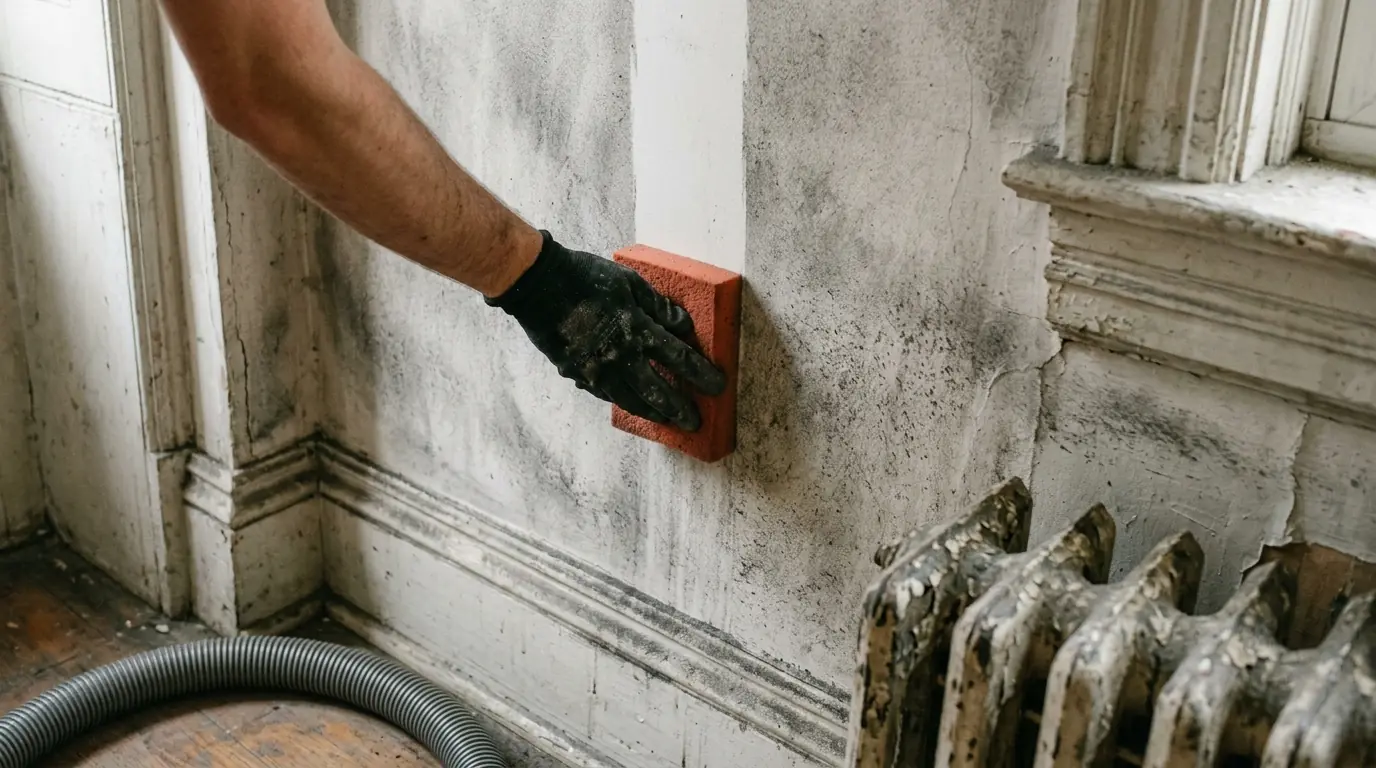
Soot is fine carbon that smears the moment it's rubbed. We lift it off walls, ceilings, brick and plaster with HEPA vacuums and dry chemical sponges first, then wet clean only what still needs it.
Drying, air and detection equipment on our jobs comes from names like
- Dri-Eaz
- Phoenix
- B-Air
- Abatement Technologies
- Protimeter
- Delmhorst
- FLIR
- Benefect
- Concrobium
- Omnitec
- Sapphire Scientific
- Tramex
Soot removal is the careful cleaning of the black or gray carbon film a fire, candle, furnace puffback or fireplace leaves on interior surfaces. The work starts dry, with HEPA vacuuming and chemical sponges, because wiping with water or household cleaners grinds soot into paint and plaster. You need it whenever a film comes off on your fingertip, or dark webs appear on ceilings and corners. Call (202) 989-3053.
Why does wiping soot with a wet rag make it worse?
Soot particles are tiny, much smaller than household dust, and they're oily enough to cling to surfaces without bonding to them. A wet rag doesn't pick them up. It drags them sideways and presses them into the texture of the paint, the pores of plaster and the grain of wood. What was a loose gray film becomes a dark smear that's locked into the surface, and you can't dry clean it anymore.
Household sprays and all-purpose cleaners add to the problem. Many are water based with surfactants that spread the soot further, and some leave their own residue that later bonds with what's left. On flat or eggshell paint, a single wet wipe can turn a cleanable wall into one that needs priming and repainting. If you need to stop soot from spreading before we arrive, leave the surfaces alone, keep the heating and cooling system off and avoid walking soot through the house on your shoes. The cleaning goes faster and better when nothing has been rubbed yet.
What is the order for removing soot from a room?
We always work dry to wet and top to bottom so the cleaned surfaces don't get soot dropped on them again.
Protect and contain
Floors and furniture are covered, the HVAC system is shut down and HEPA air scrubbers run to catch soot that comes loose during cleaning.
HEPA vacuum all surfaces
Ceilings, walls, trim, light fixtures and horizontal surfaces are vacuumed with soft brushes to remove loose particles before any contact cleaning.
Dry sponge cleaning
Walls and ceilings are cleaned with dry chemical sponges in single-direction strokes. Our technicians test each surface to see how much the dry pass removes.
Wet clean what remains
Surfaces with remaining film are washed with residue-appropriate detergents and rinsed. Brick and masonry get gentle water methods suited to older material.
Inspect and seal
We check every surface in raking light. Areas with stains that won't lift are sealed with a stain-blocking primer before repainting.
How do dry sponges and HEPA vacuums lift soot without smearing it?
The first pass is a HEPA vacuum with a soft brush attachment, held just off the surface, working from the ceiling down. It pulls up the loose particles sitting on top without pushing them into the wall, and the HEPA filter keeps them from blowing back into the room. Ordinary shop vacuums can't do this, because fine soot passes straight through their filters and coats everything again.
The second pass is a dry chemical sponge, sometimes called a soot sponge. It's made of vulcanized natural rubber, not chemicals. It works like an eraser: our technicians pull it across the wall in long, single-direction strokes, and the sponge grabs soot into its pores. When a face turns black, it gets trimmed or the next face is used. Pressing too hard or scrubbing in circles smears the residue, so technique matters as much as the tool. On dry smoke residue, these two passes often get a wall nearly clean. Only after that do we wet clean, using mild detergents, two buckets and frequent rinses so we're removing soot, not moving it around.
How do you know you have soot that needs professional removal?
Soot isn't always a thick black layer, so check for these less obvious patterns.
Black on your fingertip
Touch the top of a door frame or a ceiling fan blade. If your finger comes away gray or black, soot settled across the room.
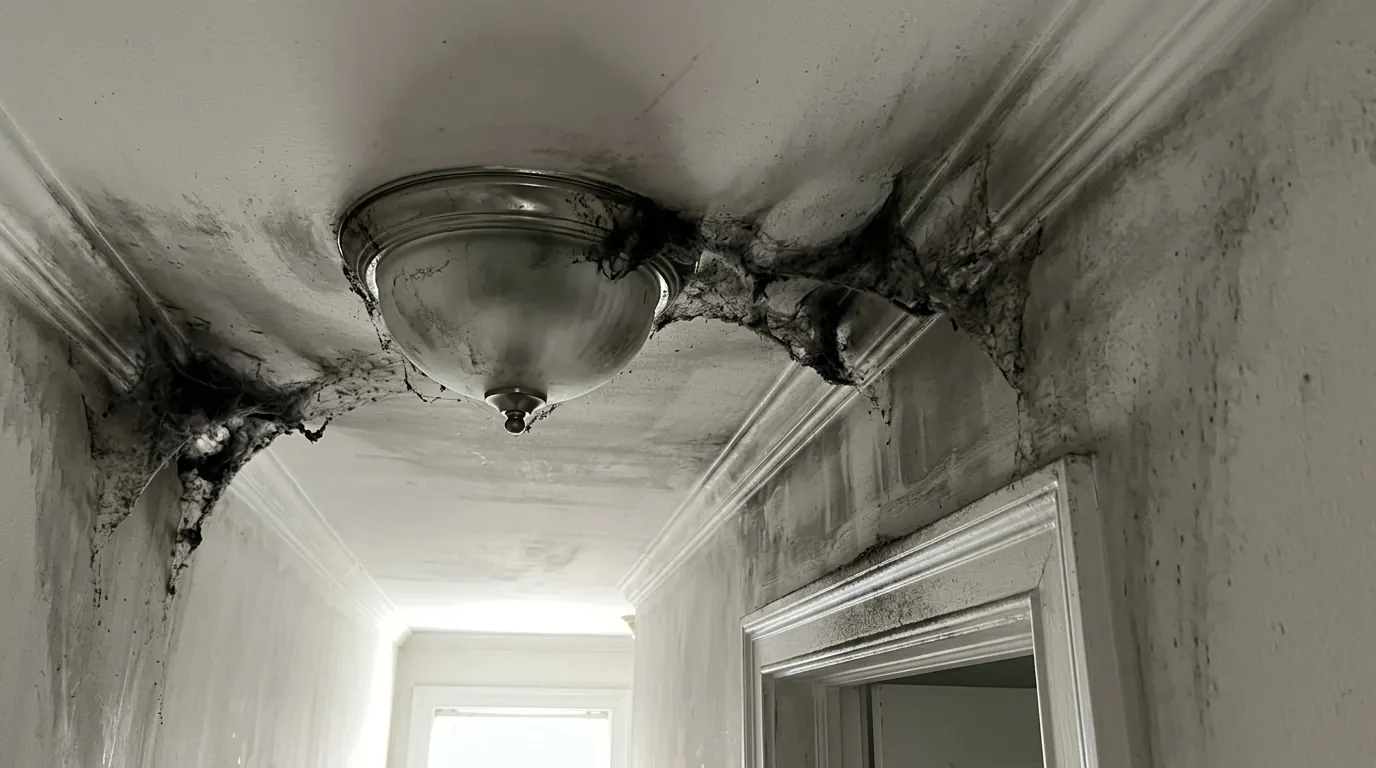
Dark webs in corners
Sooty strands hanging in ceiling corners look like cobwebs but are soot that collected on existing dust or spider silk.
Ghost lines along carpet edges
Dark lines at baseboards and under doors show soot carried by air movement, often from candles or a furnace issue.
Smudges after a puffback
A loud bang from the furnace followed by black film on vents and walls means soot came through the duct system.
Stains above heat sources
Dark shadows above radiators, baseboard heaters and lamps form where warm air rises and drops soot on the wall.
Discolored brick near the fireplace
A dark plume above the firebox opening shows a draft problem pushing soot into the room.
What does soot removal look like on brick, plaster and painted woodwork?
Each surface in an older DC house takes soot differently, and the method has to change with it.
- Exposed brick: rough and porous, so soot sinks into the mortar joints and the face of the brick. We HEPA vacuum with a brush, then clean with low-pressure water and a masonry-safe detergent, keeping wet methods gentle on soft historic brick. Heavy staining can need a poultice.
- Plaster walls and ceilings: plaster on lath is harder than drywall but porous where paint is thin or cracked. Dry sponging works well on sound paint, while cracked ceilings are checked first so cleaning pressure doesn't loosen them.
- Painted woodwork and trim: gloss and semigloss paint on doors, baseboards and window casings clean up well with dry sponges and a mild wet wash. Detailed moldings take more time and smaller tools to reach soot in the profile.
- Unfinished wood and attic framing: bare wood holds soot in its grain. It's cleaned with soda or dry ice blasting on larger jobs, or brushed and sealed where blasting isn't practical.
Where does soot come from when there wasn't a house fire?
Plenty of soot calls have nothing to do with a fire. An oil or gas furnace that misfires can produce a puffback, a burst of soot blown through the ducts that coats every room in a fine black film in seconds. Older oil-fired boilers and furnaces in DC and the inner suburbs are common culprits. Candle soot builds up more slowly and shows up as dark lines on walls and carpet edges near doors and baseboards, where air flows. A fireplace with a bad draft or a flue that's partly blocked can blow soot back into the room when a door opens or the wind picks up.
The cleaning methods are the same, but the source has to be fixed first or the soot comes right back. We tell you what we think caused it and recommend you have the furnace, boiler or chimney checked by the right technician before relighting. After a furnace puffback, the ducts and registers need cleaning too, since they're full of soot. Larger fire events and their odor are covered on our fire restoration page.
How much does soot removal cost?
Soot removal is mostly labor, priced by surface area, how heavy the film is and what it's on.
| Candle or fireplace soot, one or two rooms | $480-$1,370 |
|---|---|
| Furnace puffback, whole house with duct cleaning | $2,940-$7,850 |
| Exposed brick wall cleaning, per wall | $560-$1,620 |
| Soot after a small fire, several rooms | $1,890-$5,730 |
These are typical DC-area ranges, not quotes; we price after assessing your rooms on site. Compare ranges across all 40 services.
What moves the price
- Square footage of surfaces
- Plaster, brick or drywall
- Ceiling height and detail
- Duct cleaning needed
- Prior wet wiping
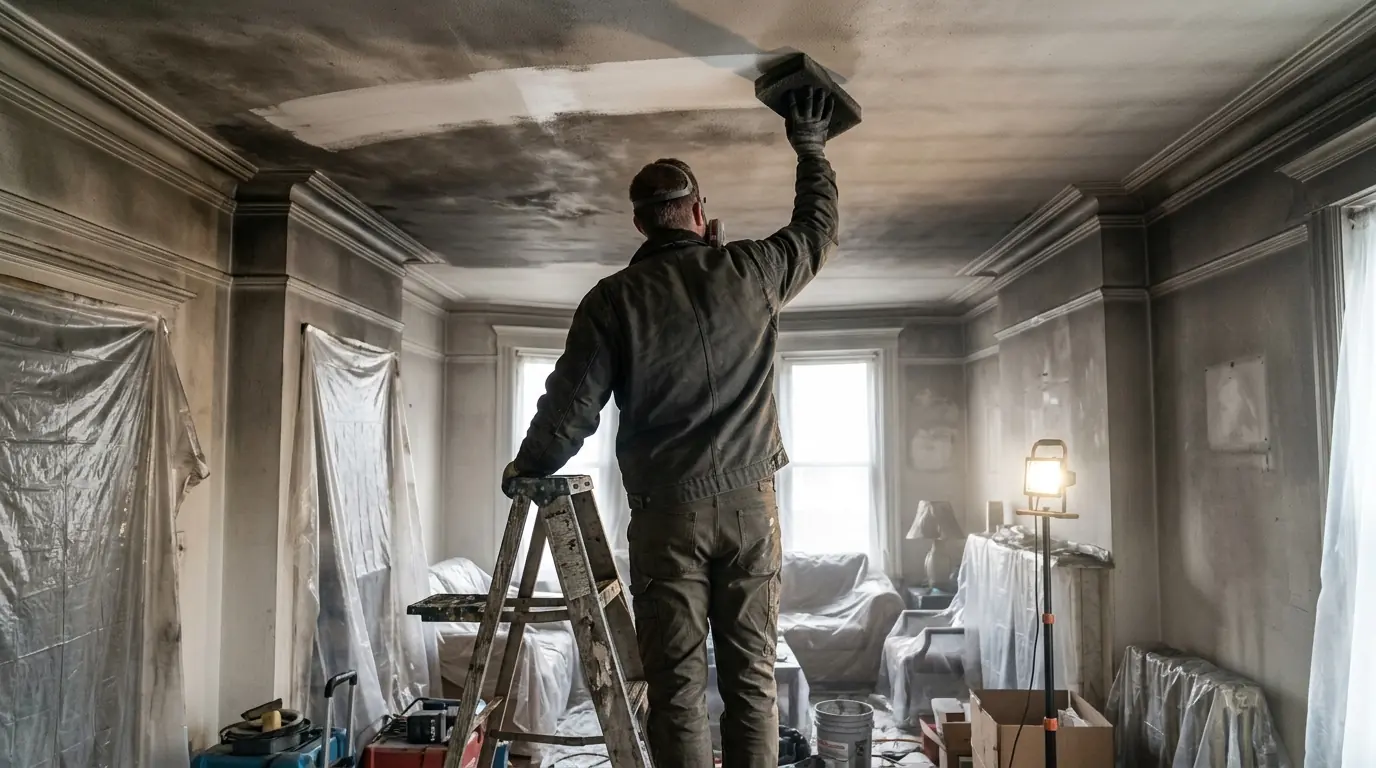
Dry-sponge soot cleanup on a rowhouse ceiling
Why is soot cleanup different in DC's older houses?
A lot of DC's housing stock was built before drywall, so soot jobs here mean plaster, exposed brick and layers of old paint. Rowhouses in Capitol Hill, Dupont Circle and Shaw often have a party wall stripped to the brick, which looks good but holds soot in its rough face and soft lime mortar, so pressure washing is out and gentle masonry cleaning takes its place. Plaster ceilings in houses from the 1900s to the 1940s may have hairline cracks and older paint layers underneath, which can include lead-based paint, so we avoid aggressive scrubbing and sanding that could disturb them. Many of these houses still run on radiators fed by old boilers, and some detached homes in upper Northwest and Chevy Chase were converted from oil heat only partly or not at all, so furnace and boiler puffbacks remain a regular call. Fireplaces are another source, since many original chimneys were built for coal and draw poorly with modern gas inserts or wood fires.
Where we do this work: Washington, DC and nearby Maryland and Virginia, including:
Related work we often do on the same job
Smoke Damage Cleanup
Smoke damage cleanup removes the residue a fire leaves on walls, ceilings, ducts and belongings, then neutralizes the odor tied to it.
How we handle it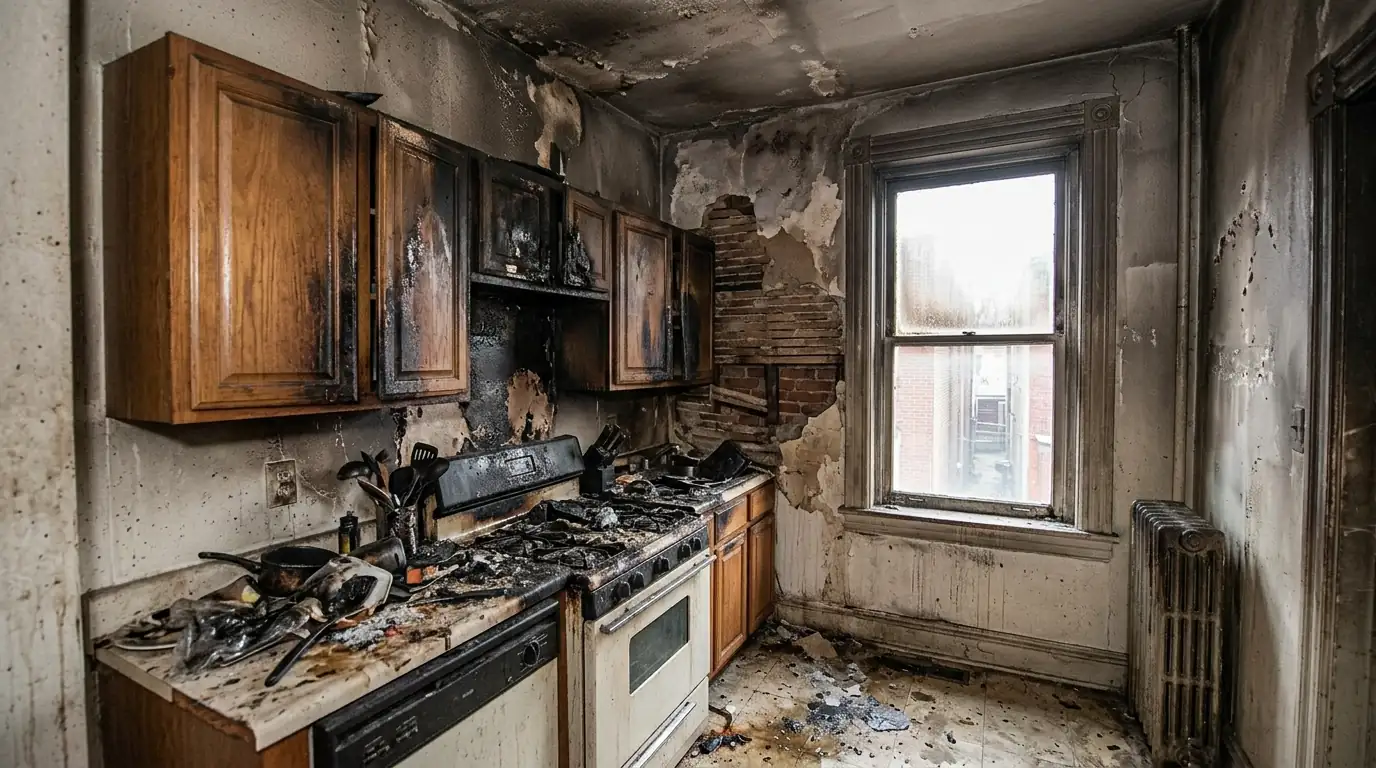
Fire Damage Restoration
Fire damage restoration is the full recovery of a home after a fire: boarding and tarping openings, removing firefighting water, cleaning soot and smoke residue, treating odor, handling contents and preparing for repairs.
How we handle it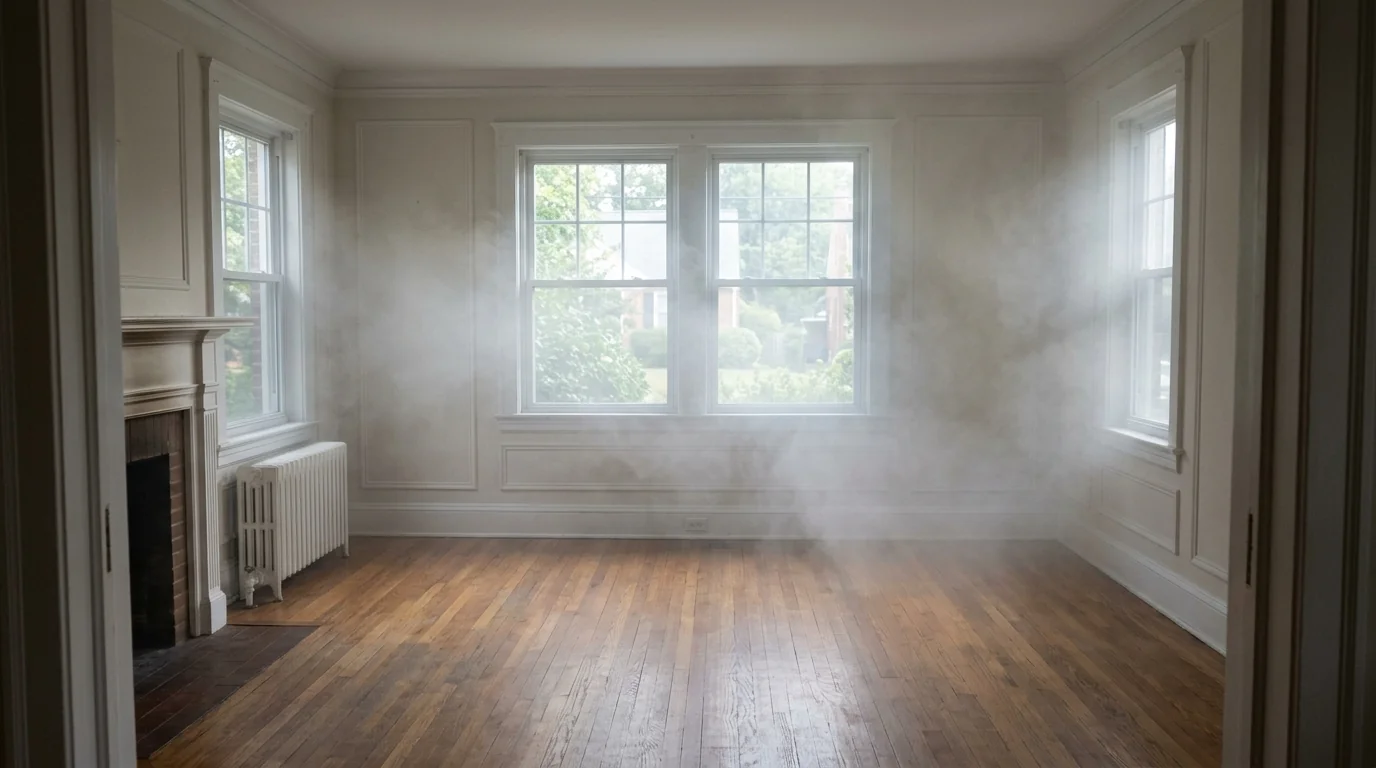
Odor Removal
Odor removal is the process of finding what's causing a persistent smell in a home, removing or cleaning that source, and then treating the remaining odor with methods like thermal fogging, hydroxyl generators or, in empty spaces, ozone.
How we handle it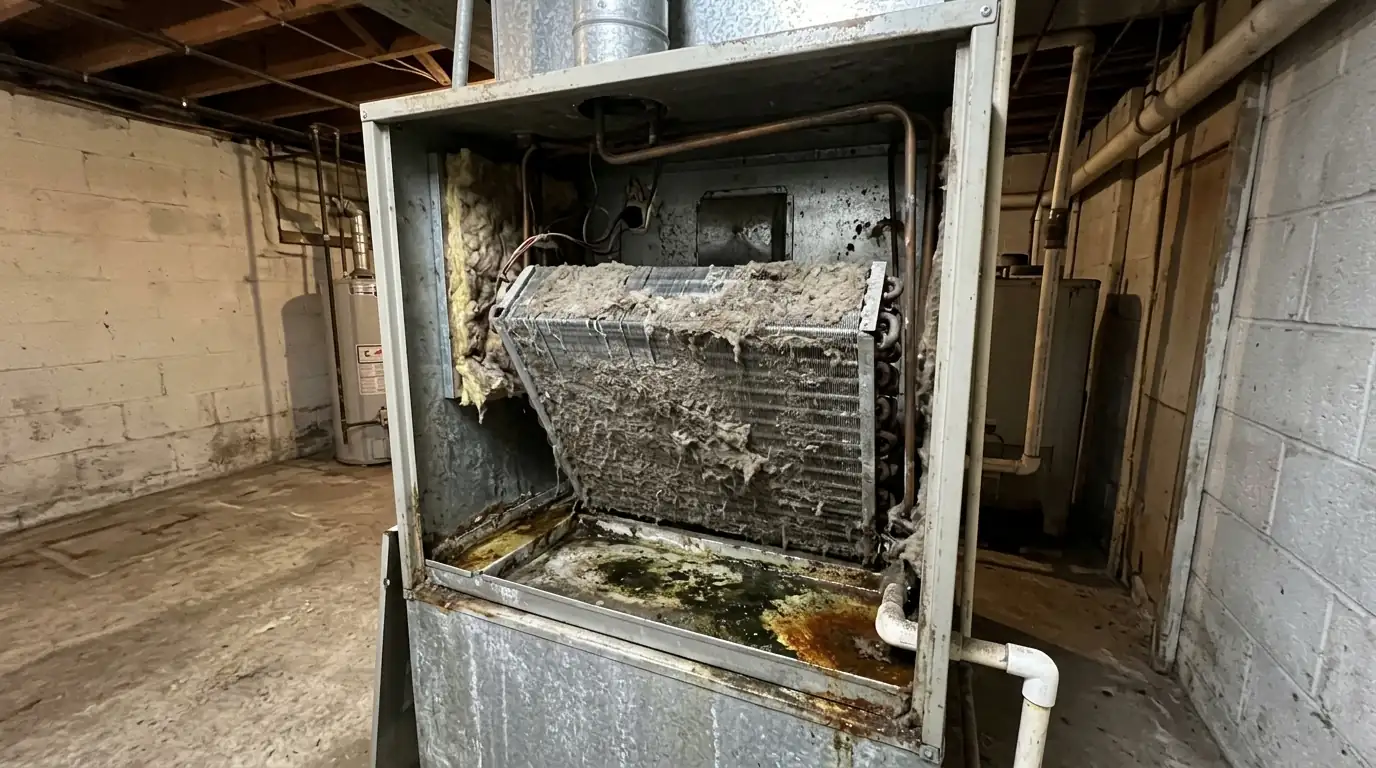
HVAC & Duct Mold Cleaning
HVAC and duct mold cleaning removes growth from the parts of a heating and cooling system that stay wet: the evaporator coil, drain pan, blower and the ducts closest to them.
How we handle itQuestions homeowners ask about soot removal
What is a dry chemical sponge, and can I use one myself?
Despite the name, a dry chemical sponge is vulcanized natural rubber with no chemicals in it. It pulls soot off surfaces like an eraser. You can buy them at hardware stores and use them on a small area of light soot: wipe in one direction with light pressure and never wet the sponge. Large areas, oily residue or ceilings are better left to us.
Is soot dangerous to breathe?
Soot is made of very fine particles that can irritate the eyes, nose, throat and lungs, especially in people with asthma or other breathing problems. Avoid stirring it up, keep children and pets out of affected rooms, leave the forced-air system off and wear an N95 mask if you must go in. We run HEPA air scrubbers during cleanup to capture particles in the air.
What is a furnace puffback?
A puffback is a small explosion inside an oil or gas furnace or boiler, usually caused by a delayed ignition. It blows soot through the ductwork or out of the burner chamber, coating rooms with a fine black film. The heating system needs repair by a qualified technician before relighting. Then the ducts, registers and every affected surface need soot cleaning.
Can soot be cleaned off exposed brick?
Yes, but with care. Brick in older DC houses is often soft and the mortar is lime based, so pressure washing and harsh acids can damage both. We HEPA vacuum first, then use gentle water cleaning and masonry-safe detergents. Deep stains may need a poultice that draws soot out. Some faint discoloration in very porous brick may remain after cleaning.
Do I need to repaint after soot removal?
Not always. Glossy paint and lighter soot often clean up completely. Flat paint, heavy soot, or walls that were wiped wet before we arrived usually need a stain-blocking primer and new paint, since residue sets into the finish. We show you the results room by room. Lingering smells after soot cleanup are a separate issue handled by our odor treatment work.
Water in the house or a musty room you can't explain?
Call JEC Restoration any time. We answer 24/7 and talk through what you are seeing before anyone touches a wall.