Prevention & Repairs
Sump pump installation and replacement in Washington, DC and nearby suburbs
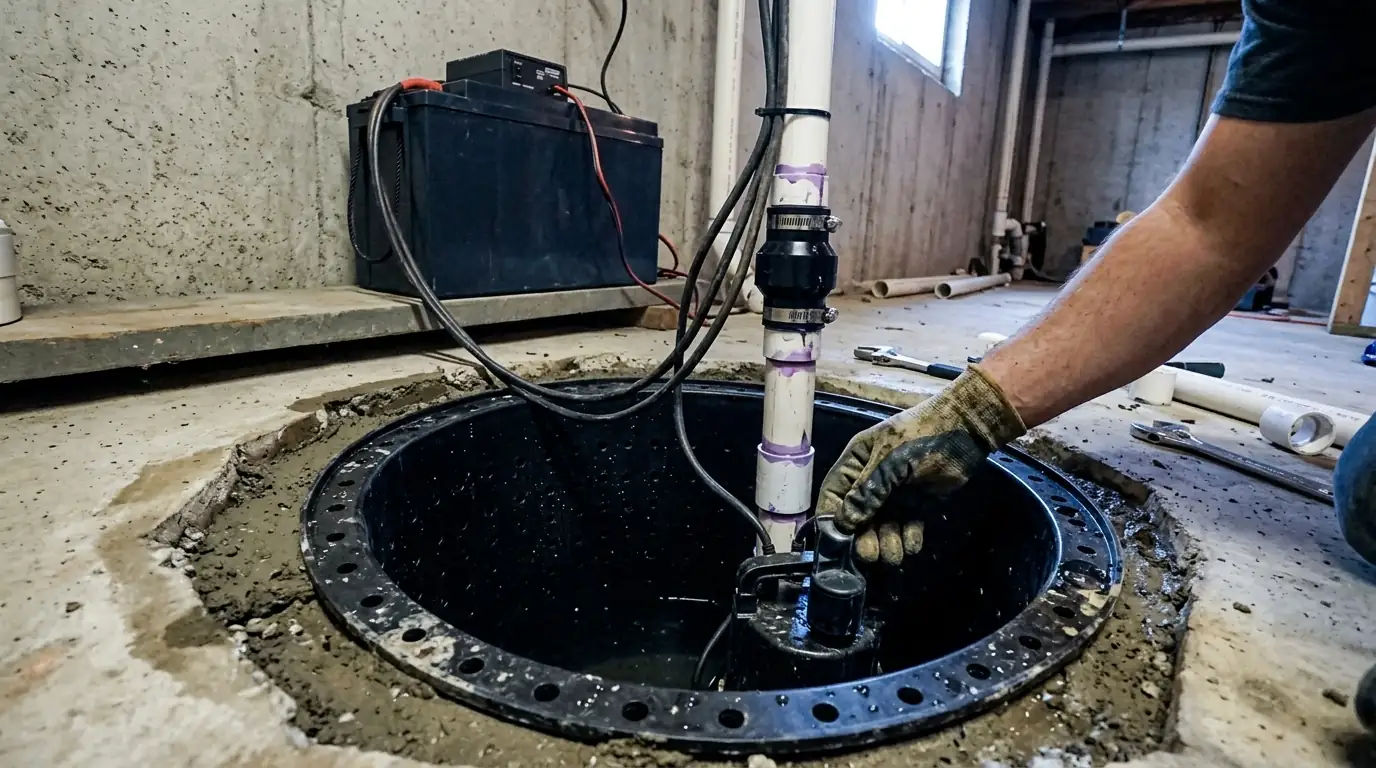
A sump pump only helps if the pit sits where groundwater collects and the discharge line carries it well away from the house. We install new pits, replace failing pumps and add battery backup so a storm outage does not flood the basement.
Drying, air and detection equipment on our jobs comes from names like
- Dri-Eaz
- Phoenix
- B-Air
- Abatement Technologies
- Protimeter
- Delmhorst
- FLIR
- Benefect
- Concrobium
- Omnitec
- Sapphire Scientific
- Tramex
A sump pump sits in a lined pit at the low point of a basement and pumps out groundwater that collects there from under the slab or from a perimeter drain. You need one when water rises through the floor or at the base of the walls after heavy rain. It will not stop sewer backup through a floor drain or rain coming in under a door; those need different fixes.
Will a sump pump fix the water in your basement?
A sump pump solves one specific problem: groundwater building up under and around the basement. When the soil around the foundation saturates after a long rain, water pushes up through the slab, seeps in along the base of the walls, and finds the lowest point in the room. A pit set at that low point, ideally fed by a perimeter drain, gives the water somewhere to go, and the pump lifts it out before it reaches the floor.
It does not help with every wet basement. Water pouring in under an English basement door comes from a clogged stairwell drain. Murky, smelly water coming up through a floor drain in a heavy storm is usually the sewer backing up, which calls for a backwater valve and a sewage cleanup, not a pump. A damp wall with no standing water may be a gutter or grading problem. If you are not sure which one you have, our sewer or groundwater checklist lays out the clues, and we check for all of them before recommending a pit.
Signs your basement needs a new pump or a pit where none exists
Some of these point to a failing pump; others mean the house never had the right setup.
Water at the wall base after rain
Seepage along the joint between wall and slab, with no pit to collect it, is the classic case for adding a sump.
Pump runs in dry weather
Frequent cycling with no rain can mean a failed check valve, a high water table, or a leaking water line near the foundation.
Humming with no water moving
A motor that hums but does not pump usually has a jammed impeller or a seized bearing, and it can burn out quickly.
Float hangs on the pit wall
A tethered float that catches on the liner or a cord leaves the pump off while the pit fills. A vertical switch avoids this.
Rust and grinding noises
Corrosion on an old cast pump and a grinding sound at start-up are signs it is near the end of its working life.
Wet floor during a power outage
If the basement only floods when the power goes out, the pump works fine; it just needs a backup.
What does sump pump installation cost around Washington, DC?
The biggest cost difference is whether the pit already exists. Discharge routing through brick and a backup system add the most to a new install.
| Replace pump and check valve in an existing pit | $485-$1,140 |
|---|---|
| Battery backup pump and alarm added to an existing pit | $780-$1,690 |
| New pit, pump and discharge line, open basement | $2,680-$5,350 |
| New pit with short interior drain runs to the problem walls | $4,950-$9,780 |
Treat these as typical DC-area numbers rather than quotes; your price is set after we see the basement and the discharge route in person. Compare ranges across all 40 services.
What moves the price
- Existing pit or new cut
- Discharge route and wall type
- Pump size and lift height
- Backup system choice
- Finished floor or walls in the way
How we install or replace a sump pump
A new pit takes most of a day; swapping a pump in an existing pit is usually a few hours.
Find the low point
We check moisture readings across the slab and look at where water has stood before. The pit goes where groundwater naturally collects and where a discharge line can exit.
Cut and dig the pit
We saw-cut a circle in the slab, dig below it and set a perforated liner in gravel. Dust stays inside plastic sheeting with an air scrubber running.
Set the pump and valve
A submersible pump with a vertical float goes in, sized for the inflow and the height it has to lift. The check valve and a union go in above it so the pump can be changed later without cutting pipe.
Run the discharge line
PVC runs up and out through the rim or wall, sealed where it leaves the house, and drains to the yard well away from the foundation. We add a freeze relief fitting outside.
Patch, backup and test
We patch the slab around the liner, mount the battery backup and alarm if included, and fill the pit with water to watch both pumps cycle and drain.
When can a DC rowhouse take a sump pit, and when can it not?
Many rowhouses were built with no pit at all, and adding one is possible more often than owners expect. It works when there is a poured slab to cut, a corner or utility room where a pit fits, and a practical route for the discharge line to reach the rear yard or front garden without crossing a neighbor's lot. Routing the pipe up through the rear wall and out across the areaway is common.
It does not make sense in a few situations. Some rowhouse basements have only a thin skim of concrete over dirt, which needs a new slab first. Some have no outdoor space to discharge into, because the house covers the whole lot and the front is sidewalk. In condo buildings, cutting the slab and penetrating an exterior wall usually needs board approval. Discharge rules also vary, and most jurisdictions do not allow a sump to empty into the sanitary sewer line, so we confirm what is permitted at your address before we cut. If a pit will not work, we tell you that up front and point to the fix that will.
Battery backup, check valves and discharge lines: what usually fails first?
The pump motor gets the attention, but most flooded basements we see with a sump in place failed somewhere else. The most common is power. Summer thunderstorms knock out electricity in the same hours they soak the ground, and a pump without backup stops exactly when it is needed. A battery backup pump sits in the same pit beside the main one and runs off a sealed battery for several hours of normal cycling. Where the house has steady city water pressure, a water-powered backup is another option that needs no battery.
Next is the check valve, a one-way valve in the discharge pipe just above the pump. When it fails, the water in the pipe falls back into the pit after every cycle, and the pump runs twice as often and wears out early. Then there is the discharge line itself. A line that ends a foot from the foundation sends the same water straight back into the pit. One buried in a yard can freeze in January. We run it at least ten feet out where the yard allows, add a freeze relief fitting outside, and slope it to drain between cycles.
- A high-water alarm that sounds before water reaches the floor
- A sealed pit lid to keep soil gas, debris and humidity out
- A dedicated outlet so the pump does not share a circuit
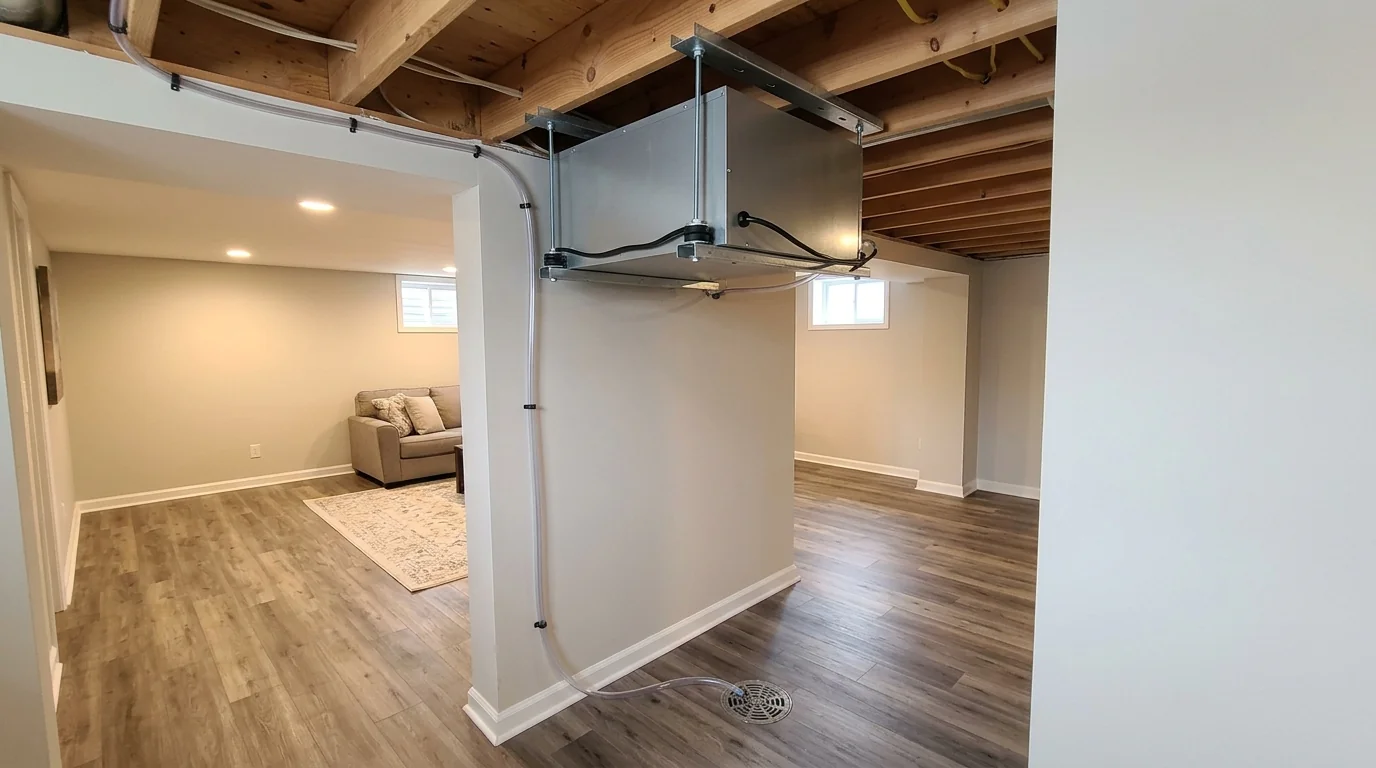
A whole-basement dehumidifier holding humidity down after the work
Which DC-area homes usually have a sump, and which ones need one added?
Split-levels, ramblers and colonials built from the 1960s through the 1980s across Montgomery, Prince George's and Fairfax counties often came with a pit and a perimeter drain from the builder. Those pumps are now on their third or fourth replacement, and many of the pits have no lid, no check valve and a discharge pipe that ends at the foundation. Houses near stream valleys, such as along Sligo Creek in Silver Spring and Takoma Park, along Northwest Branch near Hyattsville, or by Four Mile Run in Arlington, see the water table climb fast after a wet week, and those pumps cycle hard. Inside the District, detached houses in Brookland, Chevy Chase DC and the Palisades sometimes have a shallow pit with a pump that is too small. Rowhouses on Capitol Hill and in Shaw and Petworth rarely have one at all, which is why a basement that only got damp for decades can suddenly take water after a few heavy storms in a row, and why many owners pair a new pit with interior drainage along the leaking walls.
Where we do this work: Washington, DC and nearby Maryland and Virginia, including:
Related work we often do on the same job
Basement Waterproofing
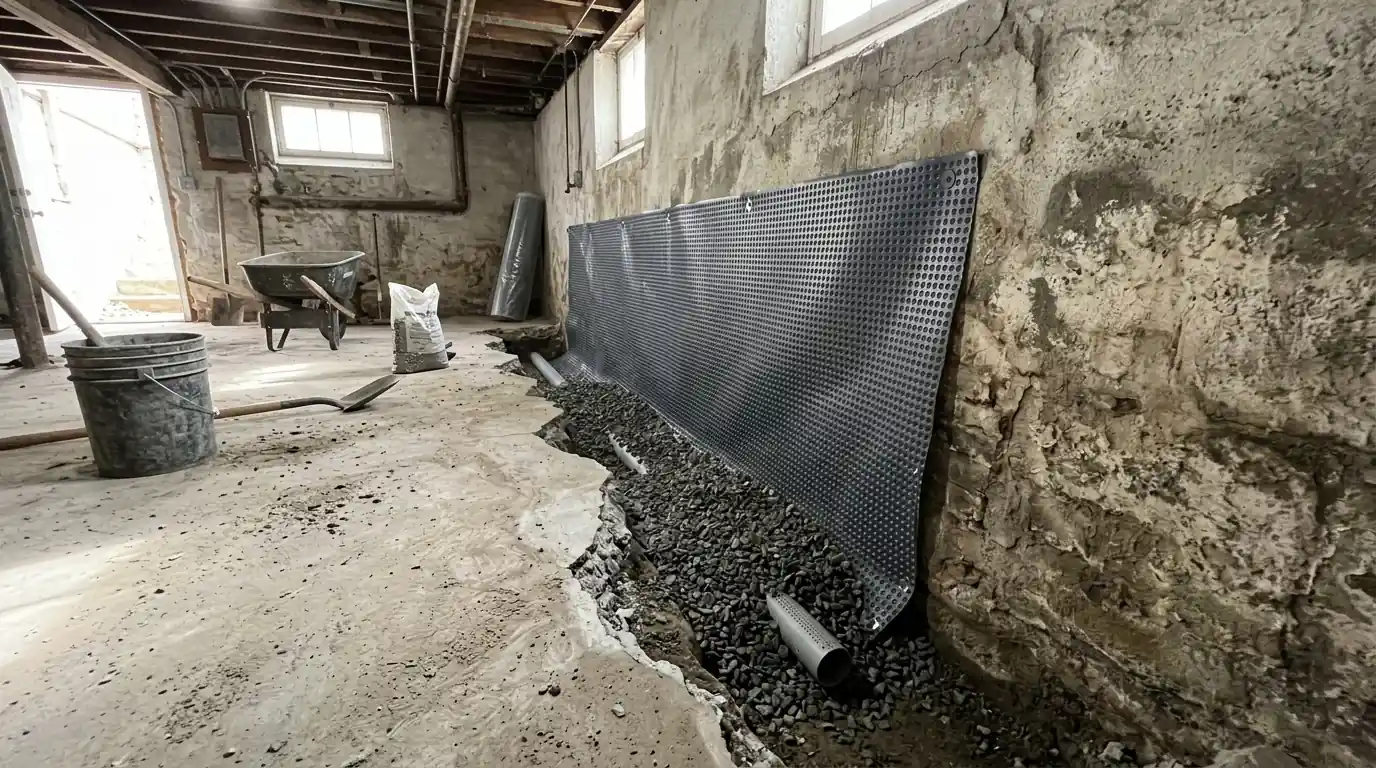
Basement waterproofing means stopping or managing the water that reaches a basement from outside: through wall cracks, mortar joints, the cove joint at the base of the wall, or a clogged stairwell drain.
How we handle it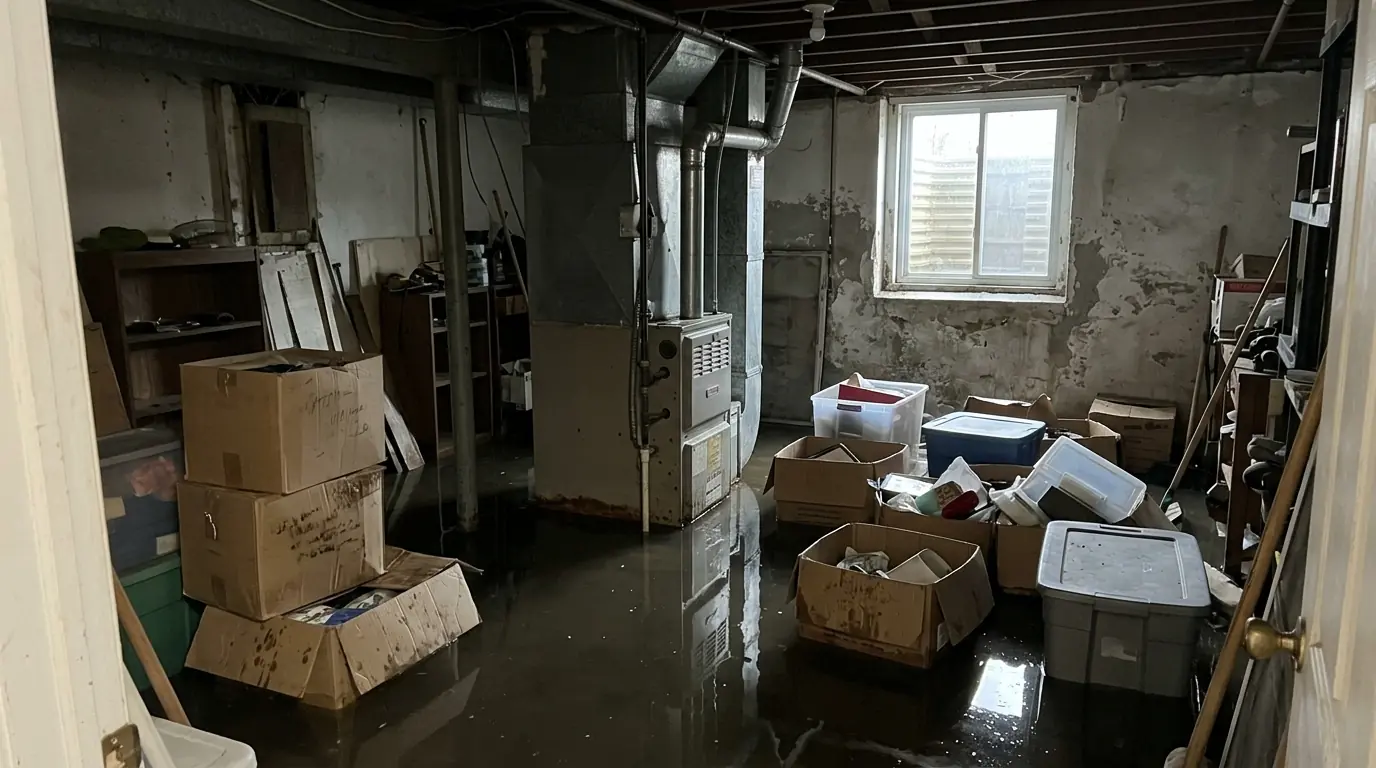
Flooded Basement Cleanup
Flooded basement cleanup removes water from a below-grade space, cleans and sanitizes what it touched, takes out finishes that cannot be saved, and dries the slab, walls and framing.
How we handle it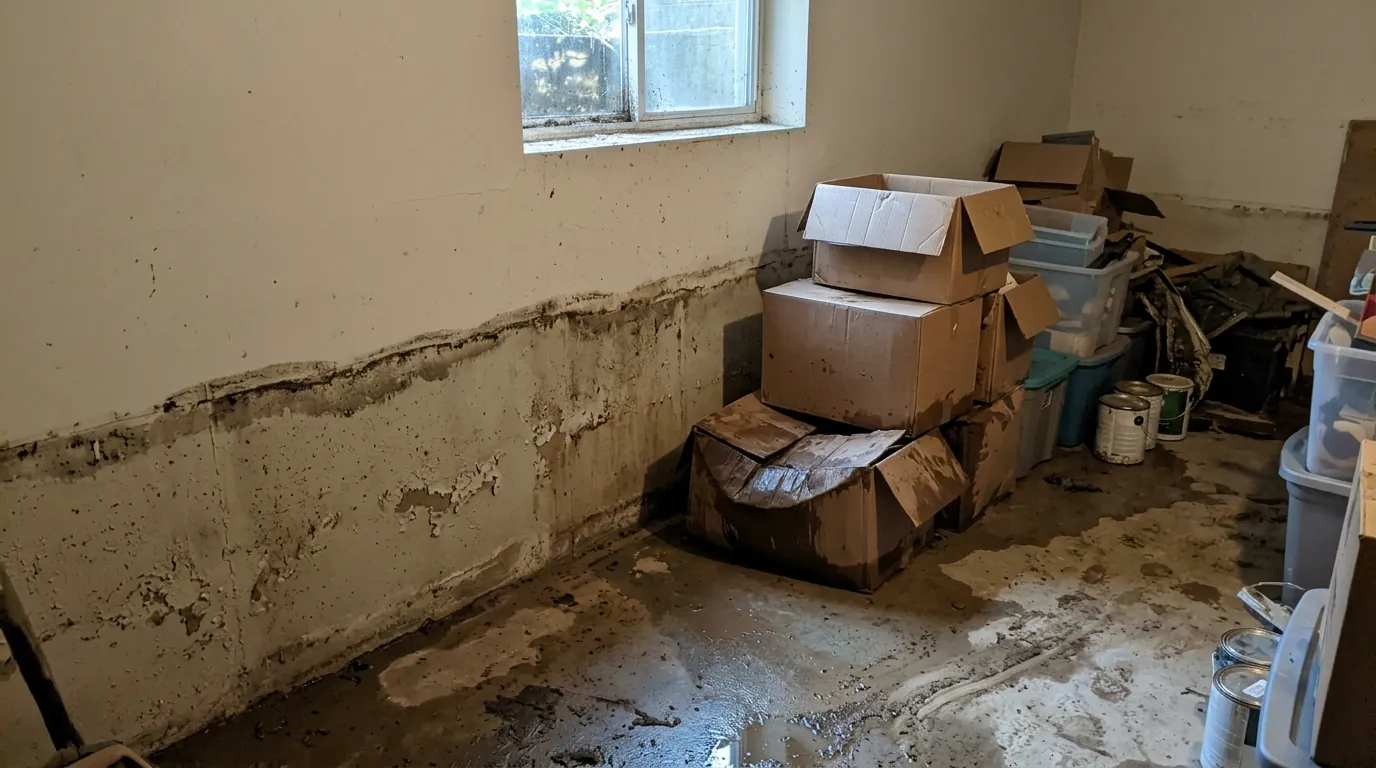
Storm & Flood Cleanup
Storm and flood cleanup covers water that enters a home from outside during heavy weather: flash flooding at basement doors and window wells, overflowing areaway drains, wind-driven rain through walls and windows, and roof openings from fallen limbs.
How we handle it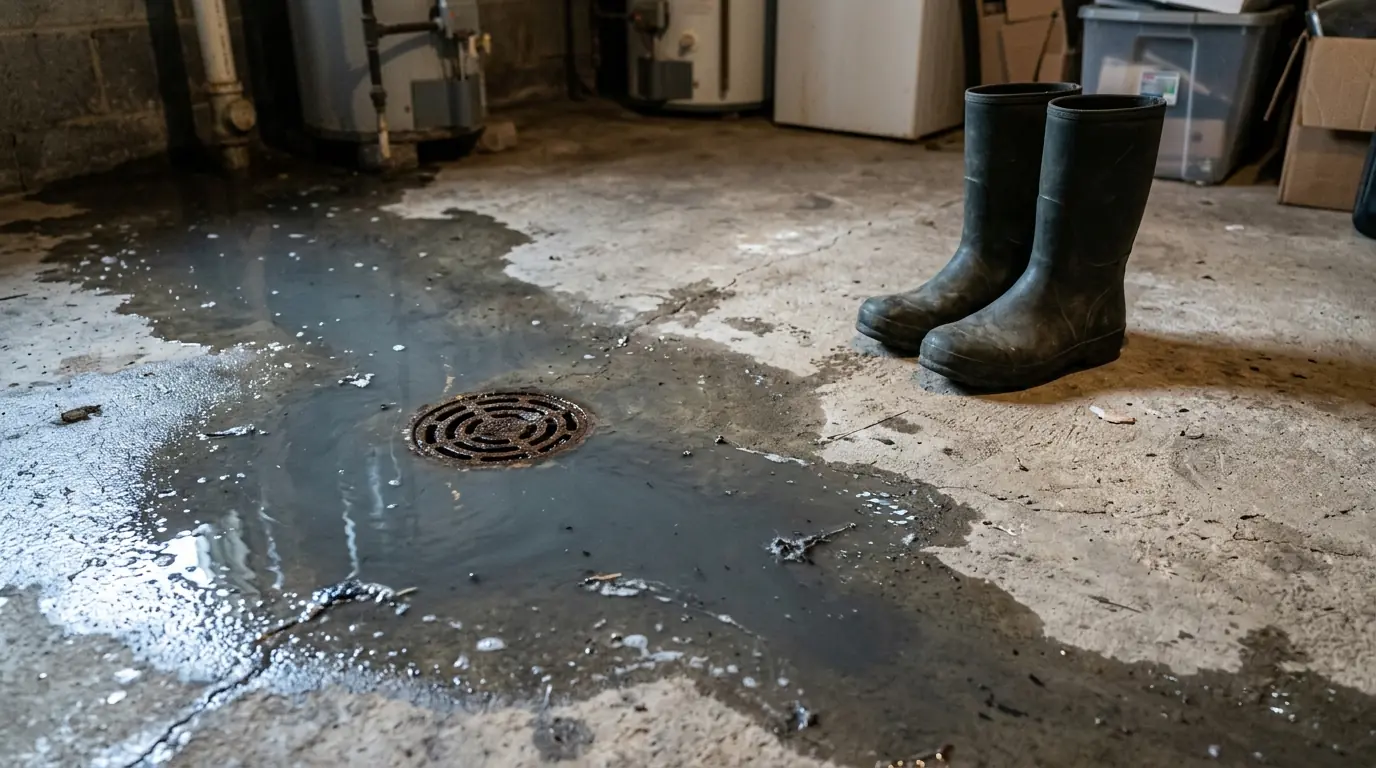
Sewage Backup Cleanup
Sewage backup cleanup is the removal of wastewater and the porous materials it soaked, followed by cleaning, disinfection and drying of the affected area.
How we handle itQuestions homeowners ask about sump pump installation
How do I test my sump pump before storm season?
Pour a bucket or two of water slowly into the pit until the float lifts. The pump should start, empty the pit in under a minute or so, and shut off cleanly. Walk outside and confirm water comes out the end of the discharge line. If you have a battery backup, unplug the main pump and repeat. Spring and late summer are good times to do this in the DC area.
Can my sump pump drain into the laundry sink or a floor drain?
In most cases it should not. Laundry sinks and floor drains connect to the sanitary sewer, and most jurisdictions do not allow groundwater from a sump to go there because it overloads the treatment system during storms. It also means sewer trouble can back up into the pit. We route the discharge outside, and if the yard is tight we look for a permitted spot that works rather than tying into a drain.
Why is my sump pump running when it has not rained for days?
Several things cause this. After a long wet spell, the water table can stay high for a week or more, especially near creeks. A failed check valve lets the same water fall back into the pit over and over. A leaking water service line or lawn irrigation near the foundation can feed the pit too. We check the valve first because it is the most common cause and the easiest fix.
Is a battery backup worth it for a basement near DC?
If the basement is finished, rented or holds anything you would hate to lose, usually yes. Summer thunderstorms and winter ice storms in this area often cut power during the same hours the ground is saturated. A backup pump with a charged battery covers several hours of normal cycling. Batteries need replacing every few years, and we show you how to check the charge indicator.
Can a sump pump go in a finished basement without being loud?
Yes. Submersible pumps sit under water in the pit and are much quieter than older pedestal pumps. A sealed lid cuts the noise further and keeps humidity and soil odors out of the room. The check valve can make a thump when it closes; a quiet-close valve reduces that. In a finished room we usually tuck the pit in a closet or under stairs with an access panel.
Water in the house or a musty room you can't explain?
Call JEC Restoration any time. We answer 24/7 and talk through what you are seeing before anyone touches a wall.