Mold Remediation
Black mold removal in Washington, DC, without the scare stories
Dark spots on a wall look alarming, and the internet makes them sound worse. Color alone tells you very little. We look at what the mold is growing on, how long it has been wet, and remove it the right way.
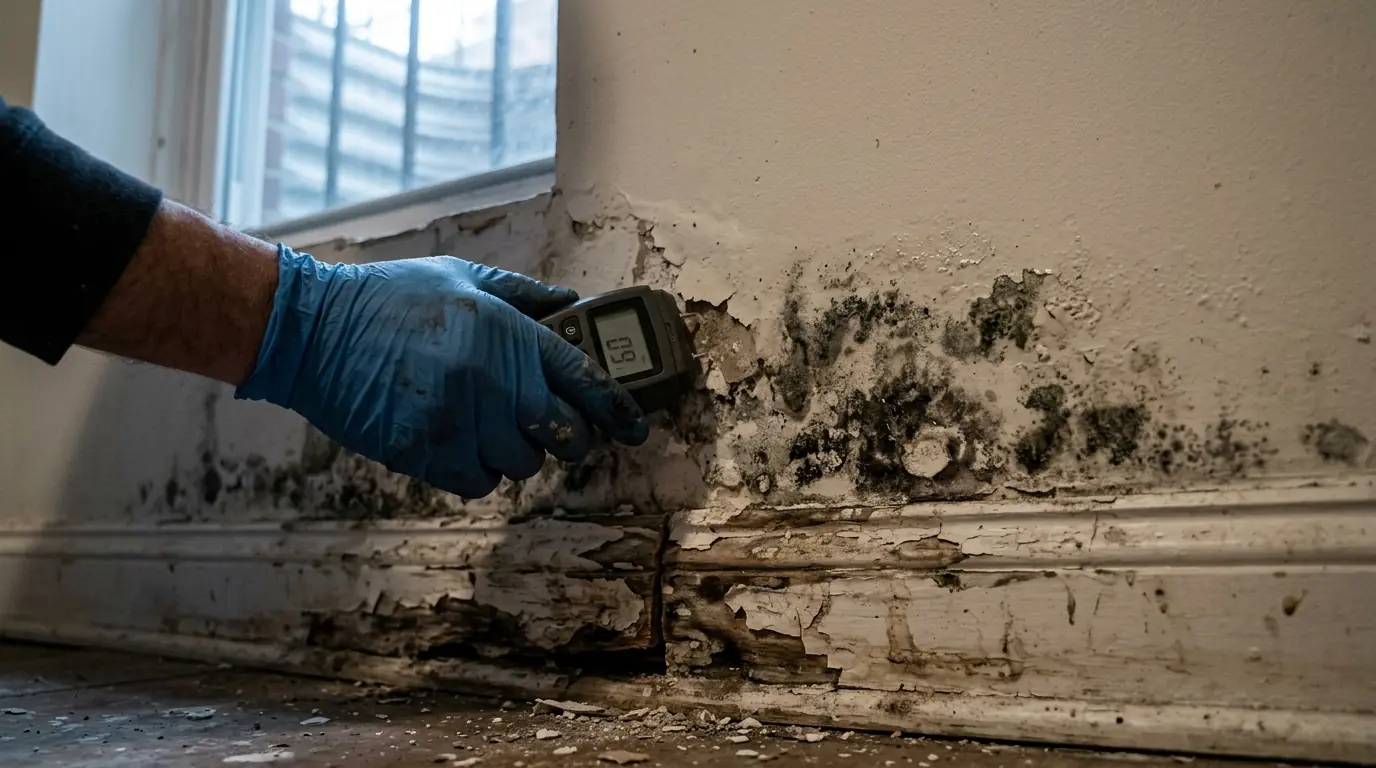
Drying, air and detection equipment on our jobs comes from names like
- Dri-Eaz
- Phoenix
- B-Air
- Abatement Technologies
- Protimeter
- Delmhorst
- FLIR
- Benefect
- Concrobium
- Omnitec
- Sapphire Scientific
- Tramex
Black mold is a common name for any dark-colored mold, though people often mean Stachybotrys chartarum, a slow-growing mold that needs drywall paper or other cellulose to stay wet for a long time. Many harmless-looking and serious-looking molds are both dark. Removal follows the same principle for all of them: contain the area, take out affected porous material, clean, and fix the moisture.
Is every black spot on the wall the mold people warn about?
No. Dozens of common molds grow dark green, gray or black, and most of the black growth we see in DC homes is Cladosporium, Aspergillus niger, Alternaria or Ulocladium. Cladosporium is the dark speckling on bathroom caulk, window sills and the north side of a cold closet wall. It is also one of the most common molds in outdoor air. Stachybotrys chartarum, the one most news stories mean by black mold, looks slimy and very dark when wet and sooty when dry, but so can several others.
Not everything dark is mold, either. Soot from candles and a gas fireplace leaves gray shadows along ceiling joists and behind pictures, a pattern called ghosting. Dirt collects in cold spots on exterior walls. Mildew on a shower curtain is a surface growth that wipes off. A tape-lift sample costs far less than a remediation job and settles the question in a few days when the answer matters to you.
How we handle dark mold from first look to final check
The steps follow the moisture, not the color.
Identify the material and the water
We note what the growth is on and take moisture readings outward from it until we reach dry material. A tape lift is offered when you want the genus named.
Set containment sized to the cavity
Containment is built around the full wet area, not just the visible spot. HEPA negative air keeps fragments inside the zone.
Mist, cut and bag
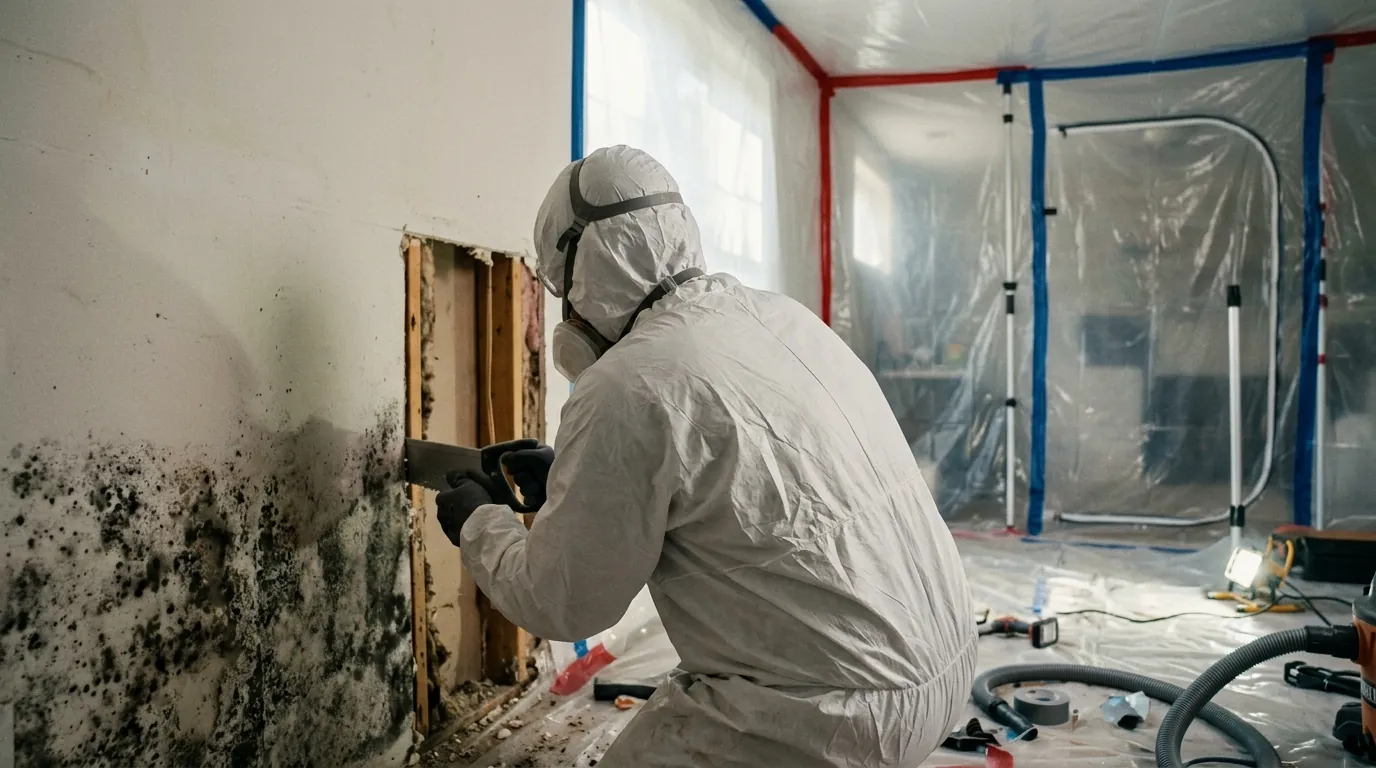
Surfaces are lightly misted to keep spores down, then drywall and insulation are cut in large sections past the growth and bagged in place.
Clean the framing and dry it
Studs and plates are HEPA vacuumed, scrubbed and sanded where stained. Dehumidifiers and air movers bring wood back to dry readings.
Fix the source and check the result
The leak or drainage problem is repaired or written up for repair. A final visual inspection, and sampling if you want it, closes the job.
What Stachybotrys actually needs to grow
Stachybotrys is a slow competitor. It shows up when a cellulose material, such as the paper face of drywall, ceiling tile, cardboard or wood, has stayed soaked for a week or more. Short wettings that dry in a day or two usually favor faster molds instead. That makes Stachybotrys a useful clue: if it is present, something has been wet for a long time, often a slow supply-line drip inside a wall, a roof leak above a ceiling, or flood water that sat behind baseboards.
That clue matters more than the name. A long-wet wall usually means wet framing, damp insulation and growth on the back of the drywall, which faces the stud cavity and is invisible from the room. The visible patch is often the smallest part of the problem. For that reason we treat any long-term wetting as a hidden-cavity job until readings prove otherwise, regardless of the color on the surface.
Clues that dark growth points to long-term moisture
Color is not the clue that matters. These conditions are.
Growth on drywall paper, not tile
Dark mold growing into the paper face of drywall or ceiling board means that material held water for a long stretch.
Slimy patch that smears
Wet, glossy black growth that smudges when touched is typical of an active, saturated surface.
Stain spreading from a seam or corner
Growth that fans out from a baseboard, ceiling corner or plumbing wall points to a source inside the cavity.
Warped baseboard or loose tile
Swollen trim and tiles that lift near a wall show water has been sitting at floor level.
Boxes or paper growing spots
Cardboard and books stored against a basement wall grow dark mold when the wall stays damp.
Odor stronger after rain
A musty smell that peaks after storms suggests water entry through masonry, flashing or a window well.
Why the removal method is the same for every color of mold
The EPA and CDC both make the same practical point: you do not need to know the species to decide how to handle growth indoors. Any mold can trigger allergy and asthma symptoms in sensitive people, and the safe approach is the same for all of them. Contain the area if it is larger than about 10 square feet, keep dust down, remove porous materials that have growth in them, clean hard surfaces, and dry the source.
Where Stachybotrys changes our work is in the handling. Its spores are sticky and heavy when wet, so they do not float easily, but once the growth dries out and someone scrapes or tears the drywall, fragments become airborne. We mist the surface lightly before cutting, cut sheets in larger pieces instead of breaking them, and bag them inside containment. Fear-based offers to fog a house or treat it with a special product for black mold are a warning sign. Physical removal and drying are what work.
How big is the mold patch?
Measure the visible growth and enter it in feet. The EPA uses about 10 square feet as the line between a homeowner cleanup and a job that needs containment.
Measure the visible growth, including any faint edges.
Growth inside walls, in ductwork or after sewage or floodwater needs professional cleanup at any size.
What black mold removal costs, and why the color does not change the price
We price by the amount of wet material and the containment it needs, not by the species name on a lab report.
| Tape-lift identification of a dark stain | $85-$135 per sample |
|---|---|
| Drywall section, one wall cavity, with containment | $1,640-$3,870 |
| Ceiling cavity under a condo or bathroom leak | $2,240-$5,180 |
| Basement wall run with bottom plate replacement | $3,950-$8,620 |
Figures shown are typical for the DC area and are not quotes; your price is set after we assess the wall or ceiling on site. Compare ranges across all 40 services.
What moves the price
- Size of the wet area behind the surface
- Ceiling or wall height and access
- Framing that needs sanding or replacing
- Cabinets or built-ins to remove first
- Drying time before rebuild
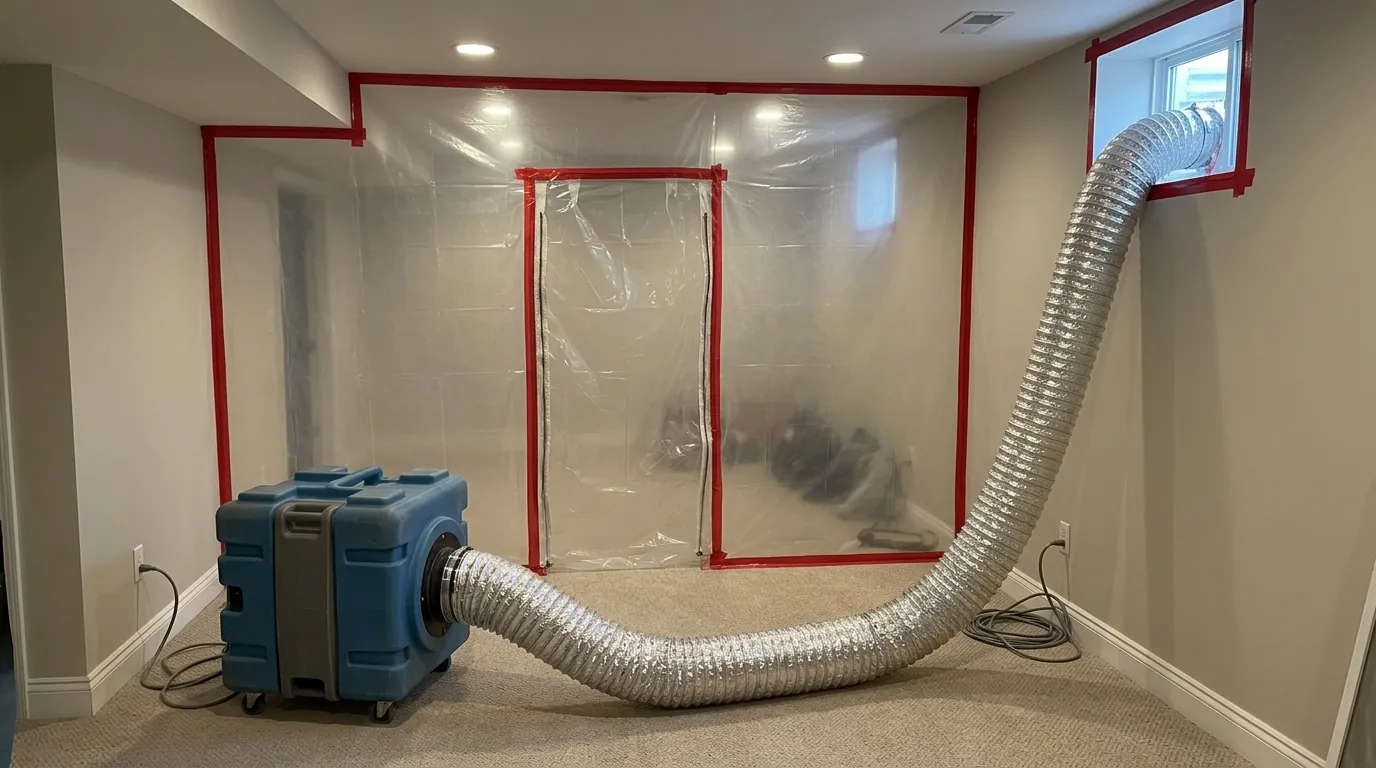
Sealed containment with HEPA filtration on a basement mold job
Where long-wet drywall turns up in DC homes
The jobs where we actually find Stachybotrys in Washington tend to share a story: water ran unseen for weeks. In condo buildings, a slow drain leak from the unit above soaks a ceiling cavity, and the owner below notices only when the paint bubbles. In rowhouses that were renovated in the 1990s and 2000s, drywall was hung over the original brick, and a failed flashing or an overflowing rear gutter wets the back of that drywall every storm. Behind kitchen cabinets, a pinhole leak at a dishwasher supply line can feed growth for months.
English basement apartments add another version. Water seeping through the front foundation wall beneath the stoop wets the bottom few inches of drywall and the wood bottom plate, and furniture pushed against the wall hides it. We see this from Shaw to Petworth and in older Takoma Park bungalows. Most of these jobs end with the same advice: dry the wall, then deal with the water entry. Our article on black mold myths explains why spending on fogging instead of repairs leaves the problem in place.
Where we do this work: Washington, DC and nearby Maryland and Virginia, including:
Related work we often do on the same job
Mold Remediation
Mold remediation is the controlled removal of mold growth from a building.
How we handle it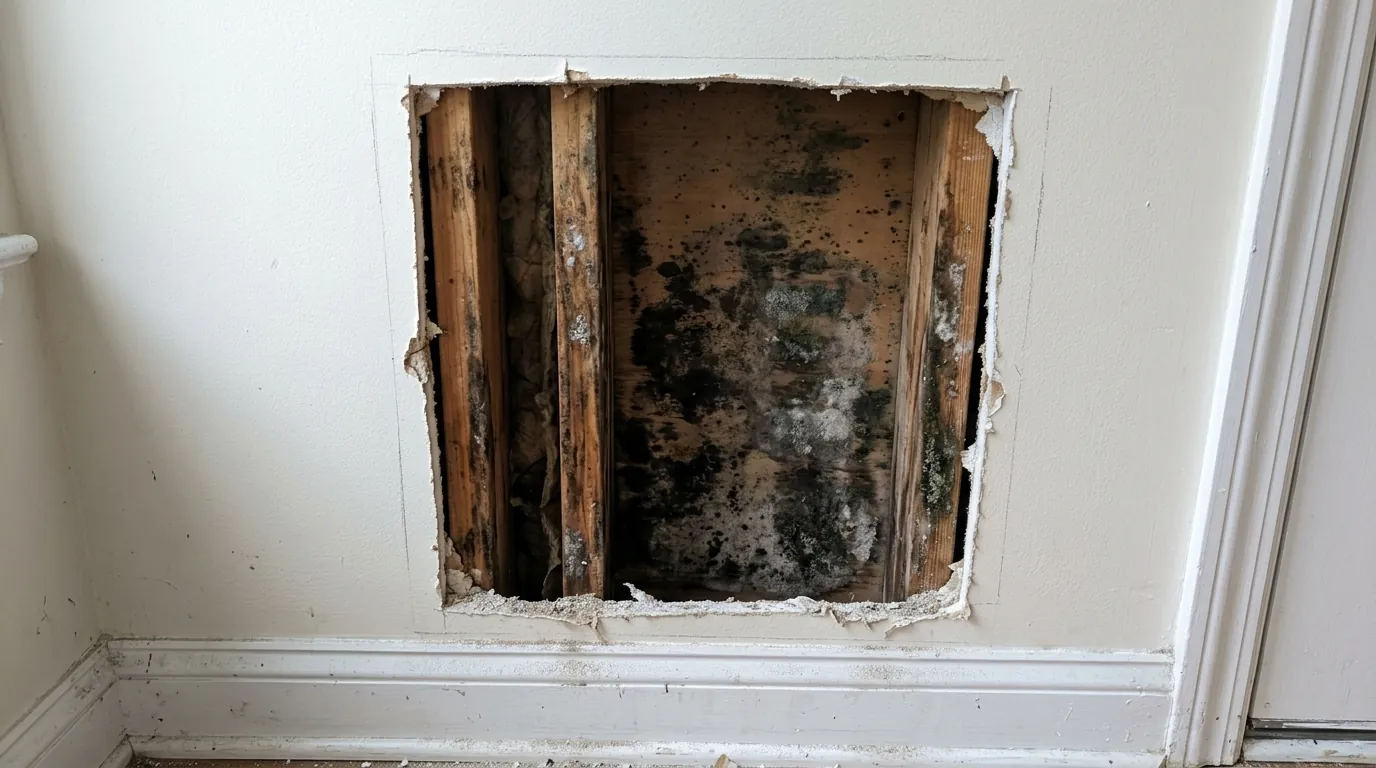
Mold Behind Drywall
Mold behind drywall grows on the back of the paper facing, on studs and on insulation inside a wall that has stayed damp from a slow leak, condensation or an old flood.
How we handle it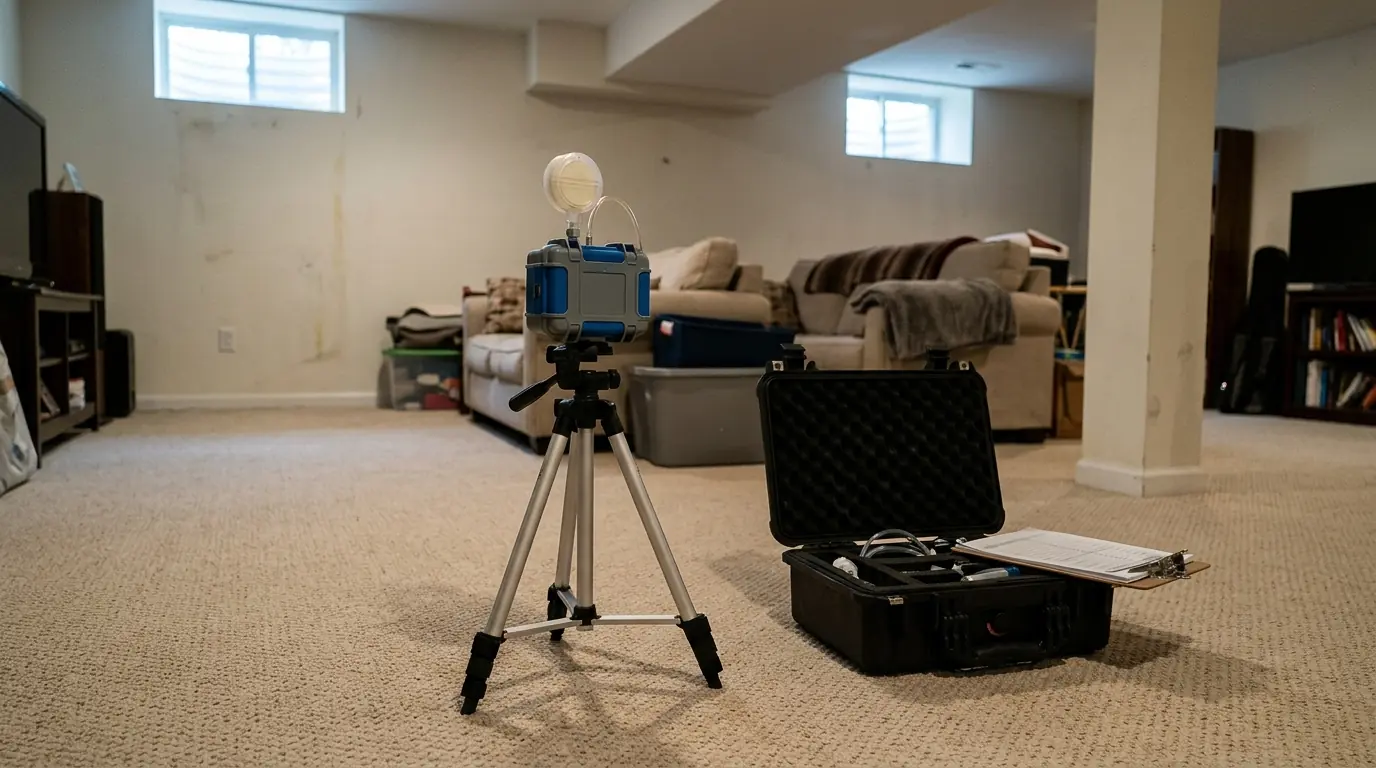
Mold Inspection & Testing
A mold inspection is a room-by-room check for visible growth and the moisture that feeds it, using a moisture meter, a thermal camera and a hygrometer.
How we handle it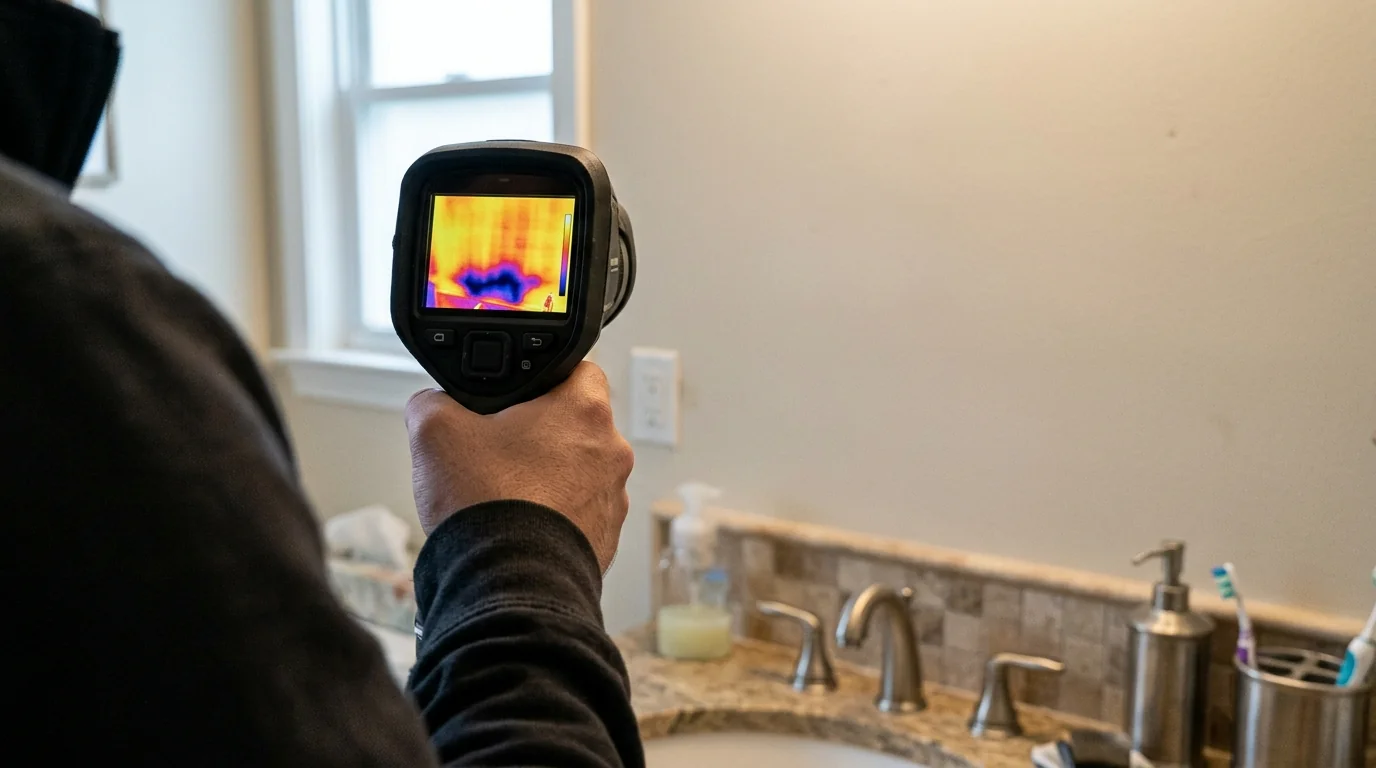
Moisture & Leak Detection
Moisture and leak detection is a non-invasive survey that finds where water is hiding in walls, ceilings and floors and how far it has spread.
How we handle itQuestions homeowners ask about black mold removal
Can I just paint over black mold with mold-resistant paint?
Paint seals the surface but leaves the growth and the moisture behind it. If the drywall is still wet, the mold keeps growing on the back of the sheet and through the paint film within months. Mold-resistant primer is useful on new drywall after the cause is fixed and the framing is dry, not as a cover for existing growth.
Is Stachybotrys more dangerous than other molds?
It is one of several molds that can produce compounds called mycotoxins, and it gets a lot of attention for that. Public health agencies have not tied a specific illness in homes to it with certainty. What is clear is that any indoor mold can trigger allergy and asthma symptoms in sensitive people, so all visible growth should be removed the same careful way.
Do I need to throw out furniture that was near black mold?
Hard furniture such as wood, metal and plastic can usually be HEPA vacuumed and wiped clean. Upholstered pieces, mattresses and cardboard boxes that have visible growth on them are hard to clean fully and are usually discarded. Items that sat near the wall without growth on them typically just need cleaning. We sort contents with you before work starts.
Why did black mold appear only on the lower part of my wall?
Growth limited to the bottom foot or two of a wall almost always means water at floor level. Common causes are seepage through a foundation wall, a past flood that wicked up the drywall, or a leak that ran along the floor under cabinets. The height of the stain is a good guide to where we start looking for the source.
Will bleach get rid of black mold on drywall?
Bleach may lighten the stain, but on porous drywall it does not reach growth inside the paper and gypsum, and the water in it adds moisture to the board. The EPA does not recommend bleach as a routine mold treatment. On drywall with growth, the reliable approach is to cut it out, clean the framing behind it and dry the cavity.
Water in the house or a musty room you can't explain?
Call JEC Restoration any time. We answer 24/7 and talk through what you are seeing before anyone touches a wall.