About us
How we approach remediation in DC area homes
A careful, measured way of handling water, mold, fire and sewage damage, built around the rowhouses, condos and suburban homes of the Washington area.
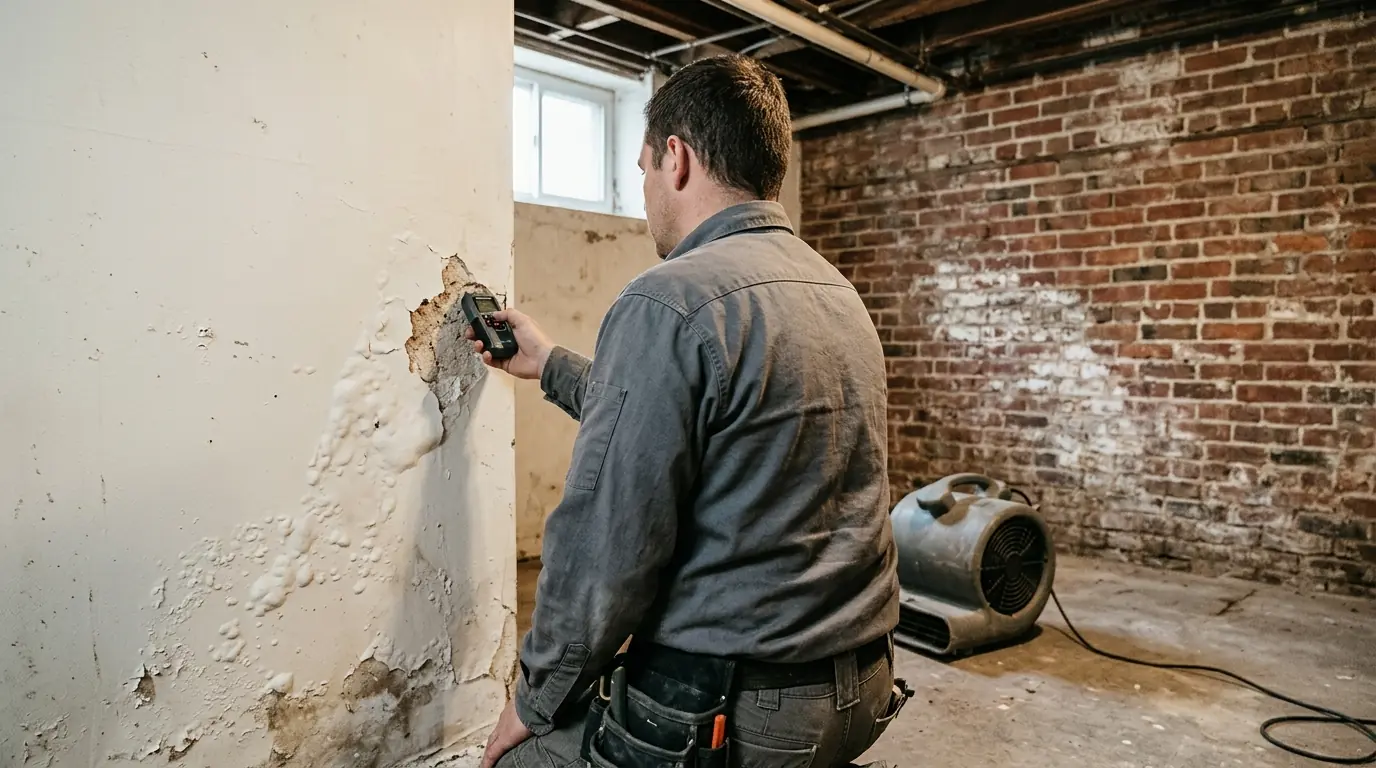
Measure first, then decide what comes out
Most damage looks worse or better than it is. A stain on a ceiling can hide a wet joist bay three feet away, and a buckled floor can sit over a dry subfloor. So every job starts with readings: pin and pinless meters, a thermal camera and a hygrometer for the air. We mark the wet edges on the wall, photograph them and use that map to decide what has to be removed.
That habit saves a lot of old houses. Plaster on lath, oak strip floors and original trim can often be dried where they are, which costs less and keeps the character of the house. When something is contaminated, like drywall soaked by sewage or pad under carpet that sat in gray water, it comes out and is bagged on site.
Why DC houses need their own approach
The city's housing stock is old, dense and connected. Rowhouses share party walls and sometimes attics, English basements sit half below the sidewalk, and many older neighborhoods drain into a combined sewer system that can push water back up through floor drains in a hard rain. Condo buildings stack kitchens and bathrooms, so one failed hose can reach several units.
We plan around those facts. In a rowhouse, we check the neighbor's side of a shared wall when readings point that way. In a condo, we work with building management and document each unit separately. In the suburbs, we look at sump pits, grading and crawl spaces before calling a job finished.
How you stay informed during the job
You will know what we found, what we plan to remove and why, before anything is cut. During drying, we take readings every day and share where each room stands against its goal. When the house is dry, you get the moisture logs, photos and an itemized scope in one set, which is what an adjuster usually asks for.
If something turns out to be outside our work, such as a plumbing repair or a new roof membrane, we tell you plainly and leave you with notes and photos your plumber or roofer can use.
Where we work
Our Washington, DC office is in upper Northwest near Tenleytown, and our headquarters is in Landover, Maryland, just east of the DC line. Between them we cover every quadrant of the city, Montgomery and Prince George's counties, and Arlington, Fairfax, Alexandria and Falls Church. The full list is on our DC neighborhoods page and the areas index.
Where to find us
Washington, DC office
4299 50th St NW, Ste 100 #7112
Washington, DC 20016
Headquarters
8604 Central Ave
Landover, MD 20785
Who writes our Knowledge Base
Winifred Larkin, Knowledge Base Editor. She turns the questions our technicians hear every week into plain guides, checks them against how DC houses are actually built, and updates them when practice changes.
Water in the house or a musty room you can't explain?
Call JEC Restoration any time. We answer 24/7 and talk through what you are seeing before anyone touches a wall.