Montgomery County, MD
Water damage restoration in Potomac, MD 20854
Potomac homes are big, and so are their leaks: a failed fitting in a second-floor laundry can wet three levels, and a walkout basement can hold thousands of square feet of carpet and millwork. We dry large homes room by room.
Potomac homeowners and property managers call JEC Restoration for large-home water drying, mold removal, fire and smoke cleanup, and sewage or septic backups, from Potomac Village and the Cabin John area to the larger lots off River Road and Falls Road. Our upper Northwest DC office is a short drive away. Call (202) 989-3053, answered 24/7.
Why does a leak in a large Potomac home turn into a large drying job?
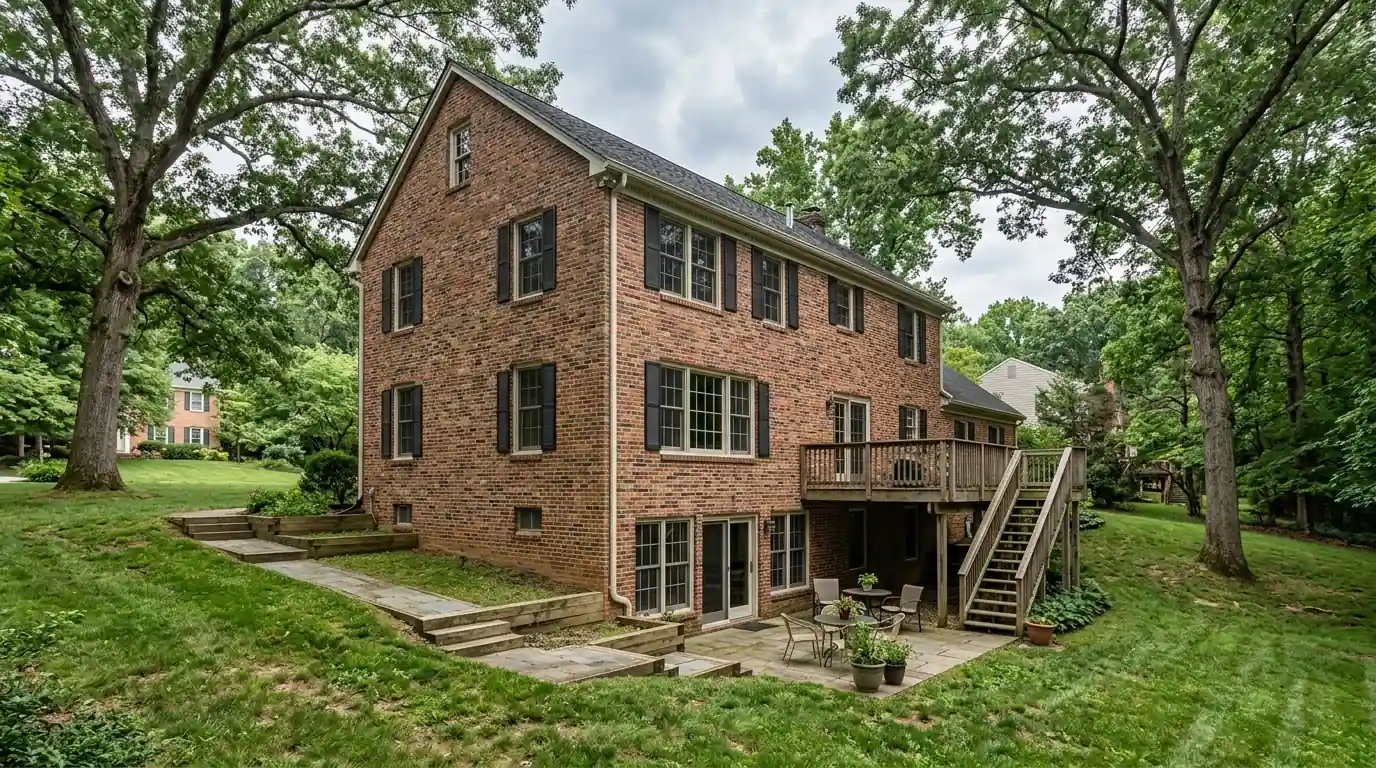
Much of Potomac, in 20854, was built from the 1960s onward as detached homes on lots of half an acre to several acres, and the houses kept getting bigger. Many are center-hall colonials and contemporaries with two-story foyers, multiple HVAC zones, second-floor laundry rooms, wet bars and whirlpool tubs. On sloped lots, the lower level is a finished walkout with a home theater, a gym, a guest suite and a kitchenette. Hardwood, built-in cabinetry, stone and custom millwork run throughout.
Size changes the job. A supply line that fails in an upstairs laundry while the family is away can run long enough to wet the floor system, the ceiling of the room below, and the walkout level underneath that. Water travels along joists and ducts far from where it started. More square footage means more equipment, more readings and a longer plan, so we map every affected room with meters and a thermal camera before deciding where dehumidifiers and air movers go. We also keep the unaffected parts of the house sealed off so the drying effort stays where it is needed.
Most-called services in Potomac
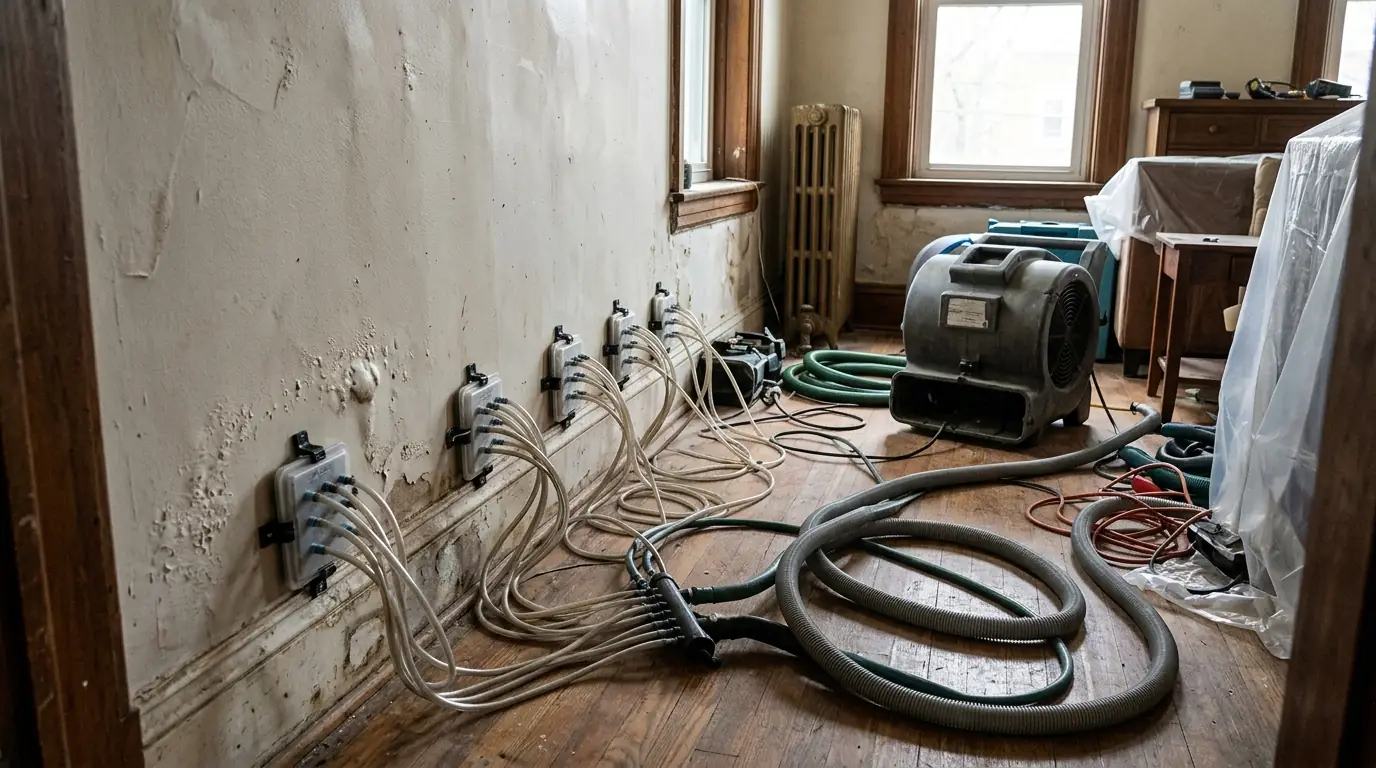
Structural Drying
Structural drying is the controlled removal of moisture from a building's framing, subfloor, wall cavities, plaster and masonry after a water loss.
How we handle it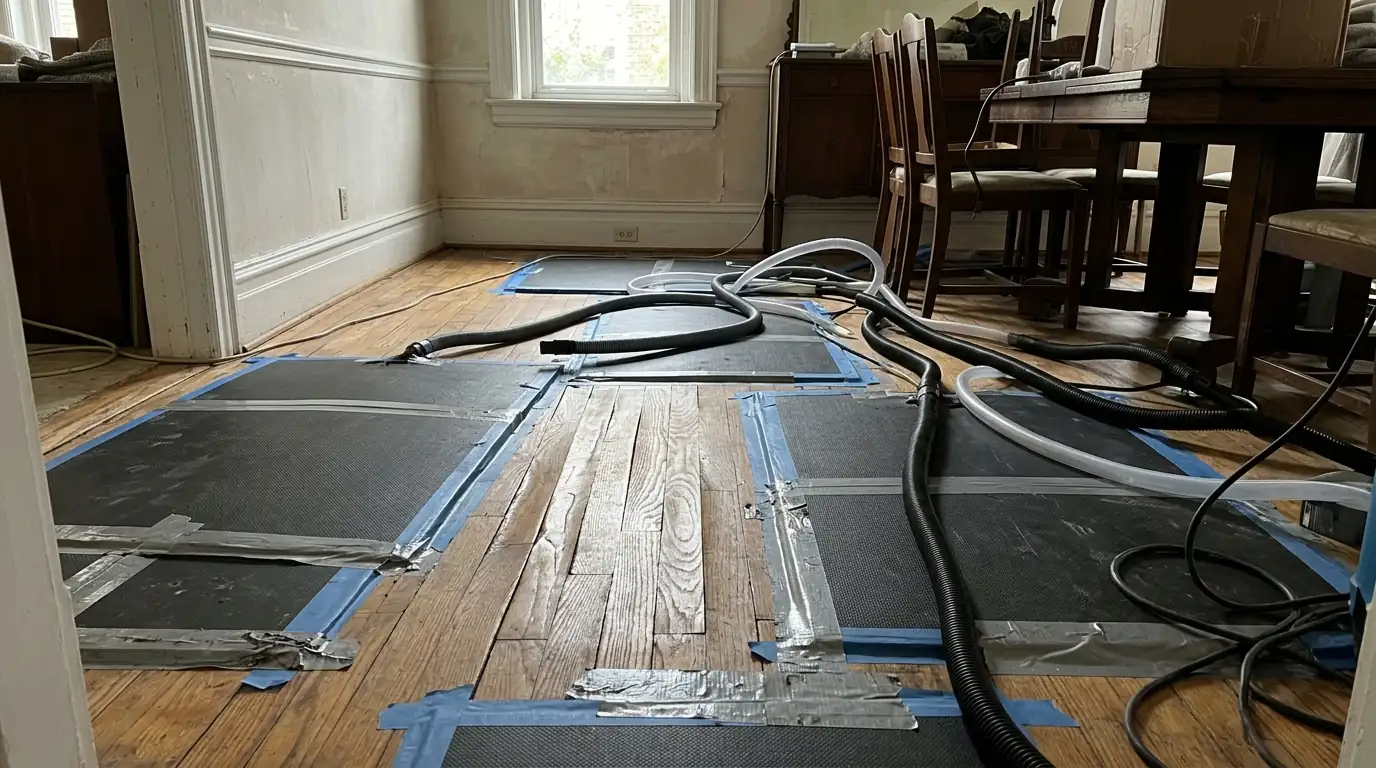
Hardwood Floor Drying
Hardwood floor drying removes water from solid wood flooring and the subfloor beneath it, usually with suction floor mats, dehumidifiers and steady monitoring.
How we handle it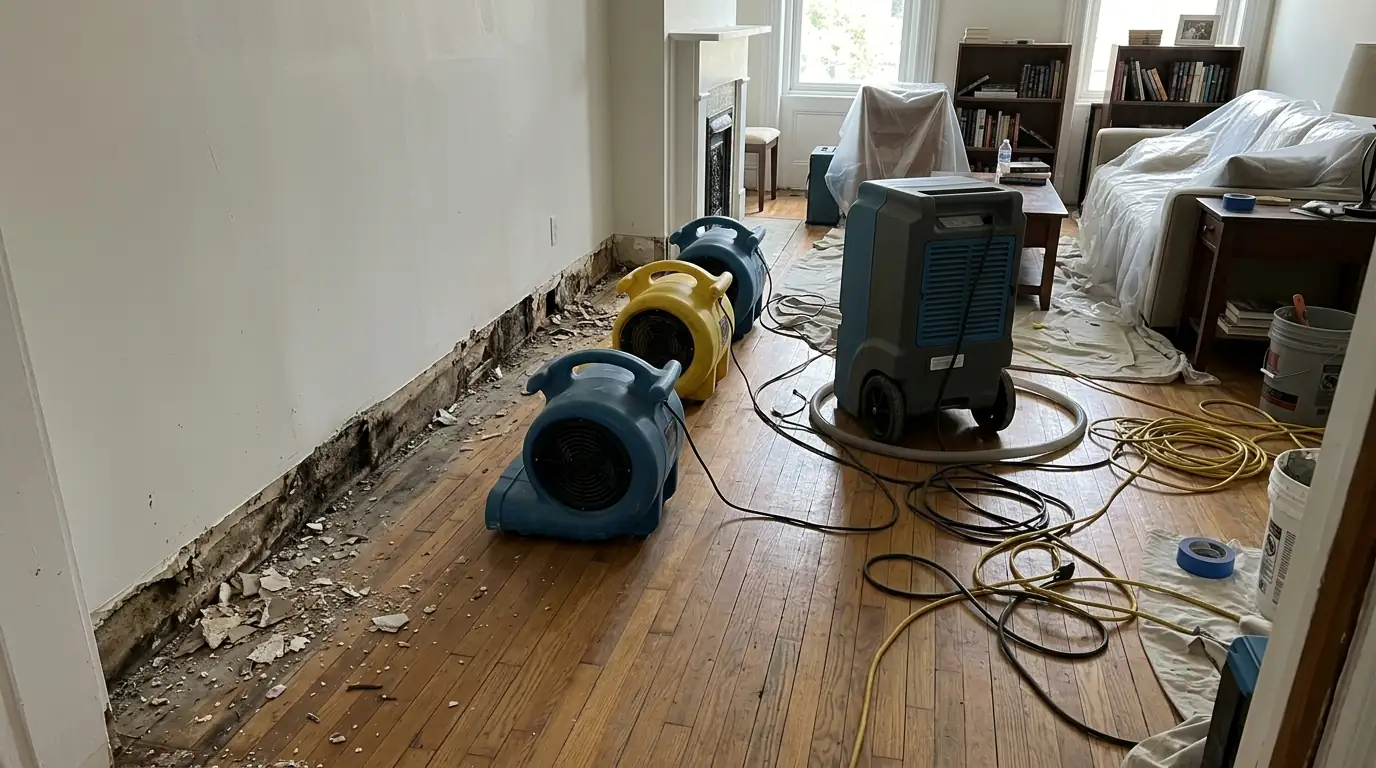
Water Damage Restoration
Water damage restoration is the full sequence after a leak or flood: stopping the source, extracting standing water, removing materials that cannot be saved, drying walls and floors with dehumidifiers and air movers, and logging moisture readings until they reach a dry standard.
How we handle it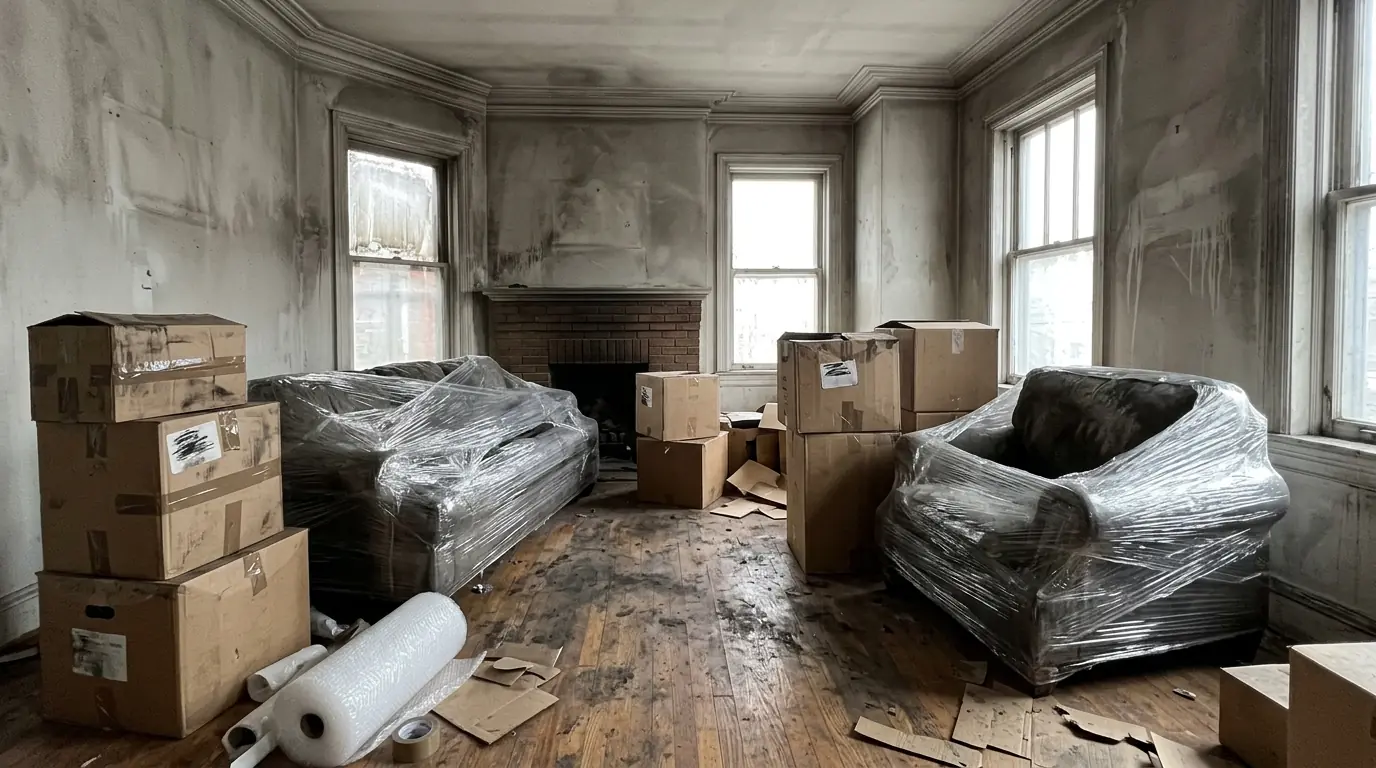
Contents Cleaning & Pack-Out
A contents pack-out is the inventory, packing and removal of belongings from a home damaged by fire, smoke, water or sewage, so the structure can be cleaned and repaired while items are cleaned and stored elsewhere.
How we handle it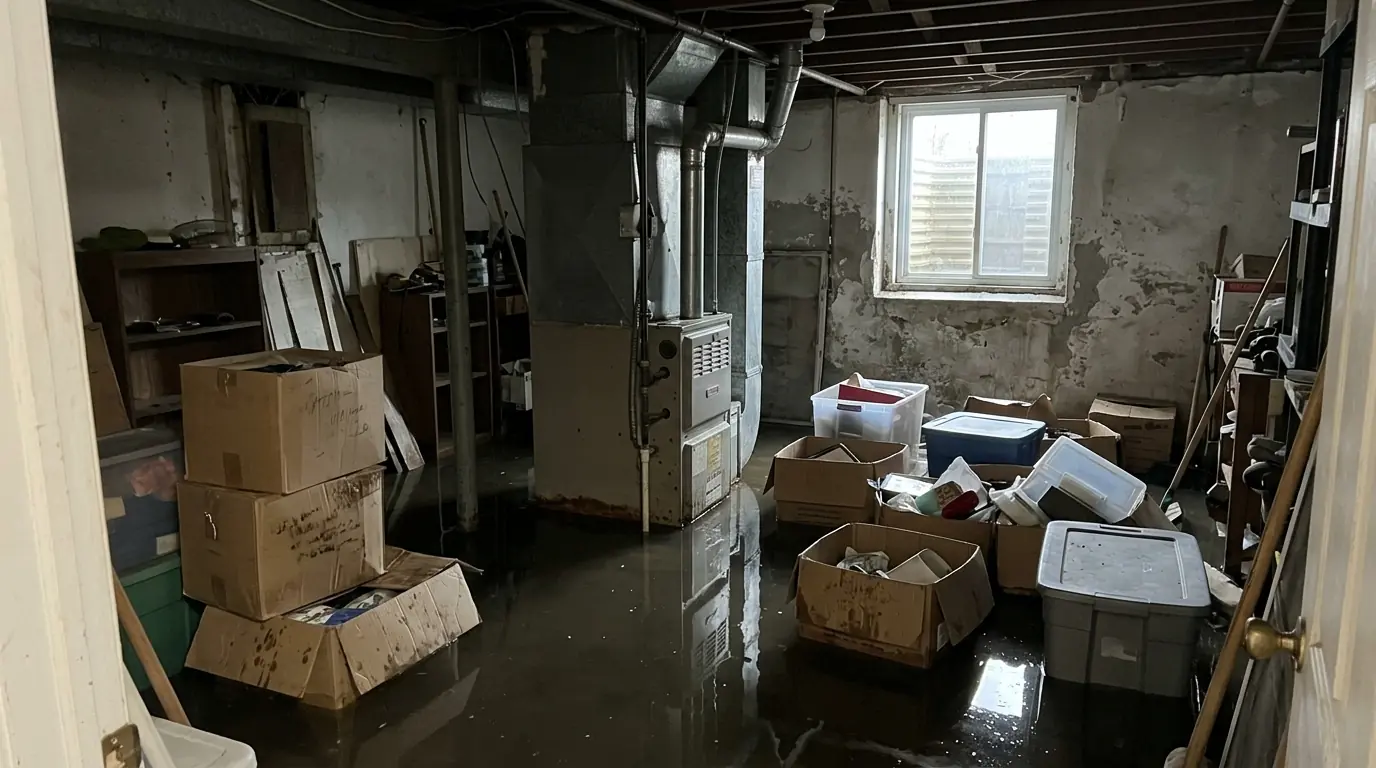
Flooded Basement Cleanup
Flooded basement cleanup removes water from a below-grade space, cleans and sanitizes what it touched, takes out finishes that cannot be saved, and dries the slab, walls and framing.
How we handle itWhat do wells, long driveways and the Potomac slopes mean for water damage?
The land drops toward the Potomac River and the C&O Canal on the south and west sides, and Cabin John Creek and its tributaries cut through the eastern neighborhoods. Homes built into those slopes put the walkout level partly below grade on the uphill side, where groundwater presses against the wall after long rains. Perimeter drains and sump pumps handle it until a pump fails during a storm or a power outage, and outages last longer on wooded roads where trees come down on the lines.
Some properties, especially farther out from Potomac Village, are on private wells and septic systems rather than public water and sewer. A failed well pressure tank or a cracked fitting near the pump can flood a mechanical room, and a septic backup brings Category 3 water into a lower level. Long driveways and gated properties add their own logistics. In winter, pipes freeze in bonus rooms over garages, in pool houses, and in outdoor kitchen lines that were not drained before a cold snap.
Typical calls we get from Potomac
Second-floor laundry leak through three levels
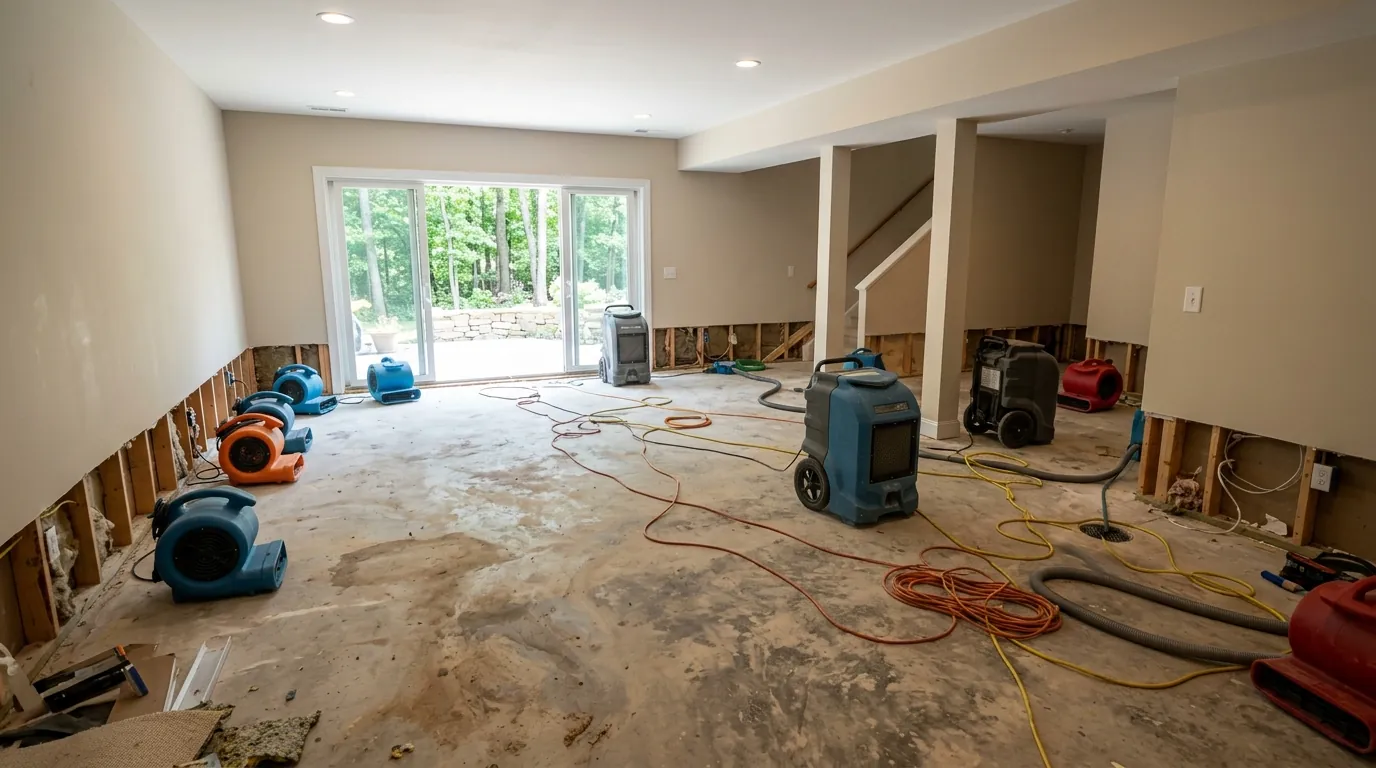
A washer supply hose bursts while the owners are traveling, and water runs through the floor into a family room ceiling and down to the walkout level. We set up drying on all three floors, open ceilings where water pooled, and track readings in each room until all of them reach dry standard.
Walkout basement flood after a power outage
A storm knocks out power on a wooded road, the sump pump stops, and groundwater fills the lower level gym and theater. We extract, remove carpet pad and the bottom of the drywall, and dry the framing and slab while protecting built-in cabinetry.
Well pressure tank failure in a mechanical room
A fitting on a well pressure tank cracks and floods the mechanical room and the guest suite next to it. We extract, dry the walls and floor, and check behind the guest bath vanity for hidden water before rebuild.
Wide-plank floor cupping from a wet bar leak
A slow leak under a wet bar sink cups the wide-plank oak floor in a lower-level lounge. Drying mats go over the boards, and we monitor moisture in the wood and subfloor daily, removing only boards that will not flatten.
How do we run a restoration job on a big Potomac property?
We start by agreeing on access: gate codes, where trucks can park without blocking the driveway, and which entrance to use so equipment does not cross finished floors. In homes with caretakers or property managers, we coordinate with them and send daily updates on readings. Large drying jobs often need more power than one circuit can carry, so we spread equipment across circuits or bring a distribution box.
Hardwood and millwork get particular attention. We use mats and directed air to dry wide-plank and engineered floors in place where possible, and we pack out art, rugs and furniture that need off-site cleaning or storage. Every room gets photos and a moisture log, which matters when a claim involves several floors. Coverage for sudden leaks, groundwater and septic backups varies widely, so check your policy. For larger losses, our structural drying work covers the walls, subfloors and framing behind the finishes.
Typical homes in this part of the DC area
Nearby areas we also cover
Questions from Potomac homeowners
What drying timeline should a large Potomac home expect after a major leak?
Most structural drying takes three to five days, but large homes with several affected floors, thick hardwood and dense materials like stone can run longer. We measure progress daily and move equipment as rooms dry. The job is finished when readings in walls, floors and framing match dry reference areas in the house, not when a set number of days has passed.
My Potomac home is on a septic system. What happens if it backs up into the basement?
A septic backup is Category 3 water and is handled like any sewage loss: we close off the area, remove porous materials that it reached, disinfect hard surfaces, and dry the space. First, have the septic system pumped or inspected so it does not back up again during cleanup. Keep children and pets away from the affected area until it is clean.
Can furniture, rugs and art from a Potomac home be cleaned and saved after water damage?
Many items can. We inventory and photograph contents, then move them out of the wet area so drying can start. Solid wood furniture, many rugs and some textiles clean up well if handled early. Art, documents and electronics need specialized care. Items soaked by sewage or that have been wet for days are often not worth saving.
Water or mold trouble in Potomac?
Call JEC Restoration any time. We answer 24/7 and talk through what you are seeing before anyone touches a wall.