Water Damage
Appliance leak cleanup for Washington, DC kitchens, laundries and basements
A split washer hose, a rusted-through water heater or a pinhole in an ice maker line can soak a floor long before anyone sees it. We stop the spread, pull the water out and dry the hidden layers underneath.
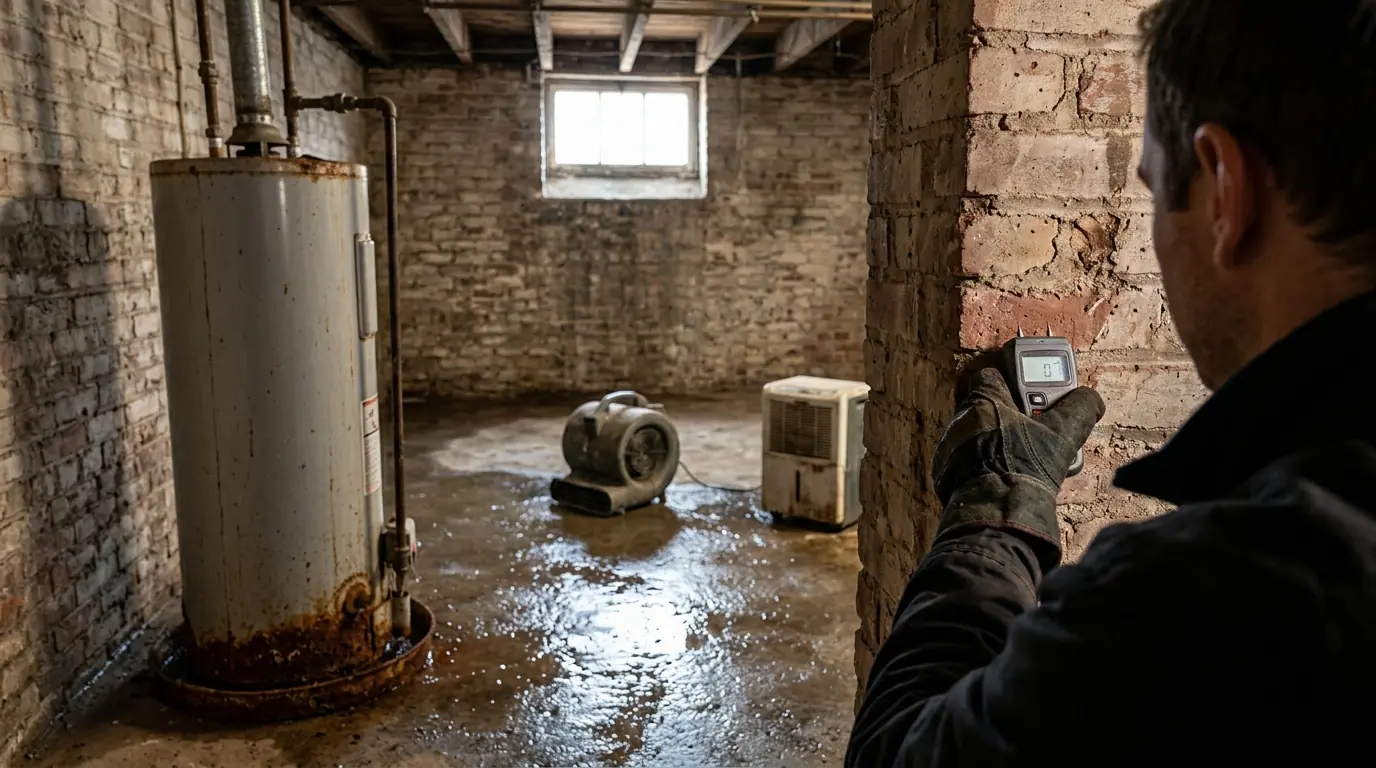
Drying, air and detection equipment on our jobs comes from names like
- Dri-Eaz
- Phoenix
- B-Air
- Abatement Technologies
- Protimeter
- Delmhorst
- FLIR
- Benefect
- Concrobium
- Omnitec
- Sapphire Scientific
- Tramex
Appliance leak cleanup is the extraction, drying and cleanup that follows water escaping from a water heater, washing machine, dishwasher, refrigerator ice maker or air conditioner condensate line. You need it when the water has spread beyond the appliance, slipped under flooring or cabinets, or shown up as a stain on the ceiling below. Close the appliance's supply valve, then call (202) 989-3053 day or night.
Which household appliances cause the most hidden water damage?
Each appliance fails in its own way, and the way it fails decides where the water ends up. A pressurized supply line, like a washer hose or an ice maker tube, keeps pushing water at full house pressure until someone closes a valve. A drain-side failure, like a dishwasher drain hose or a clogged condensate line, only leaks while the appliance runs, so it can go on quietly for weeks.
That difference matters more than the size of the puddle. A burst hose makes a mess you notice right away. A slow drip under a dishwasher soaks the subfloor, wicks into the cabinet sides and spreads under vinyl or laminate where nobody looks.
- Water heaters: corrosion at the base of the tank, a leaking drain valve, or a relief valve discharging onto the floor, often in a basement with no floor drain close by.
- Washing machines: rubber fill hoses that split near the fitting, or a drain hose that slips out of the standpipe mid-cycle.
- Dishwashers: loose supply connections, a cracked drain hose under the sink, or a worn door gasket that drips at the toe kick.
- Refrigerator ice makers and water dispensers: thin plastic or copper tubing behind the fridge that kinks, cracks or loosens when the fridge is pushed back.
- Air conditioner condensate lines: an air handler in an attic or hall closet whose drain line clogs with algae, filling the pan until it spills over.
What are the signs an appliance has been leaking for a while?
Long-running appliance leaks leave clues in the floor, the cabinets and the ceiling below before any water shows on the surface.
Soft floor in front of the dishwasher
Plywood subfloor swells and loses stiffness when it stays wet. You feel it as a slight give when you step near the toe kick.
Laminate edges peaking
Swollen plank edges rise into small ridges along the seams, usually starting nearest the leak and spreading outward.
Rust or scale at the water heater base
A crusty ring on the floor or in the pan means the tank or a fitting has been weeping. Tank leaks rarely get better on their own.
Ceiling stain under the laundry or kitchen
A brown ring or bubbled paint in the room below often traces back to a washer or ice maker line one floor up.
Musty odor from the sink base
A damp, earthy smell when you open the cabinet usually means the cabinet floor or the wall behind it is holding water.
Full or overflowing AC drain pan
Water standing in the pan under an attic or closet air handler means the condensate line is clogged and the next overflow is close.
How we clean up an appliance leak, step by step
The order matters, because drying a floor while the source still drips just wastes a day.
Isolate the source
We confirm the supply valve or the water heater's cold-water inlet is closed and that power to the appliance is off. If a shut-off is seized, we close the main and note it for the plumber.
Map the moisture
Our technicians take pin and pinless meter readings outward from the appliance until the numbers match dry material elsewhere in the house. Thermal images confirm where the water traveled under flooring and into the walls.
Extract and open up
We extract standing water, pull the appliance, remove toe kicks and lift flooring that is trapping water. Anything that cannot dry in place, like swollen particleboard or soaked pad, is removed and photographed.
Dry and monitor
Air movers, a low-grain dehumidifier and cabinet injection lines go in. We come back to log readings daily and shift equipment as areas dry, usually over three to five days.
Document the job
You get the moisture map, daily readings and photos of the failed part and the damaged materials. That record helps your adjuster and carries straight into rebuilding the cabinets or floor.
Why does a slow dishwasher or ice maker leak do more damage than a sudden one?
A sudden leak puts water on top of surfaces where it can be seen and extracted. A slow leak works downward and sideways. Under a dishwasher, water soaks the plywood subfloor, the bottom edge of the cabinet boxes and the back of the toe kick. Behind a refrigerator, it runs under the flooring toward the lowest point of the room, which is often nowhere near the fridge.
By the time the floor feels soft or a musty odor drifts out of the sink base, the subfloor may have been wet for weeks. EPA guidance notes that mold can begin growing on damp materials within 24 to 48 hours, so a long-running leak often brings mold behind the cabinets or wall along with the water damage.
Coverage tends to follow the same split. A hose that bursts without warning is the kind of sudden and accidental event many homeowner policies cover, while seepage that went on for weeks is often treated differently. Check your policy, and photograph the failed part before anything is thrown away.
How do you dry water trapped under cabinets, appliances and floating floors?
Most of the work happens in places that look dry from above. We pull the appliance out, remove the toe kick panels and take moisture readings inside the cabinet bases with a pin meter. If the base is wet, we drill small holes in the cabinet floor or the kick space and push dry air through them with an injection drying system. That dries the cavity without pulling the cabinets off the wall.
Floating floors are the harder case. Laminate and click-together vinyl plank sit on a foam underlayment that traps water against the subfloor. Some planks can be lifted, dried and relaid if their edges have not swollen; laminate with swollen edges usually has to come up. Sheet vinyl glued to plywood holds water underneath for a long time, so we check readings at the seams and around the perimeter before deciding.
When the leak was on an upper floor, we follow it down. A thermal camera shows the cooler wet zones in the ceiling of the room below, and meter readings tell us whether that ceiling can dry in place or needs a section opened.
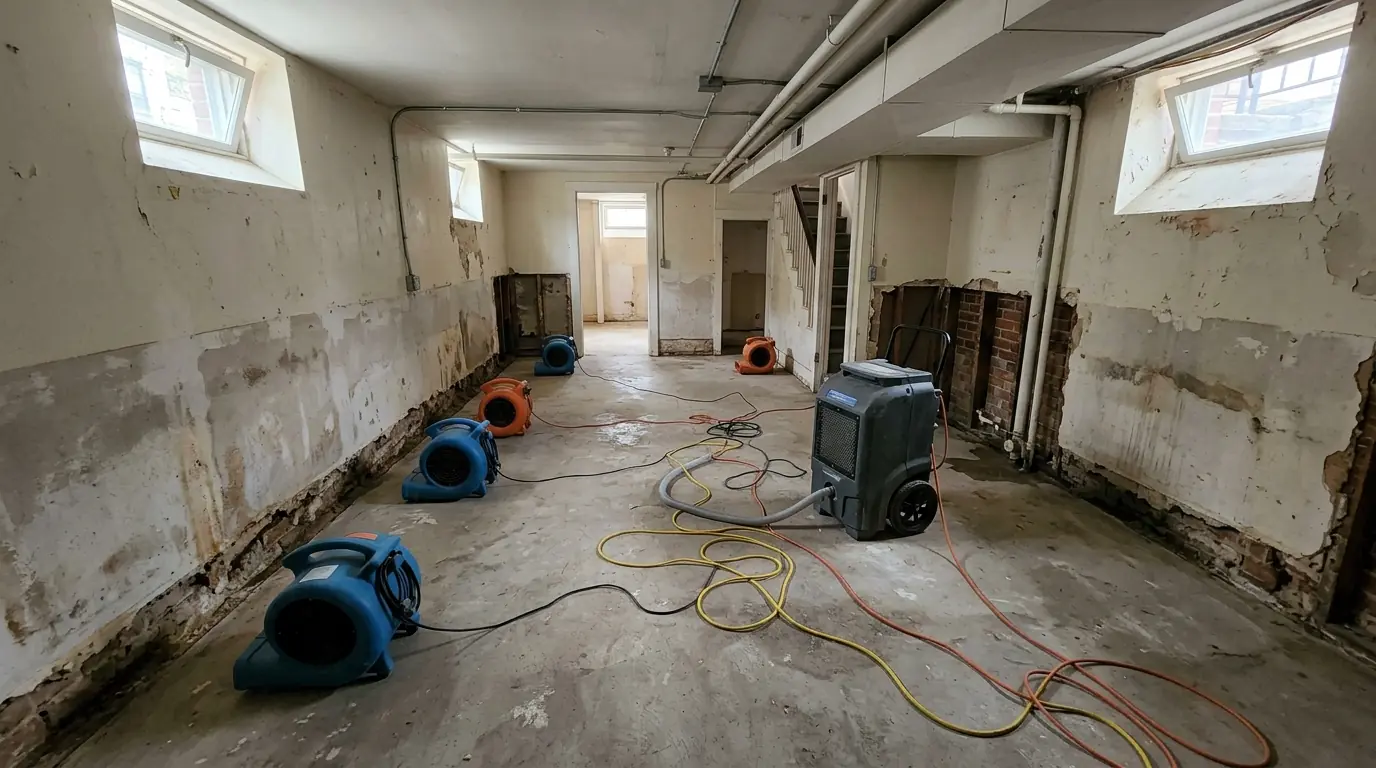
Air movers and a dehumidifier drying a DC basement apartment
Where appliance leaks end up in DC rowhouses and condo buildings
In a DC rowhouse, the water heater usually sits in the basement, and in a house with an English basement apartment it often shares a utility closet with the tenant's unit. When a tank fails overnight, the water runs under the closet door and into the rental's carpet before anyone upstairs knows. Old basement slabs rarely slope cleanly to a floor drain, so the water spreads toward the front wall or the stair.
Condo conversions bring a different problem. Stacked washer-dryers tucked into hall closets on the second or third floor sit directly over someone else's ceiling. A split hose there sends water along the joists and out through light fixtures in the unit below. In the newer towers around Navy Yard and NoMa, a dishwasher or ice maker leak can travel through slab penetrations into the units underneath. We document each unit separately, since the first steps for the neighbor below are different from yours.
Where we do this work: Washington, DC and nearby Maryland and Virginia, including:
What does appliance leak cleanup cost in the DC area?
Price depends on how far the water traveled and what has to come out, not on which appliance failed.
| Washer or dishwasher leak, one room, no ceiling below | $1,180-$2,940 |
|---|---|
| Water heater failure in a finished basement | $2,460-$6,350 |
| Upper-floor leak reaching the ceiling below | $2,870-$7,420 |
| Attic condensate overflow into a bedroom ceiling | $1,640-$4,280 |
These ranges are typical DC-area figures, not quotes; we price each appliance leak after an on-site assessment. Compare ranges across all 40 services.
What moves the price
- How long the leak ran before anyone noticed
- Flooring type: tile, hardwood, laminate or carpet
- Whether cabinets or a ceiling must be opened
- Number of rooms and floors the water reached
- Clean supply water or dirty drain water
Related work we often do on the same job
Water Damage Restoration
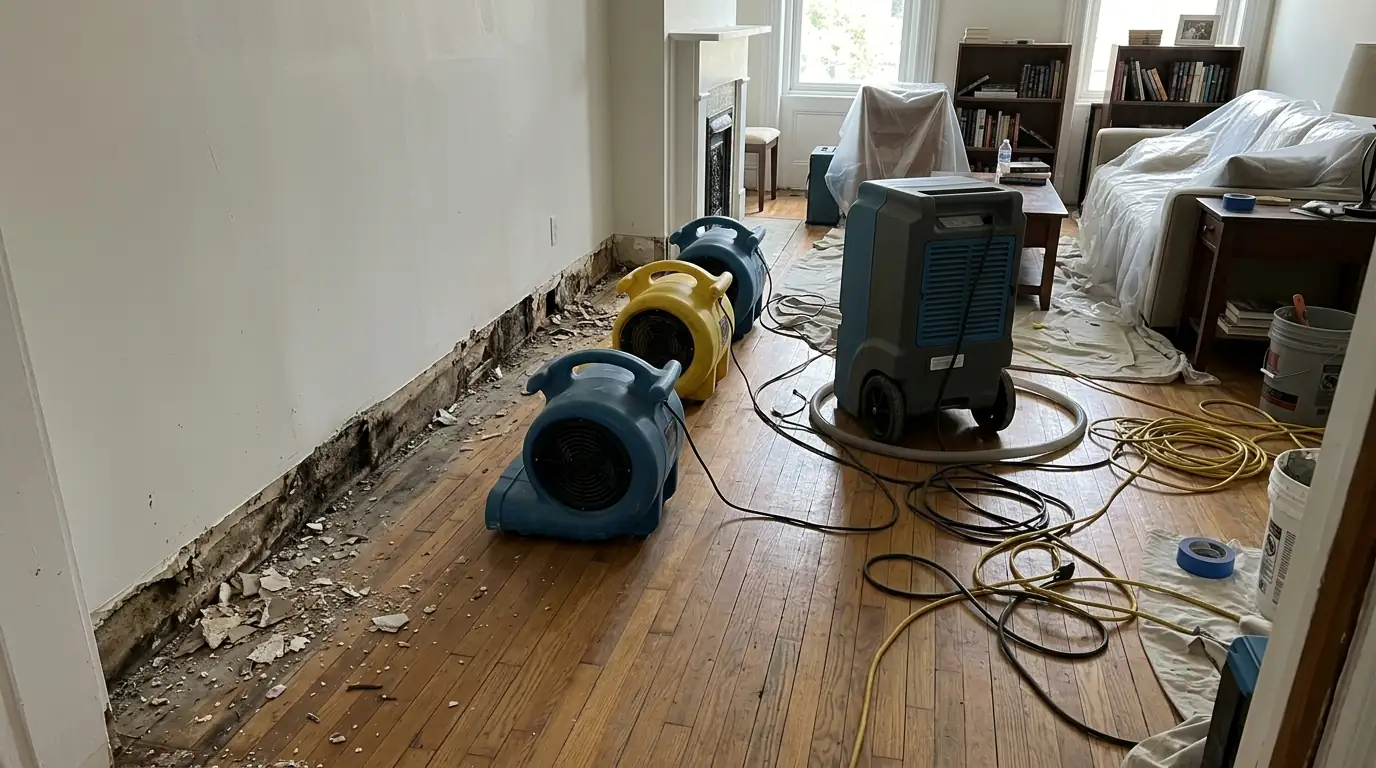
Water damage restoration is the full sequence after a leak or flood: stopping the source, extracting standing water, removing materials that cannot be saved, drying walls and floors with dehumidifiers and air movers, and logging moisture readings until they reach a dry standard.
How we handle it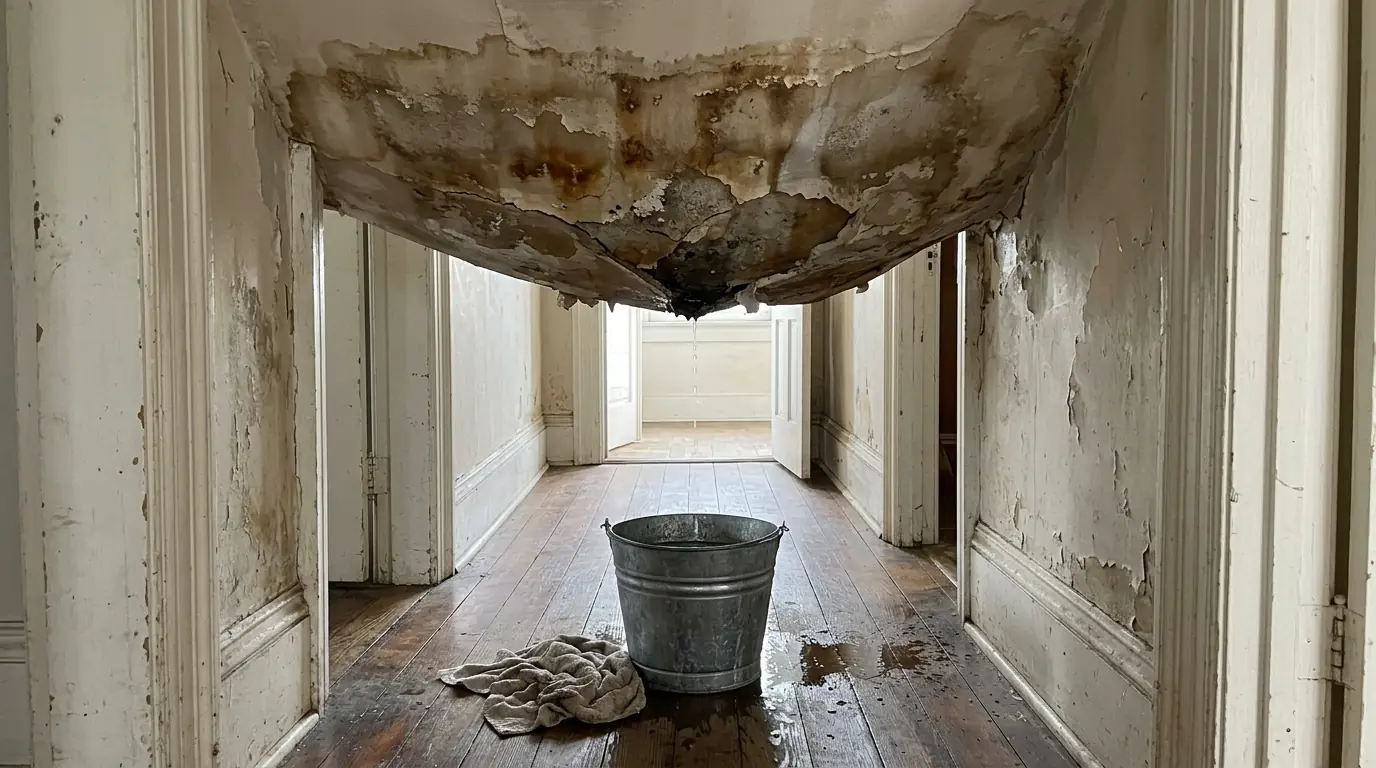
Ceiling Leak Damage
Ceiling leak damage work deals with water trapped above a ceiling from a roof, a bathroom, a radiator or an air conditioning line.
How we handle it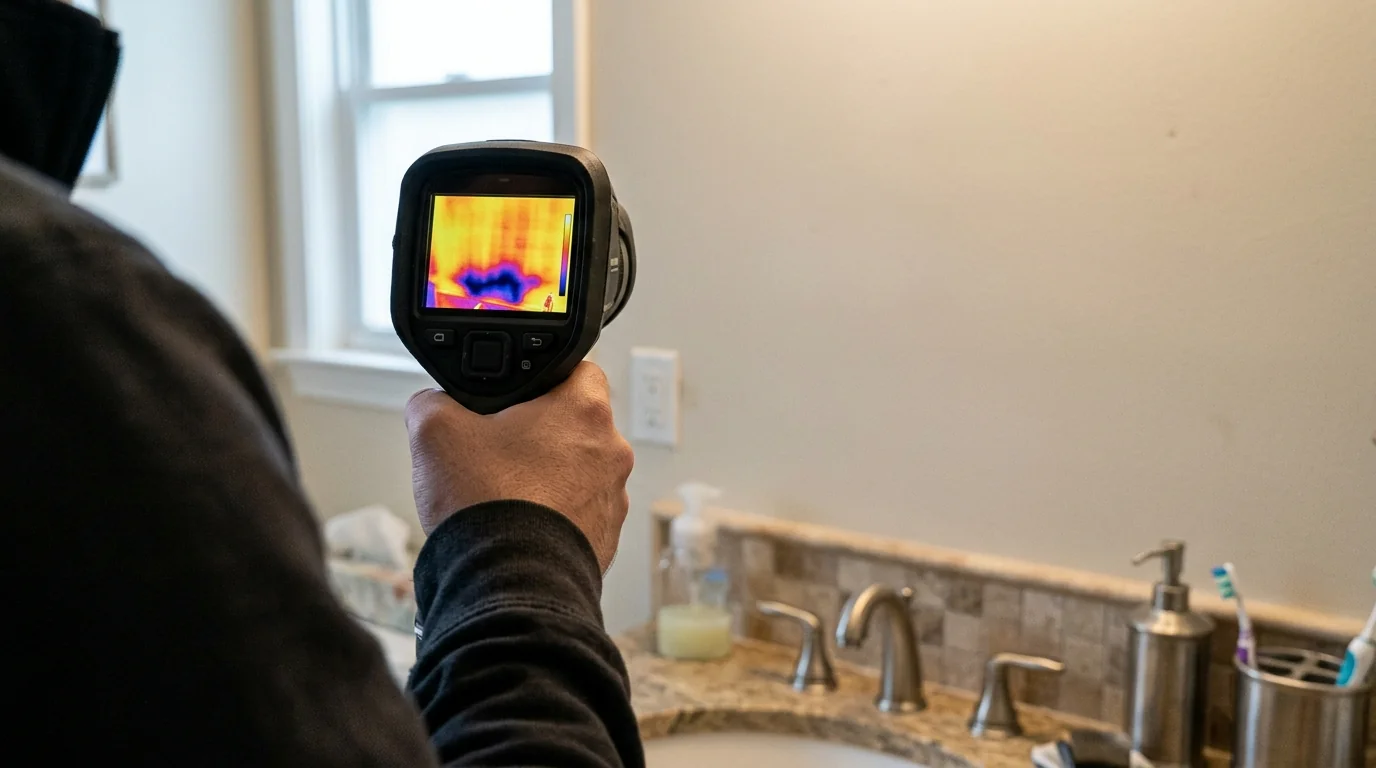
Moisture & Leak Detection
Moisture and leak detection is a non-invasive survey that finds where water is hiding in walls, ceilings and floors and how far it has spread.
How we handle it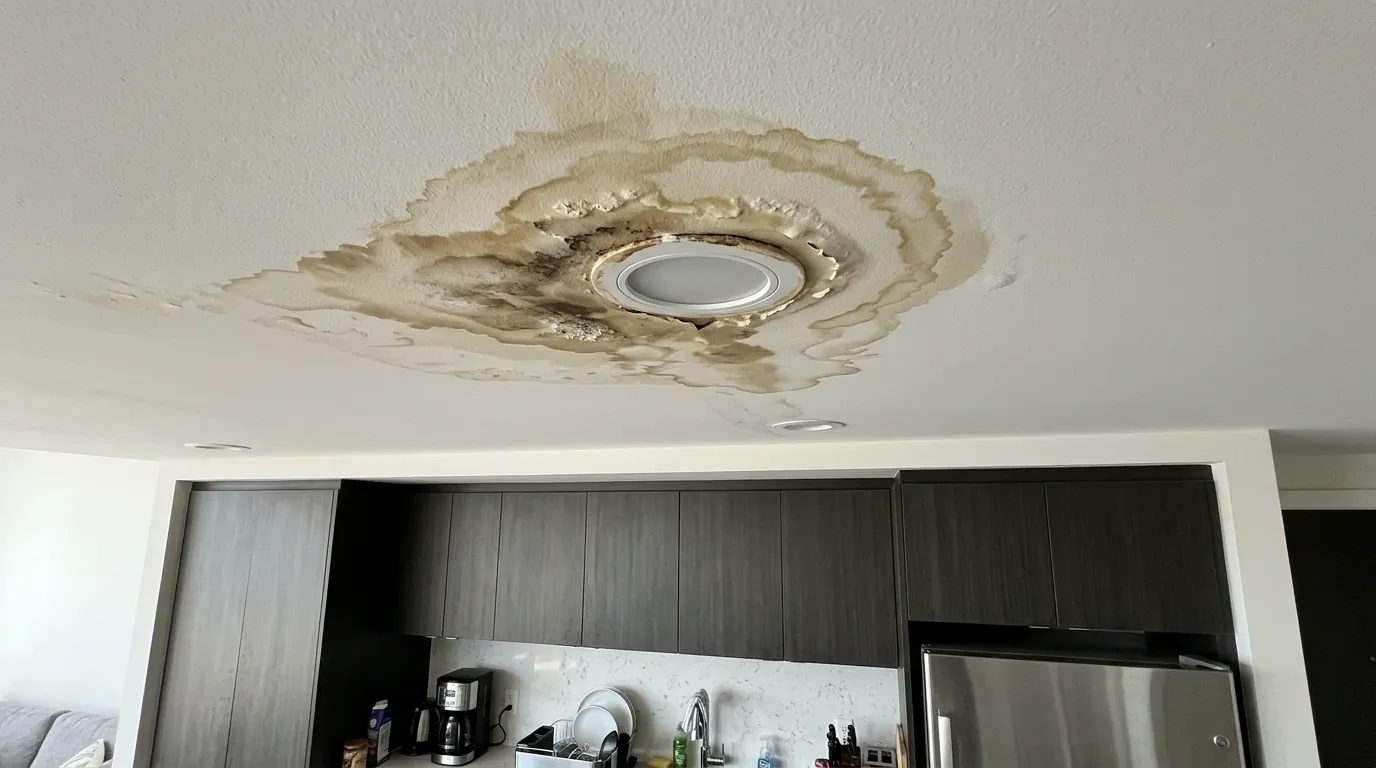
Condo Water Damage
Condo water damage work covers leaks that cross unit lines: water from the unit above, a failed riser, a shared wall or a roof over the top floor.
How we handle itQuestions homeowners ask about appliance leak cleanup
Should I save the split hose or failed water heater part?
Yes. Photograph the hose, valve or fitting where it failed, then keep it in a bag. Adjusters often want to see it, and the part can show whether the failure was sudden or a slow wear-through. If the water heater gets replaced, take a clear photo of the old tank's data plate first, since its age and model can matter for a claim.
Is water from a dishwasher leak clean water or gray water?
It depends on which side failed. A leak at the supply connection is clean water, which the drying trade calls Category 1. Water from the drain hose or the tub during a cycle carries food soil and detergent, so it counts as Category 2 and the surfaces it touched need cleaning and an antimicrobial. Either one gets worse the longer it sits.
Can you dry under kitchen cabinets without removing them?
Usually, yes. We take off the toe kick, drill a few small holes in the cabinet floor or the kick space, and run injection drying lines that blow dry air into the cavity. Readings tell us when it is done. Cabinets come out only when the particleboard has swollen or the wall behind them has to be opened.
My water heater relief valve is dripping into a bucket. Is that a leak?
Not in the sense of a failed tank, but it is a warning. The temperature and pressure relief valve opens when the tank gets too hot or the pressure climbs, so a dripping valve points to a problem a plumber should look at soon. Our part is the water that already reached the floor, the drywall and anything stored nearby.
Can a condensate line overflow in winter too?
Yes. High-efficiency gas furnaces produce condensate all heating season, so a clogged line or a failed condensate pump can overflow in January as easily as an air conditioner can in August. In basements and closets, that water often runs under the wall plate or into carpet and goes unnoticed until the drywall base stains or the carpet starts to smell.
Water in the house or a musty room you can't explain?
Call JEC Restoration any time. We answer 24/7 and talk through what you are seeing before anyone touches a wall.