Fire & Smoke
Smoke damage cleanup for Washington, DC homes
Smoke leaves a different residue depending on what burned and how hot the fire ran. We identify the type, clean it with the method it needs, check the ductwork and seal what won't wash out.
Drying, air and detection equipment on our jobs comes from names like
- Dri-Eaz
- Phoenix
- B-Air
- Abatement Technologies
- Protimeter
- Delmhorst
- FLIR
- Benefect
- Concrobium
- Omnitec
- Sapphire Scientific
- Tramex
Smoke damage cleanup removes the residue a fire leaves on walls, ceilings, ducts and belongings, then neutralizes the odor tied to it. You need it after any fire that left film, stains or smell beyond the immediate burned spot, including smoke that drifted in from a neighbor's fire through a shared wall or attic. Methods depend on whether the residue is dry, wet or protein based. Call (202) 989-3053.
Is it dry smoke, wet smoke or protein residue, and why does that matter?
The material that burned and the temperature of the fire decide what lands on your walls, and each residue type responds to different cleaning. Using the wrong method can smear a light film into a permanent stain.
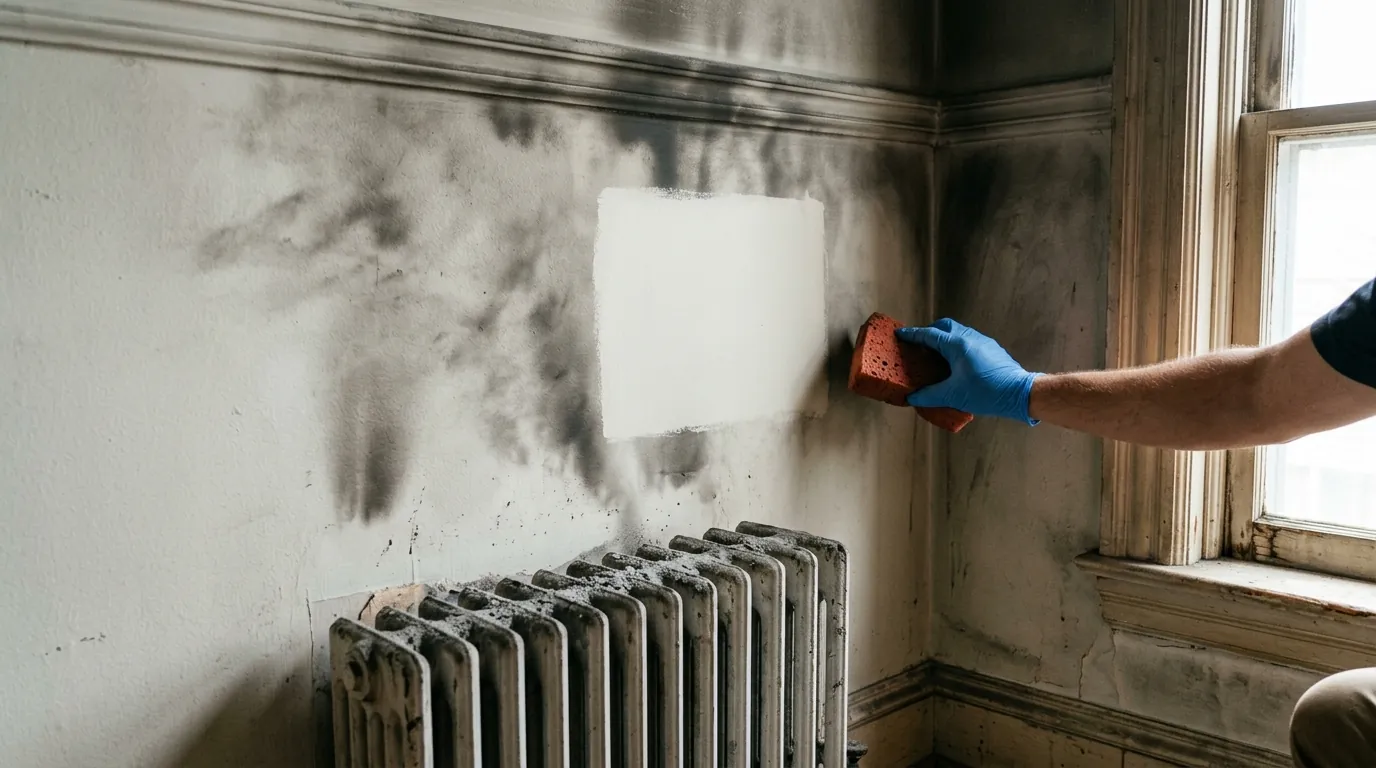
We test a small patch of each surface before cleaning a whole room. If a dry sponge lifts the residue cleanly, it's dry smoke. If it smears or gums up the sponge, we move to degreasing cleaners and wet cleaning.
- Dry smoke: fast, hot fires burning wood and paper leave a powdery gray residue. It sits on the surface and lifts with dry sponges and HEPA vacuums, but it's fine enough to work into cracks and porous finishes.
- Wet smoke: slow, smoldering fires and burning plastics, foam and rubber leave a sticky black film with a sharp odor. It smears when wiped and needs degreasing cleaners and more labor per square foot.
- Protein residue: burned food leaves a nearly invisible yellowish film that discolors paint and varnish and carries a strong, lingering smell. It's the usual residue after a pot left on the stove.
What signs show smoke reached more of the house than you thought?
Smoke damage is often faint, so look in the places where air moves and settles.
Dark lines at outlets
Shadowy streaks around outlet covers and switch plates mean air carrying smoke passed through the wall cavity.
Smudges near supply vents
Gray halos on the ceiling around registers show the duct system has been moving smoke from room to room.
Yellowing paint and plastics
Protein and wet smoke residue tint white paint, light switches, appliance housings and window blinds yellow over a few days.
Odor returning on humid days
If the smell fades and then comes back in damp weather or when the heat runs, residue is still in porous surfaces or insulation.
Gray film on top-floor ceilings
In rowhouses, smoke from a neighboring fire often collects along the top-floor ceiling and party wall first.
Tarnished metal fixtures
Faucets, door hardware and picture frames dulling within days point to acidic residue that needs cleaning soon.
How do we clean smoke residue without spreading it further?
The order matters, because working too fast or too wet turns a light film into stains you can't remove.
Shut down and isolate
The HVAC system stays off and returns are covered. In multi-room jobs we hang plastic and run HEPA air scrubbers so loose particles don't drift into cleaner areas.
Test each surface
Our technicians swipe walls, ceilings and trim in every affected room to sort dry, wet and protein residue. The results decide which cleaning method each room gets.
Dry clean before wet
Loose residue comes off first with HEPA vacuums and dry sponges, working from the ceiling down. Only then do we wet clean with degreasers suited to the residue type.
Clean ducts and cavities
Reachable duct runs, the blower and registers are cleaned or replaced. Smoke-saturated insulation in attics and opened walls is removed and bagged.
Seal and verify
Stained or porous surfaces get a stain and odor blocking primer. We close the house up, recheck odor and wipe test surfaces before signing off.
How does smoke move through attached rowhouses and shared attics?
Many DC calls come from people whose house never burned. In a row of attached houses, smoke from a fire next door finds every gap: around joists set into the shared brick party wall, through old chimney flues that pass between houses, along gaps where floors meet the wall, and across shared or poorly separated attic and roof spaces. Firefighters may also open your walls or ceilings to check that fire didn't travel, which leaves you with dust, water and smoke even though nothing in your house caught.
Smoke that moves this way tends to settle in places you don't look: the top-floor ceiling, attic insulation, closets along the party wall and the inside of built-in cabinets. The smell usually shows up before any visible stain does. We trace it from the shared wall outward, testing surfaces with dry sponge swipes, and we check attic insulation, which absorbs smoke and keeps releasing odor every time the attic heats up in summer. Insulation that's holding smoke usually comes out rather than staying in place.
Do the heating and cooling ducts need cleaning after smoke damage?
If the system was running during or after the fire, almost certainly. A forced-air system pulls smoke-laden air through return grilles, deposits residue inside the ductwork and on the blower and coil, and then pushes it into every room each time it starts. That's why we tell homeowners to leave the system off until it's checked, and why a house can smell fine one day and like smoke again the first cold morning the furnace runs.
We inspect the returns, supply runs and air handler, then clean the reachable duct surfaces with HEPA vacuums and brushes. The filter is replaced and registers are cleaned or swapped. Flexible duct and duct board that hold smoke odor are often replaced instead of cleaned. When a home also has moisture or mold in the system, the work overlaps with our duct and air handler cleaning. Older DC houses heated by radiators skip this step, but window units and ductless heads should still be wiped down and have their filters changed.
When are walls sealed and painted instead of just washed?
Washing removes the residue sitting on top of the paint. It can't always reach what soaked in. Flat latex paint, unfinished wood, the backs of trim and old plaster are porous, so smoke stains and odor stay in them after a thorough cleaning. If you repaint straight over them, yellow stains often bleed through within weeks and the smell comes back on humid days.
Once surfaces are clean and dry, we apply a sealing primer made for smoke damage. Shellac-based primers block stains and odor on wood, trim and heavily stained plaster. Some newer water-based sealers work on lighter jobs. Inside opened walls and attics, framing and roof sheathing get an odor-sealing coat before anything is closed back up. Final paint goes on afterward, as part of repairs and refinishing. Primer is not a substitute for cleaning, though. Sealing over loose soot leaves a weak surface that fails, so cleaning always comes first.
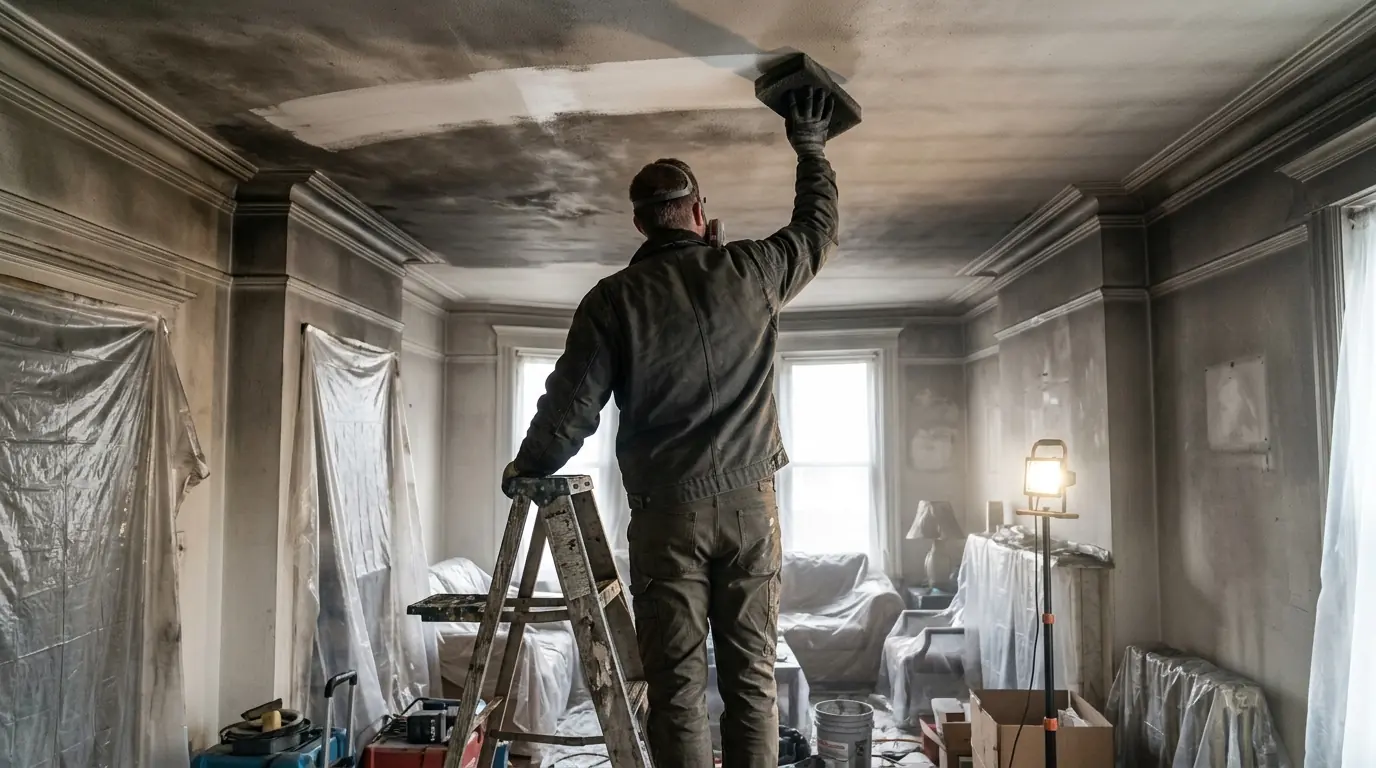
Dry-sponge soot cleanup on a rowhouse ceiling
Why do so many DC smoke calls come from the house or unit next door?
In the rowhouse blocks of Shaw, Bloomingdale, Petworth and Capitol Hill, one fire usually affects three houses: the one that burned and the two that share its party walls. Older houses often have joist pockets in the shared brick, chimney stacks that serve both sides and roof spaces that were never fully firewalled, so smoke slips through even when the wall stops the flames. In condo and apartment buildings, smoke travels through hallways, trash chutes, plumbing chases and shared ventilation, and units several floors up can smell it for weeks. Building management usually controls the common areas, so we coordinate with them on corridor cleaning while working inside your unit. Detached homes in Chevy Chase and the Maryland suburbs see more smoke from furnace puffbacks, fireplaces and attached-garage fires, where the residue is spread by the forced-air system. If your neighbor had the fire, you may be dealing with your own carrier, the neighbor's carrier or both, so keep photos of the residue before cleaning starts.
Where we do this work: Washington, DC and nearby Maryland and Virginia, including:
How much does smoke damage cleanup cost?
Smoke cleanup is priced mainly by square footage of affected surfaces and the residue type. Wet smoke and protein residue take more time per room than dry soot.
| One or two rooms, light dry residue | $880-$2,640 |
|---|---|
| Whole floor or condo unit, mixed residue | $3,470-$9,850 |
| Neighbor fire smoke through party wall and attic | $4,260-$14,700 |
| Duct cleaning add-on after smoke exposure | $590-$1,780 |
These ranges are typical for the DC area and are not quotes; we price your job after an on-site assessment. Compare ranges across all 40 services.
What moves the price
- Dry, wet or protein residue
- Rooms and ceiling heights
- Attic insulation removal
- Duct system condition
- Sealing primer coverage
Related work we often do on the same job
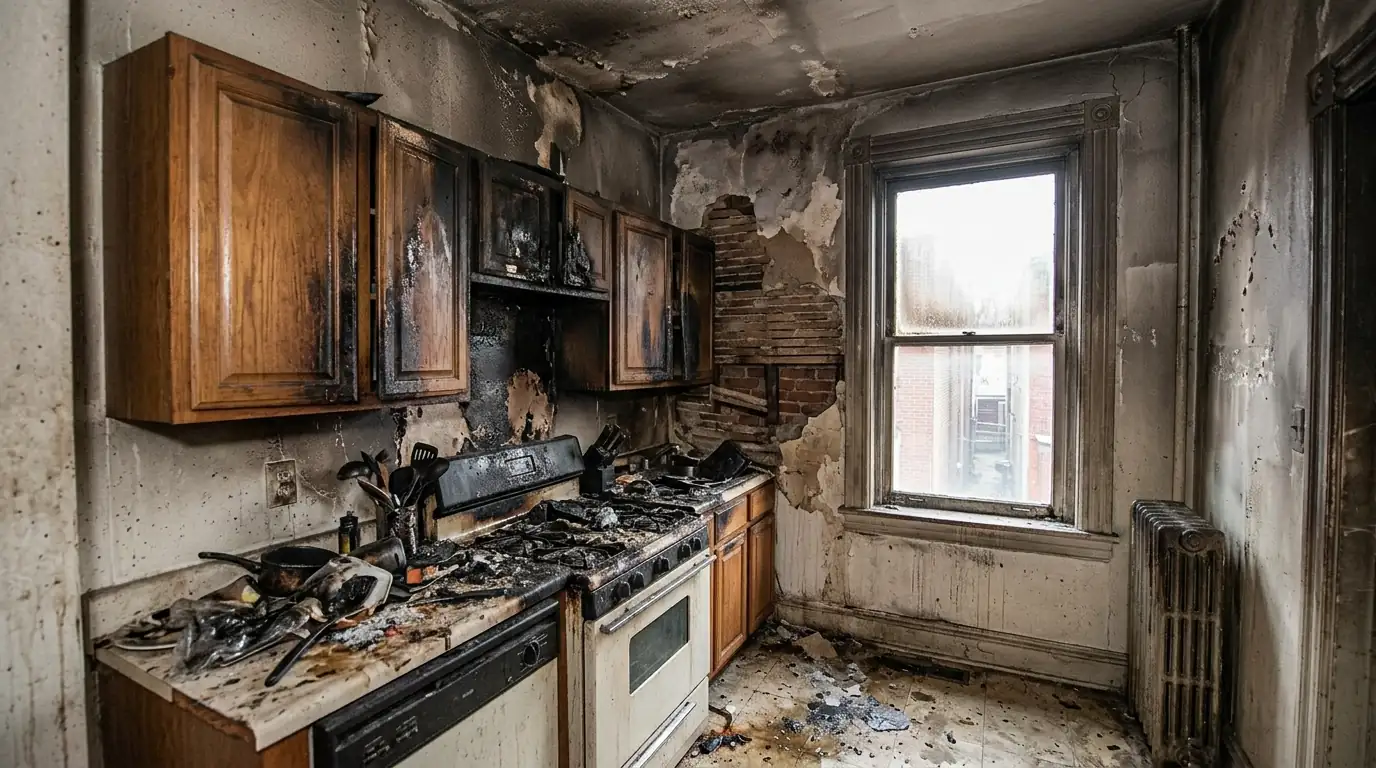
Fire Damage Restoration
Fire damage restoration is the full recovery of a home after a fire: boarding and tarping openings, removing firefighting water, cleaning soot and smoke residue, treating odor, handling contents and preparing for repairs.
How we handle it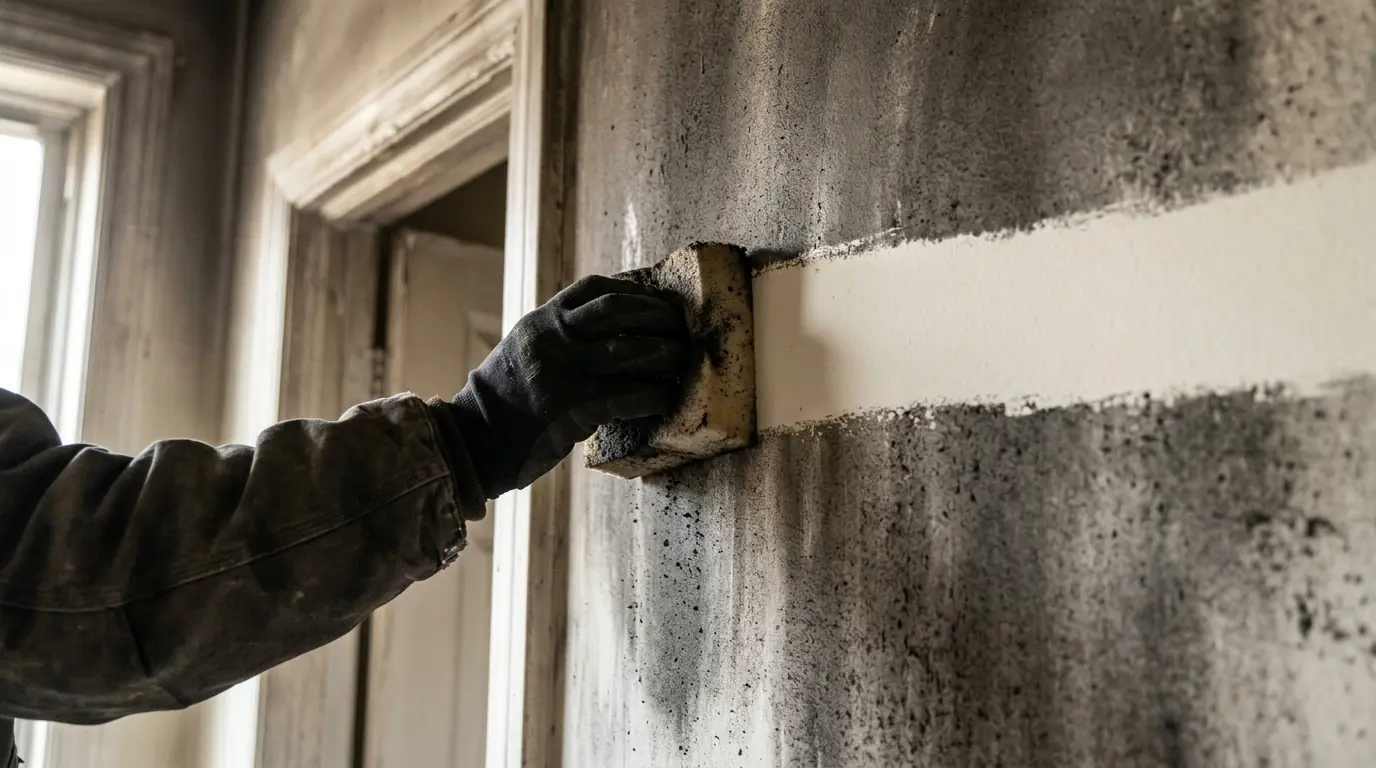
Soot Removal
Soot removal is the careful cleaning of the black or gray carbon film a fire, candle, furnace puffback or fireplace leaves on interior surfaces.
How we handle it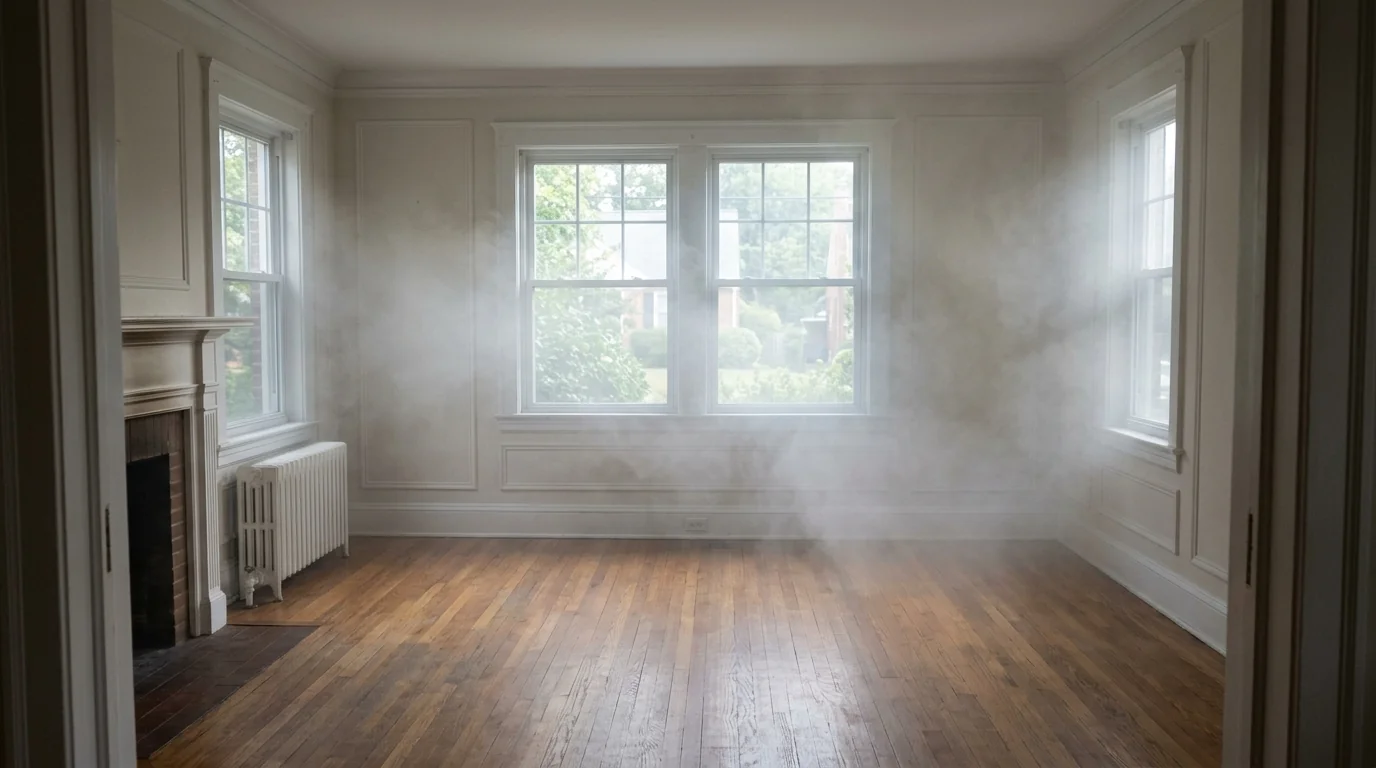
Odor Removal
Odor removal is the process of finding what's causing a persistent smell in a home, removing or cleaning that source, and then treating the remaining odor with methods like thermal fogging, hydroxyl generators or, in empty spaces, ozone.
How we handle it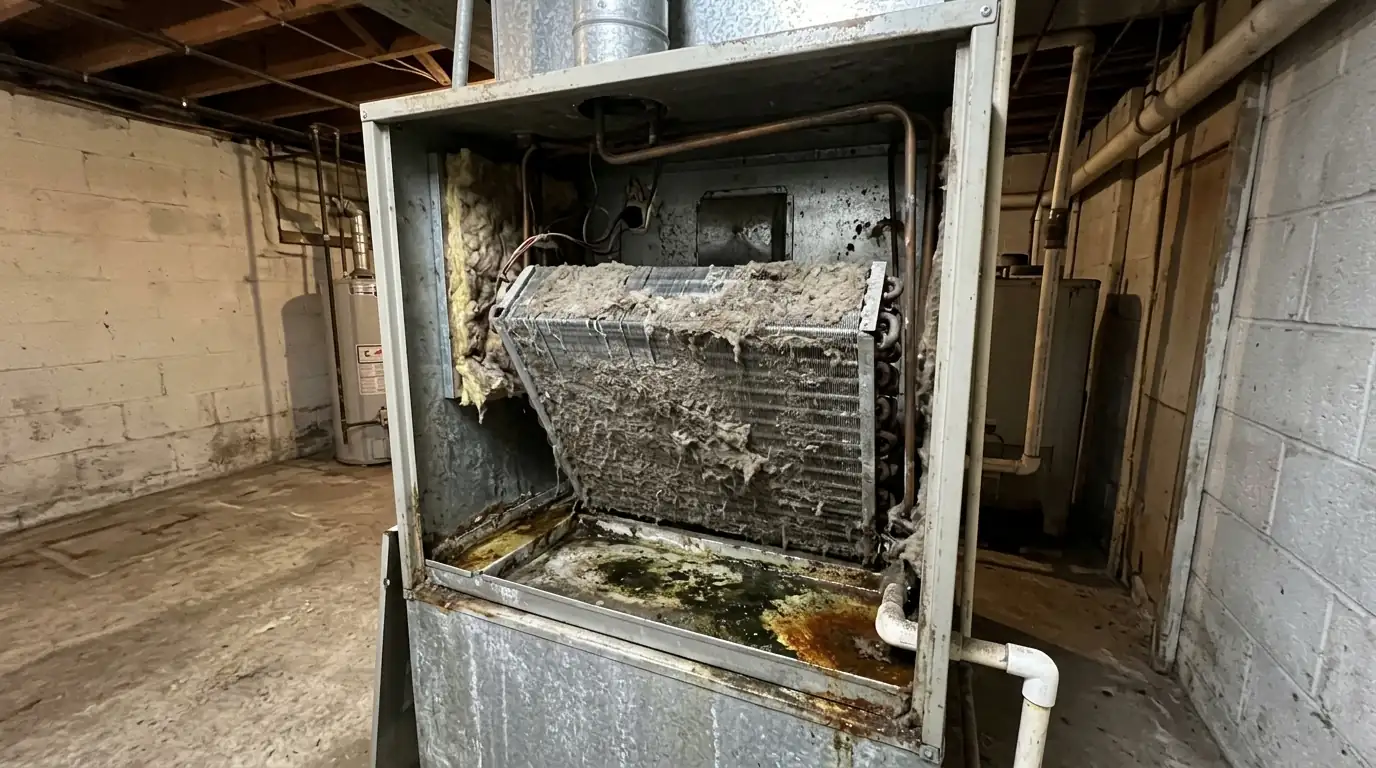
HVAC & Duct Mold Cleaning
HVAC and duct mold cleaning removes growth from the parts of a heating and cooling system that stay wet: the evaporator coil, drain pan, blower and the ducts closest to them.
How we handle itQuestions homeowners ask about smoke damage cleanup
Can I wash smoke residue off my walls myself?
Light dry residue on a small area can sometimes be lifted with a dry cleaning sponge, used in one direction and never with water. Wet smoke and protein films smear easily, and household cleaners can set the stain into flat paint. If more than one room is affected or the film is sticky, call us before you scrub, since a failed attempt usually means more sanding and priming later.
My neighbor had the fire. Why does my house smell like smoke?
Attached houses and condo units share walls, chimney flues, attic spaces and ventilation paths. Smoke under pressure from a fire pushes through every gap, and firefighters may also open your walls to check for spread. Your contents and insulation can absorb odor even without visible stains. We trace where it entered, test surfaces and clean or remove what holds the smell.
Will an air purifier fix smoke damage?
A HEPA air purifier captures fine particles floating in the air and helps during cleanup, but it does nothing for residue already stuck to walls, ceilings, fabrics and duct interiors. Those surfaces keep releasing odor until they're cleaned or sealed. Purifiers are a support tool, not the fix. Our odor treatment work starts only after the residue itself is gone.
Why does the smoke smell come back when the heat turns on?
Residue inside ductwork, on the furnace blower and on the coil gets warmed and pushed into every room when the system starts. Heat also draws odor out of porous materials like wood, insulation and plaster. If the smell returns with the first heating cycle, the ducts or a wall or attic cavity were missed and need cleaning or sealing.
What kind of primer covers smoke stains?
Shellac-based primers are the standard for heavy smoke staining and odor, especially on wood, trim and old plaster, because they block stains and seal in smell. Some water-based stain blockers work for lighter residue. Either way, the surface has to be cleaned first. Primer applied over loose soot won't bond well and can peel or let stains bleed through the finish coat.
Water in the house or a musty room you can't explain?
Call JEC Restoration any time. We answer 24/7 and talk through what you are seeing before anyone touches a wall.