Mold Remediation
Mold remediation for Washington, DC homes and condos
Mold on a wall or ceiling is a moisture problem first. We find the water that fed it, seal off the work area, remove what can't be cleaned, and dry the structure so the growth has nothing to come back to.
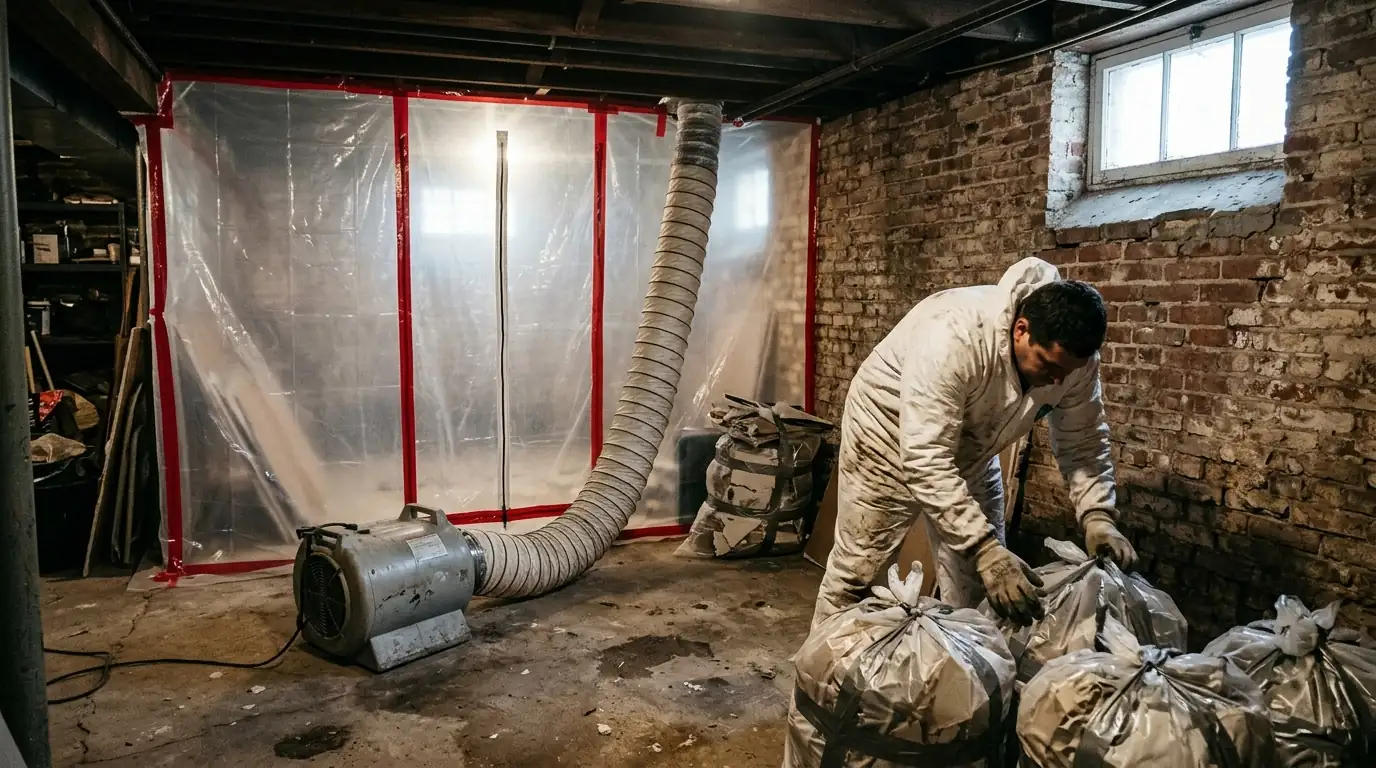
Drying, air and detection equipment on our jobs comes from names like
- Dri-Eaz
- Phoenix
- B-Air
- Abatement Technologies
- Protimeter
- Delmhorst
- FLIR
- Benefect
- Concrobium
- Omnitec
- Sapphire Scientific
- Tramex
Mold remediation is the controlled removal of mold growth from a building. The work area is sealed with plastic and held under negative air pressure, moldy porous materials such as drywall and carpet pad are cut out and bagged, surfaces are HEPA vacuumed and cleaned, and the moisture source is fixed and dried. You need it when growth covers more than about 10 square feet or keeps returning.
When is mold a cleanup job and when is it remediation?
The EPA's guidance for homeowners draws a practical line at about 10 square feet, roughly a three-foot by three-foot patch. Below that, a careful homeowner can usually clean hard, nonporous surfaces with detergent and water while wearing gloves, goggles and an N95 respirator. Above it, or anywhere the growth sits inside a wall cavity, under flooring or in ductwork, the job calls for containment and trained hands. Disturbing mold releases spores and fragments, and without controls they drift into the rest of the house.
Size is not the only test. Mold that followed sewage water or a long, unnoticed leak usually means the materials behind the surface are wet too, and growth hidden behind drywall is often several times larger than the stain you can see. Growth that returns a few weeks after you scrubbed it tells you the source is still active. And if anyone in the home has asthma, allergies or a weakened immune system, it makes sense to keep the disturbance away from them. Mold can trigger allergy and asthma symptoms in sensitive people, and a scrub brush in a closed room puts a lot of it in the air.
How a remediation job runs from first visit to clearance
Every job moves through the same five stages, though the size of each one depends on what we find.
Assessment and moisture mapping
We walk the affected area with a pin meter and a thermal camera to find how far moisture spread beyond the visible growth. Readings and photos go into a written scope, so you know what will be removed and why.
Containment and negative air
We seal the zone in polyethylene, close off HVAC registers and set up a HEPA negative air machine. Floors along the route in and out are covered.
Removal of affected materials
Moldy drywall, insulation and flooring are cut out past the edge of the growth, bagged inside the enclosure and taken out sealed. Structural wood is HEPA vacuumed, scrubbed and sanded where needed.
Drying and source repair
Low-grain dehumidifiers and air movers bring framing back to dry readings, which usually takes two to four days. The leak, condensation or drainage issue behind the growth is repaired or documented for repair.
Final cleaning and clearance
The enclosure gets a last HEPA vacuum and damp wipe before it comes down. A visual check, plus clearance sampling when you want proof on paper, confirms the area is ready for rebuild.
What happens inside the containment area?
Containment is the part of the job that separates remediation from cleaning. We build a sealed enclosure from 6-mil polyethylene sheeting, taped to the floor, walls and ceiling, with a zipper door for entry. A negative air machine fitted with a HEPA filter pulls air out of the enclosure and exhausts it outdoors, so the work zone sits at slightly lower pressure than the rest of the house. If a seam opens, air flows in rather than out. Supply and return registers in the zone are sealed so the heating and cooling system cannot carry spores to other floors.
Inside, porous materials with growth (drywall, fiberglass insulation, carpet and pad, ceiling tile) are cut out with a margin past the visible edge, bagged in heavy plastic and carried out sealed. Framing, joists and subfloor usually stay. We HEPA vacuum them, scrub them with a detergent or a botanical cleaner such as Benefect, and sand where growth has stained the wood. Debris never leaves the enclosure loose, and the path to the door is covered so nothing tracks across your floors.
Signs a mold problem has outgrown a spray bottle
These are the situations where we usually recommend containment rather than surface cleaning.
Growth larger than a doormat
A patch bigger than about 10 square feet, or several smaller patches spread across a room, is past the EPA's homeowner cleanup range.
Stains that keep coming back
If spots return within weeks of scrubbing, the material underneath is still wet or the growth is rooted inside it.
Soft or blistered drywall
Drywall that dents under a thumb or has bubbling paint is often colonized on the back of the sheet, facing the stud cavity.
Musty odor with no visible spot
A persistent earthy smell in one room points to growth in a wall cavity, under flooring or behind built-in cabinets.
Mold after sewage or flood water
Category 3 water carries bacteria along with the moisture, so porous materials it touched come out rather than being cleaned.
Symptoms that ease when you leave
A stuffy nose, itchy eyes or wheezing that improve away from home can be a reason to have the house checked, alongside a talk with your doctor.
Why killing mold is not the same as removing it
A lot of do-it-yourself advice centers on bleach. The EPA does not recommend biocides like chlorine bleach as a routine part of mold cleanup, and the reasoning is practical: dead mold can still cause allergic reactions. Spraying a wall changes the color of the stain without taking the growth off the surface, and the water in household bleach soaks into drywall paper and wood, which is the opposite of what a damp material needs.
Our approach is physical removal followed by drying. Antimicrobial coatings have a role, mostly on framing after it has been cleaned, but they are not a substitute for taking the growth off. We consider a job finished when three things are true:
- Visible growth and mold-stained debris are gone from every surface in the work zone
- Moisture readings in framing and subfloor match dry reference readings from an unaffected area
- The water source has been repaired, or you have a written note of exactly what needs fixing
How big is the mold patch?
Measure the visible growth and enter it in feet. The EPA uses about 10 square feet as the line between a homeowner cleanup and a job that needs containment.
Measure the visible growth, including any faint edges.
Growth inside walls, in ductwork or after sewage or floodwater needs professional cleanup at any size.
What does mold remediation cost in the DC area?
Price follows the size of the containment and how much material has to come out. A closet corner and a whole basement are very different jobs.
| Small contained area, 10-30 sq ft (closet, under a sink) | $1,180-$2,940 |
|---|---|
| One room or wall section with drywall removal | $2,860-$6,450 |
| Basement level or several rooms | $5,900-$14,700 |
| Attic sheathing or crawl space framing | $3,400-$9,150 |
These ranges are typical DC-area figures rather than quotes, and we price each job after an on-site assessment. Compare ranges across all 40 services.
What moves the price
- Square footage under containment
- Drywall, insulation and flooring to remove
- Access: stairs, basement doors, condo rules
- Drying time before rebuild can start
- Whether clearance sampling is wanted
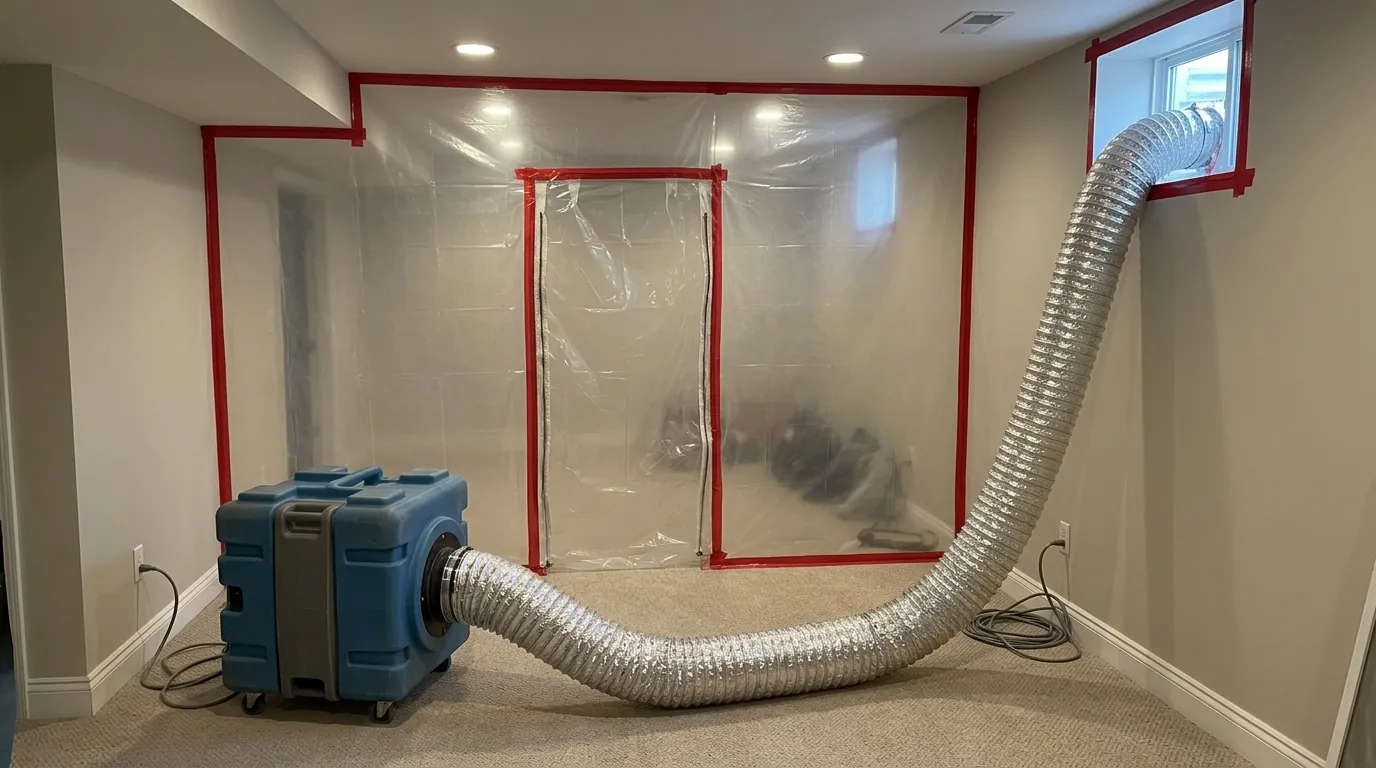
Sealed containment with HEPA filtration on a basement mold job
Why DC rowhouses and condos grow mold in the same few places
In Washington's brick rowhouses, mold rarely starts in the middle of a room. It starts where water collects against masonry: the base of a party wall in an English basement, the back wall below a clogged rear areaway drain, the top-floor ceiling under a flat roof whose parapet flashing has cracked. Plaster on wood lath tolerates a wetting better than drywall, but the lath strips and the paper on later drywall patches feed growth readily. In condo buildings from Dupont Circle to NoMa, the usual pattern is a slow leak from the unit above that wets a ceiling cavity for weeks before anyone sees a stain.
Summer adds its own load. From July through September, basement humidity in older homes often sits above the 60 percent mark where mold starts to take hold on stored boxes, wood paneling and the backs of furniture. We see it in Petworth, Brookland and Capitol Hill, and in the split-levels of Silver Spring and Bethesda. The fix is part removal, part humidity control, and our guide to mold after a humid DC summer explains what is normal and what is not.
Where we do this work: Washington, DC and nearby Maryland and Virginia, including:
Related work we often do on the same job
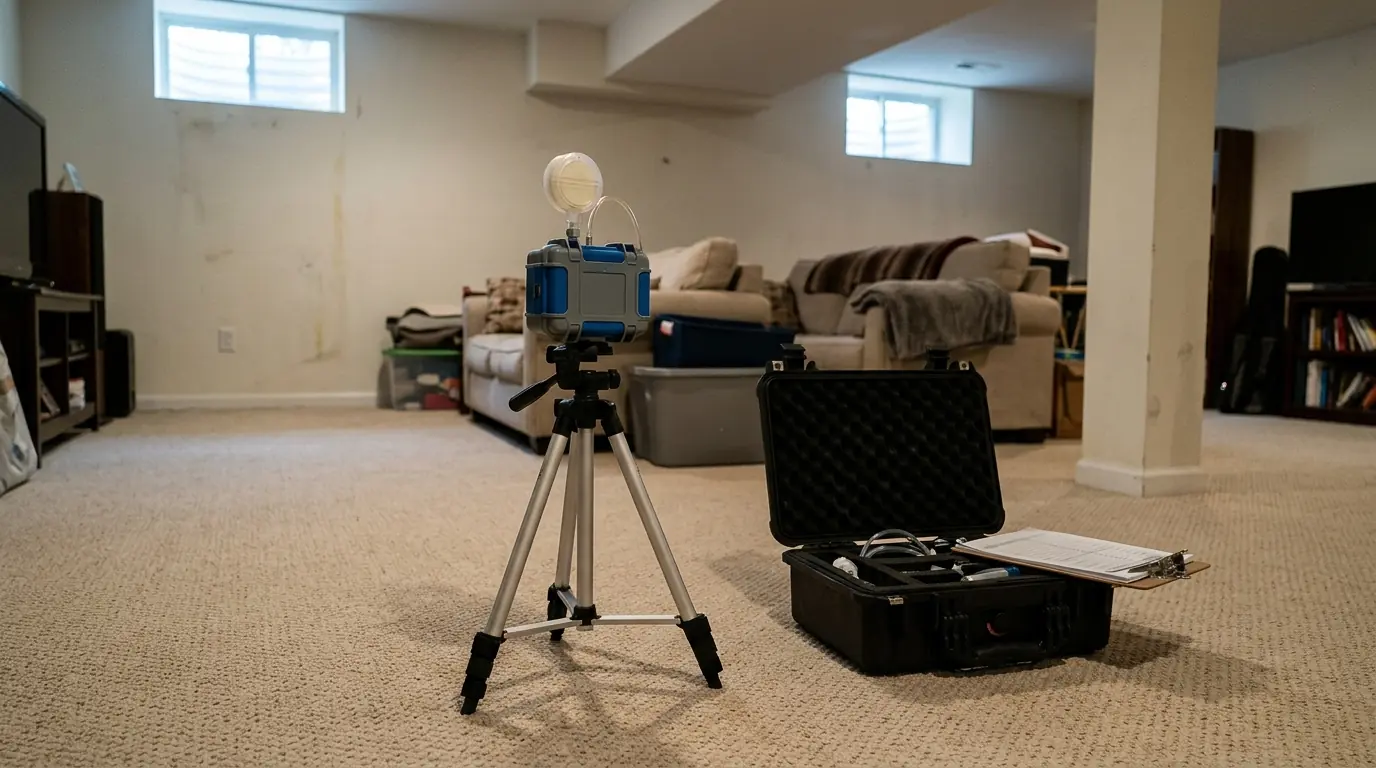
Mold Inspection & Testing
A mold inspection is a room-by-room check for visible growth and the moisture that feeds it, using a moisture meter, a thermal camera and a hygrometer.
How we handle it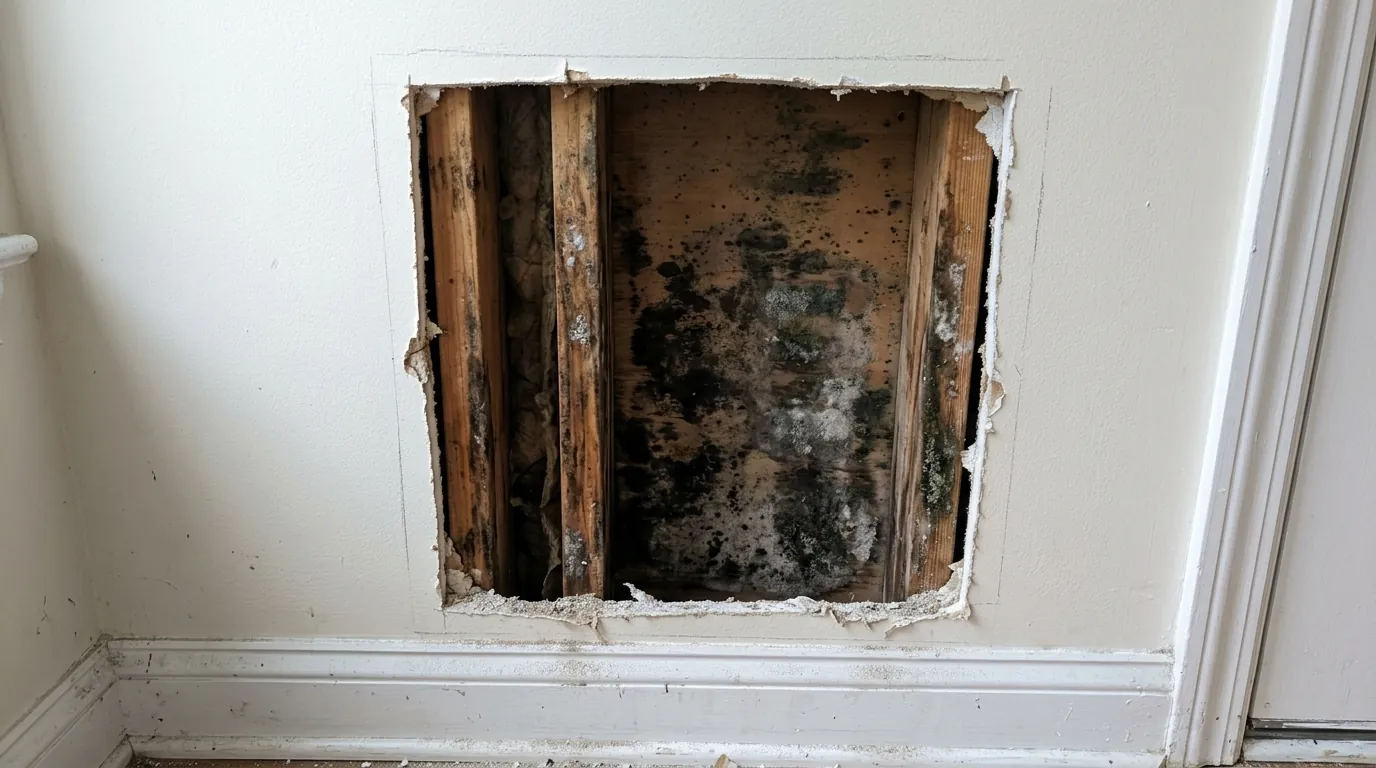
Mold Behind Drywall
Mold behind drywall grows on the back of the paper facing, on studs and on insulation inside a wall that has stayed damp from a slow leak, condensation or an old flood.
How we handle it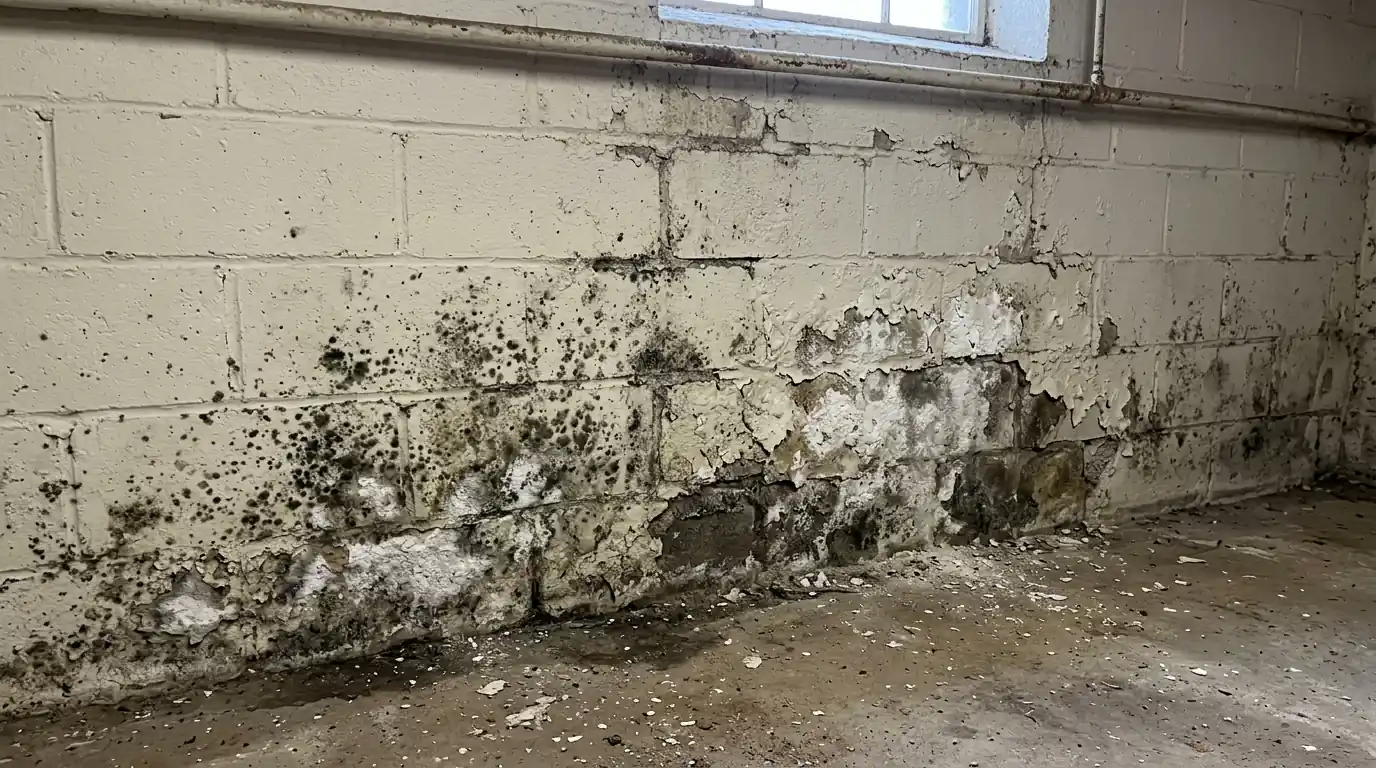
Basement Mold Removal
Basement mold removal cleans or removes growth on foundation walls, framing, finished drywall, carpet and stored contents below grade, then corrects the moisture that caused it.
How we handle it
Mold Clearance Testing
Mold clearance testing, also called post-remediation verification, checks a work area after mold removal and before the walls are closed.
How we handle itQuestions homeowners ask about mold remediation
Can I stay in my house while you remediate mold?
Usually, yes. Containment and negative air pressure exist so the rest of the house stays livable while we work in one zone. We do suggest that anyone with asthma, severe allergies or a weakened immune system stay elsewhere during demolition days, when the most material is disturbed. For a basement apartment or a one-bath condo, we talk through the plan room by room before we start.
Do you need to test mold I can already see before removing it?
Not usually. The EPA notes that when mold is visible, sampling is generally unnecessary, because the plan is the same whatever the species: remove it and fix the moisture. Testing earns its keep when you smell mold but can't find it, when you need documentation for a landlord or a sale, or after the work to confirm the area is clean. Our inspection and testing service covers those cases.
Will the mold come back after remediation?
Not if the moisture is gone. Mold needs a damp surface to grow, so recurrence almost always traces back to a leak that was not fixed, condensation that continues, or humidity that stays high. That is why the drying and source-repair step matters as much as the removal. We leave you with final moisture readings and a clear note on what keeps the area dry.
Does homeowners insurance pay for mold remediation?
It depends on the policy and on the cause. Mold that results from a sudden, covered event such as a burst pipe is sometimes covered, often with a separate dollar limit for mold. Mold from long-term leaks or high humidity is commonly excluded. Check your policy and call your carrier before work starts; we document conditions with photos and moisture readings either way.
How long does a typical mold remediation take?
A small contained area is often finished in one to two days. A room with drywall removal usually runs three to five days, including drying time before the containment comes down. Whole basements and attics can take a week or more. Rebuild work, meaning new drywall, paint and flooring, comes afterward and is scheduled once the area has passed its final check.
Water in the house or a musty room you can't explain?
Call JEC Restoration any time. We answer 24/7 and talk through what you are seeing before anyone touches a wall.