Knowledge Base
Water from the condo above: what to do first
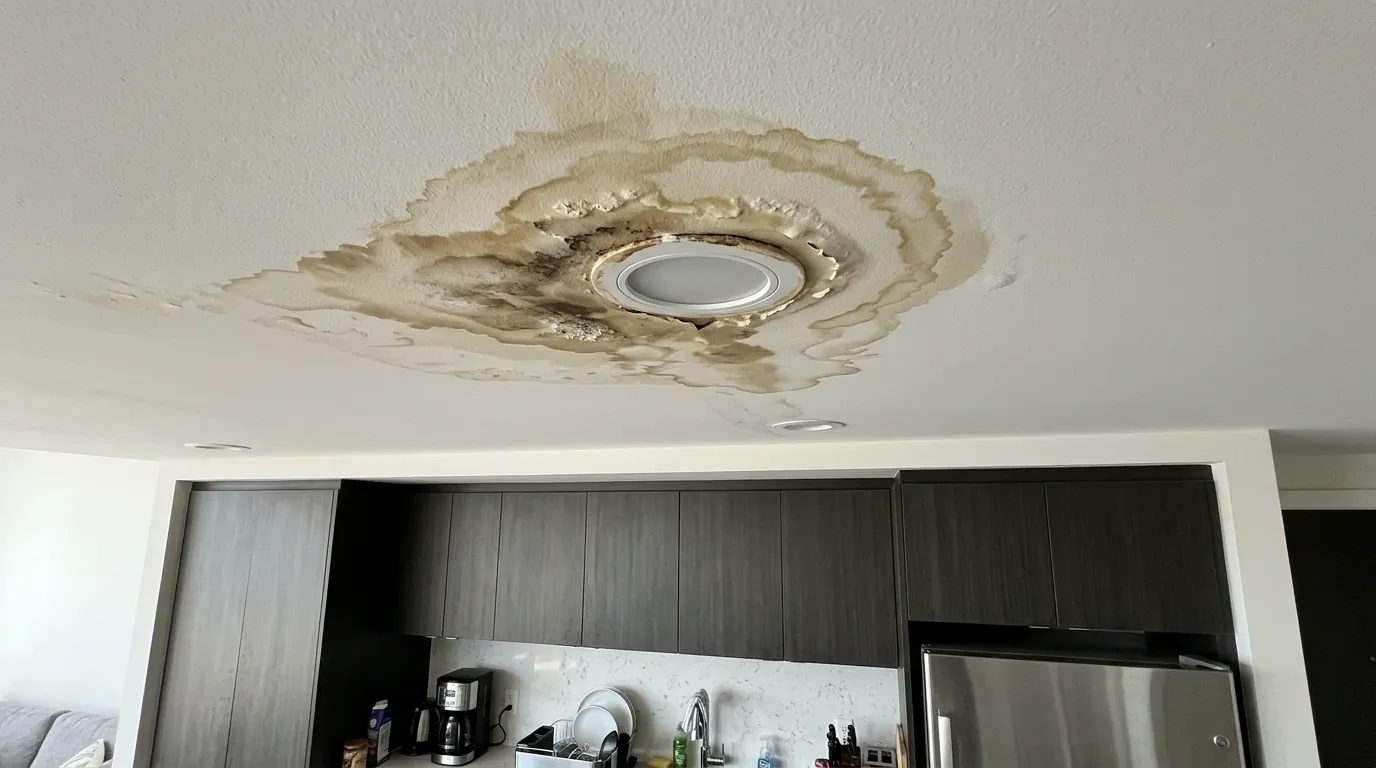
A drip from the ceiling light, a bulge in the drywall, water running down the kitchen cabinets. In a DC condo building the leak almost always starts in someone else's unit, which changes who you call and in what order.
By Winifred Larkin, Knowledge Base EditorUpdated 6 min read
The short version
- Kill power to wet light fixtures, stay clear of sagging drywall, and find the source unit fast.
- Notify the upstairs owner and building management immediately, and get the cause of the leak in writing.
- Your condo documents and policies decide who pays; the HO-6 and master policy usually split the work.
- Dry the ceiling cavity fully before any patching or painting.
What should you do in the first ten minutes?
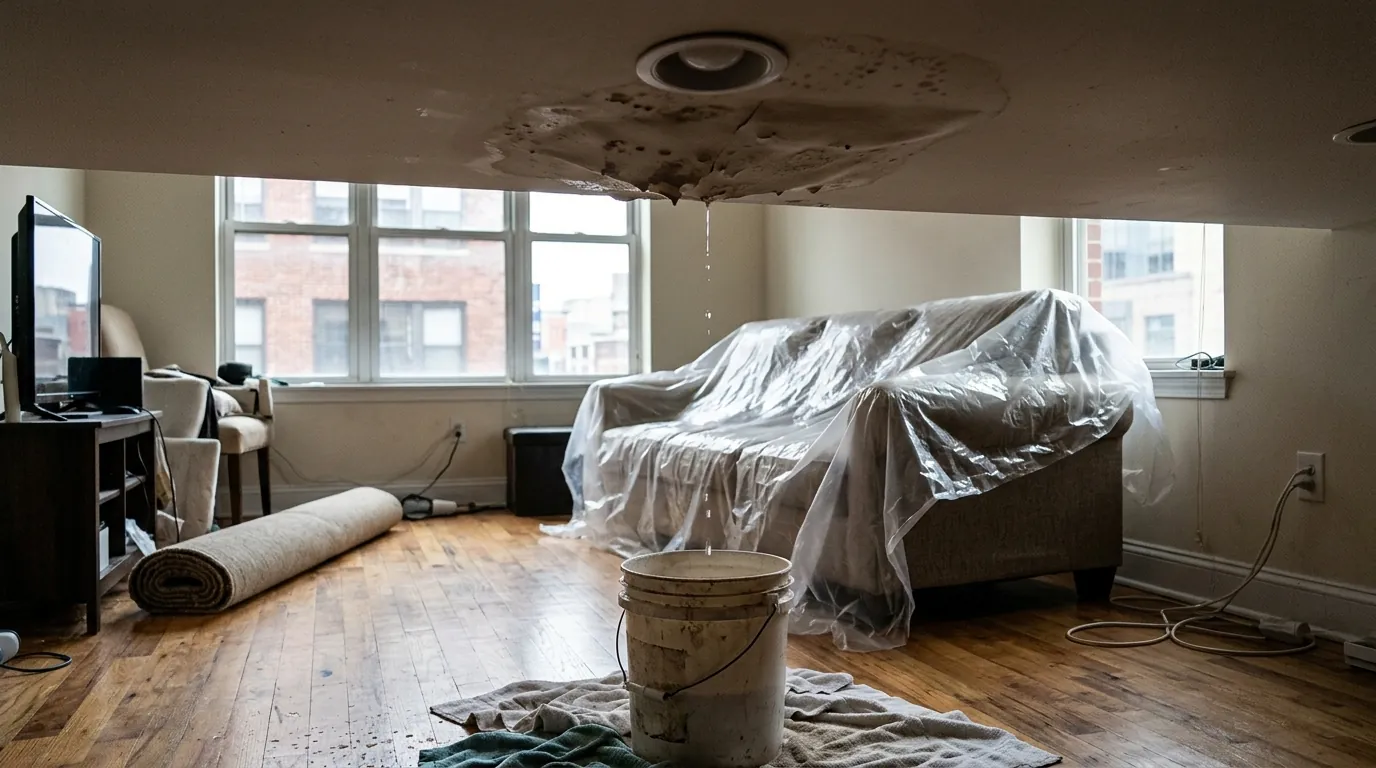
Start with safety. If water is coming through or near a ceiling light, a fan or an outlet, switch off that circuit at your unit's breaker panel and stay out from under the fixture. A ceiling that sags or bulges is holding water; keep people and pets away from it, because wet drywall can drop suddenly. Put a bucket underneath and, if the bulge keeps growing, a small hole poked at its lowest point with a screwdriver lets the water drain into the bucket in a controlled way.
Then stop the water. You can't shut off a neighbor's supply, but you can make sure someone does.
- Knock on the door of the unit directly above. If no one answers, check the unit above that one too; water can travel down more than one floor before it shows.
- Call the front desk, building engineer or management company's emergency line. Most buildings can reach a unit's shutoff or close a riser valve for that stack.
- If the building has no staff on site and the leak is heavy, ask the management company to authorize entry; most condo documents allow emergency access.
- Move furniture, rugs and electronics out of the drip zone and cover what can't be moved with plastic sheeting or a shower curtain.
What documentation protects you later?
Condo leak claims often involve three or four parties, so a clear record makes everything simpler. Take photos and a short video of the ceiling, walls, floors and anything damaged, with the source of the water visible if you can see it. Note the time you noticed the leak, who you called and when, and what each person told you.
Ask the unit owner above or the building engineer what caused the leak: a failed supply line under a sink, a toilet fill valve, a washing machine hose, a cracked drain pipe or a shower pan. Get the cause in writing, even in a text or email, because responsibility often depends on it. Ask for the upstairs owner's name, phone and insurance carrier, and file a written incident report with management.
Keep everything you replace or throw away until your insurer has seen it, or at least photographed it, and save receipts for fans, dehumidifier rentals, hotel nights and meals out. For a broader checklist, see our guide on what to save for a water damage claim.
Who usually pays for what in a DC condo leak?
There is no single answer, and the controlling documents are your building's declaration and bylaws together with the insurance policies involved. What follows describes how responsibility is commonly divided, not how it works in your building. Read your condo documents and check your policy, or ask your agent, before assuming anything.
In many buildings, the association's master policy covers the structure and common elements: the roof, exterior walls, shared risers and pipes inside common walls, and sometimes the original walls and ceilings of each unit. The individual owner's HO-6 policy usually covers the unit's interior finishes and upgrades, personal belongings, loss-of-use costs and personal liability. Some condo documents use a bare walls approach, where the owner insures nearly everything inside the drywall; others use an all-in approach, where the master policy reaches further.
Where the water came from matters, too. A leak from a common riser often falls to the association. A leak from an appliance or fixture inside the unit above often falls to that owner or their HO-6 carrier, particularly if negligence is involved. Master policies frequently carry large deductibles, and some bylaws pass that deductible to the unit owner whose fixture caused the loss. If your HO-6 policy includes loss assessment coverage, it may help with a share of that deductible. Check your policy for each of these points.
Why does a wet condo ceiling need more than a fan?
Water that reaches your ceiling has already passed through the floor of the unit above: hardwood or tile, the subfloor and often the space between floors. In older DC buildings converted from apartments, such as the prewar buildings along Connecticut Avenue and 16th Street, that can mean a concrete slab, plaster on metal lath, or wood joists with old insulation. In newer towers in Navy Yard and NoMa, it often means a concrete deck with a dropped drywall ceiling hiding ducts, sprinkler lines and wiring.
Surface fans dry the paint you can see while water stays trapped above. Our technicians measure moisture through the ceiling and walls with pin meters and thermal imaging, then check the unit above if access is allowed, because drying both sides at once is faster than drying one. Small inspection holes, drilled where they are easy to patch, let us move dry air into the cavity. Dehumidifiers and air movers stay in place and readings are logged daily until the materials reach normal levels, which typically takes three to five days for drywall ceilings.
Damaged insulation, swollen drywall and sagging sections are removed and bagged. If the leak sat unnoticed for a while, the cavity gets checked for growth, since a ceiling that stays wet for a few days can grow mold out of sight. Our condo water damage page explains how we coordinate access, elevators and quiet hours with building management.
How do you avoid delays with the board and the neighbor?
Condo leaks stall when nobody wants to commit to a cause or a plan. A few habits keep things moving. Share your photos and moisture readings with both management and the upstairs owner, and keep messages factual. Ask management early whether the association will hire its own contractor for common elements, so drying in your unit and in the shared ceiling doesn't happen in two uncoordinated passes.
Repairs come after drying, never before. Painting or patching a ceiling that still reads wet traps moisture and invites stains and growth weeks later. When it is time to rebuild, ask for the scope in writing and keep copies of the moisture logs, since the adjuster may want proof the materials were dry before they were closed up. Our team can handle ceiling leak repairs and the drywall, paint and trim work through our repair and rebuild service.
If water is coming through your ceiling right now, call (202) 989-3053. The phone is answered 24/7, and we can walk you through the shutoff and safety steps while you wait.
Questions readers ask
The upstairs owner is away and nobody answers. Can management enter their unit to stop the leak?
In most DC condo buildings, the declaration or bylaws give the association a right of emergency entry to prevent damage to other units and common elements. Call management's emergency line, explain that water is actively coming through, and ask them to send the engineer or a locksmith. Note the time you called and who authorized entry. Your specific documents set the rules, so check them.
Should I file on my HO-6 policy if the leak came from the unit above?
Often, yes. Your own carrier can pay for your covered damage and then seek repayment from the responsible party's insurer, a process called subrogation. Waiting for the other owner to accept fault can stall drying and repairs. Ask your agent how a claim affects your deductible and premium, and check your policy and condo documents before deciding.
Our ceiling is a concrete slab with no drywall. Does it still need professional drying?
A bare concrete slab dries slowly but rarely suffers lasting damage itself. The concern is what sits on top of it upstairs and below it in your unit: flooring, underlayment, cabinets, wall bottoms and any furring or drywall. Water can also travel along the slab and appear far from the source. Moisture readings show whether those materials are still wet.
Winifred Larkin, Knowledge Base Editor at JEC Restoration. She writes and updates these guides from the questions homeowners ask our crews on DC area jobs.
Services this guide connects to
Condo Water Damage
Condo water damage work covers leaks that cross unit lines: water from the unit above, a failed riser, a shared wall or a roof over the top floor.
How we handle it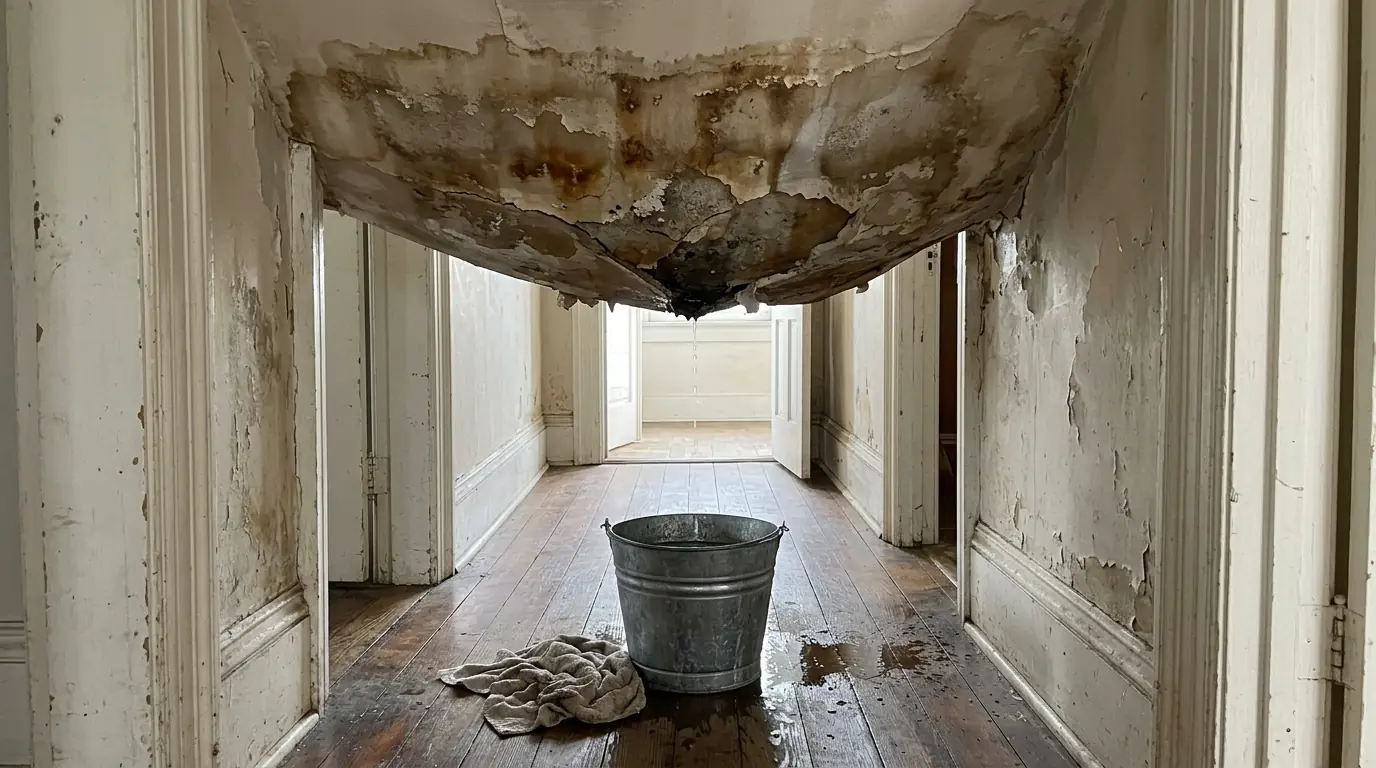
Ceiling Leak Damage
Ceiling leak damage work deals with water trapped above a ceiling from a roof, a bathroom, a radiator or an air conditioning line.
How we handle it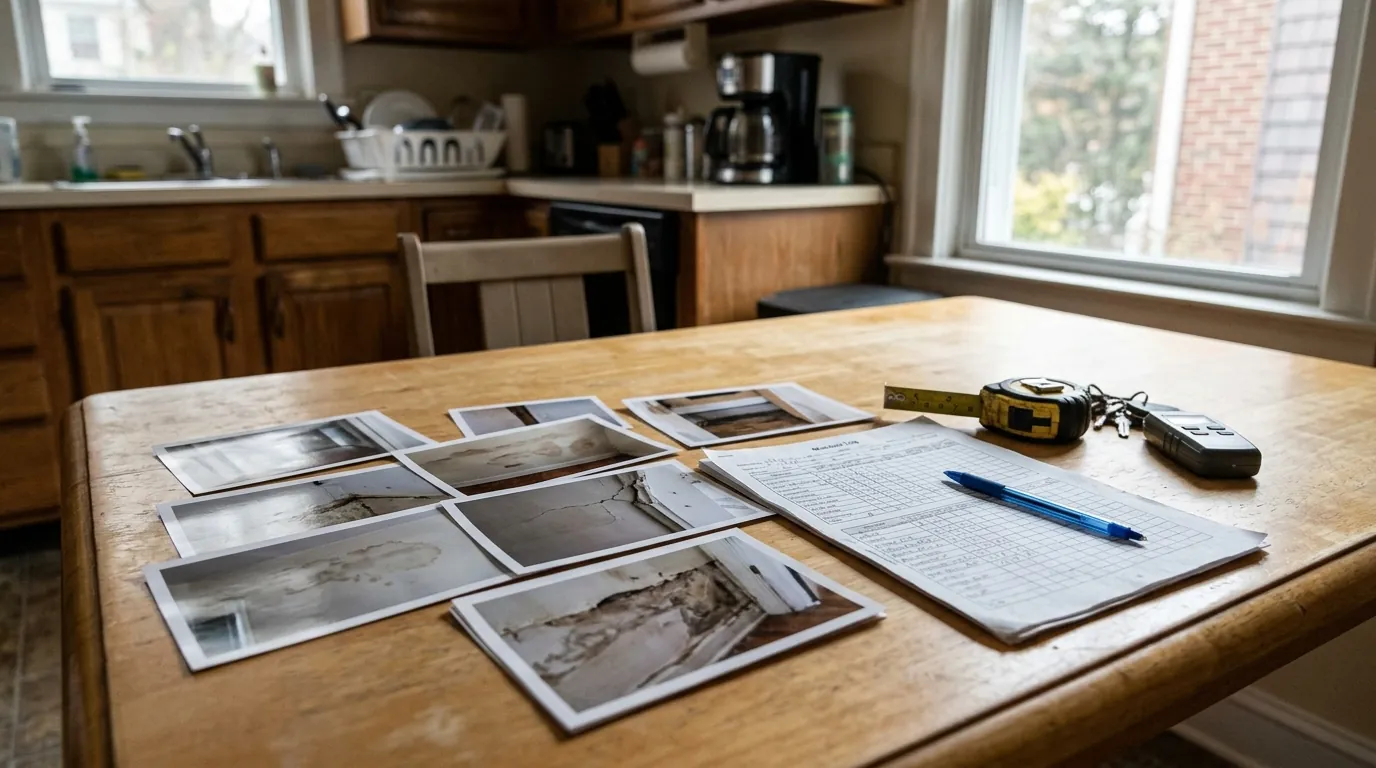
Insurance Claim Help
Insurance claim help, as we provide it, means documenting the damage and the work so you have what your insurer asks for: dated photos, moisture readings, daily drying logs, equipment records and an itemized repair scope.
How we handle itNeed someone to look at it today?
Call (202) 989-3053. We answer 24/7 and can talk you through the next safe step on the phone.