Prevention & Repairs
Indoor air quality testing for homes in Washington, DC
A stuffy bedroom, a smell nobody can place, dust that returns in days or a basement that feels damp all summer are worth measuring before you spend money on fixes. We test the air, explain the readings and tell you what is worth doing.
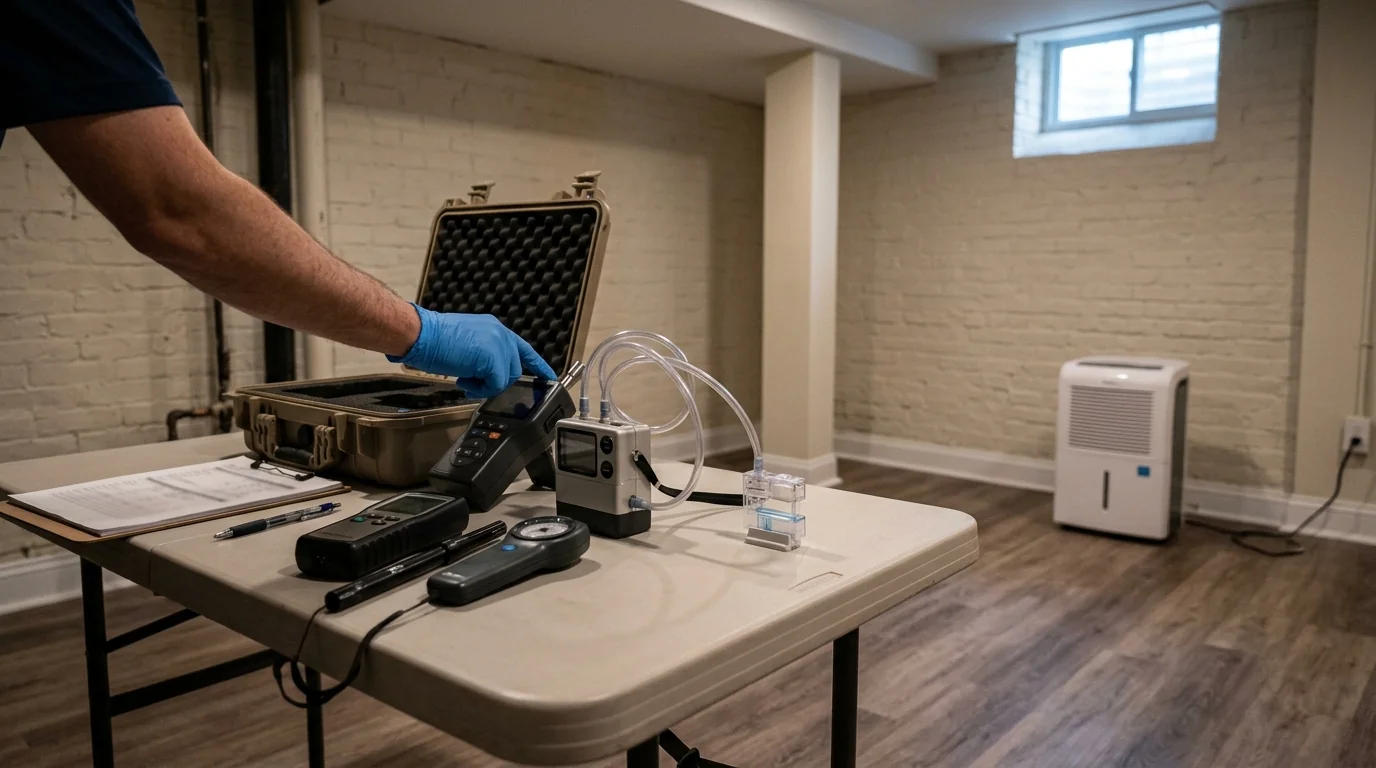
Drying, air and detection equipment on our jobs comes from names like
- Dri-Eaz
- Phoenix
- B-Air
- Abatement Technologies
- Protimeter
- Delmhorst
- FLIR
- Benefect
- Concrobium
- Omnitec
- Sapphire Scientific
- Tramex
Indoor air quality testing measures conditions in your home's air: relative humidity, temperature, fine particulates, volatile organic compounds and carbon dioxide, plus mold spores when a moisture problem is suspected. It is worth doing when a smell, symptom or damp area has no obvious cause, after water damage, or before buying an older home. It is usually not worth doing just to confirm mold you can already see.
What do we measure, and what does each reading tell you?
Each measurement answers a different question, and none of them on its own grades the whole house. We take readings room by room and outdoors so every number has something to be compared with.
Temperature, dew point and surface moisture readings fill in the picture wherever humidity looks high, because a cold wall in a humid room is where condensation and growth begin. The core readings are these:
- Relative humidity: EPA recommends keeping indoor humidity below 60 percent, ideally between 30 and 50 percent. Long stretches above that favor dust mites and mold.
- Fine particulates (PM2.5 and PM10): dust, smoke and cooking particles counted with a laser particle counter. Rooms that read far above the outdoor air point to an indoor source.
- VOCs: a total VOC meter gives one combined reading for gases released by paint, adhesives, cleaners, stored solvents and air fresheners. It shows that something is off-gassing, not which compound it is.
- Carbon dioxide: a ventilation indicator. Outdoor air sits a little above 400 ppm, and a closed bedroom can climb well past 1,000 ppm overnight, which points to too little fresh air.
- Mold spores: spore trap samples drawn through a calibrated pump and read by a lab, always alongside an outdoor sample.
Which household complaints point toward an air quality test?
These are the complaints where measurements usually tell us something useful.
A smell with no source
A musty or chemical odor that nobody can trace to a spill, a leak or a visible patch of growth.
Dust that returns in days
Fine dust settling on furniture soon after cleaning can point to leaky return ducts or a poorly fitted filter.
Window condensation in winter
Water running down the inside of windows on cold mornings means indoor humidity is higher than the house can handle.
Stuffy bedrooms in the morning
A stale, closed-in feeling after a night with the door shut often lines up with high CO2 readings.
Symptoms that ease away from home
Mold and dust can trigger allergy and asthma symptoms in sensitive people; a doctor should be part of that conversation too.
A recent leak, flood or renovation
Readings after water damage or remodeling show whether the house has dried out and the new materials have settled down.
What does indoor air quality testing cost in the DC area?
Lab samples and days of logging account for most of the difference between visits.
| Walk-through screening: humidity, particulates, VOCs and CO2 | $310-$560 |
|---|---|
| Screening plus three or four mold spore samples | $520-$890 |
| Multi-day logging with a follow-up visit | $680-$1,240 |
These are typical DC-area figures, not quotes; we price after hearing the complaint and seeing the house. Compare ranges across all 40 services.
What moves the price
- Size of the home
- Number of lab samples
- Days of data logging
- Lab turnaround speed
- Detail of the written report
How an indoor air quality visit works
A typical visit takes a few hours, with lab results and logger data following later.
Talk through the complaint
We ask when the problem shows up, where it is worst, who notices it and what changed recently, such as a renovation, a new appliance or a leak. The answers decide what we measure.
Walk the house with meters
Humidity, particulate, VOC and CO2 readings are taken room by room and outdoors. Where numbers stand out, a thermal camera and moisture meter help find the cause.
Set data loggers if needed
A single reading can miss overnight CO2 buildup or the way a basement responds to a humid week. Loggers left for several days capture those patterns.
Sample where it helps
Spore trap samples are taken indoors and outdoors only when moisture or odor suggests hidden growth. Samples go to an independent lab.
Explain results and next steps
You get the readings, any lab results and a plain-language summary of what is normal, what is not and which fix to tackle first.
When is testing worth paying for, and when is it not?
Testing earns its cost when there is a question without an obvious answer. A musty smell with no visible source, a basement that never quite dries, symptoms in sensitive family members that ease when they are away from home, or a chemical smell that lingers after a renovation are all good reasons. So is checking a house after water damage, where readings show whether drying worked and whether something is growing out of sight.
It is often not worth it when the answer is already in front of you. EPA's guidance is that sampling is usually unnecessary when mold growth is visible; the money is better spent finding the moisture and removing the growth. Testing to learn whether a dark patch is a dangerous kind of mold misses the point, since color does not tell you how harmful a mold is, as our article on black mold myths explains. Settle-plate kits sold in stores catch whatever falls into the dish and grow something almost every time, without measuring how much air was sampled.
If mold is your main worry, a dedicated mold inspection may be the better fit. Radon and carbon monoxide need their own tests and alarms.
How do test results turn into fixes that change the air?
A report that only lists numbers is not much use. Each finding should point to a change, and we tell you plainly which fixes we handle and which you can do yourself. The usual pairings look like this:
- High humidity: fix gutters and grading, run or upgrade a basement dehumidifier, and confirm bath and kitchen fans vent outdoors.
- High particulates: use the highest-rated filter your system can handle, seal leaky return ducts in the basement, and check the air handler and ductwork if dust keeps coming back.
- High VOCs: move stored paints and solvents out of living space, ventilate, and give new finishes time to off-gas.
- High CO2: open bedroom doors or windows, run bath fans, and consider mechanical ventilation in tightly renovated homes.
- Indoor spores above outdoor levels: find the moisture source first, then remove the growth.
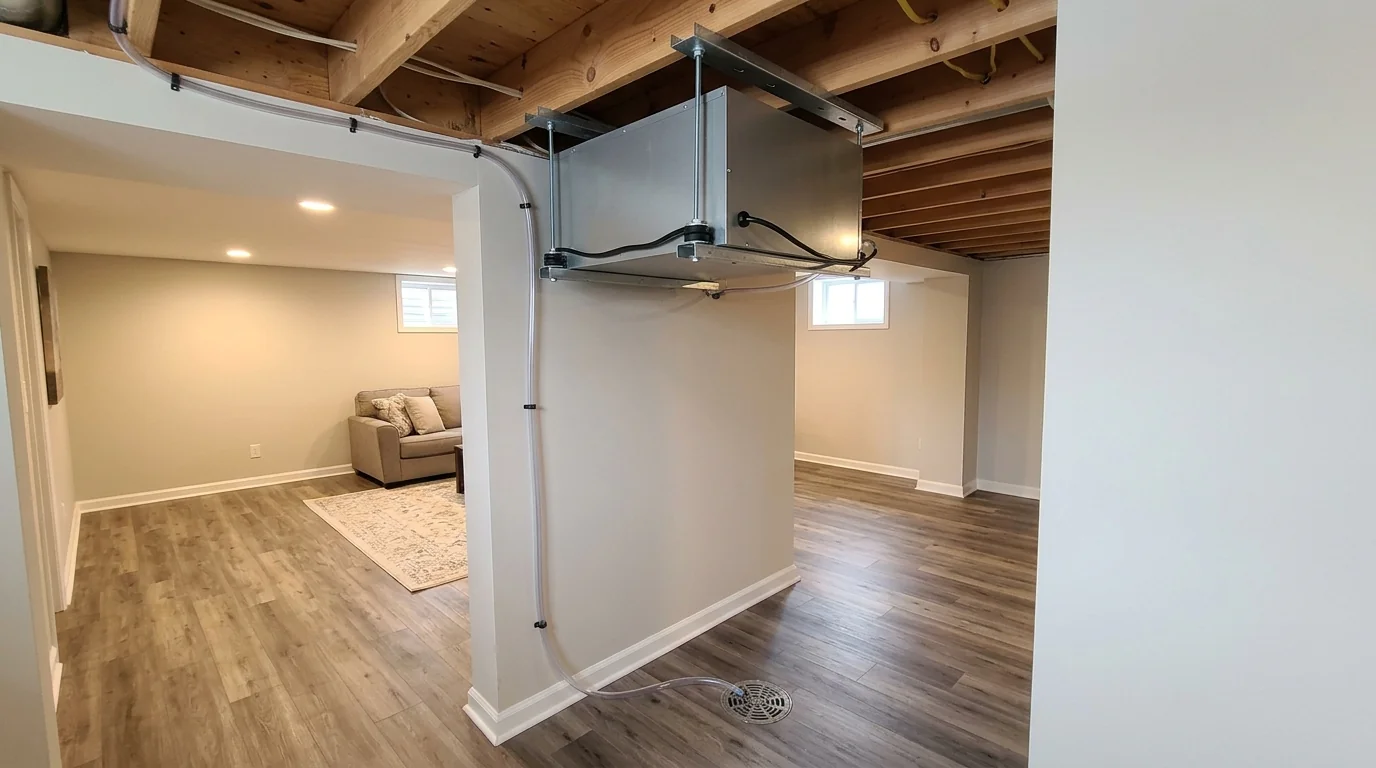
A whole-basement dehumidifier holding humidity down after the work
Air quality patterns in DC homes through the year
Summer is humidity season. From July into September, basements across the District, and English basement apartments in particular, can sit well above the humidity range EPA recommends unless a dehumidifier is running. Our piece on mold after a humid summer explains what is normal and what is not. Winter flips the picture in older rowhouses heated by steam or hot-water radiators, where the air turns dry, while tightly renovated condos can trap CO2 and cooking particles with the windows shut.
Newer condo buildings in NoMa and around the Navy Yard bring fresh finishes, adhesives and cabinetry that release VOCs for a while after move-in. Kitchens with gas ranges and no hood venting outdoors push particulate readings up during cooking, a pattern that shows clearly on a logger. Older houses sometimes carry the faint smell of a heating oil tank or old oil spills in the basement long after the switch to gas, and that odor is worth tracing rather than masking.
Where we do this work: Washington, DC and nearby Maryland and Virginia, including:
Related work we often do on the same job
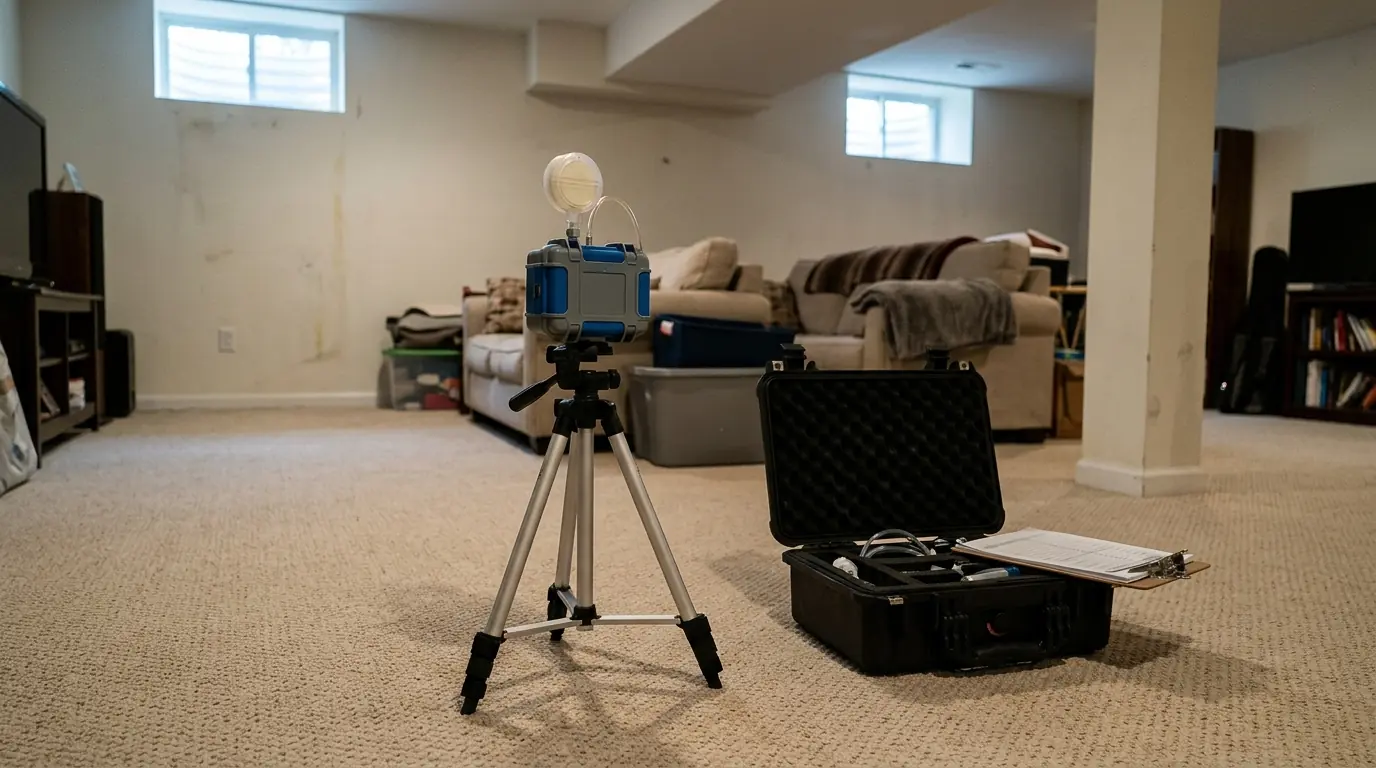
Mold Inspection & Testing
A mold inspection is a room-by-room check for visible growth and the moisture that feeds it, using a moisture meter, a thermal camera and a hygrometer.
How we handle it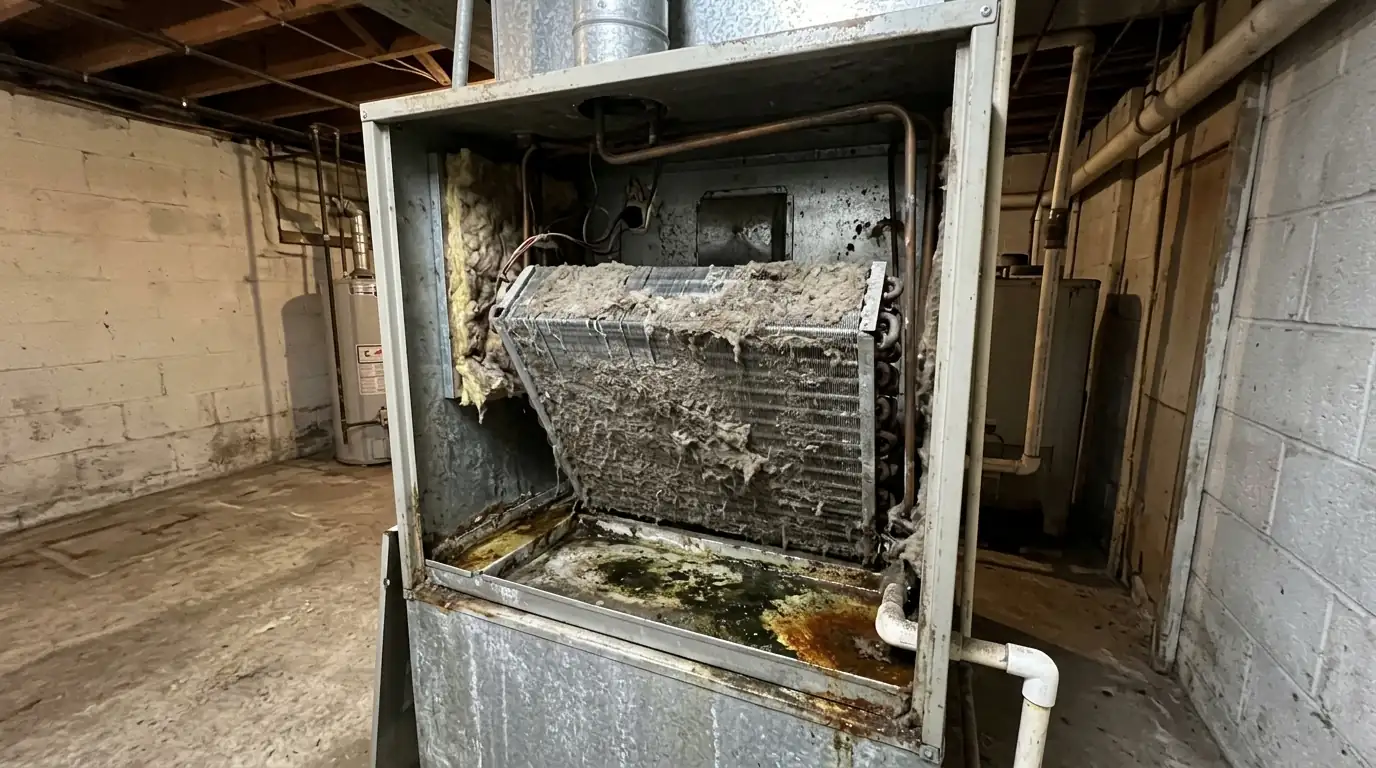
HVAC & Duct Mold Cleaning
HVAC and duct mold cleaning removes growth from the parts of a heating and cooling system that stay wet: the evaporator coil, drain pan, blower and the ducts closest to them.
How we handle it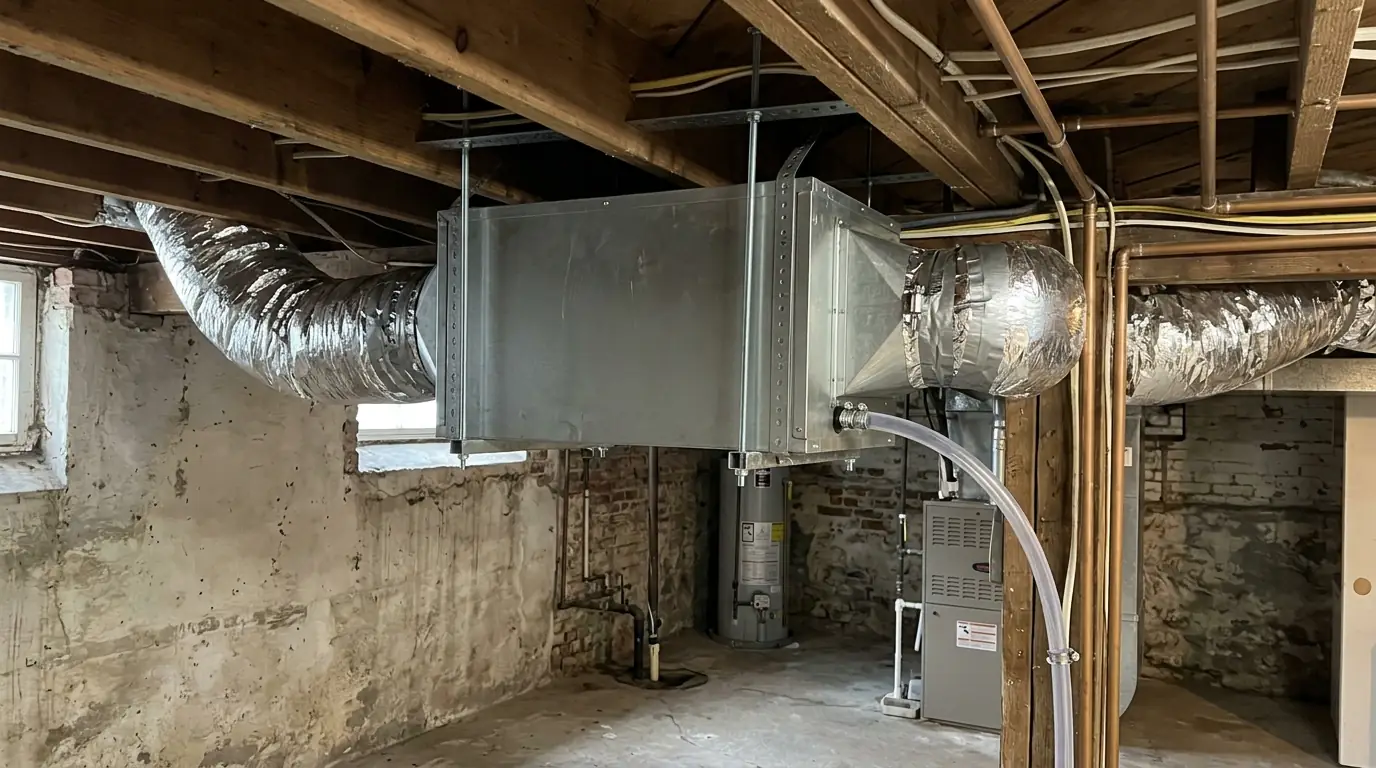
Dehumidifier Installation
A whole-basement dehumidifier is a fixed unit that pulls moisture from the air in a basement or crawl space and drains it continuously through a hose or condensate pump.
How we handle it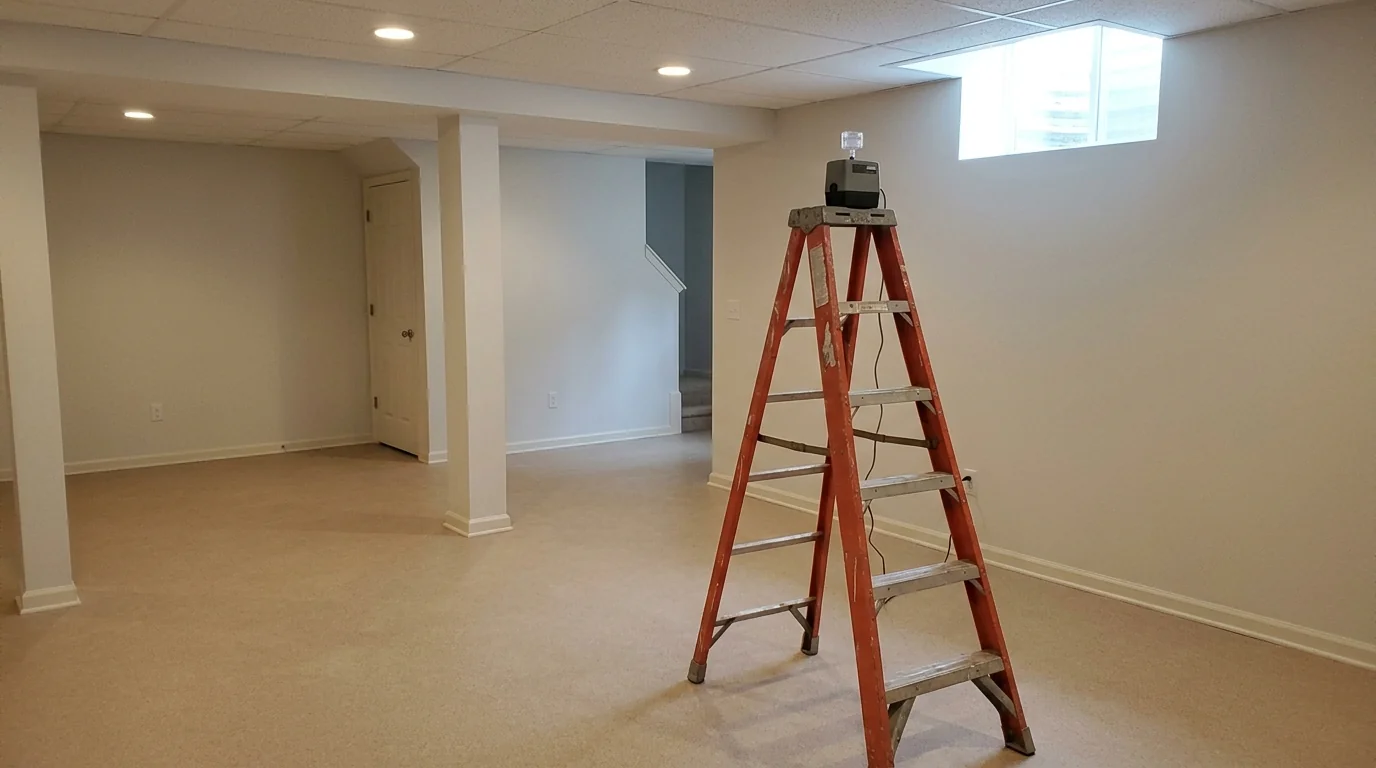
Mold Clearance Testing
Mold clearance testing, also called post-remediation verification, checks a work area after mold removal and before the walls are closed.
How we handle itQuestions homeowners ask about indoor air quality testing
Are plug-in home air quality monitors accurate enough?
They are useful for spotting trends. Consumer CO2 and humidity sensors are often reasonably close, while low-cost VOC and particulate sensors are better at showing changes than giving exact values. If your monitor flags a pattern, that is a good starting point. Our instruments give a second, more precise set of readings, and we can compare them with your monitor's history.
Is a mold air test useful if I can already see mold?
Usually not. Visible growth already tells you there is a moisture problem and material to remove, and EPA notes that sampling is generally unnecessary in that case. Spending the money on finding the water source and removing the growth makes more sense. Air sampling becomes useful afterward, to confirm the area is clean before it is closed up.
What indoor humidity should a DC home aim for?
Between 30 and 50 percent most of the year, and below 60 percent in summer, is the range EPA recommends. Basements are usually the hardest place to hold it, so a hygrometer there is worth having. In winter, radiator-heated homes can drop below 30 percent, and adding moisture should stop short of fogging the windows.
Can you test for radon or carbon monoxide during the visit?
Those need different tools. Radon is measured with a test that sits in the lowest lived-in level for at least two days, and EPA recommends fixing a home at 4 picocuries per liter or above. Carbon monoxide is a job for alarms on every level and near sleeping areas. Our visit focuses on moisture, particulates, VOCs, CO2 and mold.
Will an air purifier fix what the test finds?
It depends on the finding. A properly sized HEPA purifier lowers particulates and some airborne spores in the room it serves. It does nothing for humidity, and only models with a substantial activated carbon filter reduce VOCs. A purifier helps alongside a fix for the source, such as a leak or poor ventilation, but rarely replaces it.
Water in the house or a musty room you can't explain?
Call JEC Restoration any time. We answer 24/7 and talk through what you are seeing before anyone touches a wall.