Water Damage
Flooded basement cleanup in Washington, DC
Basement water in DC usually comes from one of three places: the sewer, the ground or the stairwell outside the door. We work out which one, clean to the standard that source calls for, and dry the brick, slab and finishes.
Drying, air and detection equipment on our jobs comes from names like
- Dri-Eaz
- Phoenix
- B-Air
- Abatement Technologies
- Protimeter
- Delmhorst
- FLIR
- Benefect
- Concrobium
- Omnitec
- Sapphire Scientific
- Tramex
Flooded basement cleanup removes water from a below-grade space, cleans and sanitizes what it touched, takes out finishes that cannot be saved, and dries the slab, walls and framing. The source matters: a sewer backup is handled as contaminated water, while clean groundwater usually is not. You need it whenever water covers a basement floor or soaks finished walls. Call (202) 989-3053, any hour.
Is it sewer water, groundwater or rain from the stairwell?
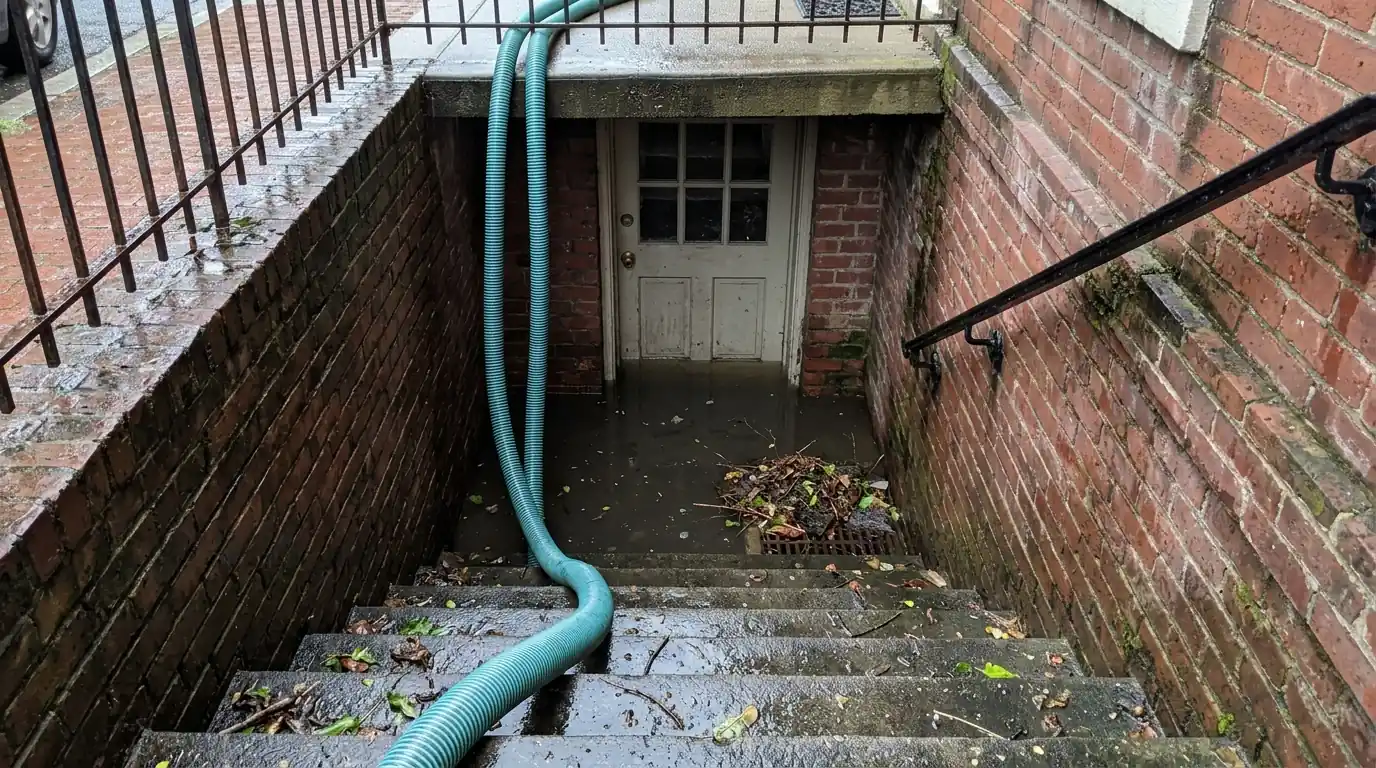
The answer changes how we clean, what we keep and sometimes which policy applies, so we start there. Look at where the water entered and when. Water rising out of the floor drain during a heavy downpour, often with an odor or debris, is almost always a sewer backup. Water seeping along the joint where the wall meets the floor, sometimes a day after the rain stops, is groundwater. Water pouring under the front or rear basement door during a storm usually means the exterior stairwell or areaway drain is clogged.
Each source carries a different level of contamination. Sewer water is Category 3 and gets full sewage backup cleanup, with porous materials removed. Groundwater that seeped through the wall is usually cleaner, though it can carry soil. Stairwell overflow starts as rain but crosses leaves, dirt and pavement on the way in, so we treat it as Category 2 at minimum. Our article on telling sewer water from groundwater goes further into the clues.
What tells you basement water is more than a small puddle?
Some basement water is a quick mop-up, but these signs point to a real cleanup job.
Water rising from the floor drain
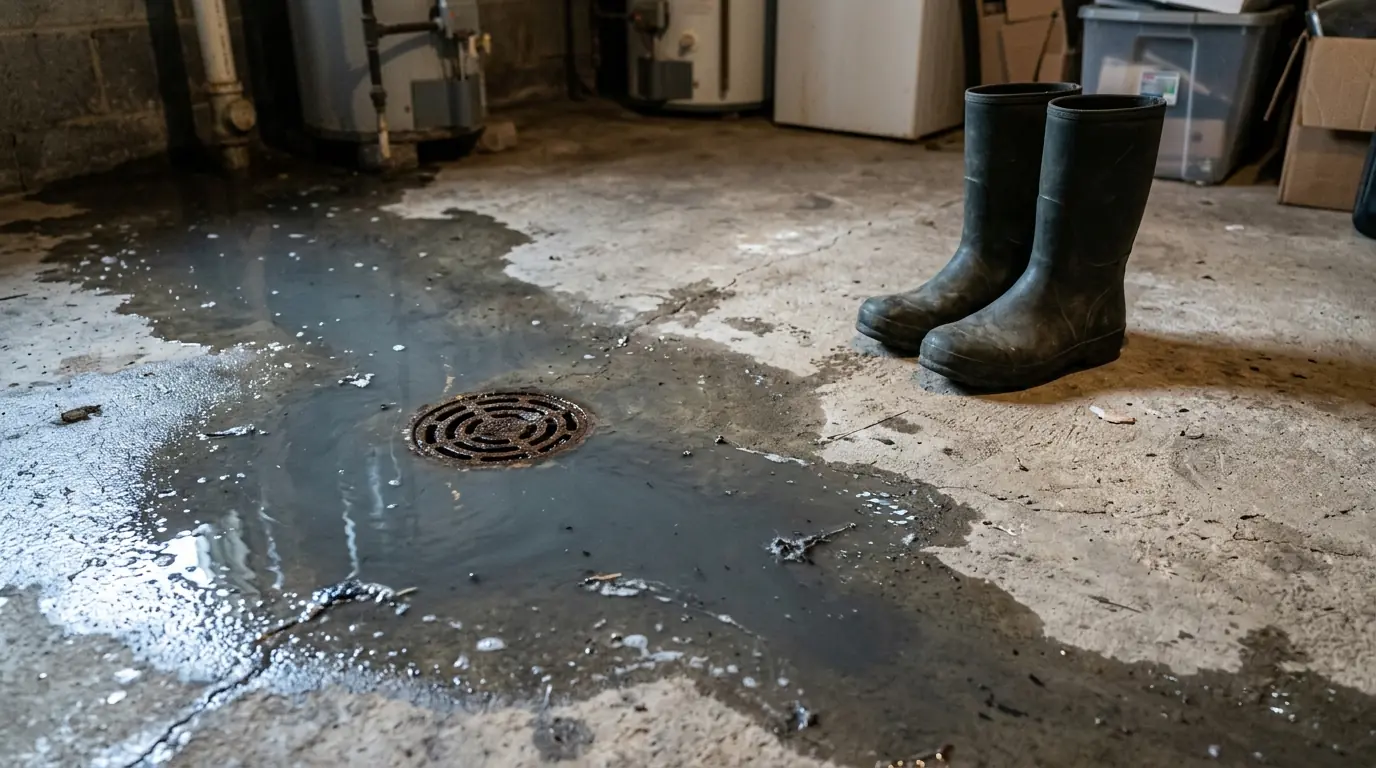
Water that comes up instead of draining away during rain is a backup, and it should be treated as sewage.
A wet band along the wall base
A dark band where the brick or block meets the slab after rain is groundwater pushing through the foundation.
Debris or odor in the water
Paper, grit or a sewer smell tell you the water is contaminated, whatever its source looks like.
Soaked carpet by the front door
Wet carpet near the basement entrance after a storm usually traces to a clogged stairwell drain outside.
White crust on brick
Efflorescence is mineral salt left behind by water moving through masonry, a sign the wall gets wet regularly.
Swollen drywall bottoms
Drywall that has gone soft or crumbly near the floor has wicked water and needs to be cut back.
How does a flooded basement cleanup run?
Basement jobs follow a set order so contaminated material is gone before drying begins.
Identify source and category
We look at the drain, the walls, the door and the water itself, then decide how to clean and what protective gear is needed. The category is recorded with photos.
Pump and extract
Submersible pumps clear standing water, and extractors pull what remains from carpet, pad and the slab. Contaminated water is discharged to the sanitary sewer.
Remove wet finishes
Carpet, pad, wet drywall, insulation and baseboard come out based on readings and the water category. Vinyl plank and laminate are lifted if water got underneath.
Clean and treat surfaces
Slabs, brick and framing are washed with detergent and treated with an antimicrobial where needed. Surfaces are HEPA vacuumed once they are dry.
Dry and verify
Dehumidifiers and air movers run until masonry, slab and framing reach dry reference readings. We then hand off a scope for rebuilding the finished areas.
What changes when the flooded basement is somebody's apartment?
Many English basements in the District are rented as separate units, and a flood there is a different job from a wet storage room. There is a kitchen with base cabinets, a bathroom, carpet or vinyl plank over the slab, drywall on furring strips against the brick, and a tenant's furniture, clothes and electronics sitting on the floor.
We handle the unit as a living space. Contents are photographed and moved or packed out of the wet area, and cabinets are pulled if water reached under them. Drywall is cut above the highest wet reading and the insulation behind it comes out. Drying equipment runs day and night and is loud, and after a Category 3 backup nobody should stay in the unit until cleaning is done. We keep owner and tenant updated on the timeline, which for a finished basement usually runs from several days to a couple of weeks before rebuilding can start. Closing walls too early is how basement mold problems begin.
How do brick walls, slab and old mortar get cleaned and dried?
Once the water is out, the masonry needs care. Old rowhouse foundations are soft brick laid in lime mortar, and they do not respond well to pressure washing or harsh chemicals. We clean with detergent and low-pressure rinsing, extract the rinse water, and apply an antimicrobial suited to the surface wherever Category 2 or 3 water was present. Concrete slabs are cleaned the same way and dried fully before any new flooring goes down.
Masonry and concrete hold water deep in their pores, so they are the slowest part of a basement to dry. Low-grain dehumidifiers run in a closed space, air movers sweep the slab and wall base, and we track readings on the brick, the slab and any framing set against it. If the basement keeps flooding, cleanup alone will not end the cycle; waterproofing the walls or adding a sump pump goes after the cause.
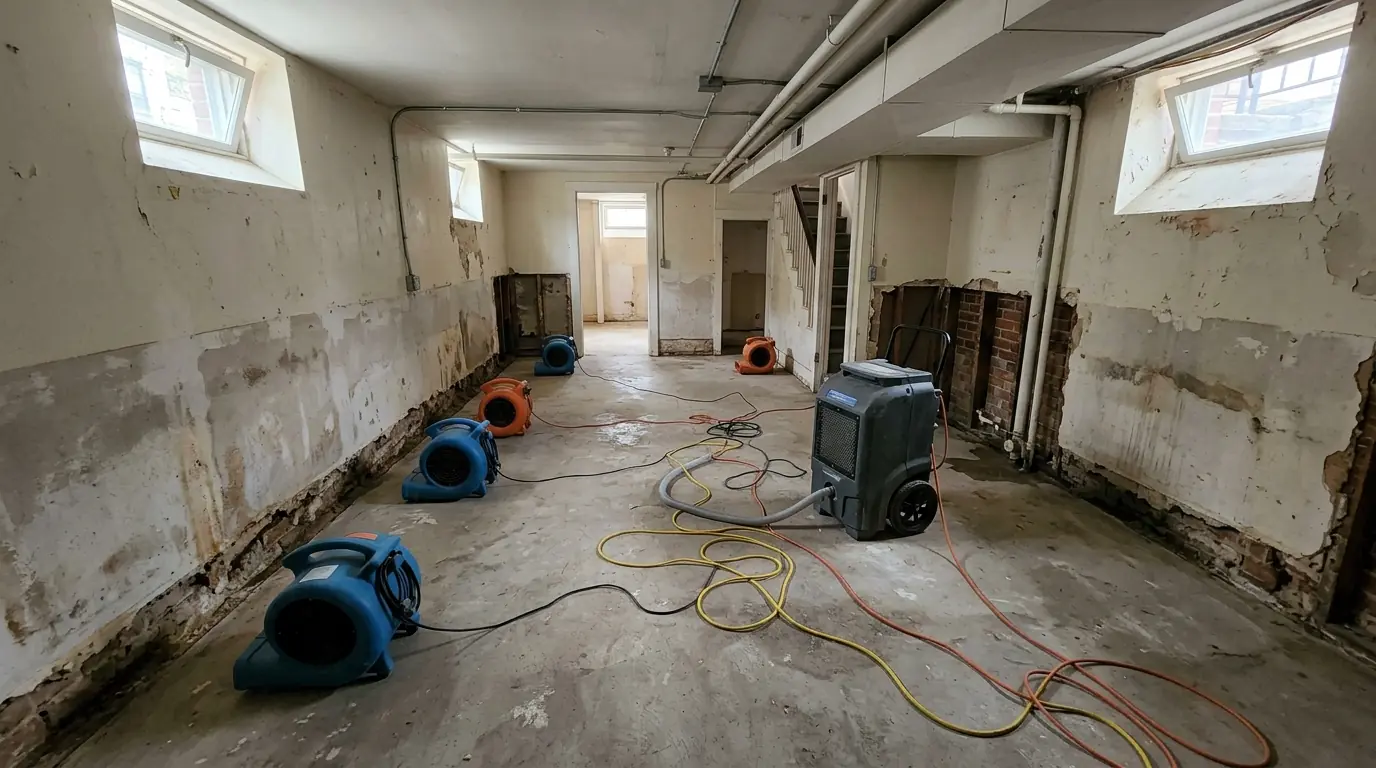
Air movers and a dehumidifier drying a DC basement apartment
Why do DC English basements flood the way they do?
An English basement sits about half below the sidewalk, with its own door under the front stoop and a small stairwell drain at the bottom of the steps. That drain is the most common failure point we see: leaves from street trees, grit and trash collect in it, and a summer thunderstorm fills the stairwell faster than the drain can take it. Rear areaways behind the house fail the same way.
The second pattern comes from below. Older parts of the city are on a combined sewer system, where storm runoff and household sewage share the same pipes, so a heavy downpour can push water back up through a basement floor drain. A backwater valve on the sewer line can stop that. The third is groundwater working through century-old brick foundations that were never waterproofed on the outside. Across the line in Montgomery and Prince George's counties, split-level and colonial basements from the 1950s to the 1980s add sump pit failures to the list, often during storm power outages.
Where we do this work: Washington, DC and nearby Maryland and Virginia, including:
What does flooded basement cleanup cost?
Basement cleanup cost is driven mostly by the water category and how much of the space is finished.
| Unfinished basement, clean groundwater | $1,380-$3,260 |
|---|---|
| Finished basement, stairwell overflow, carpet out | $3,640-$8,270 |
| English basement apartment, sewer backup | $7,850-$18,900 |
These ranges are typical DC-area figures, not quotes; we price your basement after an on-site assessment. Compare ranges across all 40 services.
What moves the price
- Source and water category
- Finished or unfinished space
- Height of wet drywall
- Tenant contents and fixtures
- Debris removal and disposal
Related work we often do on the same job
Sewage Backup Cleanup
Sewage backup cleanup is the removal of wastewater and the porous materials it soaked, followed by cleaning, disinfection and drying of the affected area.
How we handle it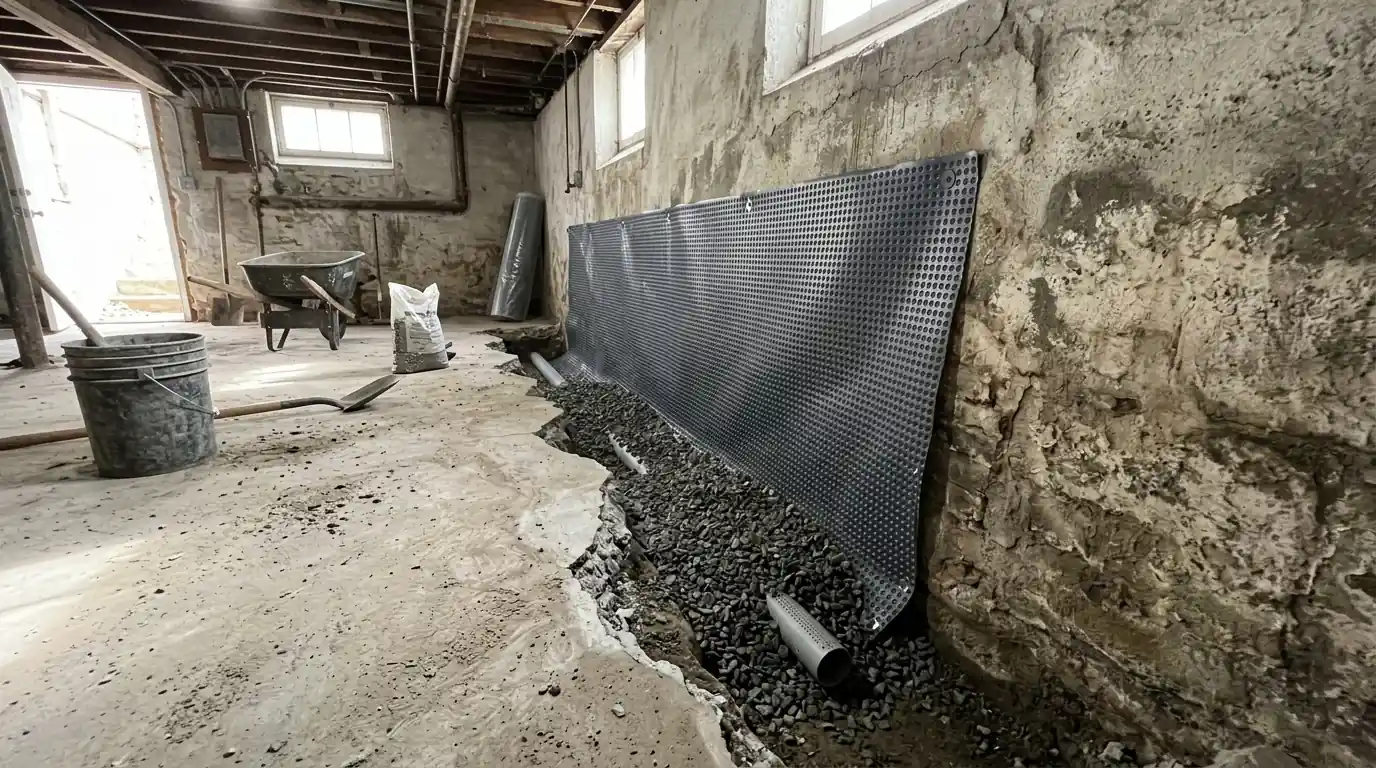
Basement Waterproofing
Basement waterproofing means stopping or managing the water that reaches a basement from outside: through wall cracks, mortar joints, the cove joint at the base of the wall, or a clogged stairwell drain.
How we handle it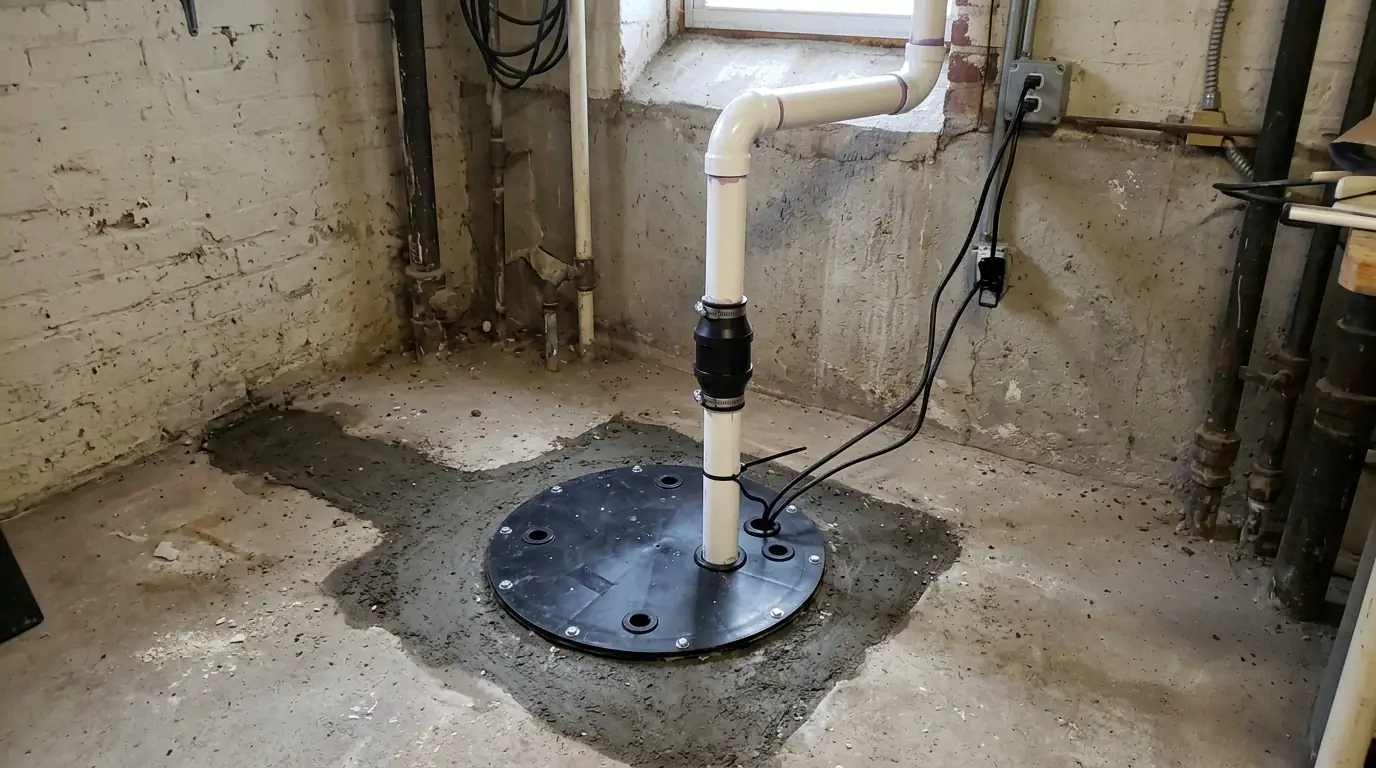
Sump Pump Installation
A sump pump sits in a lined pit at the low point of a basement and pumps out groundwater that collects there from under the slab or from a perimeter drain.
How we handle it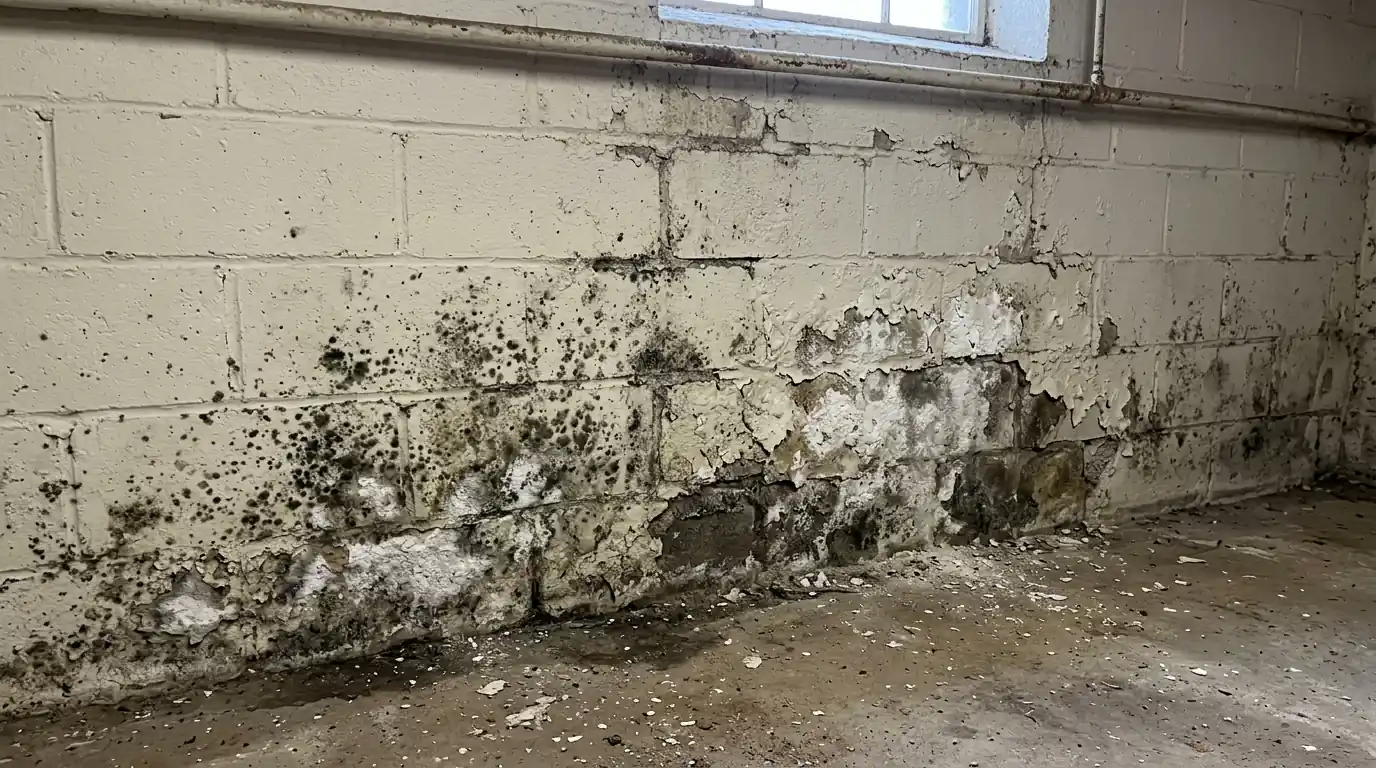
Basement Mold Removal
Basement mold removal cleans or removes growth on foundation walls, framing, finished drywall, carpet and stored contents below grade, then corrects the moisture that caused it.
How we handle itQuestions homeowners ask about flooded basement cleanup
Why did water come up through my floor drain when nothing in my house was leaking?
In older DC neighborhoods on the combined sewer system, a heavy storm can fill the shared pipes faster than they drain. With nowhere else to go, the water rises through the lowest opening it can find, which is often a basement floor drain. A backwater valve on your sewer line lets water out but closes when it tries to flow back in.
Can my tenant stay in the basement apartment during the cleanup?
If the water was a sewer backup, no; the unit should be empty until contaminated materials are removed and surfaces are cleaned. With clean water, staying is possible but rarely comfortable, since dehumidifiers and air movers run around the clock and parts of the floor and walls are opened up. Plan on the unit being unusable for at least several days.
How high do you cut the drywall after a basement flood?
We cut above the highest point where the meter still reads wet, which is usually higher than the visible water line because drywall wicks. Many cuts end at two or four feet so new sheets fit standard sizes cleanly. Cutting higher than necessary only adds repair cost, so the readings decide the line, not a fixed rule.
Should cleanup wait until the rain stops?
If water is still coming in, pumping now protects finishes and contents, but the space may refill. With groundwater or a sewer surcharge, we often clear what we can, protect what matters, and return for full extraction and drying once the water stops entering. If a sump pump has failed, getting it running again comes first.
Do I have to throw out everything stored on the basement floor?
Not everything. Hard items such as plastic bins, metal shelving and tools can usually be cleaned and disinfected. Porous items soaked by sewage, such as cardboard boxes, upholstered furniture, mattresses and stuffed toys, usually cannot be cleaned reliably and are discarded. Photograph everything before it goes, because you may need the record later.
Water in the house or a musty room you can't explain?
Call JEC Restoration any time. We answer 24/7 and talk through what you are seeing before anyone touches a wall.