Water Damage
Emergency water removal in Washington, DC
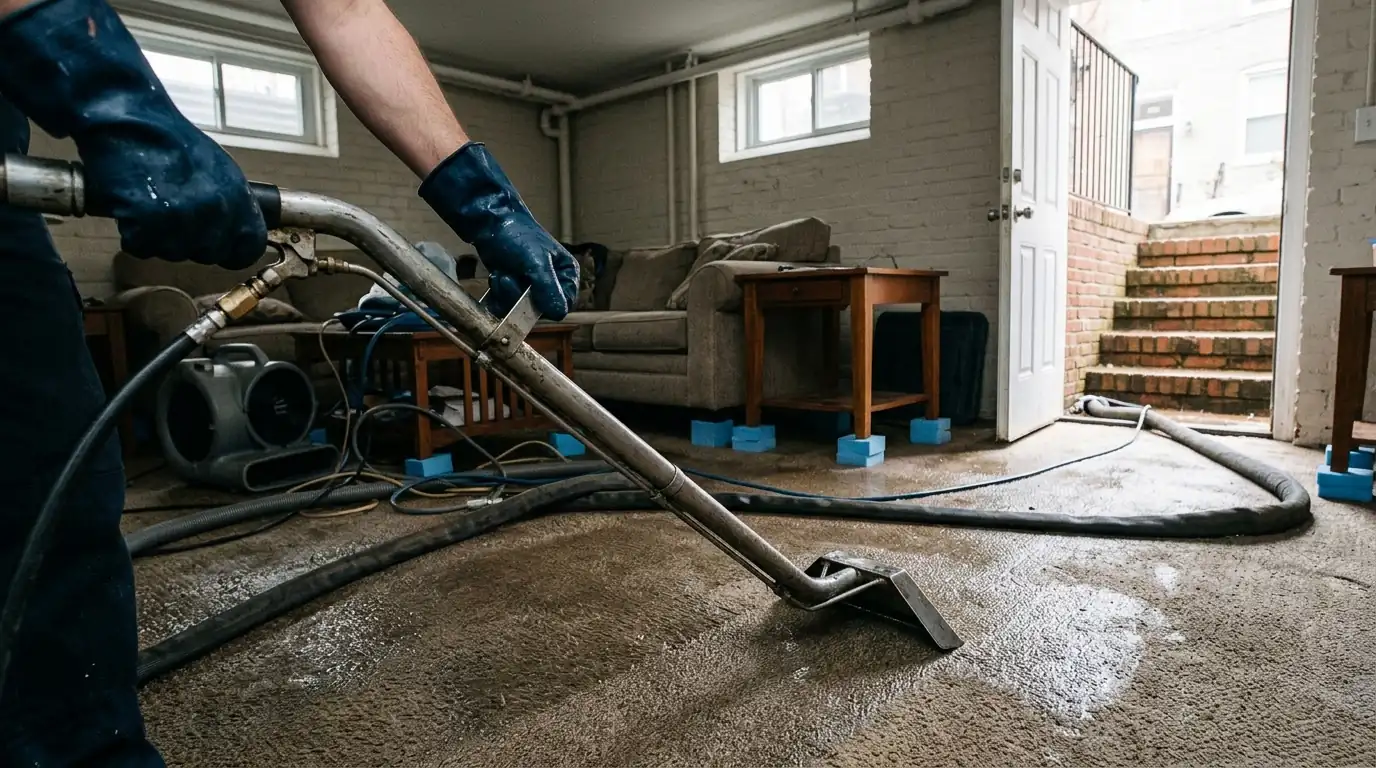
When water is standing on the floor or soaking into carpet, getting it out is the first job that matters. We pump, extract and lift contents off the wet floor so the drying that follows is shorter.
Drying, air and detection equipment on our jobs comes from names like
- Dri-Eaz
- Phoenix
- B-Air
- Abatement Technologies
- Protimeter
- Delmhorst
- FLIR
- Benefect
- Concrobium
- Omnitec
- Sapphire Scientific
- Tramex
Emergency water removal is the first stage of a water job: shutting down the source, pumping out standing water, and extracting what has soaked into carpet, pad and hard floors before it moves into walls and subfloor. Call when water covers more than a small spill, reaches a second room or keeps coming. Our phone, (202) 989-3053, is answered 24/7.
Why does getting the water out quickly matter more than the fans?
Liquid water is cheap to remove and expensive to evaporate. A pump or extractor pulls it out as fast as the hose can carry it. Once it has soaked into pad, drywall and subfloor, the only way out is evaporation, and that means dehumidifiers running around the clock for days. Every gallon we extract on the first visit is a gallon the drying equipment never has to deal with.
Time also changes what the water does. Within hours it wicks up drywall and into baseboards. Over a day or two it reaches the underside of hardwood, starts to loosen carpet backing and soaks into the bottom plates of walls. The extraction visit is aimed at stopping that spread, which is why we treat it separately from the drying phase that comes after. A thorough extraction can be the difference between drying a carpet in place and tearing it out.
When is it time to call for water removal instead of grabbing towels?
Towels handle a spill, but these situations need pumps and extractors.
Water past the baseboard
Once water reaches the wall it starts wicking into drywall and plaster, and mopping will not catch what is moving inside.
Carpet that squishes
If pressing the carpet brings water up around your foot, the pad underneath is saturated and needs weighted extraction.
Water near anything electrical
Water at outlets, floor boxes, extension cords or a basement panel is a shock hazard; stay clear and call.
Water under a floating floor
Laminate and click-together vinyl plank trap water underneath, where it sits on the subfloor or slab out of sight.
A source you cannot stop
A valve that will not close, a drain still backing up, or water still coming through a ceiling needs immediate attention.
Water spreading to another room
When water crosses a doorway or reaches the unit below, the job has grown well past a spill.
What happens during an emergency water removal visit?
The visit is focused on getting liquid water out and keeping it from spreading any further.
Stop and secure
We confirm the source is off, check for electrical hazards and note the water category. If sewage is involved, we set up for Category 3 cleanup before anyone walks through it.
Pump down standing water
Submersible pumps handle anything deeper than about an inch. Hoses run to a sanitary drain or another suitable discharge point, depending on what the water carries.
Extract carpet and hard floors
Weighted extraction pulls water from carpet and pad, and wands clear tile, wood and concrete. We make several passes, because the second and third passes still bring water up.
Move and block contents
Furniture is lifted onto blocks or carried to a dry room, and boxes and rugs come off the floor. Anything damaged is photographed before it is moved.
Map moisture and set drying
With the standing water gone, we map what is still wet using meters and a thermal camera, decide what has to come out, and place the first round of drying equipment.
Which tools do we bring for standing water versus soaked carpet?
Rowhouse access shapes the setup before any equipment gets switched on. Many DC blocks have no driveway, steep front steps and tight parking, so we often carry portable units inside and run long hose lines through the front door or down the English basement stairwell rather than relying on a truck at the curb.
The equipment itself depends on how deep the water is and what it is sitting on. A typical emergency visit uses some mix of these:
- Submersible pumps for water more than an inch or two deep, discharged through lay-flat hose to a suitable drain.
- Truck-mounted or portable extraction units with wands for carpet, tile and concrete.
- Stand-on weighted extraction tools that compress carpet and pad to pull out water a hand wand leaves behind.
- Squeegees and wet vacuums for corners, stair treads and the edges of tile floors.
- Foam blocks and plastic tabs to lift furniture legs off wet carpet so they do not stain it or swell.
What should you do before we arrive, and what should you leave alone?
Shut off the water if you can do it safely. In many DC rowhouses the main valve sits on the front basement wall near the meter. In condos there is often a shutoff in a utility closet or under the kitchen sink, while the building engineer controls the riser. If water is touching outlets, cords or the electrical panel, stay out of it and leave the breakers alone.
Then protect what you can reach from a dry spot. Pick up rugs, boxes and electronics, move small furniture to a dry room, and take photos and video of the water before anything is moved. Do not run a household vacuum on water, and do not try to pull up wall-to-wall carpet yourself; wet pad is heavy and tack strip is sharp. Our checklist for the first hour after a basement floods walks through each step in more detail.
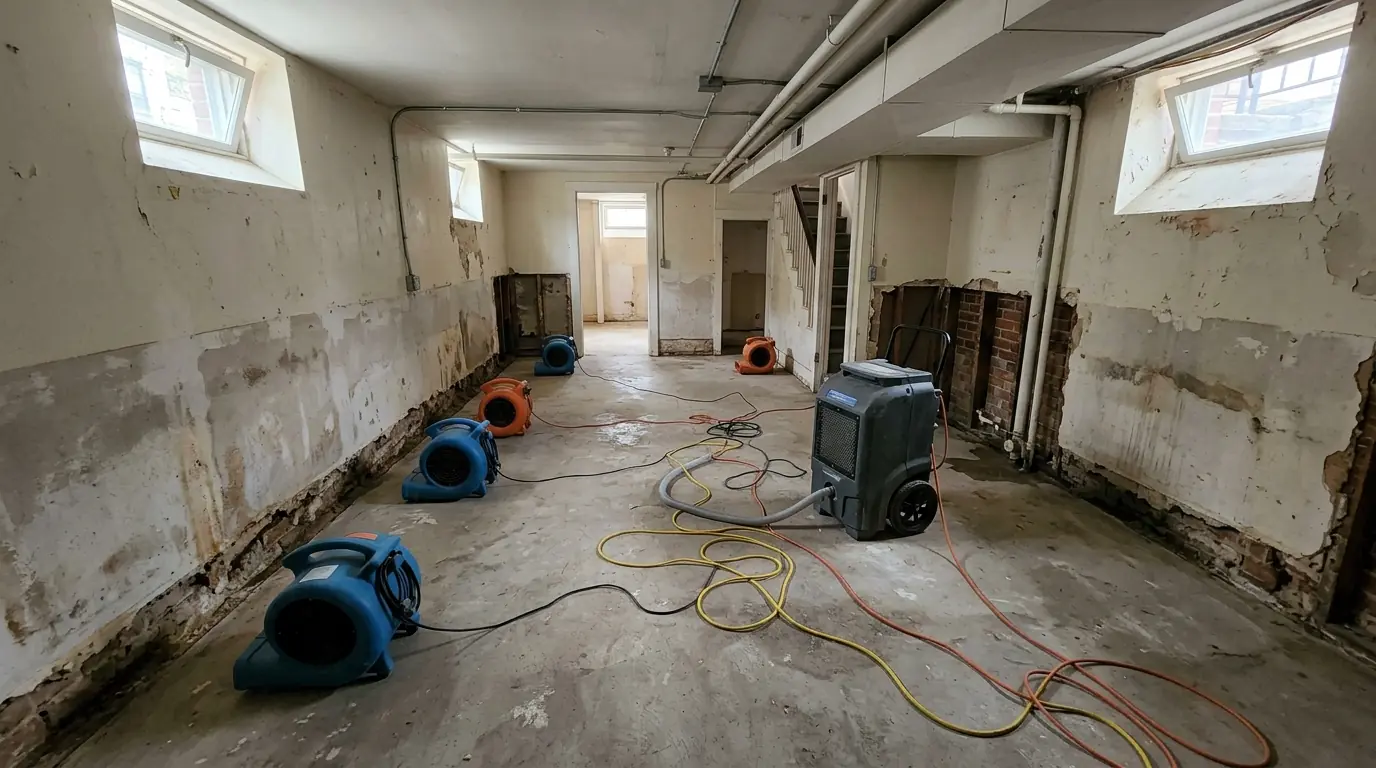
Air movers and a dehumidifier drying a DC basement apartment
Where does standing water collect in DC homes?
In the District, the lowest floor takes the hit. English basements in Shaw, Bloomingdale and Capitol Hill sit half below the sidewalk, with a stairwell at the door whose small drain clogs with leaves from the street trees. When a summer thunderstorm overwhelms it, water pours under the basement door. Rear areaway drains fail the same way behind the house. In older neighborhoods served by the combined sewer system, heavy rain can also push water up through a basement floor drain.
Inside the house, basement water heaters and washing machines are the usual culprits, along with radiator lines and aging supply pipes in the walls. In condo buildings, water from a failed supply hose collects in the lowest unit it reaches, sometimes after crossing two floors. Getting equipment in is part of the job, since narrow front steps, street parking and loading-dock rules all affect the setup. If your basement takes on water every few storms, our basement flood cleanup page covers the longer job.
Where we do this work: Washington, DC and nearby Maryland and Virginia, including:
What does emergency water removal cost by itself?
Removal is often priced as its own line before drying begins. These ranges cover the extraction visit and contents moving, not the days of drying that follow.
| Small area under 200 sq ft, hard floors | $385-$960 |
|---|---|
| One room of wall-to-wall carpet and pad | $720-$1,840 |
| Basement with 1 to 3 inches of standing water | $1,460-$3,880 |
| Multi-room basement with heavy contents to move | $2,270-$5,190 |
These are typical DC-area figures, not quotes; we price the work after assessing it on site. Compare ranges across all 40 services.
What moves the price
- Depth of standing water
- Carpet and pad versus hard floor
- Hose distance and access
- Water category
- Contents to relocate
Related work we often do on the same job
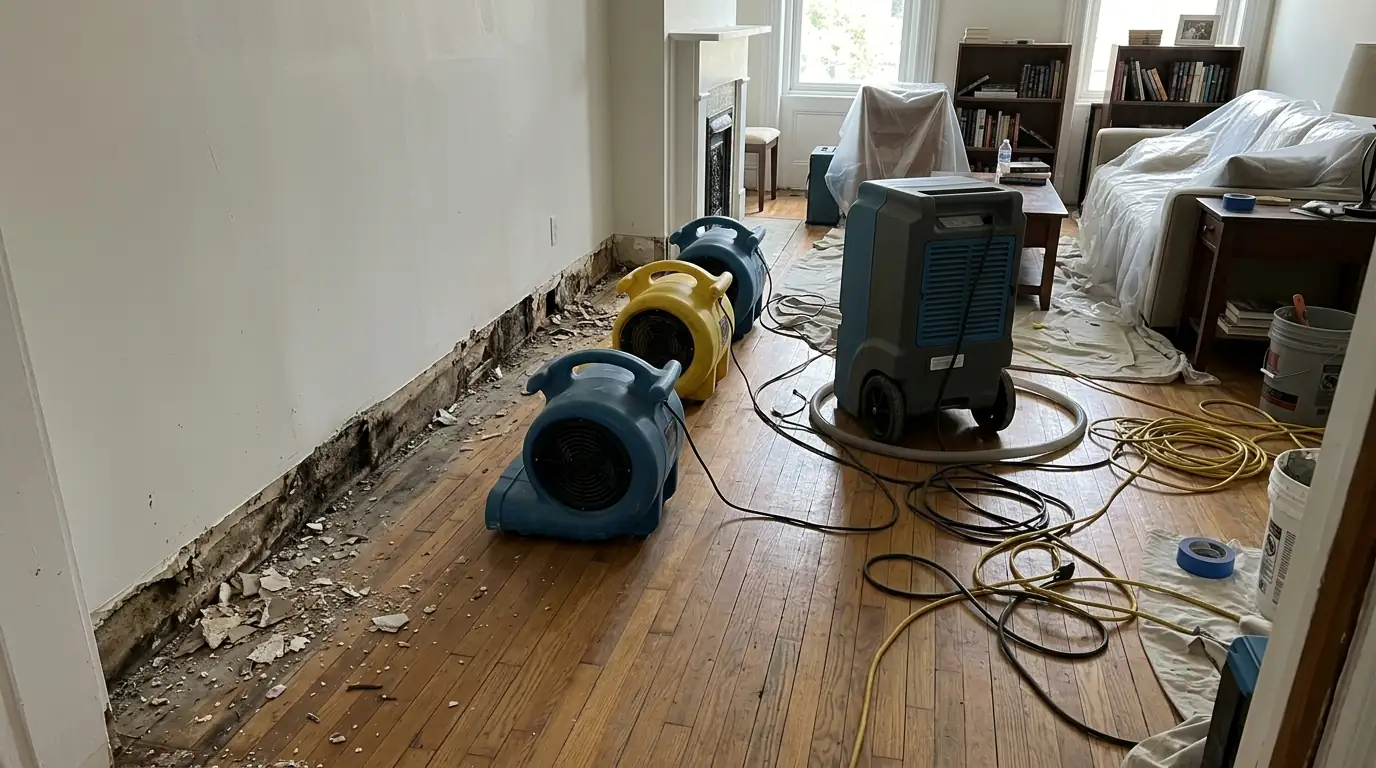
Water Damage Restoration
Water damage restoration is the full sequence after a leak or flood: stopping the source, extracting standing water, removing materials that cannot be saved, drying walls and floors with dehumidifiers and air movers, and logging moisture readings until they reach a dry standard.
How we handle it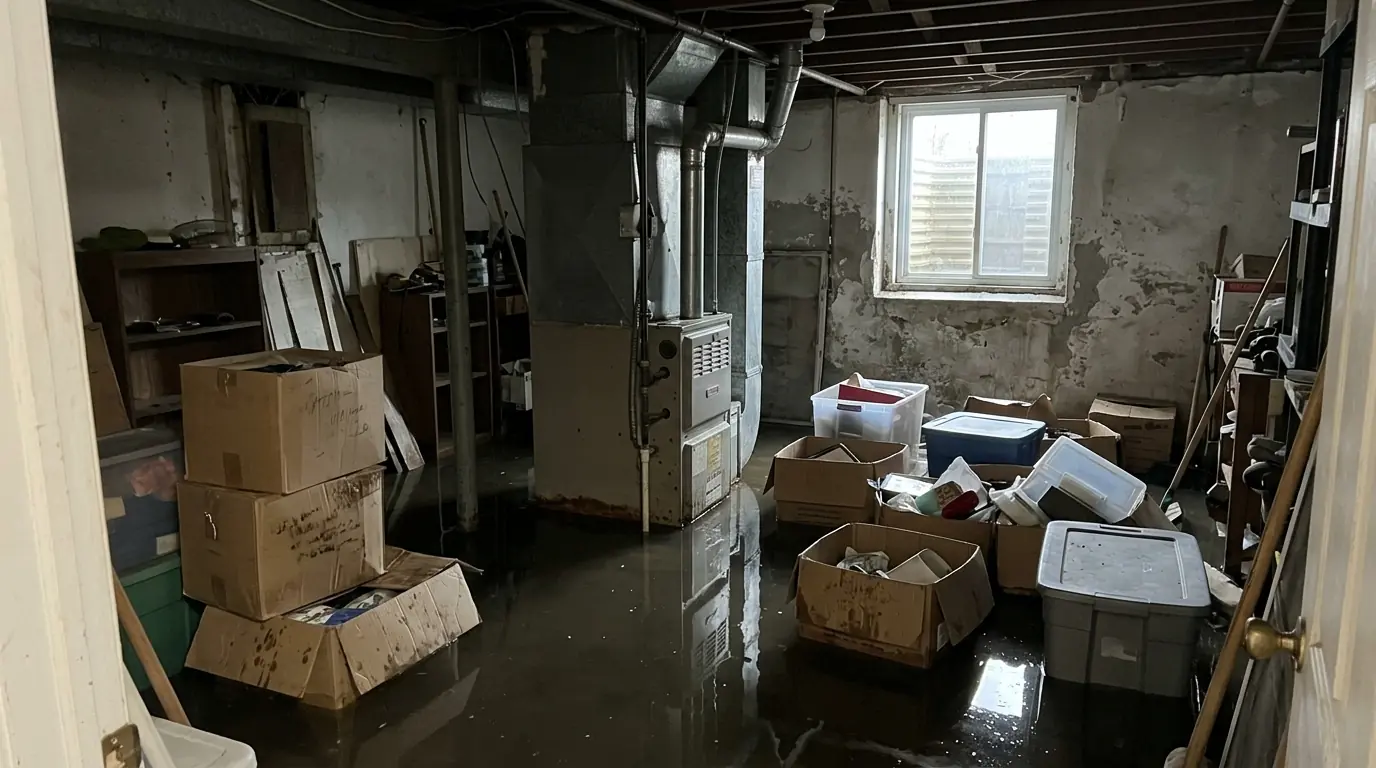
Flooded Basement Cleanup
Flooded basement cleanup removes water from a below-grade space, cleans and sanitizes what it touched, takes out finishes that cannot be saved, and dries the slab, walls and framing.
How we handle it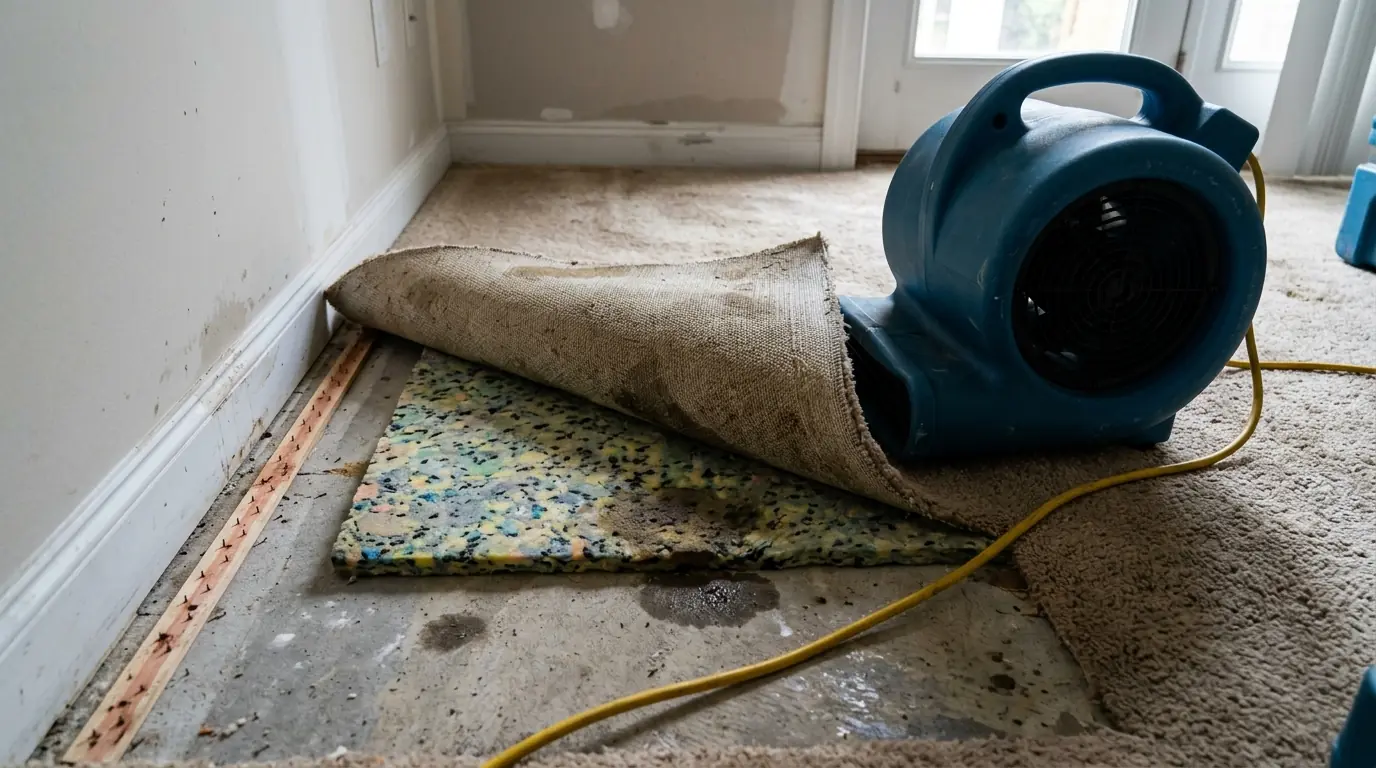
Wet Carpet Drying
Wet carpet drying is the extraction and controlled drying of carpet, pad and the subfloor beneath them after a leak or flood.
How we handle it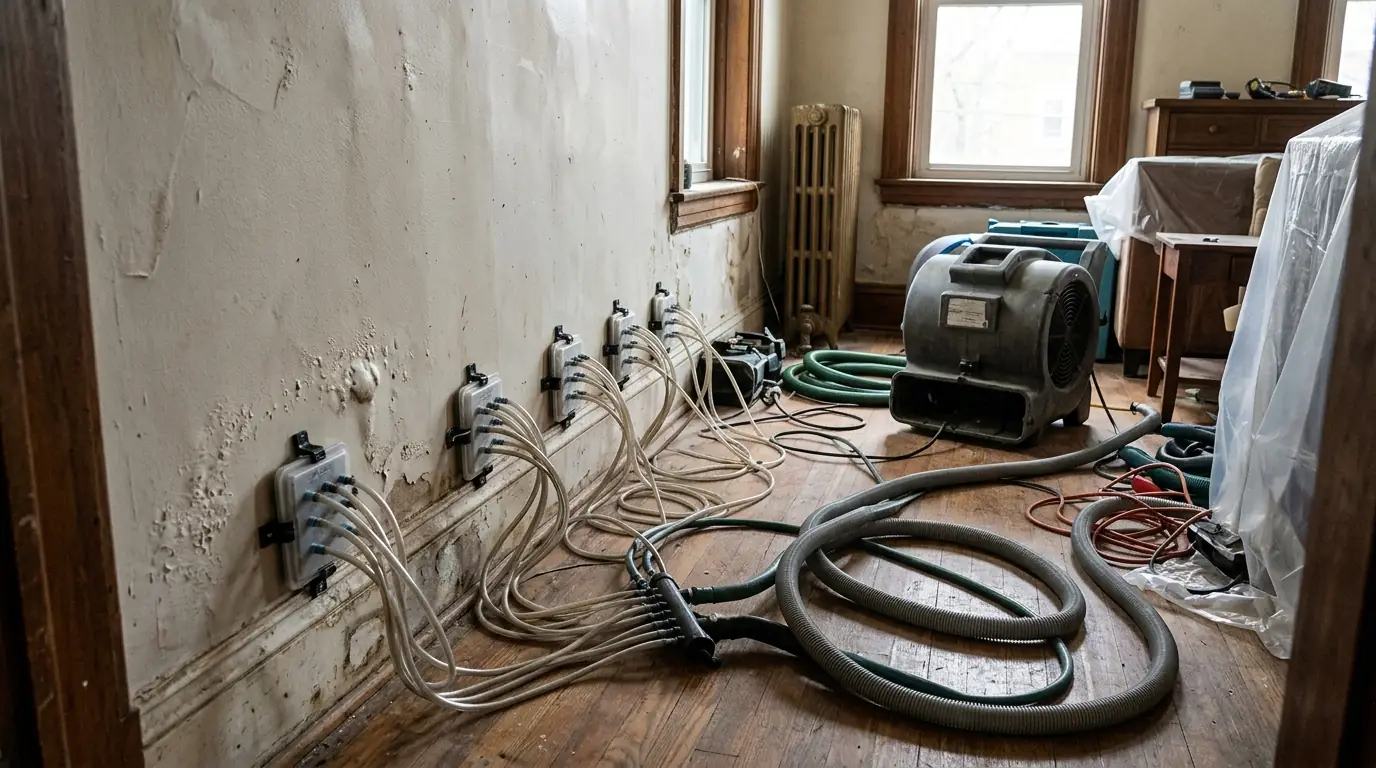
Structural Drying
Structural drying is the controlled removal of moisture from a building's framing, subfloor, wall cavities, plaster and masonry after a water loss.
How we handle itQuestions homeowners ask about emergency water removal
Can you remove the water before the leak itself is repaired?
Yes, as long as the water is shut off. A closed valve at the fixture, the main or the building riser is enough for us to extract and start drying while the repair is arranged. If the source cannot be shut off, we focus on containing the water and protecting the floors below until it can be.
Is it safe to walk into my flooded basement?
Not if water is touching outlets, extension cords, appliances or the electrical panel, or if you cannot tell whether it is. Water and live circuits are a real shock risk. Stay on the stairs, keep children and pets out, and if the panel sits in the wet area, call your electric utility before anyone wades in.
Will my wall-to-wall carpet have to be thrown out?
Not always. Carpet wet with clean water can often be extracted and dried in place if we reach it early. The pad underneath is cheaper and far more absorbent, so it is often replaced. Carpet soaked by sewage or floodwater, or carpet whose backing has started to separate, is removed.
Where does the water you pump out actually go?
Clean water can go to a floor drain, a laundry sink or outside, well away from the foundation. Contaminated water goes into the sanitary sewer through a cleanout or a toilet, never into the street gutter or a storm drain. In a condo building, we follow the building's rules for discharge and coordinate hose runs with management.
Should I empty the basement before you get there?
Only what is easy and safe. Lift boxes, papers, rugs and electronics off the floor if you can reach them from a dry spot. Leave heavy furniture where it is; we block it or move it during the visit. Take photos first so there is a record of where everything was and what the water touched.
Water in the house or a musty room you can't explain?
Call JEC Restoration any time. We answer 24/7 and talk through what you are seeing before anyone touches a wall.