Sewage & Cleanup
Rodent droppings cleanup and attic insulation removal in Washington, DC
Droppings along the basement sill, a nest in the attic insulation or a sharp urine smell in a closet mean rodents have been living there. Once the pests are dealt with, we remove the contamination, pull soiled insulation and disinfect the space.
Drying, air and detection equipment on our jobs comes from names like
- Dri-Eaz
- Phoenix
- B-Air
- Abatement Technologies
- Protimeter
- Delmhorst
- FLIR
- Benefect
- Concrobium
- Omnitec
- Sapphire Scientific
- Tramex
Rodent droppings cleanup removes mouse and rat droppings, urine-soaked material and nesting debris from attics, basements, crawl spaces and storage areas, then disinfects the surfaces. It follows CDC guidance: droppings are wetted with disinfectant first and never swept or vacuumed dry. You need it once the pest problem is under control and the space still has droppings, nests or soiled insulation.
Why should rodent droppings never be swept or vacuumed dry?
Rodent droppings and urine can carry viruses and bacteria. Sweeping or vacuuming them while they are dry can lift fine particles into the air you breathe, and a household vacuum or shop vac without HEPA filtration blows the finest dust straight back out its exhaust. That is the reasoning behind CDC's cleanup guidance.
CDC's method for small areas is straightforward. Air out the space for at least 30 minutes, put on rubber or plastic gloves, then spray the droppings and urine with a disinfectant or a bleach solution of one part bleach to ten parts water until they are thoroughly wet. Let it soak about five minutes, pick everything up with paper towels, bag it, and then disinfect the area.
For a few droppings under the kitchen sink, that is a job you can do yourself. It stops being practical when droppings are spread through attic insulation, scattered across a basement storage room or packed into the space behind a range. You cannot wet everything evenly, the volume is too large to pick up by hand, and the work stirs dust. That is where respirators, containment and HEPA equipment come in.
How we clean a space where rodents have been living
The method below scales CDC's household guidance up to attic and basement size.
Confirm activity has stopped
We check with your pest control company and look for fresh droppings before scheduling. Starting while rodents are still active means cleaning twice.
Ventilate and set up
The space is aired out, containment goes up at the attic hatch or basement door, and a negative air machine with HEPA filtration runs. Technicians wear respirators with P100 filters, disposable coveralls and gloves.
Wet and remove
Droppings, nests and urine-stained debris are sprayed with an EPA-registered disinfectant and left for the labeled contact time. Then they are picked up and double bagged.
Pull soiled insulation
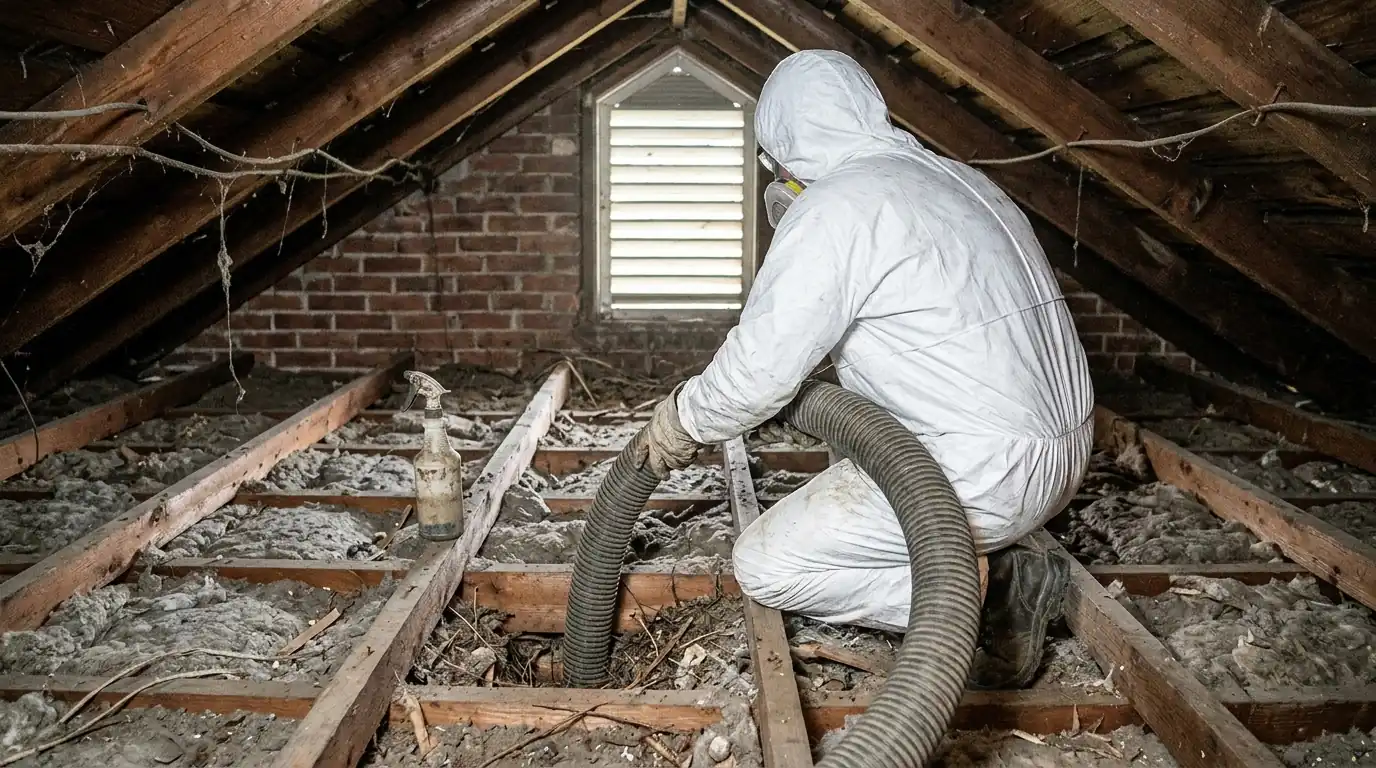
Contaminated insulation is vacuumed out to bags outside the house, and the exposed surfaces underneath are HEPA vacuumed.
Disinfect and deodorize
Joists, plates, shelves and floors are wiped with disinfectant, and wood with deep urine staining can be sealed with an odor-blocking primer. We finish with a walkthrough of every area we treated.
When does attic insulation have to come out?
Blown-in cellulose and loose fiberglass make ideal nesting material. Mice tunnel through it, leave droppings along every path, and urine soaks down into the layer, which is where the lingering ammonia smell comes from. Insulation in that condition cannot be disinfected in place with any confidence, and compressed, soiled insulation also insulates poorly.
Removal is done with a high-powered insulation vacuum. The hose runs from the attic to collection bags staged outside, with floor protection along the route through the house. Once the insulation is out, we HEPA vacuum the attic floor, including the tops of the ceiling drywall and the plates, then disinfect the joists and any stained sheathing. Fresh insulation goes in after pest control confirms the entry points are closed.
One caution: some older homes have vermiculite insulation, a pebbly gray-brown or gold material. Vermiculite can contain asbestos, and EPA advises leaving it undisturbed until it has been tested. If we find it, the job pauses until testing is done.
How can you tell rodent contamination has gone past a quick wipe-up?
Any of these usually means the problem extends beyond the spot you can see.
Droppings in several areas
Finding droppings in the attic and the basement, or in cabinets on two floors, means rodents have been moving through the walls.
Tunnels in the insulation
Trails, flattened patches and nests of shredded paper or fabric in attic insulation show long-term use.
Ammonia-like odor
A sharp urine smell near the attic hatch or in closets, often stronger in summer heat, means urine has soaked into materials.
Dark rub marks
Greasy smudges along joists, pipes and sill plates trace the routes rodents travel every night.
Droppings near the furnace or ducts
Contamination around return ducts or the air handler can carry odor through the whole house.
Chewed materials
Gnawed storage boxes, insulation facing or wire jackets show how much material has been affected.
Who handles the pests, the cleanup and the repairs?
Cleanup sits in the middle of a three-part sequence. First, pest control traps the animals and seals entry points: gaps at utility penetrations, roof returns, foundation vents, garage door corners and old pipe chases. Sealing those openings is a separate trade. Trapping and exclusion belong to your pest control company, so we coordinate timing with them and start the cleanup after activity has stopped, because cleaning an attic that mice are still using wastes your money.
Then we clean, remove and disinfect. After that come repairs. Chewed drywall, gnawed vapor barrier and damaged duct wrap are part of the repair work that follows cleanup, and chewed wiring should be looked at by an electrician before walls or insulation are closed up. If a urine odor lingers in wood framing after cleaning, targeted odor treatment handles what disinfecting alone cannot.
What does rodent droppings cleanup cost in the DC area?
The biggest variable is whether the insulation can stay or has to come out.
| Basement, utility room or under-sink areas | $560-$1,380 |
|---|---|
| Attic cleanup with insulation left in place | $1,240-$2,870 |
| Full attic insulation removal and disinfection | $3,150-$6,480 |
These are typical DC-area ranges, not quotes; we price your cleanup after seeing the space, and new insulation is priced separately. Compare ranges across all 40 services.
What moves the price
- Square footage affected
- Insulation type and depth
- Attic access and headroom
- Volume of waste to dispose of
- Odor treatment on framing
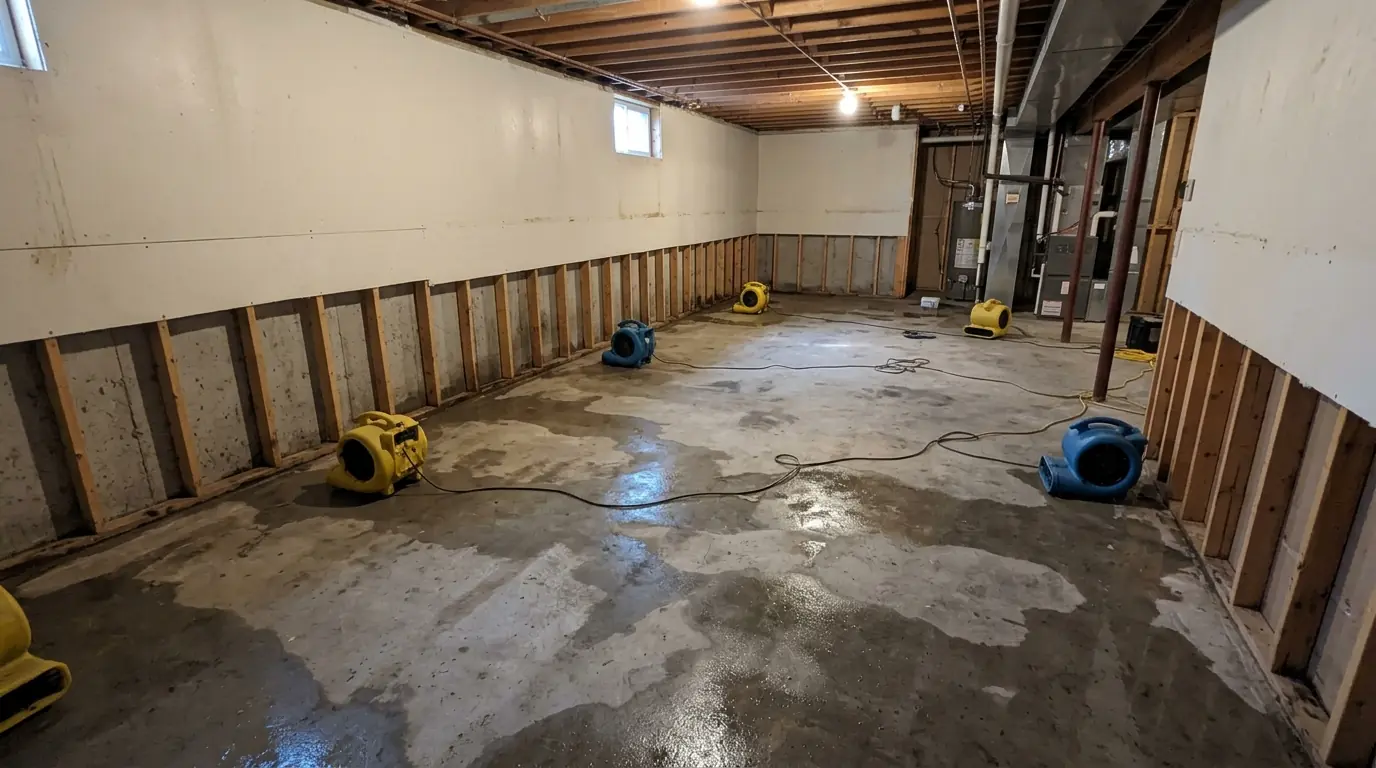
A basement floor drying after sewer backup cleanup
Where mice and rats get into DC rowhouses and suburban attics
In DC rowhouses, the alley is often where the trouble starts. Norway rats burrow in rear yards and along alleys in neighborhoods like Petworth, then get into basements through gaps around old sewer and water lines, worn areaway doors and former coal chute openings. Mice travel differently: they follow party walls and the shallow roof space over the top floor, so a problem next door can become yours. Basement storage rooms packed with boxes give both a place to nest.
In the suburbs of Montgomery, Prince George's and Fairfax counties, the usual pattern is mice moving into the attics of colonials and split-levels when the weather turns cold in the fall. Attached garages, gaps where siding meets the foundation and loose soffit vents are common entry points. Attics in these homes usually have deep blown-in insulation, which is why insulation removal makes up such a large share of suburban cleanups. If moisture shows up alongside the droppings, mold on the attic sheathing is worth checking during the same visit.
Where we do this work: Washington, DC and nearby Maryland and Virginia, including:
Related work we often do on the same job
Odor Removal
Odor removal is the process of finding what's causing a persistent smell in a home, removing or cleaning that source, and then treating the remaining odor with methods like thermal fogging, hydroxyl generators or, in empty spaces, ozone.
How we handle it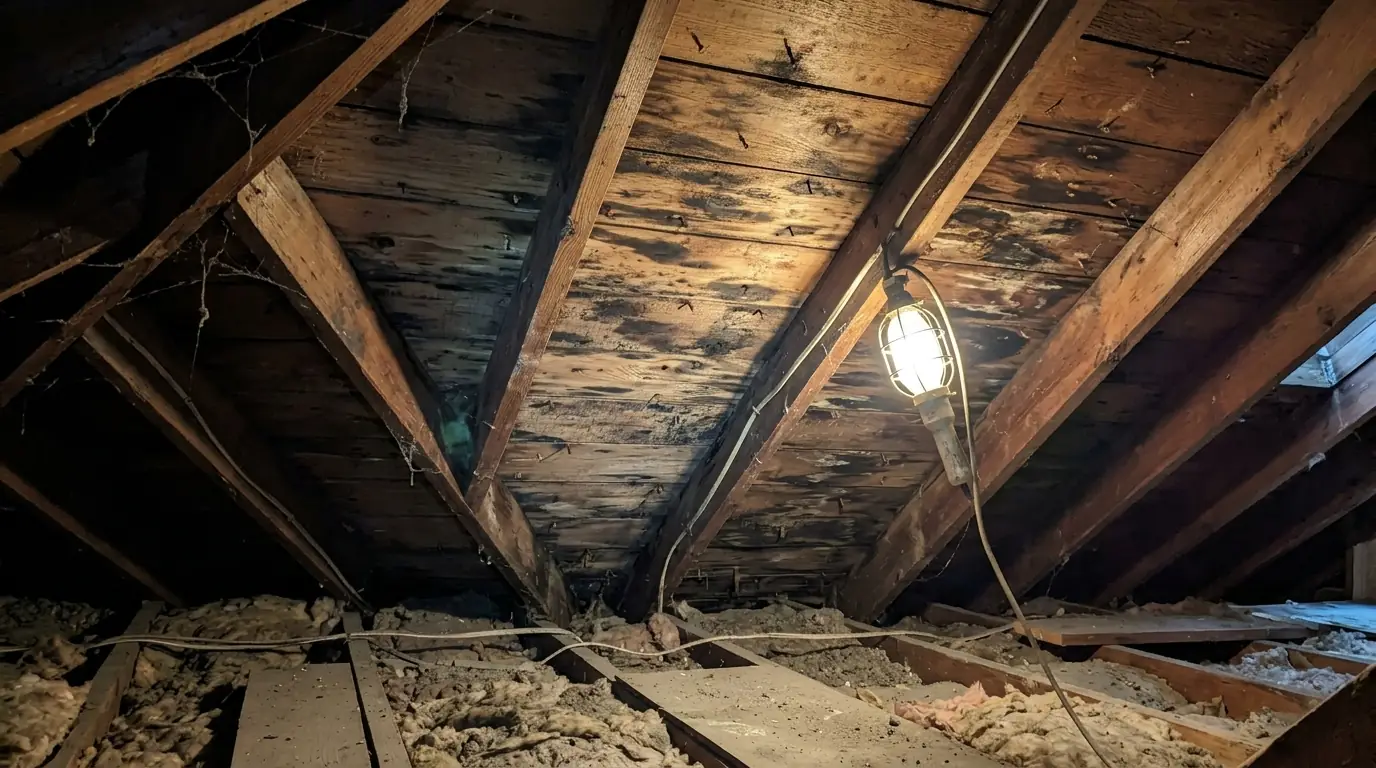
Attic Mold Removal
Attic mold removal cleans growth from roof sheathing, rafters and trusses, removes damaged insulation, and corrects the moisture source, which is usually household air leaking or being vented into the attic and condensing on cold wood in winter.
How we handle it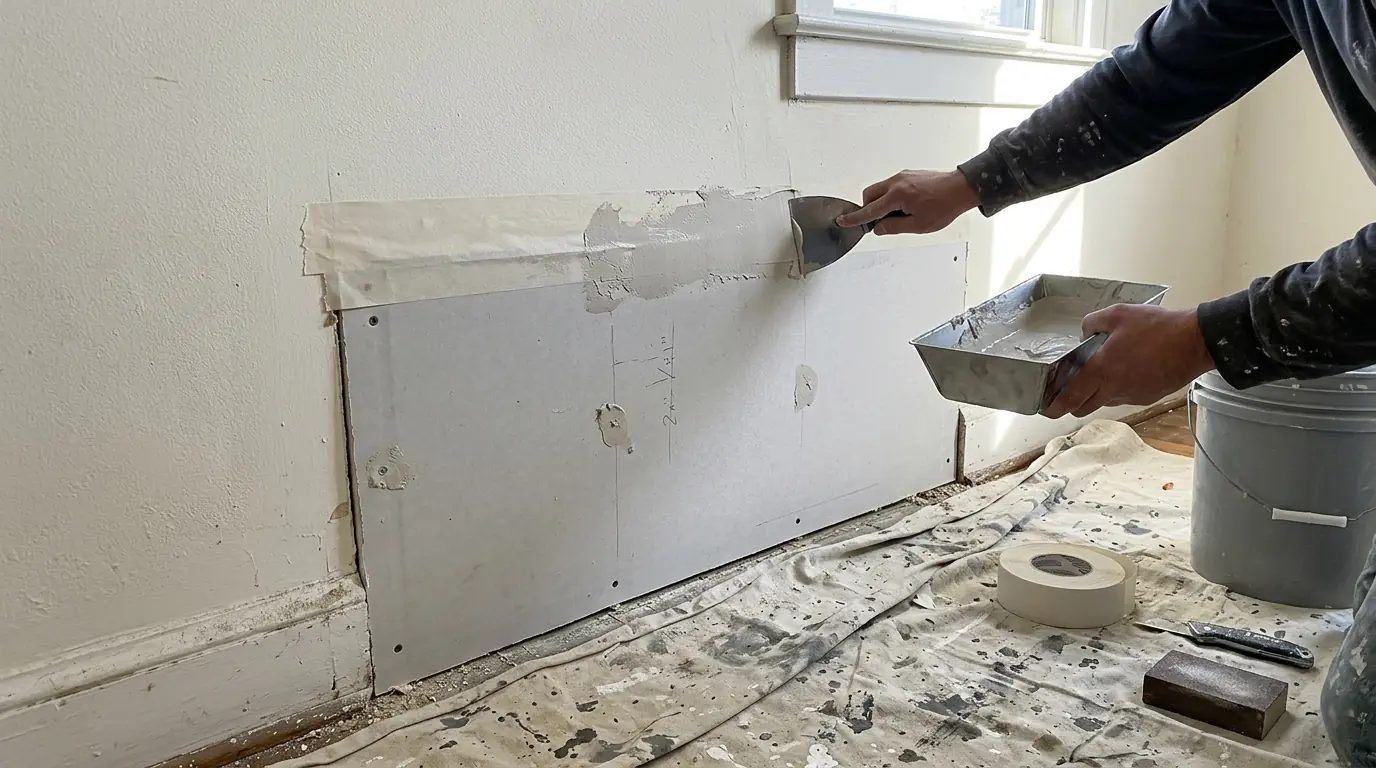
Damage Repair & Rebuild
Damage repair and rebuild is the work that restores a room after water, mold or fire mitigation is finished.
How we handle it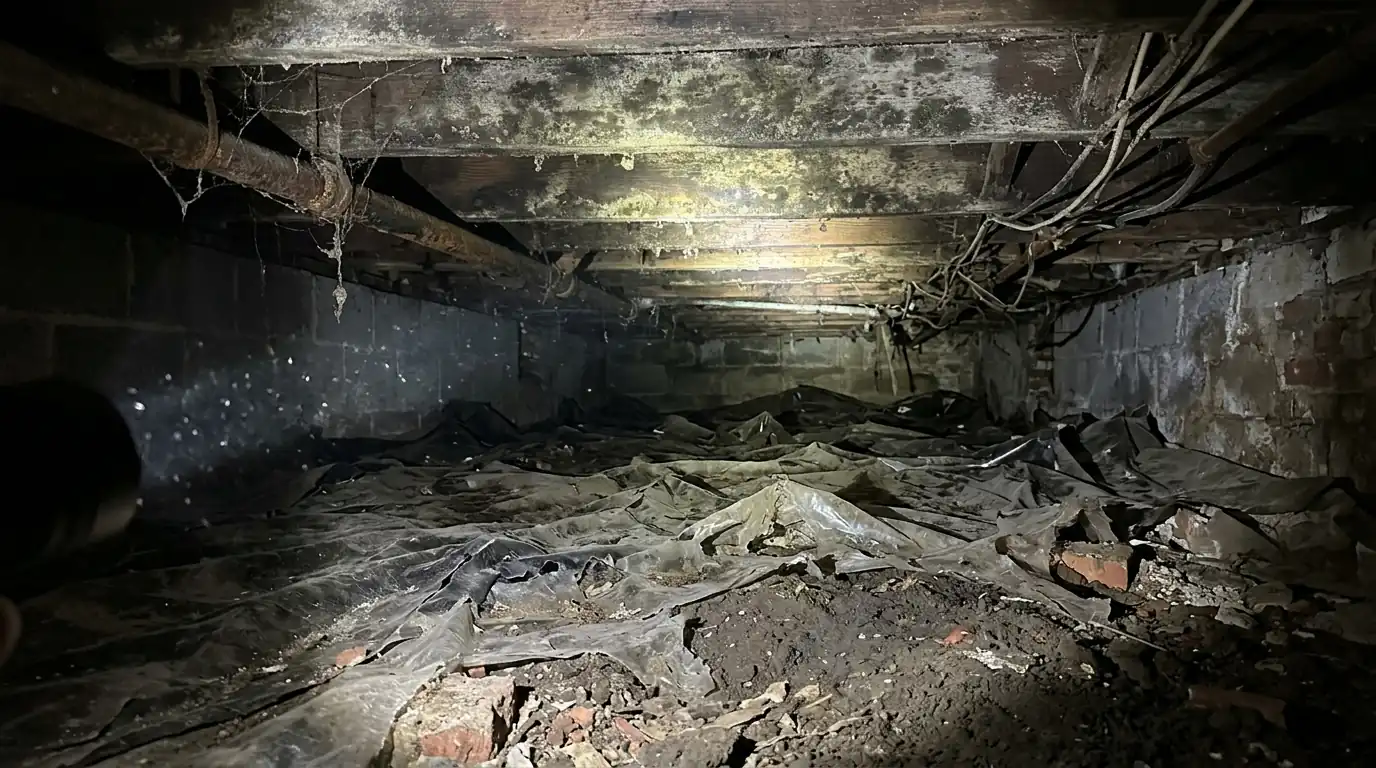
Crawl Space Mold Remediation
Crawl space mold remediation removes mold growth from the floor joists, subfloor, sill plates and beams under a house, then dries the wood so new growth does not start right away.
How we handle itQuestions homeowners ask about rodent droppings cleanup
Can I clean up mouse droppings myself?
For a small, contained spot, yes. Follow CDC's approach: air out the area, wear gloves, soak the droppings with disinfectant or a one-to-ten bleach solution for about five minutes, wipe them up with paper towels and bag them. Never sweep or vacuum them dry. Droppings spread through insulation, an attic or a large storage area are a different job.
Do you set traps or seal the holes rodents use?
No. Trapping and sealing entry points are pest control work, and your pest control company should handle them. We coordinate with them on timing so the cleanup starts after activity has stopped and the entry points are closed. That order keeps you from paying for a cleanup that new droppings undo within weeks.
Can contaminated attic insulation just be left in place?
It can, but it causes problems. Urine odor tends to persist and can drift into the rooms below on hot days, soiled insulation loses much of its insulating value, and the scent trails left behind can draw new rodents to the same spot. If the contamination is light and confined to one corner, spot removal is sometimes enough.
How long does the urine smell last after cleanup?
Most of the odor leaves with the soiled insulation and debris, and disinfection takes care of much of what remains within a few days. Wood that absorbed urine over a long period can keep releasing a faint smell, especially in summer heat. Sealing those spots with an odor-blocking primer usually resolves it.
Does homeowners insurance cover rodent cleanup?
Many homeowners policies exclude damage caused by rodents or other vermin, so cleanup is often not covered. Some policies do cover damage that results from it, such as a leak from a chewed water line. Check your policy and ask your carrier before assuming either way. We document the contamination with photos regardless, so you have a record.
Water in the house or a musty room you can't explain?
Call JEC Restoration any time. We answer 24/7 and talk through what you are seeing before anyone touches a wall.