Prince George's County, MD
Water damage & sewage cleanup in Landover, MD 20785
Landover's townhouses, garden apartments and post-war brick houses take on water from failed supply lines, sewer backups and storm runoff. We extract, dry, clean and repair after water, mold, fire and sewage damage on both sides of the Beltway.
JEC Restoration's headquarters is at 8604 Central Ave in Landover, MD 20785. From there we handle water damage, mold remediation, smoke and fire cleanup and sewage backups in Landover, Palmer Park, Landover Hills and nearby communities. Call (202) 989-3053, answered 24/7, to talk through what happened.
Which Landover homes see the most water damage, and how does it start?
Landover's housing changes block by block: brick ramblers and Cape Cods from the 1940s and 1950s on small lots, rows of townhouses from the 1960s through the 1980s, and garden apartment complexes of two- and three-story brick buildings set around parking courts. Each has a typical failure. The ramblers and Capes have aging cast-iron and galvanized lines, and their basements and crawl spaces were rarely built to stay dry. The townhouses share party walls, so a leak in one kitchen can show up as stained drywall in the unit next door.
Garden apartments stack units, which means water moves down. A second-floor tub overflow or a failed water heater in a closet can wet the unit below, and sometimes the one below that, before anyone shuts the valve. Terrace-level apartments sit partly below grade and catch water from above and seepage from outside. In all of these, condensate lines from air handlers clog in summer and drip onto ceilings, a slow leak that often gets blamed on the roof.
Most-called services in Landover
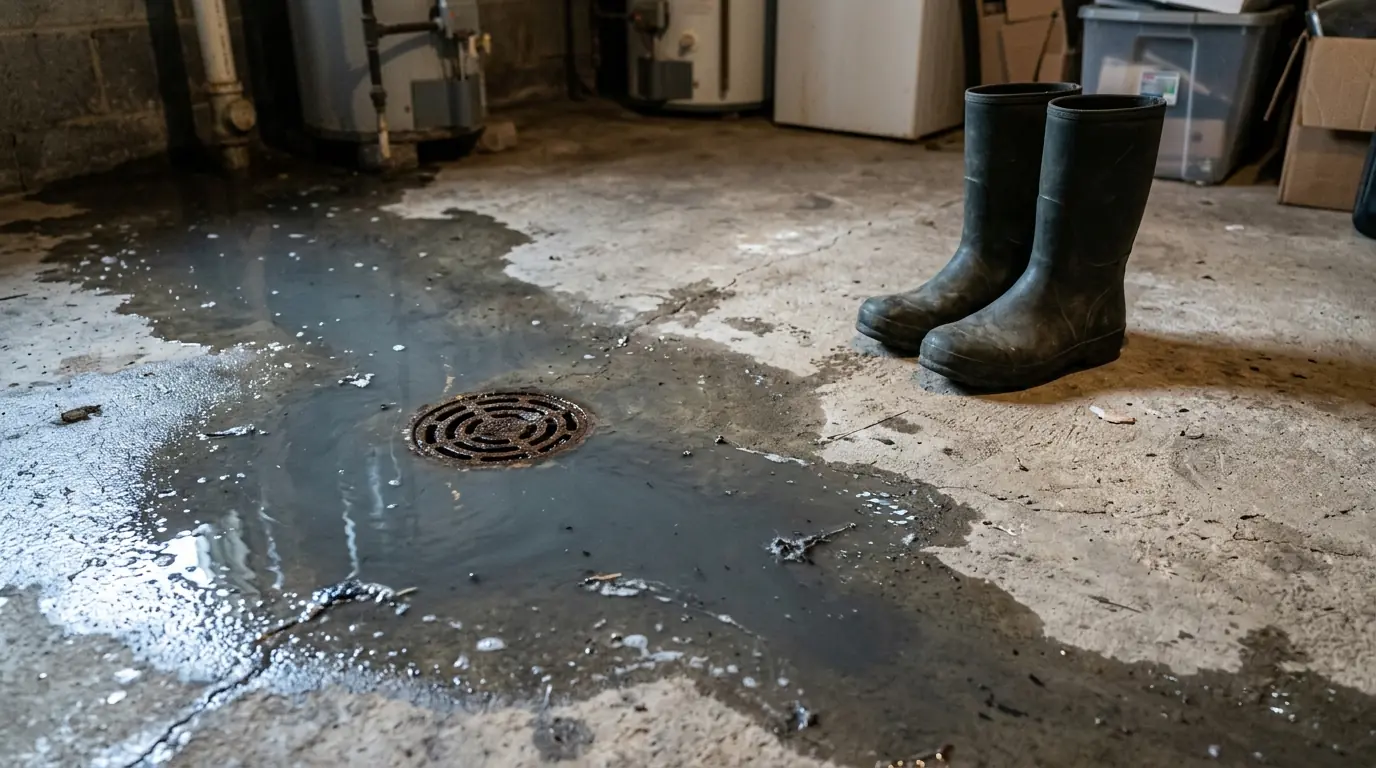
Sewage Backup Cleanup
Sewage backup cleanup is the removal of wastewater and the porous materials it soaked, followed by cleaning, disinfection and drying of the affected area.
How we handle it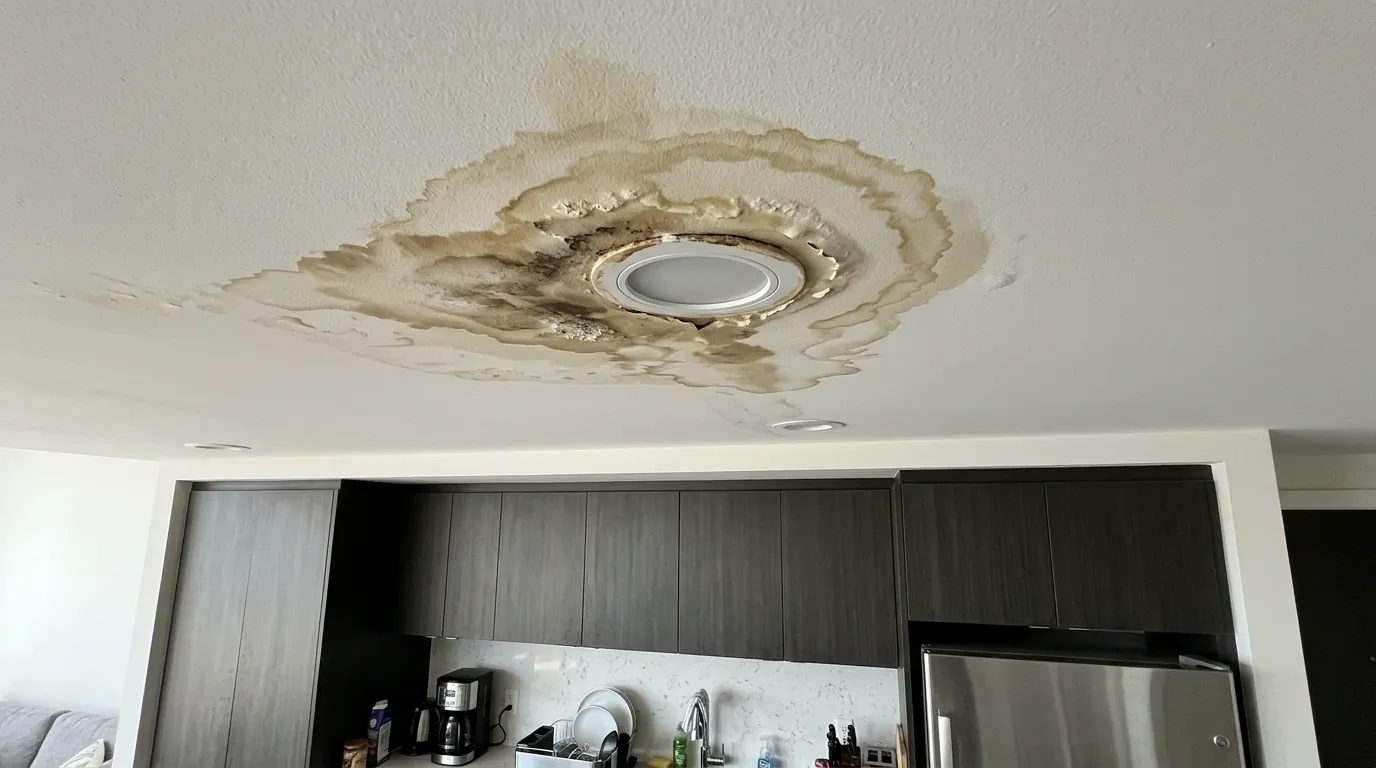
Condo Water Damage
Condo water damage work covers leaks that cross unit lines: water from the unit above, a failed riser, a shared wall or a roof over the top floor.
How we handle it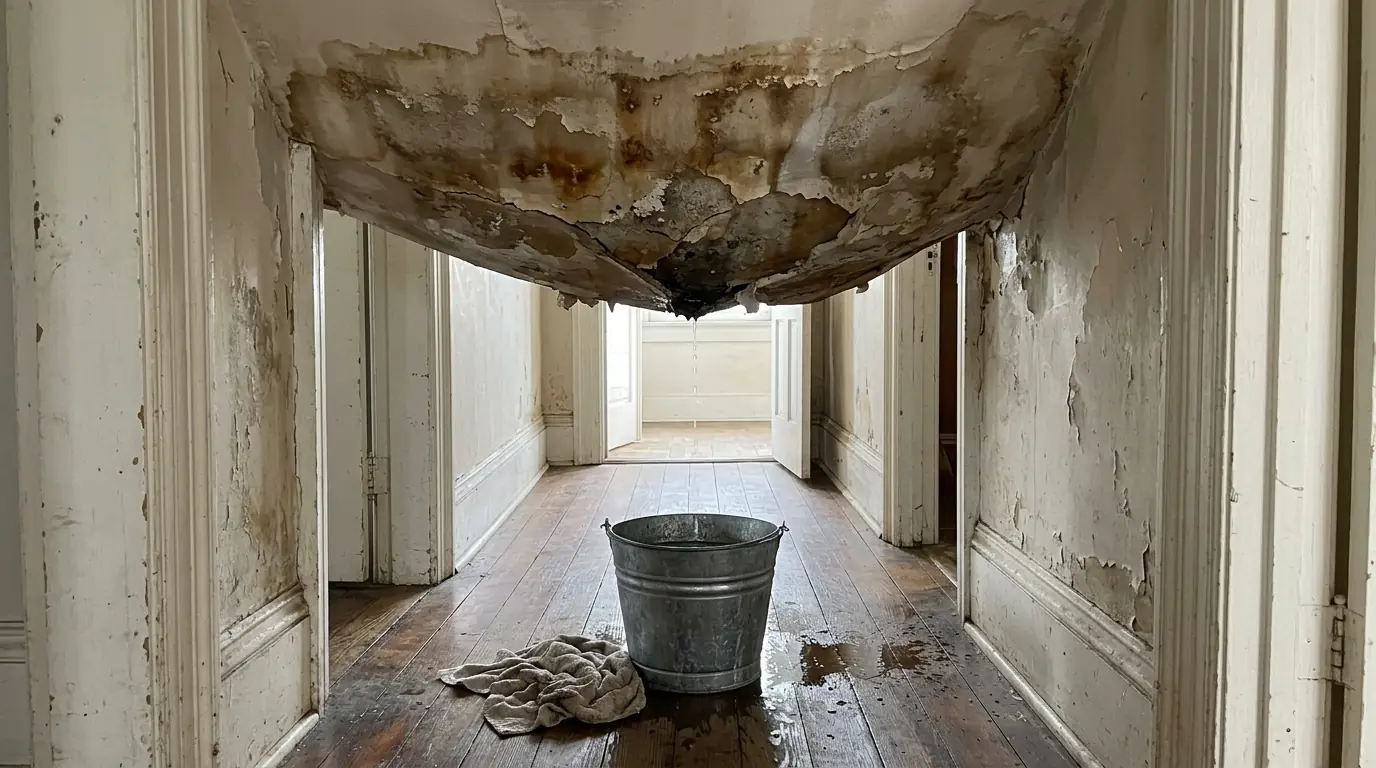
Ceiling Leak Damage
Ceiling leak damage work deals with water trapped above a ceiling from a roof, a bathroom, a radiator or an air conditioning line.
How we handle it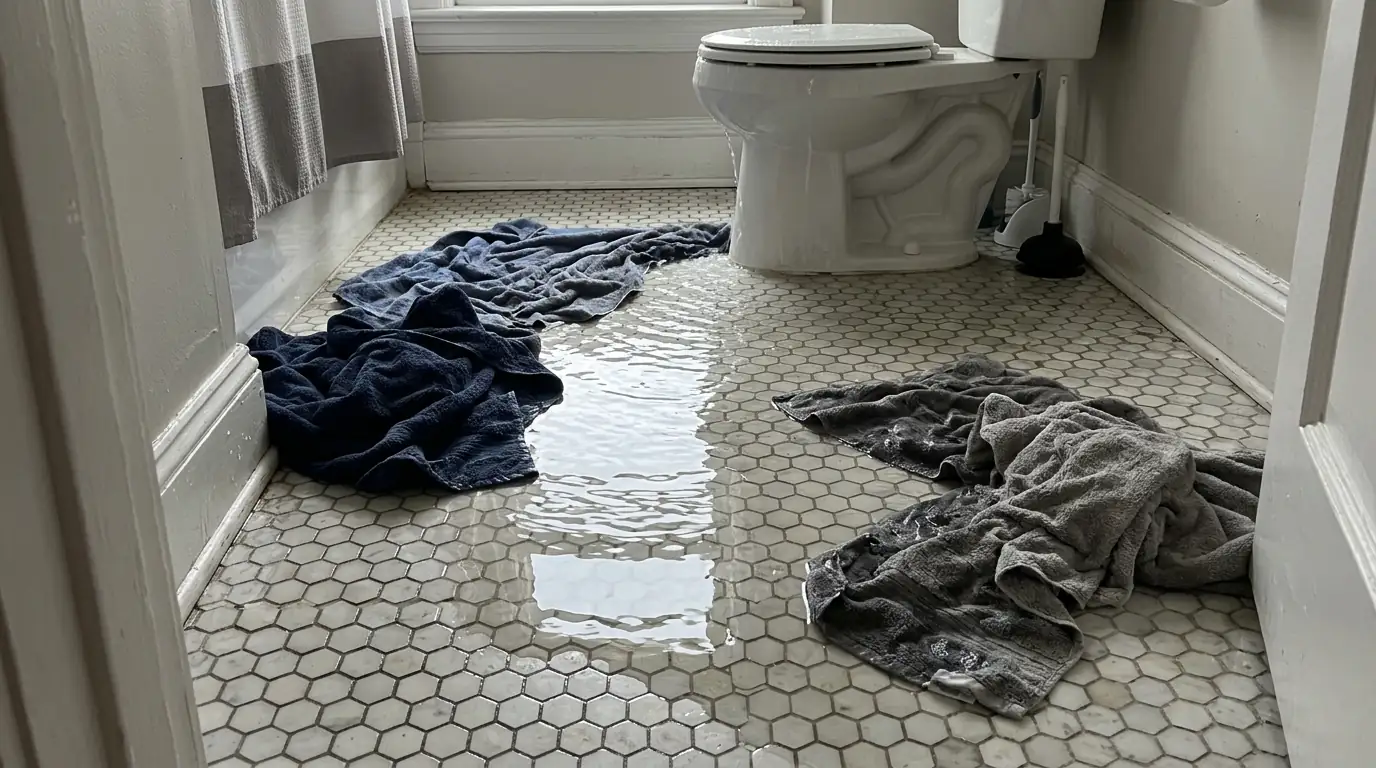
Toilet Overflow Cleanup
Toilet overflow cleanup is the removal, disinfection and drying that follows water escaping from a toilet bowl, tank, supply line or wax ring seal.
How we handle it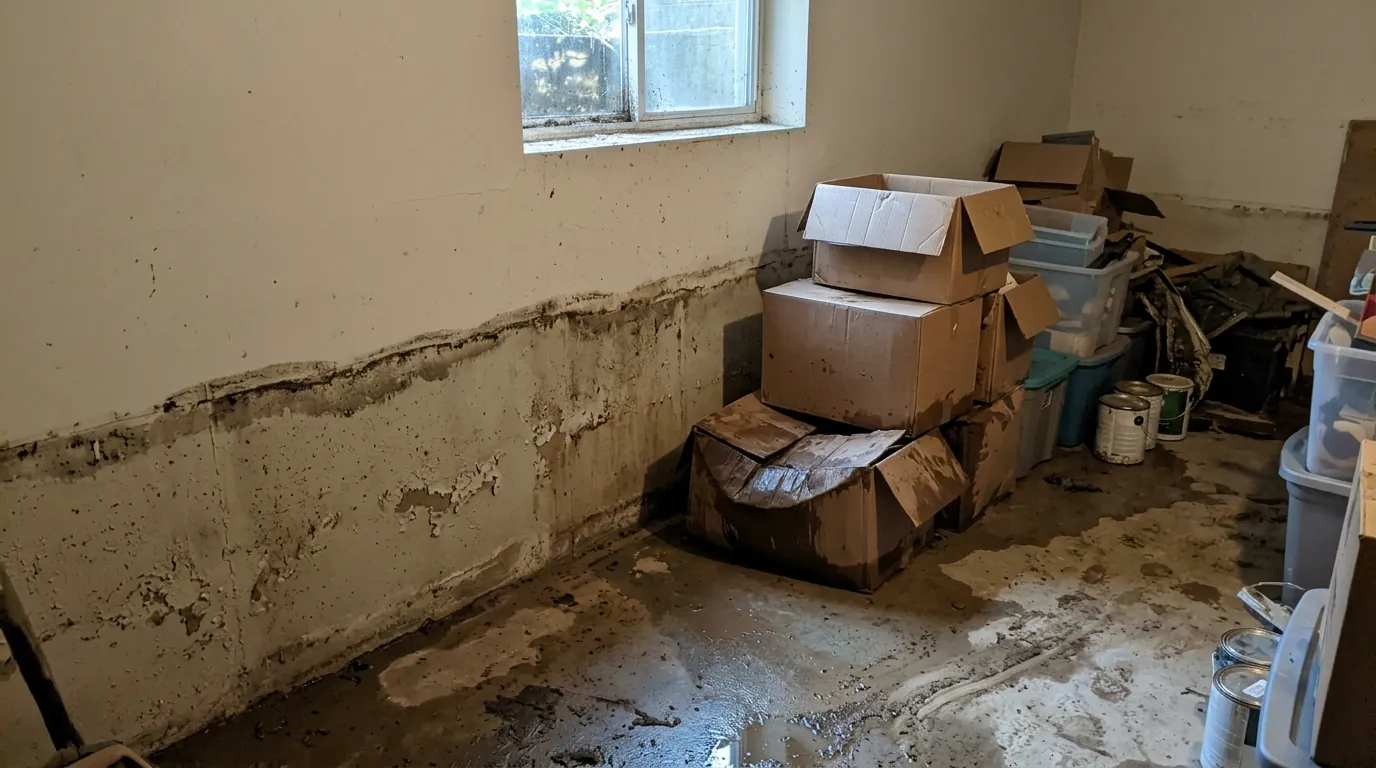
Storm & Flood Cleanup
Storm and flood cleanup covers water that enters a home from outside during heavy weather: flash flooding at basement doors and window wells, overflowing areaway drains, wind-driven rain through walls and windows, and roof openings from fallen limbs.
How we handle itWhat does storm runoff along Central Avenue and Landover Road do to nearby houses?
Landover sits on rolling ground, and much of it drains west toward the Anacostia. Large paved areas around the commercial strips, the Landover Metro station and the stadium long known as FedExField shed rain fast. During a summer thunderstorm, runoff crosses parking lots and runs down residential streets toward the lowest ground, and houses at the bottom of a slope take water through basement doors, window wells and the gap under a back slider.
Sewer backups are the other common call. Many laterals here are original to the houses, and roots, settling and grease narrow them over decades. When the line slows, the lowest drain in the house overflows first: a basement floor drain, a lower-level shower or a ground-floor toilet. That water is Category 3, and our sewer backup cleanup means protective gear, removal of porous materials and disinfection before any drying starts. In January, the pipes that freeze are usually in the exterior walls of end-unit townhouses and in unheated utility rooms.
Typical calls we get from Landover
Upstairs overflow in a garden apartment
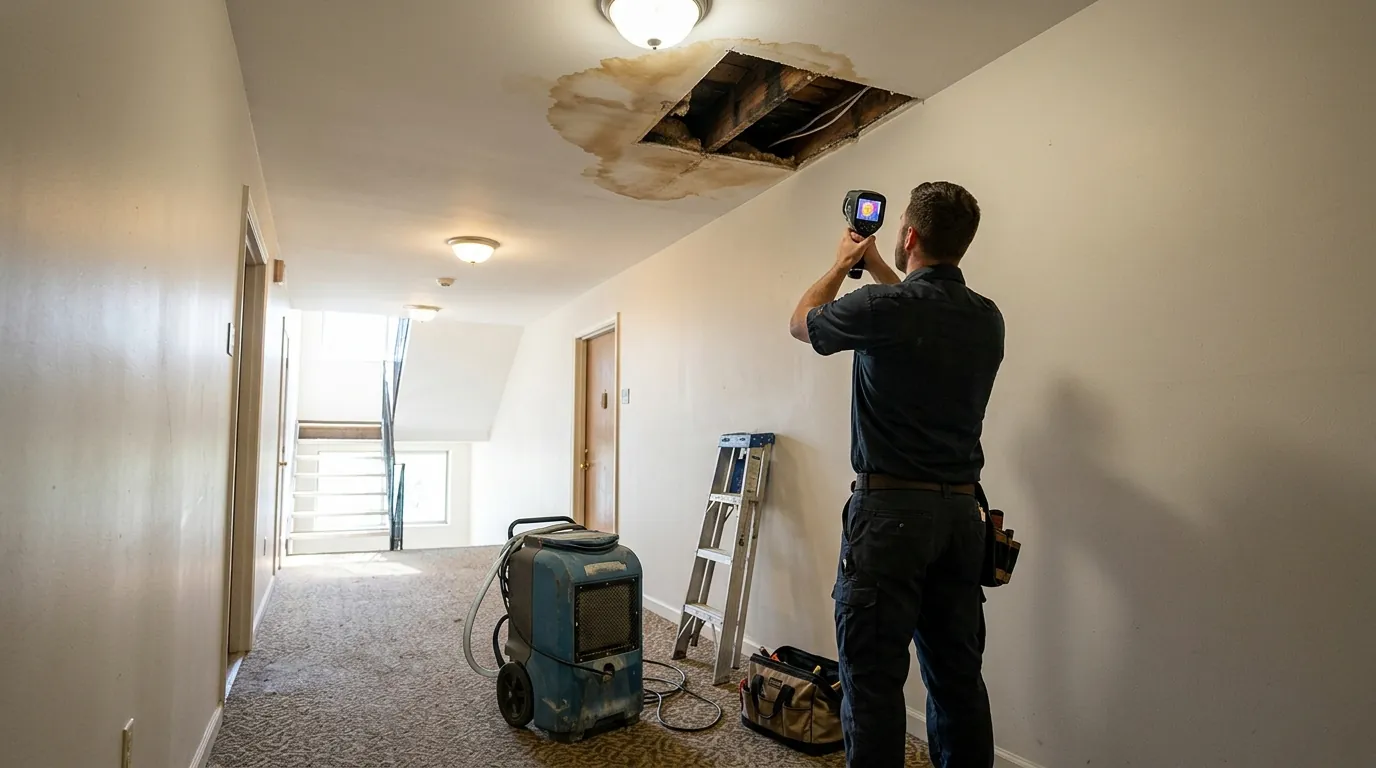
A tub overflows on the third floor of a brick garden apartment building, and water travels through two ceilings below. We trace the path with a thermal camera, open drywall where the ceiling sagged, and dry each unit with readings for the management office.
Sewer backup into a rambler basement
Roots in an old lateral cause the basement floor drain of a 1950s brick rambler to overflow. We remove wet carpet, paneling and the bottom of the drywall, disinfect the slab and walls, and dry the space under negative air.
Condensate leak blamed on the roof
A ring spreads across a townhouse hallway ceiling in August. Readings point to the air handler's clogged condensate line, not the roof. We dry the ceiling and insulation and remove any moldy drywall around the stain.
Storm water under a back slider
Runoff from a sloped yard pools against a ground-level sliding door during a thunderstorm and soaks the family room carpet. We extract, dry the slab and wall bottoms, and talk through regrading or a drain at the patio.
How do we run a job in the same ZIP as our headquarters?
Landover is home base, so the local layouts are familiar: townhouse courts with assigned spaces, garden apartment complexes with a management office and maintenance staff, and single-family streets with driveways. Before we start, we ask who controls the building. Renters should tell their property manager right away, since the landlord usually decides how the structure gets repaired, while each tenant handles their own belongings.
For stacked units, we start at the source and work down, taking moisture readings in every unit the water reached and sharing them with the management office. Our work on multi-unit leaks follows the water floor by floor with a thermal camera. In townhouses, we check the neighbor's side of the party wall with their permission. Clean-water drying of drywall and framing typically runs three to five days. Sudden leaks are often covered, while slow leaks and sewer backups often need separate coverage or an endorsement, so check your policy, and lean on our claim documentation for photos, readings and a clear scope. We cover the rest of Prince George's County the same way.
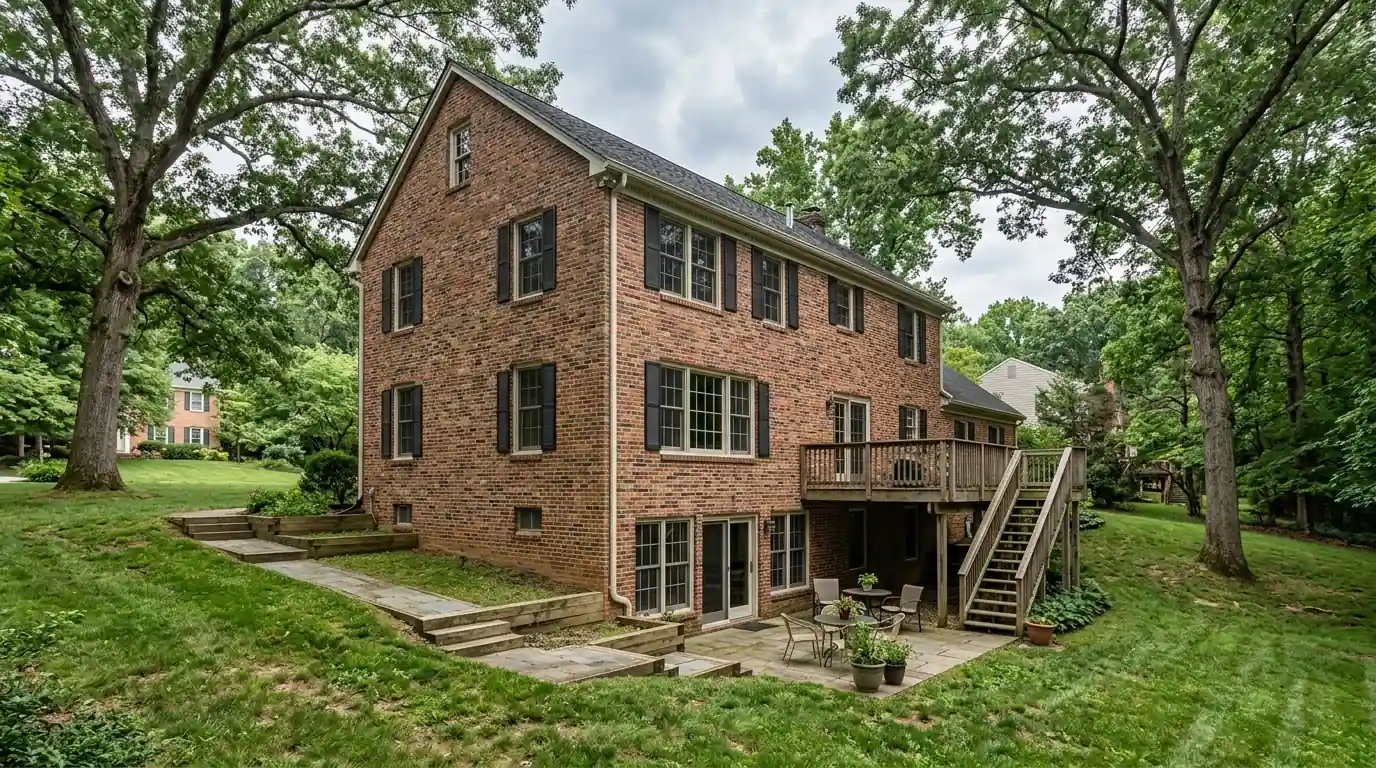
Typical homes in this part of the DC area
Nearby areas we also cover
Questions from Landover homeowners
I rent a garden apartment in Landover. Who should arrange the water damage cleanup?
Tell your property manager or landlord first, in writing if you can, because they usually control repairs to the building. You can still call us for advice on protecting your things while you wait. Photograph your damaged belongings before moving them, and check your renters policy, since your furniture and clothing are normally covered there, not under the landlord's policy.
Why does my townhouse ceiling leak only in summer?
A ceiling stain that appears on hot, humid days and dries out in winter usually points to the air conditioning, not the roof. The air handler makes water as it cools, and that water drains through a condensate line that can clog with algae. When it backs up, the overflow pan fills and drips onto the ceiling below. Clearing the line stops the leak; drying the ceiling prevents mold.
How long does a sewer backup cleanup take in a basement?
For a typical finished basement, removal and disinfection take one to two days, and drying the remaining structure takes another three to five. The timeline stretches if water sat for days, if it reached ductwork, or if the walls are block that holds moisture. We do not rebuild until readings show the framing and slab are dry and the space has been cleaned and disinfected.
Water or mold trouble in Landover?
Call JEC Restoration any time. We answer 24/7 and talk through what you are seeing before anyone touches a wall.