Sewage & Cleanup
Sewage backup cleanup in Washington, DC basements and lower levels
When sewage comes up through a basement floor drain, toilet or shower, it needs removal and disinfection, not just drying. We pull out what cannot be cleaned, sanitize what can and dry the space properly.
Drying, air and detection equipment on our jobs comes from names like
- Dri-Eaz
- Phoenix
- B-Air
- Abatement Technologies
- Protimeter
- Delmhorst
- FLIR
- Benefect
- Concrobium
- Omnitec
- Sapphire Scientific
- Tramex
Sewage backup cleanup is the removal of wastewater and the porous materials it soaked, followed by cleaning, disinfection and drying of the affected area. Sewage is Category 3 water, so carpet, pad, insulation and the lower part of drywall it touched are removed rather than dried. Keep people and pets out of the area, avoid running water down the drains, and call (202) 989-3053.
Why does sewage come up through a basement floor drain?
The floor drain is usually the lowest opening in the house's plumbing, so it is where wastewater appears first when something downstream stops it. There are two very different reasons that can happen, and the fix for each is different.
The first is a blockage in your own building sewer, the pipe running from the house to the public main. Tree roots work into joints in old clay or cast-iron pipe, grease builds up, a section of pipe sags or collapses, or something gets flushed that should not have been. Every time someone upstairs runs water, it has nowhere to go but out of the lowest drain.
The second is the public sewer itself filling faster than it can drain during a heavy storm, which pushes water backward up the lateral and out of the floor drain. That is a city system problem, but the cleanup is still in your basement. Our article on telling a sewer backup from groundwater helps sort out which one you are looking at.
Early signs your sewer line is about to back up
Many sewage backups give warnings in the days or weeks before water comes up through the floor.
Gurgling from the floor drain
Bubbling sounds from the basement drain when a toilet flushes or a tub drains upstairs point to a restriction in the main line.
Water rising in the basement shower or tub
If water appears in the lowest fixture while the washing machine drains, the building sewer is slowing down.
Several drains slow at once
One slow sink is a local clog. Every drain slowing together usually means the main line is partly blocked.
Sewer odor near the basement drain
A sewage smell around the floor drain or cleanout can mean water is sitting in the line instead of flowing out.
Damp ring around the floor drain
A wet or stained ring on the slab after heavy water use shows the drain is pushing water back up briefly.
Backups only during heavy rain
If the drain fills only in storms, the city sewer may be surcharging, and a backwater valve is worth discussing with a plumber.
How we clean up a sewage backup
Sewage cleanup follows a fixed order: contain, remove, clean, disinfect, then dry.
Protect and contain
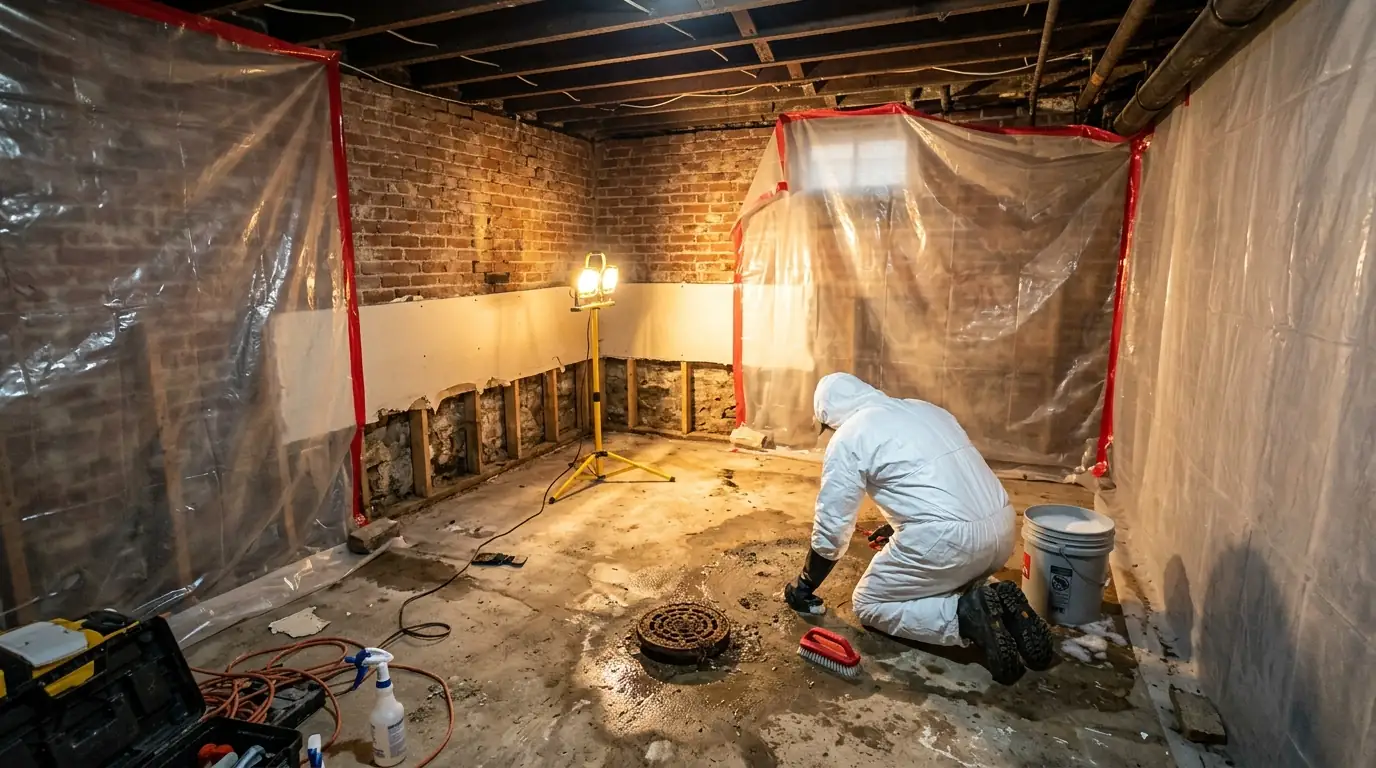
Our technicians wear protective suits, gloves, boots and respirators, and we close off the affected area with plastic sheeting. Walkways out of the house are covered so nothing is tracked through clean rooms.
Remove the water and solids
Standing wastewater is pumped or extracted, and solids are bagged and removed. We avoid spreading it with air movers until surfaces are cleaned.
Tear out porous materials
Carpet, pad, soaked drywall, insulation and contents that cannot be cleaned come out, each one photographed and listed before disposal.
Clean and disinfect
Floors, framing and masonry are scrubbed, rinsed and treated with an EPA-registered disinfectant suited to each surface. Hard contents worth saving are cleaned separately.
Dry and check
Once surfaces are clean, dehumidifiers and air movers dry the structure to its goal readings. A follow-up check confirms the area is dry and no longer smells before rebuild starts.
What does the combined sewer system in older DC mean for your basement?
In the older central parts of Washington, a single set of pipes carries both sewage and storm runoff from streets and roofs. This combined sewer system dates back to the city's early development, and much of the rowhouse core is served by it. Newer parts of the city and most suburbs use separate pipes for storm water and sewage.
During a hard summer storm, the combined pipes can surcharge, meaning the water level rises inside them. A basement floor drain set below that level can then send a mix of rainwater and sewage back into the house. DC Water has spent years building large tunnels to reduce overflows, and that work has helped in some neighborhoods, but backups on individual blocks still happen during intense rain.
A backwater valve is the main defense. It is a one-way valve installed in the building sewer that lets water flow out but closes when flow reverses. Installing one is plumbing work, usually with a permit, and the valve needs occasional cleaning. Houses that have backed up more than once are good candidates.
What has to be removed after a sewage backup, and what can be cleaned?
The dividing line is porosity. Materials that absorb water also absorb what is in it, and cleaning cannot reliably reach inside them. After sewage, we remove carpet and pad, upholstered furniture that sat in the water, mattresses, cardboard boxes, wall insulation and drywall to a line above the wet zone. Particleboard furniture and paneling usually go too.
Hard, non-porous materials can be cleaned and kept: concrete slabs, ceramic tile, metal, sealed wood, glass and most plastics. Framing lumber is semi-porous; studs and sill plates are scrubbed, treated with a disinfectant suited to wood and then dried and checked with a meter. Brick and block walls are washed down and disinfected before drying.
We photograph everything before it leaves the house and list it, so you have a record. Sewer backup damage is often excluded from standard homeowner policies unless you carry a water or sewer backup endorsement, so check your policy before assuming coverage either way.
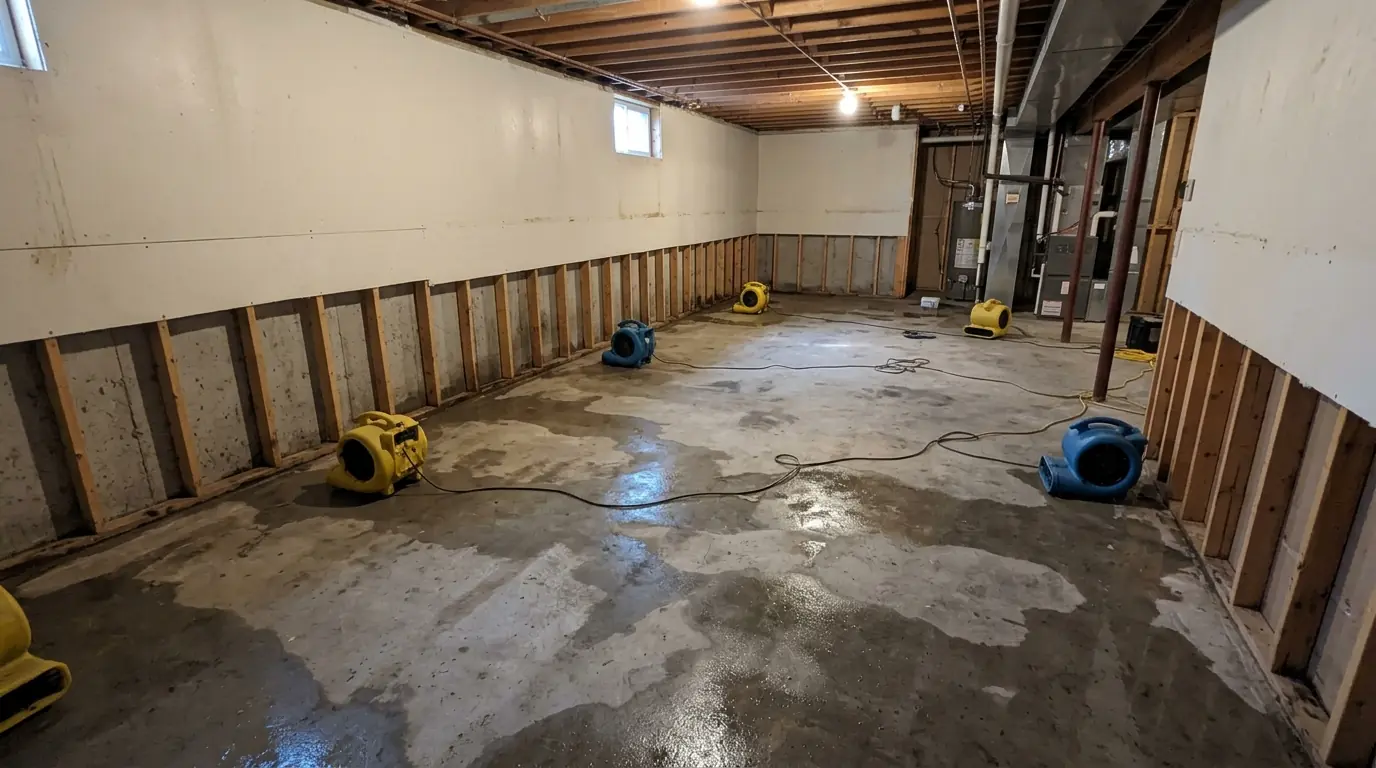
A basement floor drying after sewer backup cleanup
Where sewage backups are most common across DC
Calls cluster in two kinds of houses. The first is the older rowhouse with an original cast-iron or clay building sewer running under the front yard to the street. Roots from street trees find the joints, and the line partly blocks for months before it finally backs up through the basement floor drain, often on a holiday weekend when the house is full. In English basement rentals, the tenant usually sees it first, since their bathroom or laundry is the lowest fixture in the building.
The second is the house on a low block in a combined sewer area, where heavy summer storms push water back up the lateral. Bloomingdale and parts of nearby neighborhoods are known for this, and DC Water has run backwater valve programs for affected areas over the years. In the Maryland and Virginia suburbs, separate sewer systems make storm surcharge less common, but root intrusion in aging laterals is just as frequent. When a backup soaks a finished basement, the job usually continues as full basement cleanup and then rebuilding the finished walls.
Where we do this work: Washington, DC and nearby Maryland and Virginia, including:
What sewage backup cleanup costs in the DC area
Sewage jobs cost more per square foot than clean-water jobs because of protective gear, tear-out and disinfection.
| Unfinished basement, floor drain backup, slab only | $1,340-$3,280 |
|---|---|
| Finished basement room with carpet and drywall removed | $3,170-$7,860 |
| Full finished basement or English basement apartment | $6,240-$14,580 |
These are typical DC-area ranges, not quotes; we price sewage cleanup after an on-site assessment. Compare ranges across all 40 services.
What moves the price
- Square footage the sewage reached
- Finished walls, carpet and built-ins to remove
- How long the wastewater sat before cleanup
- Contents to pack out, clean or discard
- Containment needed to protect occupied rooms
Related work we often do on the same job
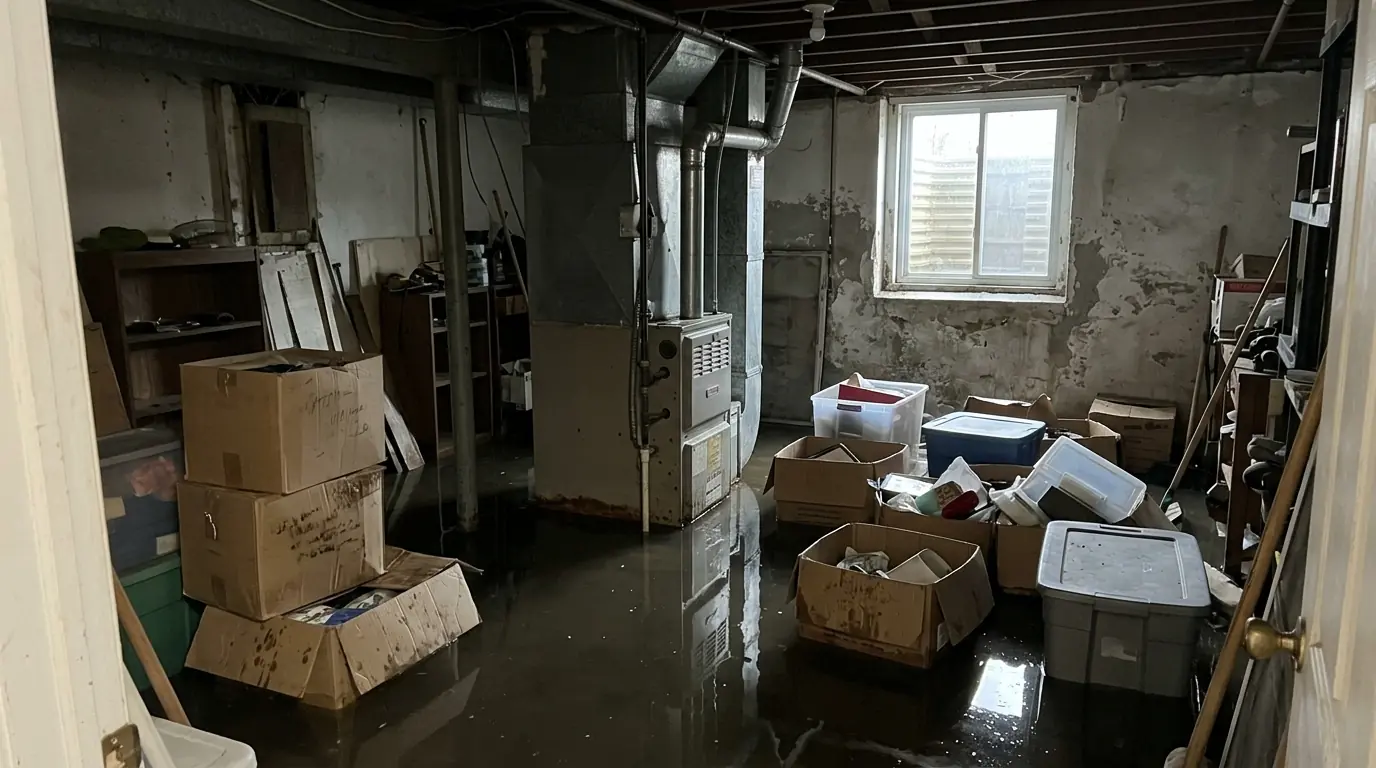
Flooded Basement Cleanup
Flooded basement cleanup removes water from a below-grade space, cleans and sanitizes what it touched, takes out finishes that cannot be saved, and dries the slab, walls and framing.
How we handle it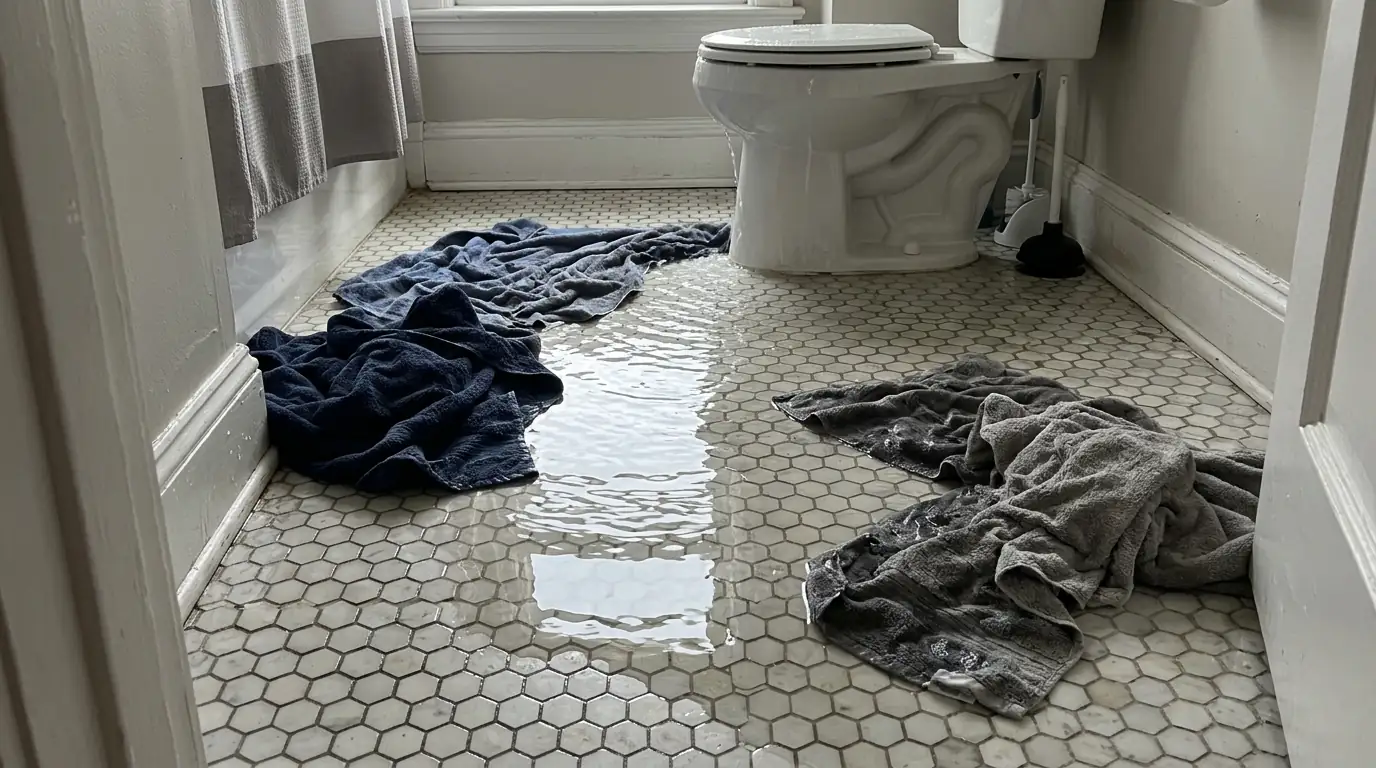
Toilet Overflow Cleanup
Toilet overflow cleanup is the removal, disinfection and drying that follows water escaping from a toilet bowl, tank, supply line or wax ring seal.
How we handle it
Odor Removal
Odor removal is the process of finding what's causing a persistent smell in a home, removing or cleaning that source, and then treating the remaining odor with methods like thermal fogging, hydroxyl generators or, in empty spaces, ozone.
How we handle it
Insurance Claim Help
Insurance claim help, as we provide it, means documenting the damage and the work so you have what your insurer asks for: dated photos, moisture readings, daily drying logs, equipment records and an itemized repair scope.
How we handle itQuestions homeowners ask about sewage backup cleanup
Should I run water or flush toilets while waiting for cleanup?
No. Any water you send down a drain has to pass the same blockage, so it may come straight back up in the basement. Stop running the washing machine, dishwasher and showers, and avoid flushing until a plumber has cleared the line or confirmed the city sewer has drained down after a storm.
Who clears the sewer line, and who cleans up the basement?
Clearing the blockage is a plumber's job, usually with a drain cable or a hydro jetter, often followed by a camera inspection of the line. Our part is the basement: removing wastewater and soaked materials, cleaning and disinfecting surfaces and drying the structure. Both are needed, and the plumbing should be fixed before rebuilding starts.
Can I clean up a small sewage backup myself?
A small amount confined to bare concrete can be cleaned by a careful homeowner wearing gloves, boots and eye protection, using a disinfectant and good ventilation. Once sewage reaches carpet, drywall, furniture or a finished room, removal and disinfection get much bigger, and that is when professional cleanup makes sense.
Does a backwater valve stop every sewage backup?
It stops backups caused by the public sewer surcharging, because it closes when flow reverses. It does not help with a clog in your own line between the valve and the house, since that water comes from your fixtures. Valves also need periodic inspection and cleaning, or debris can keep them from sealing.
Will the sewage smell go away once the basement is dry?
When the soaked materials are removed and surfaces are properly cleaned and disinfected, the odor usually goes with them. Lingering smell points to something missed, like a wet wall cavity, a dry floor drain trap or residue in porous masonry. We check for those at the follow-up visit before signing off on drying.
Water in the house or a musty room you can't explain?
Call JEC Restoration any time. We answer 24/7 and talk through what you are seeing before anyone touches a wall.