Mold Remediation
Bathroom mold removal in Washington, DC
Most bathroom mold is surface growth you can clean yourself. Some of it is a sign of water inside the wall behind the tile. We help you tell the two apart and handle the second kind properly.
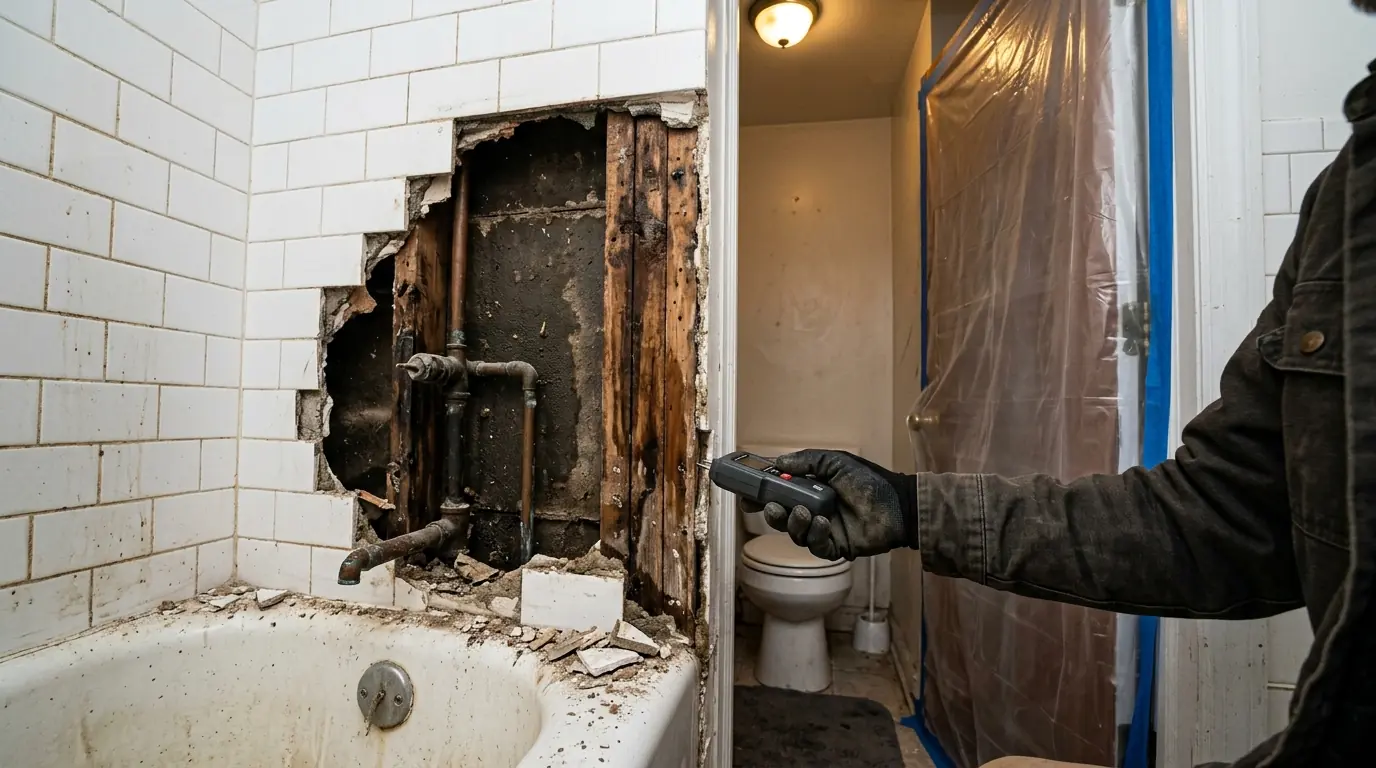
Drying, air and detection equipment on our jobs comes from names like
- Dri-Eaz
- Phoenix
- B-Air
- Abatement Technologies
- Protimeter
- Delmhorst
- FLIR
- Benefect
- Concrobium
- Omnitec
- Sapphire Scientific
- Tramex
Bathroom mold removal ranges from cleaning surface growth on grout, caulk and painted ceilings to opening tile walls where a failed shower pan, valve or drain has wet the cavity. Surface spots usually return because of humidity, which better exhaust fixes. Growth that returns through new caulk, loose tile or a soft wall means water is behind the finish and the wall needs to be opened.
When is bathroom mold just a cleaning job?
Black or pink speckling on grout lines, dark spots in the silicone bead around a tub, and a gray haze on a painted ceiling above the shower are usually surface growth. They come from soap film and daily moisture, not from a leak. If the tile is tight, the wall is firm and the spots wipe off or lighten with a scrub brush and a household cleaner, you can handle it yourself with gloves and the window or fan running.
Caulk is the exception. Silicone and acrylic caulk are soft enough that mold grows into them, not just on them, and no amount of scrubbing removes the stain. The fix is to cut out the old bead, clean and dry the joint for a full day, and run a new bead of mold-resistant silicone. Grout that stays dark after cleaning can be cleaned with a stiff brush and sealed. If the spots come back within a few weeks, the cause is almost always humidity that lingers after showers, which brings us to the fan.
How we fix bathroom mold that cleaning will not touch
The goal is to remove the growth and stop the water, while saving as much finished tile as the readings allow.
Test the walls, floor and ceiling
We take moisture readings around the tub, shower, toilet and vanity, scan the area with a thermal camera, and check the room below if there is one. The fan's airflow is measured.
Contain the bathroom
The doorway is sealed with plastic and a zipper door, the fan and HVAC registers are covered, and HEPA negative air is set up so dust stays in the room.
Open only what is wet
Tile, backer board, drywall or subfloor is removed where readings are high, with a margin past the wet zone. Dry tile beyond that line is left in place where possible.
Clean and dry the cavity
Framing and subfloor are HEPA vacuumed, scrubbed and dried with a dehumidifier and air movers. The plumbing repair, such as a new valve or drain gasket, is made with the wall open.
Final check and handoff for rebuild
We confirm dry readings and clean surfaces before the containment comes down. Backer board, waterproofing membrane and tile follow as rebuild work.
Is your exhaust fan actually moving air?
A bathroom fan that hums but does not pull is one of the most common causes of recurring mold on ceilings and upper walls. Hold a single square of toilet paper up to the grille with the fan on. If it does not cling, the fan is too weak, the duct is crushed or disconnected, or the damper at the exterior cap is stuck. Many older fans move a fraction of their rated airflow once ducting and a few years of lint are involved.
The fix can be cleaning, a new damper, or replacing the fan with a quieter, higher-capacity model on a timer switch. The duct must end outside, not in the attic or a soffit cavity, or the moisture simply moves upstairs. We have seen plenty of attic sheathing mold that started at a bathroom fan. As a rule, run the fan for 20 minutes after every shower and leave the door open afterward so the room can dry.
Bathroom clues that call for a moisture check
Any one of these is worth a meter reading before more caulk goes on.
Mold returns through new caulk
Dark spots showing through a bead that is only weeks old means water or growth is behind the caulk line.
Loose or hollow tiles
Tiles that rock, sound hollow or have popped near the tub suggest wet backer board or failed adhesive behind them.
Soft drywall beside the shower
A wall that gives under thumb pressure outside the tiled area has been wicking water for some time.
Stain on the ceiling below
A brown ring under an upstairs bathroom usually points to a shower pan, drain, supply line or toilet seal.
Peeling paint on the ceiling
Blistering paint above the tub that comes back after repainting shows the room stays too humid after showers.
Musty smell in the vanity
Odor inside the sink cabinet often means a slow drip at a trap or supply valve feeding growth on particleboard.
Signs the mold is behind the tile, not on it
Hidden bathroom mold follows water that gets past the finish. Cracked grout and failed caulk at the tub edge let shower water into the wall a little at a time. Older shower pans, particularly mortar beds with a lead or vinyl liner, can fail and wet the subfloor below. Valve bodies and supply connections inside the wall can drip for months. Toilet wax rings leak at the flange and wet the subfloor around the toilet. In each case, the growth starts on the back of the backer board, the subfloor and the framing, where you cannot see it.
The tile itself gives clues. Hollow-sounding tiles when tapped, grout that keeps cracking in the same spot, a soft wall beside the faucet, or a ceiling stain in the room below the bathroom are reasons to check with a moisture meter before anyone recaulks again. If readings are high, the wall or floor has to be opened under containment, the wet material removed, and the cavity dried. For water traveling to a ceiling below, see our ceiling leak repair page.
How big is the mold patch?
Measure the visible growth and enter it in feet. The EPA uses about 10 square feet as the line between a homeowner cleanup and a job that needs containment.
Measure the visible growth, including any faint edges.
Growth inside walls, in ductwork or after sewage or floodwater needs professional cleanup at any size.
What does bathroom mold removal cost?
Most bathroom jobs fall into one of these scopes, and the cost turns on whether tile has to come off.
| Ceiling and upper wall growth, cleaned, fan airflow checked | $460-$1,180 |
|---|---|
| Vanity or toilet area subfloor opened and dried | $1,340-$2,870 |
| Tub or shower wall opened behind tile, cavity cleaned | $2,180-$4,960 |
| Full bath floor and walls, failed shower pan | $4,350-$8,790 |
These ranges are typical DC-area figures rather than quotes, and we price each bathroom after an on-site assessment. Compare ranges across all 40 services.
What moves the price
- Tile removal versus drywall only
- Subfloor or joist damage underneath
- Ceiling damage in the room below
- Plumbing repair while the wall is open
- Fan replacement and new exterior duct
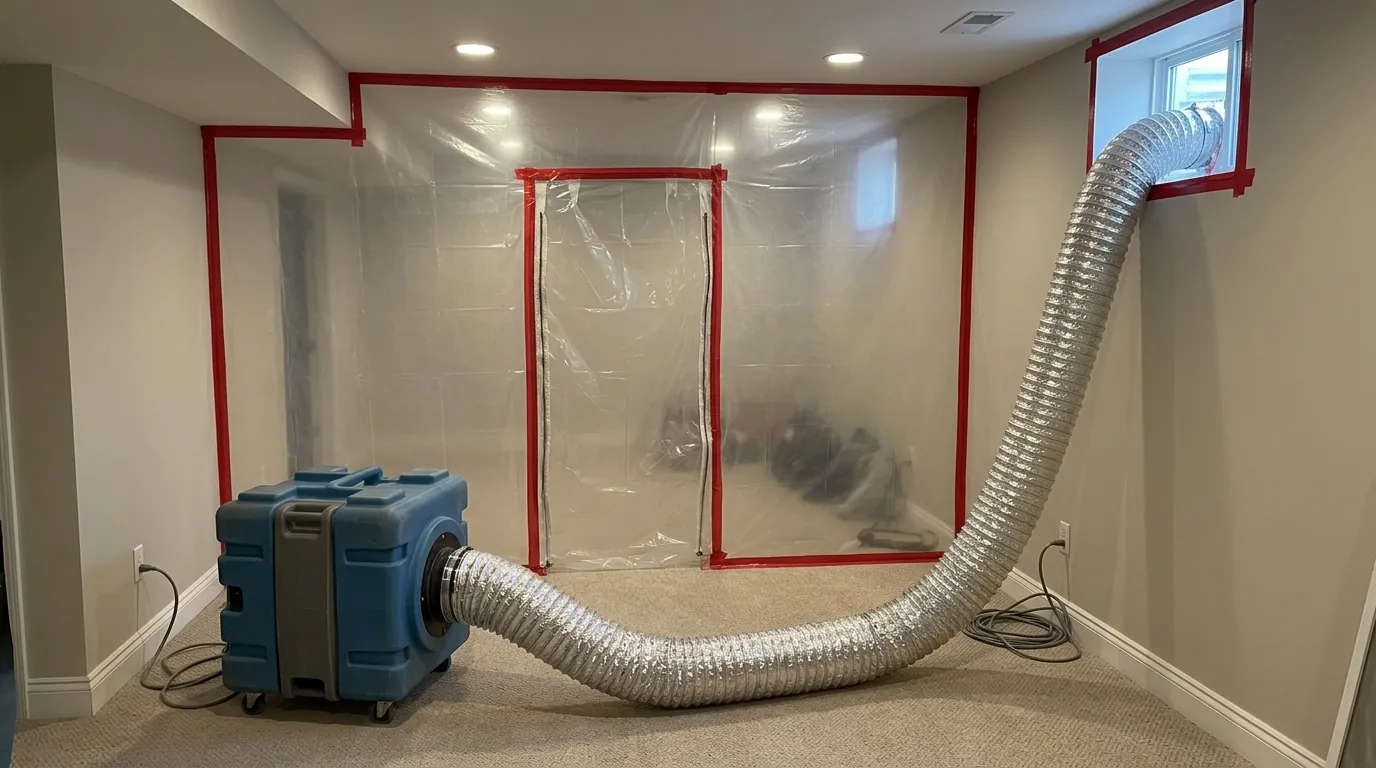
Sealed containment with HEPA filtration on a basement mold job
Windowless rowhouse bathrooms and condo baths stacked over each other
A lot of DC bathrooms were not part of the original house. In rowhouses from Capitol Hill to Columbia Heights, second and third baths were added over the decades, tucked into former closets, hall ends or the middle of the house where there is no exterior wall. Those rooms have no window at all, so the exhaust fan is the only way moisture leaves. When the fan duct runs a long distance to the rear wall or the roof through a flat-roof cavity, it often sags, separates or ends short, and we find growth on the ceiling joists above the bath.
Condo buildings bring the stacking problem. In NoMa, Navy Yard and the converted buildings around Logan Circle and Dupont Circle, bathrooms sit directly above each other, so a failed shower pan in one unit shows up as a ceiling stain in the unit below. Older co-ops have original cast-iron drain stacks that rust at the joints. We open the affected ceiling or wall, document the moisture path for both owners and the building manager, and clean the cavity. Our guide to leaks from the condo above covers the first steps.
Where we do this work: Washington, DC and nearby Maryland and Virginia, including:
Related work we often do on the same job
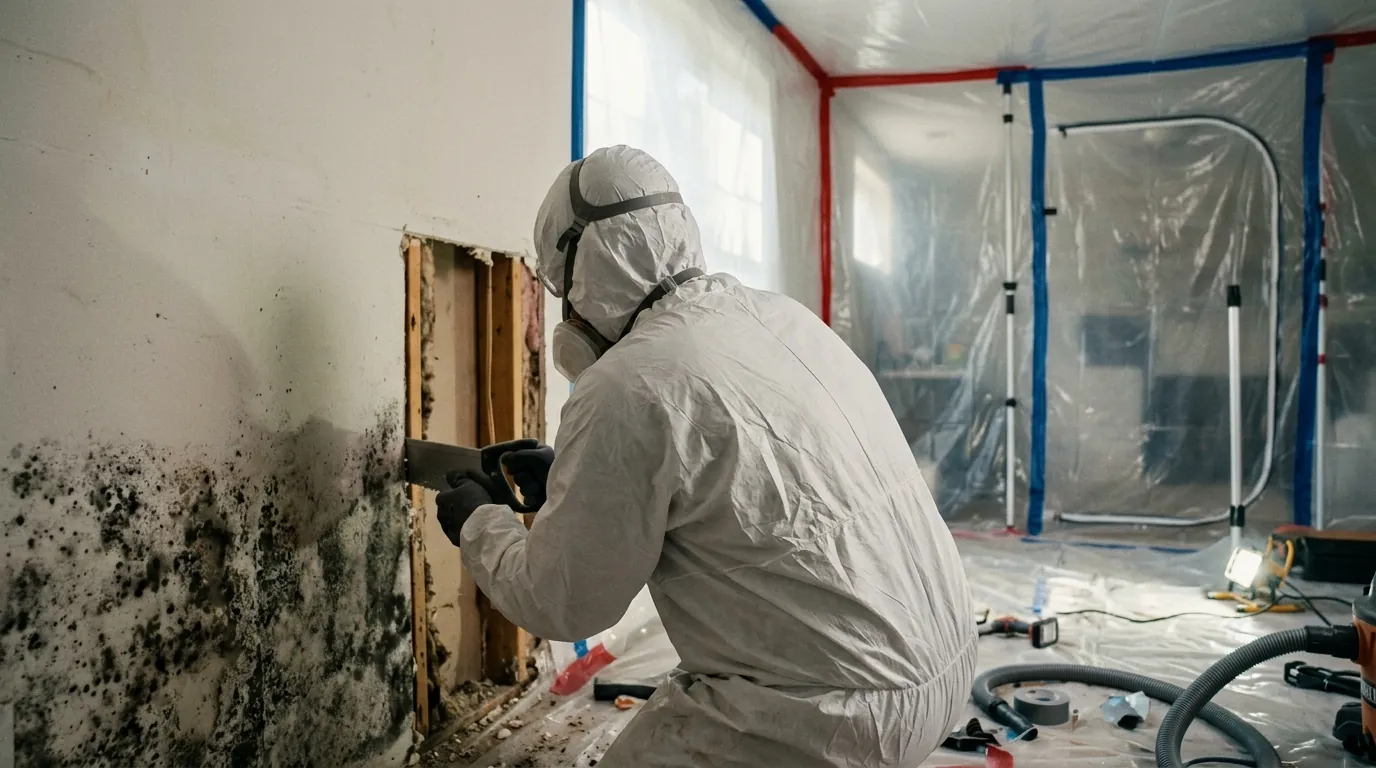
Mold Remediation
Mold remediation is the controlled removal of mold growth from a building.
How we handle it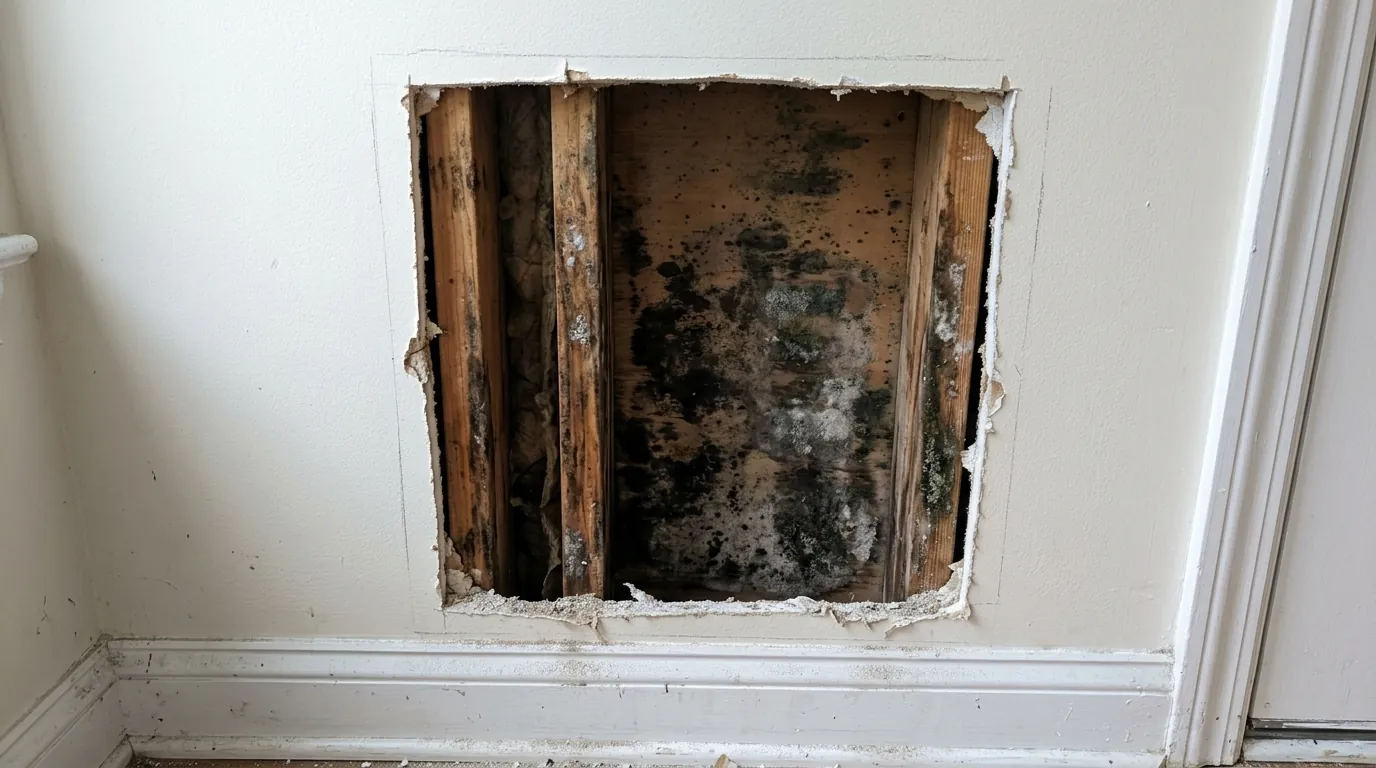
Mold Behind Drywall
Mold behind drywall grows on the back of the paper facing, on studs and on insulation inside a wall that has stayed damp from a slow leak, condensation or an old flood.
How we handle it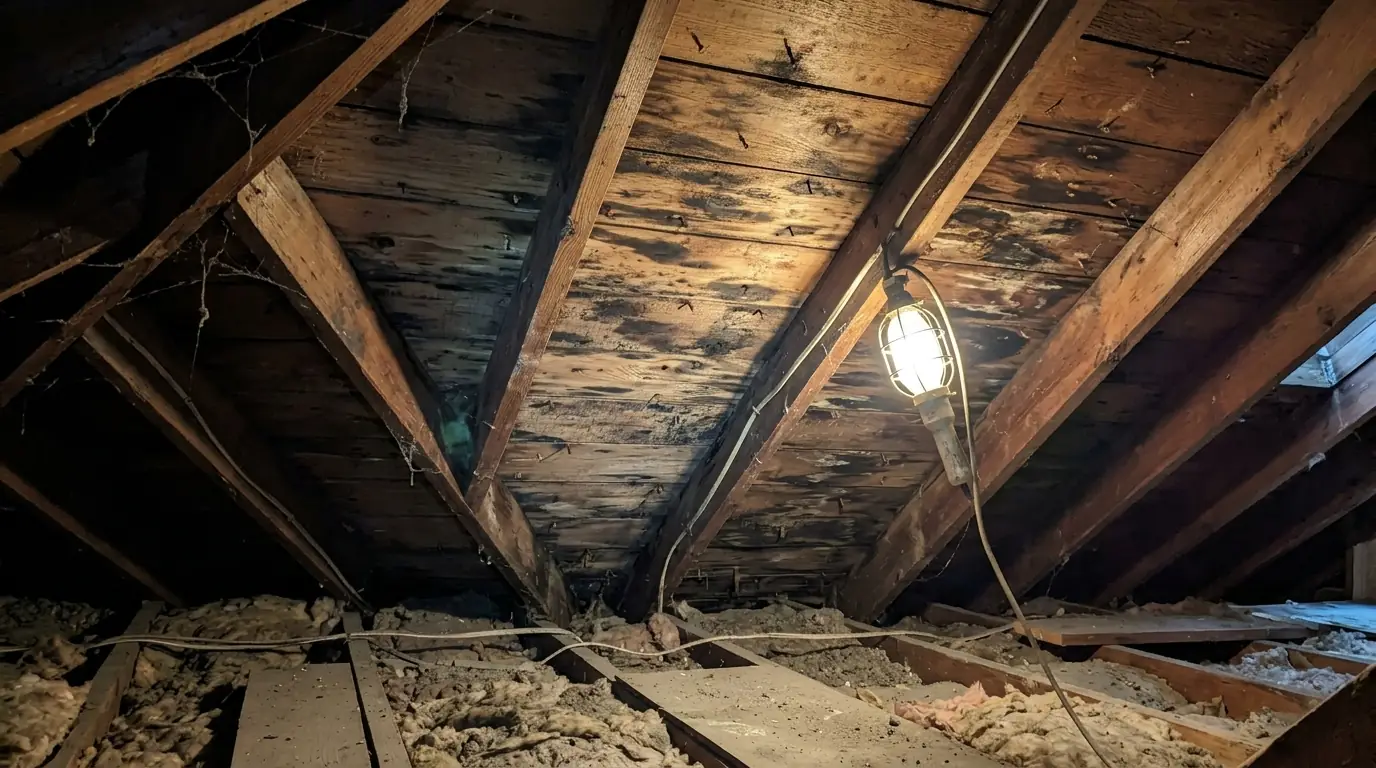
Attic Mold Removal
Attic mold removal cleans growth from roof sheathing, rafters and trusses, removes damaged insulation, and corrects the moisture source, which is usually household air leaking or being vented into the attic and condensing on cold wood in winter.
How we handle it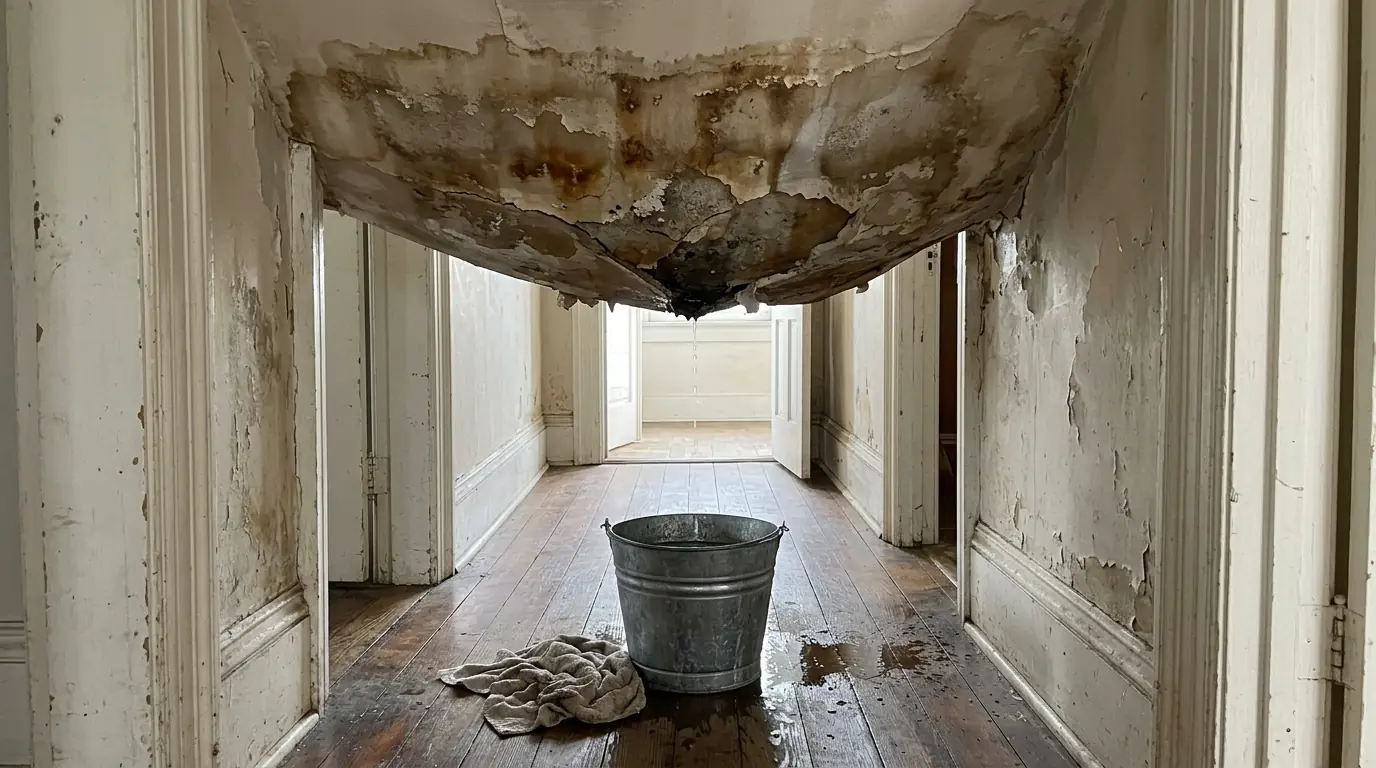
Ceiling Leak Damage
Ceiling leak damage work deals with water trapped above a ceiling from a roof, a bathroom, a radiator or an air conditioning line.
How we handle itQuestions homeowners ask about bathroom mold removal
Why does pink stuff keep coming back in my shower?
The pink or orange film on grout, drains and shower curtains is usually a bacterium called Serratia marcescens, not mold. It feeds on soap residue and thrives in damp, poorly ventilated showers. Regular cleaning, rinsing soap off surfaces, and running the exhaust fan after each shower keep it down. It does not mean water is getting into the wall.
Can I regrout over moldy grout instead of removing it?
Thin new grout over old grout tends to crack and flake, and any growth or moisture in the old joint stays put. If the original grout is crumbling or stained deep, rake it out with a grout saw to about two-thirds of its depth, clean and dry the joint, then regrout and seal. If the tiles are loose, check behind them before regrouting at all.
How do I know if my shower pan is leaking?
Common signs are a stain or drip on the ceiling below that shows up after showers but not after using the sink, loose floor tiles near the drain, and grout that stays dark at the base of the walls. A simple test is to plug the drain and fill the pan with an inch of water for a few hours, then check below. We confirm with moisture readings before opening anything.
What exhaust fan size does my bathroom need?
A common guideline is at least one cubic foot per minute of airflow for each square foot of floor area, with a minimum of 50 CFM, and more for bathrooms with a large soaking tub or a high ceiling. Long or twisting duct runs reduce real airflow, so a fan rated a bit above the minimum helps. A humidity-sensing or timer switch makes sure it runs long enough.
Is mold under my bathroom vinyl or laminate floor common?
It is common around toilets and tubs where small leaks run under the flooring. Sheet vinyl and click laminate trap moisture against the plywood or particleboard underlayment, so growth spreads unseen. Curling seams, a spongy spot near the toilet or a musty smell after showers are the clues. The flooring and wet underlayment usually come out so the subfloor can dry.
Water in the house or a musty room you can't explain?
Call JEC Restoration any time. We answer 24/7 and talk through what you are seeing before anyone touches a wall.