Knowledge Base
Is that musty basement smell mold?
Stale basement air has several possible causes, and only some of them involve hidden mold. A few cheap checks, done in order, usually narrow it down before you spend money.
By Winifred Larkin, Knowledge Base EditorUpdated 7 min read
The short version
- A sewage or rotten-egg smell near a drain is usually a dry trap, and a gallon of water fixes it.
- Steady 45 to 50 percent humidity with a lingering smell points to a hidden, local source.
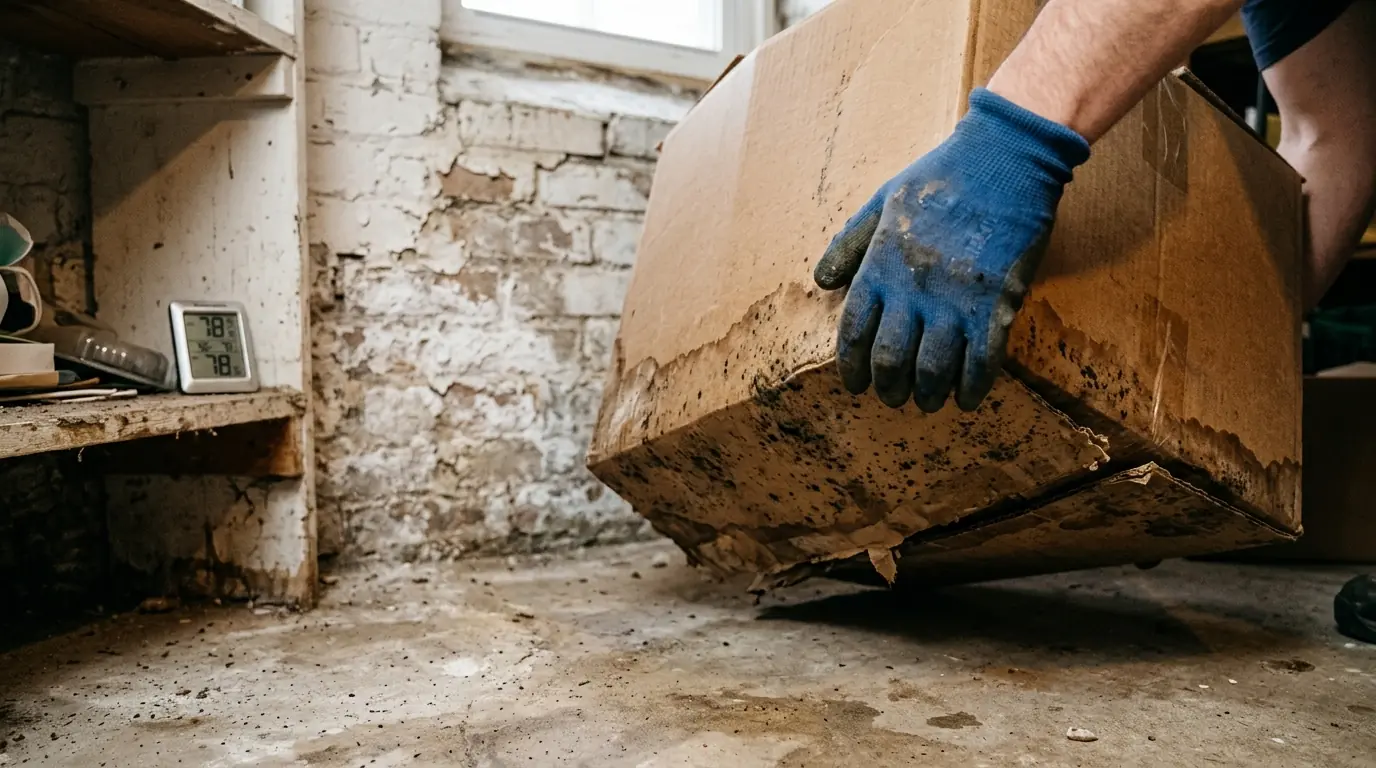
- Check under boxes, under carpet edges and behind furniture on outside walls before anything else.
- A strong smell in one spot with no visible cause is worth tracing with moisture readings.
Why doesn't a musty smell always mean mold?
A true musty smell comes from compounds that mold and bacteria release as they feed on damp material, known in the trade as MVOCs (microbial volatile organic compounds). Your nose catches them at very low levels, which makes smell a sensitive alarm but a poor locator. Growth behind one bookcase can scent an entire basement.
In DC basements, the odor usually traces back to one of six suspects, each with its own pattern:
- Hidden mold growth: a sharp, stale smell that is strongest near one wall, closet or piece of furniture and barely fades on dry days.
- Damp cardboard, paper and fabric: a dusty, sour odor around stored boxes, old rugs or bins of clothing.
- High relative humidity: a general staleness across the whole floor that comes and goes with the weather.
- Efflorescence and damp masonry: an earthy, wet-stone smell near brick or block walls, often with a white crust on the surface.
- A dry floor-drain trap: a sewage or rotten-egg smell, not a musty one, near a floor drain, laundry tub or unused shower.
- A wet crawl space: a dirt-floor odor drifting in from a hatch or from an addition built over open ground.
Is it sewer gas from a dried-out floor drain?
Rule this one out first, because it takes five minutes and a bucket of water. Every floor drain has a trap, a dip in the pipe holding a few inches of water that seals your basement off from the sewer line. When a drain goes months without use, that water evaporates, faster in dry winter air from a radiator or furnace, and sewer gas drifts straight into the room.
Sewer gas doesn't smell musty. It smells like sewage, or like rotten eggs from the hydrogen sulfide in it, and it is usually strongest right over the drain. Pour a gallon of water into the drain, and if the smell fades over the next few hours, you found it. Some plumbers suggest a tablespoon of mineral oil on top of the water to slow evaporation, and a device called a trap primer can refill a seldom-used drain automatically.
If the smell returns within a day of refilling, a loose cleanout plug, a cracked cast-iron fitting or a failed toilet seal may be leaking gas, and that is a plumber's call. Water rising out of the drain during a storm is a different problem, covered in our guide to sewer backups versus groundwater.
What can a cheap hygrometer tell you in one week?
A digital hygrometer from a hardware store usually costs under $20, and it answers the most useful question: is the smell an air problem or a material problem? Put one in the middle of the basement and a second in the corner where the smell seems strongest. Read both morning and evening for a week.
Readings that sit above 60 percent most of the time mean the whole basement is damp enough for growth on dust, paper and wood. That is a humidity problem first, and our guide to basement humidity after a DC summer explains how to set and drain a dehumidifier. Run one for a week with the windows closed and see whether the smell drops along with the numbers.
The more telling result is the opposite one. If the room holds 45 to 50 percent and the odor still hangs around one wall or one closet, the air is fine and something in that spot is wet. That points away from humidity and toward a leak, damp masonry or growth you haven't found yet.
Where should you look before calling anyone?
Bring a flashlight, gloves and an N95 mask in case you disturb something. Work around the edges of the room, because growth almost always starts where air sits still against a cool surface.
- Behind and under stored boxes. Lift a few that sit directly on the slab and check the bottoms for dark staining, softness or white fuzz. Cardboard wicks water out of concrete and feeds growth quickly.
- Under carpet edges. Pull back a corner at the tack strip along an outside wall. A stained pad, a rusty tack strip or damp backing means water has been reaching the floor.
- Behind furniture against outside walls. Sofas and bookcases pushed tight to a below-grade wall trap damp air, so check the back panel and the wall.
- The base of the front wall in an English basement, under the window and beside the stairwell door, where runoff collects. Our guide to English basement leak points walks through each one.
- Closets, the space under the stairs and the floor around the water heater and washer, where small leaks go unnoticed.
- Baseboards and the bottom foot of drywall or paneling. Bubbling paint, swelling or a spot that gives under your thumb point to moisture inside the wall.
Could damp brick or a crawl space be the source?
Old rowhouse foundations are brick in lime mortar, and they pass ground moisture as vapor even when nothing drips through. The wall gives off a mineral, wet-stone smell, and a white, salty crust called efflorescence marks where water evaporated. The crust isn't mold. The trouble is what touches the wall: furring strips, wood paneling and drywall paper installed tight against damp brick are where growth starts.
To tell whether a wall is wet from outside or just sweating, tape an 18-inch square of clear plastic to the bare masonry and seal all four edges. After a day or two, droplets under the plastic mean moisture is coming through the wall. Droplets on the room side mean condensation, which drier air will fix.
Crawl spaces deserve a look too. Many rowhouse rear additions, and plenty of detached houses in upper Northwest and Northeast, sit partly over open ground. Warm air rising through a house draws air up from the lowest spaces, so a crawl space smell can surface in the basement or kitchen. Open the hatch and look for standing water, a torn vapor barrier, sagging insulation or spots on the joists. If you find them, cleaning up crawl space mold usually comes before sealing the space.
When is it time to have the smell traced?
Call when the checks above leave a strong smell with no clear source, or point somewhere you can't safely open up yourself, and especially when:
- The odor stays strong in one spot after a week at 50 percent humidity or lower.
- You found growth larger than about 10 square feet, or stains on drywall, paneling or ceiling tile.
- The smell started after a leak, a flooded floor or a sewage backup.
- Someone at home has asthma or allergies and notices symptoms, since mold can trigger allergy and asthma symptoms in sensitive people.
- A tenant in the basement apartment reports the smell and you want documented readings.
What happens when we trace a basement odor?
Our technicians map moisture with a pin meter, a thermal camera and humidity readings before opening anything, then cut small inspection holes only where the numbers say a wall or floor is wet. A mold inspection shows whether growth is present and how far it reaches, and leak tracing finds the water feeding it. If the basement smells and you can't find why, call (202) 989-3053, day or night.
Questions readers ask
Why does my basement smell worse after a rainstorm when no water comes in?
Rain soaks the soil against your foundation, and old brick and block walls pass that moisture inside as vapor. Humidity climbs, materials near the walls get damper, and anything growing on them gives off more odor. If the smell peaks a day or two after every storm, take readings on that wall and check the gutters and grading outside it.
Will an air purifier or a plug-in deodorizer get rid of a musty basement smell?
Only for a while. A deodorizer covers the odor with a stronger one, and a HEPA air purifier catches some spores and dust but not the gases that make the smell. As long as a damp material or hidden growth keeps producing odor, the smell comes back. Find and dry the source first, then clean the air.
Our English basement apartment sat empty for two months and now smells like sewage. What happened?
Most likely every trap in the unit dried out: the shower, the sinks, the floor drain and sometimes the toilet bowl itself. Run each faucet for a minute, flush the toilet and pour a gallon of water into each floor drain. If the smell is still there the next day, have a plumber check the vent, the cleanout plug and the toilet's wax ring.
Winifred Larkin, Knowledge Base Editor at JEC Restoration. She writes and updates these guides from the questions homeowners ask our crews on DC area jobs.
Services this guide connects to
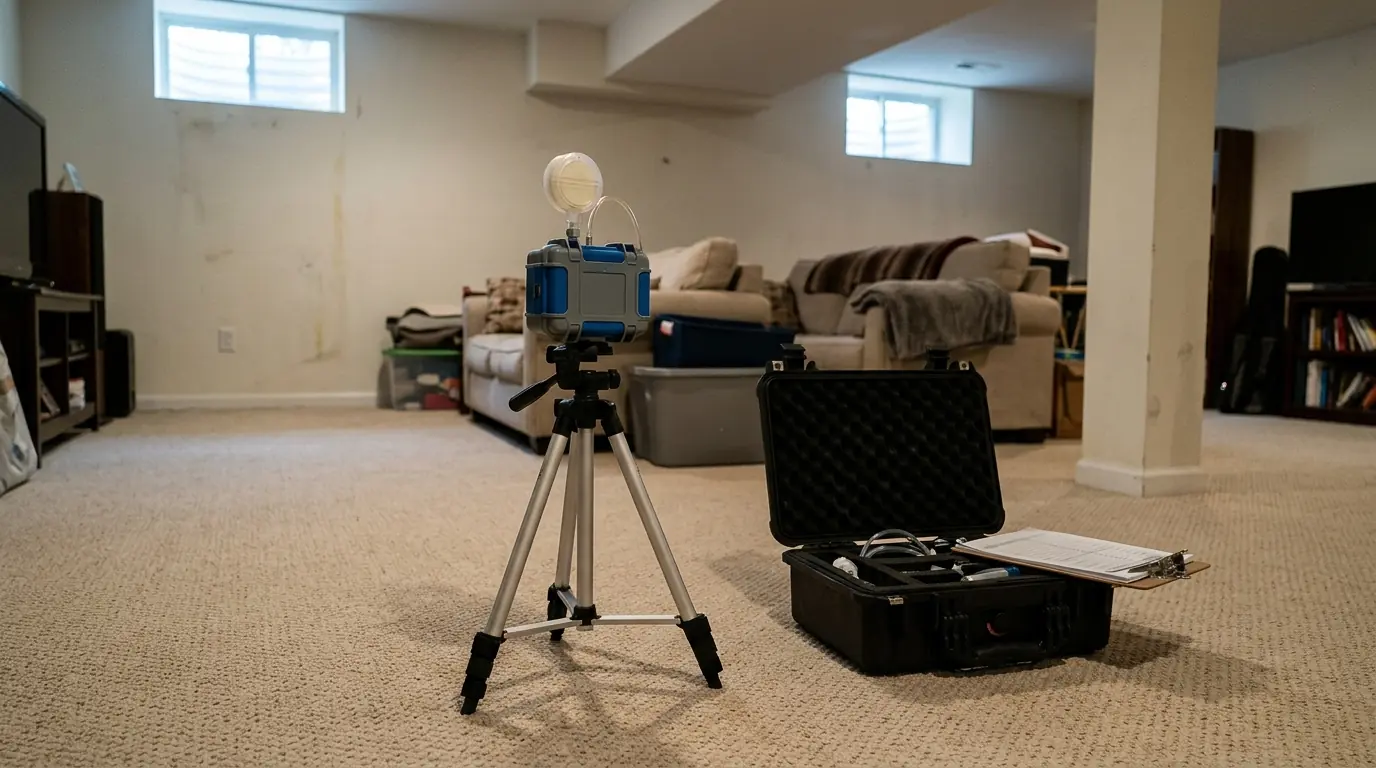
Mold Inspection & Testing
A mold inspection is a room-by-room check for visible growth and the moisture that feeds it, using a moisture meter, a thermal camera and a hygrometer.
How we handle it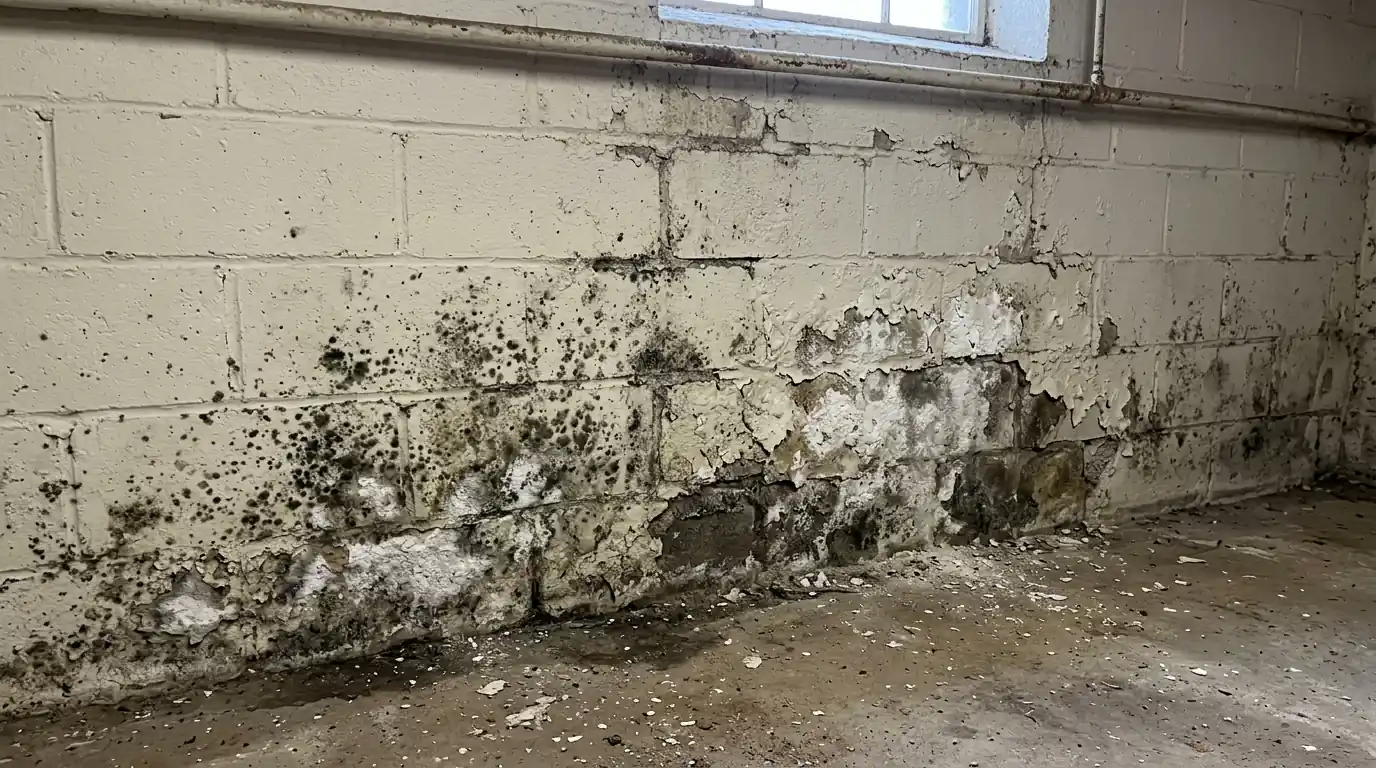
Basement Mold Removal
Basement mold removal cleans or removes growth on foundation walls, framing, finished drywall, carpet and stored contents below grade, then corrects the moisture that caused it.
How we handle it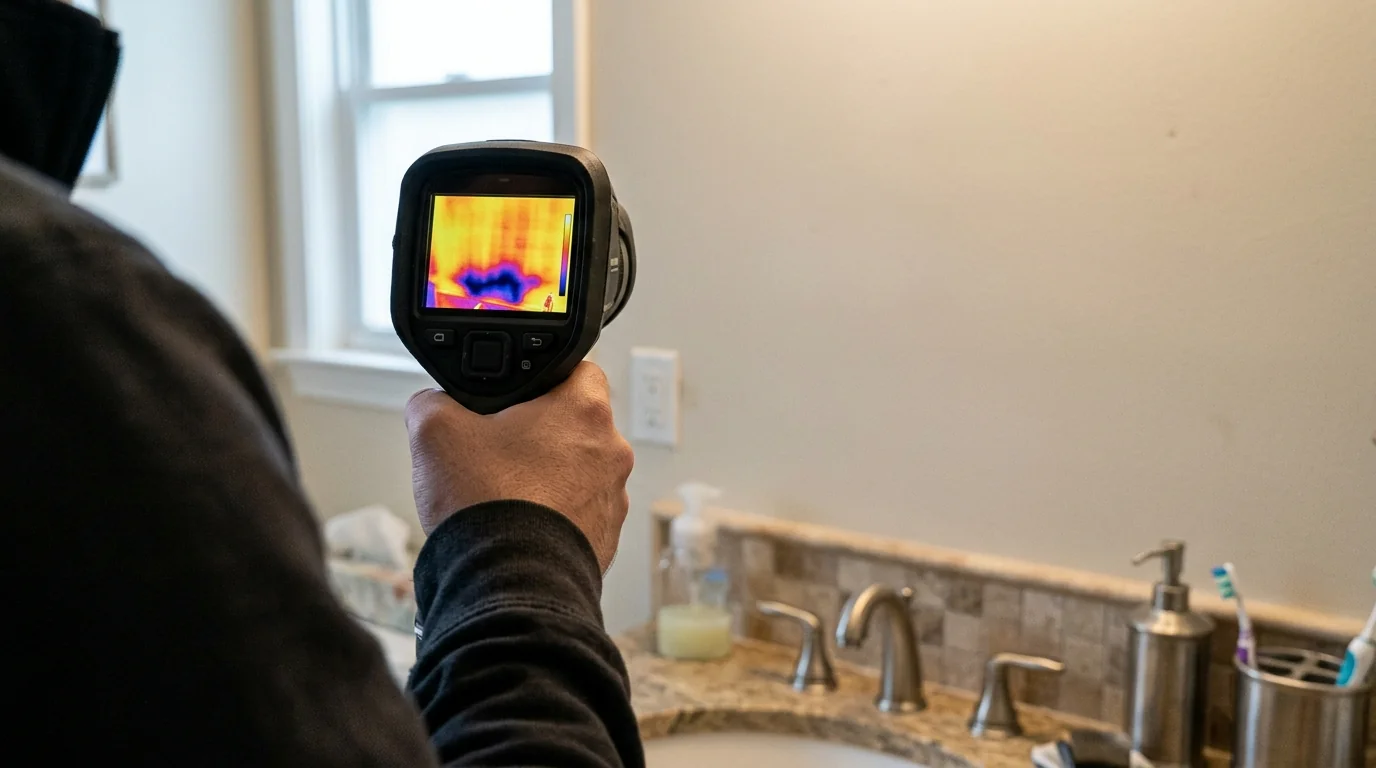
Moisture & Leak Detection
Moisture and leak detection is a non-invasive survey that finds where water is hiding in walls, ceilings and floors and how far it has spread.
How we handle itNeed someone to look at it today?
Call (202) 989-3053. We answer 24/7 and can talk you through the next safe step on the phone.