Knowledge Base
Mold after a humid DC summer: what is normal and what is not
By late August, plenty of DC basements smell musty and a few have spots on the joists or the back of a bookcase. Some of that is a humidity problem you can manage. Some of it points to water that needs a closer look.
By Winifred Larkin, Knowledge Base EditorUpdated 6 min read
The short version
- Keep basement relative humidity at about 45 to 50 percent, checked with a separate hygrometer.
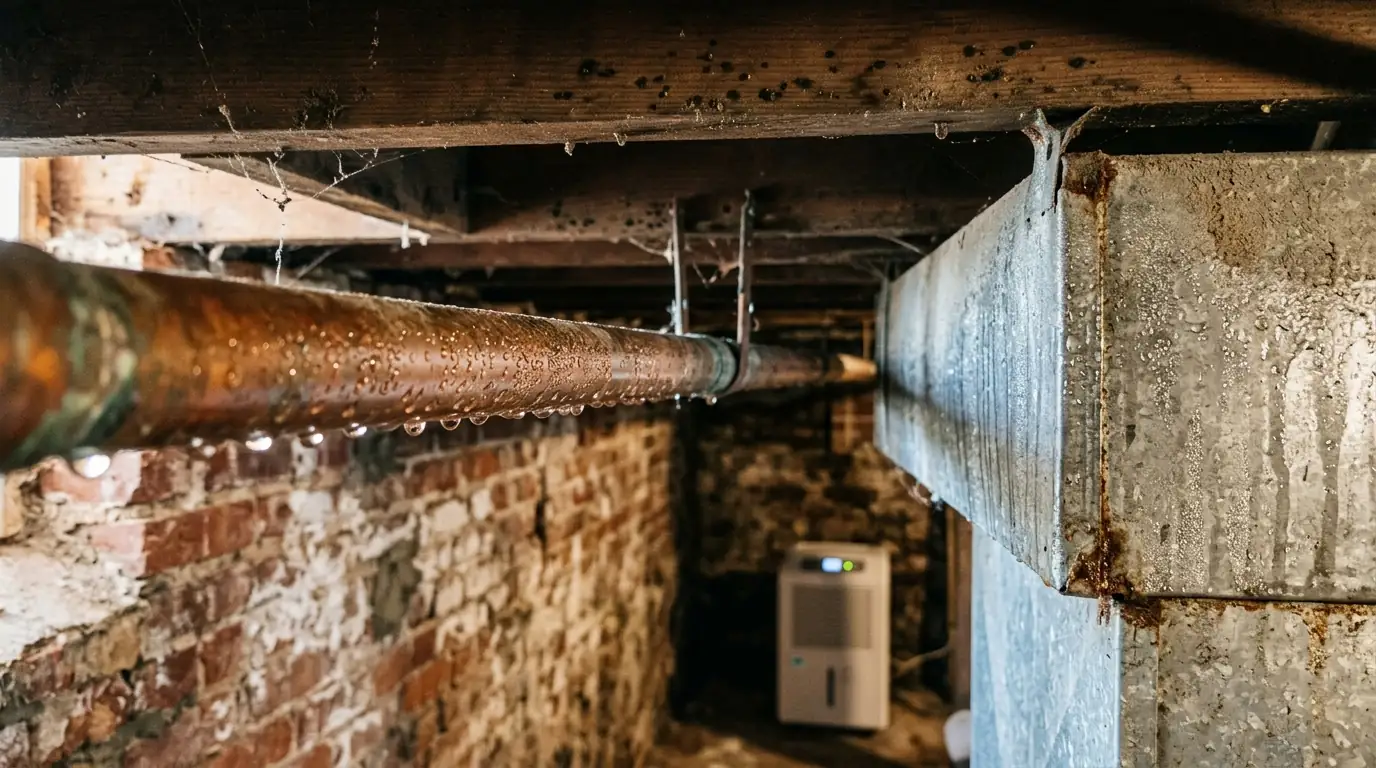
- Drips under cold pipes and AC ducts are often condensation, not leaks; insulation and drier air fix most of it.
- Small mold spots under about 10 square feet on hard surfaces are usually a DIY job once the moisture is fixed.
- Recurring growth, mold inside walls or ducts, or mold after a flood calls for professional help.
Why does the basement smell musty by August?
Relative humidity is the share of moisture the air is holding compared with the most it could hold at that temperature. Warm air holds more water than cool air. So when humid July air drifts into a basement that stays ten or fifteen degrees cooler than outside, the same moisture now makes up a much larger share of what that cooler air can carry, and relative humidity climbs.
The EPA recommends keeping indoor humidity below 60 percent, ideally between 30 and 50 percent. Many DC basements sit well above that from July through September, especially in rowhouses with brick walls that pass ground moisture and in older detached houses in Brookland or Chevy Chase with unsealed block foundations. Mold spores are present nearly everywhere; at sustained high humidity, they find enough moisture in dust, paper, cardboard and wood to start growing.
That musty smell comes from gases released by growing mold and bacteria. It tells you something is active, but not how much or where. An inexpensive digital hygrometer, left on a shelf for a week, will tell you more than your nose can.
What does dew point have to do with wet pipes and ducts?
Dew point is the temperature at which air becomes saturated and water starts to condense. Any surface colder than the dew point of the air around it collects droplets, the same way a glass of iced tea sweats on a porch. On muggy DC summer days, dew points often climb into the upper 60s or low 70s Fahrenheit, which is warmer than many surfaces in a basement.
The cold water line coming in from the street, uninsulated metal ducts carrying air-conditioned air, and the bottom few feet of a below-grade wall all run cool. When they drip, the water lands on joists, insulation, stored boxes and carpet, often in a neat line under the pipe or duct. Homeowners regularly mistake this for a plumbing leak.
A quick test: wipe the pipe dry and wrap it with a paper towel. If the towel turns damp along its whole length and the pipe has no joint or fitting nearby, you are looking at condensation. Foam pipe insulation and sealed, insulated duct wrap fix most of it, along with lower basement humidity.
Which signs are normal for a DC basement, and which are not?
A slight earthy smell in a basement during the humid months is common. So are a few small spots on a cardboard box or the underside of a stair tread that have been sitting in damp air. What changes the picture is a pattern that points to liquid water or long-term saturation.
- Normal, manageable: faint mustiness that fades once a dehumidifier runs for a few days.
- Normal, manageable: small spots on stored items, a shelf or a single joist, with nothing wet to the touch.
- Not normal: growth that comes back within weeks after cleaning.
- Not normal: spots spreading across drywall, ceiling tiles or carpet, or appearing on the back side of finished walls.
- Not normal: a stain that lines up with a pipe, a window, a wall crack or the floor drain.
- Not normal: a strong musty odor upstairs, or one that gets worse when the air conditioning runs.
How should you set and run a dehumidifier in a basement?
Set the dehumidifier to hold the basement around 45 to 50 percent relative humidity. Going much lower wastes energy and wears out the compressor without adding protection. Check the reading against a separate hygrometer, since built-in sensors drift.
Most portable units fill their buckets in a few hours during a DC summer, then shut off and do nothing until someone empties them. Use the hose port to drain continuously to a floor drain, a sump pit or a condensate pump. Close basement windows on humid days: outdoor summer air usually carries more moisture than the air you are trying to dry, and an open window turns the unit into a losing effort.
Size matters too. A small unit sized for a bedroom won't keep up with a full rowhouse basement with brick walls. Clean the filter monthly, keep the unit a foot off the walls so it can breathe, and run a box fan to move air into closets and corners. If a portable unit runs constantly and still can't hold 50 percent, a ducted or larger whole-basement dehumidifier is often the better answer, especially in finished basements and English basement apartments.
When can you clean small mold spots yourself?
The EPA's guidance is that a homeowner can usually handle mold covering less than about 10 square feet, roughly a three-by-three-foot patch, provided the moisture source has been fixed and nobody in the home has health concerns that make exposure a bad idea. Mold can trigger allergy and asthma symptoms in sensitive people, so anyone with asthma or a weakened immune system should leave cleanup to someone else.
For hard surfaces like sealed wood, metal shelving, concrete and tile, scrub with detergent and water, then dry the surface completely. Wear an N95 respirator, gloves and eye protection. Bleach is not required, and it should never be mixed with ammonia or other cleaners. Porous items with growth in them, like moldy cardboard, ceiling tiles, carpet pad and upholstery, usually go in the trash rather than getting cleaned.
The color of mold doesn't tell you how harmful it is. Dark spots are not automatically worse than white or green ones, and treating a dark patch as an emergency often leads to unnecessary spending. Our piece on common black mold myths goes into this further.
When is it time for a professional?
Call when growth covers more than about 10 square feet, when it sits inside a wall cavity or behind finished drywall, when it follows a flood or sewage backup, or when it is inside the air conditioning system or ductwork. Running the AC over a moldy coil or duct spreads spores through every room, so that situation calls for cleaning the ducts and air handler as a planned job, not a wipe-down.
Our technicians start by finding the moisture behind the growth, using a pin meter, a thermal camera and humidity logs. Sometimes the answer is condensation, sometimes a slow leak at a window well or wall, which our article on where English basements take on water covers in detail. Larger jobs get containment with plastic sheeting, negative air pressure with HEPA filtration, removal of damaged materials and HEPA vacuuming, as described on our basement mold removal page. If you want to know what you have before deciding, call (202) 989-3053, day or night.
Questions readers ask
Why do the AC supply registers in my basement drip and grow spots every August?
The register and the duct behind it carry air chilled well below the basement's dew point, so moisture condenses on the metal and drips onto the ceiling or carpet around it. Spots grow on the dust caught on the grille. Lowering basement humidity, sealing and insulating the duct, and checking that the register isn't pushing cold air against a damp wall usually solves it.
My dehumidifier runs nonstop, but the hygrometer still reads 65 percent. What is going on?
Usually one of four things: the unit is too small for the space, its coil is iced over because the basement is cool, a window or door is letting outside air in, or water is entering through walls or the floor faster than the unit can remove it. Check for frost on the coil, close openings and measure again. If readings stay high, there is likely a water source worth tracing.
Can I paint over mildew spots on basement drywall?
Painting over growth hides it without stopping it, and mold often comes back through the new paint or keeps growing on the paper facing behind it. Clean small spots first, let the wall dry fully and fix the humidity. If the drywall is soft, stained through or the spots return after cleaning, the board itself likely needs to be cut out and replaced rather than repainted.
Winifred Larkin, Knowledge Base Editor at JEC Restoration. She writes and updates these guides from the questions homeowners ask our crews on DC area jobs.
Services this guide connects to
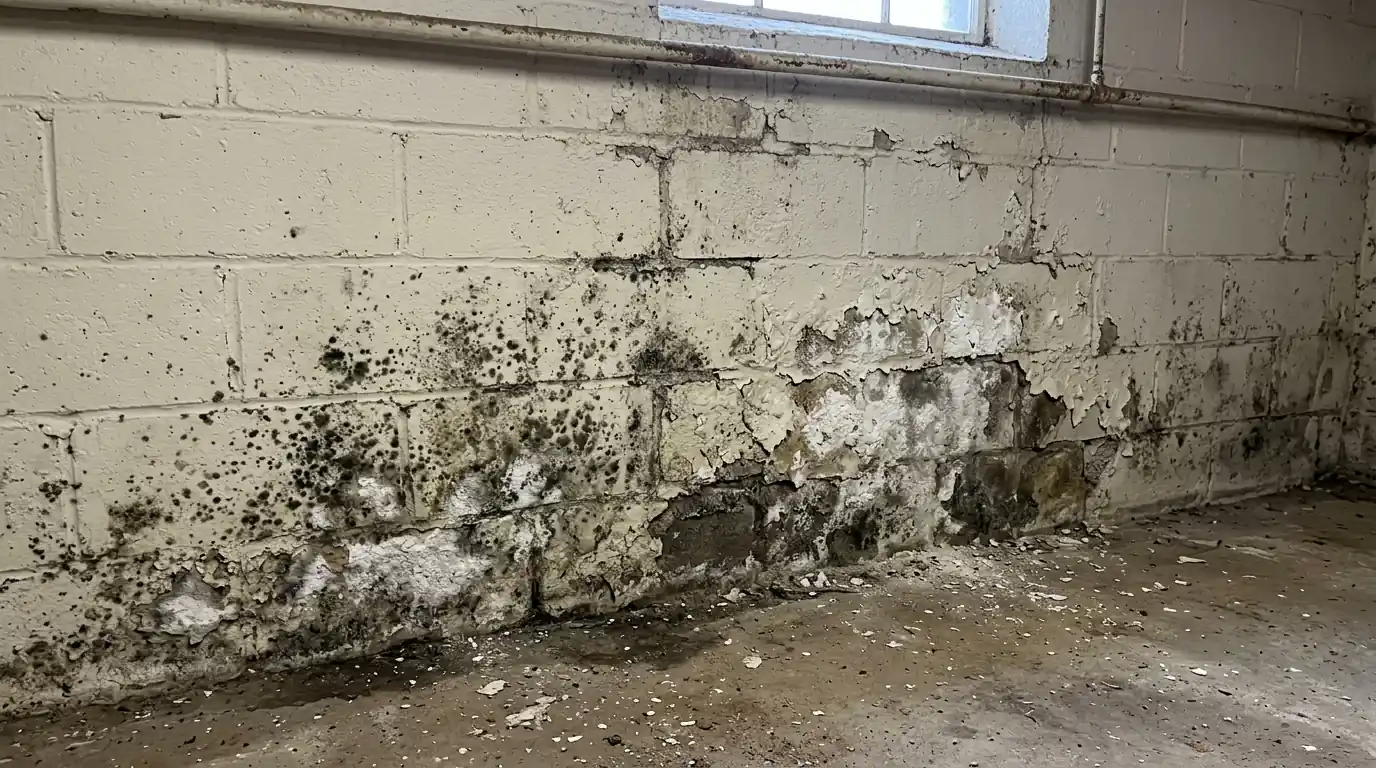
Basement Mold Removal
Basement mold removal cleans or removes growth on foundation walls, framing, finished drywall, carpet and stored contents below grade, then corrects the moisture that caused it.
How we handle it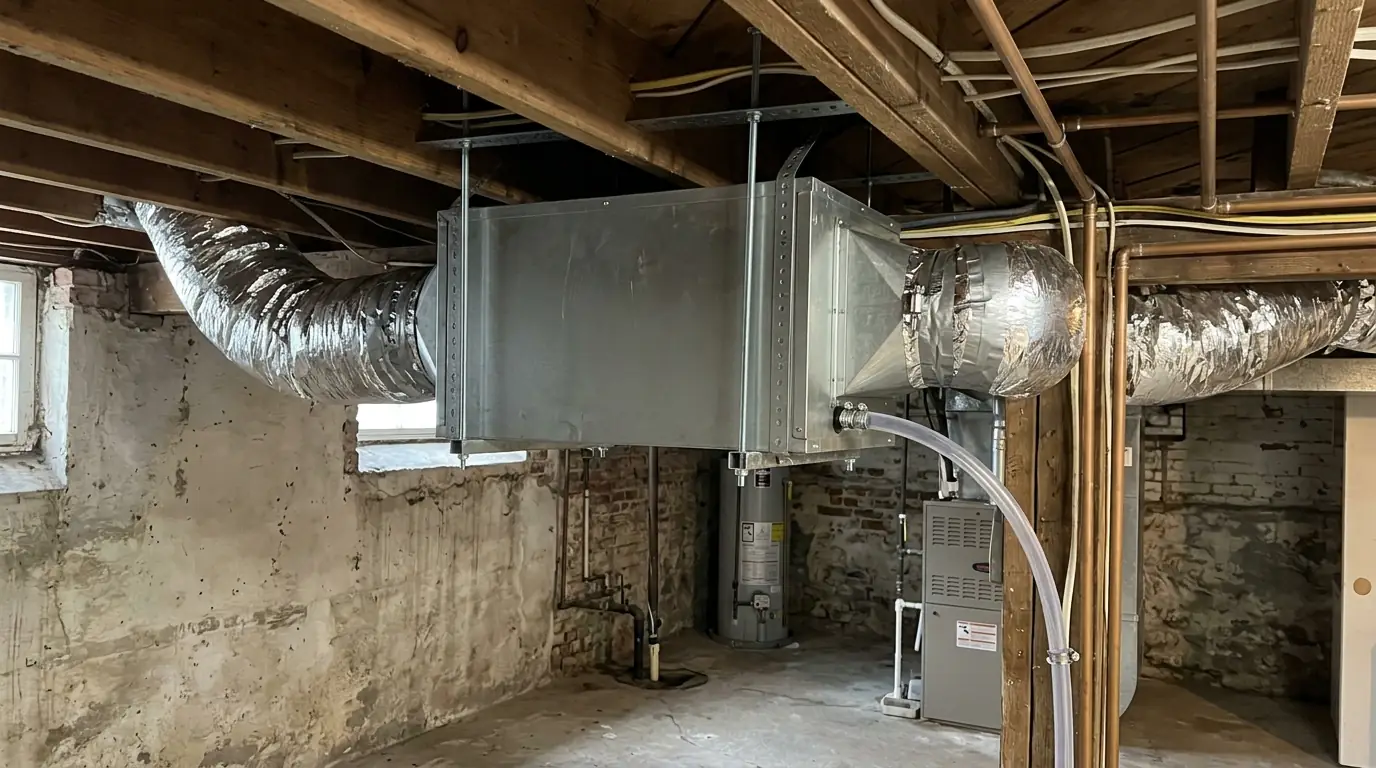
Dehumidifier Installation
A whole-basement dehumidifier is a fixed unit that pulls moisture from the air in a basement or crawl space and drains it continuously through a hose or condensate pump.
How we handle it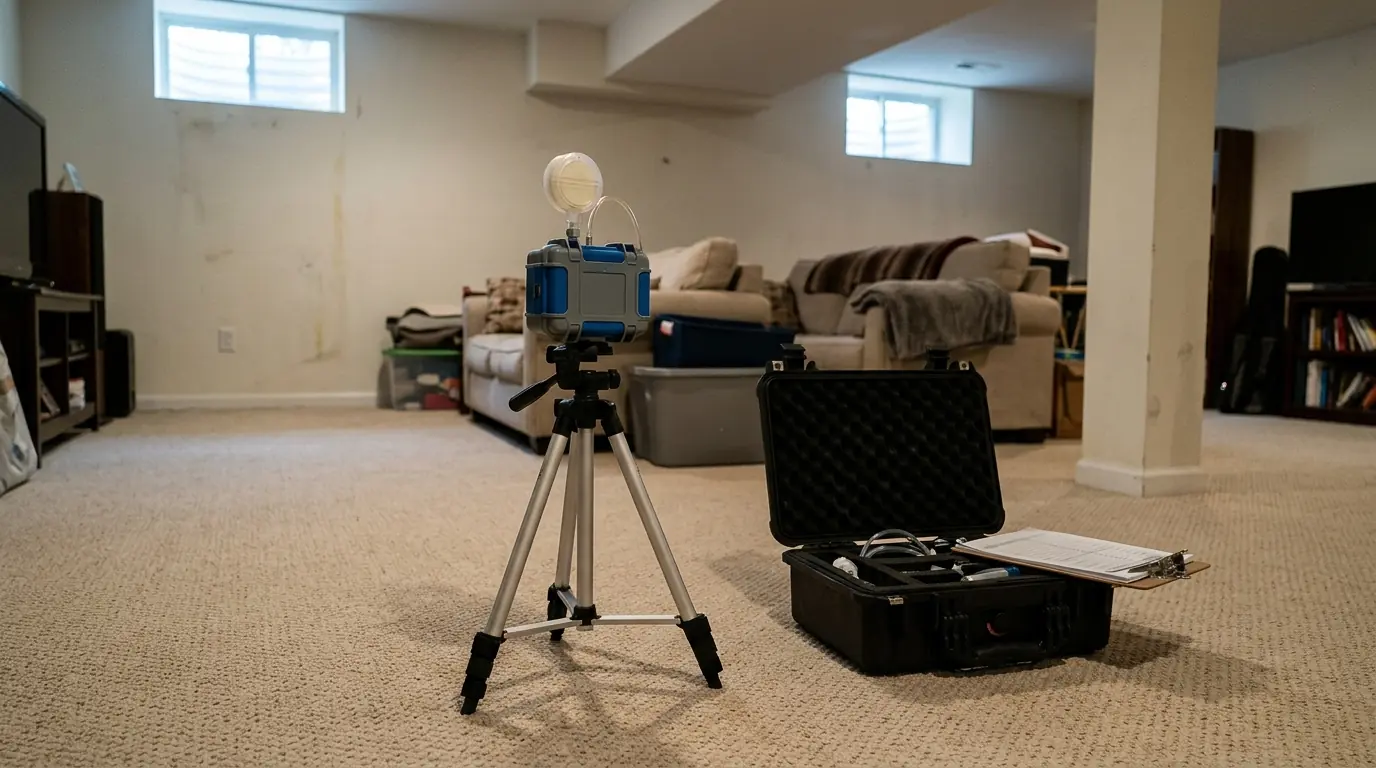
Mold Inspection & Testing
A mold inspection is a room-by-room check for visible growth and the moisture that feeds it, using a moisture meter, a thermal camera and a hygrometer.
How we handle itNeed someone to look at it today?
Call (202) 989-3053. We answer 24/7 and can talk you through the next safe step on the phone.