Knowledge Base
Black mold myths that cost DC homeowners money
Most of the fear around mold, and most of the money wasted on it, comes from a handful of stubborn ideas. Here is what holds up, what does not, and what actually decides how big the fix needs to be.
By Winifred Larkin, Knowledge Base EditorUpdated 6 min read
The short version
- Color does not tell you how harmful a mold is; size, material and moisture do.
- Bleach whitens surfaces but leaves growth in porous materials, and removal is the goal.
- Dead mold can still trigger allergy symptoms, so it has to be removed, not just killed.
- Visible growth rarely needs a test first: fix the water, then clean or remove.
Does black mold mean you have the dangerous kind?
Dark color is the most common reason people panic, and it is the least useful clue. Plenty of molds grow dark green, gray or black. Cladosporium, which shows up on bathroom caulk and window sills, is often black. So are Alternaria and Aspergillus niger. Stachybotrys chartarum, the one headlines focus on, is greenish black and tends to grow on paper-faced drywall or ceiling tile that stayed wet for a long time.
Color does not tell you how harmful a mold is. A pale, fuzzy patch can bother a sensitive person just as much as a dark one. Mold of many kinds can trigger allergy and asthma symptoms in sensitive people, which is how the EPA and CDC describe the health concern, and that holds regardless of shade.
Black speckles on the inside of old single-pane windows are a good example. In winter, warm indoor air condenses on cold glass in many prewar DC homes, the sill stays damp, and spots appear. That is usually a cleaning and humidity problem, not an emergency.
Will bleach kill the mold and end the problem?
Bleach makes mold disappear from sight on hard, non-porous surfaces like glazed tile and glass, and that is where the myth comes from. On porous materials it behaves differently. The water in household bleach soaks into drywall, wood and grout, while the chlorine works mostly at the surface. The stain fades, the growth inside stays, and the extra water can help it come back.
EPA guidance on mold cleanup does not recommend routine use of biocides such as chlorine bleach. The goal is to remove mold, not to disinfect it in place. For small areas on hard surfaces, detergent and water followed by thorough drying does the job. Bleach fumes also irritate the lungs, and bleach must never be mixed with ammonia or with cleaners that contain it.
The same caution applies to sprays that promise to make mold vanish overnight. Many of them whiten stains without removing anything, which hides the problem until the next humid stretch.
If the mold is dead, is it safe to leave it?
Killing mold is not the same as getting rid of it. Spores and fragments carry the proteins that cause allergic reactions whether the mold is alive or not, and the EPA notes that dead mold can still cause those reactions. A basement wall that flooded years ago and has since dried out can still shed debris when someone moves boxes or runs a shop vac against it.
That is why antimicrobial products have a narrow role. We apply products like Benefect or Concrobium after removal, on cleaned framing and sheathing, to discourage regrowth. They are a finishing step, not a substitute for physically removing growth with HEPA vacuuming, scrubbing, sanding and, where needed, tearing out material.
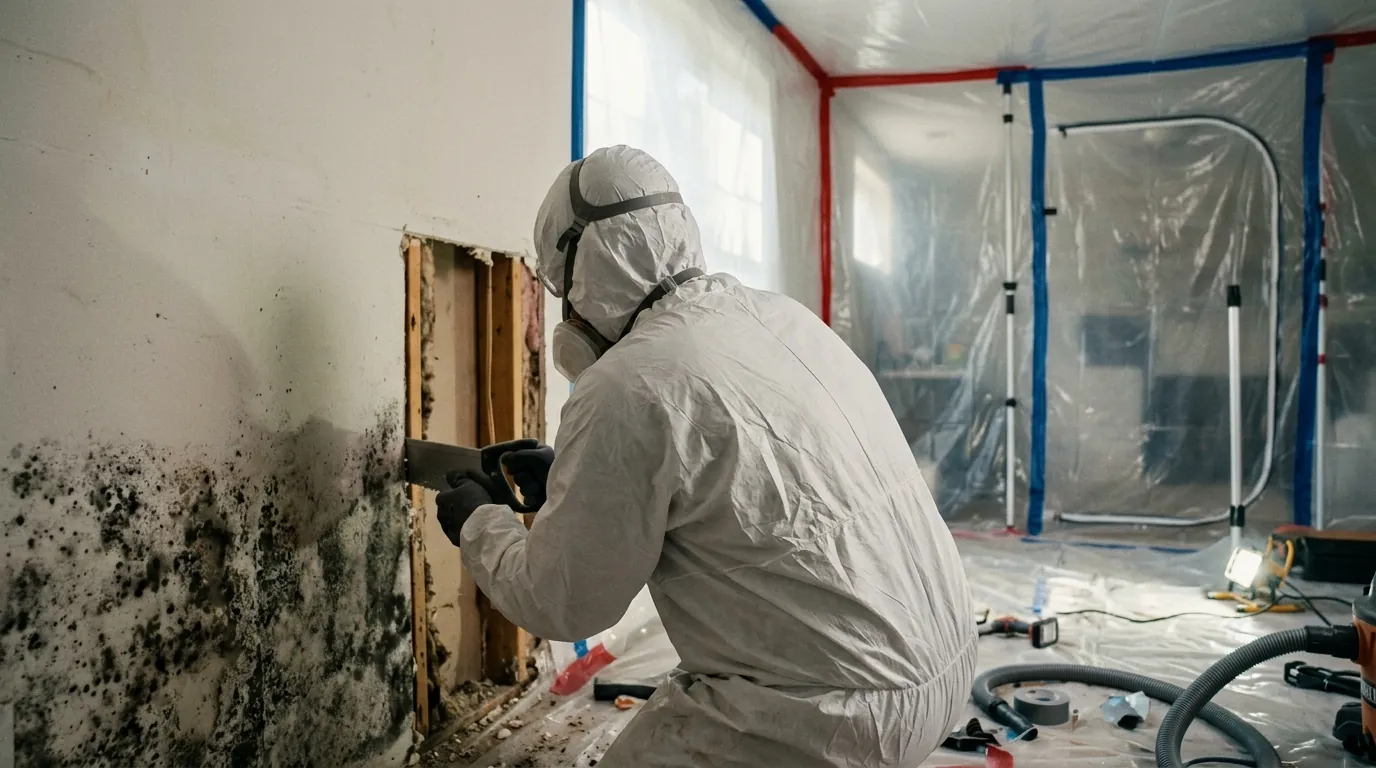
For larger areas, removal happens inside plastic containment under negative air pressure, so dust leaves through a filtered machine instead of drifting into bedrooms and closets.
Do you need a mold test before anything else happens?
Often you do not. EPA guidance says that when mold is visible, sampling is usually unnecessary, and there are no federal limits for how many spores are acceptable indoors. A lab report will confirm that the patch you can already see is mold, which does not change what needs to happen next.
Hardware store petri dish kits are the weakest option. Spores are present in every home and outdoors, so a dish left open will grow something almost anywhere. A single air sample is also just a snapshot, and it only means something when compared with an outdoor sample taken at the same time. Testing earns its cost in a few situations:
- A musty odor with no visible source, which can point to growth behind a wall or under flooring.
- Confirming the work is finished, through clearance testing after remediation.
- A physician asking for information about the home of someone with symptoms.
- A sale or lease where both sides want documented results, often paired with a moisture-mapped inspection.
Can mold-resistant paint cover the problem?
Mold-resistant primers and paints help keep new growth from starting on clean, dry surfaces. They do nothing for growth that is already there. Paint over a damp, moldy wall and you seal moisture in, the film blisters or peels, and growth continues behind it.
This shows up often in English basement apartments that get repainted between tenants. The wall looks fresh for a season, then the paint bubbles along the bottom foot or so and the musty smell returns. A home inspector with a moisture meter will find that damp wall at sale time anyway.
The order that works is fix the water, remove the growth, dry the material to normal readings, then prime and paint. Skipping straight to paint saves a weekend and usually costs more later.
What actually decides how big a mold job is?
Four things matter far more than color or a spore count.
- The moisture source: a roof leak, a sweating pipe, a wet crawl space or plain humidity. If it is not fixed, growth comes back.
- The size of the area. EPA guidance treats roughly 10 square feet, about a 3 foot by 3 foot patch, as something most homeowners can clean with gloves, goggles and an N-95 respirator. Larger areas call for containment.
- The material. Porous drywall, ceiling tile, carpet pad and insulation are usually removed, semi-porous wood can often be cleaned and sanded, and glass, metal and tile clean up well.
- Who lives there. Infants, older adults and people with asthma, allergies or weakened immune systems call for extra caution.
When does a mold problem need more than a weekend cleanup?
After a humid DC summer, many basements need a dehumidifier and a careful cleaning more than a full remediation, and our guide to mold after a humid summer covers where that line falls. Growth on a few feet of painted block wall or a closet ceiling is often a homeowner job with the right precautions.
It is a different job when growth covers a larger area, has spread behind drywall or under flooring, keeps returning after cleaning, or sits in a home with someone who reacts to it. Those situations call for containment, removal of affected porous materials and drying before anything is closed back up. Call (202) 989-3053 to talk through mold remediation for your space.
Questions readers ask
Is a small patch of mold on a window sill something to worry about?
Usually it points to condensation more than a crisis. Clean the sill and frame with detergent and water, dry them, and lower indoor humidity with exhaust fans and a dehumidifier if needed. The EPA suggests keeping indoor humidity below 60 percent. If someone at home has asthma or allergies and notices symptoms, or the spots return quickly after cleaning, look for a leak or a wet wall.
Do I have to throw out everything that was in a moldy basement?
No. Hard items such as glass, metal, plastic bins and sealed furniture can usually be cleaned. Porous items with visible growth, like cardboard boxes, upholstered furniture, mattresses, rugs and stacks of paper, are hard to clean fully and are usually discarded. Valuable papers, books and photos can sometimes be saved by a conservator, so set those aside rather than tossing them in a hurry.
Does homeowners insurance cover mold removal?
It depends on the policy, so check your policy and ask your agent. Many policies limit mold coverage and tie it to a covered water event, such as a sudden pipe burst, while growth from long-term leaks or high humidity is often excluded. Documentation helps either way, and our guide to documenting a water damage claim explains what to keep.
Winifred Larkin, Knowledge Base Editor at JEC Restoration. She writes and updates these guides from the questions homeowners ask our crews on DC area jobs.
Services this guide connects to
Mold Remediation
Mold remediation is the controlled removal of mold growth from a building.
How we handle it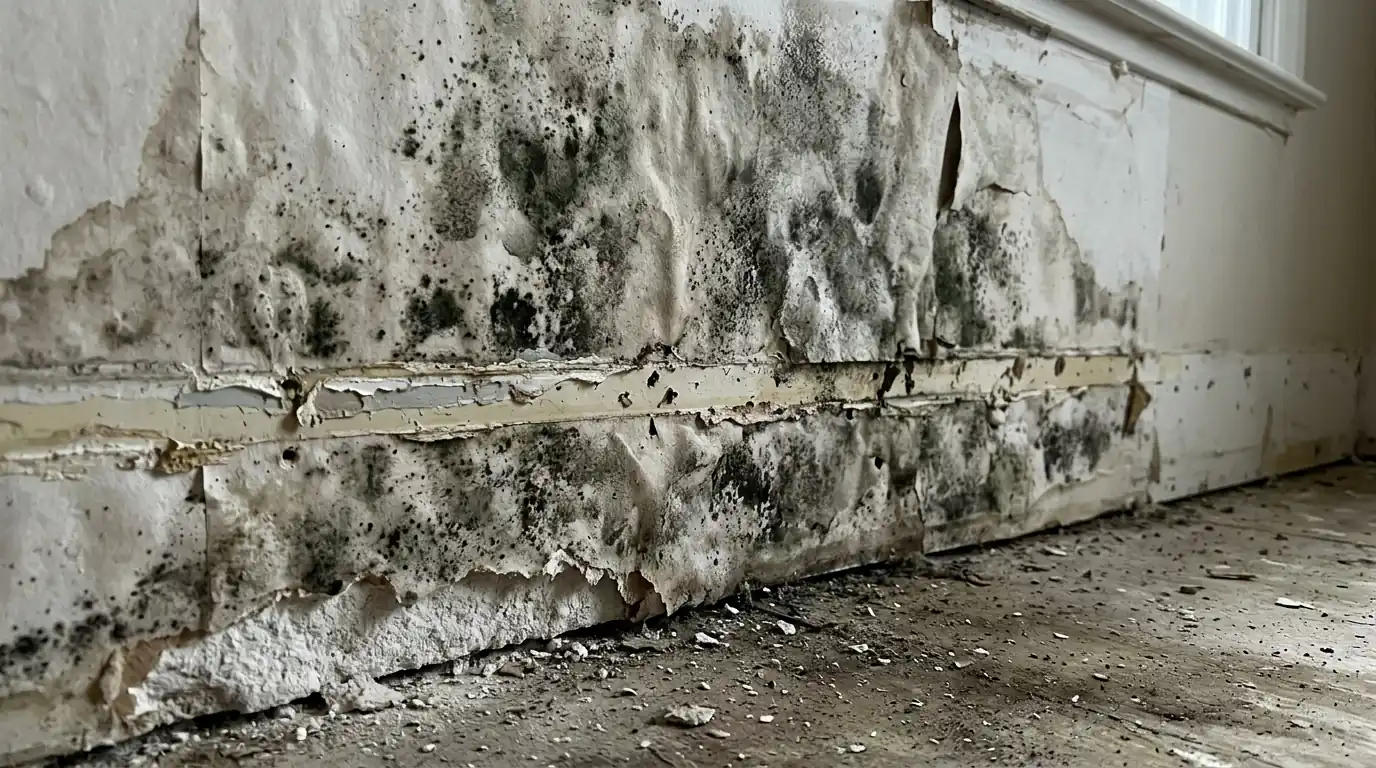
Black Mold Removal
Black mold is a common name for any dark-colored mold, though people often mean Stachybotrys chartarum, a slow-growing mold that needs drywall paper or other cellulose to stay wet for a long time.
How we handle it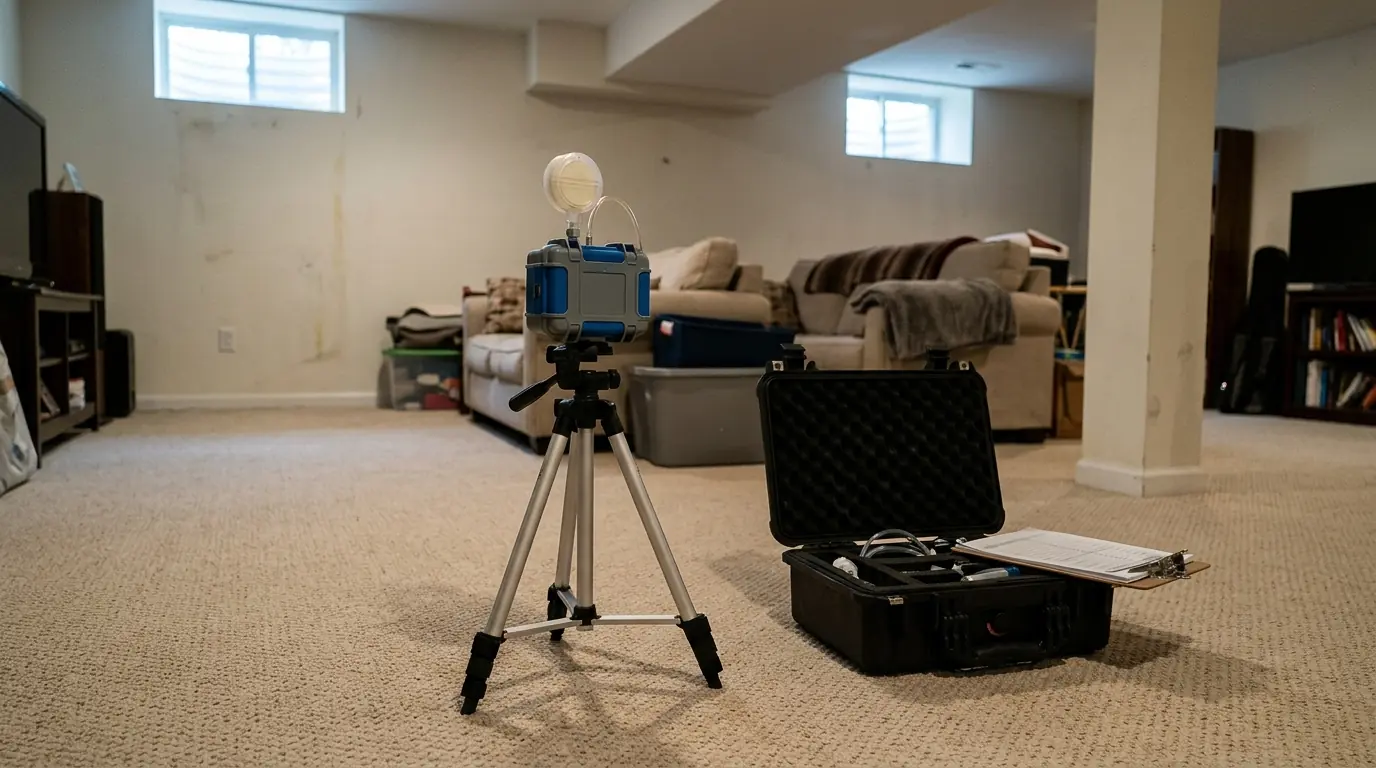
Mold Inspection & Testing
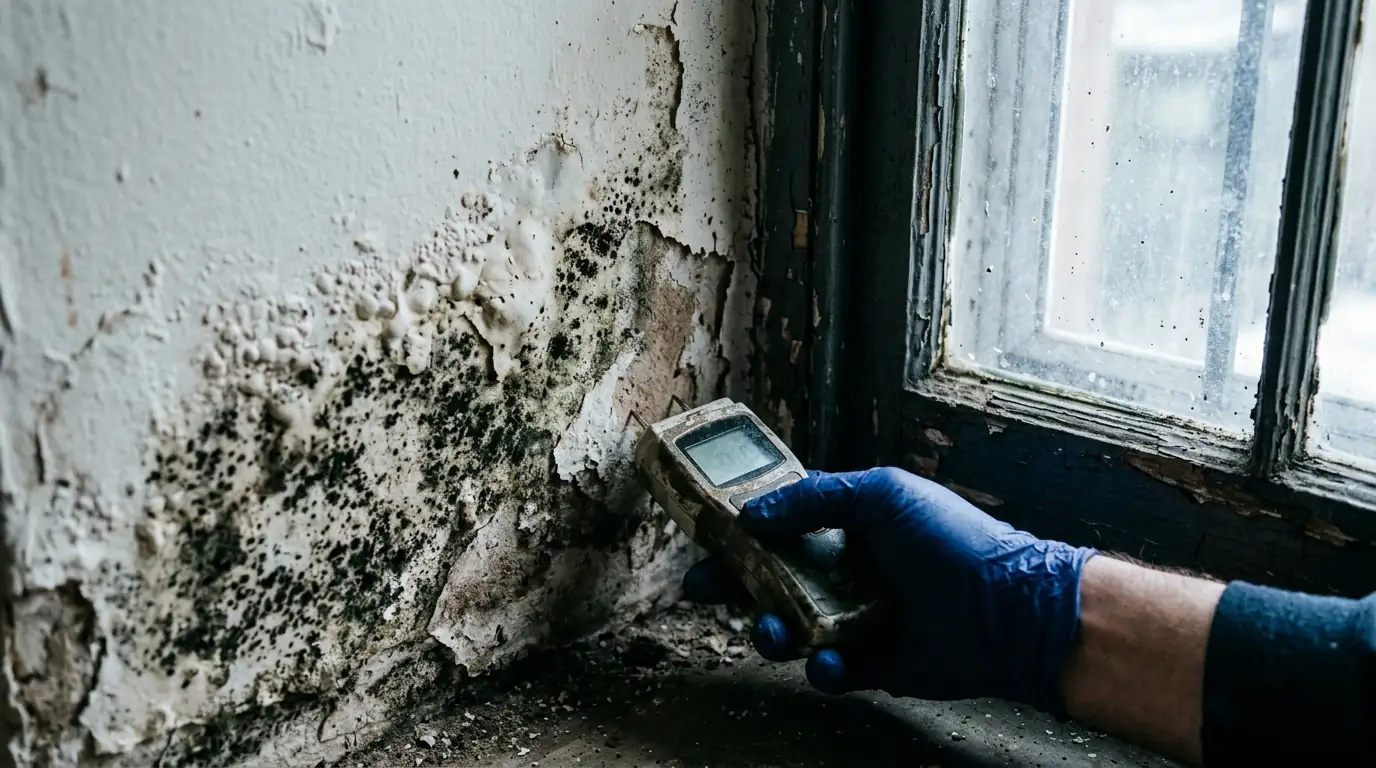
A mold inspection is a room-by-room check for visible growth and the moisture that feeds it, using a moisture meter, a thermal camera and a hygrometer.
How we handle itNeed someone to look at it today?
Call (202) 989-3053. We answer 24/7 and can talk you through the next safe step on the phone.