Knowledge Base
How long water damage drying really takes in a DC home
Wet drywall and carpet usually dry in a few days, but plaster, hardwood, brick and concrete each run on their own clock. Here is what sets the pace and how you can tell when a room is actually dry.
By Winifred Larkin, Knowledge Base EditorUpdated 7 min read
The short version
- Drywall and carpet usually dry in three to five days; plaster, hardwood, brick and concrete take longer.
- The drying class describes how much is wet and how dense it is, and it sets the equipment plan.
- Daily readings against a dry standard, not the calendar, decide when equipment comes out.
- Fans without dehumidifiers move water around the house instead of removing it.
Why is there no single answer to how long drying takes?
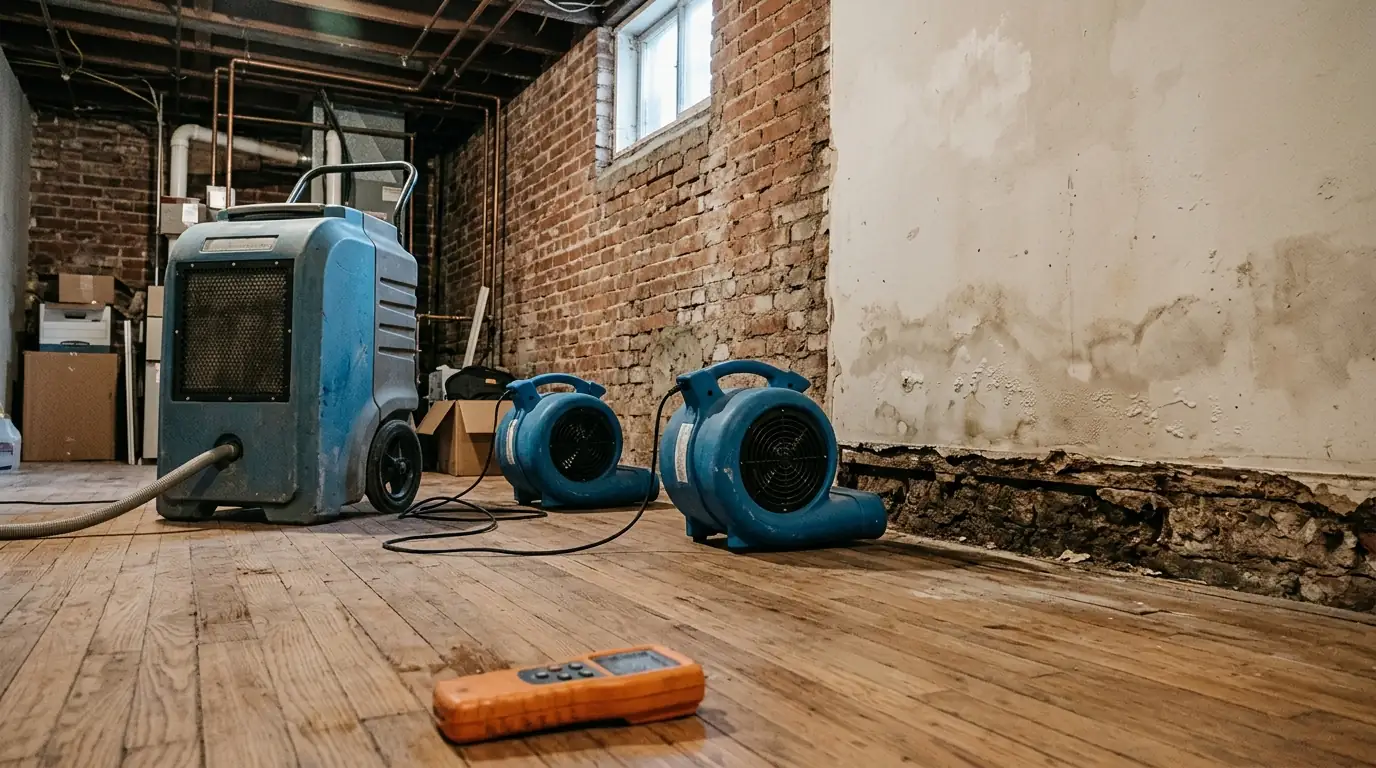
Drying is a two-step process. Water moves out of wet materials into the air, then dehumidifiers pull it out of the air and send it down a drain hose. How fast that happens depends on how much water there was, how long it sat, what it soaked into and what the air in the room is like.
Picture two basements on the same block. In one, a washing machine hose lets go onto vinyl plank over concrete, the water is pulled up the same morning, and the room is dry in three days. In the other, water seeps through a brick foundation wall behind wood paneling for weeks before anyone sees it, and drying runs closer to two weeks.
The clock also starts later than most people think. It starts when proper equipment is running, not when the leak stops. The EPA advises drying water-damaged materials within 24 to 48 hours to head off mold, so every day a wet room sits closed up adds time and risk. Our guide to the first hour after a basement floods covers what to do before equipment arrives.
What are typical drying times for carpet, drywall, plaster and floors?
The ranges below assume clean water, air movers and dehumidifiers running around the clock, and no wet pockets left closed up. They are typical figures, not promises, and your home can land outside them in either direction.
- Carpet and pad: two to four days when the water was clean; the pad is often replaced, while the carpet itself can usually dry in place.
- Drywall: three to five days for a wet bottom edge, longer when water ran down inside the cavity and soaked the insulation.
- Plaster on wood lath: often one to two weeks, because the plaster is thick and dense and the lath behind it holds water.
- Oak strip or plank hardwood: one to three weeks, depending on how far the boards cupped, the finish and the subfloor underneath.
- Plywood or plank subfloor: several days to two weeks, and slower when it is sealed under vinyl, tile or hardwood.
- Concrete slab: weeks rather than days, since water leaves concrete slowly and a basement slab may sit on damp soil.
- Brick and stone foundation walls: weeks, and old masonry may only return to its normal seasonal level rather than getting truly dry.
What do Class 1 through Class 4 mean for your drying plan?
Restoration crews sort water losses into four classes. The class describes how much surface got wet and how dense the wet materials are, and it decides how many air movers and dehumidifiers go in and how long the job should run.
- Class 1: a small area with little absorption, such as a dishwasher leak on a tile floor that was caught early.
- Class 2: a whole room, with carpet and pad wet and water wicking into the bottom of the walls.
- Class 3: water from above that soaked ceilings, wall cavities, insulation and floors, the usual result of a burst pipe or overflowing tub on an upper floor.
- Class 4: water held deep inside dense materials such as hardwood, plaster, brick, concrete and stone, which needs drier air, focused airflow and more time.
Why do plaster walls and old brick take so much longer?
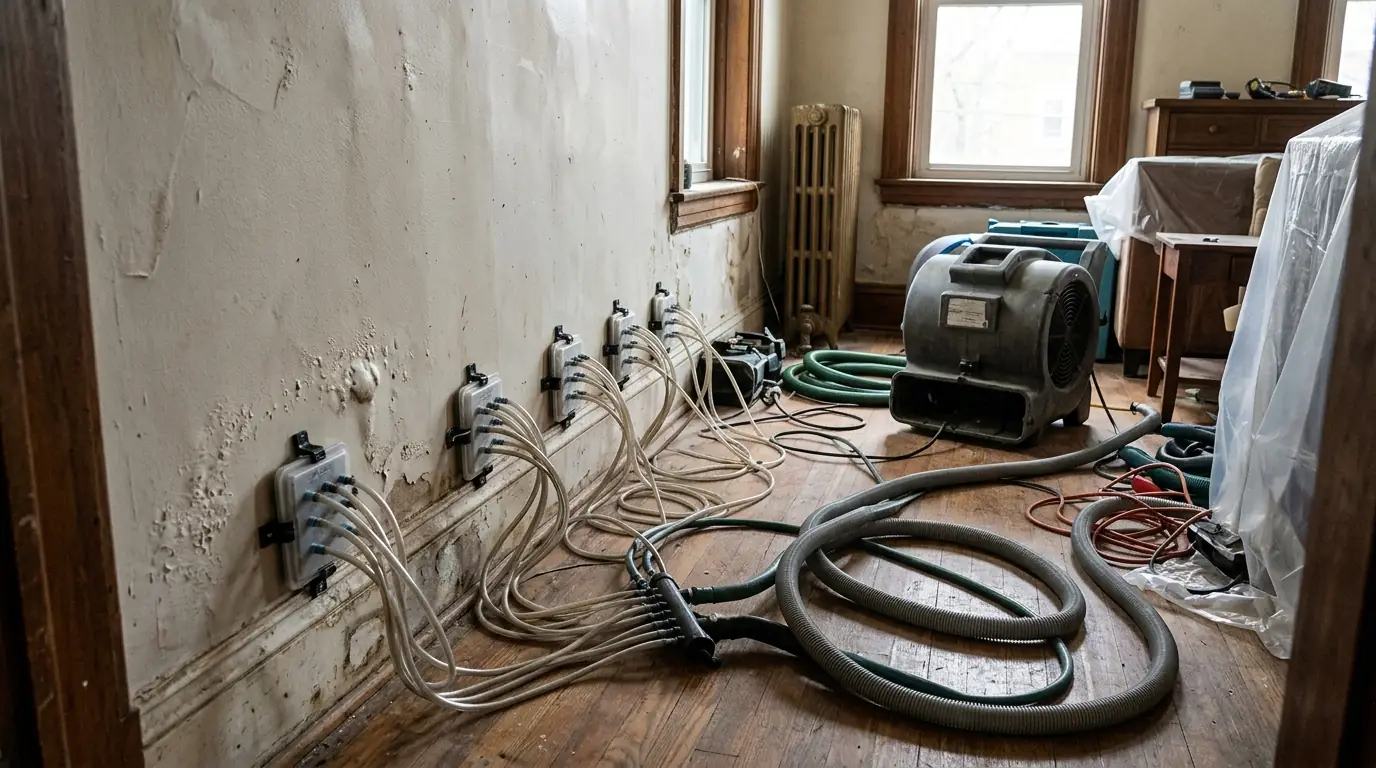
Three-coat plaster on wood lath is thick and dense, and the lath behind it soaks up water like a sponge. Moisture can only leave through the painted face or through the cavity, and decades of paint layers slow it down. To speed things up, we often pull the baseboard and drill small holes along the bottom of the wall where the trim will hide them, then push dry air into the cavity.
In houses built before 1978, those paint layers may contain lead. That is one reason we avoid sanding or cutting painted plaster without dust controls, and why drying plaster in place is usually worth a few extra days compared with tearing it out and replastering.
Brick is its own case. Foundation walls touch damp soil, and party walls are shared with the house next door, so brick rarely gets bone dry. The goal is to bring it back to its normal level, measured against an unaffected section of the same wall, not to a number from a chart. Most DC rowhouse losses end up mixed: a ceiling soaked from a bathroom above behaves like Class 3, while the oak floor and plaster in the same room act like Class 4. We plan the equipment around the slowest material, because that sets the finish date.
How do daily moisture readings show the drying is working?
On the first visit, our technicians map the wet area with a pin meter, a pinless meter and a thermal camera. The camera shows cool patches where water is evaporating, but every suspicious spot gets confirmed with a meter, because a cold pipe or a drafty window can look the same on screen.
Next comes a dry standard: readings from the same kind of material in a part of the house that never got wet, such as plaster in an upstairs bedroom. Each day we read the same marked spots, log temperature, relative humidity and grains of moisture per pound of air inside and outside the drying area, and check the air leaving the dehumidifiers.
The trend is what counts. Numbers should fall day after day. When they stall, something changes: another dehumidifier, air movers turned to a new angle, a cavity opened, a rug lifted. Equipment comes out when readings match the dry standard, not on a calendar date. Ask for a copy of the log, because it is also useful paperwork for an insurance claim.
Why won't a few box fans dry the room on their own?
Fans speed up evaporation, but the water they lift off the floor has to go somewhere. Without dehumidifiers, it goes into the room air, relative humidity climbs, and moisture settles back into drywall, closets, books and furniture. In a closed basement, it beads up on cold-water pipes and foundation walls.
Opening windows rarely solves it in DC. From July through September the outdoor air is often as humid as the basement, so fresh air adds moisture instead of removing it. A household dehumidifier is not sized for a flooded room and loses capacity as basement air cools, while low-grain refrigerant units and desiccant dehumidifiers keep pulling water in those conditions.
Fans can also do harm. After a sewage backup, blowing air across contaminated materials spreads particles through the house, so removal and cleaning come before any drying. Box fans also blow at the room rather than along the surface, while air movers push a thin, fast sheet of air across the floor and up the base of the wall, where the water is. If you are not sure whether a room is drying or just sitting, call (202) 989-3053 and we can take readings and set up structural drying that fits the materials.
Questions readers ask
Can I put the furniture back once the carpet feels dry?
Not yet. Carpet fibers dry first, while the pad and subfloor underneath can stay wet for days. Putting a sofa or dresser back too soon traps that moisture and can leave rust or stain marks from metal glides and wood finishes. Wait until meter readings on the subfloor match the dry standard, then set furniture legs on plastic blocks or foil tabs for the first week.
Why is my hardwood floor still cupped while the equipment is running?
Cupping means the bottom of each board is wetter than the top. As drying goes on, moisture evens out and many floors flatten noticeably. Sanding too early is a common mistake, because once the bottoms dry, the sanded edges sink and the floor crowns. With drying mats on the boards and some patience, refinishing decisions can wait until readings are stable.
Is it safe to stay in the house while drying equipment runs?
For clean water drying, usually yes. Expect noise, warm rooms and higher power use, and leave doors and equipment where the technicians set them, since moving a dehumidifier or closing a door can stall progress. Keep children and pets away from cords. When the water was contaminated, or mold showed up, contained areas stay off limits until cleaning is done.
Winifred Larkin, Knowledge Base Editor at JEC Restoration. She writes and updates these guides from the questions homeowners ask our crews on DC area jobs.
Services this guide connects to
Structural Drying
Structural drying is the controlled removal of moisture from a building's framing, subfloor, wall cavities, plaster and masonry after a water loss.
How we handle it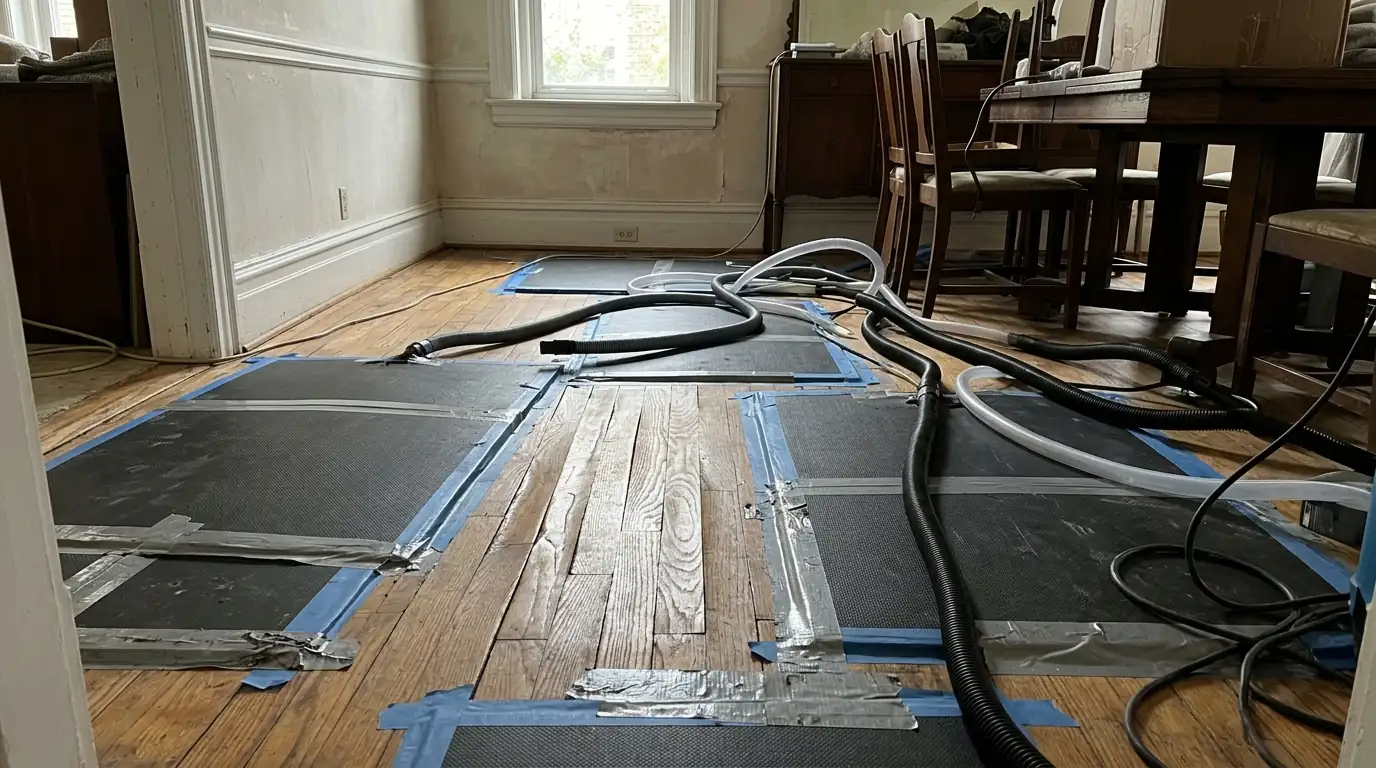
Hardwood Floor Drying
Hardwood floor drying removes water from solid wood flooring and the subfloor beneath it, usually with suction floor mats, dehumidifiers and steady monitoring.
How we handle it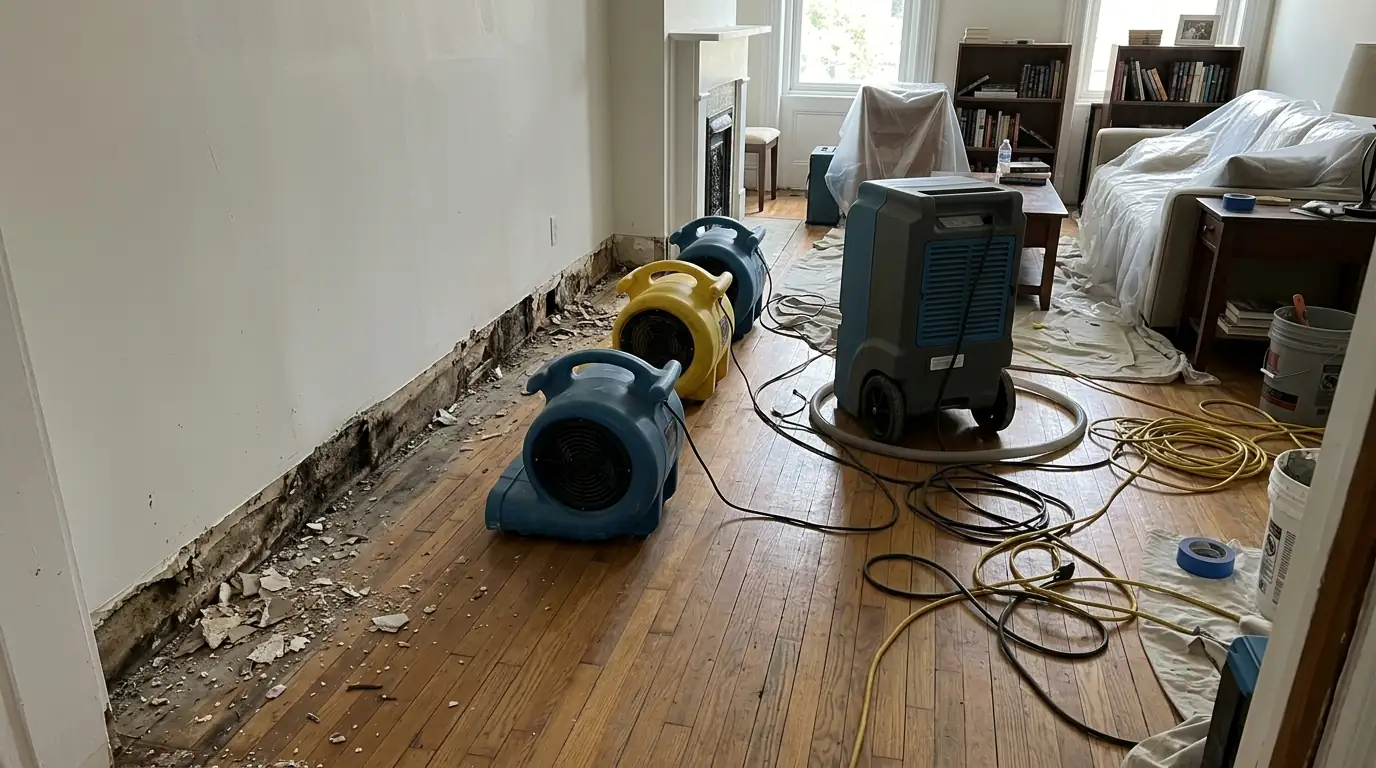
Water Damage Restoration
Water damage restoration is the full sequence after a leak or flood: stopping the source, extracting standing water, removing materials that cannot be saved, drying walls and floors with dehumidifiers and air movers, and logging moisture readings until they reach a dry standard.
How we handle itNeed someone to look at it today?
Call (202) 989-3053. We answer 24/7 and can talk you through the next safe step on the phone.